
We can whenever and wherever we choose successfully
- Slides: 26
We can, whenever and wherever we choose, successfully teach all children whose schooling is of interest to us; we already know more than we need to do that; and whether or not we do it must finally depend on how we feel about the fact that we haven’t so far. – Ronald Edmonds
SCHOOL INSTRUCTIONAL LEADERSHIP T-330 September 23, 2015 Class 3: Effective Teaching and Learning
SLP 2016 Cohort Norms • Value vulnerability and truths over peace. • Create collaborative, transparent relationships. • Seek voices, feedback and unlearning. • Honor balance, confidentiality, and difference.
Learning Targets for Class #3 • I can explain how the “task” relates to learning. • I can give examples of specific practices that make rigorous tasks accessible to all students. • I can reflect upon how teacher beliefs influence learning.
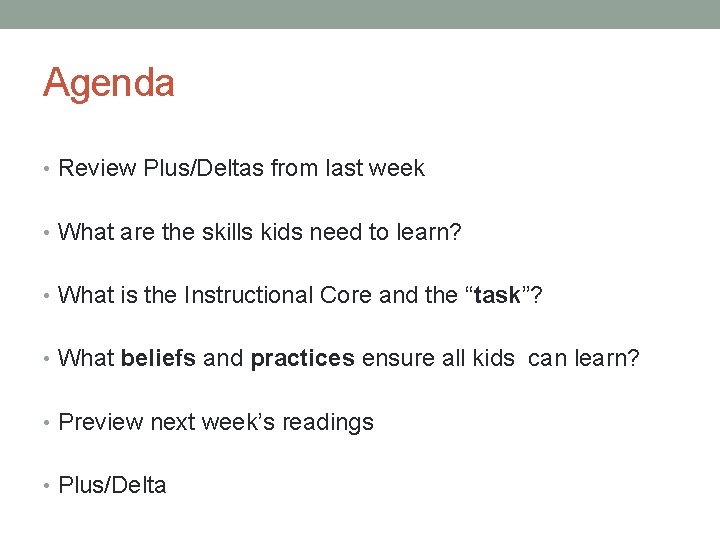
Agenda • Review Plus/Deltas from last week • What are the skills kids need to learn? • What is the Instructional Core and the “task”? • What beliefs and practices ensure all kids can learn? • Preview next week’s readings • Plus/Delta
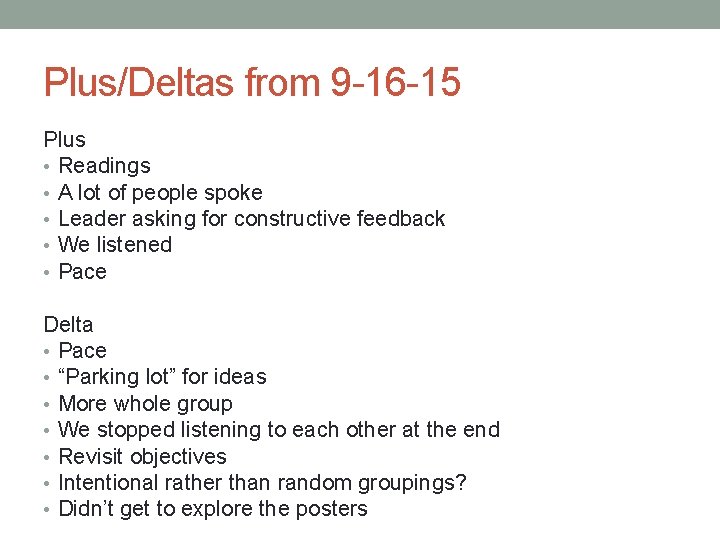
Plus/Deltas from 9 -16 -15 Plus • Readings • A lot of people spoke • Leader asking for constructive feedback • We listened • Pace Delta • Pace • “Parking lot” for ideas • More whole group • We stopped listening to each other at the end • Revisit objectives • Intentional rather than random groupings? • Didn’t get to explore the posters
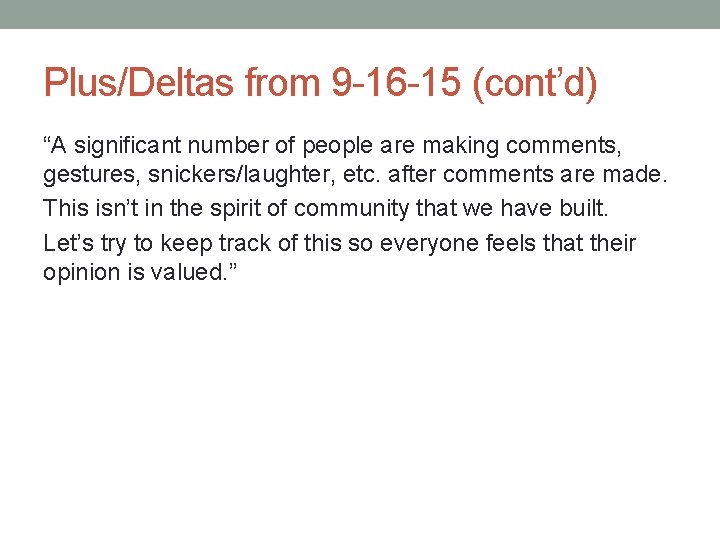
Plus/Deltas from 9 -16 -15 (cont’d) “A significant number of people are making comments, gestures, snickers/laughter, etc. after comments are made. This isn’t in the spirit of community that we have built. Let’s try to keep track of this so everyone feels that their opinion is valued. ”
Sharing How are you allocating time at your practicum site to observe teaching and learning? How could you observe even more?
21 st Century Skills College & Career Readiness
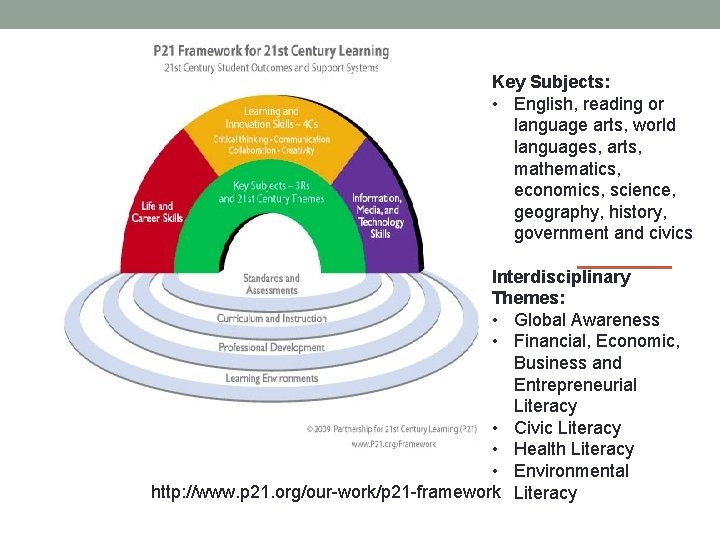
Key Subjects: • English, reading or language arts, world languages, arts, mathematics, economics, science, geography, history, government and civics Interdisciplinary Themes: • Global Awareness • Financial, Economic, Business and Entrepreneurial Literacy • Civic Literacy • Health Literacy • Environmental http: //www. p 21. org/our-work/p 21 -framework Literacy
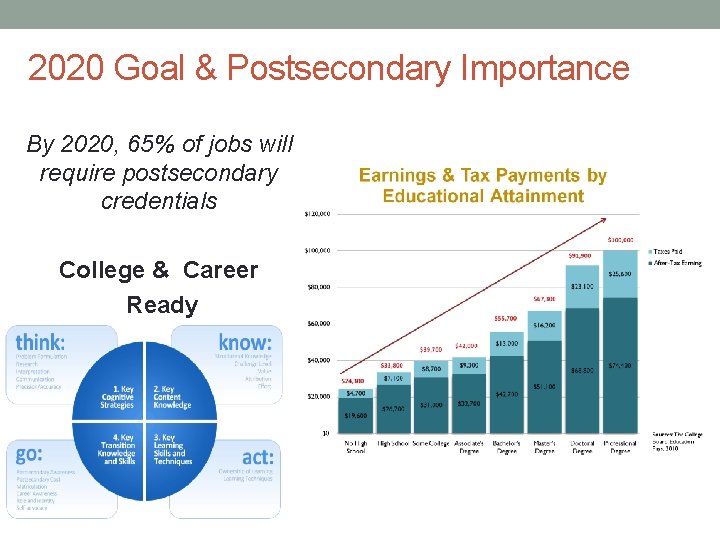
2020 Goal & Postsecondary Importance By 2020, 65% of jobs will require postsecondary credentials College & Career Ready
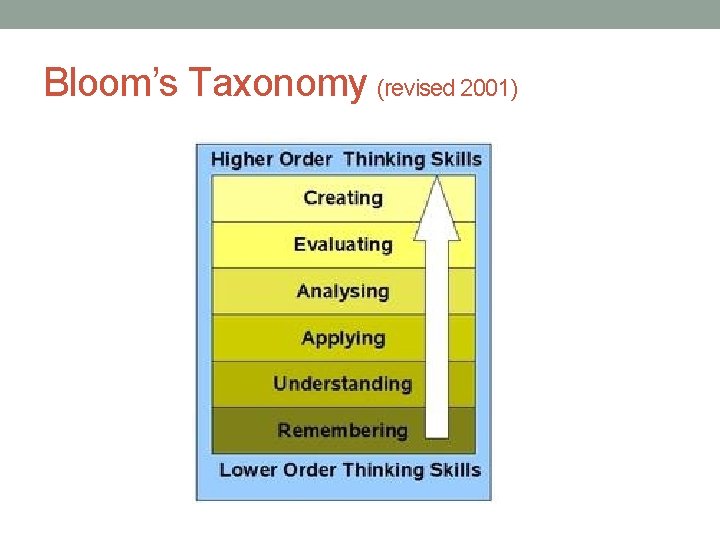
Bloom’s Taxonomy (revised 2001)
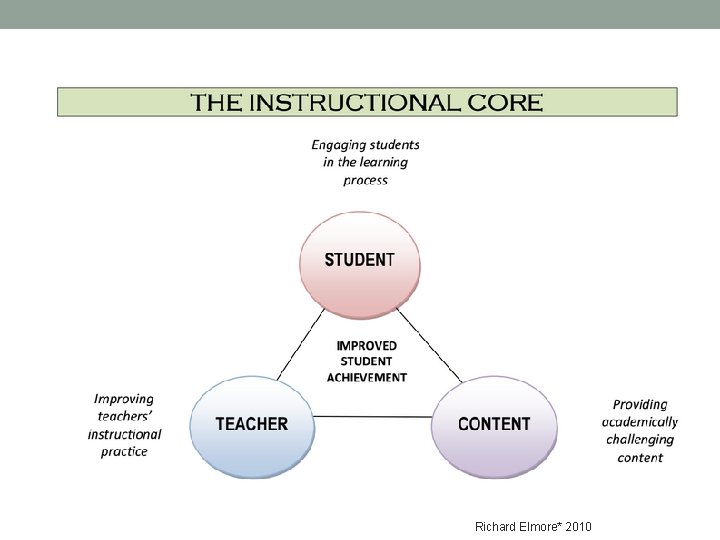
Richard Elmore* 2010
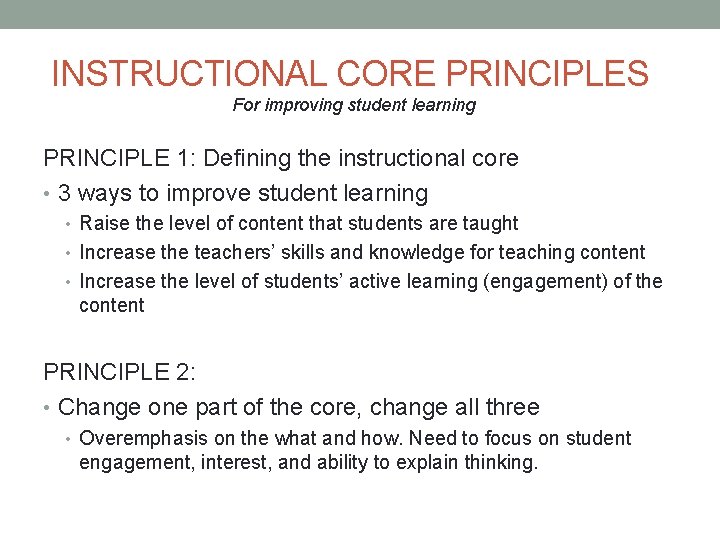
INSTRUCTIONAL CORE PRINCIPLES For improving student learning PRINCIPLE 1: Defining the instructional core • 3 ways to improve student learning • Raise the level of content that students are taught • Increase the teachers’ skills and knowledge for teaching content • Increase the level of students’ active learning (engagement) of the content PRINCIPLE 2: • Change one part of the core, change all three • Overemphasis on the what and how. Need to focus on student engagement, interest, and ability to explain thinking.
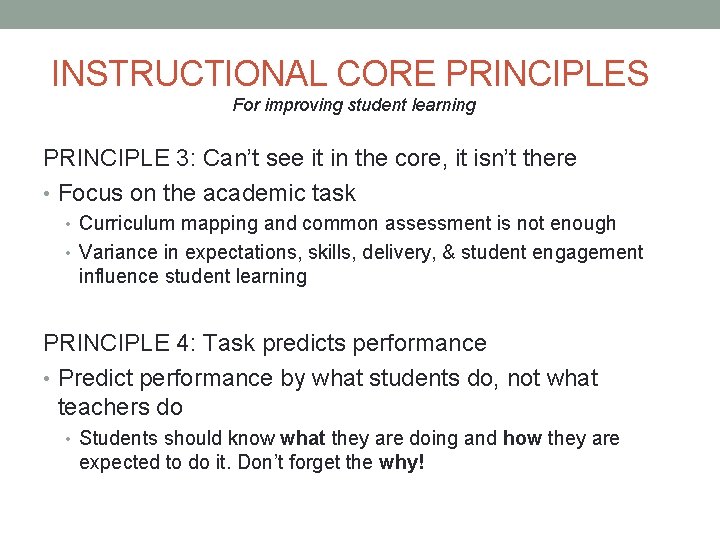
INSTRUCTIONAL CORE PRINCIPLES For improving student learning PRINCIPLE 3: Can’t see it in the core, it isn’t there • Focus on the academic task • Curriculum mapping and common assessment is not enough • Variance in expectations, skills, delivery, & student engagement influence student learning PRINCIPLE 4: Task predicts performance • Predict performance by what students do, not what teachers do • Students should know what they are doing and how they are expected to do it. Don’t forget the why!
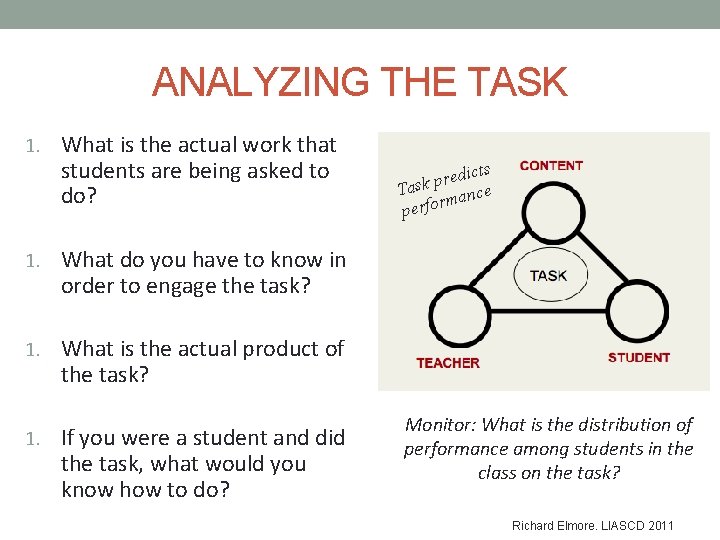
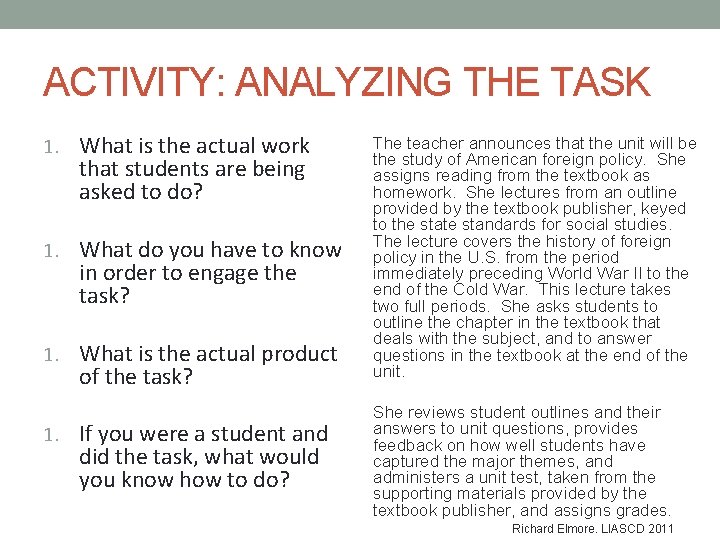
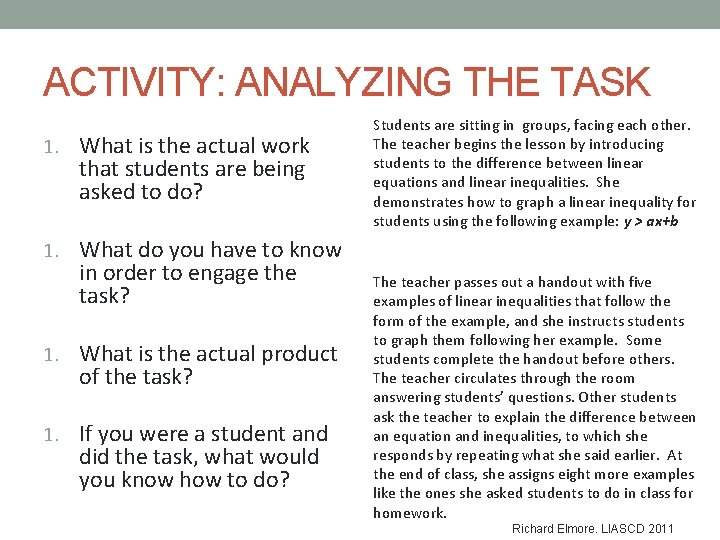
ANALYZING THE TASK 1. What is the actual work that students are being asked to do? icts d e r p Task ance m r o f per 1. What do you have to know in order to engage the task? 1. What is the actual product of the task? 1. If you were a student and did the task, what would you know how to do? Monitor: What is the distribution of performance among students in the class on the task? Richard Elmore. LIASCD 2011
ACTIVITY: ANALYZING THE TASK 1. What is the actual work that students are being asked to do? 1. What do you have to know in order to engage the task? 1. What is the actual product of the task? 1. If you were a student and did the task, what would you know how to do? The teacher announces that the unit will be the study of American foreign policy. She assigns reading from the textbook as homework. She lectures from an outline provided by the textbook publisher, keyed to the state standards for social studies. The lecture covers the history of foreign policy in the U. S. from the period immediately preceding World War II to the end of the Cold War. This lecture takes two full periods. She asks students to outline the chapter in the textbook that deals with the subject, and to answer questions in the textbook at the end of the unit. She reviews student outlines and their answers to unit questions, provides feedback on how well students have captured the major themes, and administers a unit test, taken from the supporting materials provided by the textbook publisher, and assigns grades. Richard Elmore. LIASCD 2011
ACTIVITY: ANALYZING THE TASK 1. What is the actual work that students are being asked to do? Students are sitting in groups, facing each other. The teacher begins the lesson by introducing students to the difference between linear equations and linear inequalities. She demonstrates how to graph a linear inequality for students using the following example: y > ax+b 1. What do you have to know in order to engage the task? 1. What is the actual product of the task? 1. If you were a student and did the task, what would you know how to do? The teacher passes out a handout with five examples of linear inequalities that follow the form of the example, and she instructs students to graph them following her example. Some students complete the handout before others. The teacher circulates through the room answering students’ questions. Other students ask the teacher to explain the difference between an equation and inequalities, to which she responds by repeating what she said earlier. At the end of class, she assigns eight more examples like the ones she asked students to do in class for homework. Richard Elmore. LIASCD 2011
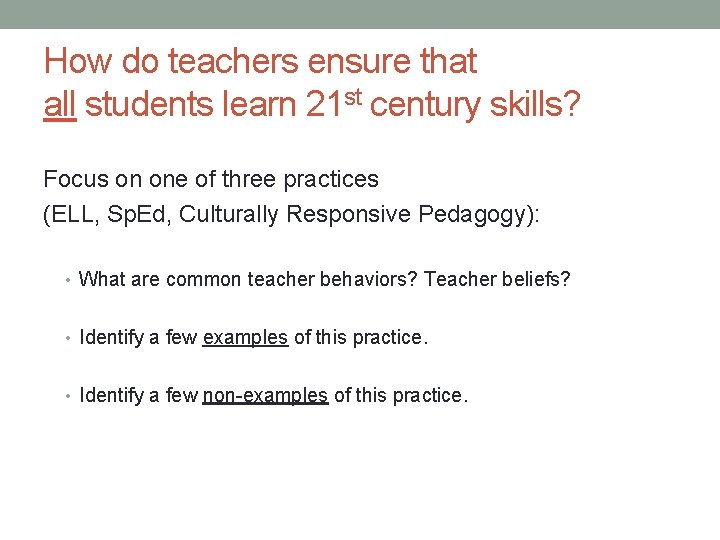
How do teachers ensure that all students learn 21 st century skills? Focus on one of three practices (ELL, Sp. Ed, Culturally Responsive Pedagogy): • What are common teacher behaviors? Teacher beliefs? • Identify a few examples of this practice. • Identify a few non-examples of this practice.
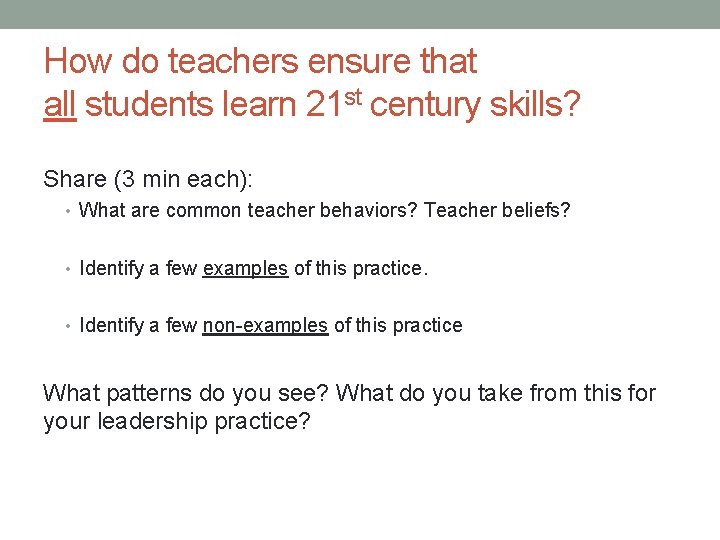
How do teachers ensure that all students learn 21 st century skills? Share (3 min each): • What are common teacher behaviors? Teacher beliefs? • Identify a few examples of this practice. • Identify a few non-examples of this practice What patterns do you see? What do you take from this for your leadership practice?
Teacher beliefs about student learning • Fill out online survey sent by Annice this afternoon. • What role do teacher beliefs play in student learning?
Teacher beliefs about student learning • Describe the data. • How do you make sense of it? • What questions do you have? If this were your staff: • What other data do you want to look at? • What kind of support does your staff need? • As the school leader, what steps do you take going forward?
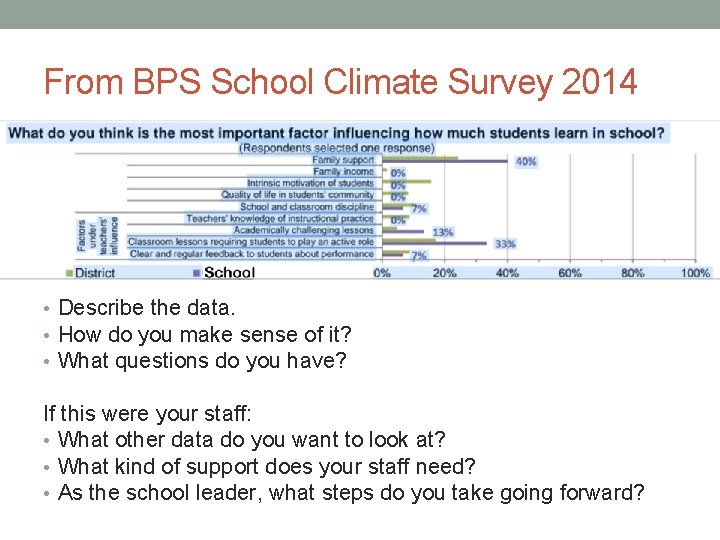
From BPS School Climate Survey 2014 • Describe the data. • How do you make sense of it? • What questions do you have? If this were your staff: • What other data do you want to look at? • What kind of support does your staff need? • As the school leader, what steps do you take going forward?
Learning Targets for Class #3 • I can explain how the “task” relates to learning. • I can give examples of specific practices that make rigorous tasks accessible to all students. • I can explain how teacher beliefs influence learning.
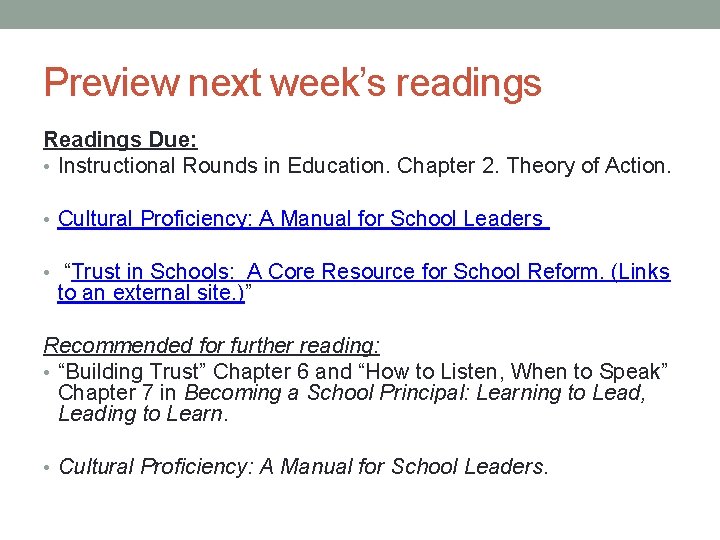
Preview next week’s readings Readings Due: • Instructional Rounds in Education. Chapter 2. Theory of Action. • Cultural Proficiency: A Manual for School Leaders • “Trust in Schools: A Core Resource for School Reform. (Links to an external site. )” Recommended for further reading: • “Building Trust” Chapter 6 and “How to Listen, When to Speak” Chapter 7 in Becoming a School Principal: Learning to Lead, Leading to Learn. • Cultural Proficiency: A Manual for School Leaders.
Plus/Delta Plus Delta