
We Are Learning to Estimate Objects and Amounts
We Are Learning to Estimate Objects and Amounts I can estimate the number of objects in a group I can estimate and compare amounts I can check my estimates by counting
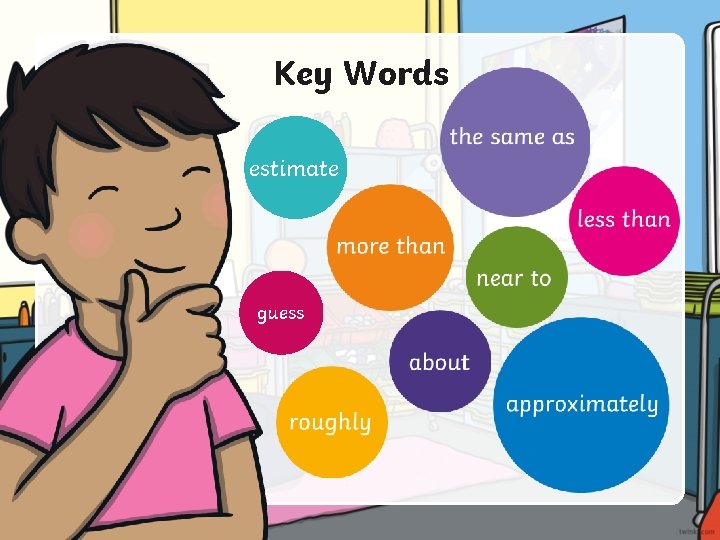
Key Words estimate guess
Let’s Warm Up! Can you estimate how many star jumps you can do in 10 seconds? How can we check how close your estimate was to how many star jumps you actually did? Let’s have a go! Ready. Set. Star jump!
Let’s Warm Up! How did you do? Were you close to your estimate? Did you estimate more or less than you actually did? Now, estimate and check how many of the following you can do in 10 seconds: • hops on one foot • hops on the other foot • full turns around
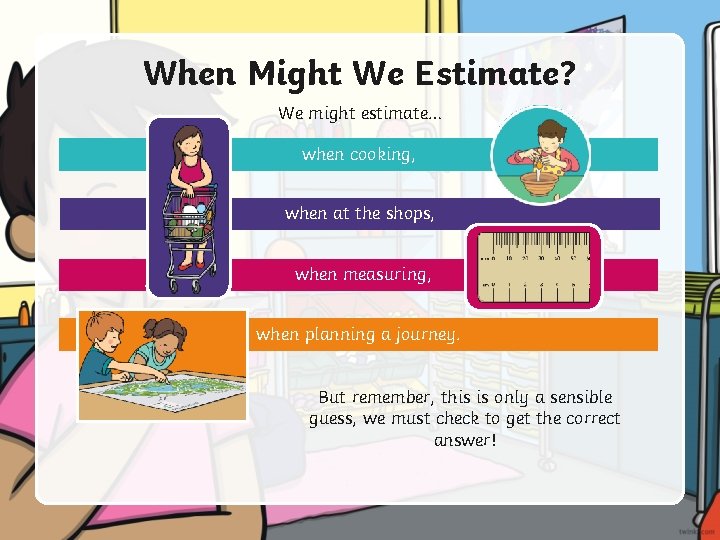
When Might We Estimate? We might estimate… when cooking, when at the shops, when measuring, when planning a journey. But remember, this is only a sensible guess, we must check to get the correct answer!
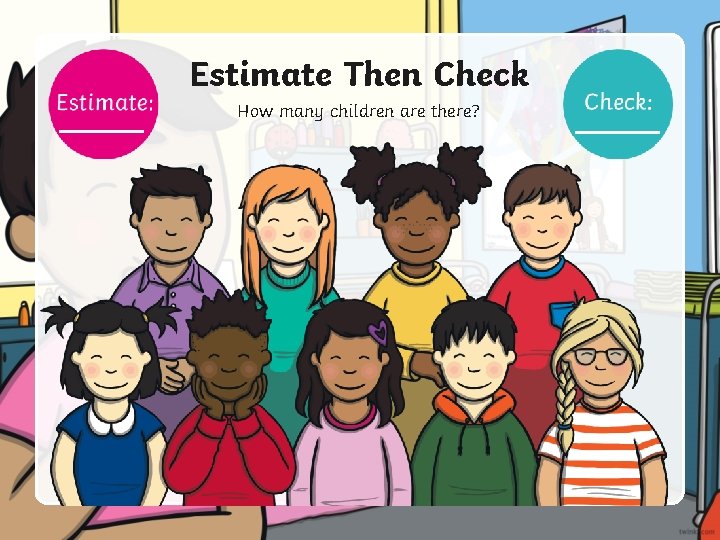
Estimate Then Check How many children are there?
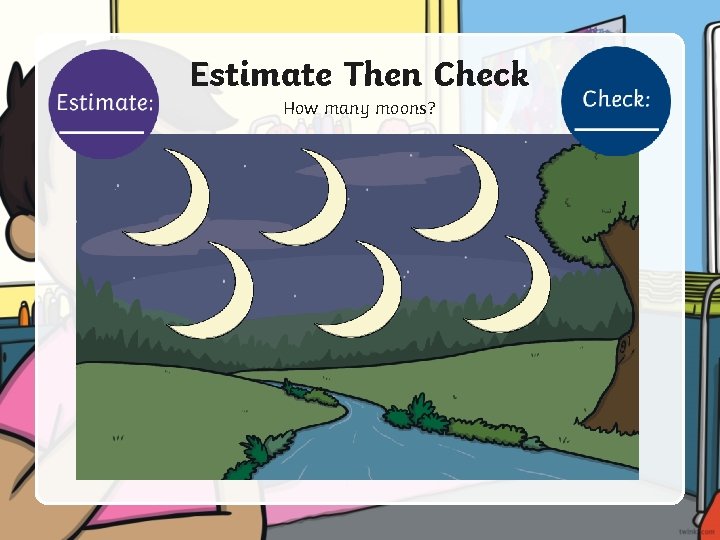
Estimate Then Check How many moons?
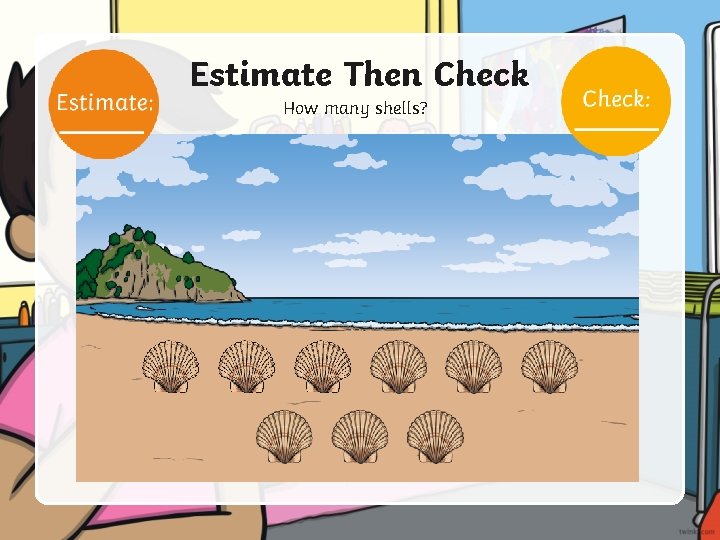
Estimate Then Check How many shells?
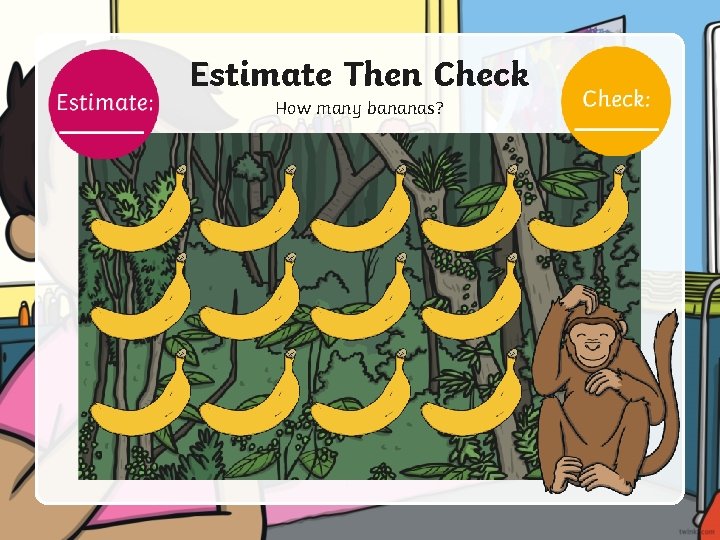
Estimate Then Check How many bananas?
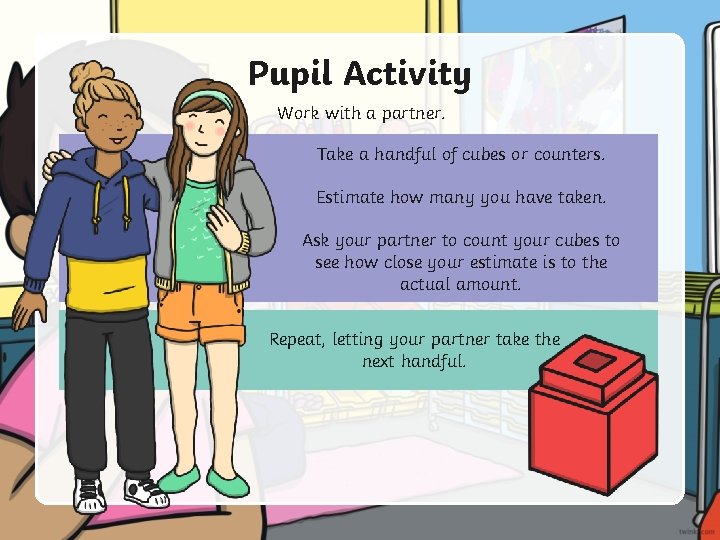
Pupil Activity Work with a partner. Take a handful of cubes or counters. Estimate how many you have taken. Ask your partner to count your cubes to see how close your estimate is to the actual amount. Repeat, letting your partner take the next handful.
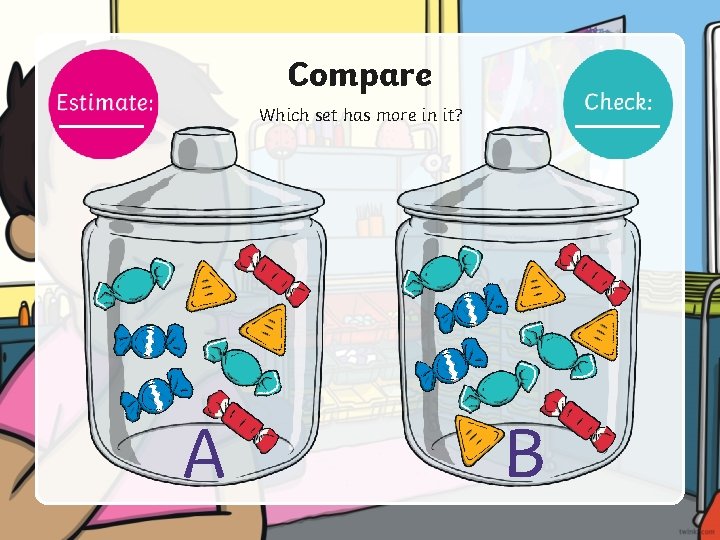
Compare Which set has more in it? A B
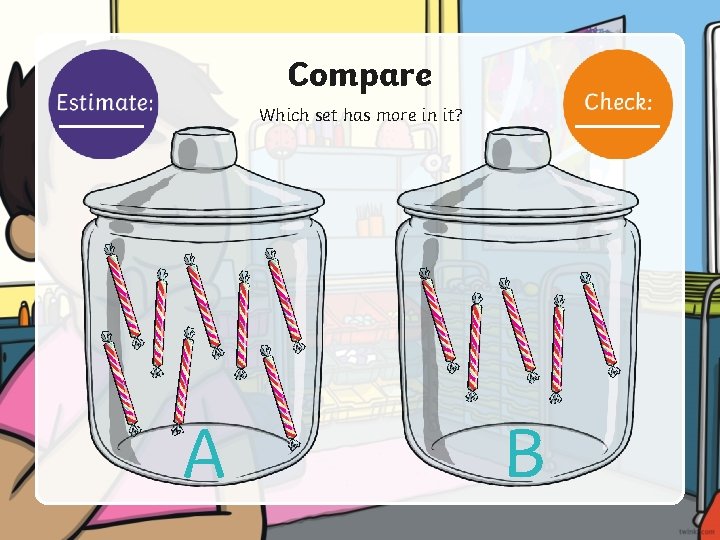
Compare Which set has more in it? A B
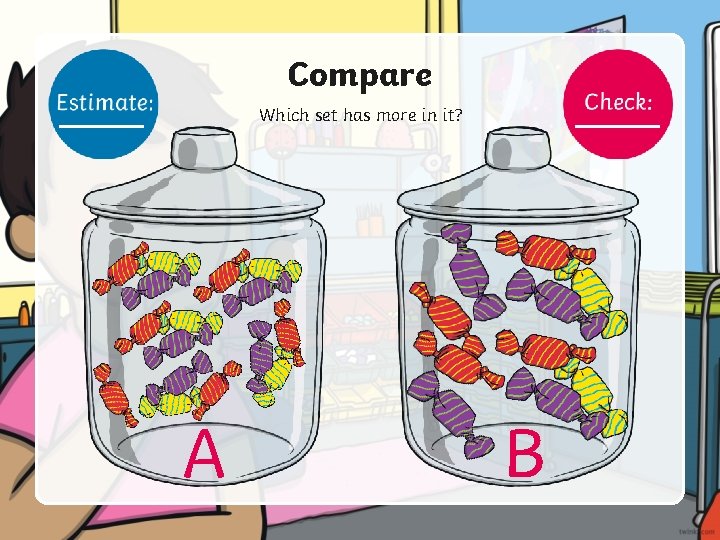
Compare Which set has more in it? A B
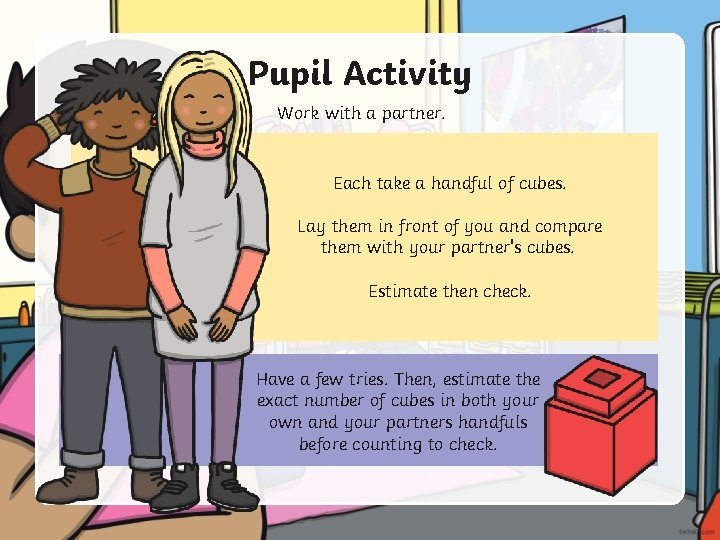
Pupil Activity Work with a partner. Each take a handful of cubes. Lay them in front of you and compare them with your partner's cubes. Estimate then check. Have a few tries. Then, estimate the exact number of cubes in both your own and your partners handfuls before counting to check.
Plenary What have we learnt today? We have been learning to… estimate. Estimating is making a sensible… guess. We can check our estimation by… counting.
- Slides: 17