
We acknowledge the traditional custodians of this land

- Slides: 14
We acknowledge the traditional custodians of this land pay our respects to the Elders both past, present and future for they hold the memories, the traditions, the culture and hopes of Aboriginal Australia. We must always remember that under the concrete and asphalt, this land is, was and always will be traditional Aboriginal land.
L 3 - Language, Learning and Literacy
L 3 - How Does It Work? ü It is a component of the Best Start Initiative that aims to ensure that all students are on tack in their Literacy learning by Year 3. ü The aim of the program is to provide teachers with skills in identifying literacy needs, recognising the diverse needs of learners, assessing student progress and providing explicit instruction to extend student learning. ü Teachers participate in 12 half days of professional learning and mentoring. ü Using data to refine teaching practice and inform the next steps in learning. ü First implemented in 2007 only for Kindergarten, then extended to Stage 1 in 2012. ü Research based program, including the work of Marie Clay. Why do we do L 3? The aim of the L 3 program is that all individual learning needs are being catered for. With such an explicit program, the hope is that less students will require intervention programs, such as Reading Recovery or Learning Support Programs.
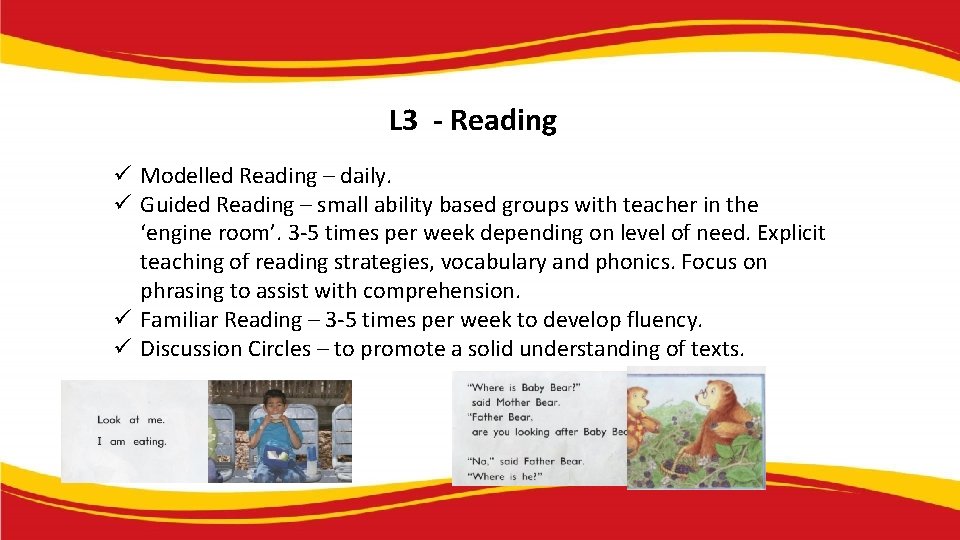
L 3 - Reading ü Modelled Reading – daily. ü Guided Reading – small ability based groups with teacher in the ‘engine room’. 3 -5 times per week depending on level of need. Explicit teaching of reading strategies, vocabulary and phonics. Focus on phrasing to assist with comprehension. ü Familiar Reading – 3 -5 times per week to develop fluency. ü Discussion Circles – to promote a solid understanding of texts.
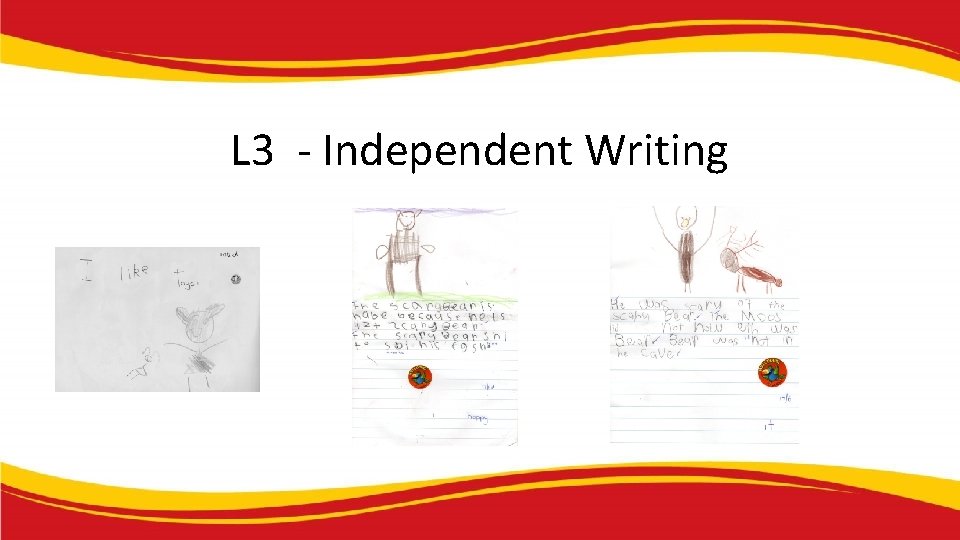
L 3 - Writing ü Modelled Writing – Daily. Based on point of need (eg. capitals, spaces between words, speech marks, etc) ü Interactive Writing – students help to construct sentences using stimulus (a shared experience, an object, a picture). Teacher demonstrates a variety of skills that students can use when writing independently (using a sound card, word wall, clapping out syllables, saying words slowly) ü Guided Writing – small groups of 3 -4. Students write on whiteboards. Teacher can observe letter formation and correct if needed. ü Independent Writing – teacher helps select groups on different days. Each student has a focus and goal.
L 3 - Independent Writing
What do the other students do when the teacher is in the ‘engine room’? ü Phonemic awareness ü Spelling ü Word Recognition ü Daily Writing ü Comprehension ü Grammar and Punctuation ü Familiar Reading ü Art/Craft ü Computer games ü i. Pad activities
L 3 - Assessment ü ü ü Running Records (throughout terms) Kindy – Vocabulary Testing (every 5 weeks) Hearing and Recording Sounds (every ten weeks) Spelling Tests Phonemic Awareness and Phonological Testing Anecdotal notes
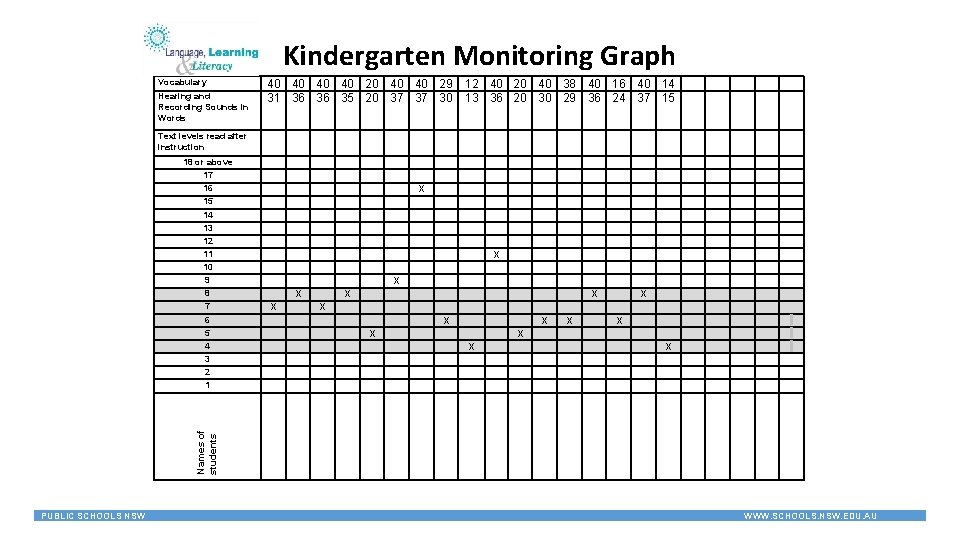
Kindergarten Monitoring Graph PUBLIC SCHOOLS NSW X X X X X Names of students 18 or above 17 16 15 14 13 12 11 10 9 8 7 6 5 4 3 2 1 12 40 20 40 38 40 16 40 14 13 36 20 30 29 36 24 37 15 Text levels read after instruction 40 40 20 40 40 29 31 36 36 35 20 37 37 30 Hearing and Recording Sounds in Words Vocabulary WWW. SCHOOLS. NSW. EDU. AU
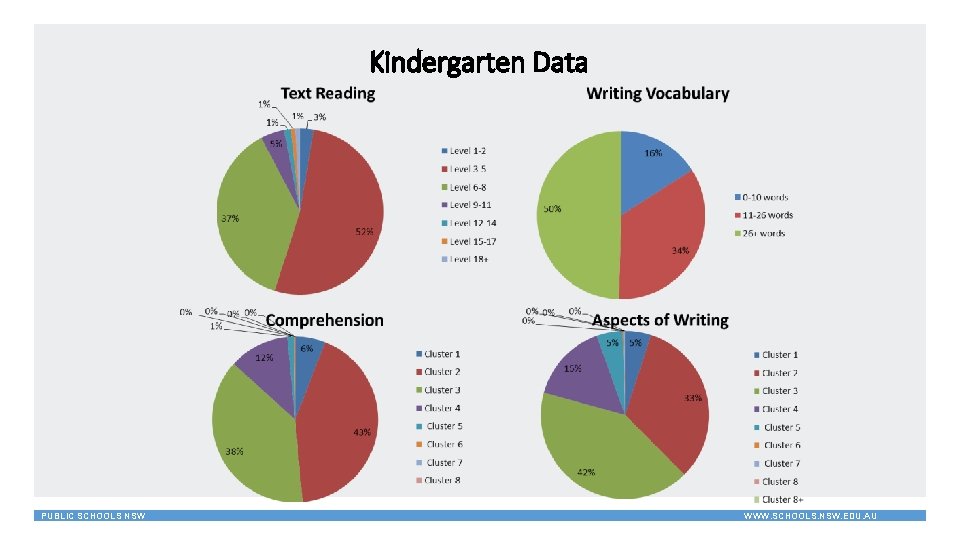
Kindergarten Data PUBLIC SCHOOLS NSW WWW. SCHOOLS. NSW. EDU. AU
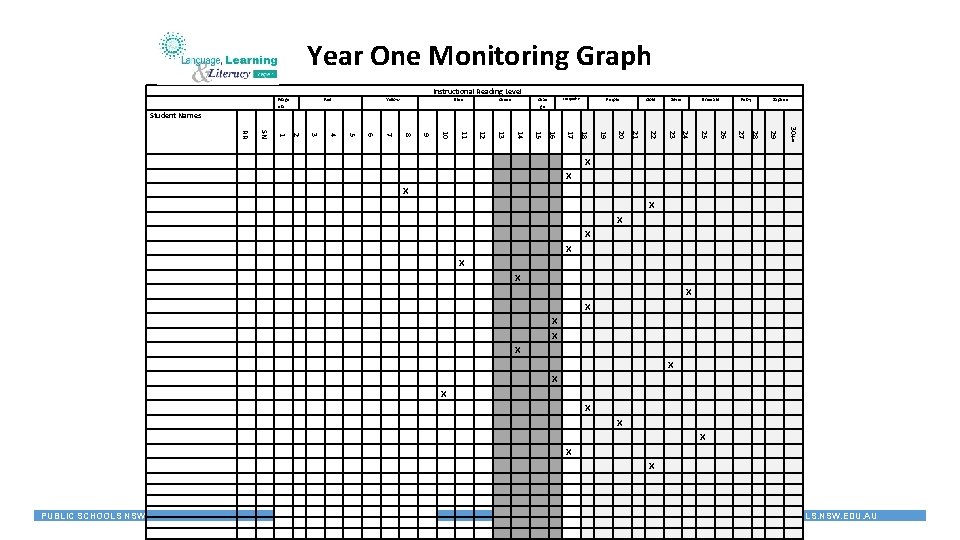
Year One Monitoring Graph Instructional Reading Level Mage nta Red Yellow Blue Green Turquoise Oran ge Purple Gold Silver Emerald Ruby Saphire Student Names 13 14 15 19 20 22 23 25 26 27 29 30+= X X X 2 28 12 24 11 X X 21 10 X 18 9 X X X 17 8 16 7 X 6 5 4 X 3 X 1 SN X RR PUBLIC SCHOOLS NSW WWW. SCHOOLS. NSW. EDU. AU
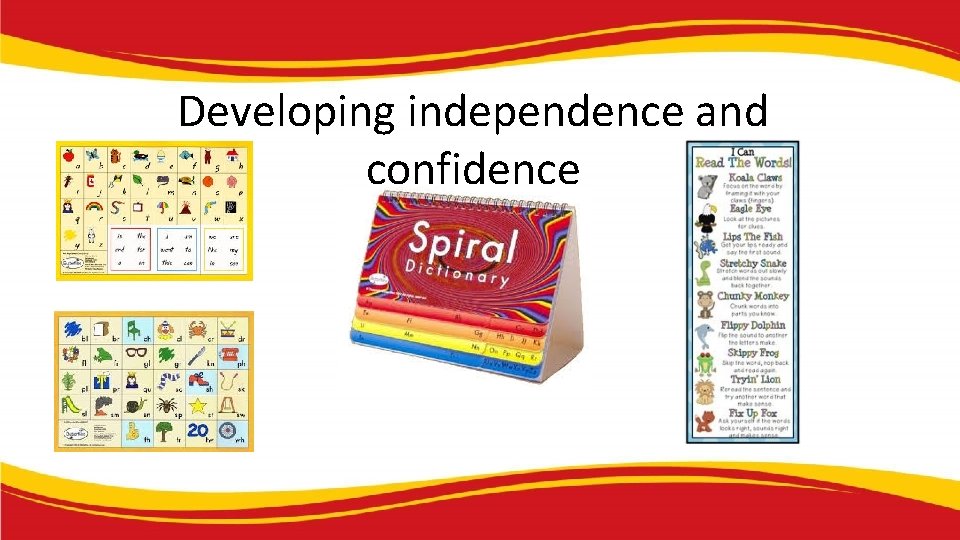
Developing independence and confidence
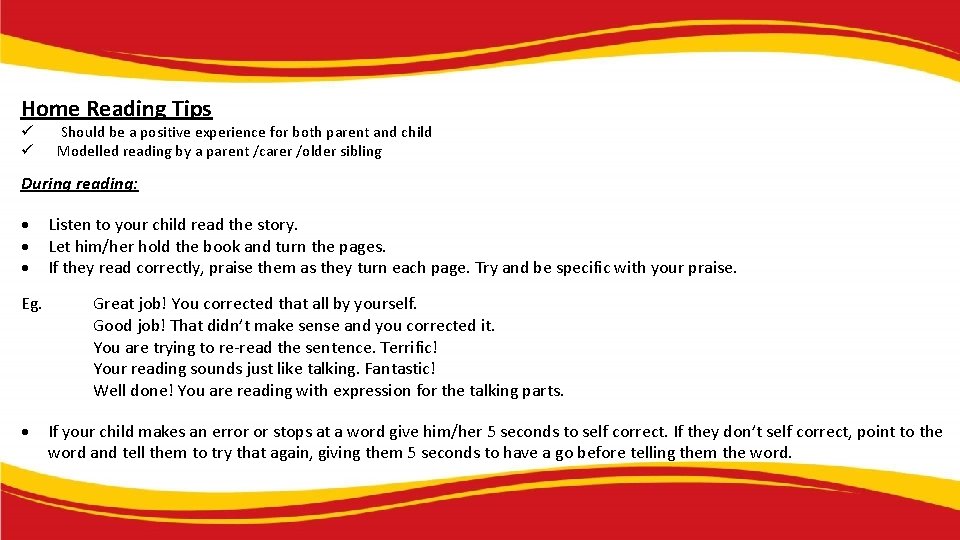
Home Reading Tips ü ü Should be a positive experience for both parent and child Modelled reading by a parent /carer /older sibling During reading: Eg. Listen to your child read the story. Let him/her hold the book and turn the pages. If they read correctly, praise them as they turn each page. Try and be specific with your praise. Great job! You corrected that all by yourself. Good job! That didn’t make sense and you corrected it. You are trying to re-read the sentence. Terrific! Your reading sounds just like talking. Fantastic! Well done! You are reading with expression for the talking parts. If your child makes an error or stops at a word give him/her 5 seconds to self correct. If they don’t self correct, point to the word and tell them to try that again, giving them 5 seconds to have a go before telling them the word.
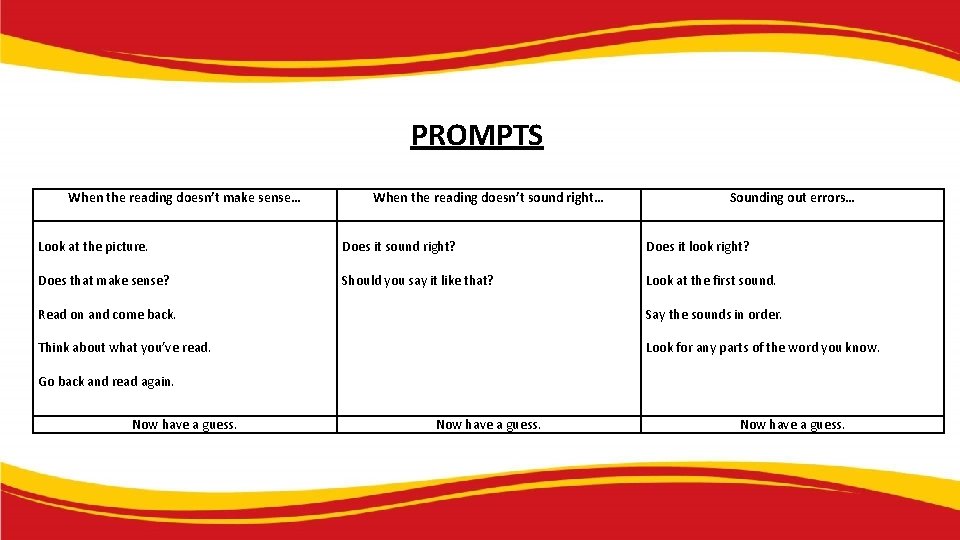
PROMPTS When the reading doesn’t make sense… Look at the picture. Does that make sense? Read on and come back. Think about what you’ve read. Go back and read again. Now have a guess. When the reading doesn’t sound right… Does it sound right? Should you say it like that? Now have a guess. Sounding out errors… Does it look right? Look at the first sound. Say the sounds in order. Look for any parts of the word you know. Now have a guess.