
WCDMA AIR INTERFACE FOR 3 G SYSTEMS By
W-CDMA AIR INTERFACE FOR 3 G SYSTEMS By Medapati, Sai Raghavendra Reddy Gadige, Raghunath
INTRODUCTION Ø What is W-CDMA? Stands for Wideband Code Division Multiple Access It is a type of 3 G cellular network. It acts as an air interface for 3 G systems. It is an ITU’s IMT-2000 standard. Uses CDMA technology Uses 5 MHz wide frequency band.
Evolution from 2 G to 3 G Ø From 2 G to 2. 5 G GPRS (General Packet Radio Service) data rates 56 kbps to 114 kbps Ø From 2. 5 G to 2. 75 G GPRS to EDGE (Enhanced Data rates for GSM Evolution) Ø From 2. 75 G to 3 G EDGE to UMTS (Universal Mobile Telecommunications Service) Data rates 144 kbps, 384 kbps, 2 Mbps. Compare…
Development Ø GSM Successful, Plans 3 G systems Ø Co. Di. T (Code Division Testbed) started, first W -CDMA Ø FRAMES ( Future Radio wideband Multiple Access Systems) started, to support European 3 G standards Ø 5 groups formed by ETSI (European Telecommunications Standard Institute)
Contd… Ø W-CDMA developed by NTT Do. Co. Mo as air interface for 3 G FOMA (Freedom of Mobile Multimedia Access) Ø ITU accepted W-CDMA as IMT-2000 standard. Ø W-CDMA adopted in 55 countries
Technical Features Ø Data rates 384 kbps (wide coverage), 2 Mbps (local coverage) Ø Operates in 2 modes FDD and TDD Ø High service flexibility Ø Efficient packet access
Contd… Ø Supports inter frequency handover, handover to other systems Ø Uses 5 MHz wide frequency band. High speed. Ø Built in support for future technologies and coverage enhancing technologies.
Technologies Used Ø Asynchronous Network Operation Ø Cell Search As Asynchronous, no need to search for base stations Uses common base station code with unique base station time shifts Ø Soft Handover Communicates same information through 2 or more base stations Per call synchronization
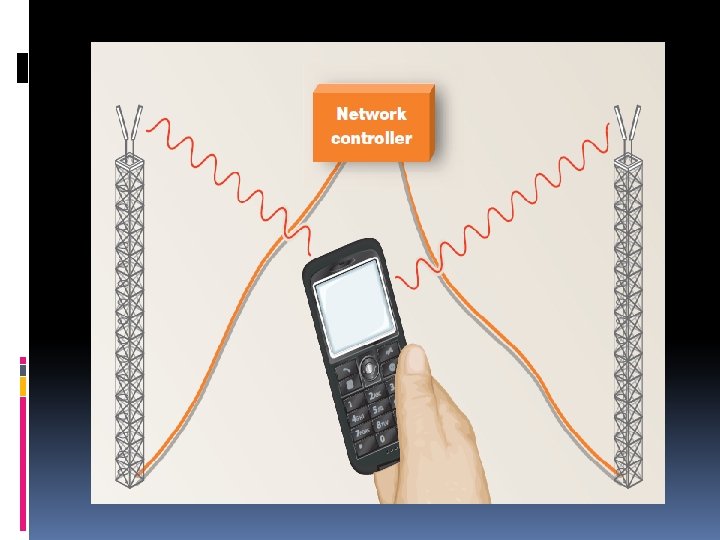
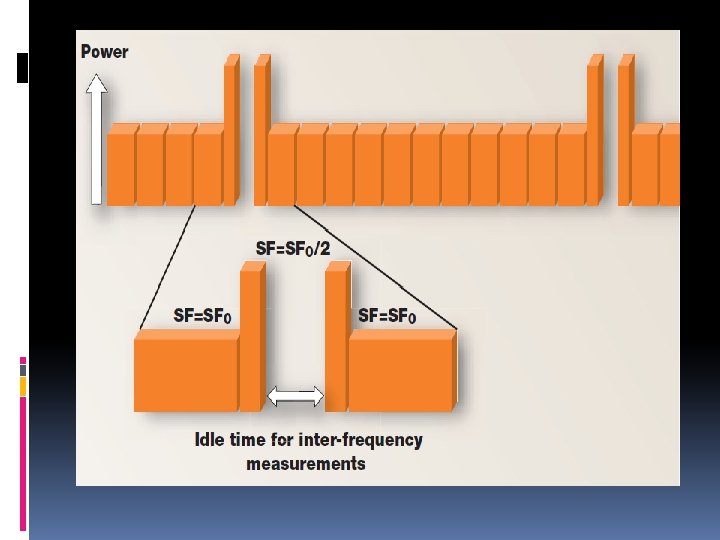
Contd… Ø Compressed mode Mobile devices dual mode Handover from WCDMA to GSM crucial Compressed mode, SF is changed and compress the transmitting and receiving information for a short time span. Remaining time for measuring other frequencies. Measures sent to network
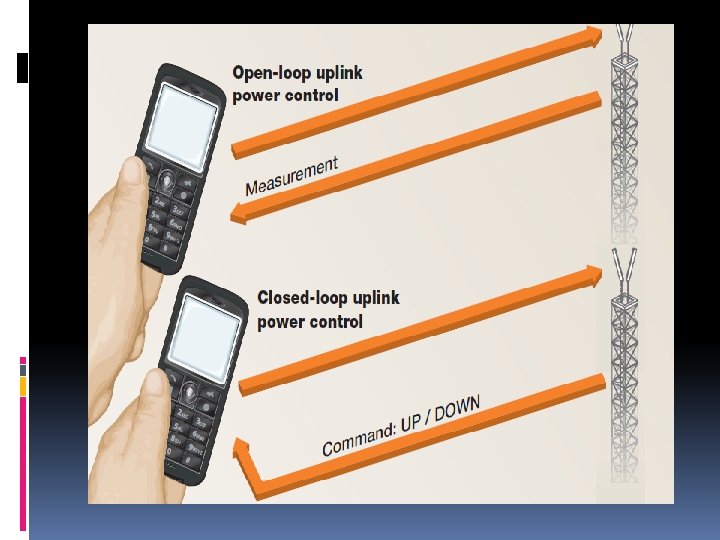
Contd… Ø Uplink Power Control Due to near-far problem Power control for uplink needed Open loop and Closed loop is used with update rate of 1500 Mhz. 2 G systems use update rate of 800 Mhz
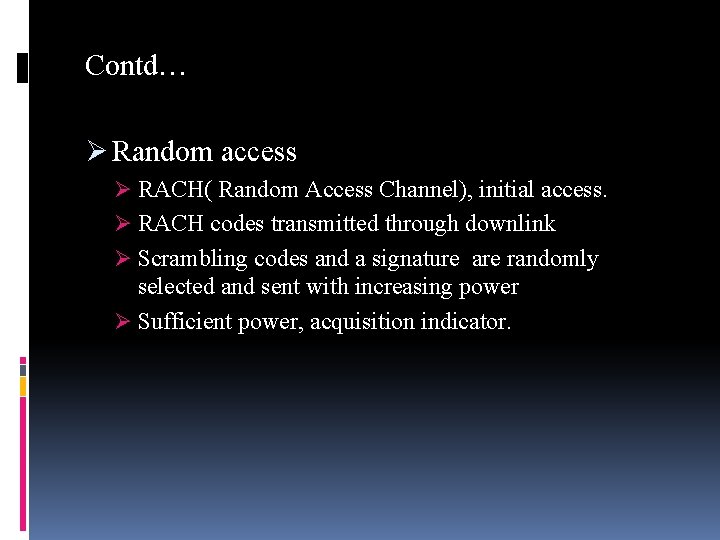
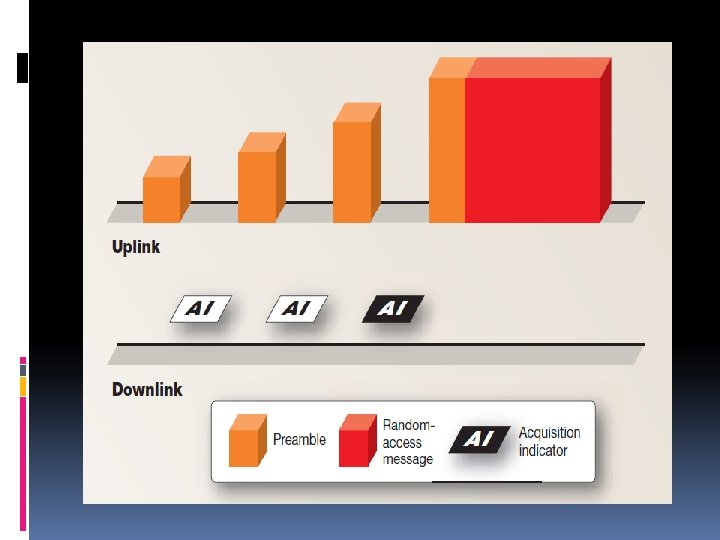
Contd… Ø Random access Ø RACH( Random Access Channel), initial access. Ø RACH codes transmitted through downlink Ø Scrambling codes and a signature are randomly selected and sent with increasing power Ø Sufficient power, acquisition indicator.
Contd… Ø Coherent Uplink Detection Ø Used for data reception. “Pilot symbols” used in Uplink and Downlink. Ø CDMA 2000 adopted these Pilot symbols Ø OVSF Codes Ø higher flexible bearer system to send all kinds of data Ø OVSF (Orthogonal Variable Spreading Factor) codes, formed form code tree principle. Ø Reduces interference, minimizes crosstalk Ø Data Rate Indication Ø TFCI (Transport Format Combination Indicator) Ø Blind-rate detection
Contd… Ø Speech Codec Ø Speech signal transmitted efficiently with high capacity, speech codec required Ø 12. 2 kbps AMR codec used Ø High-speed Packet Data Ø HSPA (High-Speed Packet Access) an extension of W-CDMA Ø Enhanced data rates up to 100 Mbps Ø These are the 4 schemes used in HSPA shared channel with channel dependent scheduling, fast link adaption, hybrid ARQ with sort combining, a short TTI are used.
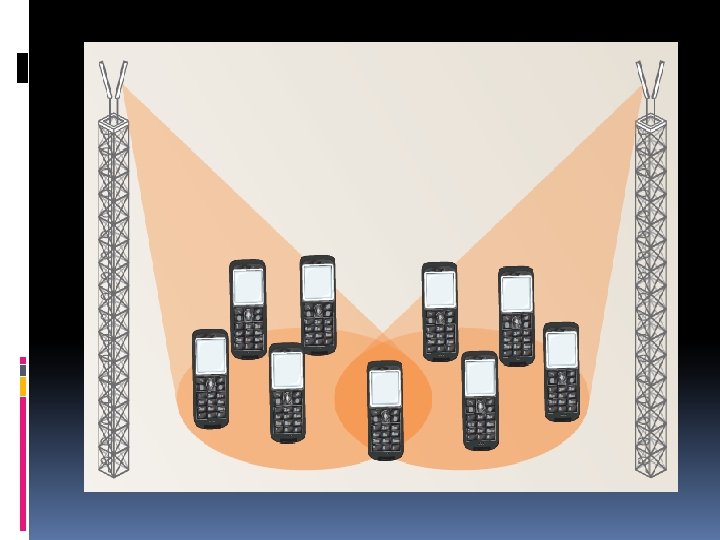
Contd… Ø Broadcast and Multi cast Services Ø MBMS (Multimedia Broadcast and Multicast Service) Ø The user residing at the cell edge, signal from adjacent base station is used. Downlink soft handover used. Ø Increase in data rates and coverage Ø W-CDMA uses same carrier for MBMS where CDMA 2000 uses separate carrier and separate receiver
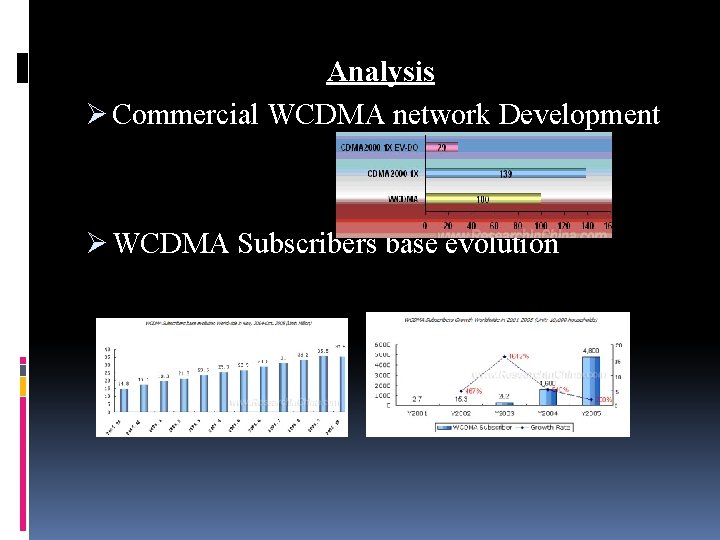
Analysis Ø Commercial WCDMA network Development Ø WCDMA Subscribers base evolution
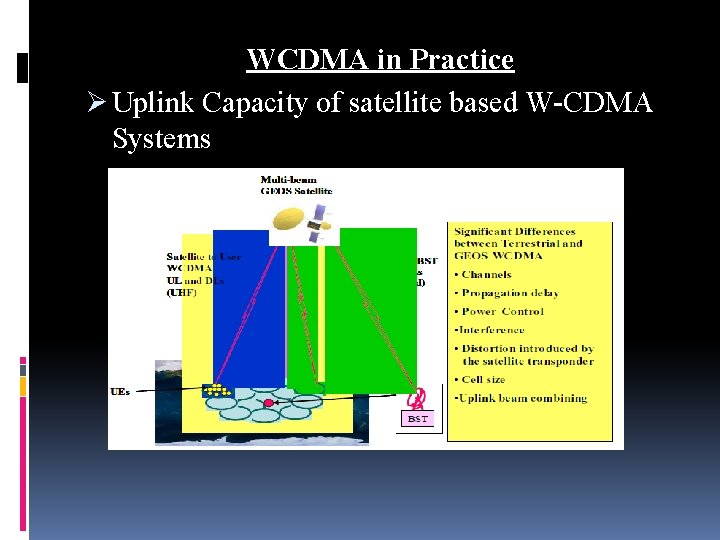
WCDMA in Practice Ø Uplink Capacity of satellite based W-CDMA Systems
Contd… Ø The commercial and military operations now a days using satellite based WCDMA systems. Ø The main factors to be considered are Uplink and Downlink Capacity. Ø There are 2 types of WCDMA used in this system. Terrestrial WCDMA and GEOS( Geosynchronous) WCDMA.
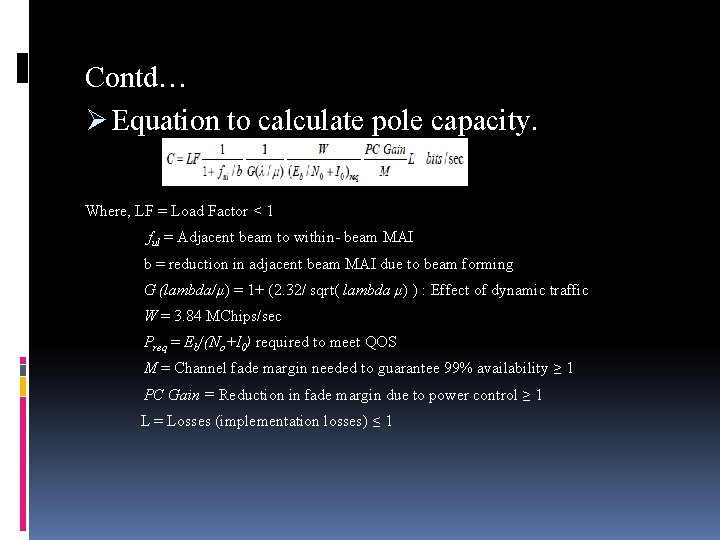
Contd… Ø Equation to calculate pole capacity. Where, LF = Load Factor < 1 ful = Adjacent beam to within- beam MAI b = reduction in adjacent beam MAI due to beam forming G (lambda/μ) = 1+ (2. 32/ sqrt( lambda μ) ) : Effect of dynamic traffic W = 3. 84 MChips/sec Preq = Eb/(No+I 0) required to meet QOS M = Channel fade margin needed to guarantee 99% availability ≥ 1 PC Gain = Reduction in fade margin due to power control ≥ 1 L = Losses (implementation losses) ≤ 1
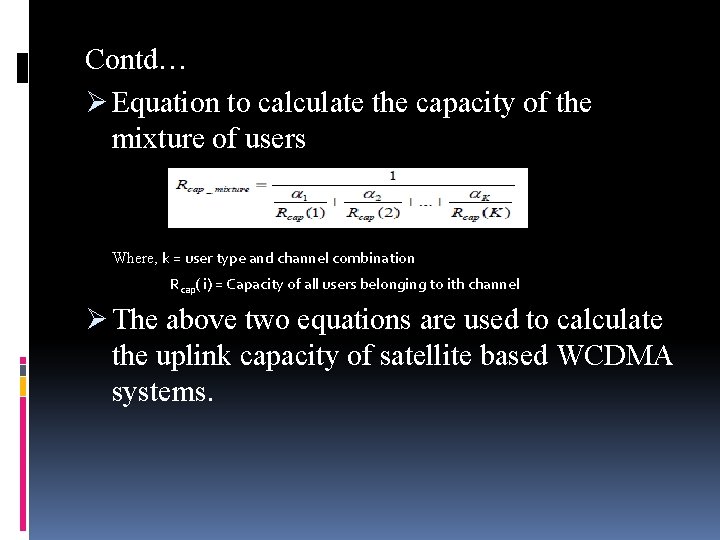
Contd… Ø Equation to calculate the capacity of the mixture of users Where, k = user type and channel combination Rcap( i) = Capacity of all users belonging to ith channel Ø The above two equations are used to calculate the uplink capacity of satellite based WCDMA systems.
Advantages Ø W-CDMA provides faster data connection ( 384 kbps and in future 10 Mbps Ø Can do all the activities that a normal phone does (SMS, MMS, INTERNET etc. ) and supports fast video streaming. Ø Simultaneous usage of all the activities even on call. Ø We will only be billed for the data transferred but not for the time connected.
Contd…. . Ø In W-CDMA , cells use single frequency with differentiated codes. Ø Cell planning is easier. Ø Uses asynchronous operation. Ø Longer battery life.
Limitations Ø Uses wide frequency band. Mechanism for maximum usage. Ø Cell planning is easier but it should be done carefully.
Conclusion Ø Drastic change in cellular technology Ø HSPDA ( High Speed Downlink Packet Access). Extension of UMTS. Ø W-CDMA used in almost every 3 G mobile. Ø Research on 4 G started.
Literature Cited http: //scholar. lib. vt. edu/theses/available/etd-122199 -153028/unrestricted/fakhrul_thesis. pdf http: //www. comlab. hut. fi/opetus/238/lecture 4_Intro_to_WCDMA. pdf( intro to wcdma) http: //www. tech-faq. com/wcdma. shtml http: //0 el 70 beril. blogspot. com/2007/06/technical-features. html http: //www. ericsson. com/technology/whitepapers/innovations_in_wcdma. pdf http: //en. wikipedia. org/wiki/2 G http: //en. wikipedia. org/wiki/3 G http: //en. wikipedia. org/wiki/W-CDMA http: //www. umtsworld. com/technology/wcdma. htm http: //www. researchina. com/report/Telecommunications/470. html http: //delivery. acm. org/10. 1145/1300000/1292336/a 4 shanmugan. pdf? key 1=1292336&key 2=1523038221&coll=GUIDE&dl=GUIDE&CFID=13694613&CFTO KEN=23668837
Thank You…
- Slides: 30