
WBCs count Hemocytometer Hemocytometer Hemocytometer consists of 1

WBCs count

Hemocytometer Hemo-cyto-meter �������
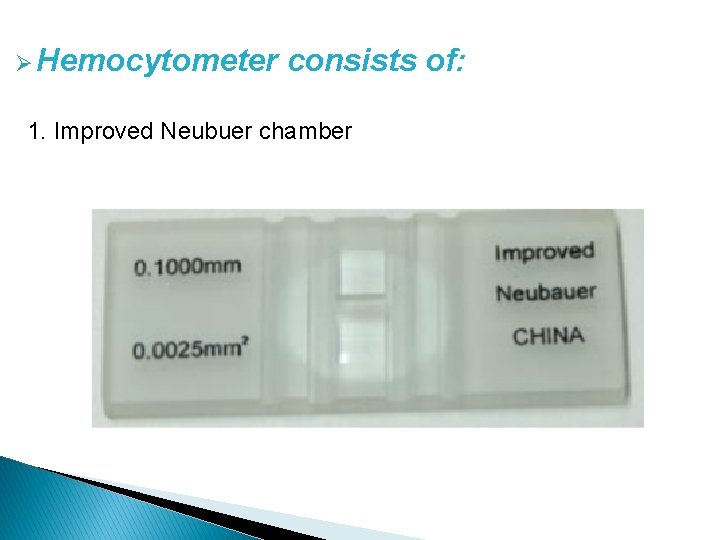
Ø Hemocytometer consists of: 1. Improved Neubuer chamber
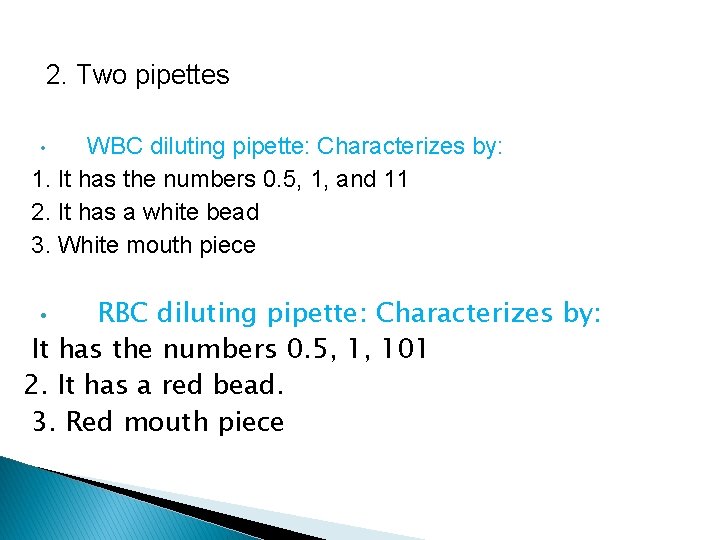
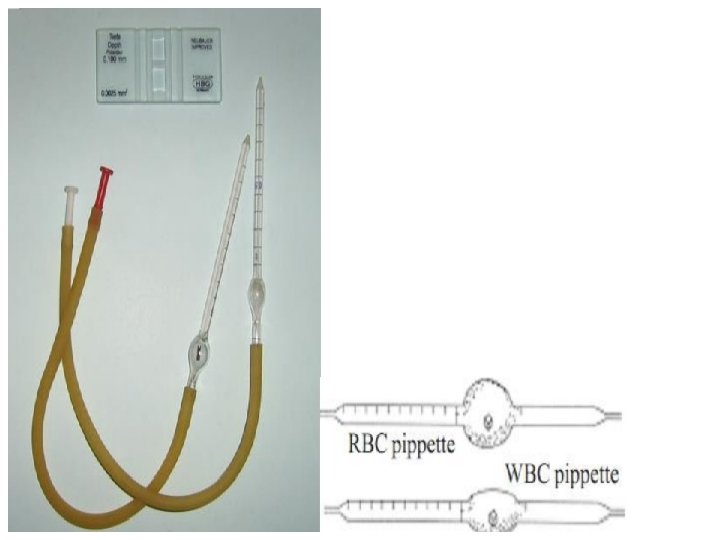
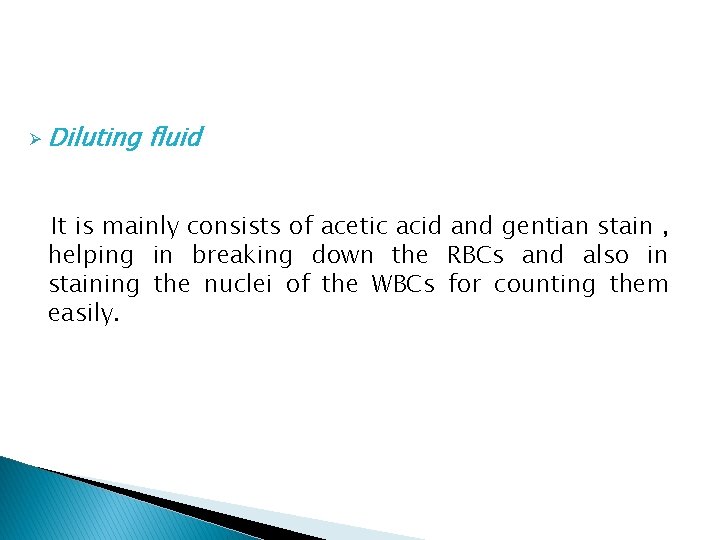
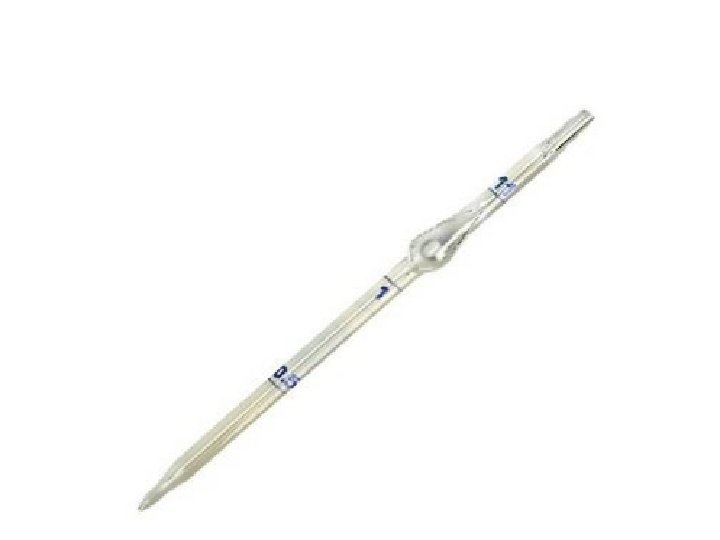
2. Two pipettes WBC diluting pipette: Characterizes by: 1. It has the numbers 0. 5, 1, and 11 2. It has a white bead 3. White mouth piece • RBC diluting pipette: Characterizes by: It has the numbers 0. 5, 1, 101 2. It has a red bead. 3. Red mouth piece •
Ø Diluting fluid It is mainly consists of acetic acid and gentian stain , helping in breaking down the RBCs and also in staining the nuclei of the WBCs for counting them easily.
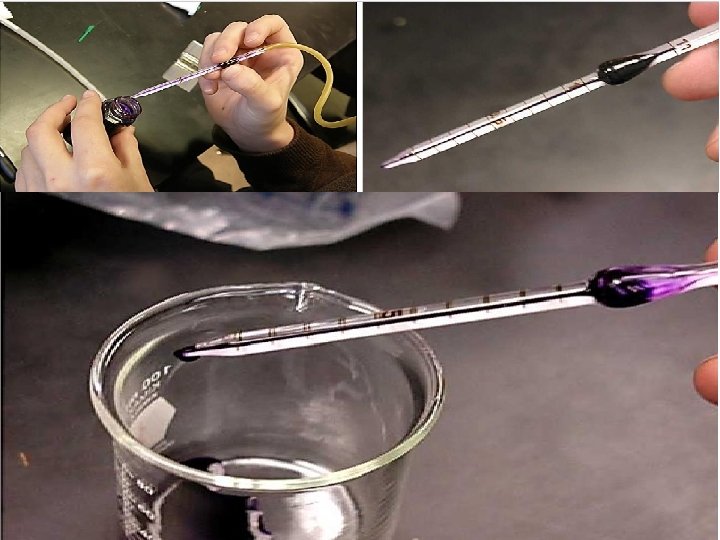
� Procedures: 1. Using dilution pipit with the WHITE mixer, draw up to the 0. 5 mark. Do not allow blood to congeal in pipette. Haemocytometer. 2. Immediately draw diluting fluid to the "11" mark while rotating the pipette between the thumb and forefinger to mix the specimen and diluent. Hold the pipette upright to prevent air bubbles in the bulb. 3. Mix the contents of the pipette for 3 -5 minutes to ensure even distribution of cells. Expel unmixed and relatively cellfree fluid from the capillary portion of the pipette (usually 4 drops).
4. Place the forefinger over the top (short end) of the pipette, hold the pipette at a 45 angle, and touch the pipette tip to the junction of the cover glass and the counting chamber. Allow the mixture to flow under the cover glass until the chamber of the hemacytometer is completely charged. 5. Allow the cells to settle for about 3 minutes. 6. Count the white cells in the four large squares of the WBCs area on the neubuer chamber.
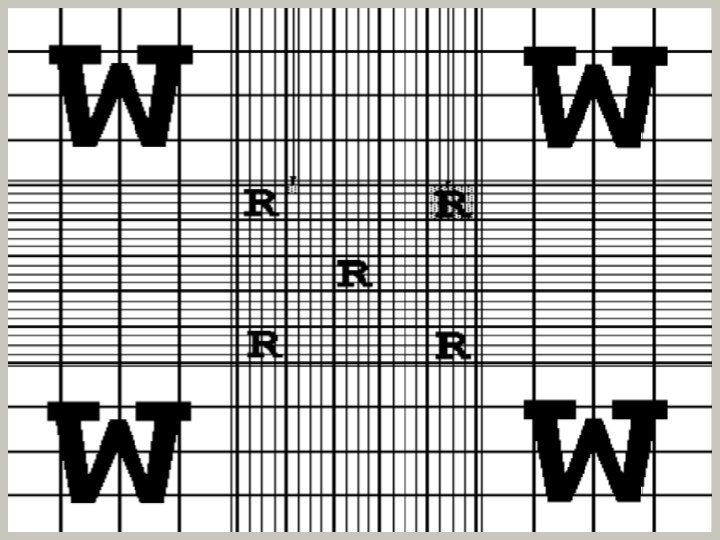
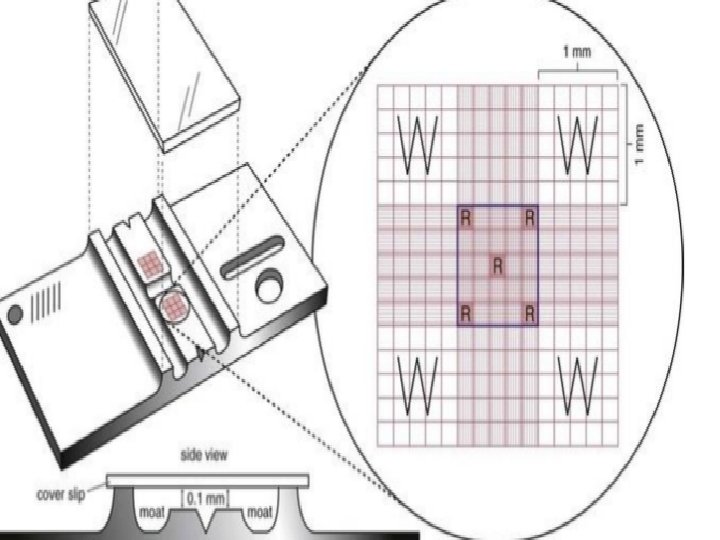
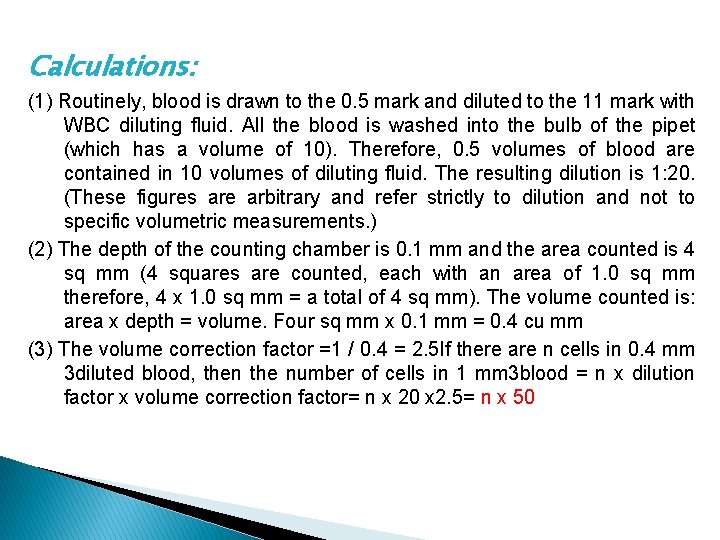
Calculations: (1) Routinely, blood is drawn to the 0. 5 mark and diluted to the 11 mark with WBC diluting fluid. All the blood is washed into the bulb of the pipet (which has a volume of 10). Therefore, 0. 5 volumes of blood are contained in 10 volumes of diluting fluid. The resulting dilution is 1: 20. (These figures are arbitrary and refer strictly to dilution and not to specific volumetric measurements. ) (2) The depth of the counting chamber is 0. 1 mm and the area counted is 4 sq mm (4 squares are counted, each with an area of 1. 0 sq mm therefore, 4 x 1. 0 sq mm = a total of 4 sq mm). The volume counted is: area x depth = volume. Four sq mm x 0. 1 mm = 0. 4 cu mm (3) The volume correction factor =1 / 0. 4 = 2. 5 If there are n cells in 0. 4 mm 3 diluted blood, then the number of cells in 1 mm 3 blood = n x dilution factor x volume correction factor= n x 20 x 2. 5= n x 50
- Slides: 13