
Waves Radioactive sources Physics 1 GCSE Science A
- Slides: 10
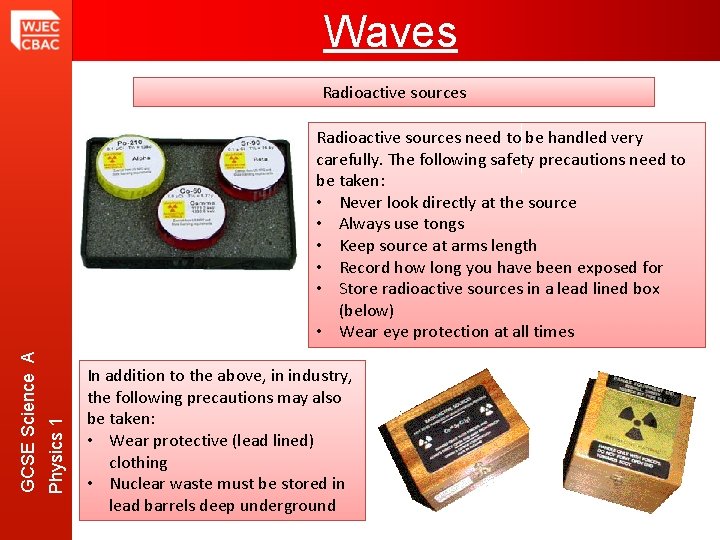
Waves Radioactive sources Physics 1 GCSE Science A Radioactive sources need to be handled very carefully. The following safety precautions need to be taken: • Never look directly at the source • Always use tongs • Keep source at arms length • Record how long you have been exposed for • Store radioactive sources in a lead lined box (below) • Wear eye protection at all times In addition to the above, in industry, the following precautions may also be taken: • Wear protective (lead lined) clothing • Nuclear waste must be stored in lead barrels deep underground
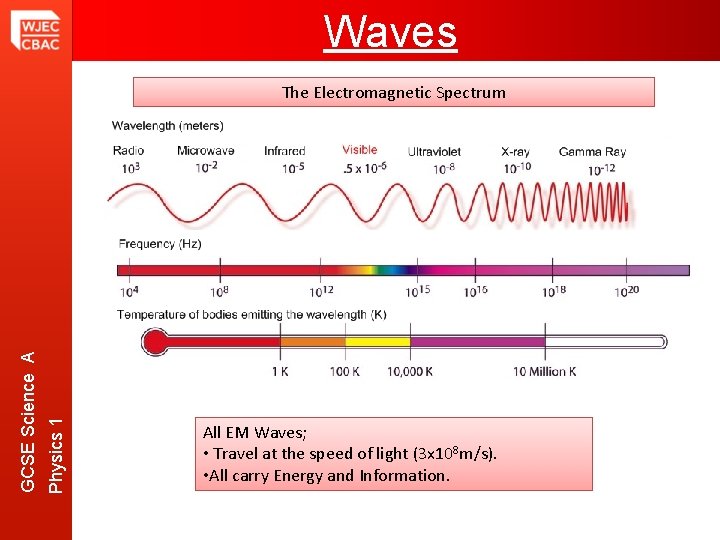
Waves Physics 1 GCSE Science A The Electromagnetic Spectrum All EM Waves; • Travel at the speed of light (3 x 10⁸ m/s). • All carry Energy and Information.
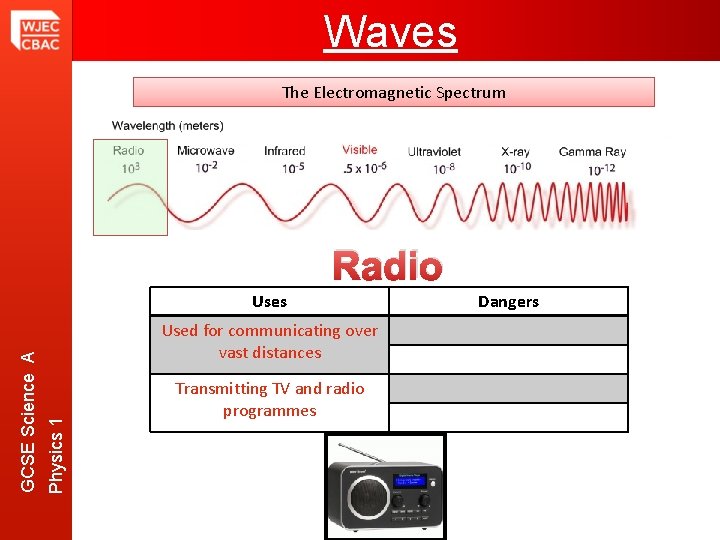
Waves The Electromagnetic Spectrum Radio Used for communicating over vast distances Physics 1 GCSE Science A Uses Transmitting TV and radio programmes Dangers
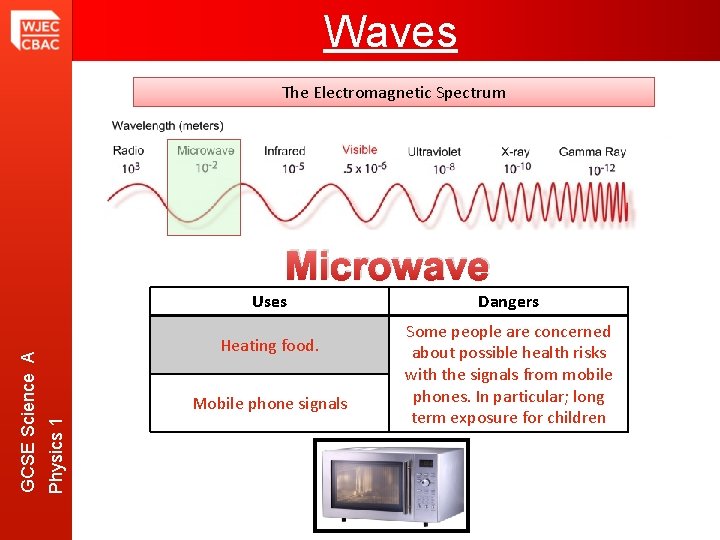
Waves The Electromagnetic Spectrum Microwave Heating food. Mobile phone signals Physics 1 GCSE Science A Uses Dangers Some people are concerned about possible health risks with the signals from mobile phones. In particular; long term exposure for children
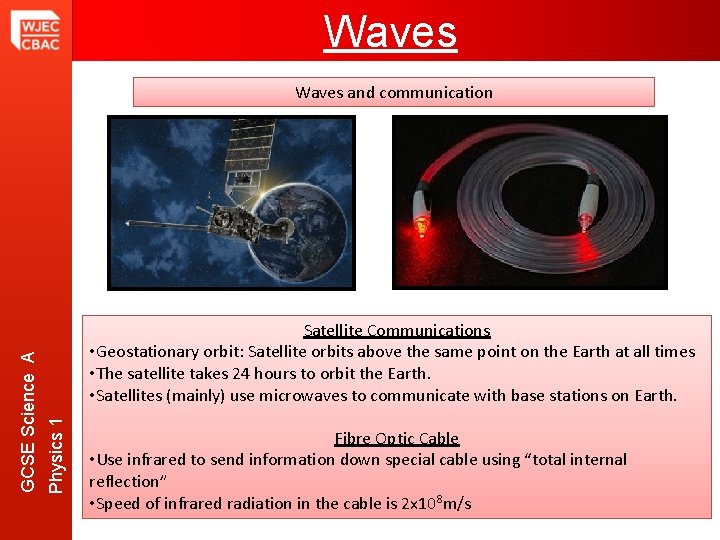
Waves Satellite Communications • Geostationary orbit: Satellite orbits above the same point on the Earth at all times • The satellite takes 24 hours to orbit the Earth. • Satellites (mainly) use microwaves to communicate with base stations on Earth. Physics 1 GCSE Science A Waves and communication Fibre Optic Cable • Use infrared to send information down special cable using “total internal reflection” • Speed of infrared radiation in the cable is 2 x 10⁸ m/s
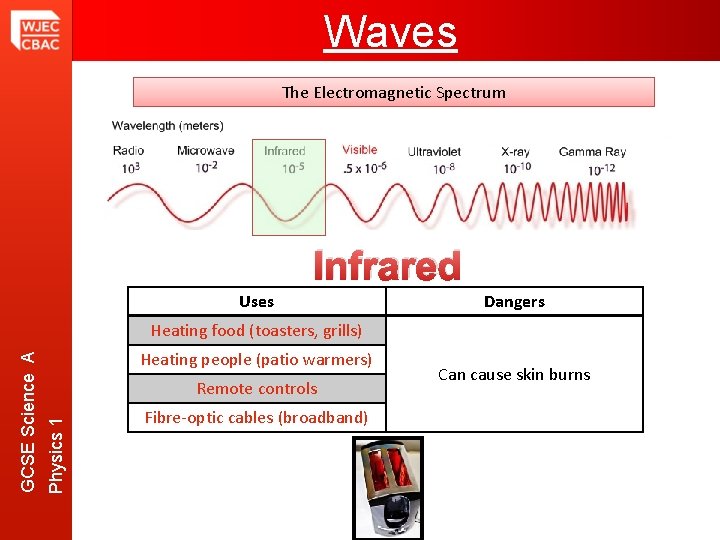
Waves The Electromagnetic Spectrum Infrared Uses Dangers Heating people (patio warmers) Remote controls Physics 1 GCSE Science A Heating food (toasters, grills) Fibre-optic cables (broadband) Can cause skin burns
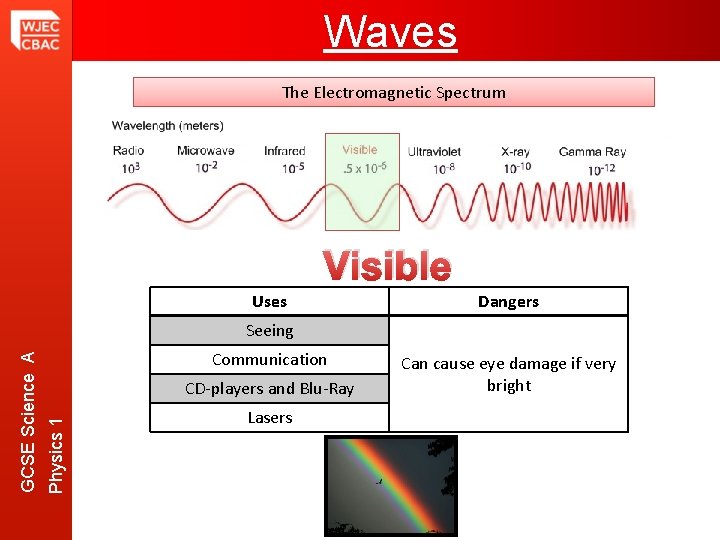
Waves The Electromagnetic Spectrum Visible Uses Dangers Communication CD-players and Blu-Ray Physics 1 GCSE Science A Seeing Lasers Can cause eye damage if very bright
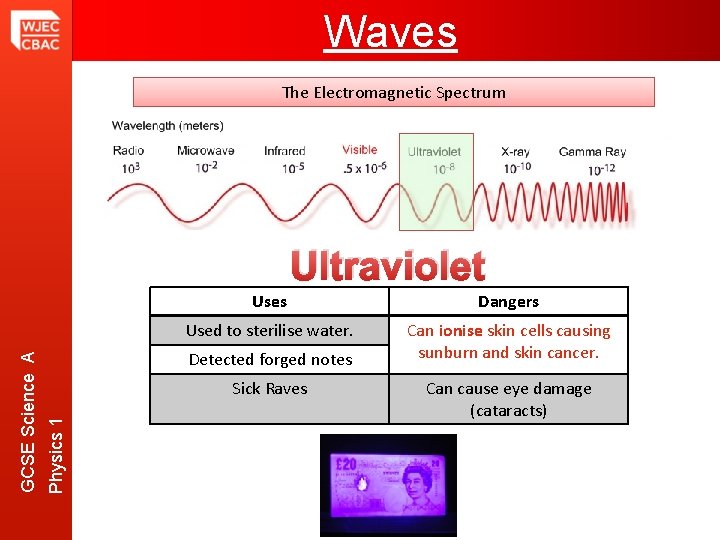
Waves The Electromagnetic Spectrum Uses Dangers Used to sterilise water. Can ionise skin cells causing sunburn and skin cancer. Detected forged notes Sick Raves Physics 1 GCSE Science A Ultraviolet Can cause eye damage (cataracts)
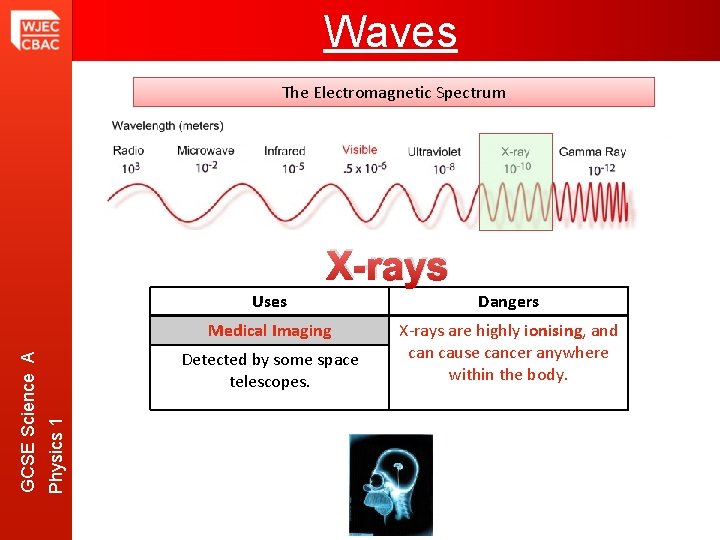
Waves The Electromagnetic Spectrum Uses Dangers Medical Imaging X-rays are highly ionising, and can cause cancer anywhere within the body. Detected by some space telescopes. Physics 1 GCSE Science A X-rays
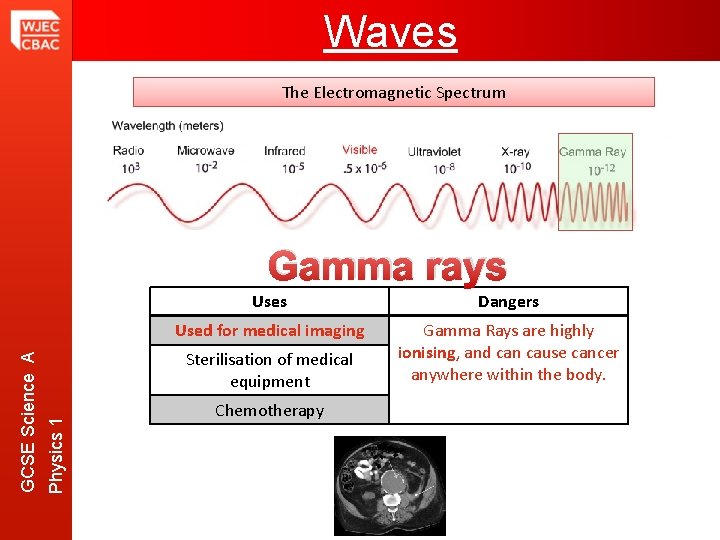
Waves The Electromagnetic Spectrum Uses Dangers Used for medical imaging Gamma Rays are highly ionising, and can cause cancer anywhere within the body. Sterilisation of medical equipment Physics 1 GCSE Science A Gamma rays Chemotherapy