
Waves of Immigration Urbanization THE WHITE GRAY CITY
Waves of Immigration & Urbanization
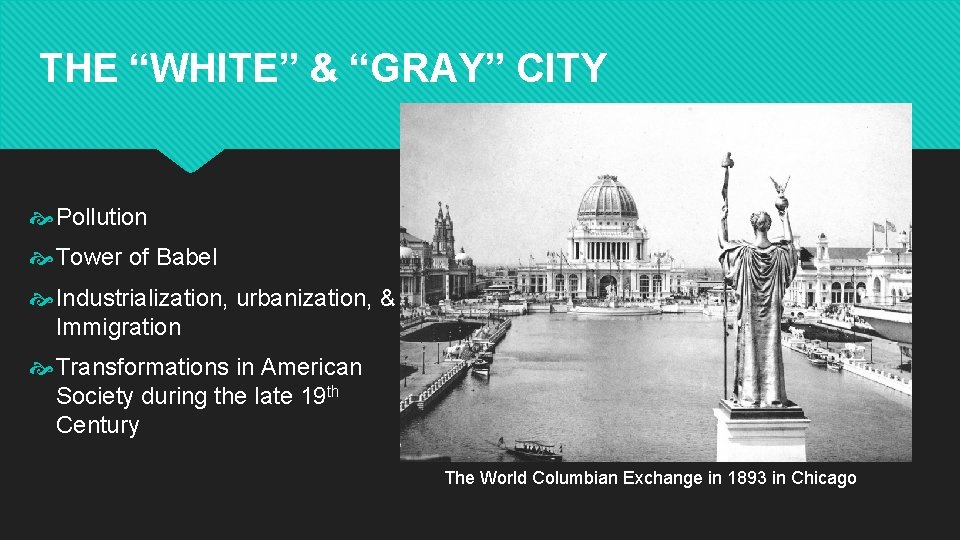
THE “WHITE” & “GRAY” CITY Pollution Tower of Babel Industrialization, urbanization, & Immigration Transformations in American Society during the late 19 th Century The World Columbian Exchange in 1893 in Chicago
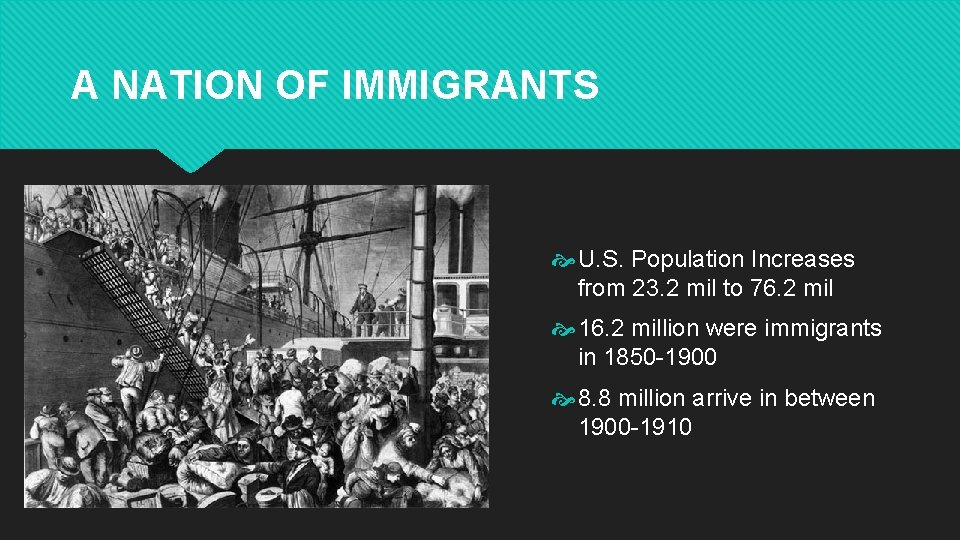
A NATION OF IMMIGRANTS U. S. Population Increases from 23. 2 mil to 76. 2 mil 16. 2 million were immigrants in 1850 -1900 8. 8 million arrive in between 1900 -1910
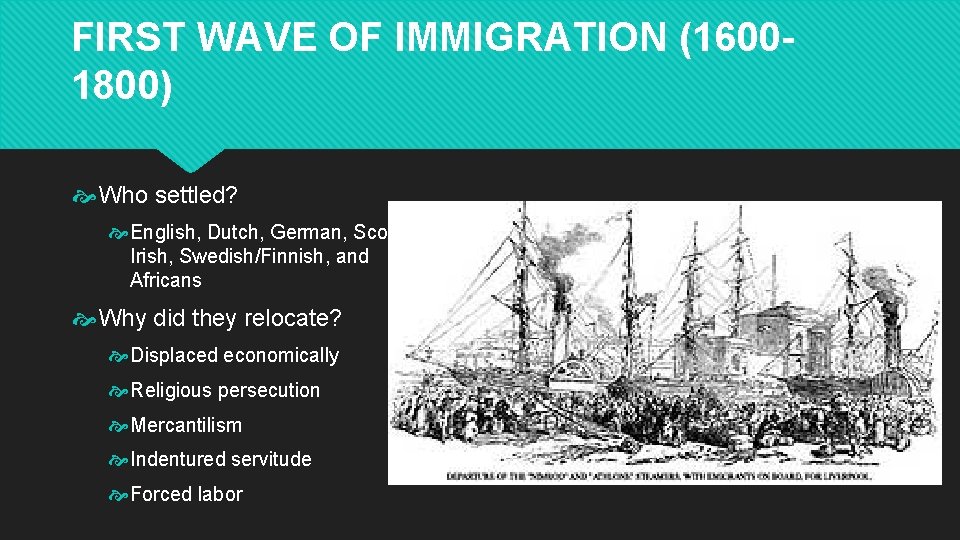
FIRST WAVE OF IMMIGRATION (16001800) Who settled? English, Dutch, German, Scot. Irish, Swedish/Finnish, and Africans Why did they relocate? Displaced economically Religious persecution Mercantilism Indentured servitude Forced labor
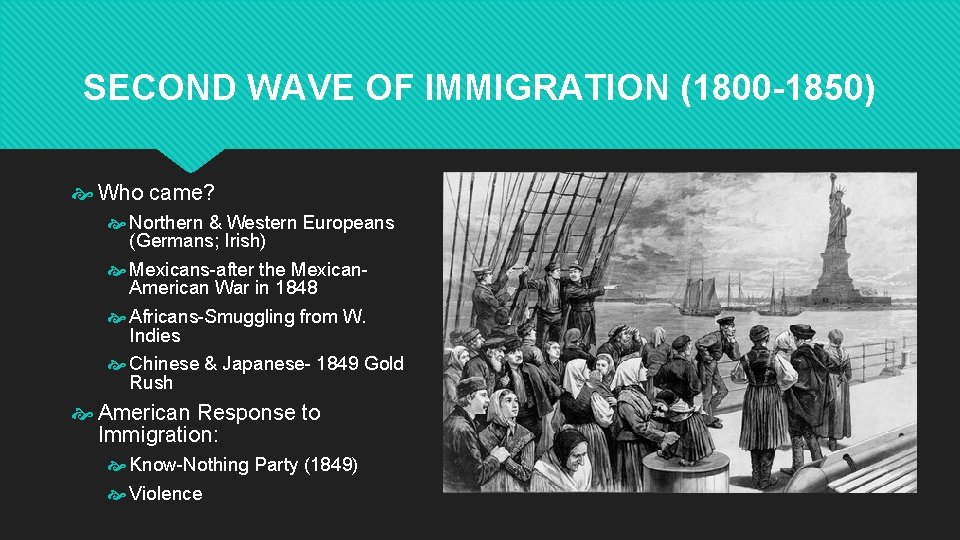
SECOND WAVE OF IMMIGRATION (1800 -1850) Who came? Northern & Western Europeans (Germans; Irish) Mexicans-after the Mexican. American War in 1848 Africans-Smuggling from W. Indies Chinese & Japanese- 1849 Gold Rush American Response to Immigration: Know-Nothing Party (1849) Violence
PUSH & PULL FACTORS FOR 2 ND WAVE IMMIGRANTS European Immigrants Push Poverty of displaced farmers Overcrowding & high unemployment Religious persecution-Jews from Russia Pull Reputation of religious & political freedom Economic opportunities Abundance of industrial jobs Steamships & cheap passage Chinese & Japanese Immigrants Push Escaping economic hardships of rural China Political corruption Pull Reputation of religious & political freedom Economic opportunities Abundance of industrial jobs Steamships & cheap passage
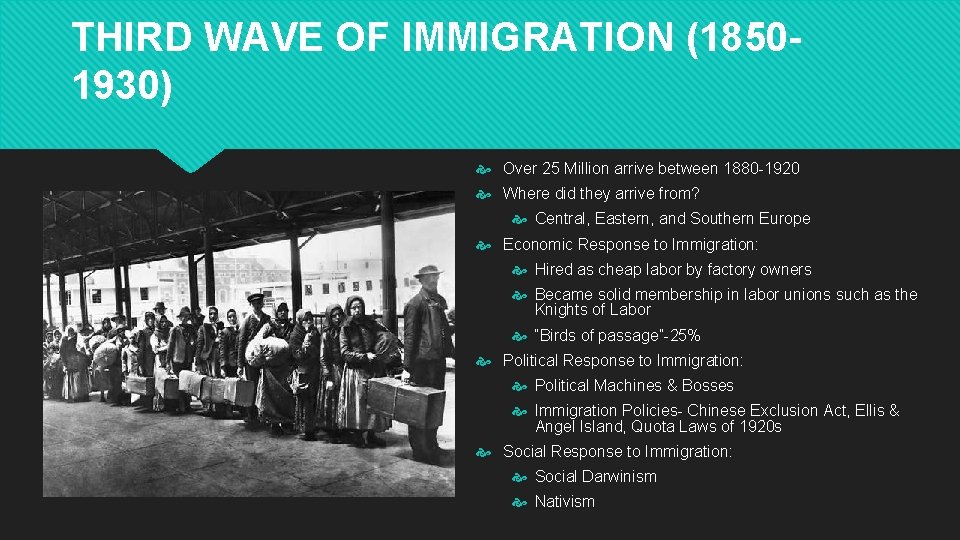
THIRD WAVE OF IMMIGRATION (18501930) Over 25 Million arrive between 1880 -1920 Where did they arrive from? Central, Eastern, and Southern Europe Economic Response to Immigration: Hired as cheap labor by factory owners Became solid membership in labor unions such as the Knights of Labor “Birds of passage”-25% Political Response to Immigration: Political Machines & Bosses Immigration Policies- Chinese Exclusion Act, Ellis & Angel Island, Quota Laws of 1920 s Social Response to Immigration: Social Darwinism Nativism
“OLD” V. “NEW” IMMIGRANTS OLD IMMIGRANTS (2 nd Wave) From Northern & Western Europe British Isles, Germany, and Scandinavia Mostly Protestant with a few Irish & German Catholics Spoke English High levels of literacy Occupational Skills NEW IMMIGRANTS (3 rd Wave) From Southern & Eastern Europe Italians, Greeks, Croats, Slovaks, Poles, & Russians Poor & Illiterate Unaccustomed to democracy Largely Roman Catholic, Greek Orthodox, Russian Orthodox, and Jewish Crowded into small ethnic neighborhoods
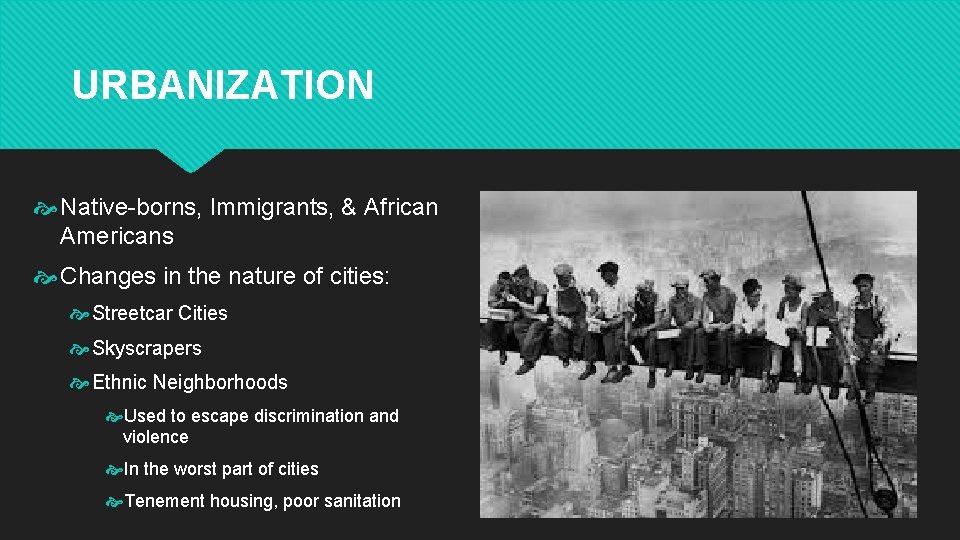
URBANIZATION Native-borns, Immigrants, & African Americans Changes in the nature of cities: Streetcar Cities Skyscrapers Ethnic Neighborhoods Used to escape discrimination and violence In the worst part of cities Tenement housing, poor sanitation
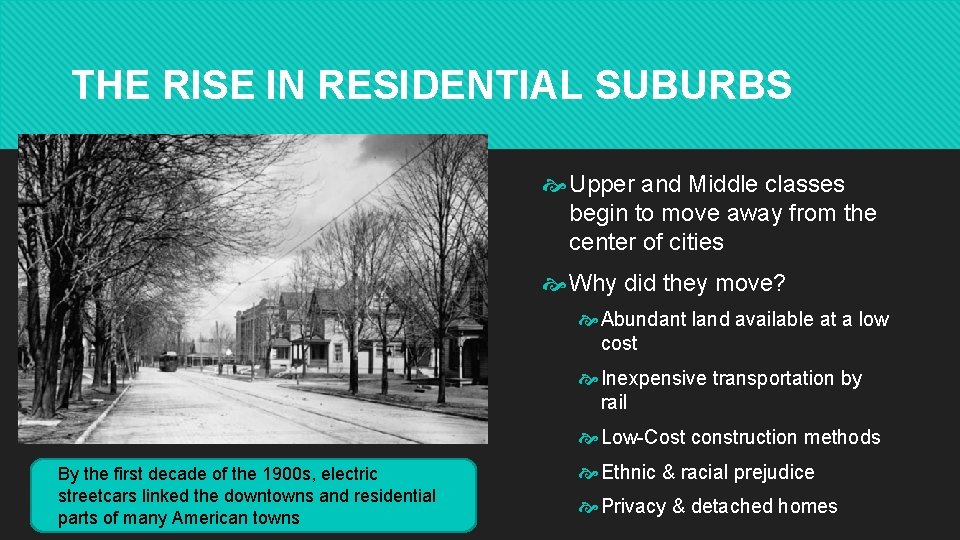
THE RISE IN RESIDENTIAL SUBURBS Upper and Middle classes begin to move away from the center of cities Why did they move? Abundant land available at a low cost Inexpensive transportation by rail Low-Cost construction methods By the first decade of the 1900 s, electric streetcars linked the downtowns and residential parts of many American towns Ethnic & racial prejudice Privacy & detached homes
- Slides: 10