
Waves Lesson 1 Properties of Waves Learning Objectives
Waves Lesson 1 – Properties of Waves Learning Objectives: 1. Recall that waves transfer energy. 2. Describe waves using the terms frequency, wavelength, and amplitude. 3. Compare and contrast transverse waves and longitudinal waves. 4. Give examples of both types of waves. 5. Use the equation for waves v = f x λ.

Video: Brainpop – Waves
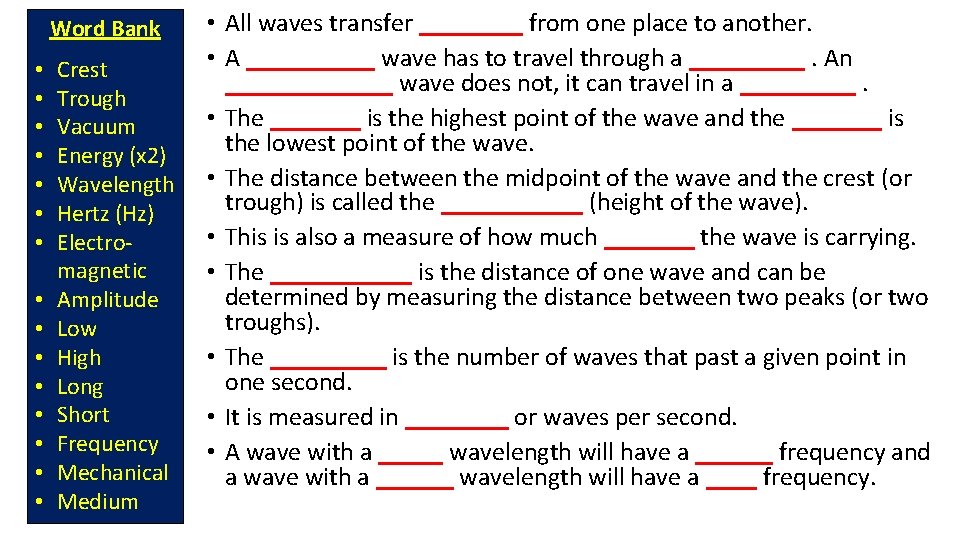
Word Bank • • • • Crest Trough Vacuum Energy (x 2) Wavelength Hertz (Hz) Electromagnetic Amplitude Low High Long Short Frequency Mechanical Medium • All waves transfer ____ from one place to another. • A _____ wave has to travel through a _____. An _______ wave does not, it can travel in a _____. • The _______ is the highest point of the wave and the _______ is the lowest point of the wave. • The distance between the midpoint of the wave and the crest (or trough) is called the ______ (height of the wave). • This is also a measure of how much _______ the wave is carrying. • The ______ is the distance of one wave and can be determined by measuring the distance between two peaks (or two troughs). • The _____ is the number of waves that past a given point in one second. • It is measured in ____ or waves per second. • A wave with a _____ wavelength will have a ______ frequency and a wave with a ______ wavelength will have a ____ frequency.
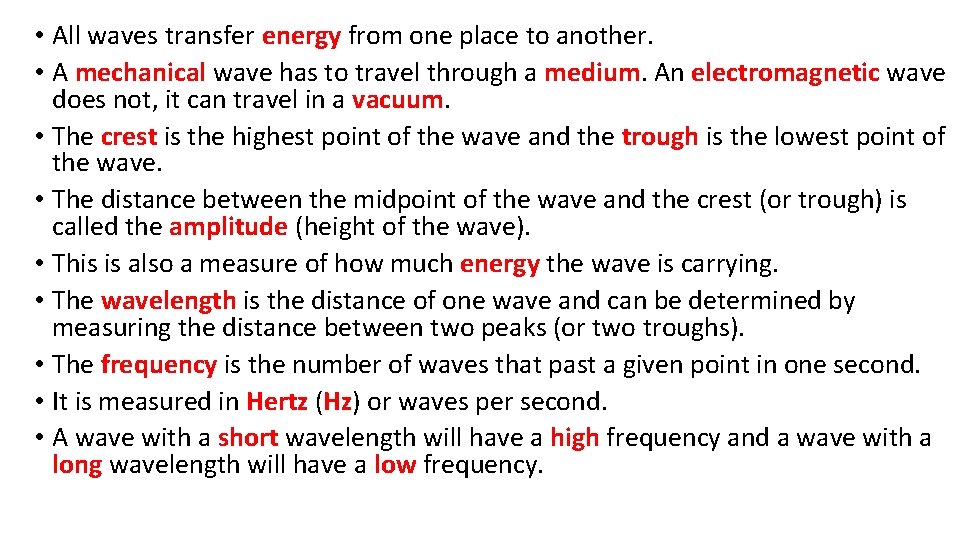
• All waves transfer energy from one place to another. • A mechanical wave has to travel through a medium. An electromagnetic wave does not, it can travel in a vacuum. • The crest is the highest point of the wave and the trough is the lowest point of the wave. • The distance between the midpoint of the wave and the crest (or trough) is called the amplitude (height of the wave). • This is also a measure of how much energy the wave is carrying. • The wavelength is the distance of one wave and can be determined by measuring the distance between two peaks (or two troughs). • The frequency is the number of waves that past a given point in one second. • It is measured in Hertz (Hz) or waves per second. • A wave with a short wavelength will have a high frequency and a wave with a long wavelength will have a low frequency.
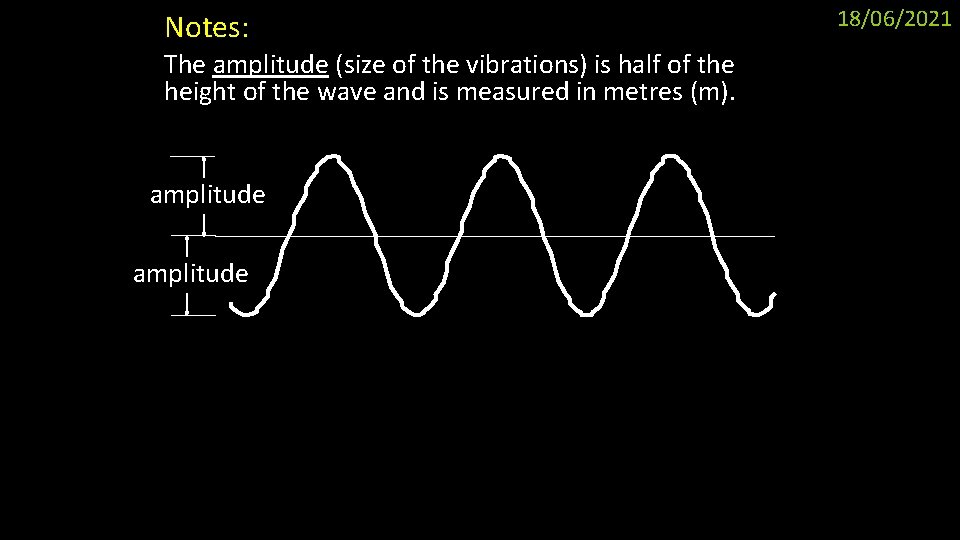
Notes: The amplitude (size of the vibrations) is half of the height of the wave and is measured in metres (m). amplitude 18/06/2021
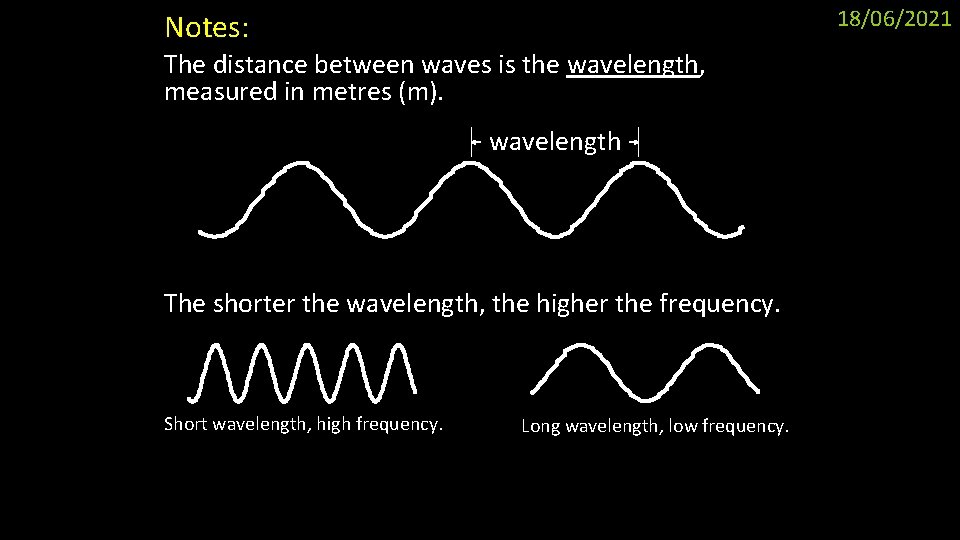
18/06/2021 Notes: The distance between waves is the wavelength, measured in metres (m). wavelength The shorter the wavelength, the higher the frequency. Short wavelength, high frequency. Long wavelength, low frequency.

18/06/2021 The frequency is the number of vibrations (number of waves) per second, measured in Hertz (Hz). Number of waves 1 Time (s) Frequency (Hz) 5 0. 2 A wave arrives at the beach every 5 s. What is the frequency of the waves?
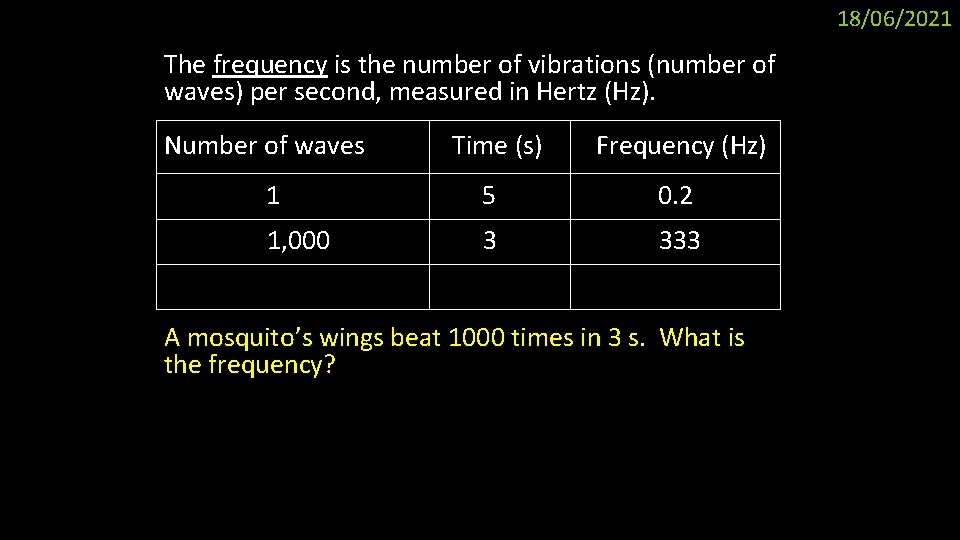
18/06/2021 The frequency is the number of vibrations (number of waves) per second, measured in Hertz (Hz). Number of waves Time (s) Frequency (Hz) 1 5 0. 2 1, 000 3 333 A mosquito’s wings beat 1000 times in 3 s. What is the frequency?
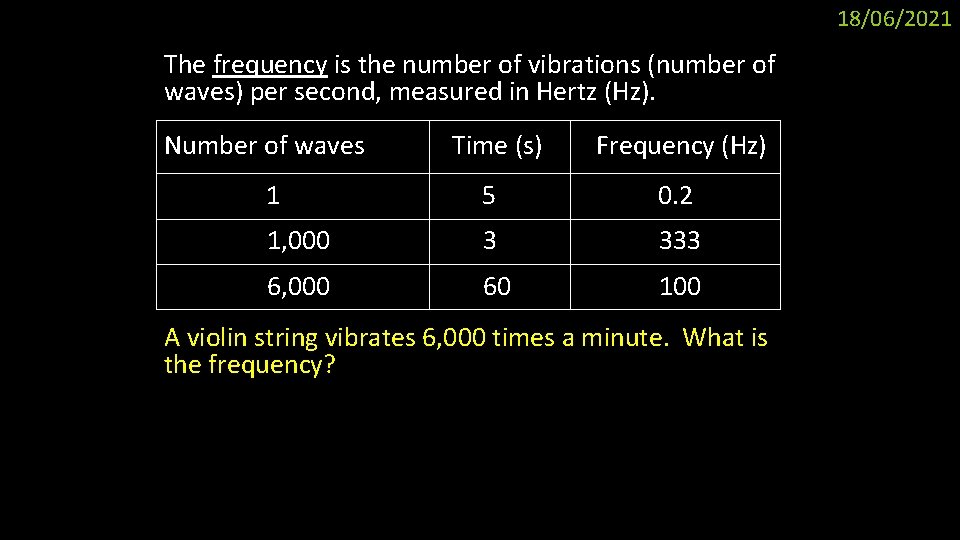
18/06/2021 The frequency is the number of vibrations (number of waves) per second, measured in Hertz (Hz). Number of waves Time (s) Frequency (Hz) 1 5 0. 2 1, 000 3 333 6, 000 60 100 A violin string vibrates 6, 000 times a minute. What is the frequency?
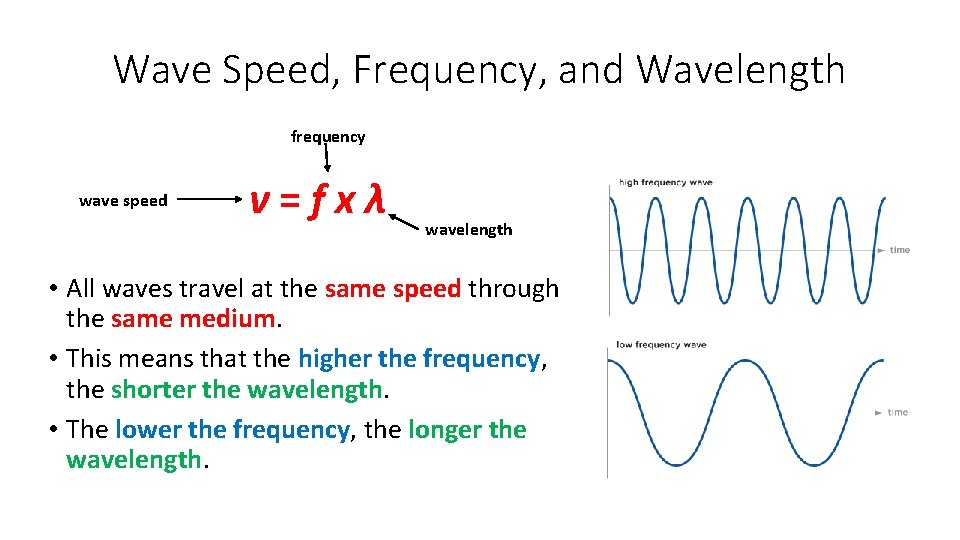
Wave Speed, Frequency, and Wavelength frequency wave speed v=fxλ wavelength • All waves travel at the same speed through the same medium. • This means that the higher the frequency, the shorter the wavelength. • The lower the frequency, the longer the wavelength.

Practice Problems
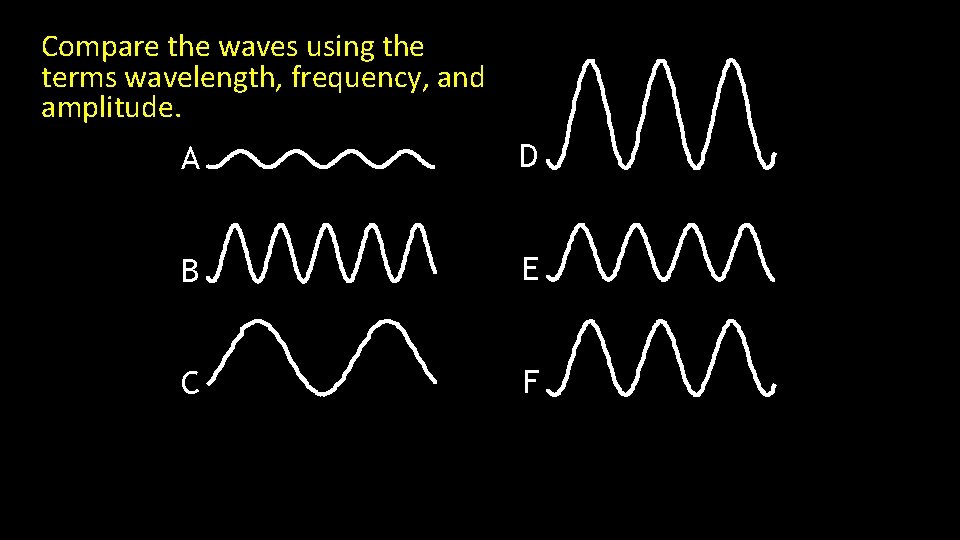
Compare the waves using the terms wavelength, frequency, and amplitude. A D B E C F
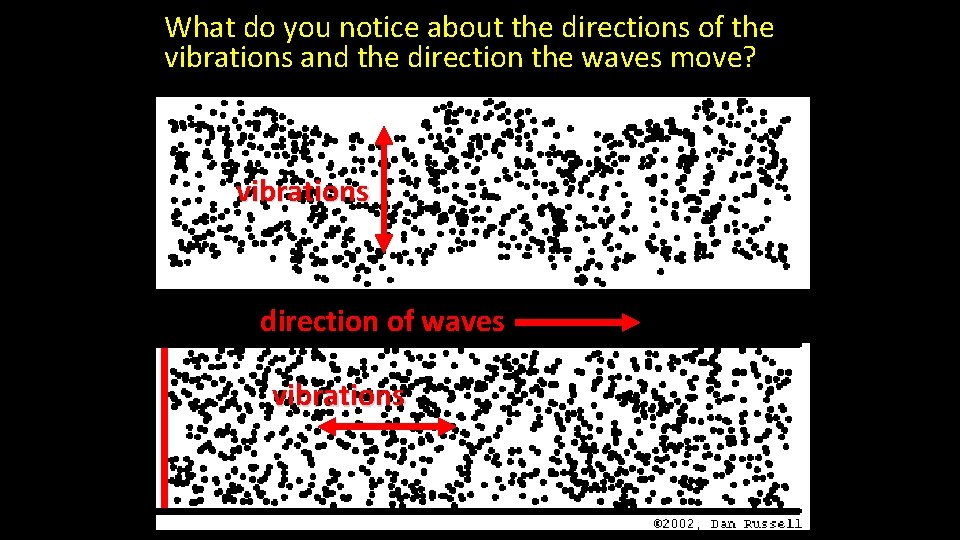
What do you notice about the directions of the vibrations and the direction the waves move? vibrations direction of waves vibrations
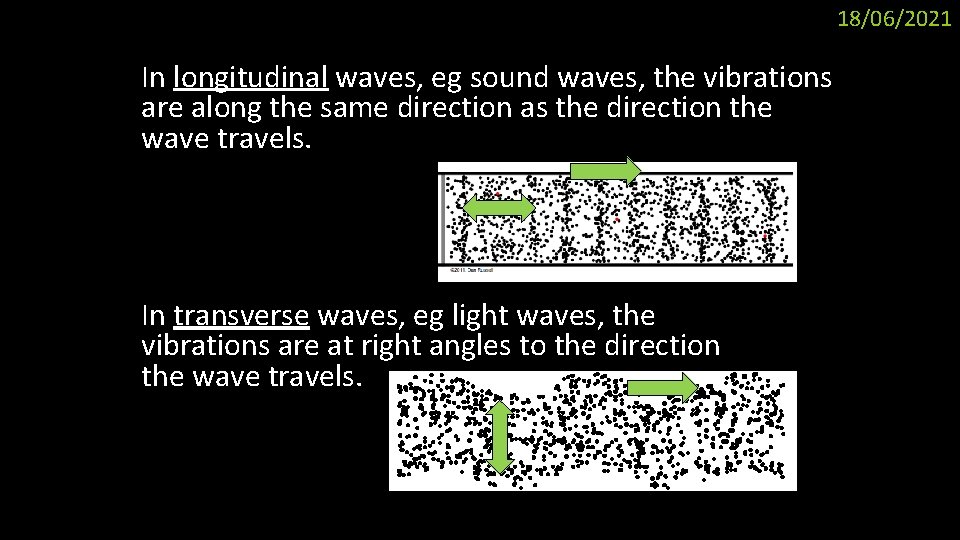
18/06/2021 In longitudinal waves, eg sound waves, the vibrations are along the same direction as the direction the wave travels. In transverse waves, eg light waves, the vibrations are at right angles to the direction the wave travels.
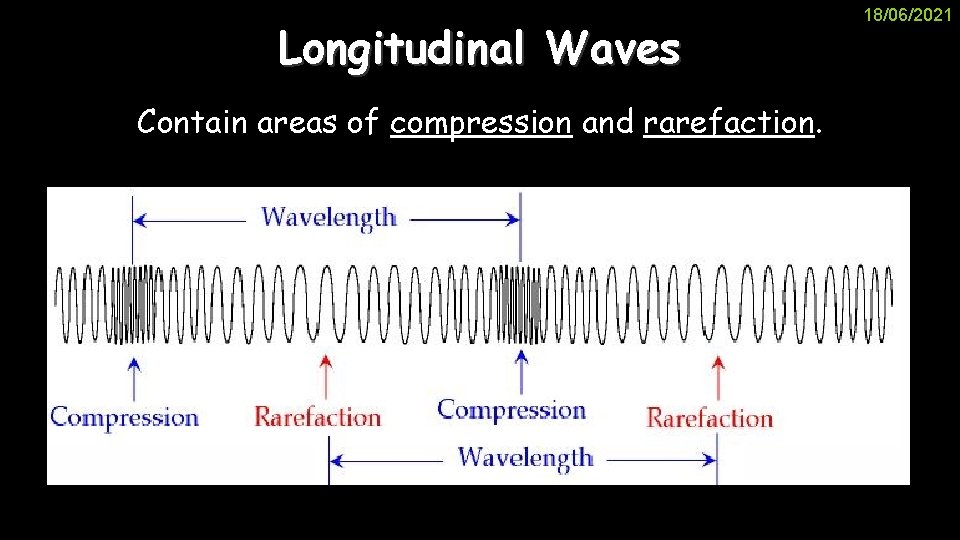
Longitudinal Waves Contain areas of compression and rarefaction. 18/06/2021
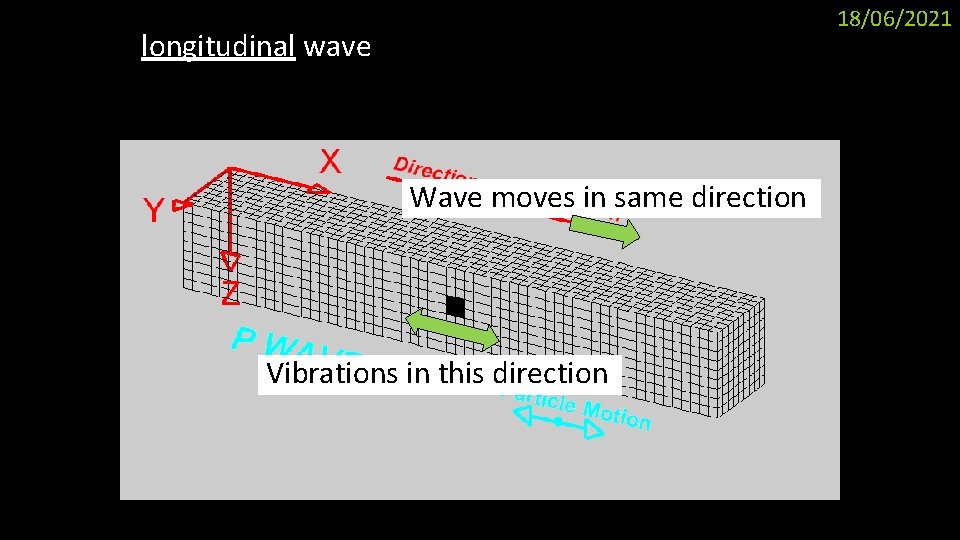
18/06/2021 longitudinal wave Wave moves in same direction Vibrations in this direction
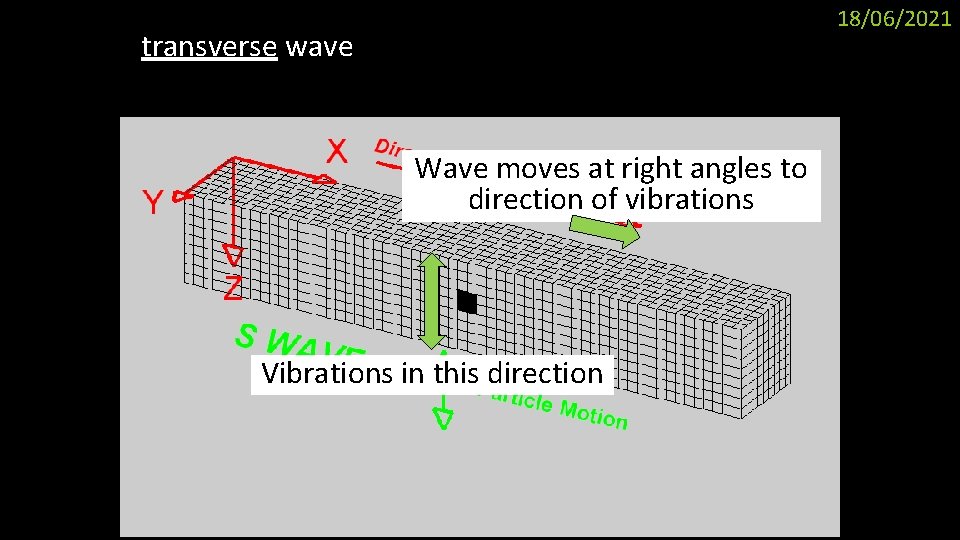
18/06/2021 transverse wave Wave moves at right angles to direction of vibrations Vibrations in this direction
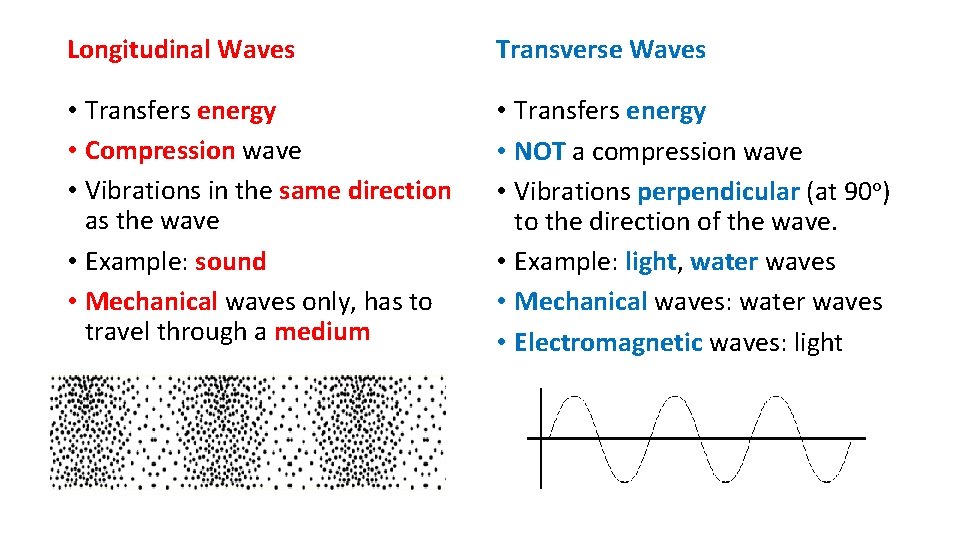
Longitudinal Waves Transverse Waves • Transfers energy • Compression wave • Vibrations in the same direction as the wave • Example: sound • Mechanical waves only, has to travel through a medium • Transfers energy • NOT a compression wave • Vibrations perpendicular (at 90 o) to the direction of the wave. • Example: light, water waves • Mechanical waves: water waves • Electromagnetic waves: light
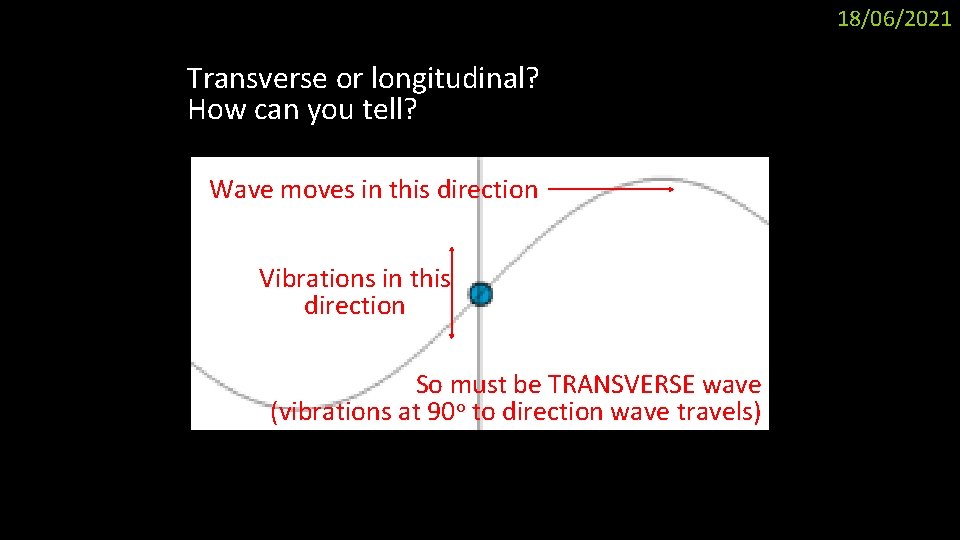
18/06/2021 Transverse or longitudinal? How can you tell? Wave moves in this direction Vibrations in this direction So must be TRANSVERSE wave (vibrations at 90 o to direction wave travels)
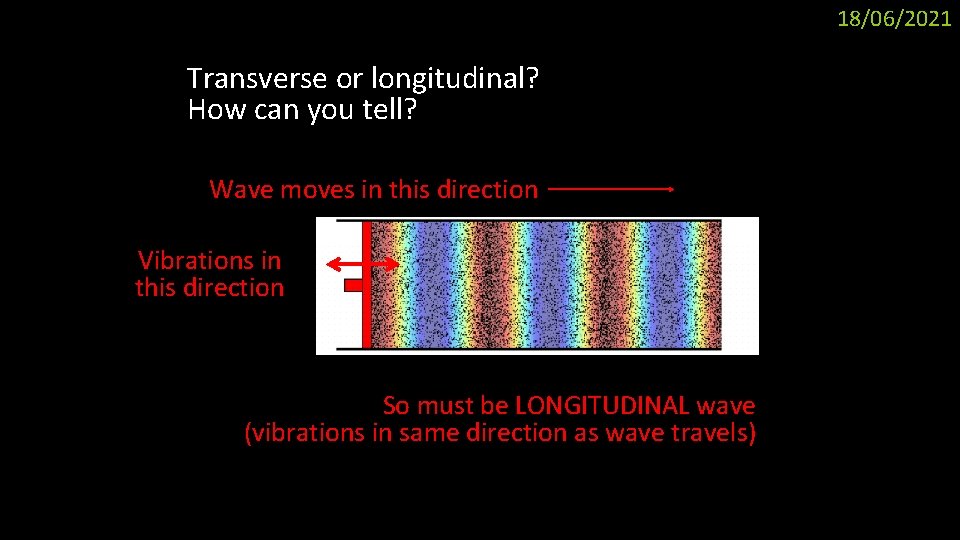
18/06/2021 Transverse or longitudinal? How can you tell? Wave moves in this direction Vibrations in this direction So must be LONGITUDINAL wave (vibrations in same direction as wave travels)
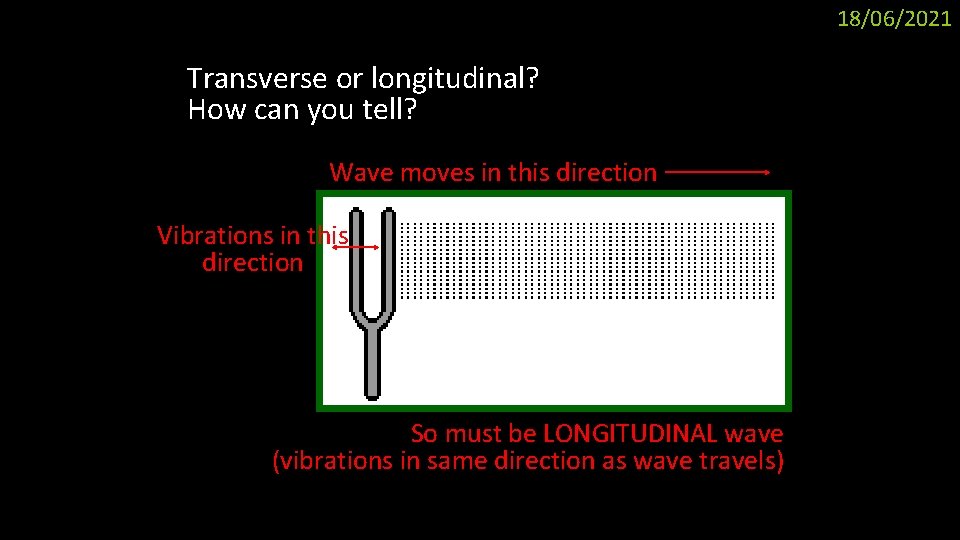
18/06/2021 Transverse or longitudinal? How can you tell? Wave moves in this direction Vibrations in this direction So must be LONGITUDINAL wave (vibrations in same direction as wave travels)
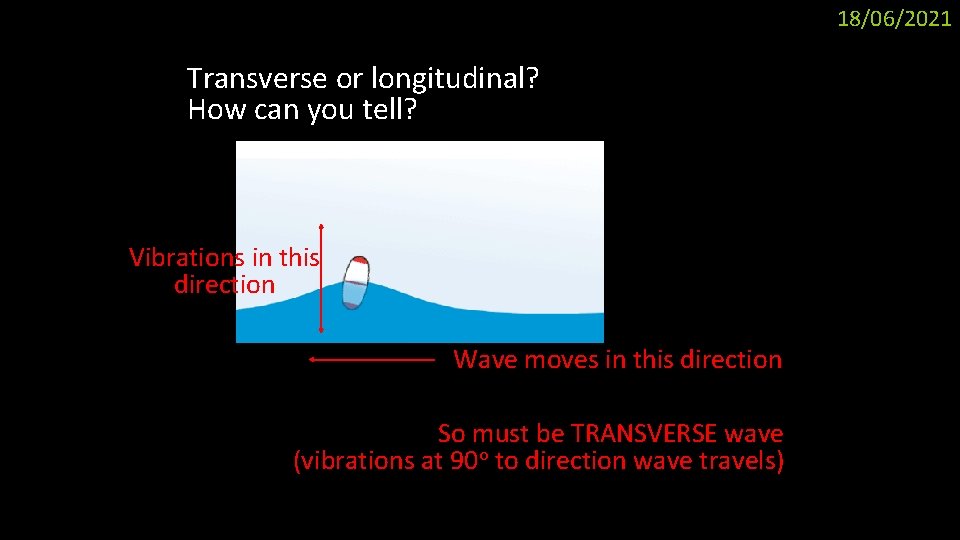
18/06/2021 Transverse or longitudinal? How can you tell? Vibrations in this direction Wave moves in this direction So must be TRANSVERSE wave (vibrations at 90 o to direction wave travels)

Transverse or longitudinal? How can you tell? 18/06/2021
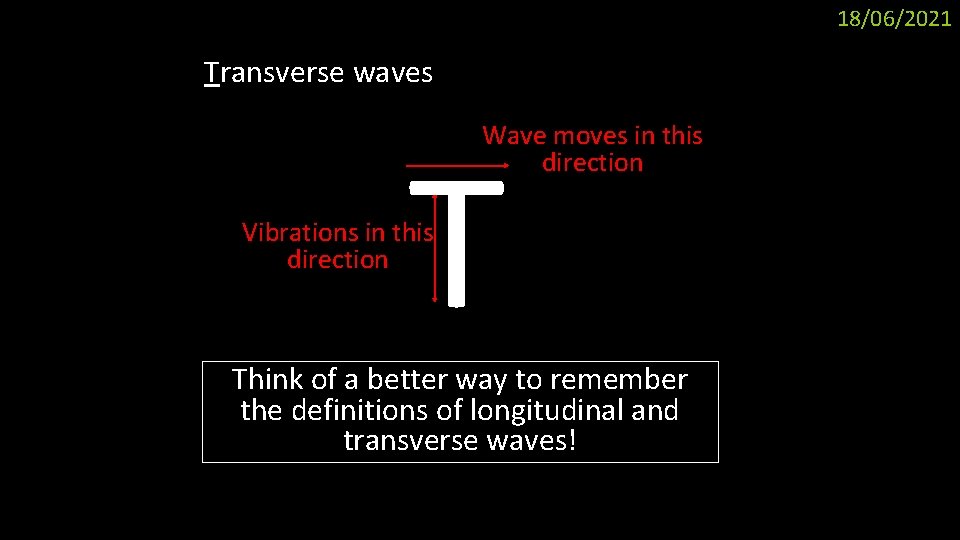
18/06/2021 Transverse waves T Wave moves in this direction Vibrations in this direction Think of a better way to remember the definitions of longitudinal and transverse waves!
- Slides: 24