
WAVES Essential Questions What is a wave How





- Slides: 27
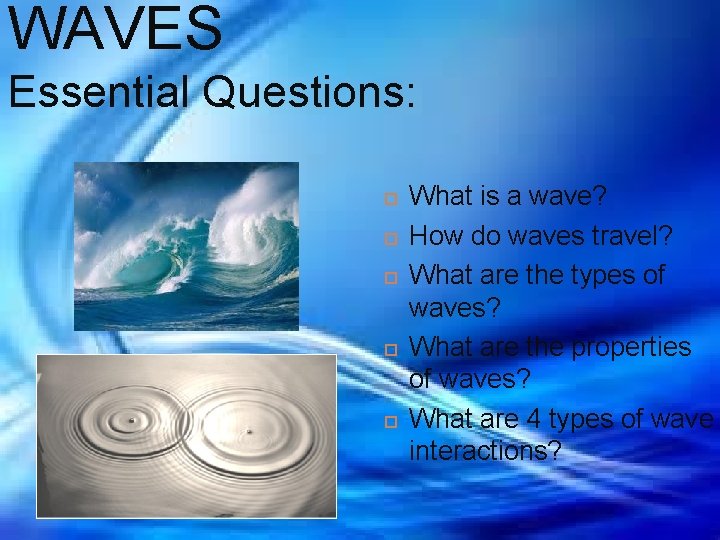
WAVES Essential Questions: What is a wave? How do waves travel? What are the types of waves? What are the properties of waves? What are 4 types of wave interactions?
Day 1 The Nature of Waves
What are Waves?
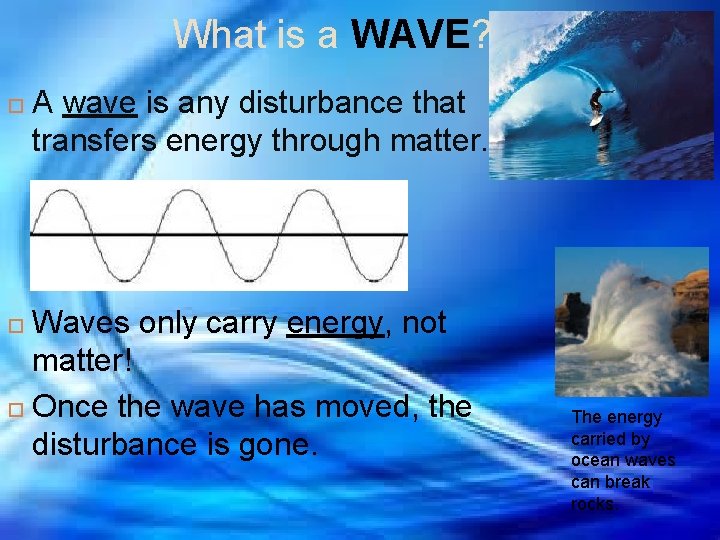
What is a WAVE? A wave is any disturbance that transfers energy through matter. Waves only carry energy, not matter! Once the wave has moved, the disturbance is gone. The energy carried by ocean waves can break rocks.
How do waves travel? A wave must have MATTER to travel through. The matter through which a wave travels is called a MEDIUM
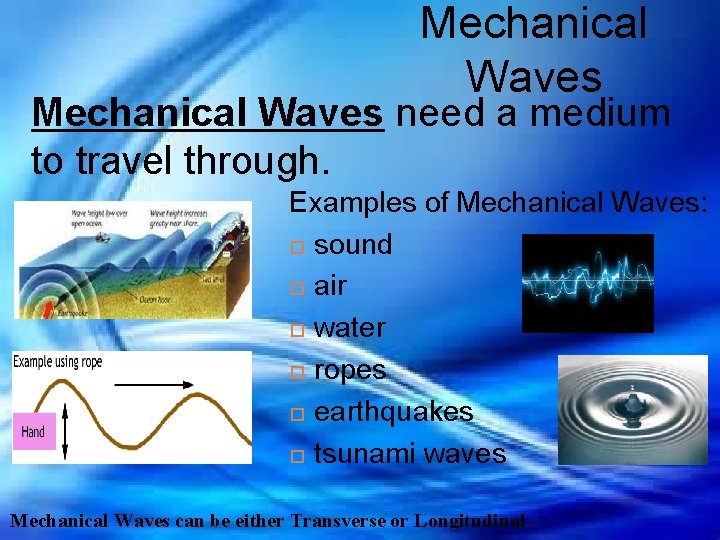
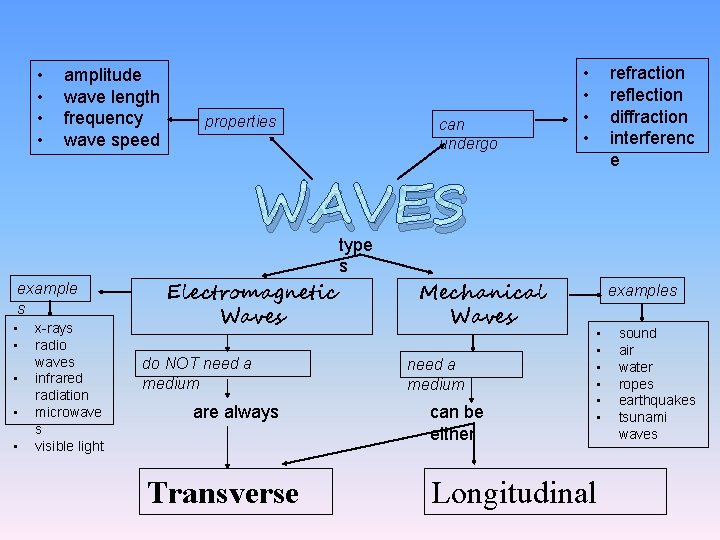
Mechanical Waves need a medium to travel through. Examples of Mechanical Waves: sound air water ropes earthquakes tsunami waves Mechanical Waves can be either Transverse or Longitudinal
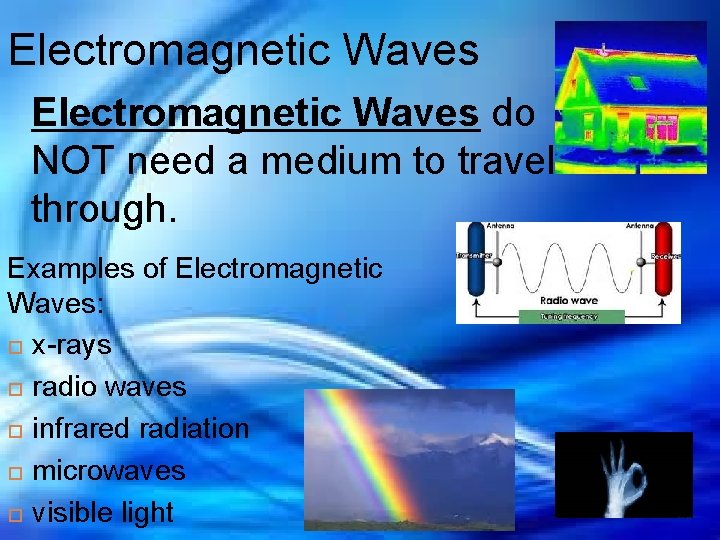
Electromagnetic Waves do NOT need a medium to travel through. Examples of Electromagnetic Waves: x-rays radio waves infrared radiation microwaves visible light
Electromagnetic Waves are ALWAYS transverse waves.
Transverse Waves waves in which the particles vibrate in an up and down motion ex: light waves http: //www. youtube. com/watch? v=UHcse 1 j. JAto&feature=player_detailpage#t=8
Transverse Wave
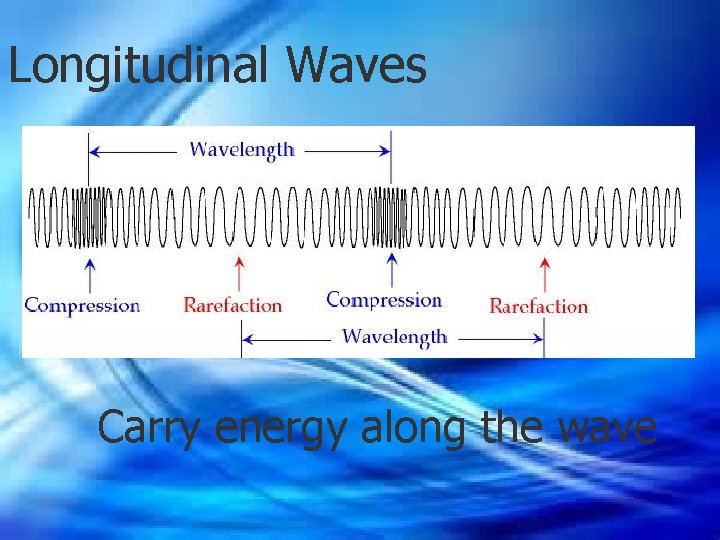
Longitudinal Waves waves in which the particles vibrate back and forth along the path that the wave moves. ex: sound waves http: //www. youtube. com/watch? v=agu. CWnb. RETU&feature=player_embedded
Longitudinal Waves Carry energy along the wave
Day 2 Properties of Waves
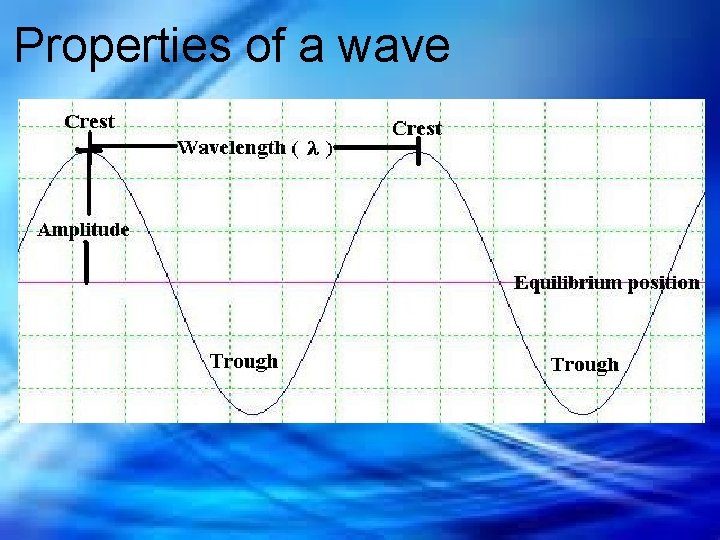
Properties of Waves: Amplitude Wave Length Frequency Wave Speed
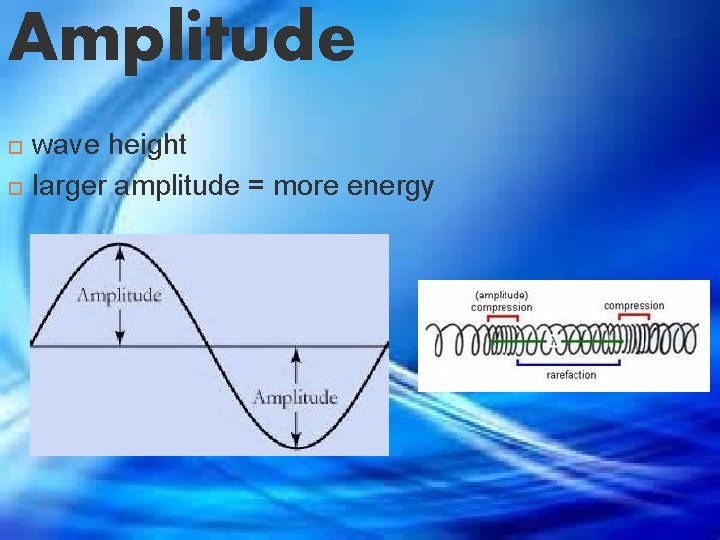
Amplitude wave height larger amplitude = more energy
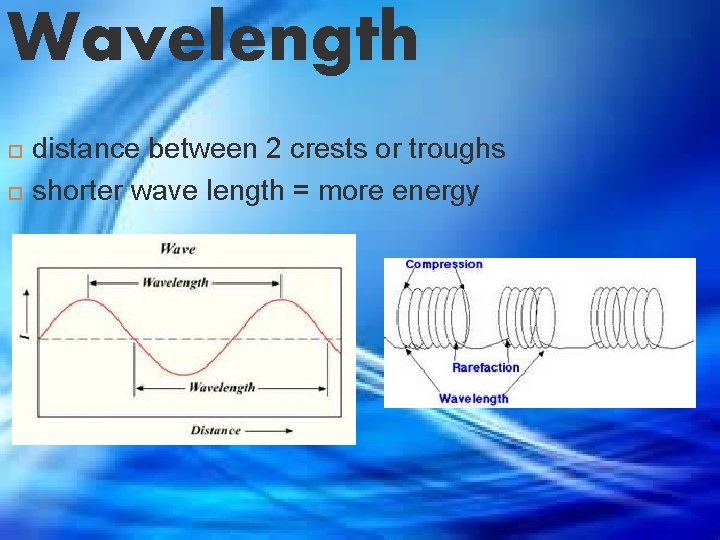
Wavelength distance between 2 crests or troughs shorter wave length = more energy
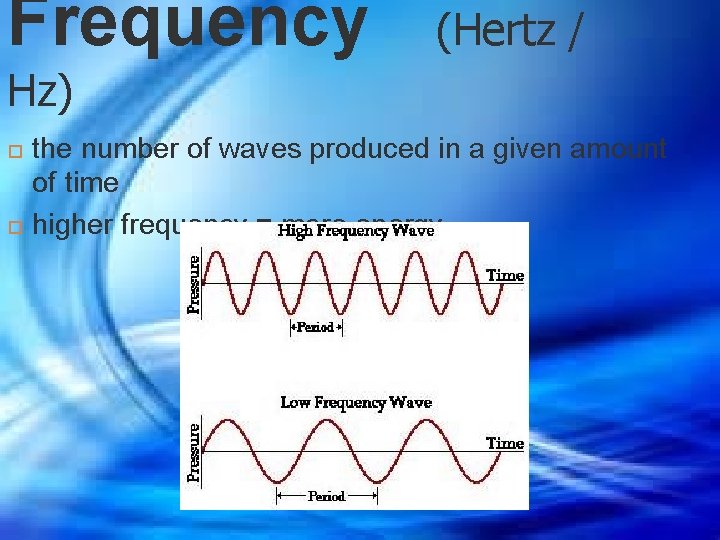
Frequency (Hertz / Hz) the number of waves produced in a given amount of time higher frequency = more energy
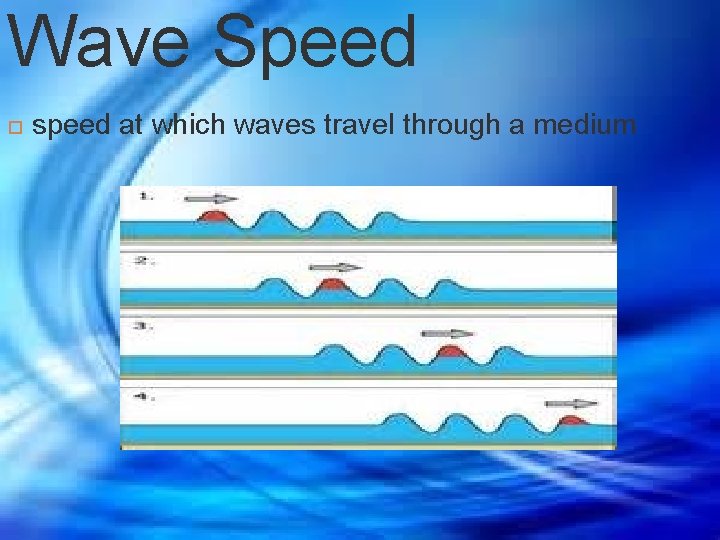
Wave Speed speed at which waves travel through a medium
Properties of a wave
Day 3 WAVE INTERACTIONS
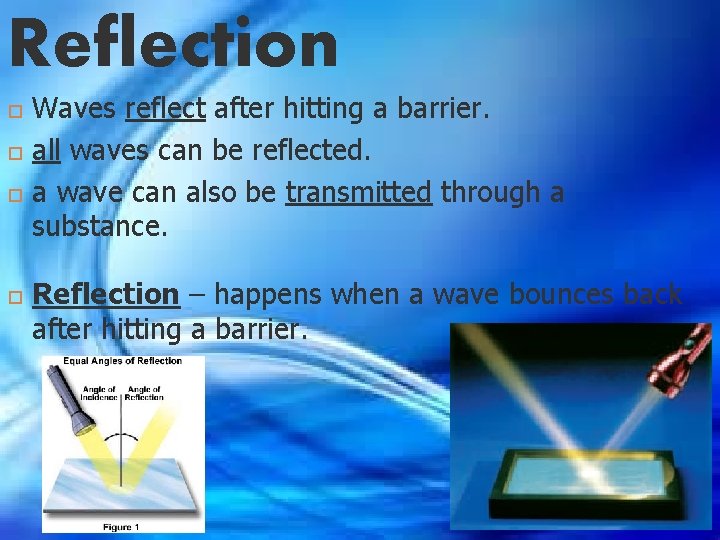
Reflection Waves reflect after hitting a barrier. all waves can be reflected. a wave can also be transmitted through a substance. Reflection – happens when a wave bounces back after hitting a barrier.
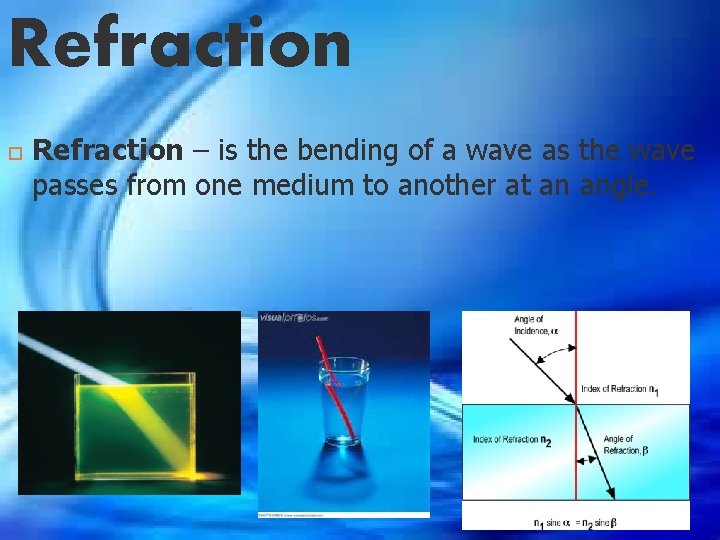
Refraction – is the bending of a wave as the wave passes from one medium to another at an angle.
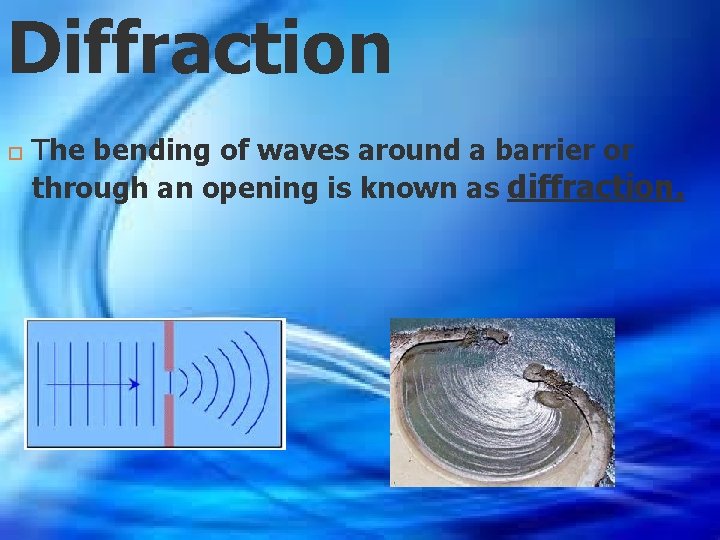
Diffraction The bending of waves around a barrier or through an opening is known as diffraction.
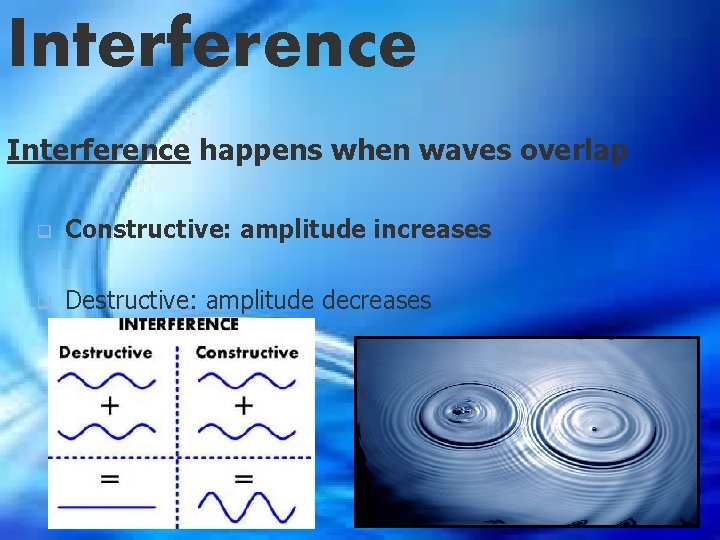
Interference happens when waves overlap q Constructive: amplitude increases q Destructive: amplitude decreases
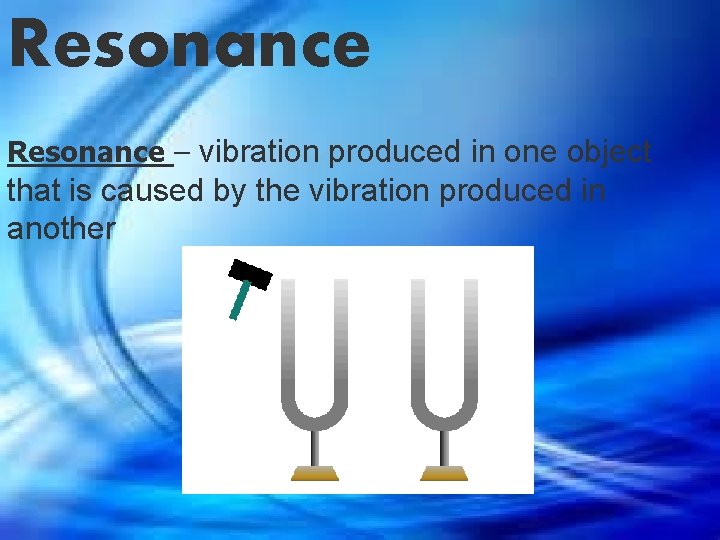
Resonance – vibration produced in one object that is caused by the vibration produced in another
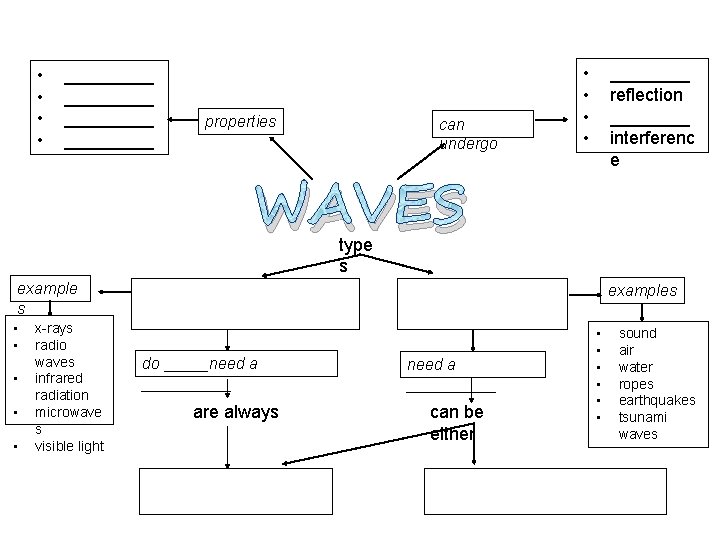
• • _________ properties can undergo • • ____ reflection ____ interferenc e WAVES type s example s • • • x-rays radio waves infrared radiation microwave s visible light examples do _____need a _____ are always need a _____ can be either • • • sound air water ropes earthquakes tsunami waves
• • amplitude wave length frequency wave speed properties can undergo • • refraction reflection diffraction interferenc e WAVES type s example s • • • x-rays radio waves infrared radiation microwave s visible light Electromagnetic Waves do NOT need a medium are always Transverse Mechanical Waves need a medium can be either examples • • • Longitudinal sound air water ropes earthquakes tsunami waves