
WAVES Chapter 12 Physics Waves transfer what ENERGY
- Slides: 43
WAVES Chapter 12 Physics
Waves transfer what? ENERGY!!!!
What are the two main types of waves? • MECHANICAL WAVES • ELECTROMAGNETIC WAVES
Which type of wave requires a medium? MECHANICAL WAVES Electromagnetic waves do NOT need a medium.
What are 3 examples of Mechanical Waves? • Water waves • Sound waves • Seismic waves
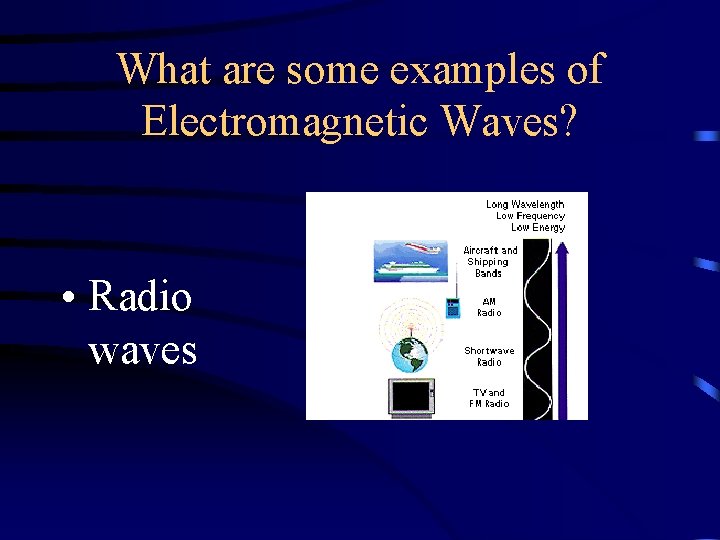
What are some examples of Electromagnetic Waves? • Radio waves
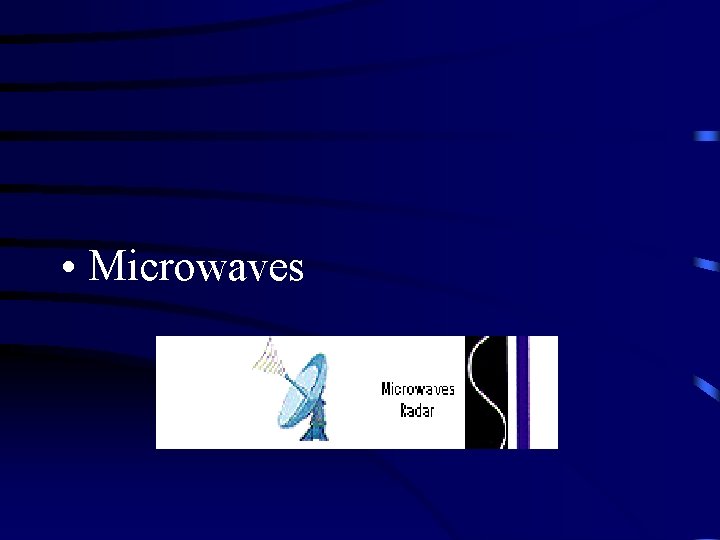
• Microwaves
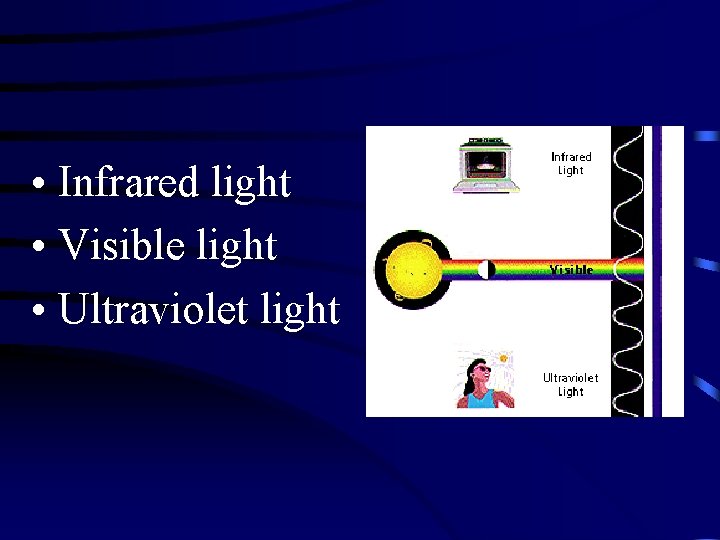
• Infrared light • Visible light • Ultraviolet light
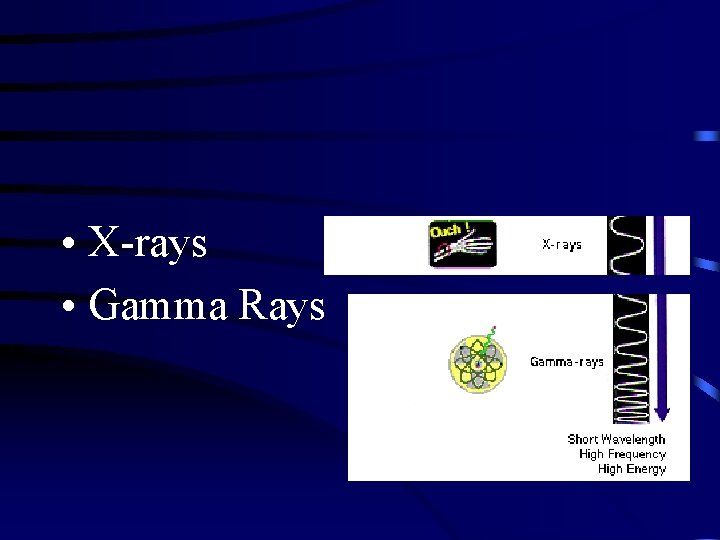
• X-rays • Gamma Rays
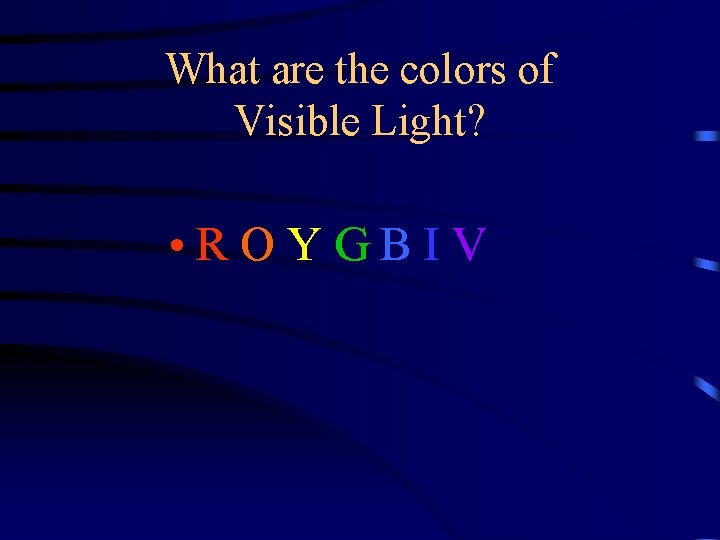
What are the colors of Visible Light? • R O Y G B I V
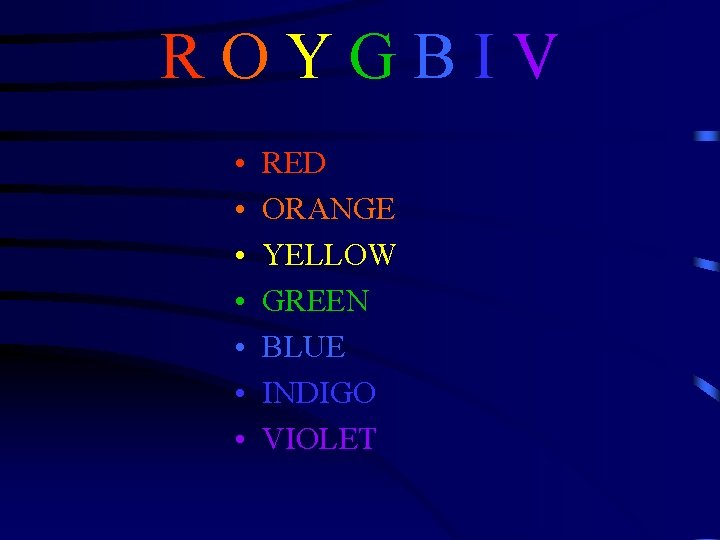
R O Y G B I V • • RED ORANGE YELLOW GREEN BLUE INDIGO VIOLET
Which color is the HIGHEST energy wave? • VIOLET
Which color is the LOWEST energy wave? • RED
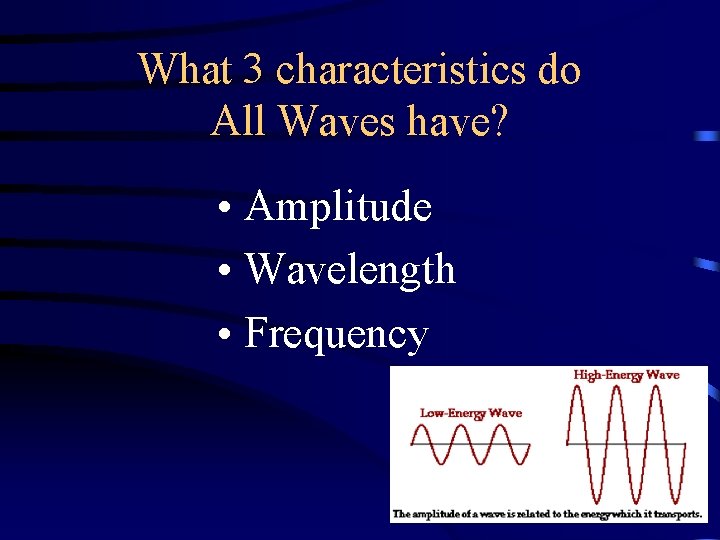
What 3 characteristics do All Waves have? • Amplitude • Wavelength • Frequency
What does the size of the amplitude of a wave tell us? • HIGH AMPLITUDE = HIGH AMOUNTS OF ENERGY • LOW AMPLITUDE = LOW AMOUNTS OF ENERGY
What unit do we use to measure Wavelengths in? • Meters
What greek letter do we use to represent a wavelength? • Lambda
What are the 3 units we can use for Frequency of a wave? • Waves / second • Cycles / second • 1/s = Hertz (Hz)
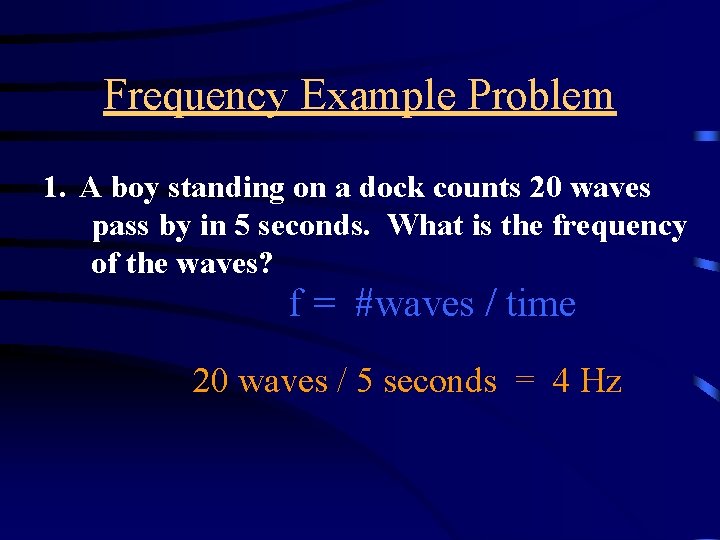
Frequency Example Problem 1. A boy standing on a dock counts 20 waves pass by in 5 seconds. What is the frequency of the waves? f = #waves / time 20 waves / 5 seconds = 4 Hz
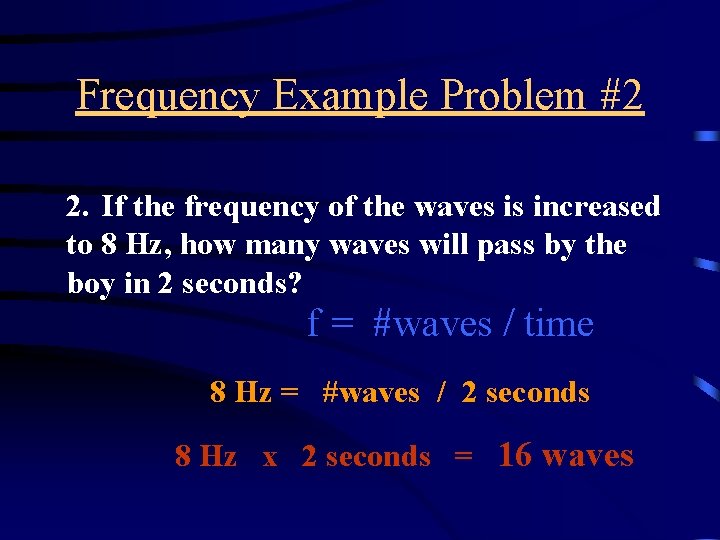
Frequency Example Problem #2 2. If the frequency of the waves is increased to 8 Hz, how many waves will pass by the boy in 2 seconds? f = #waves / time 8 Hz = #waves / 2 seconds 8 Hz x 2 seconds = 16 waves
Name the 2 types of Mechanical waves. • TRANSVERSE WAVES • LONGITUDINAL WAVES
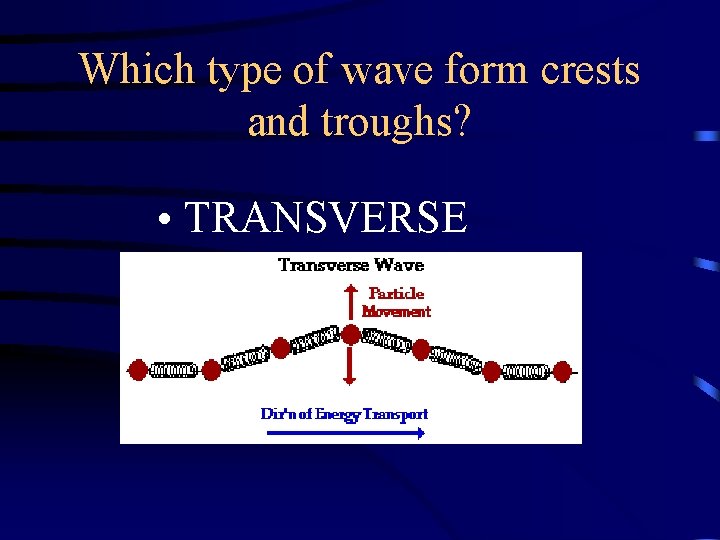
Which type of wave form crests and troughs? • TRANSVERSE
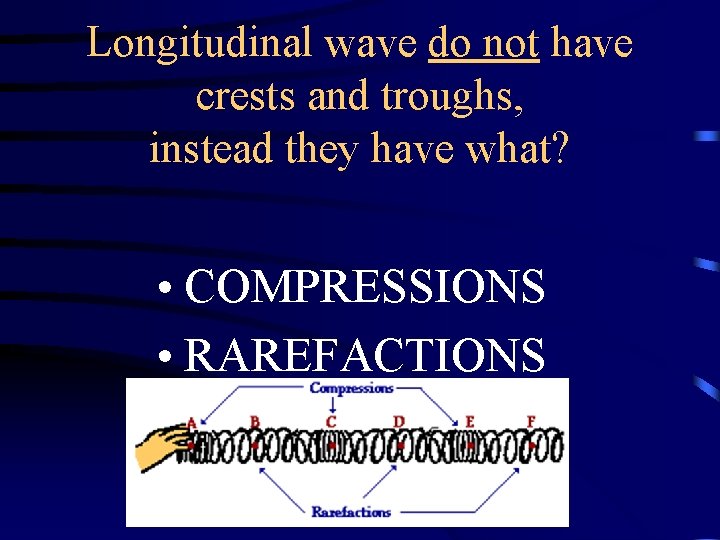
Longitudinal wave do not have crests and troughs, instead they have what? • COMPRESSIONS • RAREFACTIONS
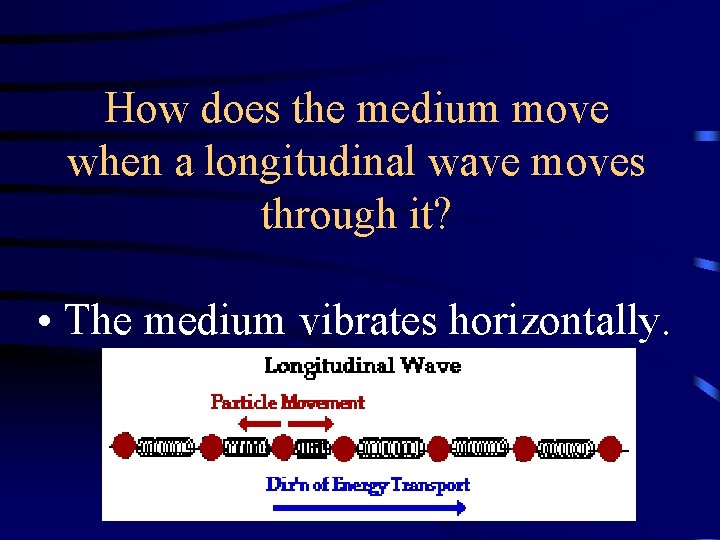
How does the medium move when a longitudinal wave moves through it? • The medium vibrates horizontally.
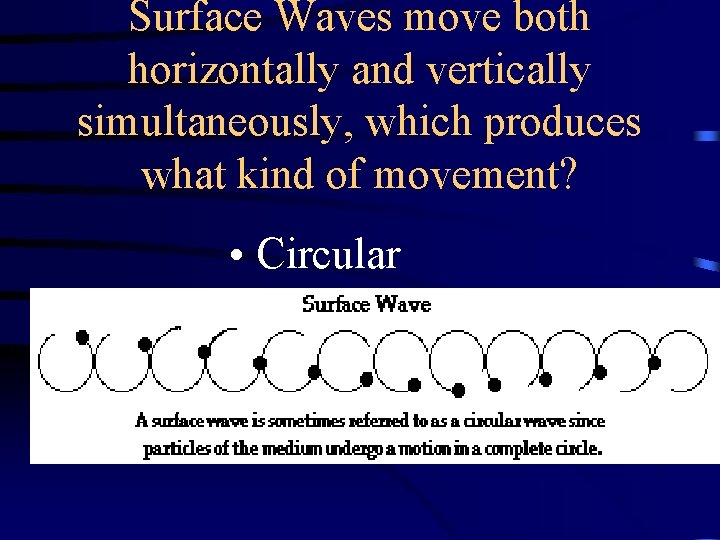
Surface Waves move both horizontally and vertically simultaneously, which produces what kind of movement? • Circular
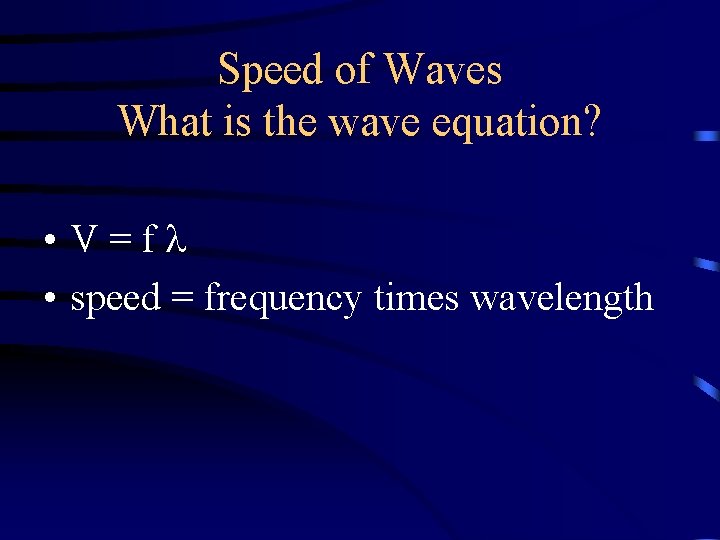
Speed of Waves What is the wave equation? • V = f • speed = frequency times wavelength
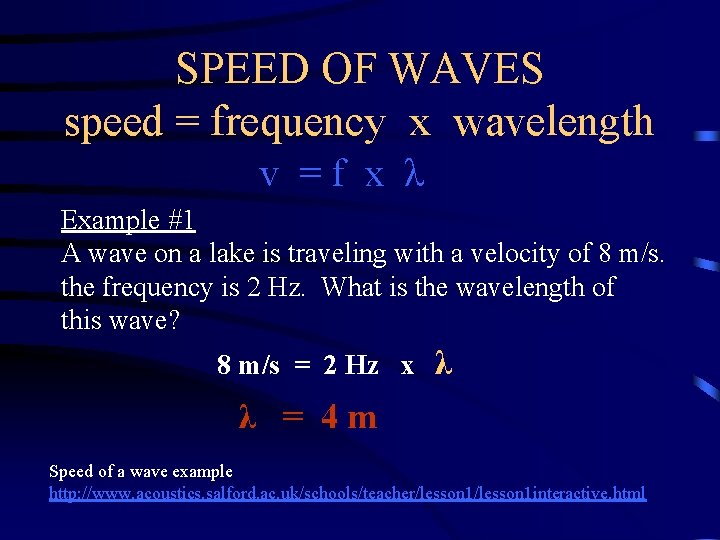
SPEED OF WAVES speed = frequency x wavelength v = f x λ Example #1 A wave on a lake is traveling with a velocity of 8 m/s. the frequency is 2 Hz. What is the wavelength of this wave? 8 m/s = 2 Hz x λ λ = 4 m Speed of a wave example http: //www. acoustics. salford. ac. uk/schools/teacher/lesson 1 interactive. html
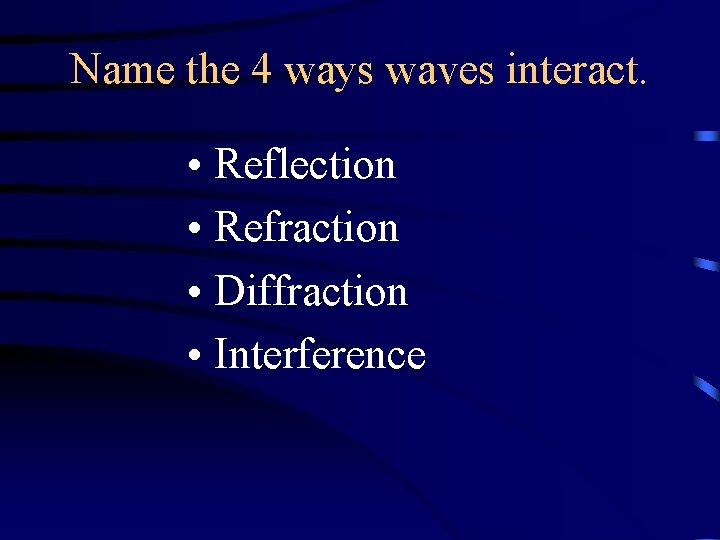
Name the 4 ways waves interact. • Reflection • Refraction • Diffraction • Interference
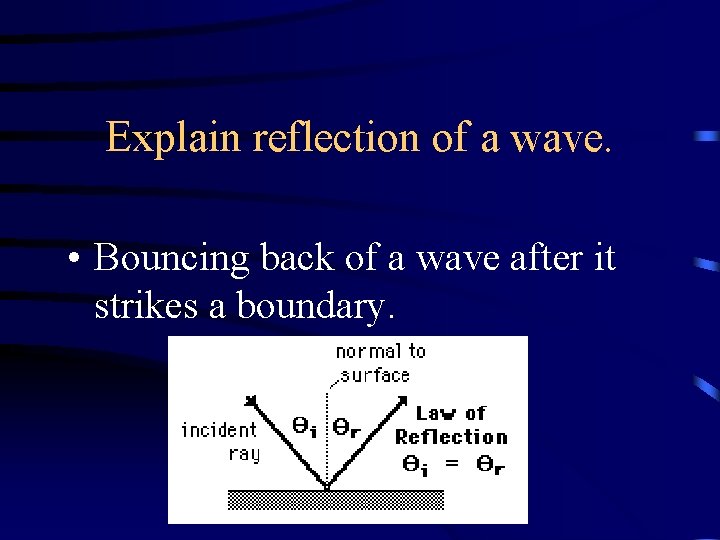
Explain reflection of a wave. • Bouncing back of a wave after it strikes a boundary.
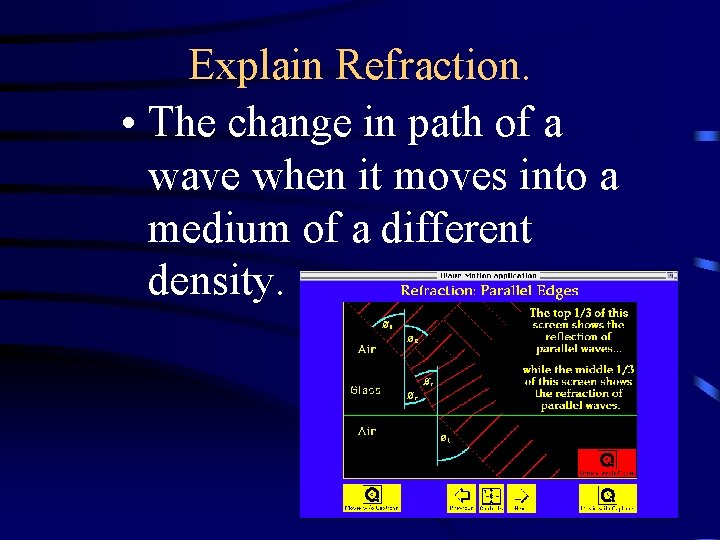
Explain Refraction. • The change in path of a wave when it moves into a medium of a different density.
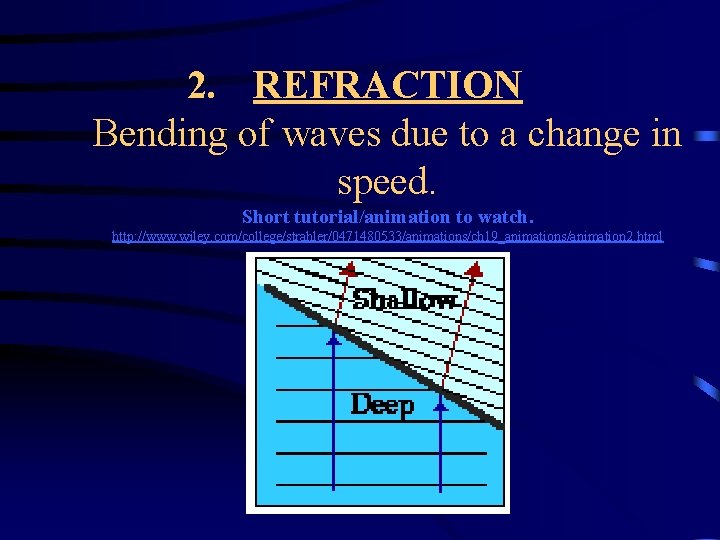
2. REFRACTION Bending of waves due to a change in speed. Short tutorial/animation to watch. http: //www. wiley. com/college/strahler/0471480533/animations/ch 19_animations/animation 2. html
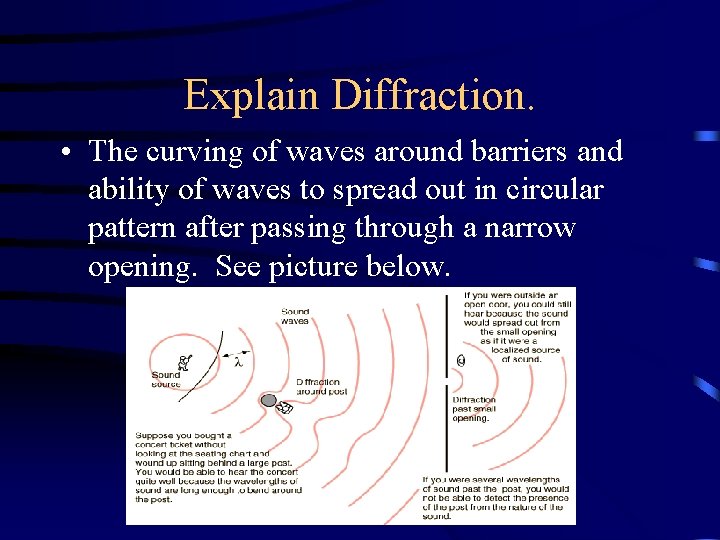
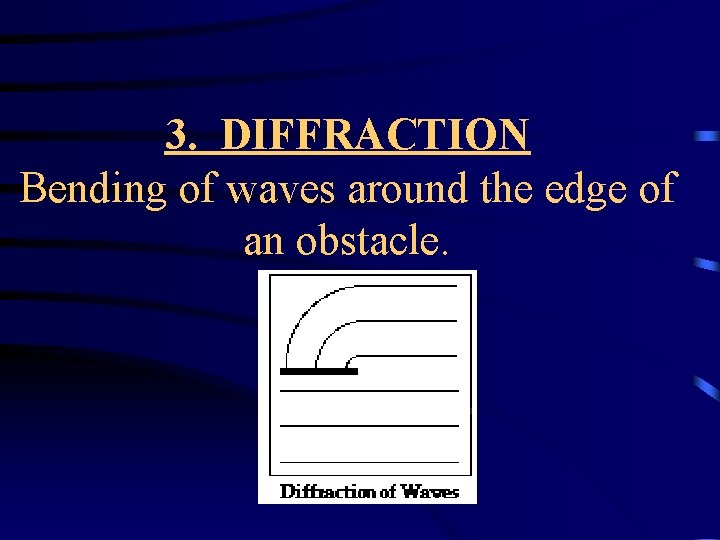
Explain Diffraction. • The curving of waves around barriers and ability of waves to spread out in circular pattern after passing through a narrow opening. See picture below.
3. DIFFRACTION Bending of waves around the edge of an obstacle.
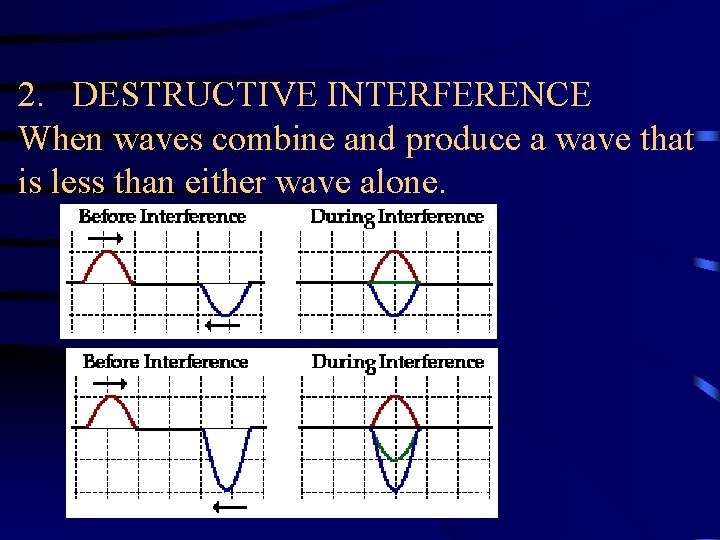
What are the 2 types of Interference? • Constructive • Destructive
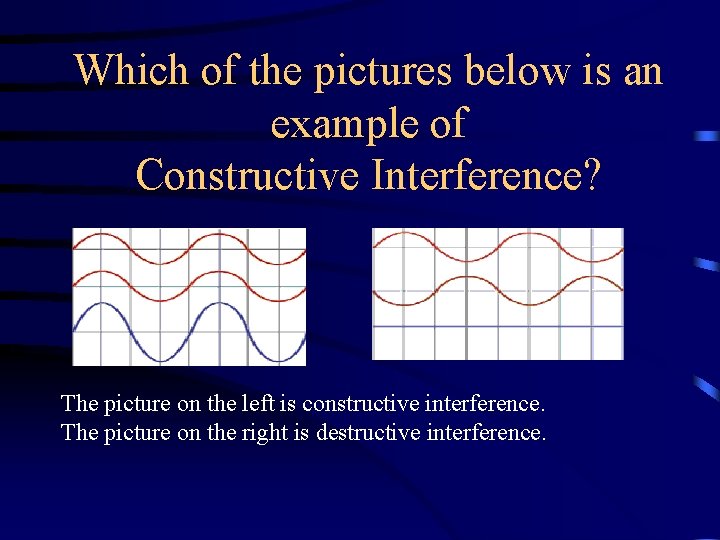
Which of the pictures below is an example of Constructive Interference? The picture on the left is constructive interference. The picture on the right is destructive interference.
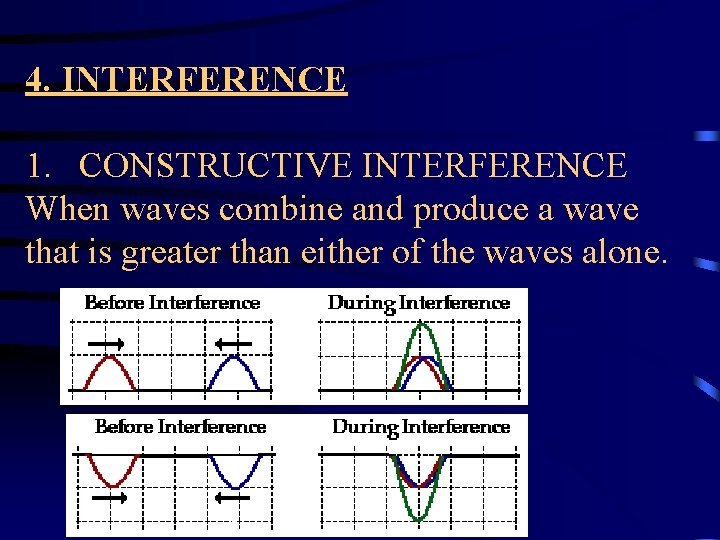
4. INTERFERENCE 1. CONSTRUCTIVE INTERFERENCE When waves combine and produce a wave that is greater than either of the waves alone.
2. DESTRUCTIVE INTERFERENCE When waves combine and produce a wave that is less than either wave alone.
Applet Interference by 3 waves simultaneously. Constructive interference applet http: //id. mind. net/~zona/mstm/physics/waves/interferenc e/wave. Interference 1/Wave. Interference 1. html Both Constructive/Destructive interference applet http: //id. mind. net/~zona/mstm/physics/waves/interferenc e/wave. Interference 2/Wave. Interference 2. html
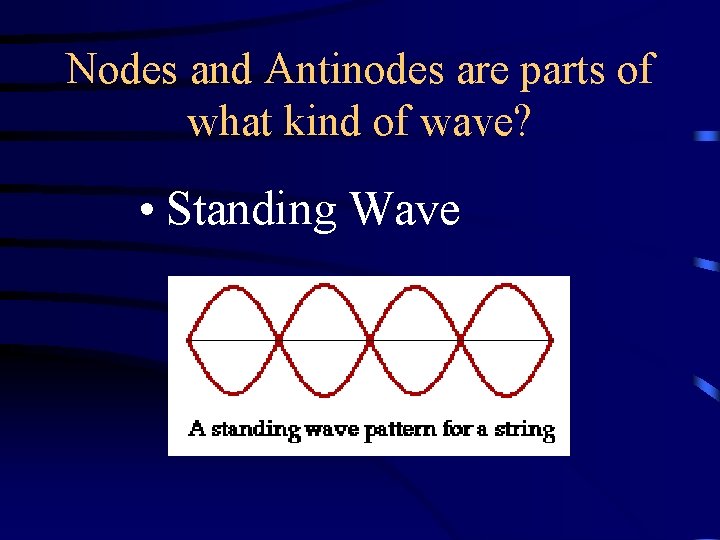
Nodes and Antinodes are parts of what kind of wave? • Standing Wave
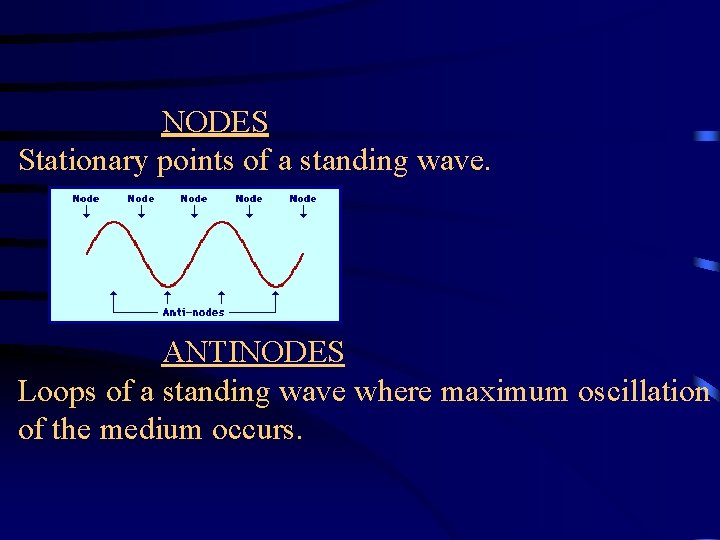
NODES Stationary points of a standing wave. ANTINODES Loops of a standing wave where maximum oscillation of the medium occurs.
The frequency at which a standing wave occurs is called what? • Resonant Frequency • Sometimes called Natural Frequency.
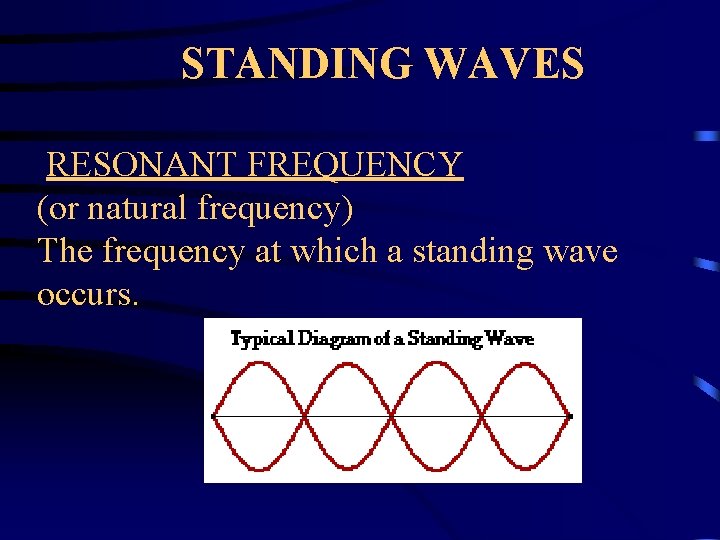
STANDING WAVES RESONANT FREQUENCY (or natural frequency) The frequency at which a standing wave occurs.