
Waves Chapter 11 Section 2 Wave Properties Ways
- Slides: 10
Waves, Chapter 11 Section 2: Wave Properties
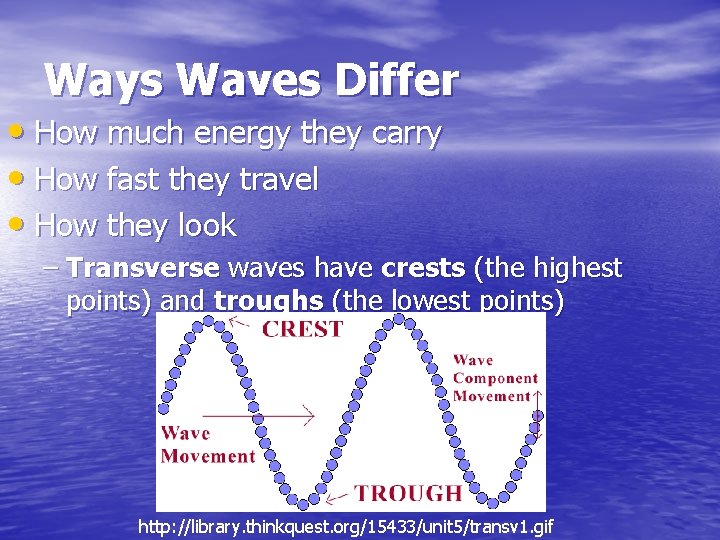
Ways Waves Differ • How much energy they carry • How fast they travel • How they look – Transverse waves have crests (the highest points) and troughs (the lowest points) http: //library. thinkquest. org/15433/unit 5/transv 1. gif
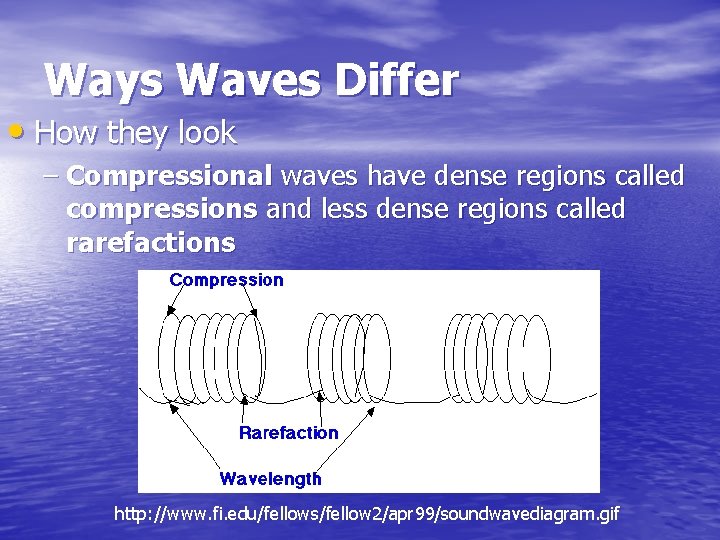
Ways Waves Differ • How they look – Compressional waves have dense regions called compressions and less dense regions called rarefactions http: //www. fi. edu/fellows/fellow 2/apr 99/soundwavediagram. gif
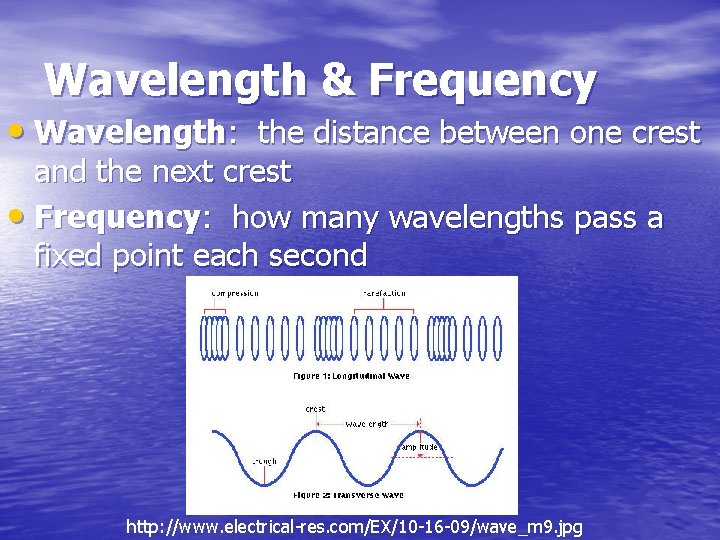
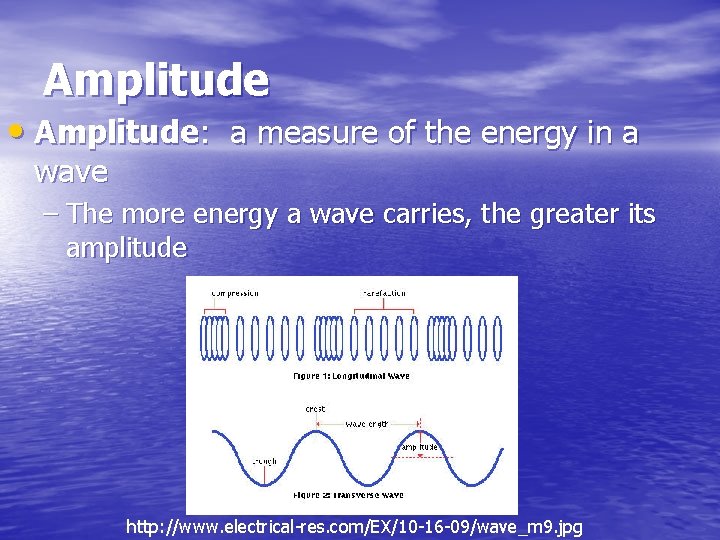
Wavelength & Frequency • Wavelength: the distance between one crest and the next crest • Frequency: how many wavelengths pass a fixed point each second http: //www. electrical-res. com/EX/10 -16 -09/wave_m 9. jpg
Frequency • Expressed in cycles per second, or hertz (Hz) • As frequency increases, wavelength decreases • The frequency of a wave equals the rate of vibration of the source that creates it – http: //www. youtube. com/watch? v=Kbd 8 QUk. Rbjw
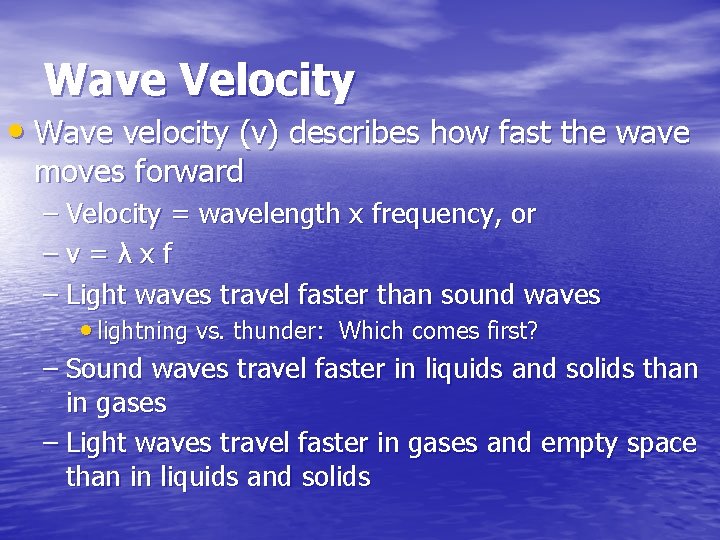
Wave Velocity • Wave velocity (v) describes how fast the wave moves forward – Velocity = wavelength x frequency, or –v=λxf – Light waves travel faster than sound waves • lightning vs. thunder: Which comes first? – Sound waves travel faster in liquids and solids than in gases – Light waves travel faster in gases and empty space than in liquids and solids
Amplitude • Amplitude: a measure of the energy in a wave – The more energy a wave carries, the greater its amplitude http: //www. electrical-res. com/EX/10 -16 -09/wave_m 9. jpg
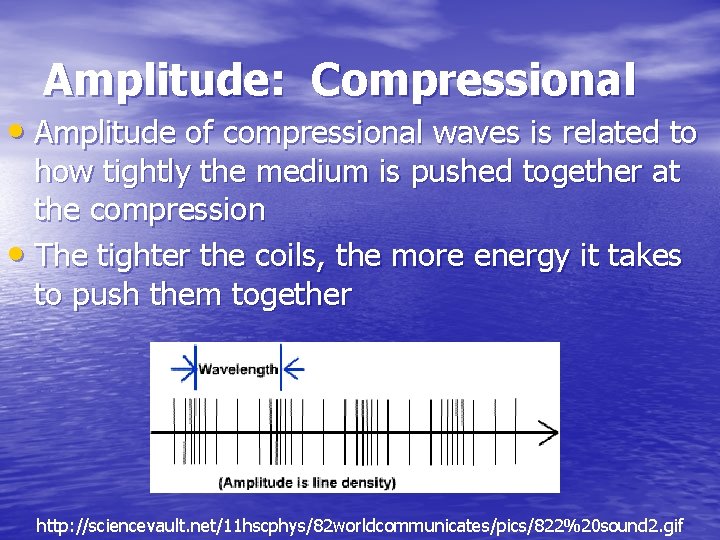
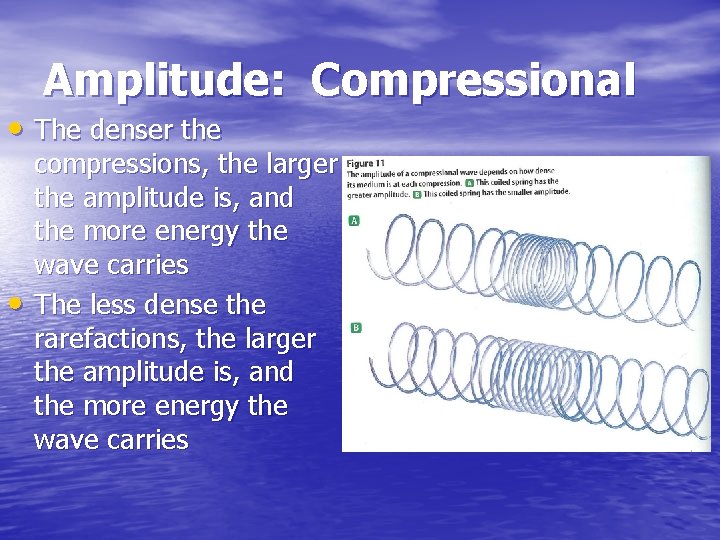
Amplitude: Compressional • Amplitude of compressional waves is related to how tightly the medium is pushed together at the compression • The tighter the coils, the more energy it takes to push them together http: //sciencevault. net/11 hscphys/82 worldcommunicates/pics/822%20 sound 2. gif
Amplitude: Compressional • The denser the • compressions, the larger the amplitude is, and the more energy the wave carries The less dense the rarefactions, the larger the amplitude is, and the more energy the wave carries
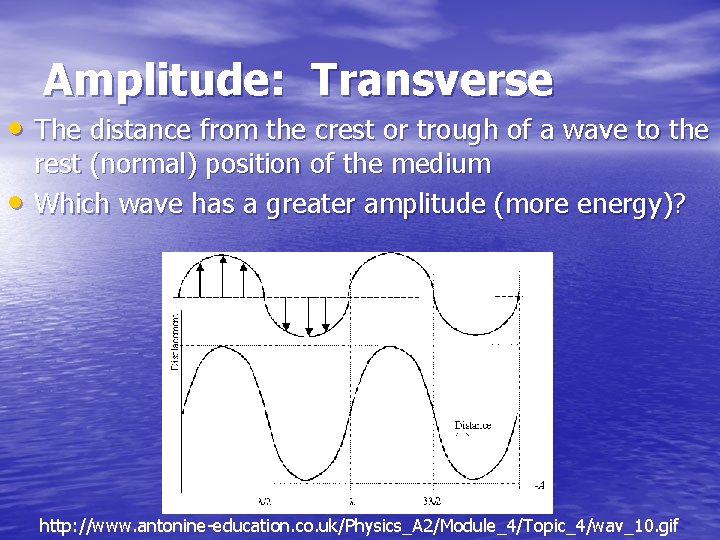
Amplitude: Transverse • The distance from the crest or trough of a wave to the • rest (normal) position of the medium Which wave has a greater amplitude (more energy)? http: //www. antonine-education. co. uk/Physics_A 2/Module_4/Topic_4/wav_10. gif