
Waves Chapter 10 Anatomy of a wave A
- Slides: 34
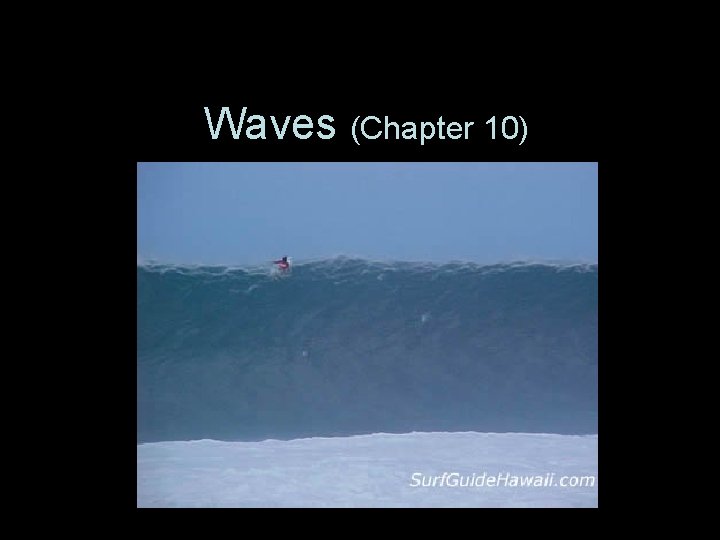
Waves (Chapter 10)
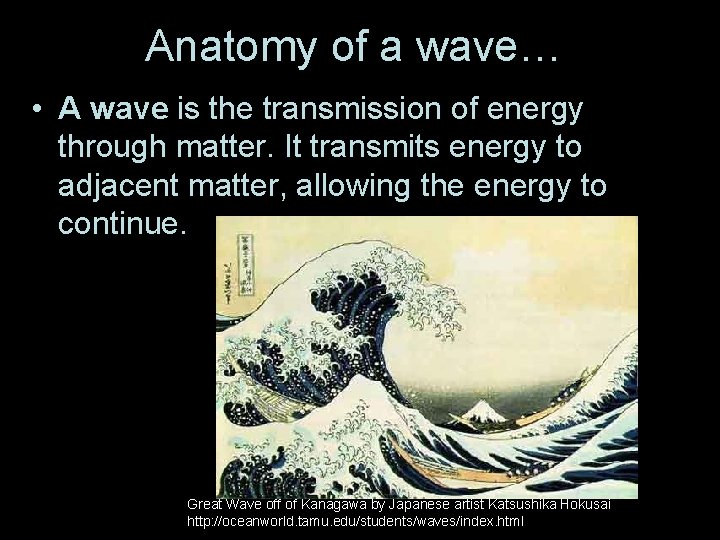
Anatomy of a wave… • A wave is the transmission of energy through matter. It transmits energy to adjacent matter, allowing the energy to continue. Great Wave off of Kanagawa by Japanese artist Katsushika Hokusai http: //oceanworld. tamu. edu/students/waves/index. html
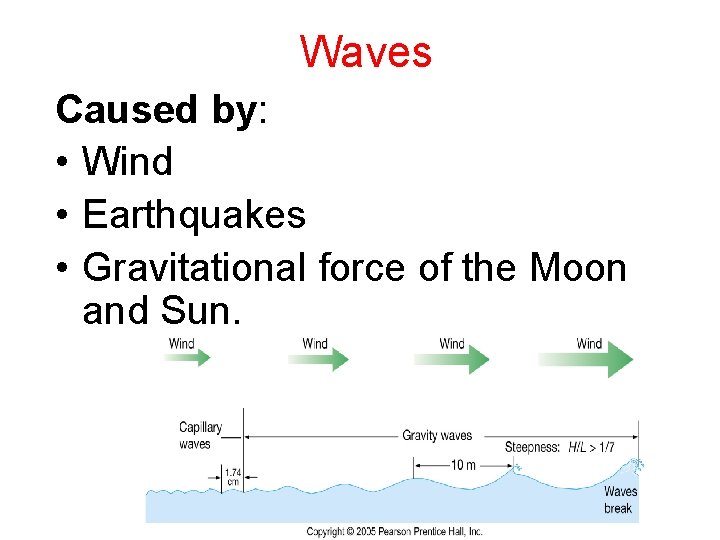
Waves Caused by: • Wind • Earthquakes • Gravitational force of the Moon and Sun.
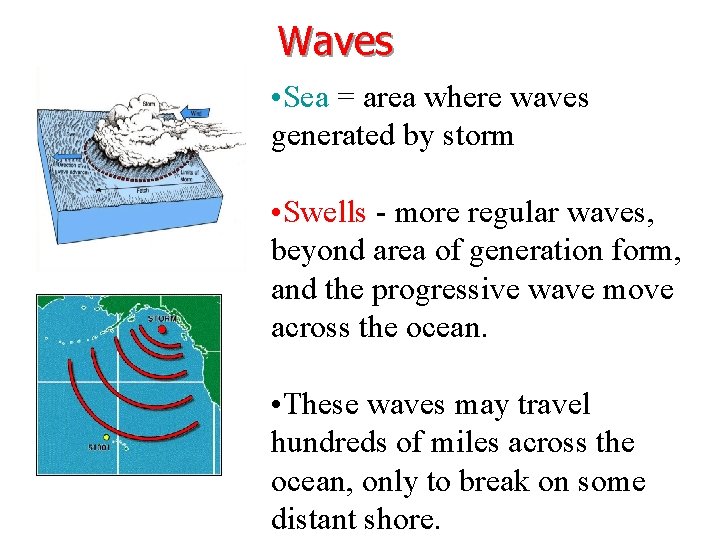
Waves • Sea = area where waves generated by storm • Swells - more regular waves, beyond area of generation form, and the progressive wave move across the ocean. • These waves may travel hundreds of miles across the ocean, only to break on some distant shore.
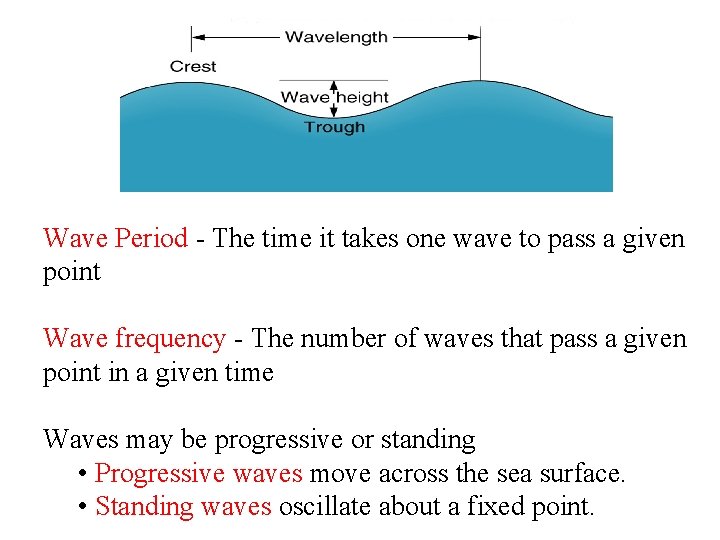
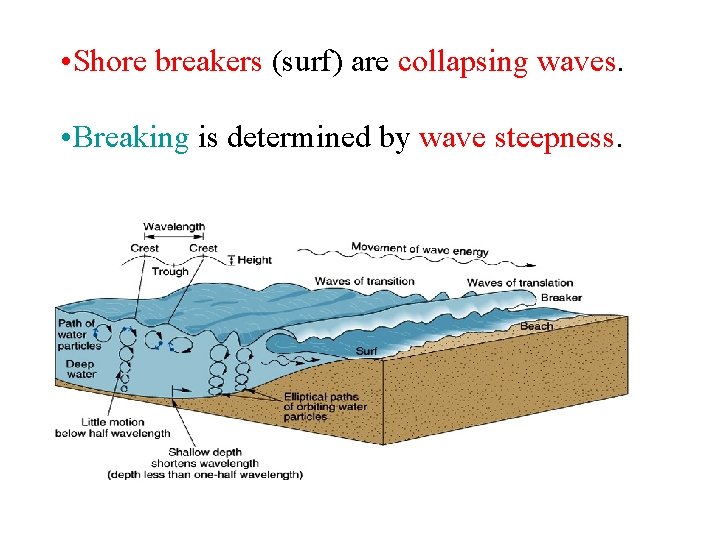
Parts of a Wave • Crest – highest point of a wave • Trough – lowest point of a wave • Wave Height – vertical distance between the crest and the trough • Wavelength – horizontal distance between two crests or two troughs
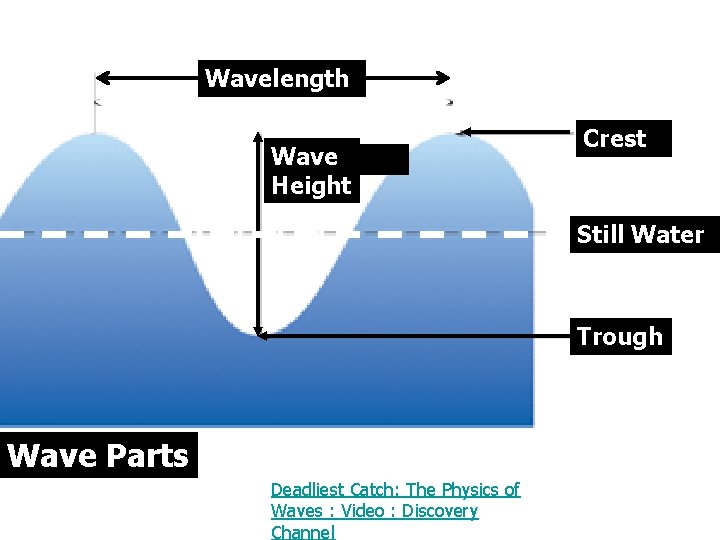
Wavelength Wave Height Crest Still Water Trough Wave Parts Deadliest Catch: The Physics of Waves : Video : Discovery Channel
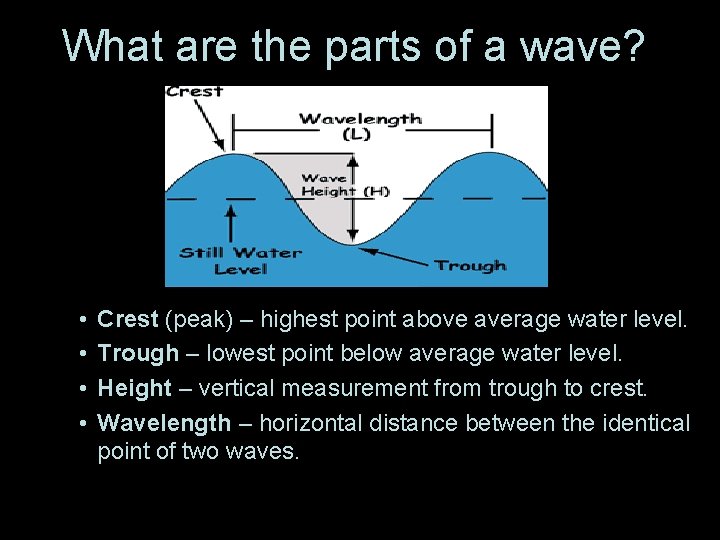
What are the parts of a wave? • • Crest (peak) – highest point above average water level. Trough – lowest point below average water level. Height – vertical measurement from trough to crest. Wavelength – horizontal distance between the identical point of two waves.
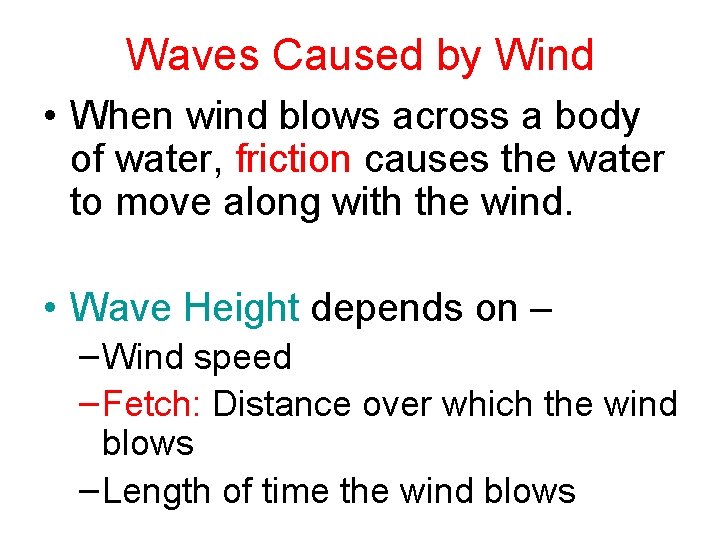
Waves Caused by Wind • When wind blows across a body of water, friction causes the water to move along with the wind. • Wave Height depends on – – Wind speed – Fetch: Distance over which the wind blows – Length of time the wind blows
Wave Period - The time it takes one wave to pass a given point Wave frequency - The number of waves that pass a given point in a given time Waves may be progressive or standing • Progressive waves move across the sea surface. • Standing waves oscillate about a fixed point.
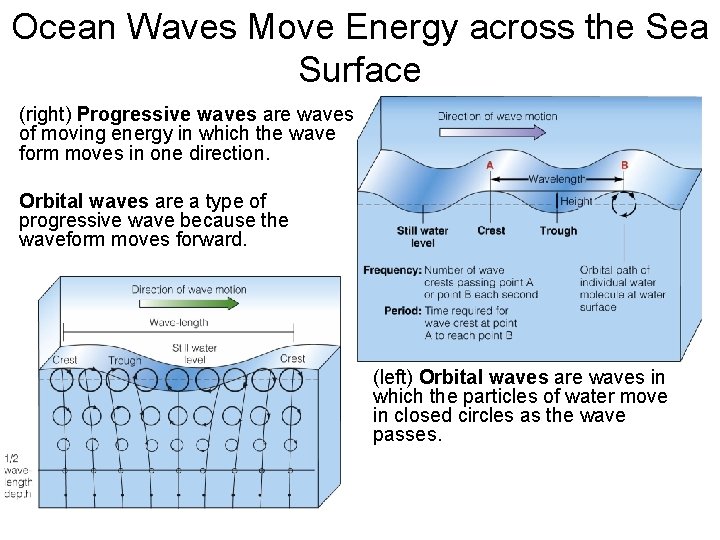
Ocean Waves Move Energy across the Sea Surface (right) Progressive waves are waves of moving energy in which the wave form moves in one direction. Orbital waves are a type of progressive wave because the waveform moves forward. (left) Orbital waves are waves in which the particles of water move in closed circles as the wave passes.
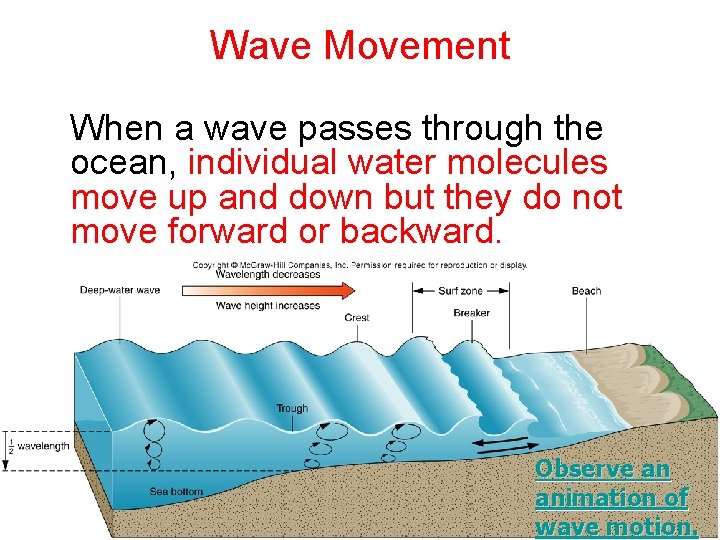
Wave Movement When a wave passes through the ocean, individual water molecules move up and down but they do not move forward or backward. Observe an animation of wave motion.
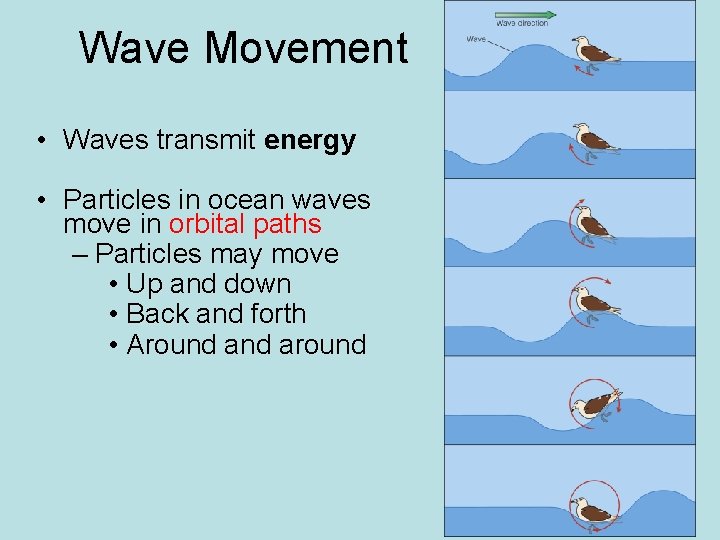
Wave Movement • Waves transmit energy • Particles in ocean waves move in orbital paths – Particles may move • Up and down • Back and forth • Around around
NOAA’s “Ocean Waves” http: //oceanexplorer. noaa. gov/edu/learning/player/lesson 09. html
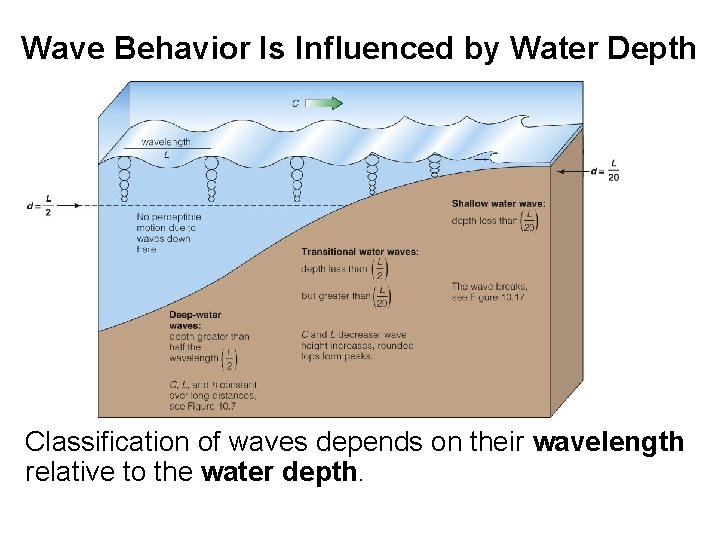
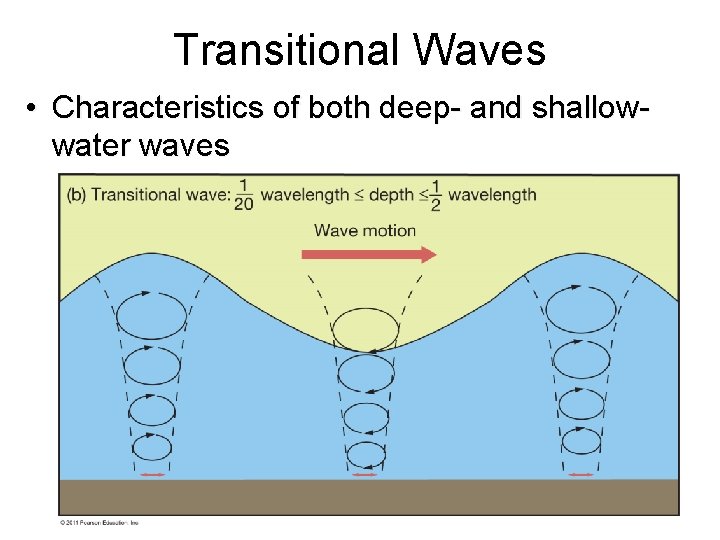
Wave Behavior Is Influenced by Water Depth Classification of waves depends on their wavelength relative to the water depth.
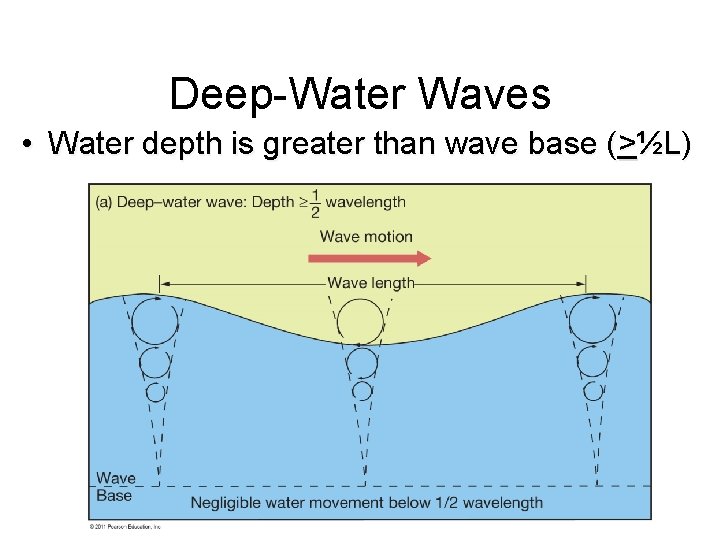
Deep-Water Waves • Water depth is greater than wave base (>½L)
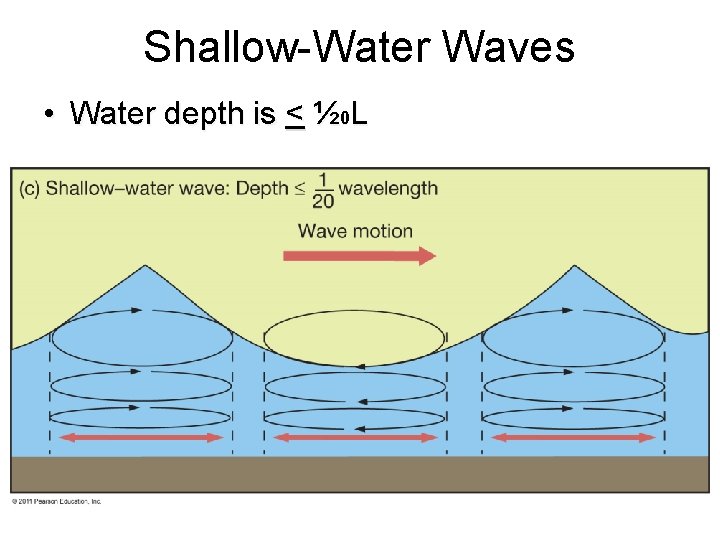
Shallow-Water Waves • Water depth is < ½ 0 L
Transitional Waves • Characteristics of both deep- and shallowwater waves
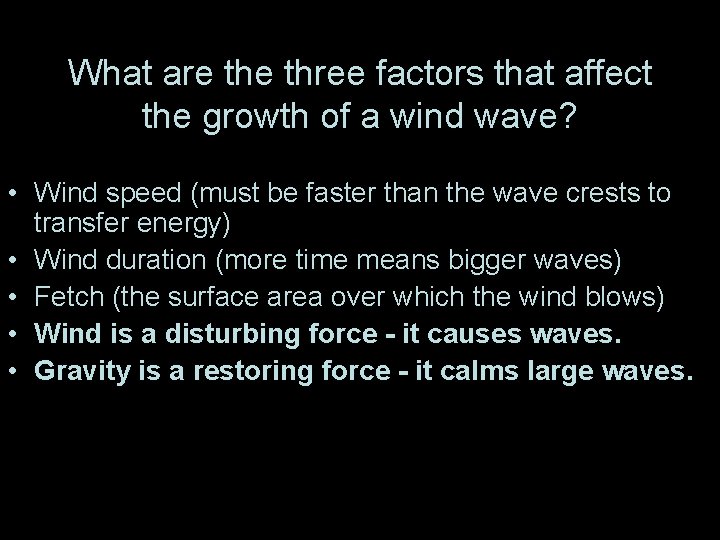
What are three factors that affect the growth of a wind wave? • Wind speed (must be faster than the wave crests to transfer energy) • Wind duration (more time means bigger waves) • Fetch (the surface area over which the wind blows) • Wind is a disturbing force - it causes waves. • Gravity is a restoring force - it calms large waves.
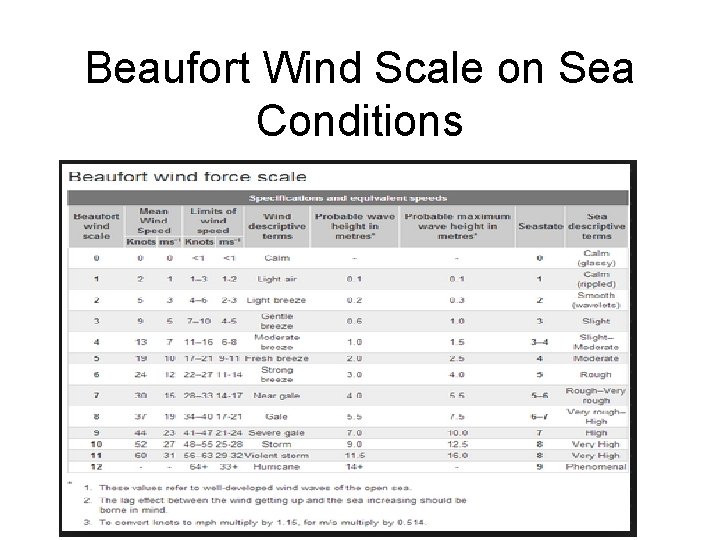
Beaufort Wind Scale on Sea Conditions
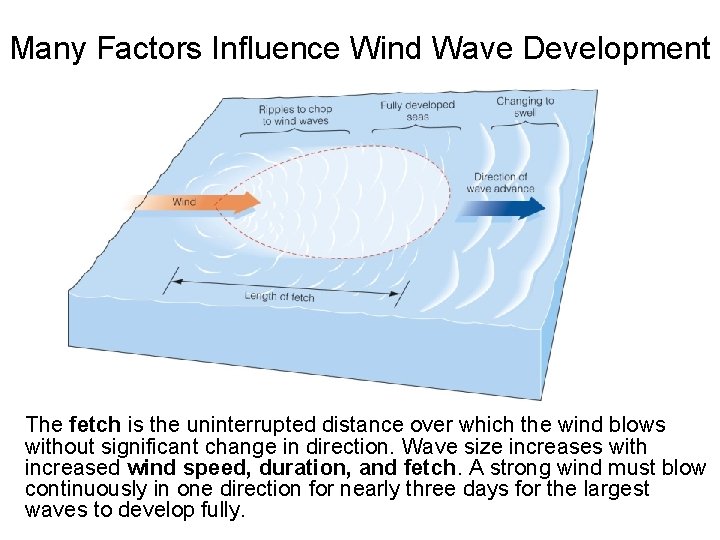
Many Factors Influence Wind Wave Development The fetch is the uninterrupted distance over which the wind blows without significant change in direction. Wave size increases with increased wind speed, duration, and fetch. A strong wind must blow continuously in one direction for nearly three days for the largest waves to develop fully.
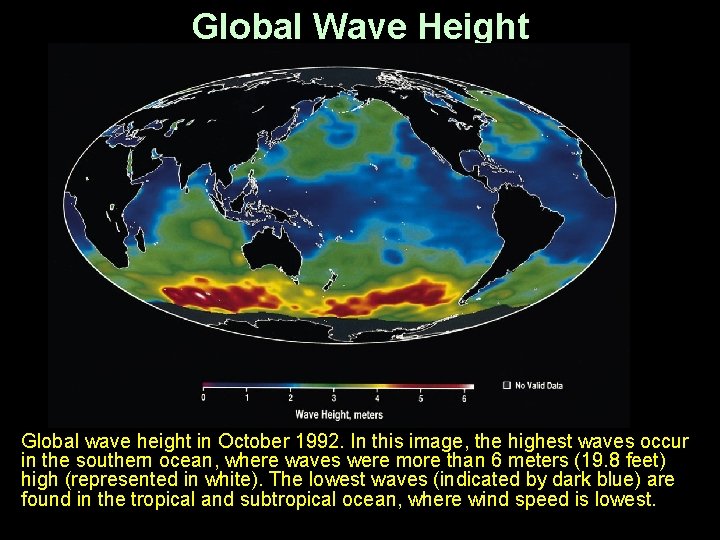
Global Wave Height Global wave height in October 1992. In this image, the highest waves occur in the southern ocean, where waves were more than 6 meters (19. 8 feet) high (represented in white). The lowest waves (indicated by dark blue) are found in the tropical and subtropical ocean, where wind speed is lowest.
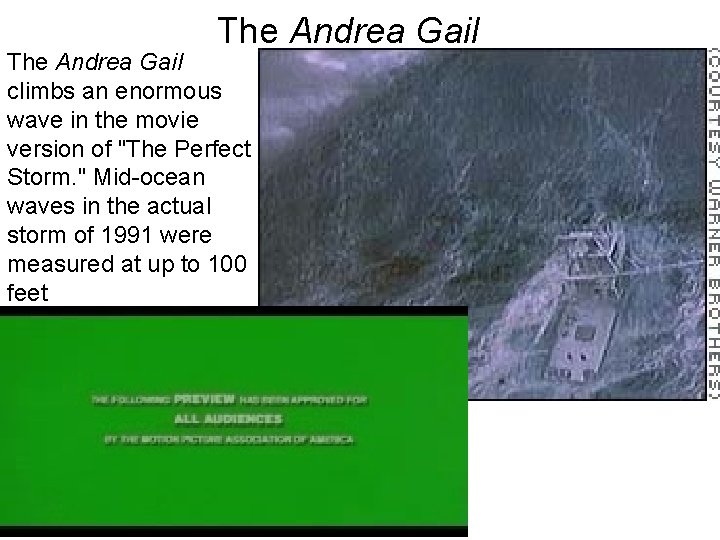
The Andrea Gail climbs an enormous wave in the movie version of "The Perfect Storm. " Mid-ocean waves in the actual storm of 1991 were measured at up to 100 feet
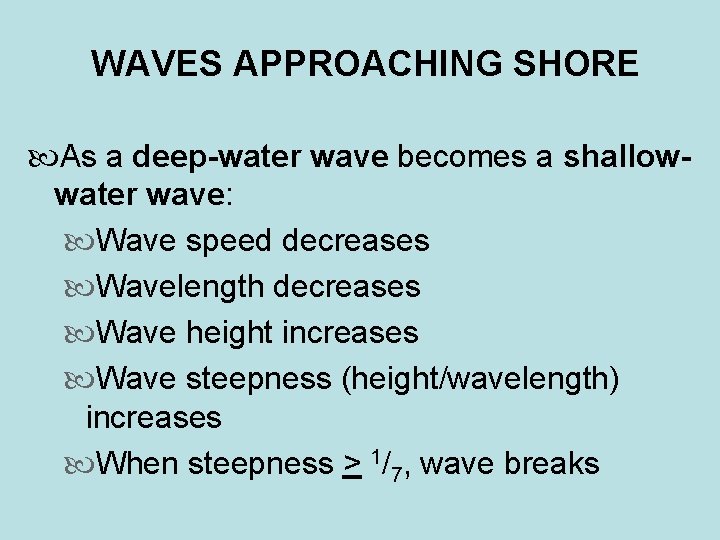
WAVES APPROACHING SHORE As a deep-water wave becomes a shallowwater wave: Wave speed decreases Wavelength decreases Wave height increases Wave steepness (height/wavelength) increases When steepness > 1/7, wave breaks
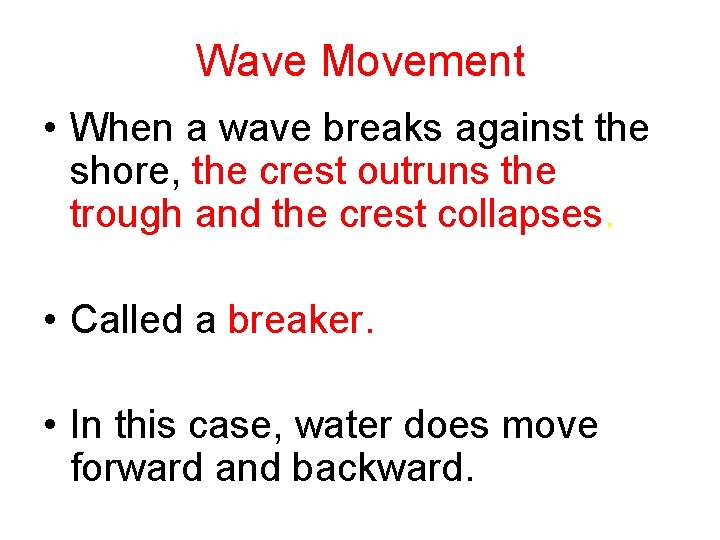
Wave Movement • When a wave breaks against the shore, the crest outruns the trough and the crest collapses. • Called a breaker. • In this case, water does move forward and backward.
• Shore breakers (surf) are collapsing waves. • Breaking is determined by wave steepness.
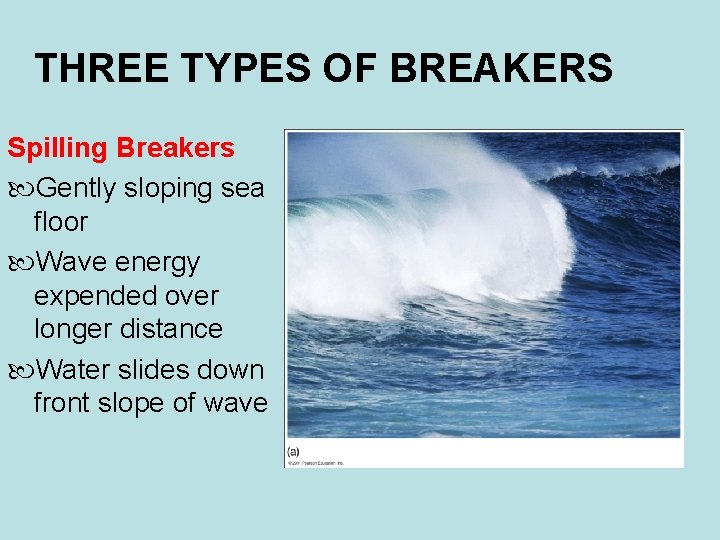
THREE TYPES OF BREAKERS Spilling Breakers Gently sloping sea floor Wave energy expended over longer distance Water slides down front slope of wave
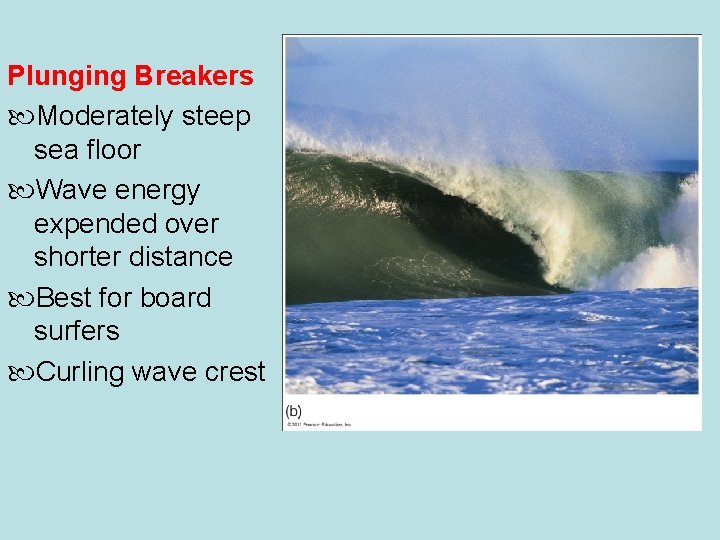
© 2011 Pearson Education, Inc. Plunging Breakers Moderately steep sea floor Wave energy expended over shorter distance Best for board surfers Curling wave crest
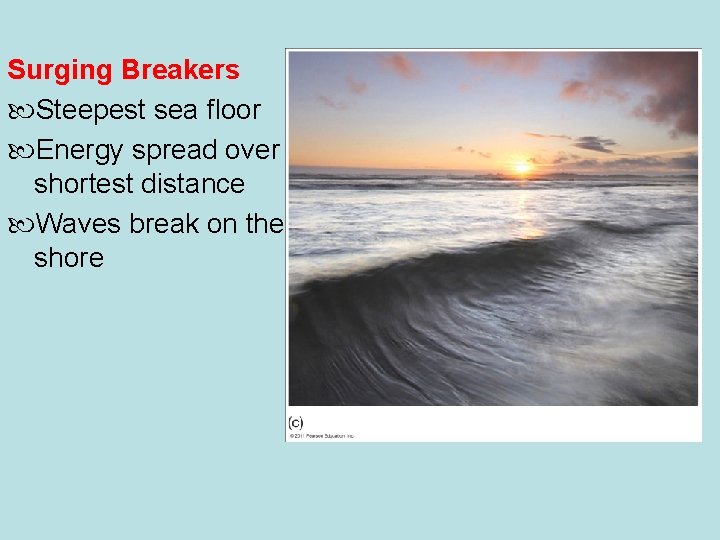
© 2011 Pearson Education, Inc. Surging Breakers Steepest sea floor Energy spread over shortest distance Waves break on the shore
Waves Refract When They Approach a Shore at an Angle • Wave refraction - the slowing and bending of waves in shallow water. • Wave diffraction - propagation of a wave around an obstacle • Wave reflection - occurs when waves “bounce back” from an obstacle they encounter. Reflected waves can cause interference with oncoming waves, creating standing waves (aka seiche).
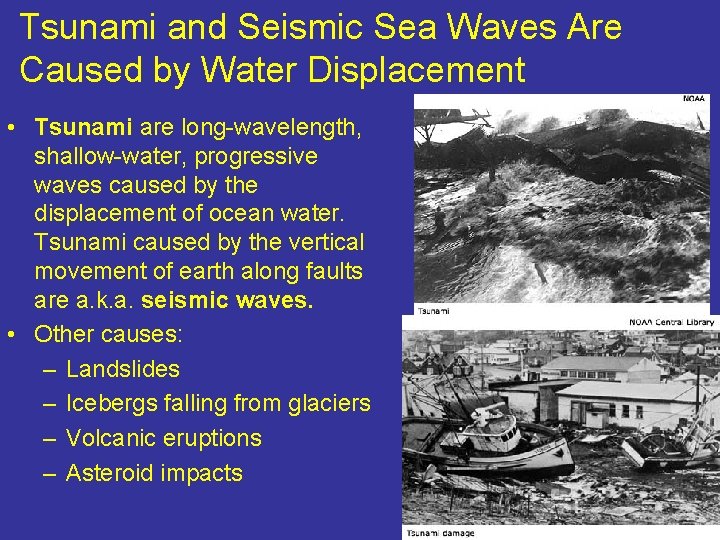
Tsunami and Seismic Sea Waves Are Caused by Water Displacement • Tsunami are long-wavelength, shallow-water, progressive waves caused by the displacement of ocean water. Tsunami caused by the vertical movement of earth along faults are a. k. a. seismic waves. • Other causes: – Landslides – Icebergs falling from glaciers – Volcanic eruptions – Asteroid impacts
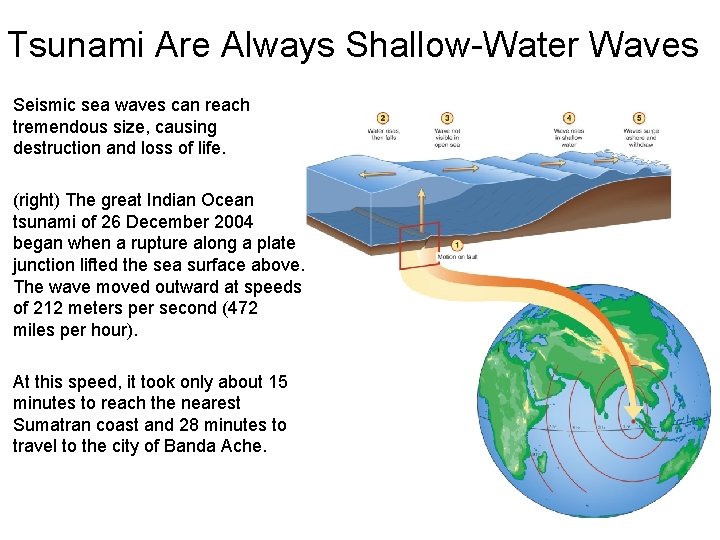
Tsunami Are Always Shallow-Water Waves Seismic sea waves can reach tremendous size, causing destruction and loss of life. (right) The great Indian Ocean tsunami of 26 December 2004 began when a rupture along a plate junction lifted the sea surface above. The wave moved outward at speeds of 212 meters per second (472 miles per hour). At this speed, it took only about 15 minutes to reach the nearest Sumatran coast and 28 minutes to travel to the city of Banda Ache.
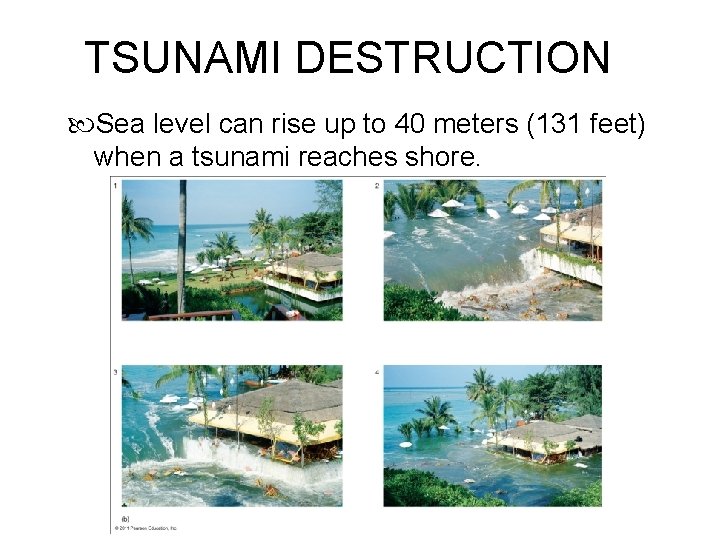
TSUNAMI DESTRUCTION Sea level can rise up to 40 meters (131 feet) when a tsunami reaches shore.
Storm Surges form beneath Strong Cyclonic Storms • A storm surge is an abrupt bulge of water driven on shore by a tropical cyclone or a frontal storm. • Storm surges are short-lived. • Storm surges consist of only a crest, so they cannot be assigned a period or wavelength, and cannot be called a wave.
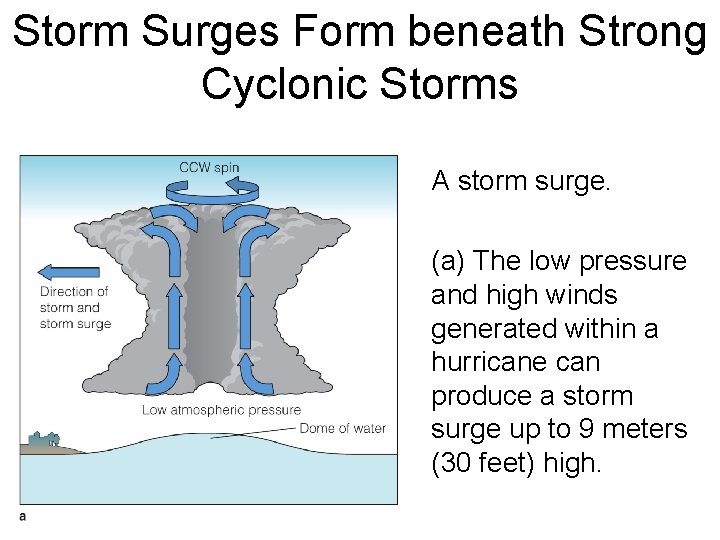
Storm Surges Form beneath Strong Cyclonic Storms A storm surge. (a) The low pressure and high winds generated within a hurricane can produce a storm surge up to 9 meters (30 feet) high.