
Waves 1 The Transfer of Energy The Basics
Waves 1 The Transfer of Energy
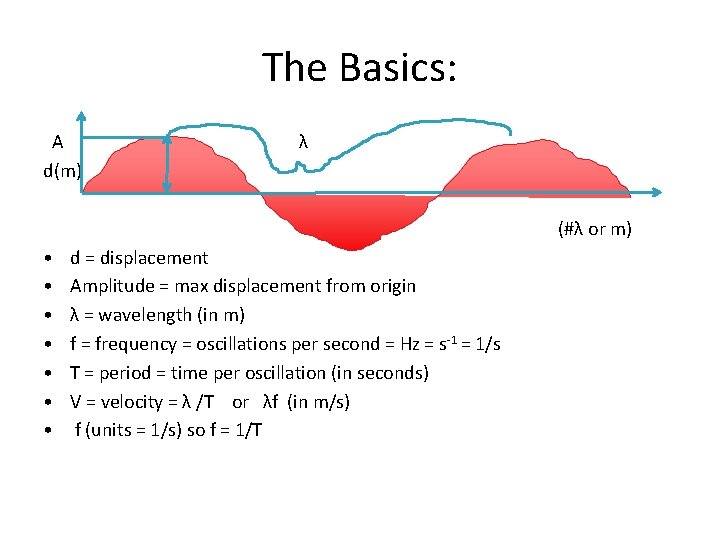
The Basics: A λ d(m) (#λ or m) • d = displacement • Amplitude = max displacement from origin • λ = wavelength (in m) • f = frequency = oscillations per second = Hz = s-1 = 1/s • T = period = time per oscillation (in seconds) • V = velocity = λ /T or λf (in m/s) • f (units = 1/s) so f = 1/T
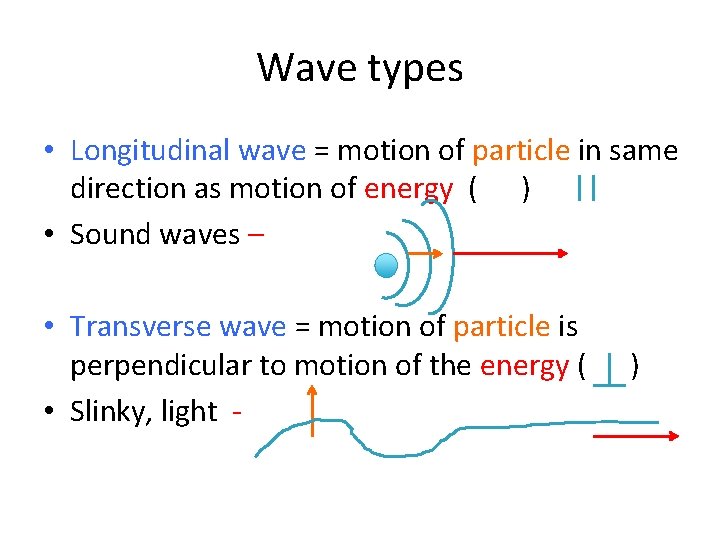
Wave types • Longitudinal wave = motion of particle in same direction as motion of energy ( ) • Sound waves – • Transverse wave = motion of particle is perpendicular to motion of the energy ( ) • Slinky, light -
Waves investigation A • Discuss your observations as a class when finished….
Superposition • Waves in a medium pass each other without being disturbed • http: //www. acs. psu. edu/drussell/Demos/sup erposition/superposition. html
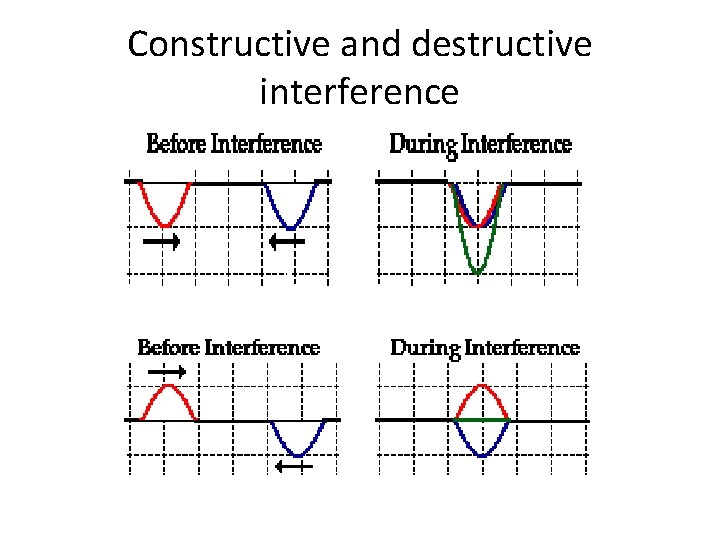
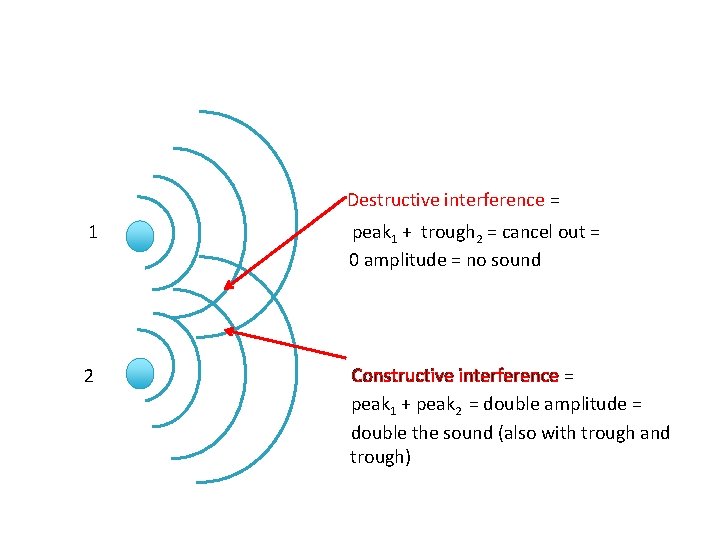
Constructive and destructive interference
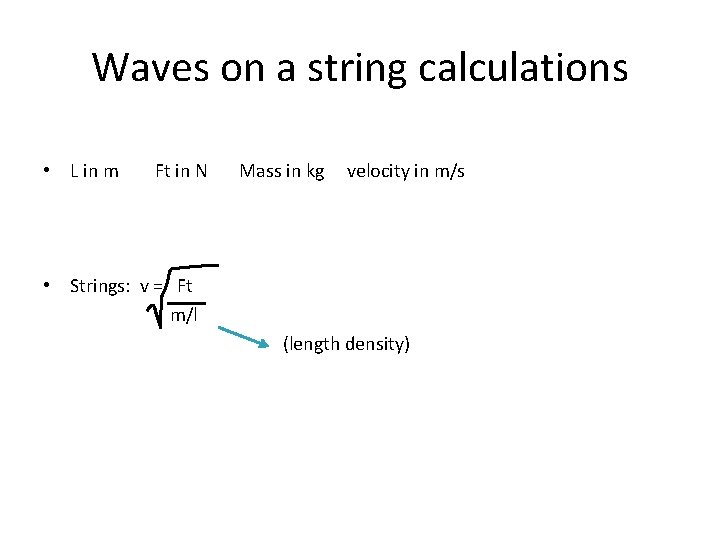
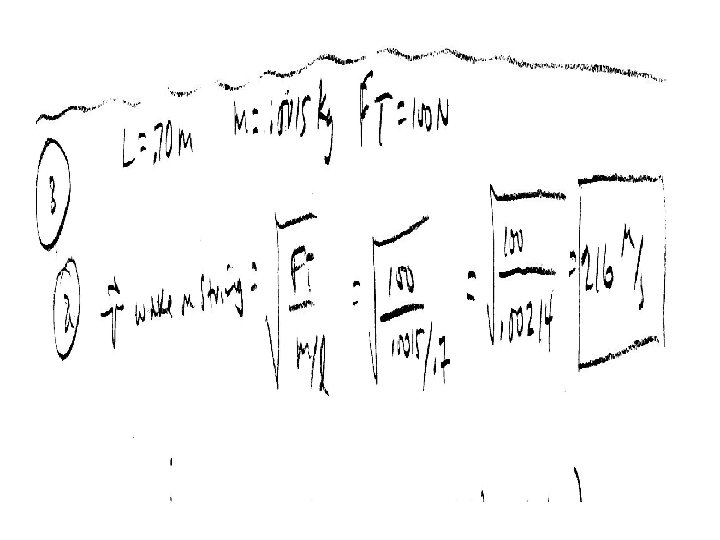
Waves on a string calculations • L in m Ft in N Mass in kg velocity in m/s • Strings: v = Ft m/l (length density)
Standing waves • 2 waves moving in opposite directions have interference that results in a stationary wave pattern – no net propagation of energy! (demo) • Note: wave can appear and disappear in same spot – no forward propagation! • Also happens when medium is moving in opposite direction as wave (standing wave in river) • Show Waimea river standing wave • https: //www. youtube. com/watch? v=18 BL 7 MKjt. ZM • Making standing waves 30 s – 1: 30 s • https: //www. youtube. com/watch? v=Np. Eevf. OU 4 Z 8
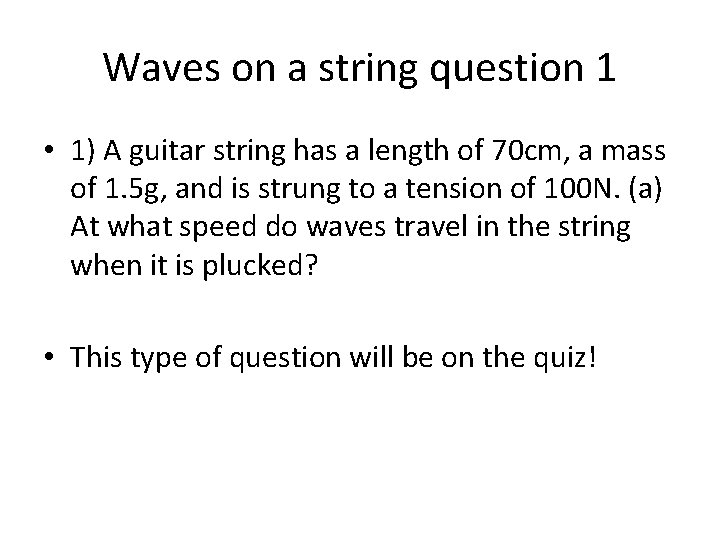
Waves on a string question 1 • 1) A guitar string has a length of 70 cm, a mass of 1. 5 g, and is strung to a tension of 100 N. (a) At what speed do waves travel in the string when it is plucked? • This type of question will be on the quiz!
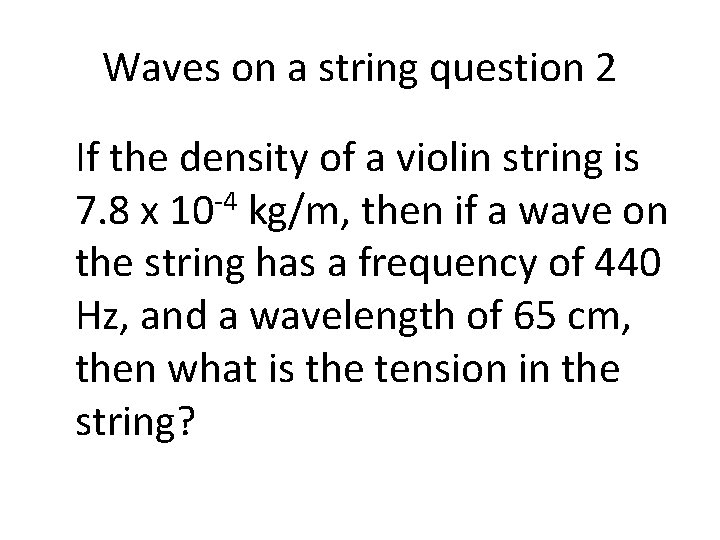
Waves on a string question 2 If the density of a violin string is 7. 8 x 10 -4 kg/m, then if a wave on the string has a frequency of 440 Hz, and a wavelength of 65 cm, then what is the tension in the string?
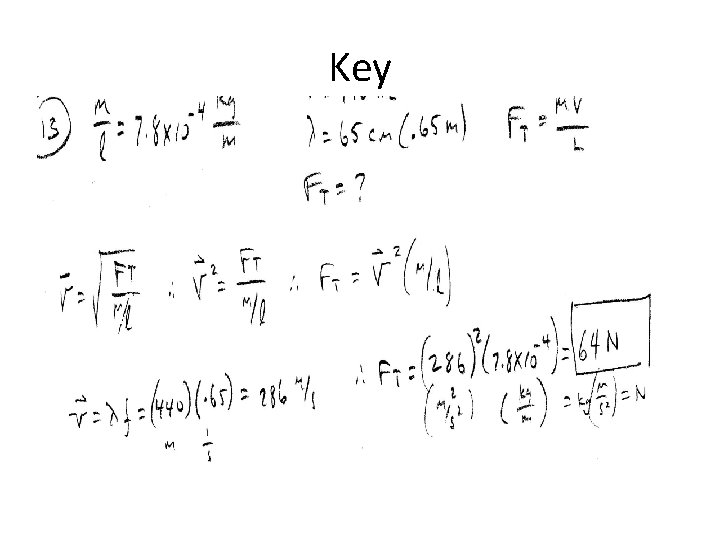
Key
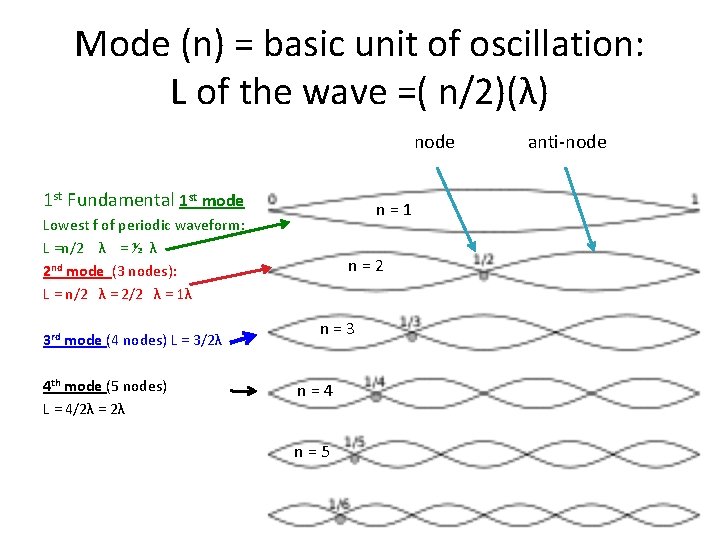
Mode (n) = basic unit of oscillation: L of the wave =( n/2)(λ) node anti-node 1 st Fundamental 1 st mode n = 1 Lowest f of periodic waveform: L =n/2 λ = ½ λ 2 nd mode (3 nodes): L = n/2 λ = 2/2 λ = 1λ 3 rd mode (4 nodes) L = 3/2λ 4 th mode (5 nodes) L = 4/2λ = 2λ n = 2 n = 3 n = 4 n = 5
Conduct investigation B here
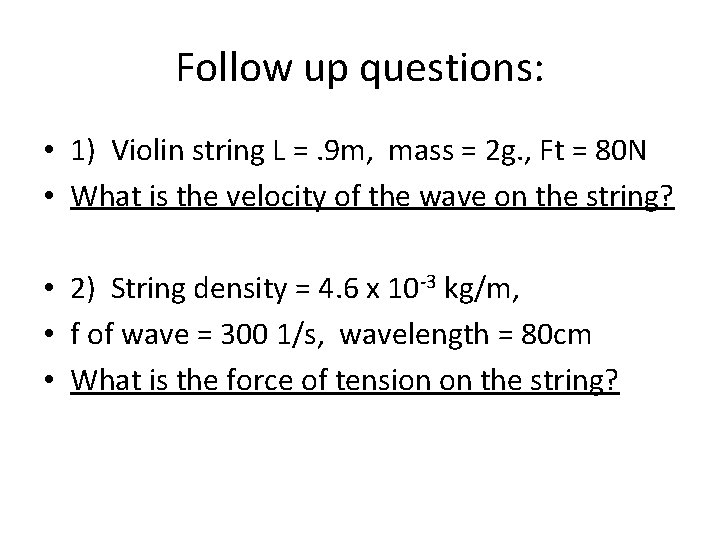
Follow up questions: • 1) Violin string L =. 9 m, mass = 2 g. , Ft = 80 N • What is the velocity of the wave on the string? • 2) String density = 4. 6 x 10 -3 kg/m, • f of wave = 300 1/s, wavelength = 80 cm • What is the force of tension on the string?
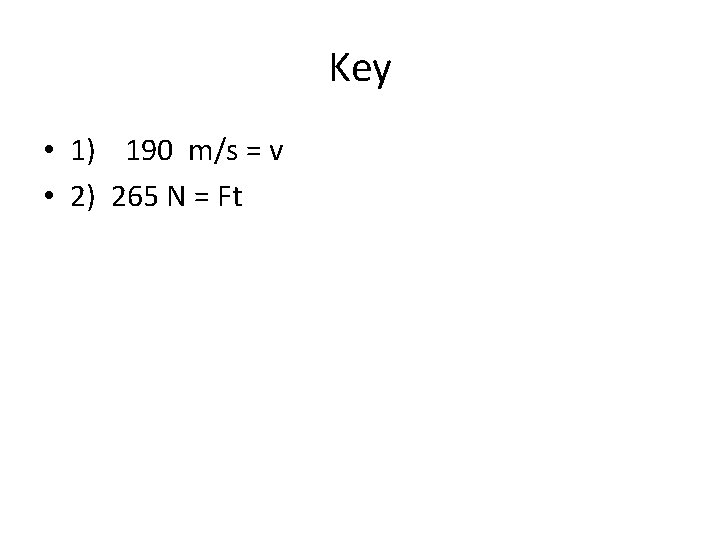
Key • 1) 190 m/s = v • 2) 265 N = Ft
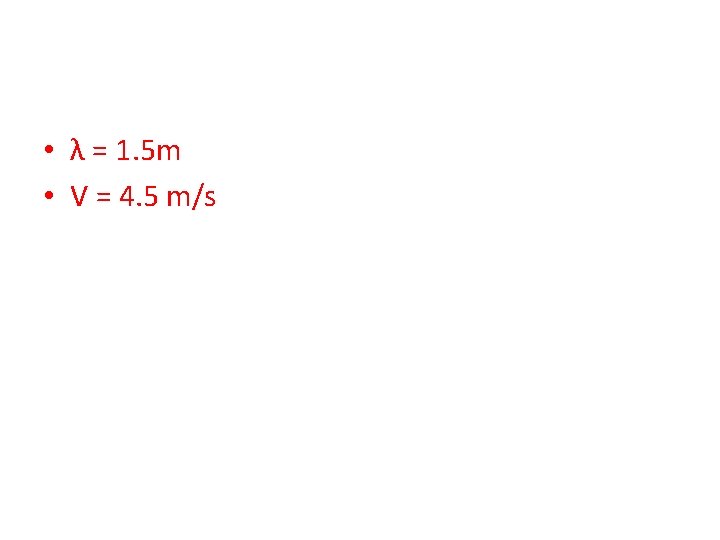
Follow up questions • Orville and Wilber are standing 3 meters apart with a spring that has a total of 5 nodes (including the ends) when it has a frequency of 3 cycles/second. • A. What is the wavelength of the wave on the spring? • What is the velocity of the wave on the spring?
Quiz • Waves on a string here
Sound waves • • • Longitudinal waves = particle motion in same direction as energy motion Hearing ~ 20 to 20, 000 Hz (sound generator) http: //plasticity. szynalski. com/tone-generator. htm Loudness = amplitude Pitch = frequency Rubens tube: tone generator and “the lion sleeps tonight”
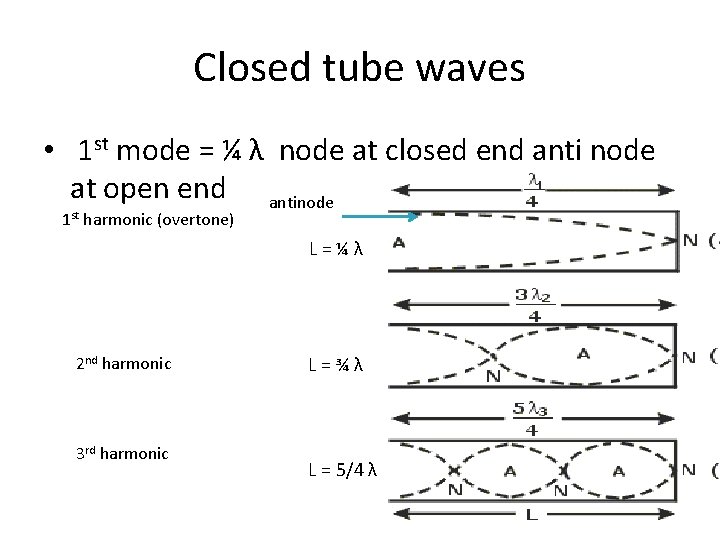
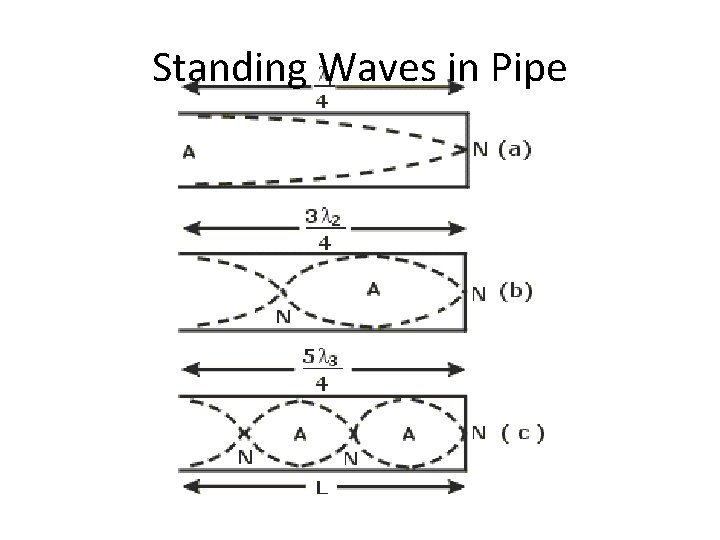
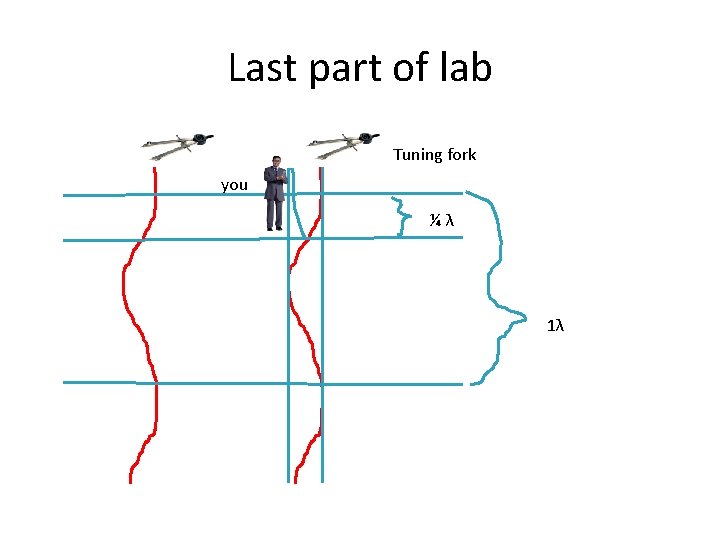
Closed tube waves • 1 st mode = ¼ λ node at closed end anti node at open end antinode 1 st harmonic (overtone) L = ¼ λ 2 nd harmonic 3 rd harmonic L = ¾ λ L = 5/4 λ
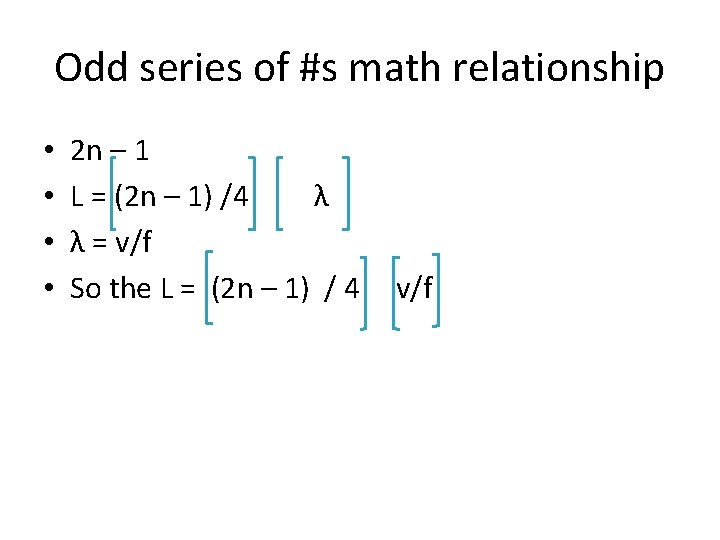
Odd series of #s math relationship • • 2 n – 1 L = (2 n – 1) /4 λ λ = v/f So the L = (2 n – 1) / 4 v/f
Investigation C here
Sound videos • https: //www. youtube. com/watch? v=Ude 8 p. Pj aw. KI • https: //www. youtube. com/watch? v=Mws. GUL Cv. MBk • https: //www. youtube. com/watch? v=c. K 26 cgqg. YA
Acoustics • https: //www. youtube. com/watch? v=JPYt 10 zr cl. Q
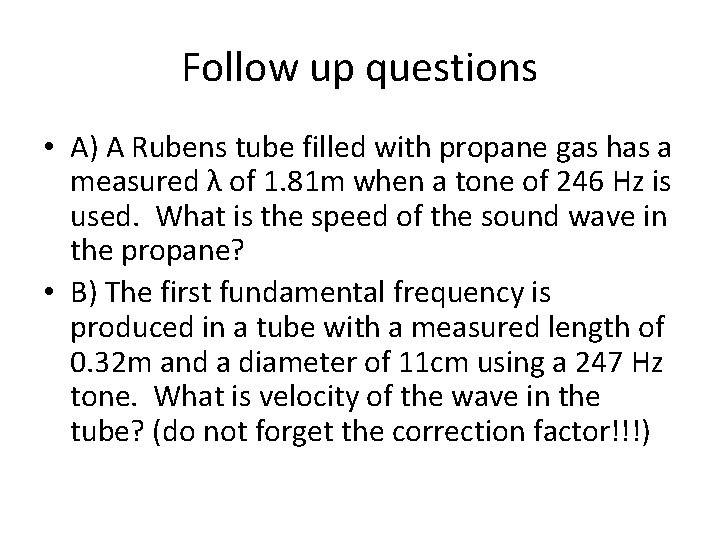
Follow up questions • A) A Rubens tube filled with propane gas has a measured λ of 1. 81 m when a tone of 246 Hz is used. What is the speed of the sound wave in the propane? • B) The first fundamental frequency is produced in a tube with a measured length of 0. 32 m and a diameter of 11 cm using a 247 Hz tone. What is velocity of the wave in the tube? (do not forget the correction factor!!!)
The answers • A) 445 m/s • B) 359. 6 m/s
More fun questions • A) If the temperature of a room filled with air is 32 OC (at one atmosphere of pressure), what is the velocity of a sound wave in the room? • The answer: 350. 2 m/s
Doppler effect here
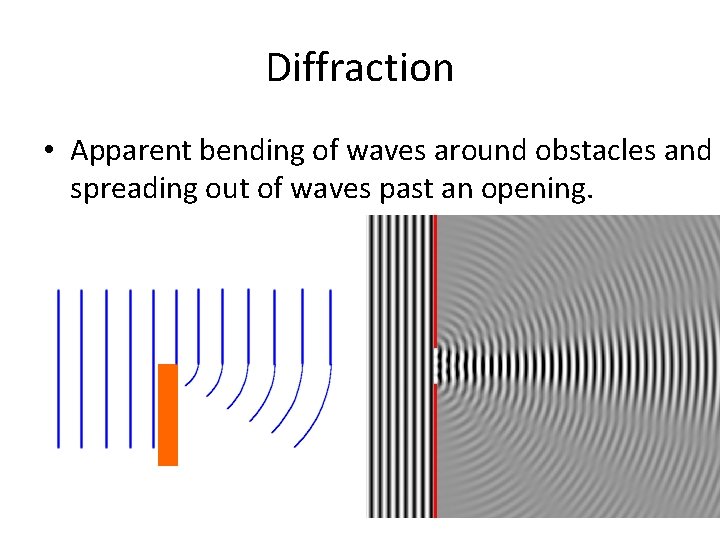
Diffraction • Apparent bending of waves around obstacles and spreading out of waves past an opening.
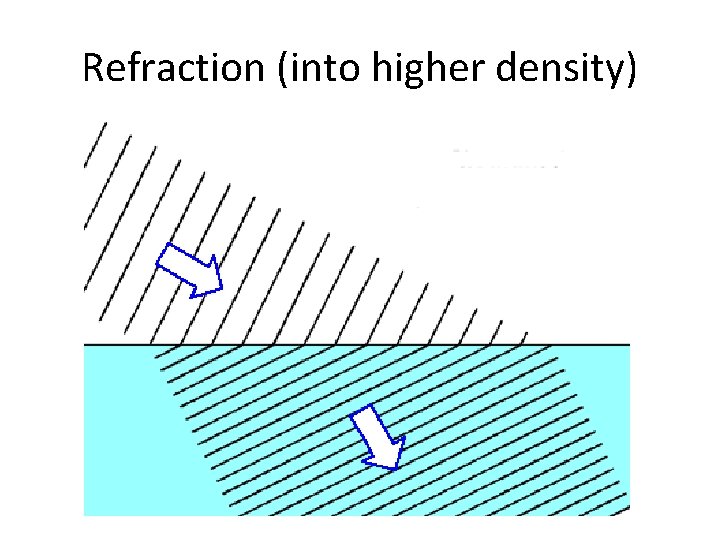
Refraction (into higher density)
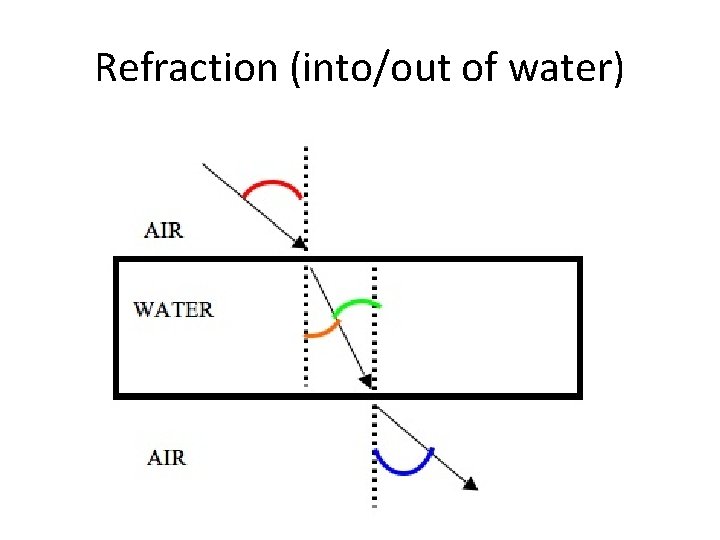
Refraction (into/out of water)
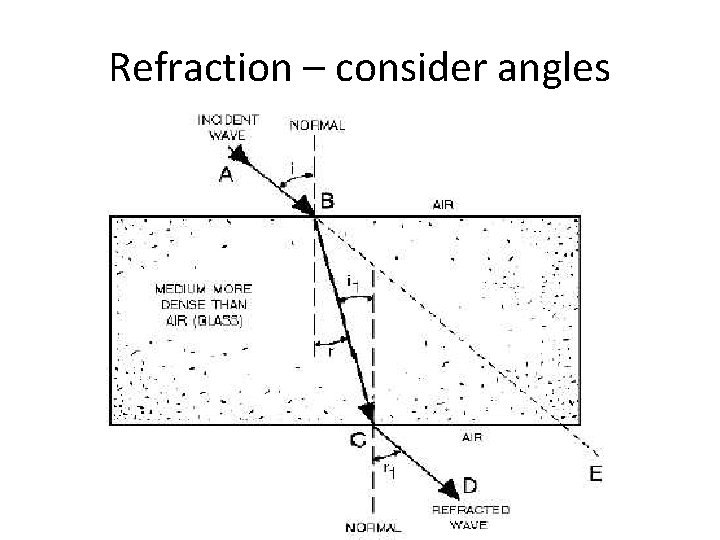
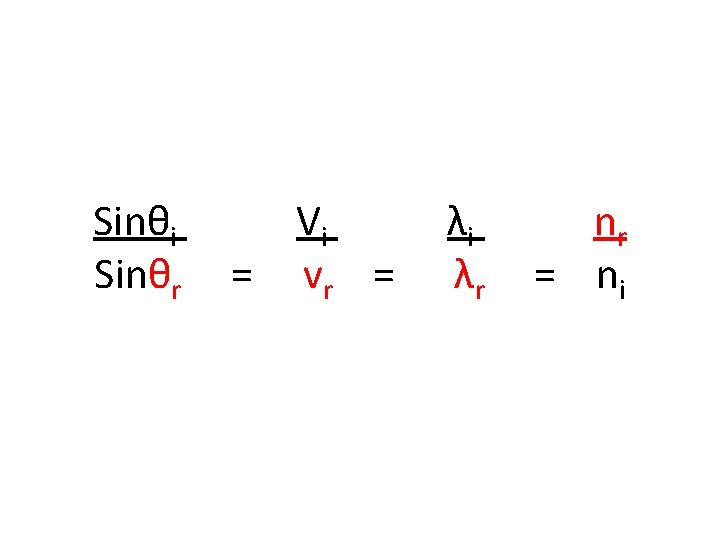
Refraction – consider angles
Sinθi Vi λi nr Sinθr = vr = λr = ni
Wave interference

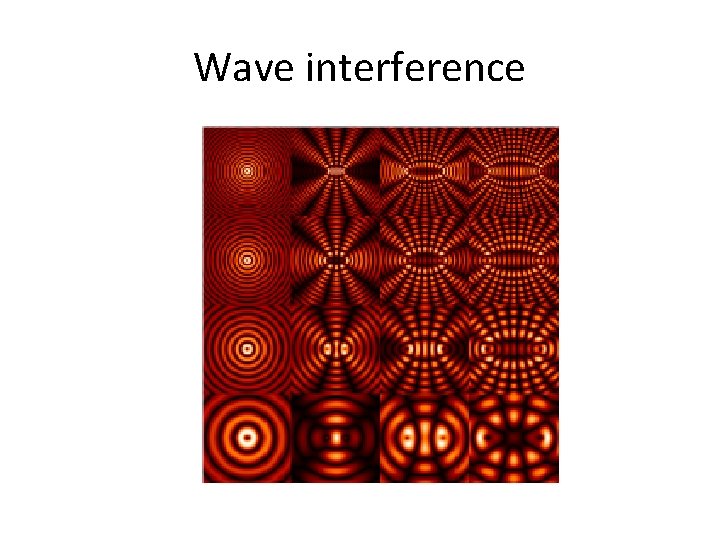
• Graphic at: http: //www. youtube. com/watch? v=CAe 3 lk. YN Kt 8
Destructive interference = 1 peak 1 + trough 2 = cancel out = 0 amplitude = no sound 2 Constructive interference = peak 1 + peak 2 = double amplitude = double the sound (also with trough and trough)
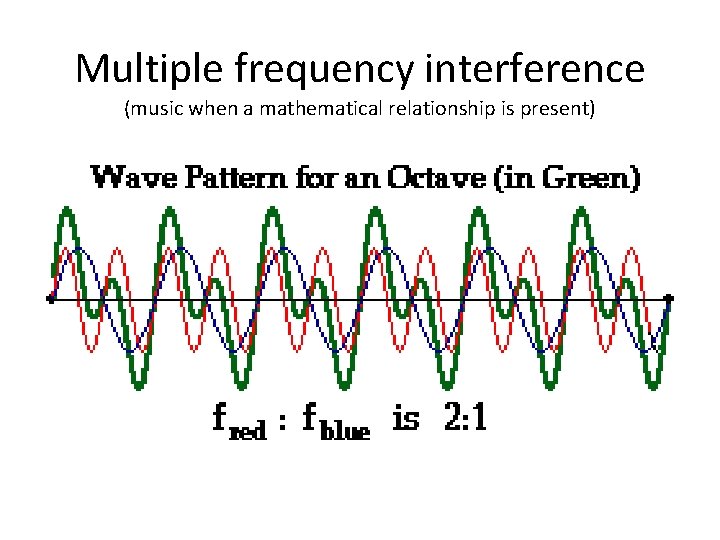
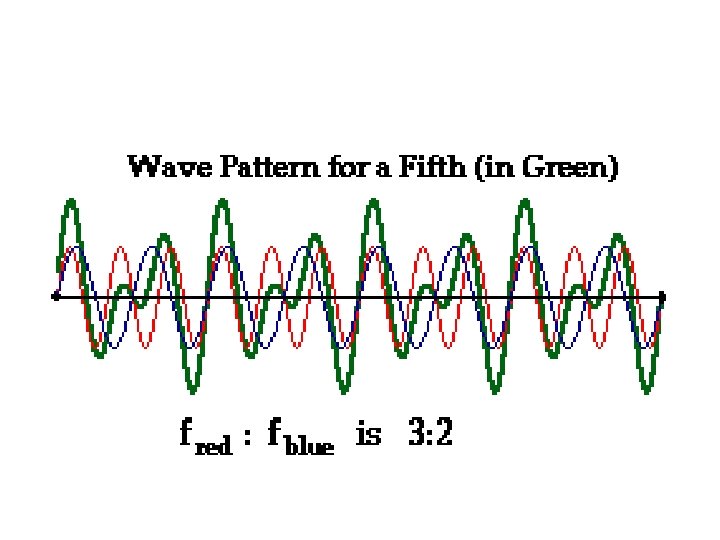
Multiple frequency interference (music when a mathematical relationship is present)
BEATS • Periodic and repeating fluctuations heard in the intensity of a sound when two sound waves of similar frequencies interfere with each other.
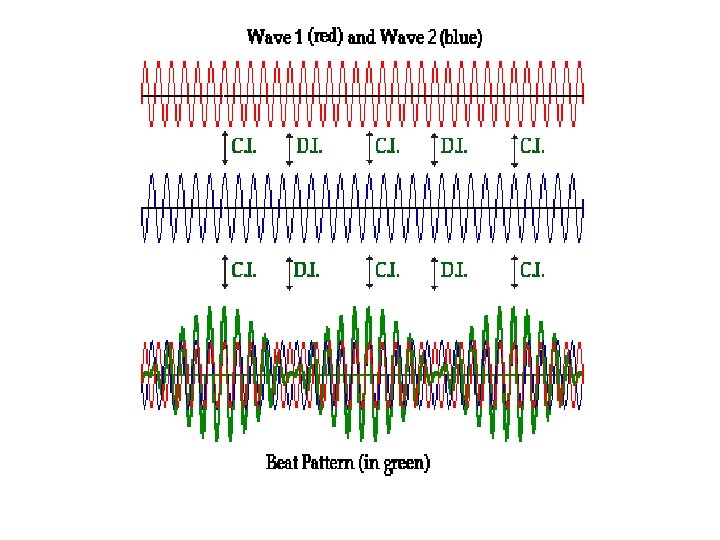
• The beat frequency = the difference in the frequency of the two notes. • Ex: 2 sound waves with 256 and 254 Hz are played at the same time, a beat frequency of 2 Hz will be detected.
Standing Waves in Pipe
Last part of lab Tuning fork you ¼ λ 1λ
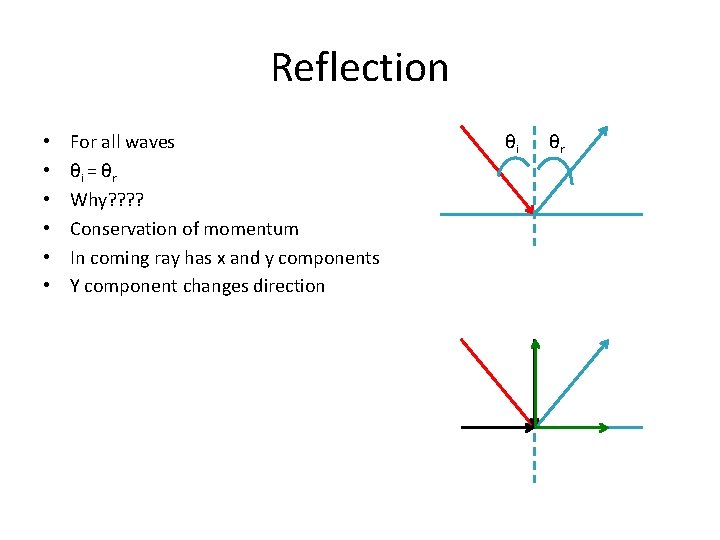
Reflection • • • For all waves θi θr θi = θr Why? ? Conservation of momentum In coming ray has x and y components Y component changes direction
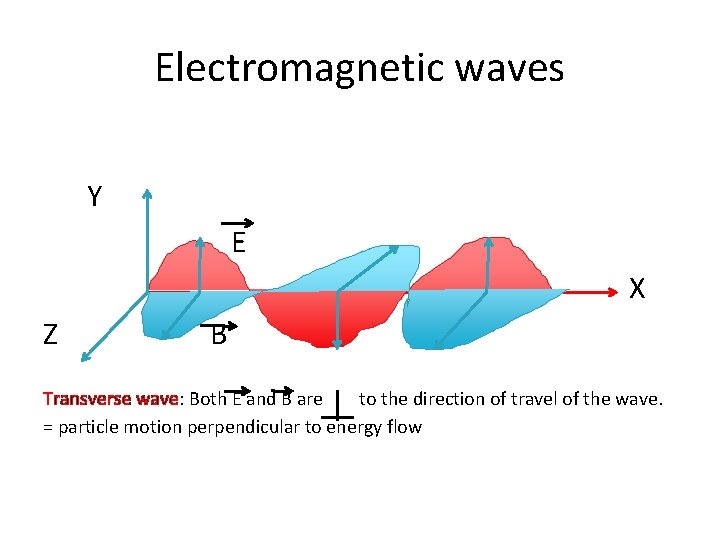
Electromagnetic waves Y E X Z B Transverse wave: Both E and B are to the direction of travel of the wave. = particle motion perpendicular to energy flow
The speed of light • c = 3. 0 x 108 m/s • In a vacuum • Slower through dense materials
- Slides: 47