
Wavepackets Outline Review Reflection Refraction Superposition of Plane

- Slides: 26
Wavepackets Outline - Review: Reflection & Refraction - Superposition of Plane Waves - Wavepackets - Δk – Δx Relations
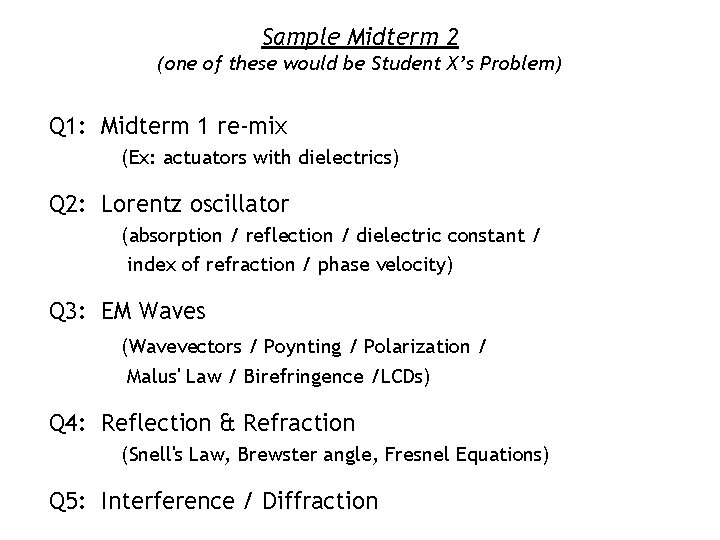
Sample Midterm 2 (one of these would be Student X’s Problem) Q 1: Midterm 1 re-mix (Ex: actuators with dielectrics) Q 2: Lorentz oscillator (absorption / reflection / dielectric constant / index of refraction / phase velocity) Q 3: EM Waves (Wavevectors / Poynting / Polarization / Malus' Law / Birefringence /LCDs) Q 4: Reflection & Refraction (Snell's Law, Brewster angle, Fresnel Equations) Q 5: Interference / Diffraction
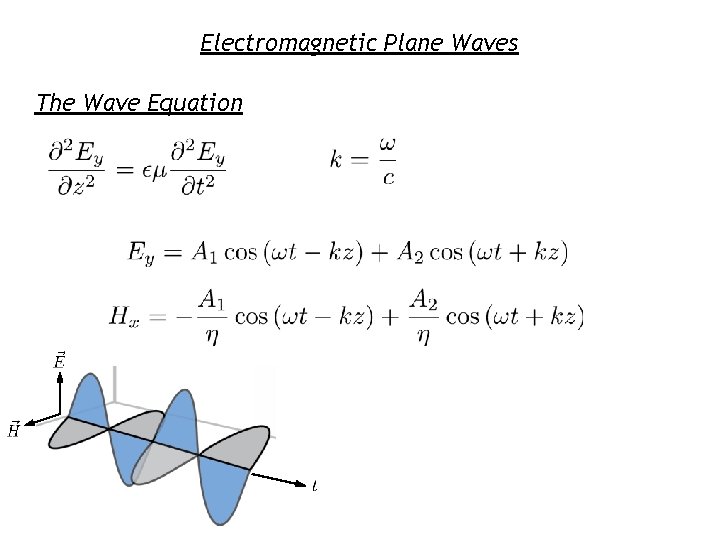
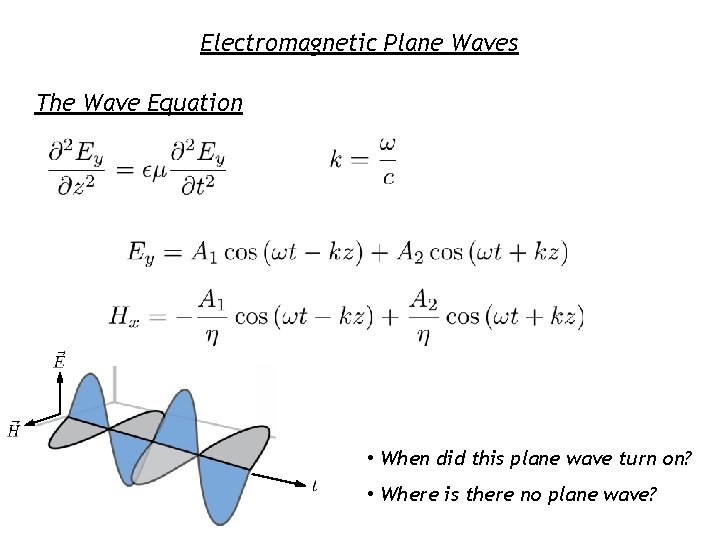
Electromagnetic Plane Waves The Wave Equation
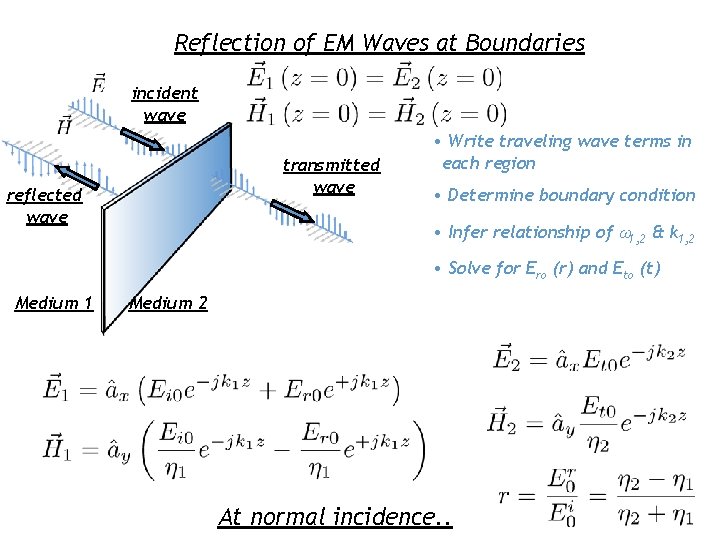
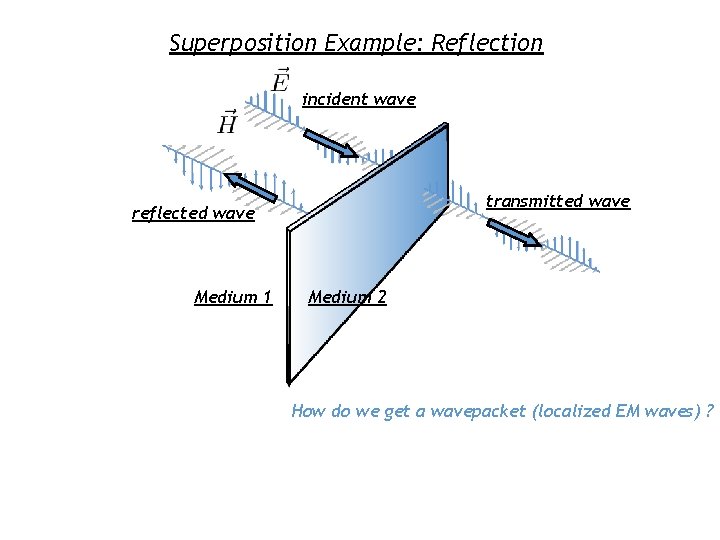
Reflection of EM Waves at Boundaries incident wave • Write traveling wave terms in each region • Determine boundary condition transmitted wave • Infer relationship of ω1, 2 & k 1, 2 reflected wave Medium 1 • Solve for Ero (r) and Eto (t) Medium 2
Reflection of EM Waves at Boundaries incident wave transmitted wave reflected wave • Write traveling wave terms in each region • Determine boundary condition • Infer relationship of ω1, 2 & k 1, 2 • Solve for Ero (r) and Eto (t) Medium 1 Medium 2 At normal incidence. .
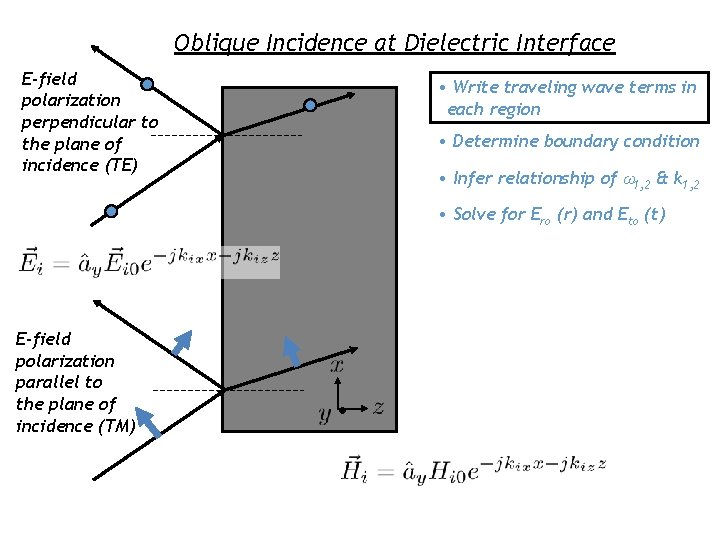
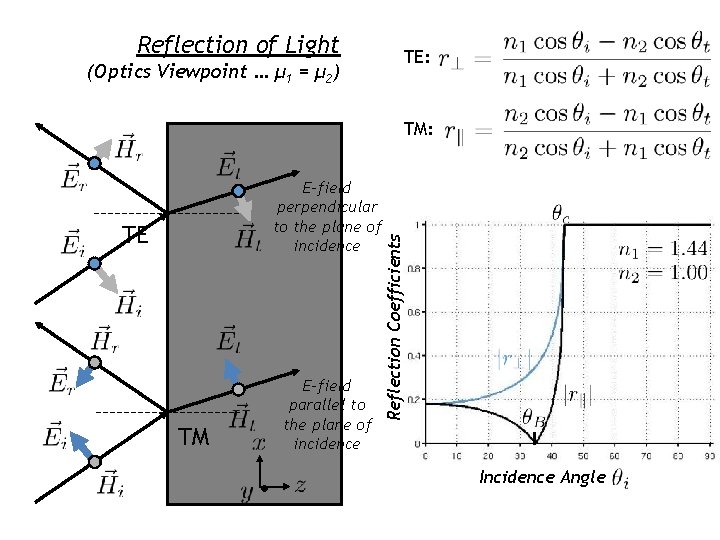
Oblique Incidence at Dielectric Interface E-field polarization perpendicular to the plane of incidence (TE) • Write traveling wave terms in each region • Determine boundary condition • Infer relationship of ω1, 2 & k 1, 2 • Solve for Ero (r) and Eto (t) E-field polarization parallel to the plane of incidence (TM) •
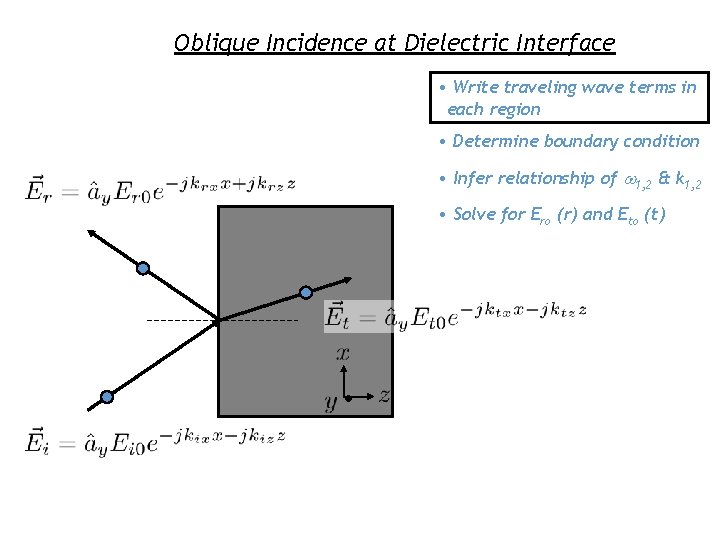
Oblique Incidence at Dielectric Interface • Write traveling wave terms in each region • Determine boundary condition • Infer relationship of w 1, 2 & k 1, 2 • Solve for Ero (r) and Eto (t) •
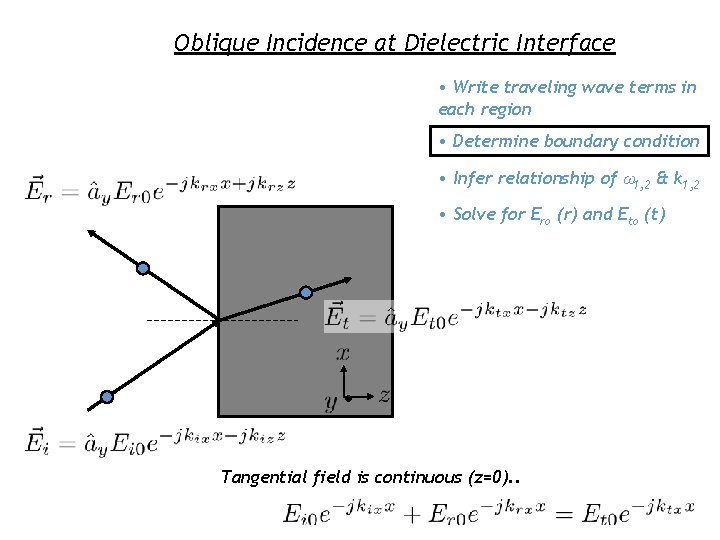
Oblique Incidence at Dielectric Interface • Write traveling wave terms in each region • Determine boundary condition • Infer relationship of ω1, 2 & k 1, 2 • Solve for Ero (r) and Eto (t) • Tangential field is continuous (z=0). .
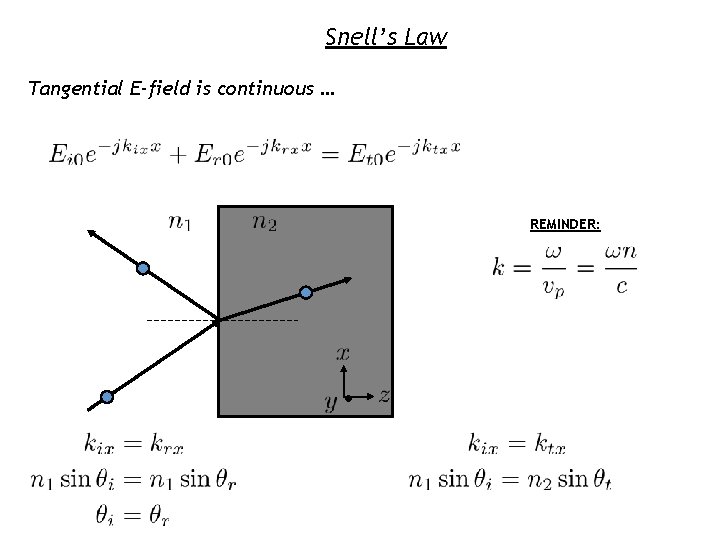
Snell’s Law Tangential E-field is continuous … REMINDER: •
Reflection of Light (Optics Viewpoint … μ 1 = μ 2) TE: E-field perpendicular to the plane of incidence TE E-field parallel to the plane of incidence TM • Reflection Coefficients TM: Incidence Angle
Electromagnetic Plane Waves The Wave Equation • When did this plane wave turn on? • Where is there no plane wave?
Superposition Example: Reflection incident wave transmitted wave reflected wave Medium 1 Medium 2 How do we get a wavepacket (localized EM waves) ?
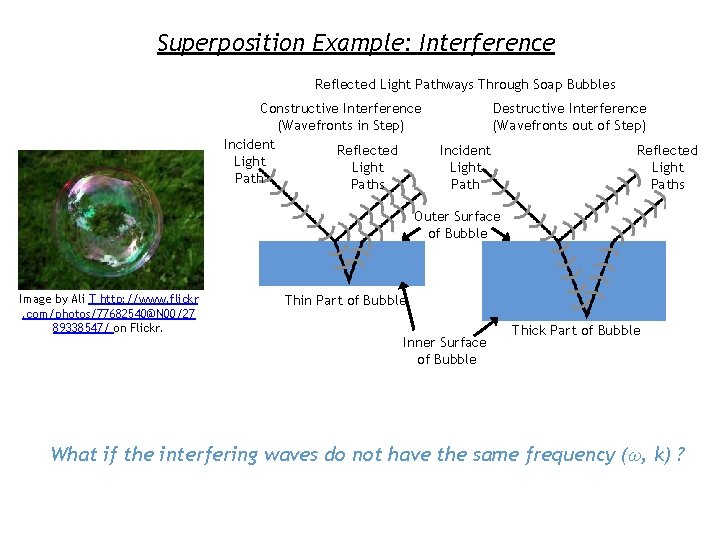
Superposition Example: Interference Reflected Light Pathways Through Soap Bubbles Constructive Interference (Wavefronts in Step) Incident Reflected Light Paths Destructive Interference (Wavefronts out of Step) Incident Light Path Reflected Light Paths Outer Surface of Bubble Image by Ali T http: //www. flickr. com/photos/77682540@N 00/27 89338547/ on Flickr. Thin Part of Bubble Inner Surface of Bubble Thick Part of Bubble What if the interfering waves do not have the same frequency (ω, k) ?
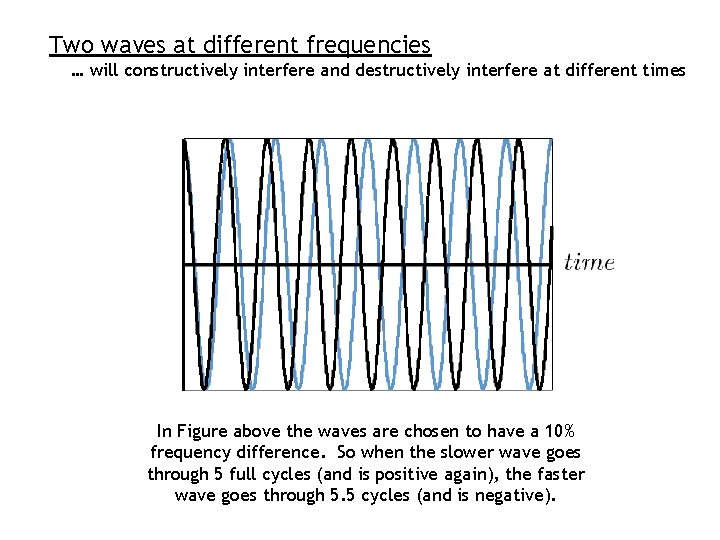
Two waves at different frequencies … will constructively interfere and destructively interfere at different times In Figure above the waves are chosen to have a 10% frequency difference. So when the slower wave goes through 5 full cycles (and is positive again), the faster wave goes through 5. 5 cycles (and is negative).
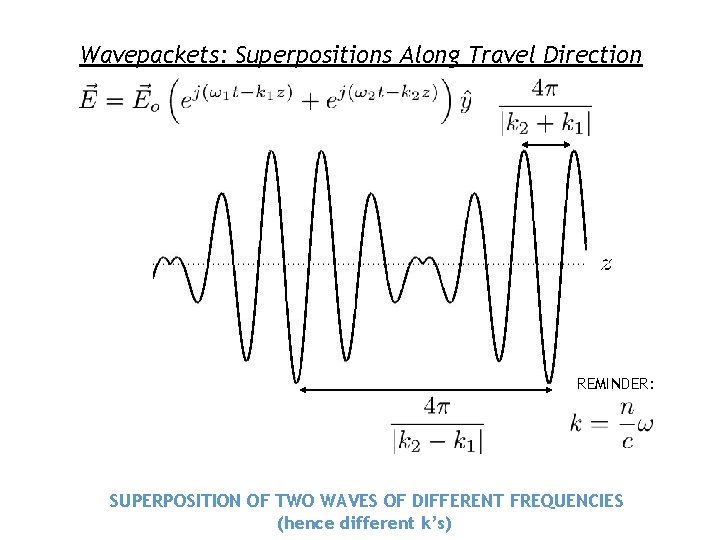
Wavepackets: Superpositions Along Travel Direction REMINDER: SUPERPOSITION OF TWO WAVES OF DIFFERENT FREQUENCIES (hence different k’s)
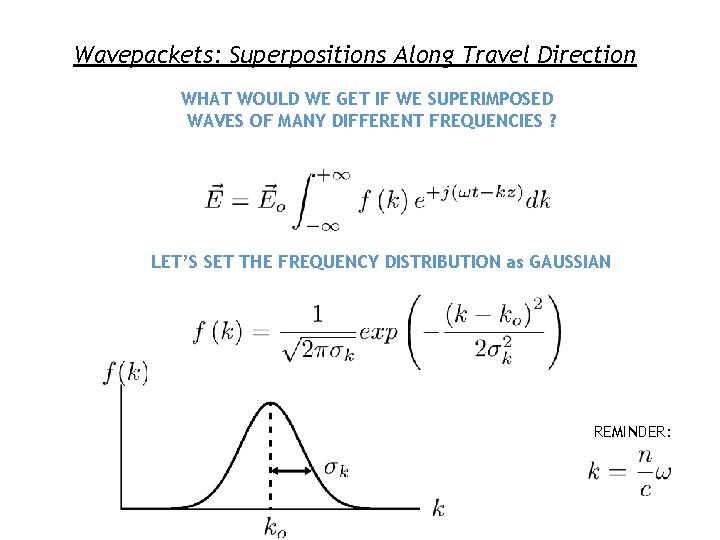
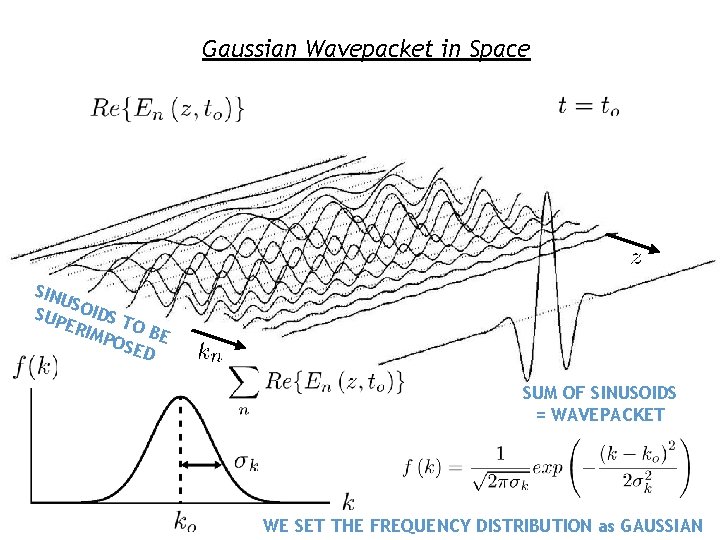
Wavepackets: Superpositions Along Travel Direction WHAT WOULD WE GET IF WE SUPERIMPOSED WAVES OF MANY DIFFERENT FREQUENCIES ? LET’S SET THE FREQUENCY DISTRIBUTION as GAUSSIAN REMINDER:
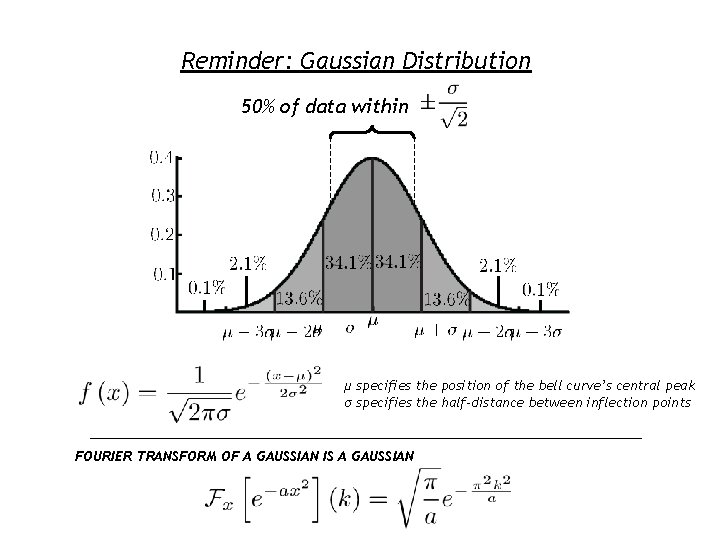
Reminder: Gaussian Distribution 50% of data within μ specifies the position of the bell curve’s central peak σ specifies the half-distance between inflection points FOURIER TRANSFORM OF A GAUSSIAN IS A GAUSSIAN
Gaussian Wavepacket in Space SINU S SUP OIDS T ERIM O POS BE ED SUM OF SINUSOIDS = WAVEPACKET WE SET THE FREQUENCY DISTRIBUTION as GAUSSIAN
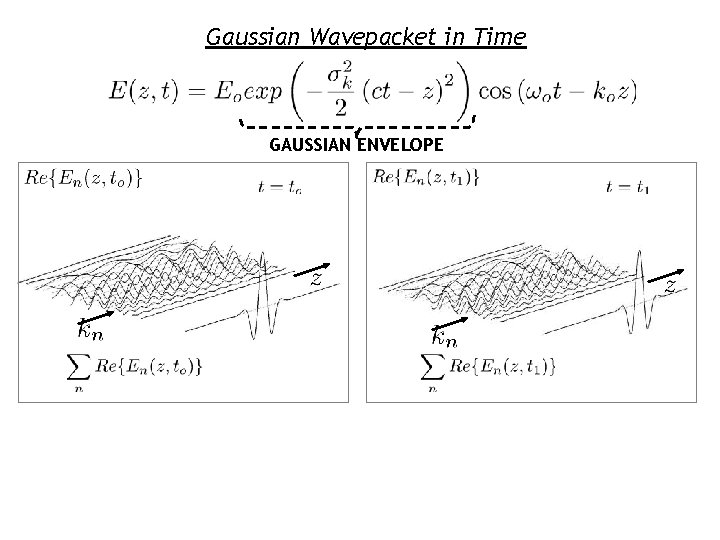
Gaussian Wavepacket in Time GAUSSIAN ENVELOPE
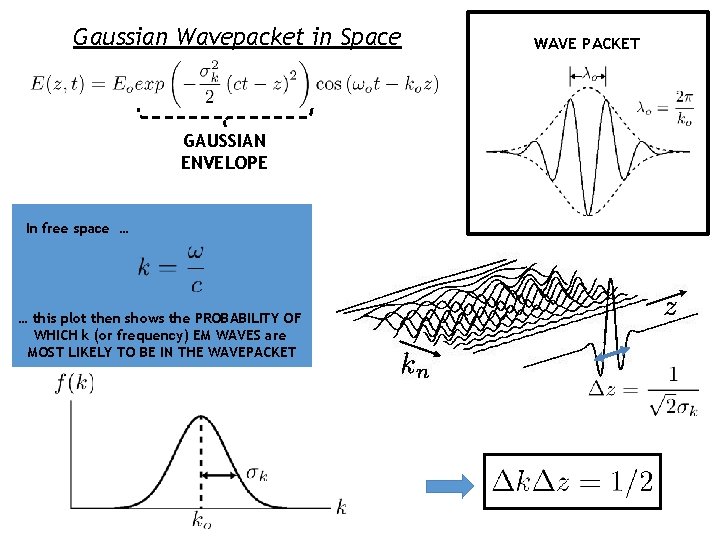
Gaussian Wavepacket in Space GAUSSIAN ENVELOPE In free space … … this plot then shows the PROBABILITY OF WHICH k (or frequency) EM WAVES are MOST LIKELY TO BE IN THE WAVEPACKET WAVE PACKET
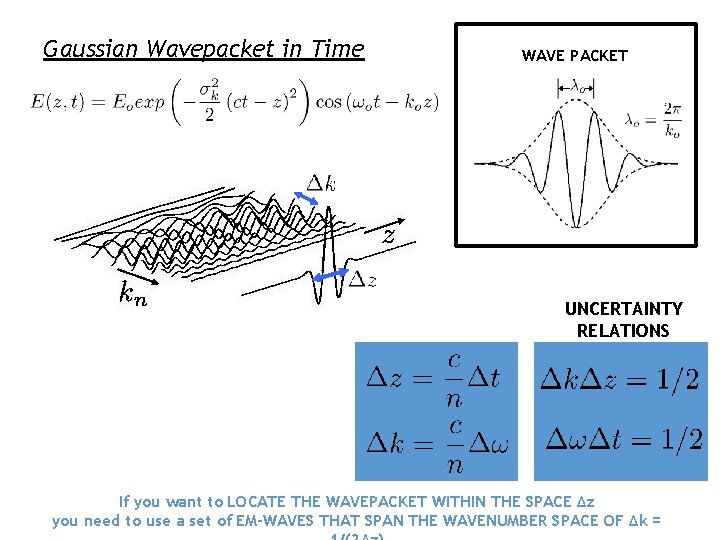
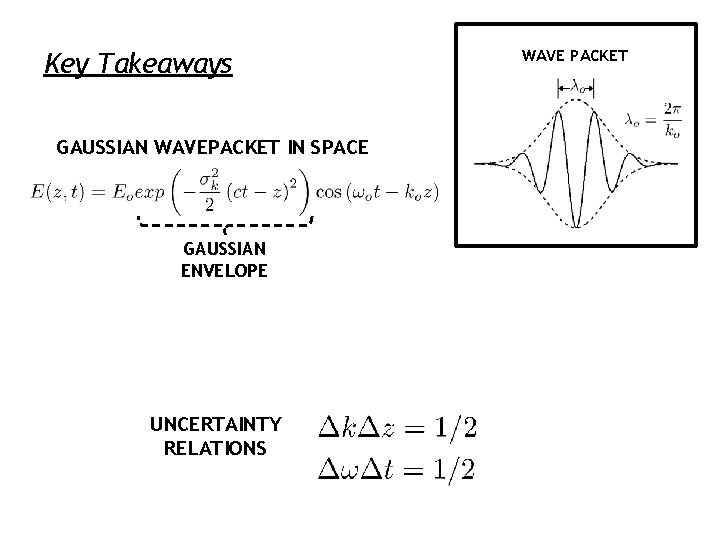
Gaussian Wavepacket in Time WAVE PACKET UNCERTAINTY RELATIONS If you want to LOCATE THE WAVEPACKET WITHIN THE SPACE Δz you need to use a set of EM-WAVES THAT SPAN THE WAVENUMBER SPACE OF Δk =
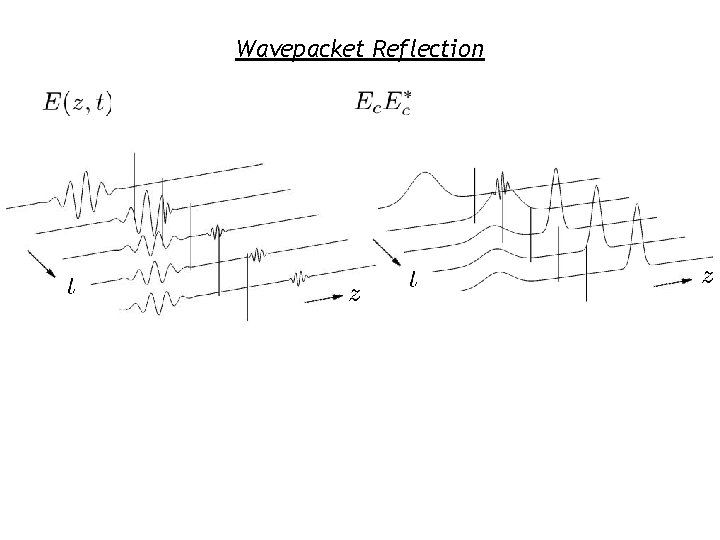
Wavepacket Reflection
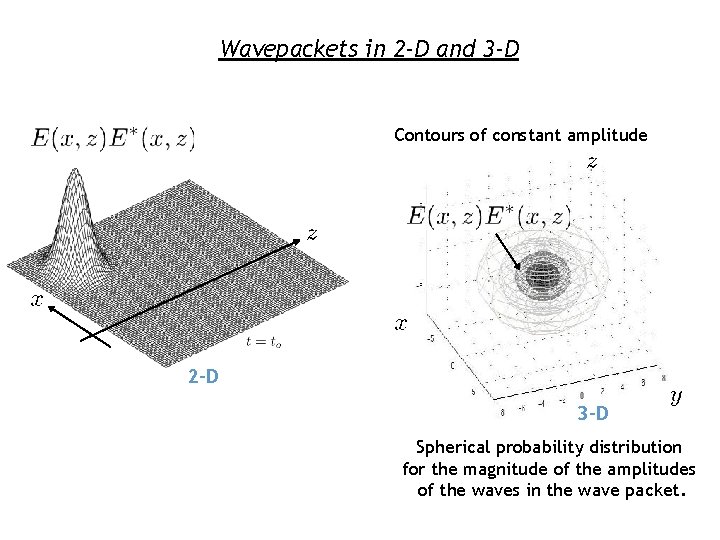
Wavepackets in 2 -D and 3 -D Contours of constant amplitude 2 -D 3 -D Spherical probability distribution for the magnitude of the amplitudes of the waves in the wave packet.
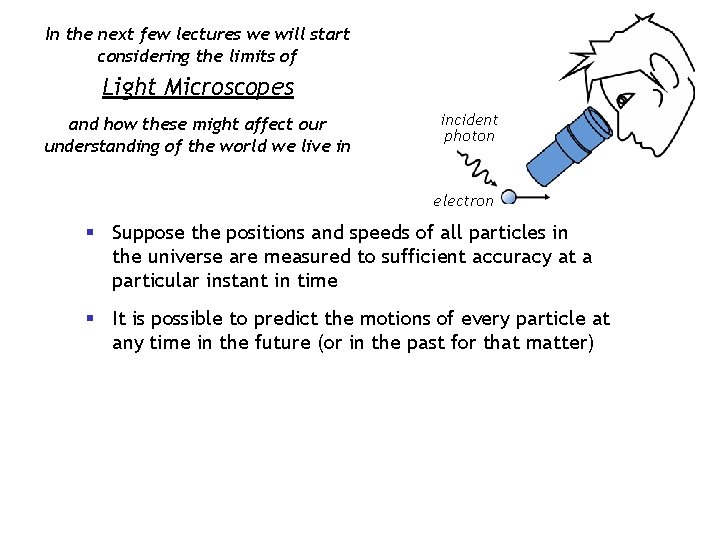
In the next few lectures we will start considering the limits of Light Microscopes and how these might affect our understanding of the world we live in incident photon electron § Suppose the positions and speeds of all particles in the universe are measured to sufficient accuracy at a particular instant in time § It is possible to predict the motions of every particle at any time in the future (or in the past for that matter)
Key Takeaways GAUSSIAN WAVEPACKET IN SPACE GAUSSIAN ENVELOPE UNCERTAINTY RELATIONS WAVE PACKET
MIT Open. Course. Ware http: //ocw. mit. edu 6. 007 Electromagnetic Energy: From Motors to Lasers Spring 2011 For information about citing these materials or our Terms of Use, visit: http: //ocw. mit. edu/terms.