
WaveMechanical Model of the Atom Aim To write
- Slides: 25
Wave-Mechanical Model of the Atom Aim: To write electron configurations and orbital notation representing the wave mechanical model of the atom.
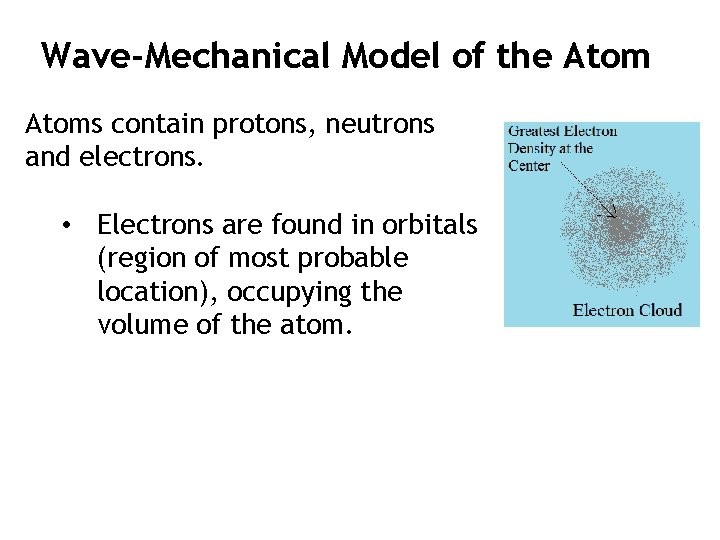
Wave-Mechanical Model of the Atoms contain protons, neutrons and electrons. • Electrons are found in orbitals (region of most probable location), occupying the volume of the atom.
• Each energy level has a number called the PRINCIPAL QUANTUM NUMBER, n • Currently n can be 1 thru 7, because there are 7 periods on the periodic table
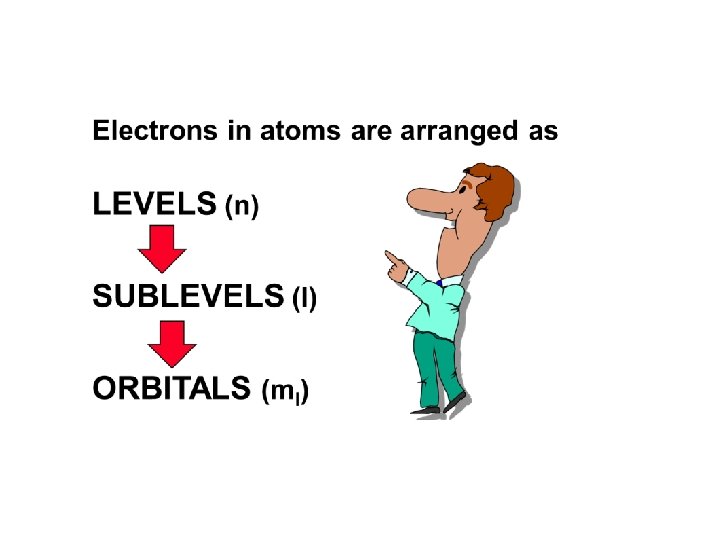
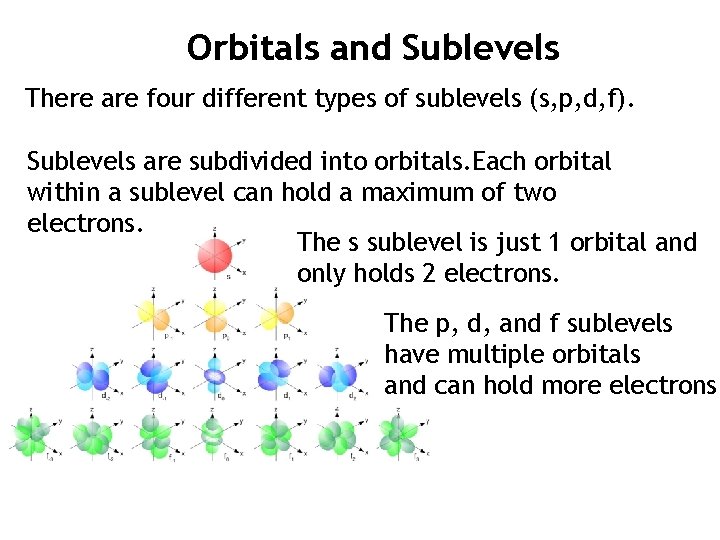
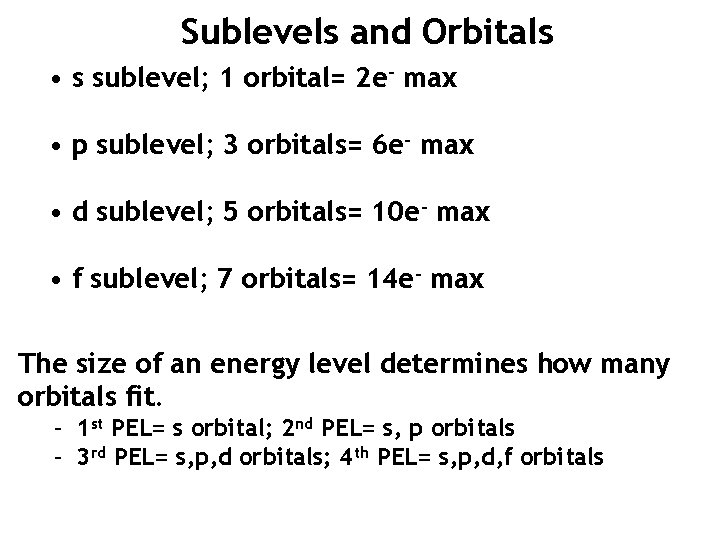
Orbitals and Sublevels There are four different types of sublevels (s, p, d, f). Sublevels are subdivided into orbitals. Each orbital within a sublevel can hold a maximum of two electrons. The s sublevel is just 1 orbital and only holds 2 electrons. The p, d, and f sublevels have multiple orbitals and can hold more electrons
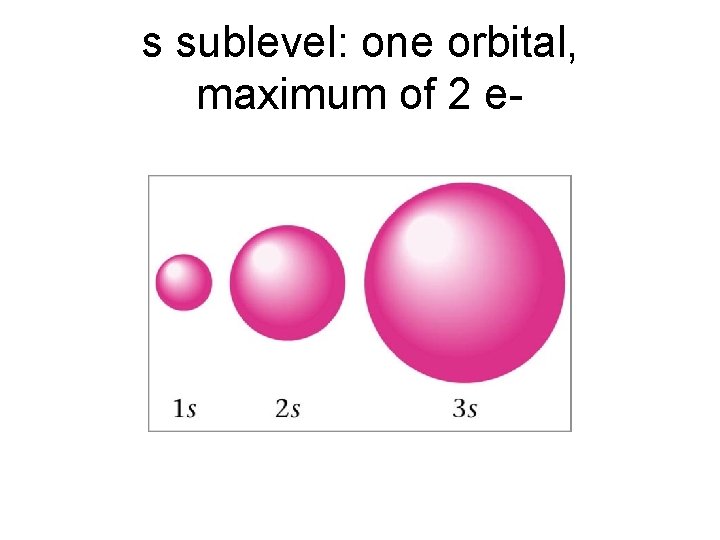
s sublevel: one orbital, maximum of 2 e-
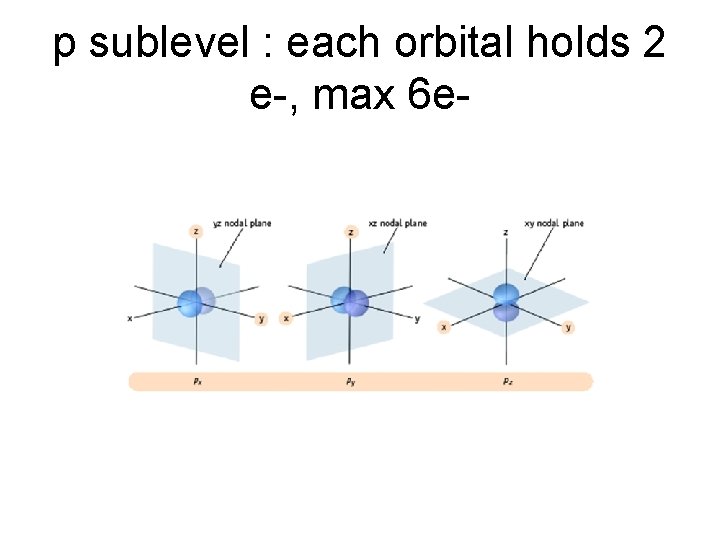
p sublevel : each orbital holds 2 e-, max 6 e-
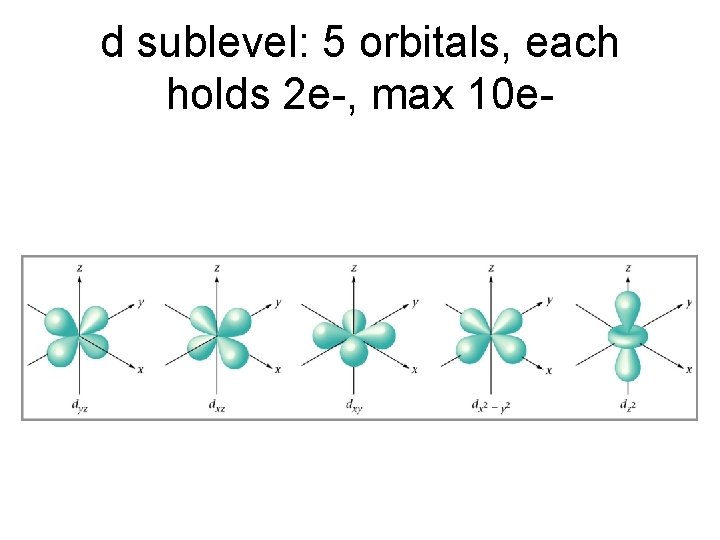
d sublevel: 5 orbitals, each holds 2 e-, max 10 e-
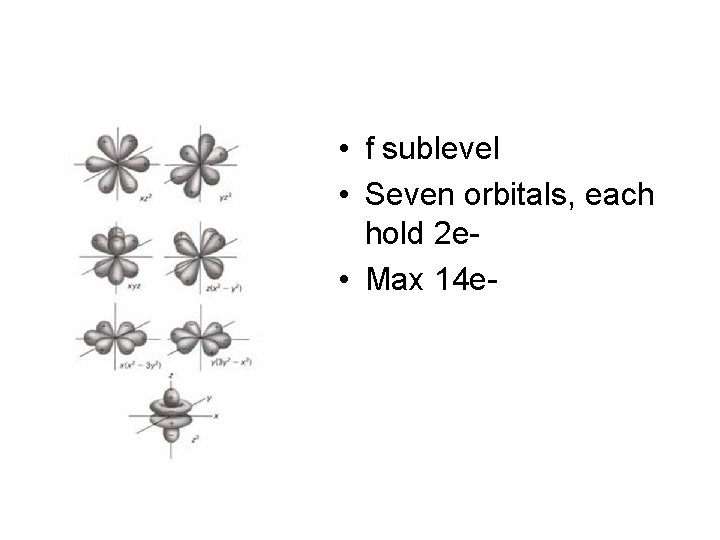
• f sublevel • Seven orbitals, each hold 2 e • Max 14 e-
Sublevels and Orbitals • s sublevel; 1 orbital= 2 e- max • p sublevel; 3 orbitals= 6 e- max • d sublevel; 5 orbitals= 10 e- max • f sublevel; 7 orbitals= 14 e- max The size of an energy level determines how many orbitals fit. – 1 st PEL= s orbital; 2 nd PEL= s, p orbitals – 3 rd PEL= s, p, d orbitals; 4 th PEL= s, p, d, f orbitals
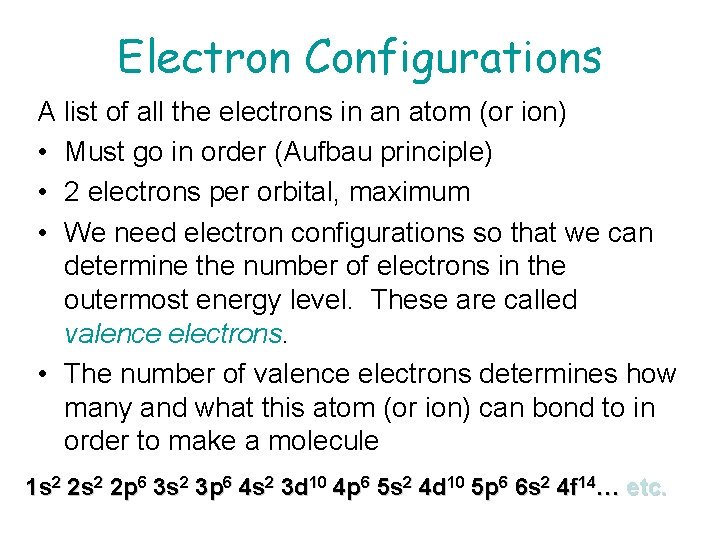
Electron Configurations A list of all the electrons in an atom (or ion) • Must go in order (Aufbau principle) • 2 electrons per orbital, maximum • We need electron configurations so that we can determine the number of electrons in the outermost energy level. These are called valence electrons. • The number of valence electrons determines how many and what this atom (or ion) can bond to in order to make a molecule 1 s 2 2 p 6 3 s 2 3 p 6 4 s 2 3 d 10 4 p 6 5 s 2 4 d 10 5 p 6 6 s 2 4 f 14… etc.
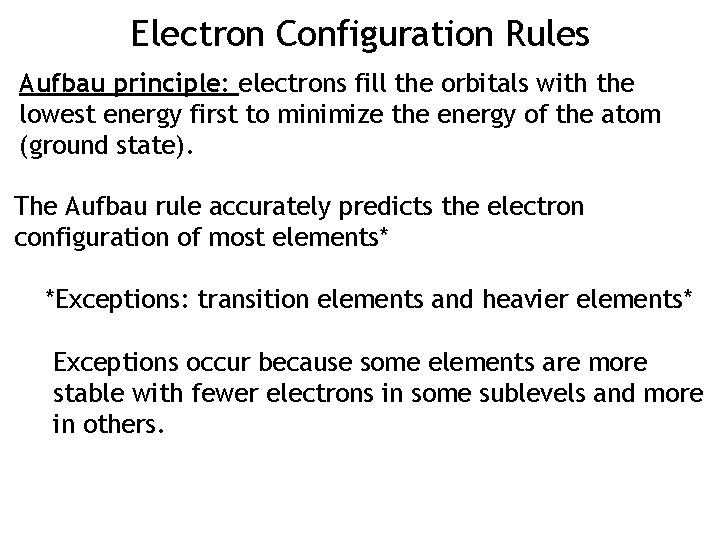
Electron Configuration Rules Aufbau principle: electrons fill the orbitals with the lowest energy first to minimize the energy of the atom (ground state). The Aufbau rule accurately predicts the electron configuration of most elements* *Exceptions: transition elements and heavier elements* Exceptions occur because some elements are more stable with fewer electrons in some sublevels and more in others.
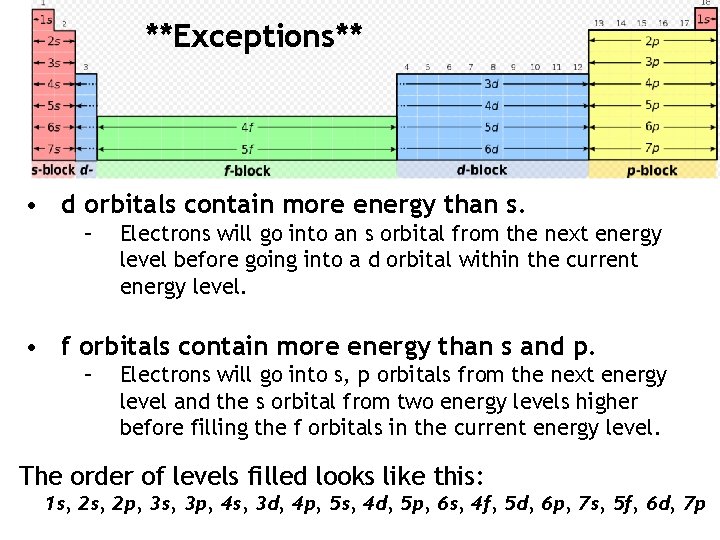
**Exceptions** • d orbitals contain more energy than s. – Electrons will go into an s orbital from the next energy level before going into a d orbital within the current energy level. • f orbitals contain more energy than s and p. – Electrons will go into s, p orbitals from the next energy level and the s orbital from two energy levels higher before filling the f orbitals in the current energy level. The order of levels filled looks like this: 1 s, 2 p, 3 s, 3 p, 4 s, 3 d, 4 p, 5 s, 4 d, 5 p, 6 s, 4 f, 5 d, 6 p, 7 s, 5 f, 6 d, 7 p
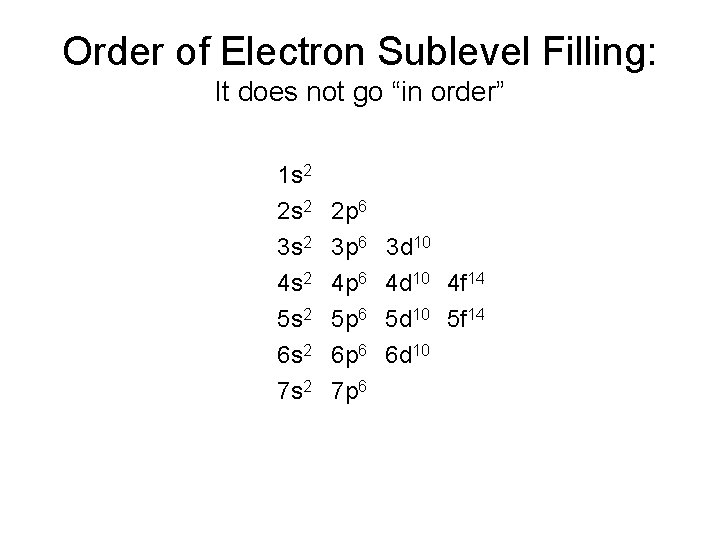
Order of Electron Sublevel Filling: It does not go “in order” 1 s 2 2 s 2 3 s 2 4 s 2 5 s 2 6 s 2 7 s 2 2 p 6 3 p 6 4 p 6 5 p 6 6 p 6 7 p 6 3 d 10 4 f 14 5 d 10 5 f 14 6 d 10
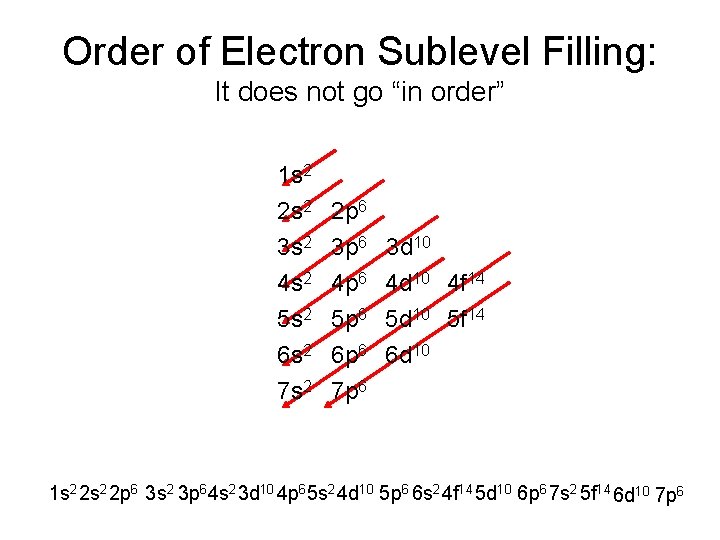
Order of Electron Sublevel Filling: It does not go “in order” 1 s 2 2 s 2 3 s 2 4 s 2 5 s 2 6 s 2 7 s 2 2 p 6 3 p 6 4 p 6 5 p 6 6 p 6 7 p 6 3 d 10 4 f 14 5 d 10 5 f 14 6 d 10 1 s 2 2 p 6 3 s 2 3 p 64 s 2 3 d 10 4 p 65 s 2 4 d 10 5 p 6 6 s 2 4 f 14 5 d 10 6 p 6 7 s 2 5 f 14 6 d 10 7 p 6
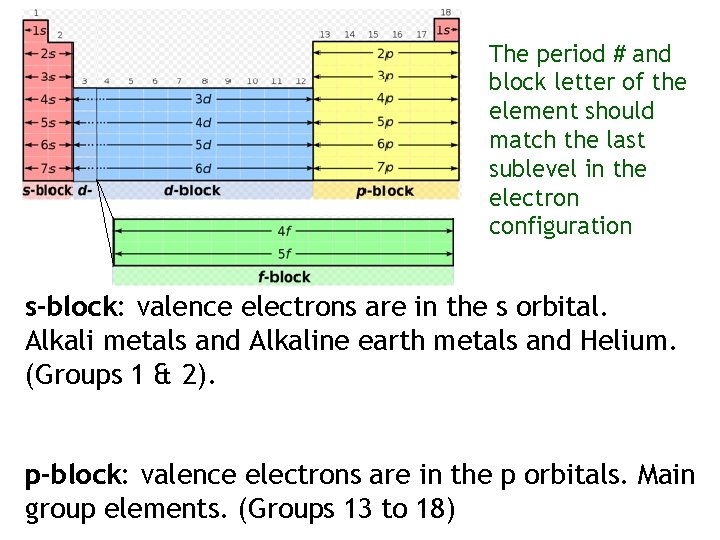
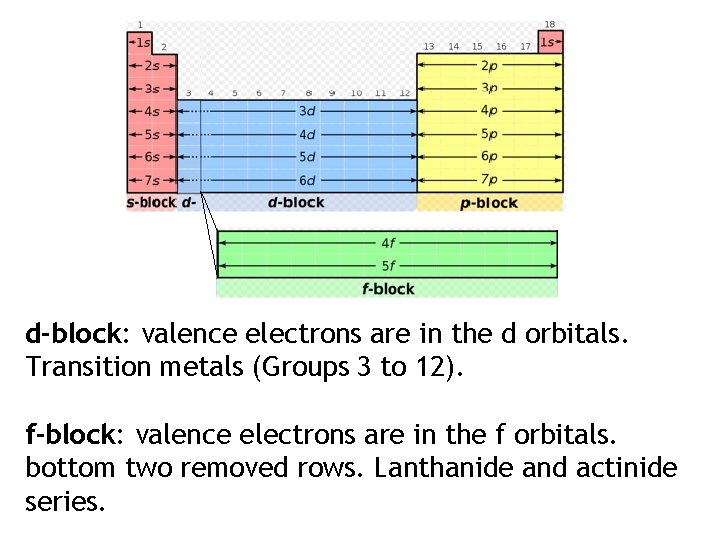
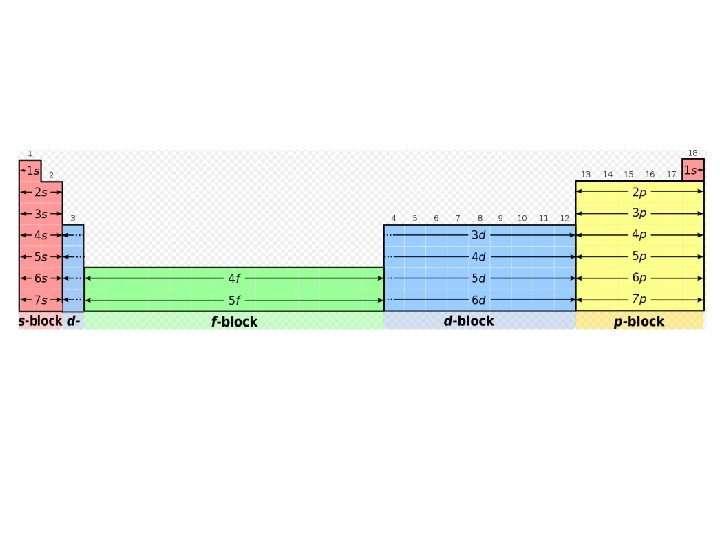
The period # and block letter of the element should match the last sublevel in the electron configuration s-block: valence electrons are in the s orbital. Alkali metals and Alkaline earth metals and Helium. (Groups 1 & 2). p-block: valence electrons are in the p orbitals. Main group elements. (Groups 13 to 18)
d-block: valence electrons are in the d orbitals. Transition metals (Groups 3 to 12). f-block: valence electrons are in the f orbitals. bottom two removed rows. Lanthanide and actinide series.
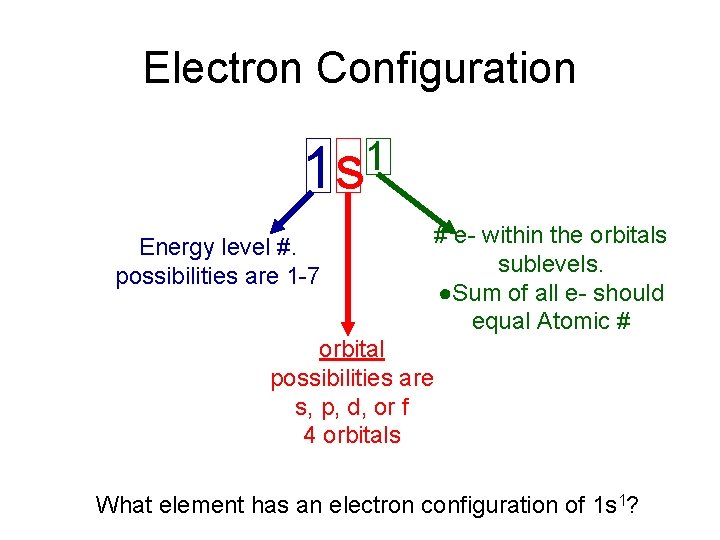
Electron Configuration 1 1 s Energy level #. possibilities are 1 -7 # e- within the orbitals sublevels. ●Sum of all e- should equal Atomic # orbital possibilities are s, p, d, or f 4 orbitals What element has an electron configuration of 1 s 1?
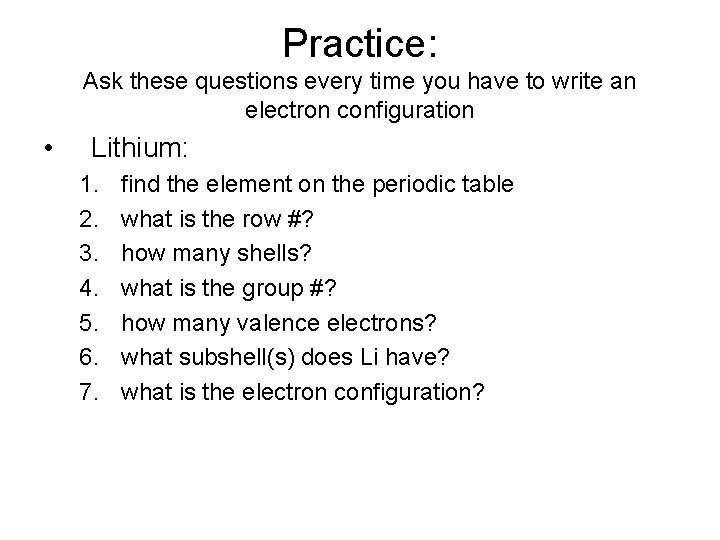
Practice: Ask these questions every time you have to write an electron configuration • Lithium: 1. 2. 3. 4. 5. 6. 7. find the element on the periodic table what is the row #? how many shells? what is the group #? how many valence electrons? what subshell(s) does Li have? what is the electron configuration?
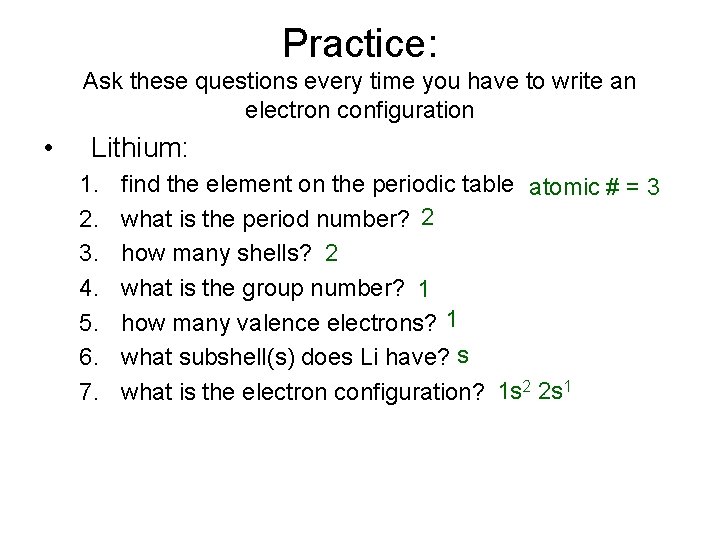
Practice: Ask these questions every time you have to write an electron configuration • Lithium: 1. 2. 3. 4. 5. 6. 7. find the element on the periodic table atomic # = 3 what is the period number? 2 how many shells? 2 what is the group number? 1 how many valence electrons? 1 what subshell(s) does Li have? s what is the electron configuration? 1 s 2 2 s 1
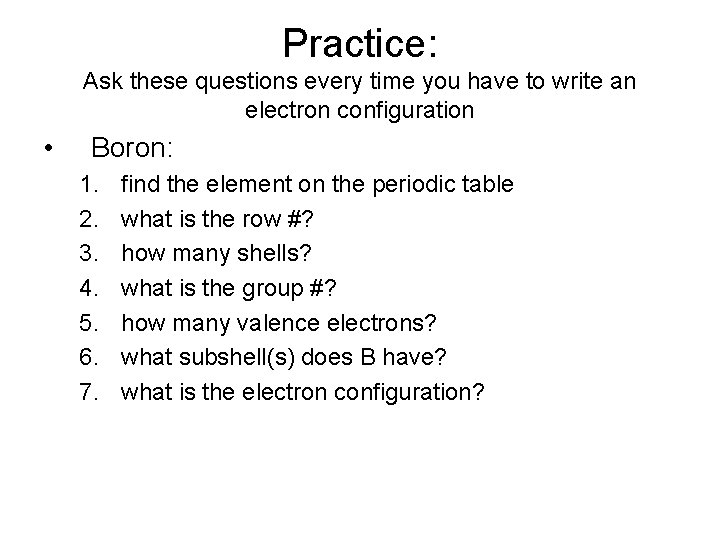
Practice: Ask these questions every time you have to write an electron configuration • Boron: 1. 2. 3. 4. 5. 6. 7. find the element on the periodic table what is the row #? how many shells? what is the group #? how many valence electrons? what subshell(s) does B have? what is the electron configuration?
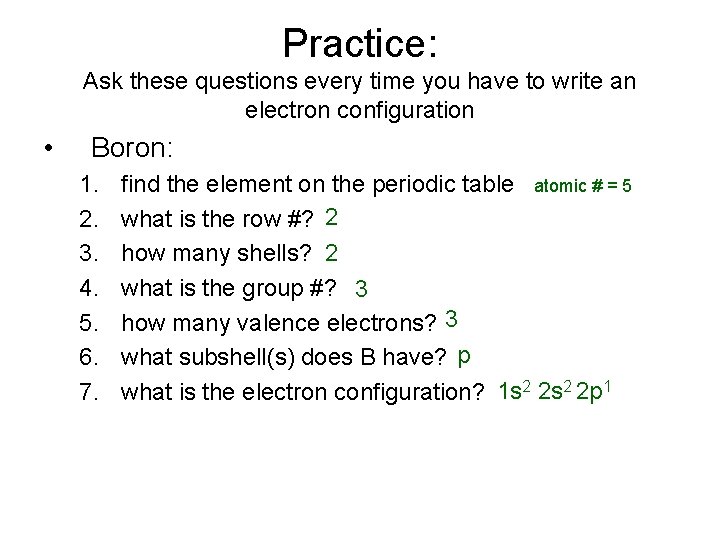
Practice: Ask these questions every time you have to write an electron configuration • Boron: 1. 2. 3. 4. 5. 6. 7. find the element on the periodic table atomic # = 5 what is the row #? 2 how many shells? 2 what is the group #? 3 how many valence electrons? 3 what subshell(s) does B have? p what is the electron configuration? 1 s 2 2 p 1
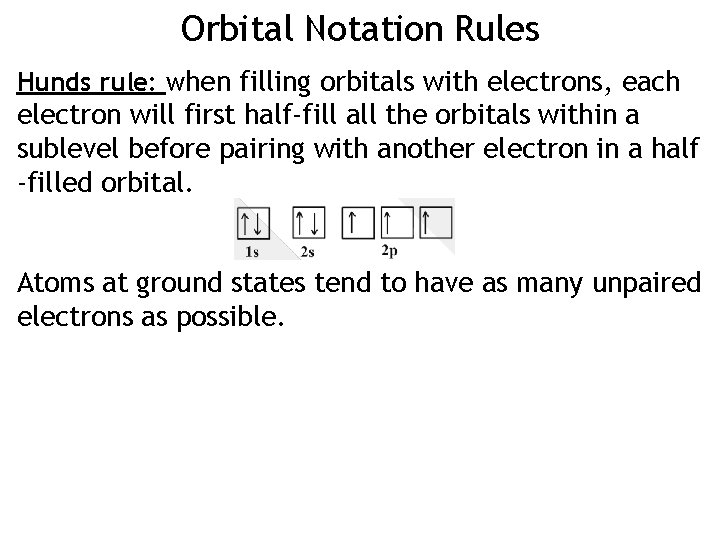
Orbital Notation Rules Hunds rule: when filling orbitals with electrons, each electron will first half-fill all the orbitals within a sublevel before pairing with another electron in a half -filled orbital. Atoms at ground states tend to have as many unpaired electrons as possible.
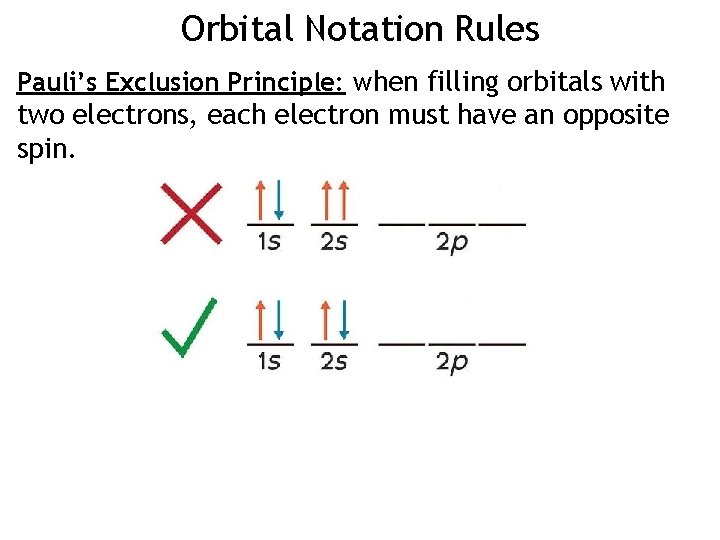
Orbital Notation Rules Pauli’s Exclusion Principle: when filling orbitals with two electrons, each electron must have an opposite spin.