
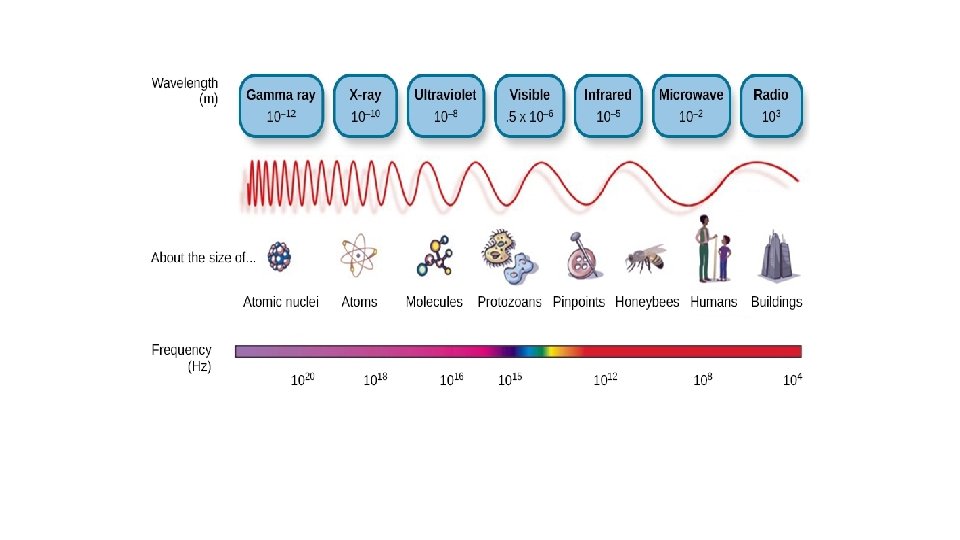
WAVELENGTHS ARE MEASURED FROM ONE CREST TO THE
- Slides: 33
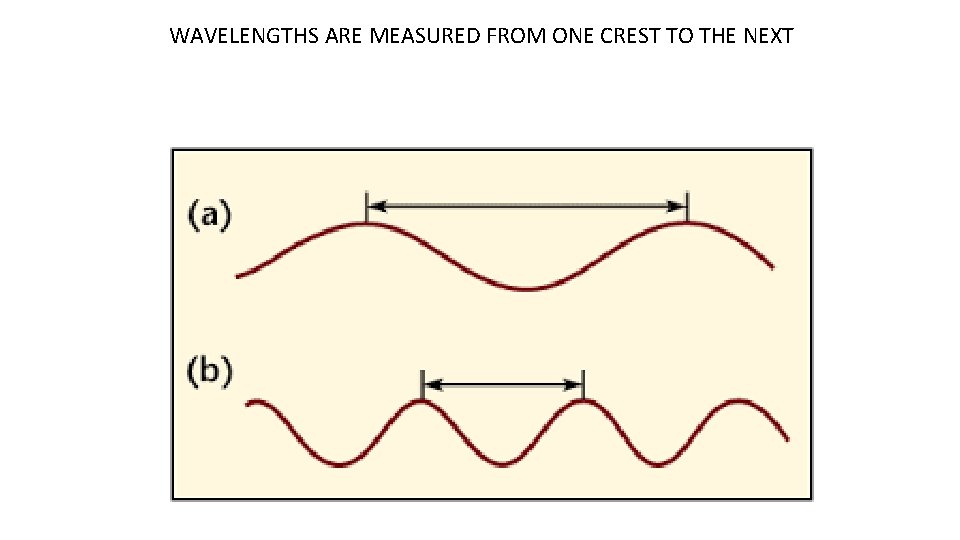
WAVELENGTHS ARE MEASURED FROM ONE CREST TO THE NEXT
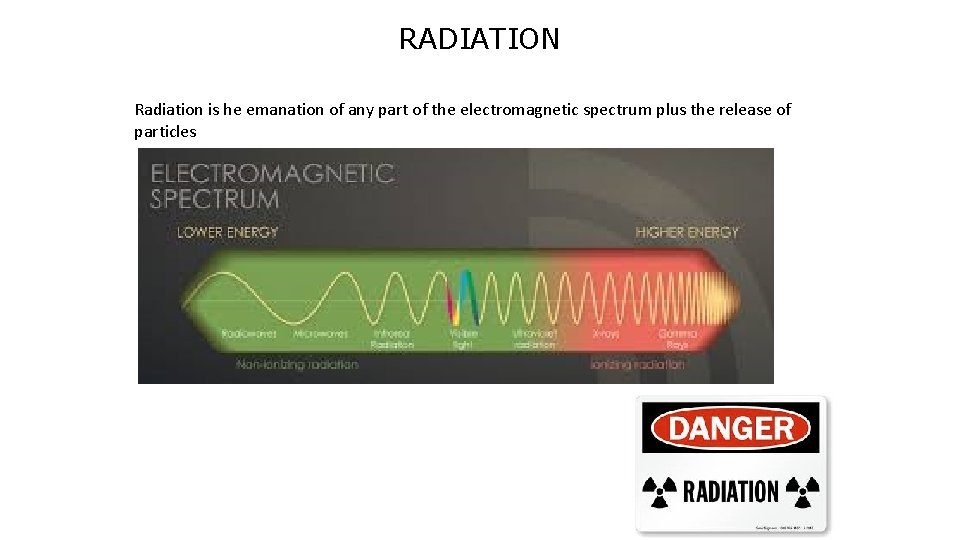
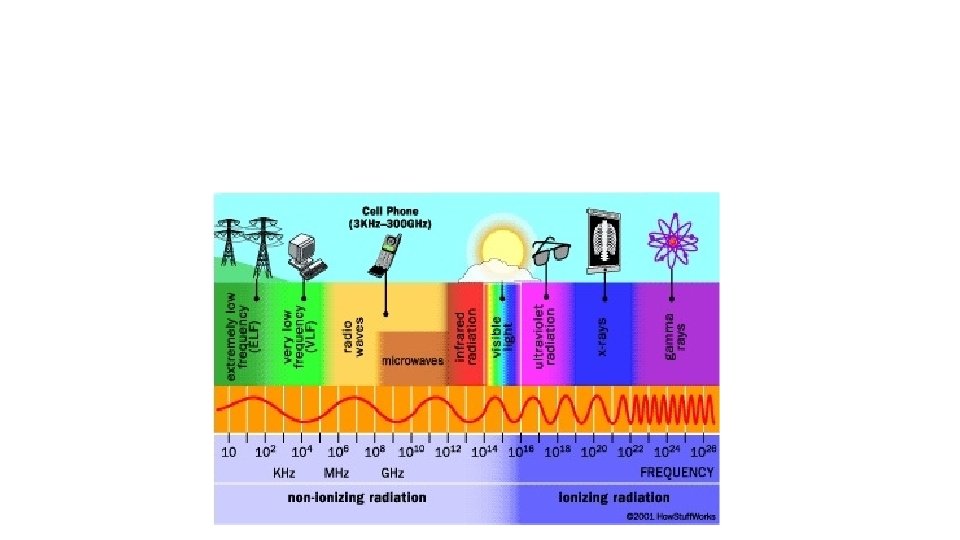
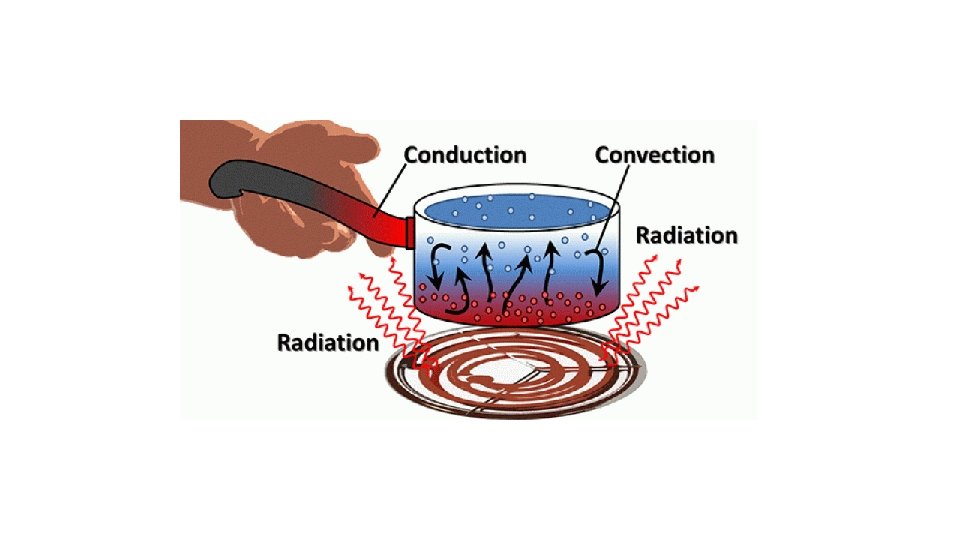
RADIATION Radiation is he emanation of any part of the electromagnetic spectrum plus the release of particles
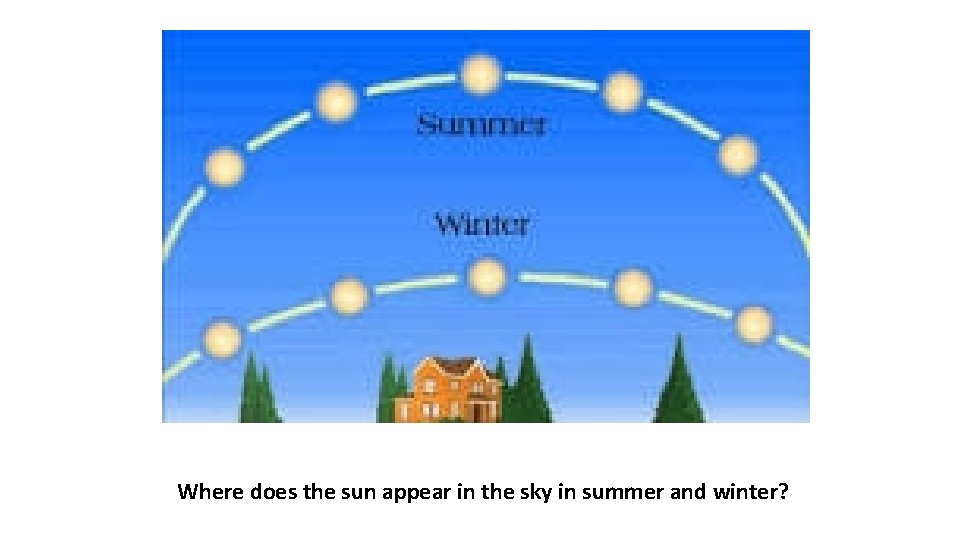
Where does the sun appear in the sky in summer and winter?
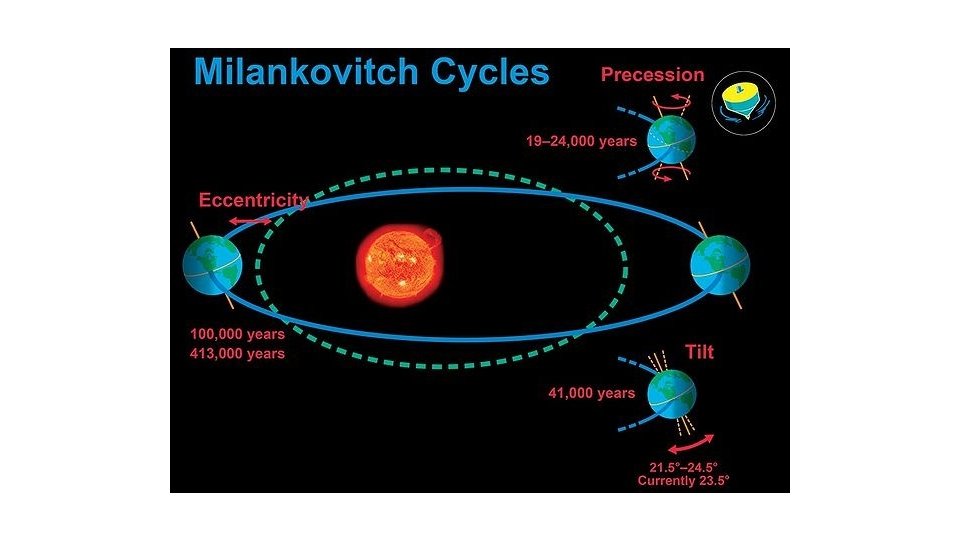
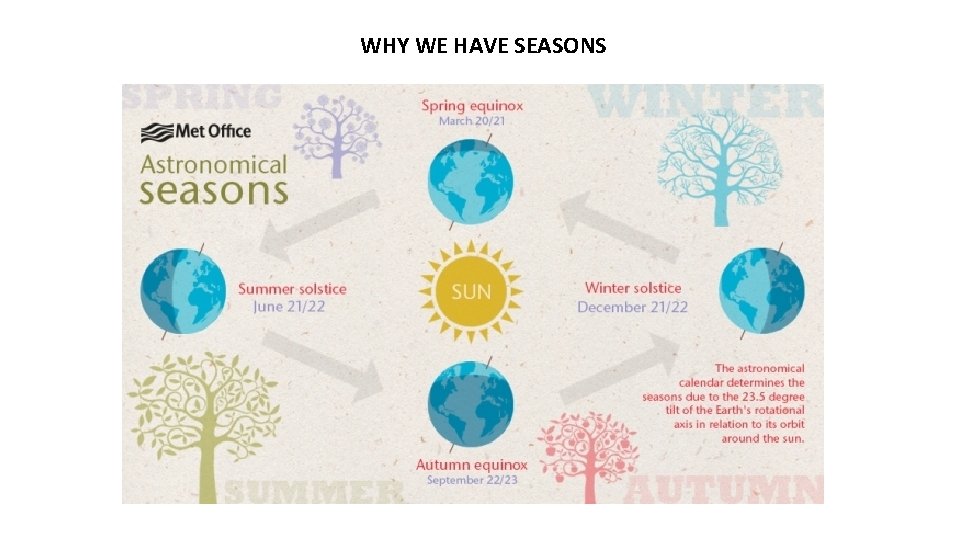
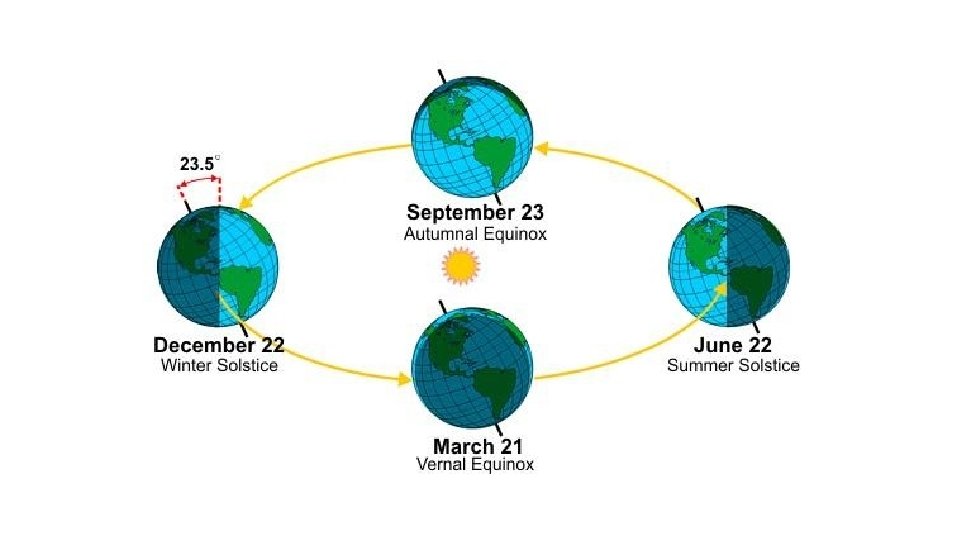
WHY WE HAVE SEASONS
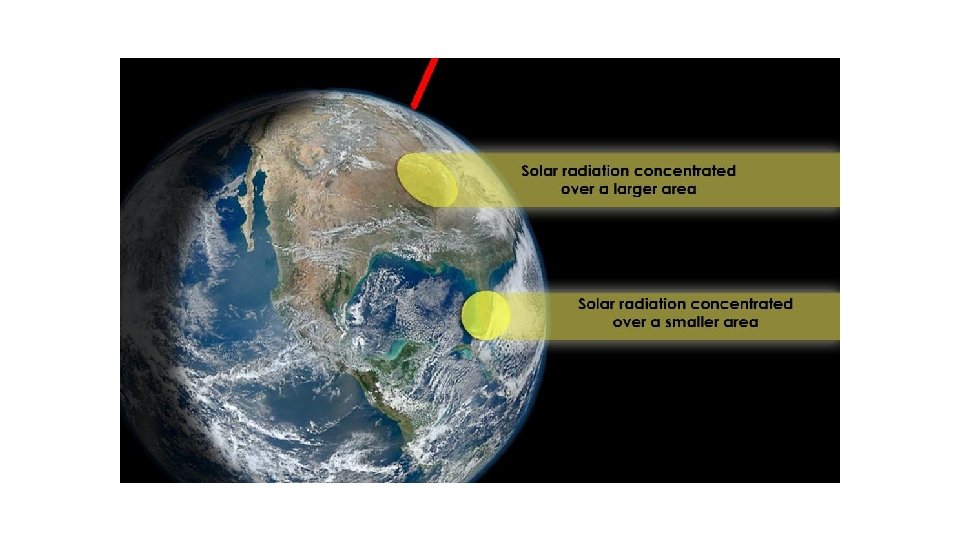
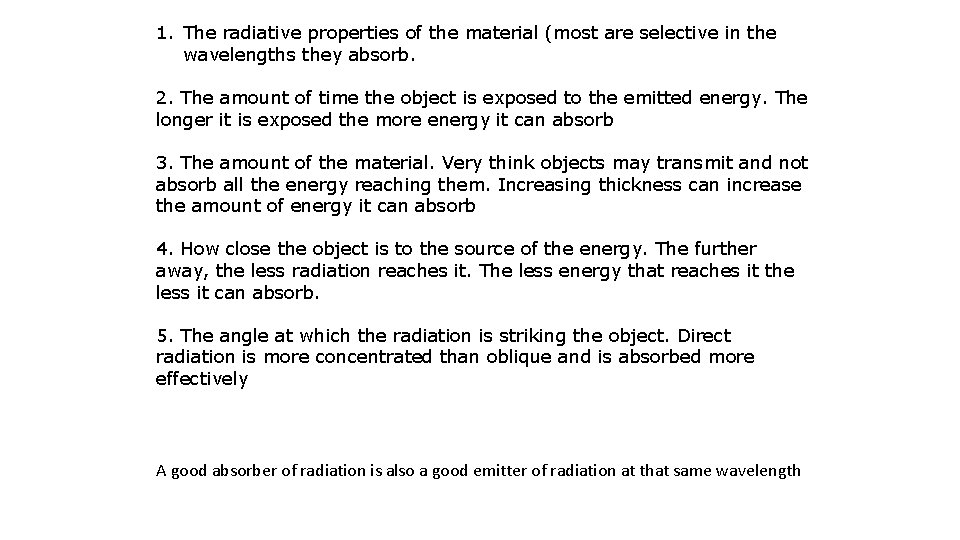
1. The radiative properties of the material (most are selective in the wavelengths they absorb. 2. The amount of time the object is exposed to the emitted energy. The longer it is exposed the more energy it can absorb 3. The amount of the material. Very think objects may transmit and not absorb all the energy reaching them. Increasing thickness can increase the amount of energy it can absorb 4. How close the object is to the source of the energy. The further away, the less radiation reaches it. The less energy that reaches it the less it can absorb. 5. The angle at which the radiation is striking the object. Direct radiation is more concentrated than oblique and is absorbed more effectively A good absorber of radiation is also a good emitter of radiation at that same wavelength
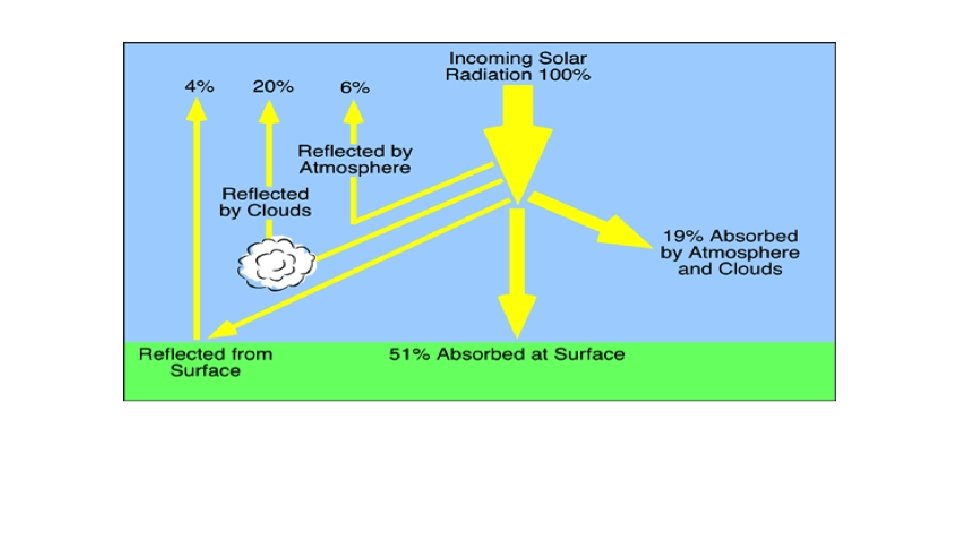
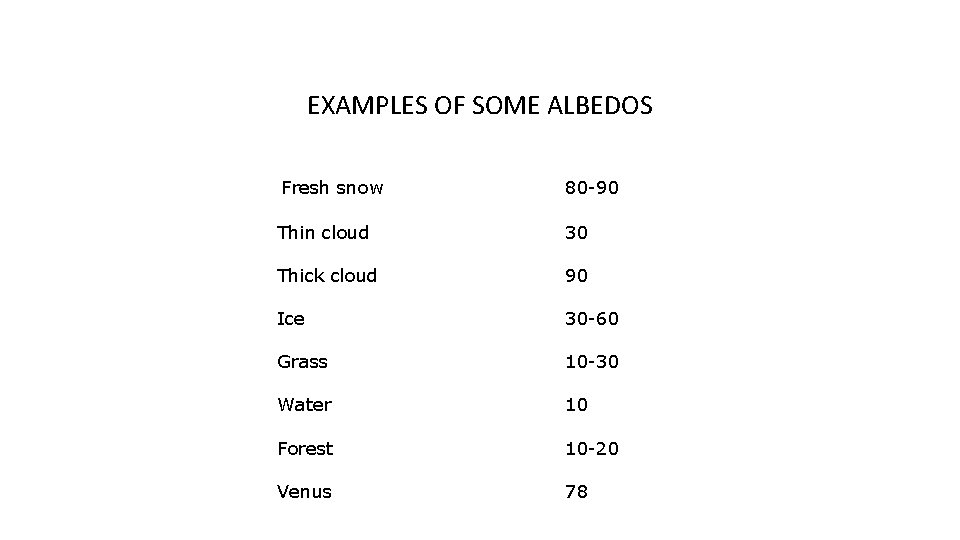
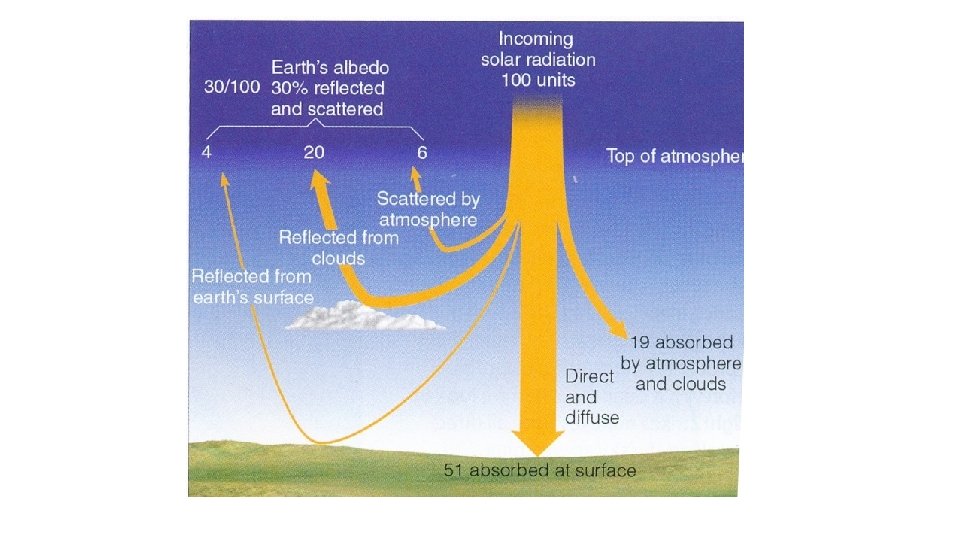
EXAMPLES OF SOME ALBEDOS Fresh snow 80 -90 Thin cloud 30 Thick cloud 90 Ice 30 -60 Grass 10 -30 Water 10 Forest 10 -20 Venus 78
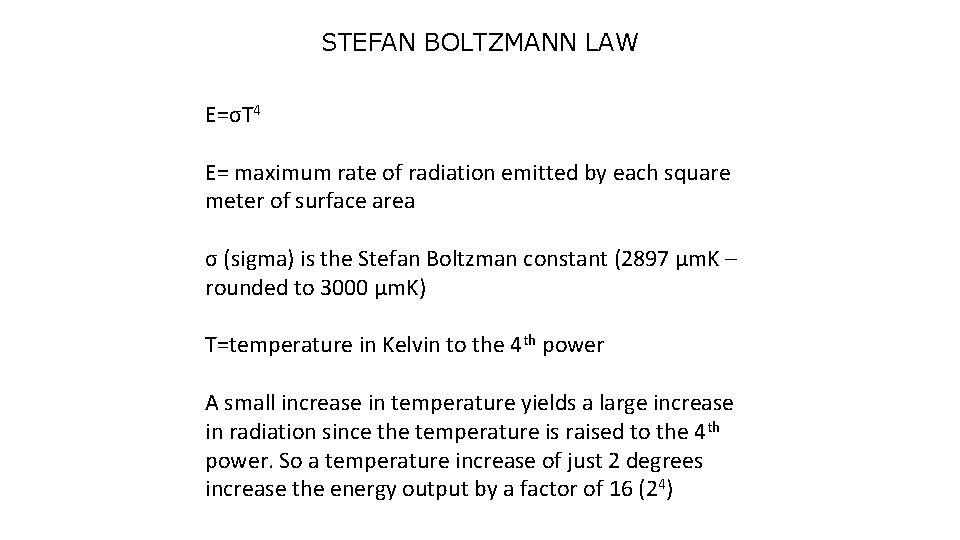
STEFAN BOLTZMANN LAW E=σT 4 E= maximum rate of radiation emitted by each square meter of surface area σ (sigma) is the Stefan Boltzman constant (2897 μm. K – rounded to 3000 μm. K) T=temperature in Kelvin to the 4 th power A small increase in temperature yields a large increase in radiation since the temperature is raised to the 4 th power. So a temperature increase of just 2 degrees increase the energy output by a factor of 16 (24)
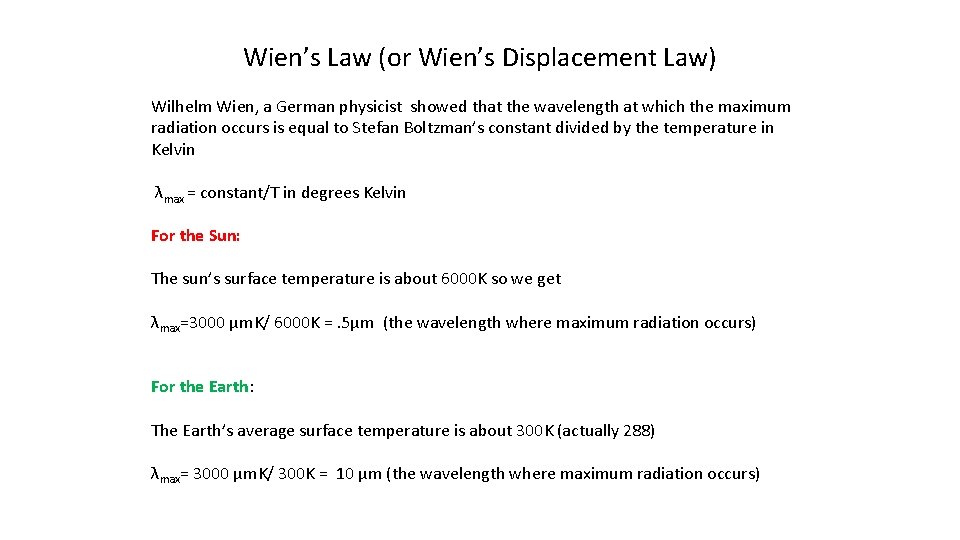
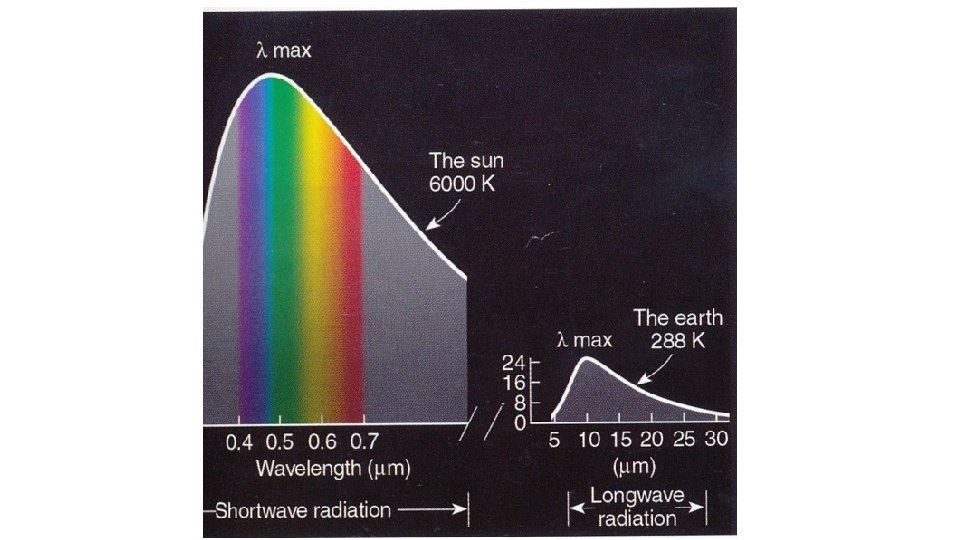
Wien’s Law (or Wien’s Displacement Law) Wilhelm Wien, a German physicist showed that the wavelength at which the maximum radiation occurs is equal to Stefan Boltzman’s constant divided by the temperature in Kelvin λmax = constant/T in degrees Kelvin For the Sun: The sun’s surface temperature is about 6000 K so we get λmax=3000 μm. K/ 6000 K =. 5μm (the wavelength where maximum radiation occurs) For the Earth: The Earth’s average surface temperature is about 300 K (actually 288) λmax= 3000 μm. K/ 300 K = 10 μm (the wavelength where maximum radiation occurs)
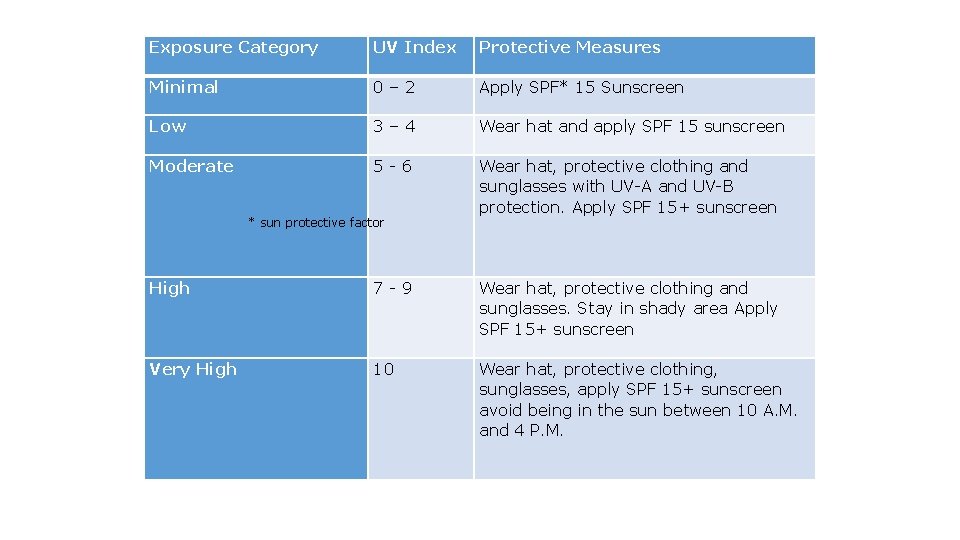
Exposure Category UV Index Protective Measures Minimal 0– 2 Apply SPF* 15 Sunscreen Low 3– 4 Wear hat and apply SPF 15 sunscreen Moderate 5 -6 Wear hat, protective clothing and sunglasses with UV-A and UV-B protection. Apply SPF 15+ sunscreen * sun protective factor High 7 -9 Wear hat, protective clothing and sunglasses. Stay in shady area Apply SPF 15+ sunscreen Very High 10 Wear hat, protective clothing, sunglasses, apply SPF 15+ sunscreen avoid being in the sun between 10 A. M. and 4 P. M.
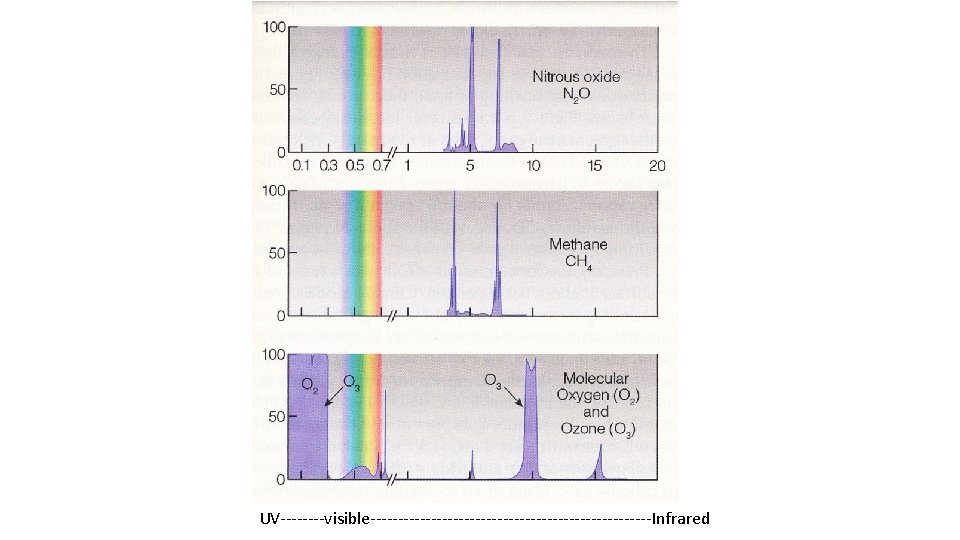
UV----visible--------------------------Infrared
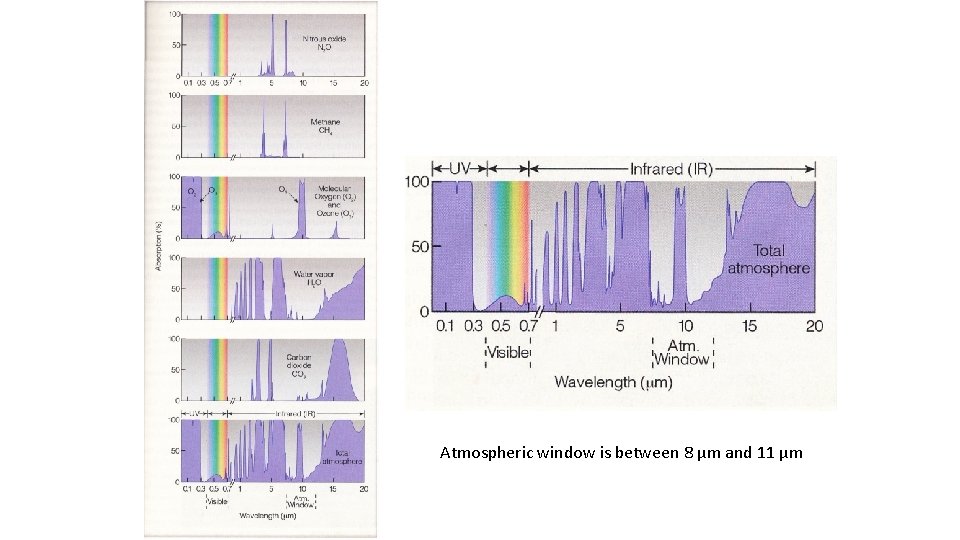
Atmospheric window is between 8 μm and 11 μm
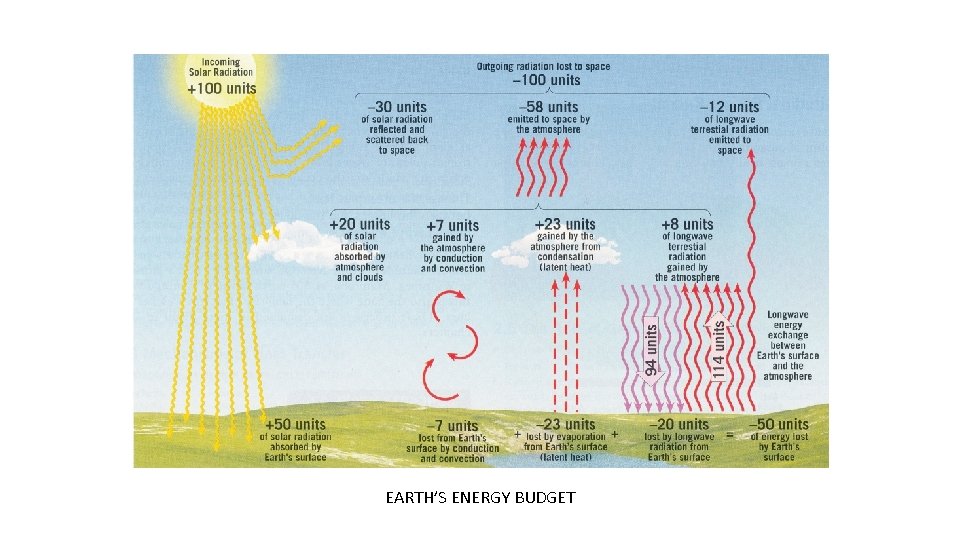
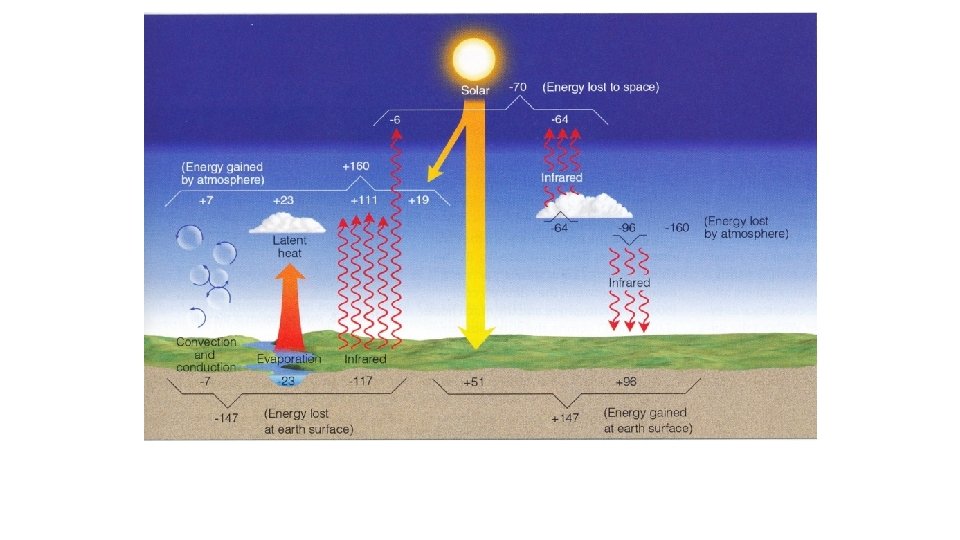
EARTH’S ENERGY BUDGET
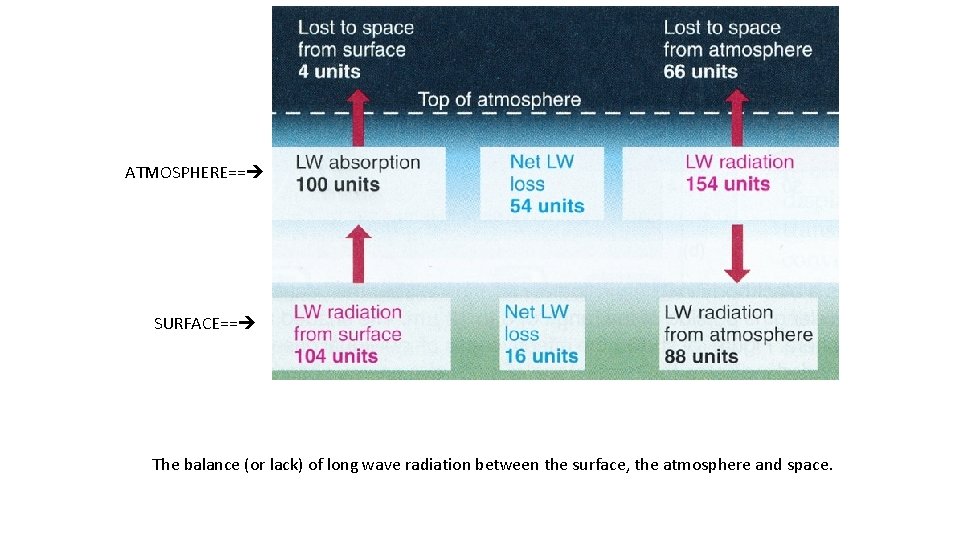
ATMOSPHERE== SURFACE== The balance (or lack) of long wave radiation between the surface, the atmosphere and space.
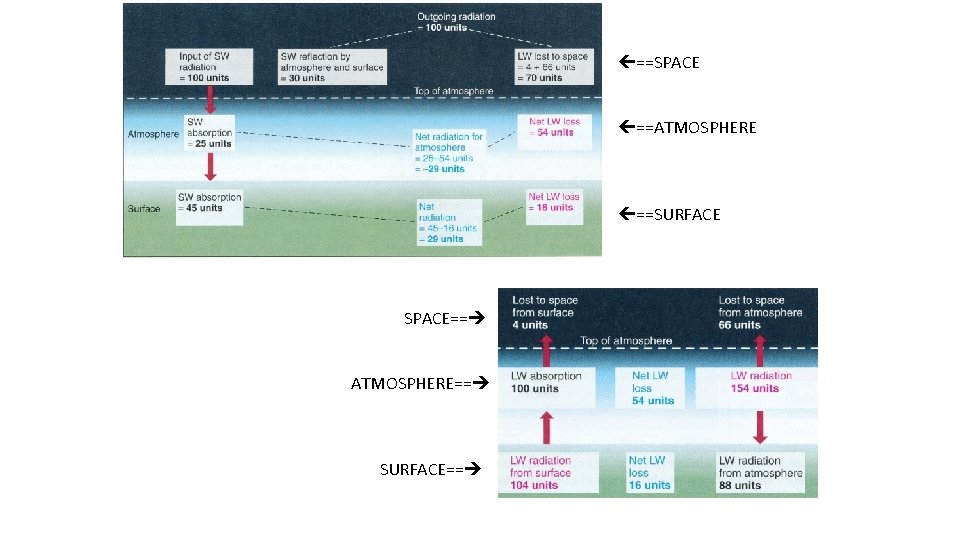
==SPACE ==ATMOSPHERE ==SURFACE SPACE== ATMOSPHERE== SURFACE==
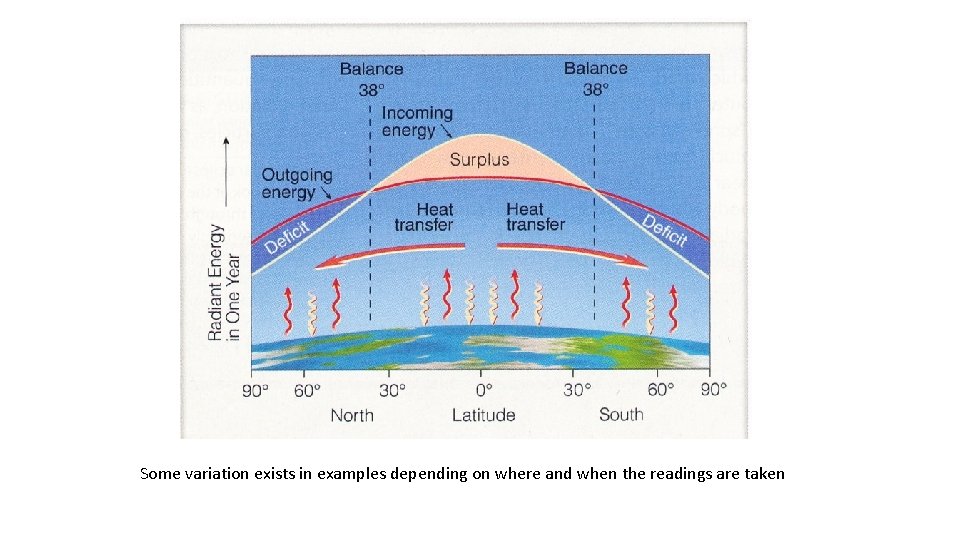
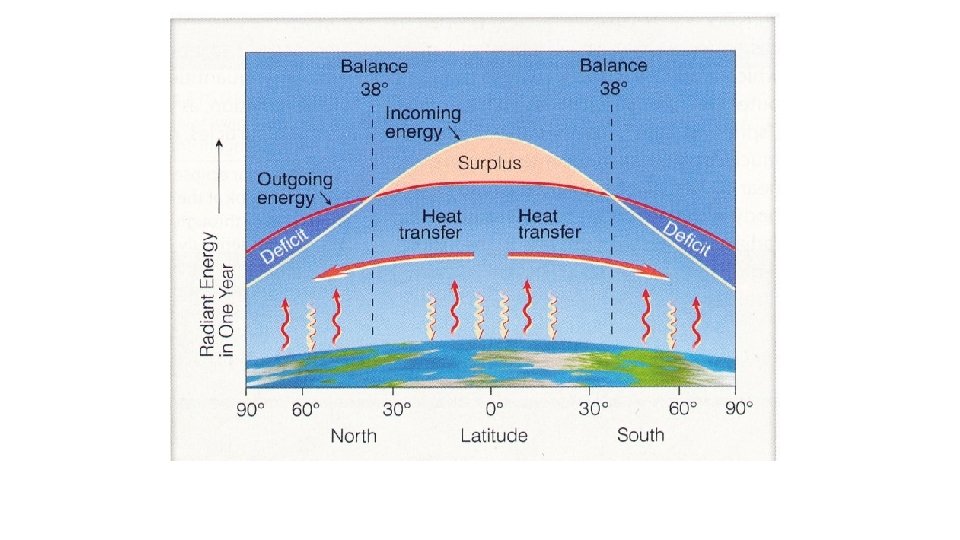
Some variation exists in examples depending on where and when the readings are taken