
Wave Interference Physics Ch 12 Sec 4 When
- Slides: 19
Wave Interference Physics Ch 12. Sec. 4
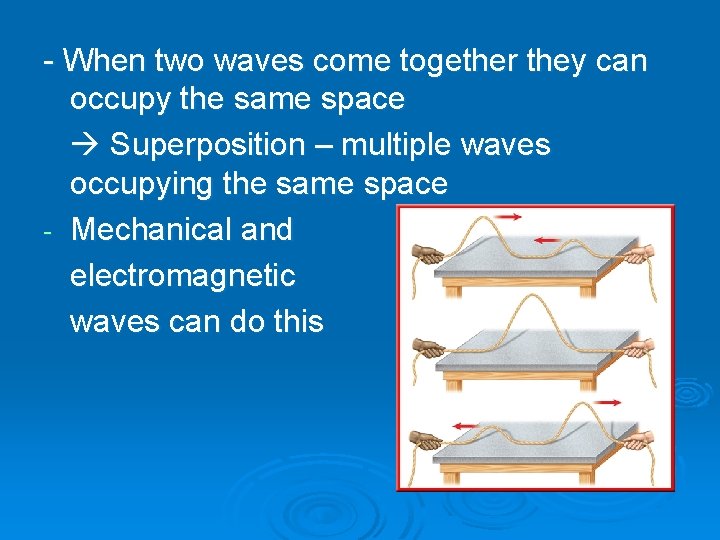
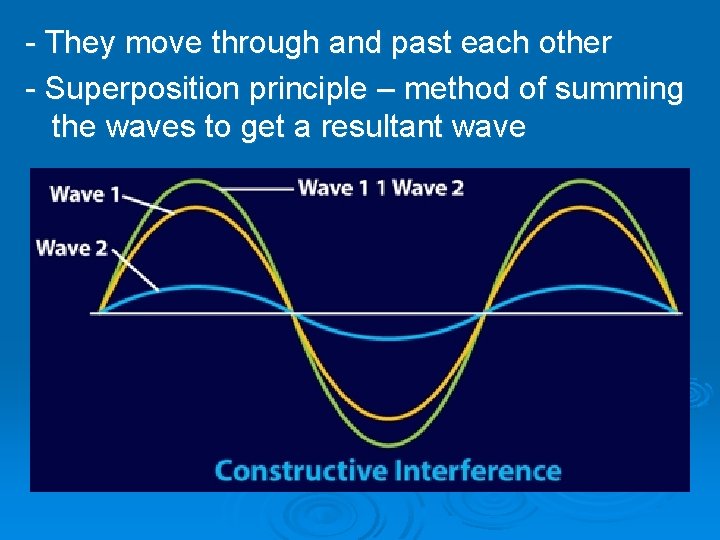
- When two waves come together they can occupy the same space Superposition – multiple waves occupying the same space - Mechanical and electromagnetic waves can do this
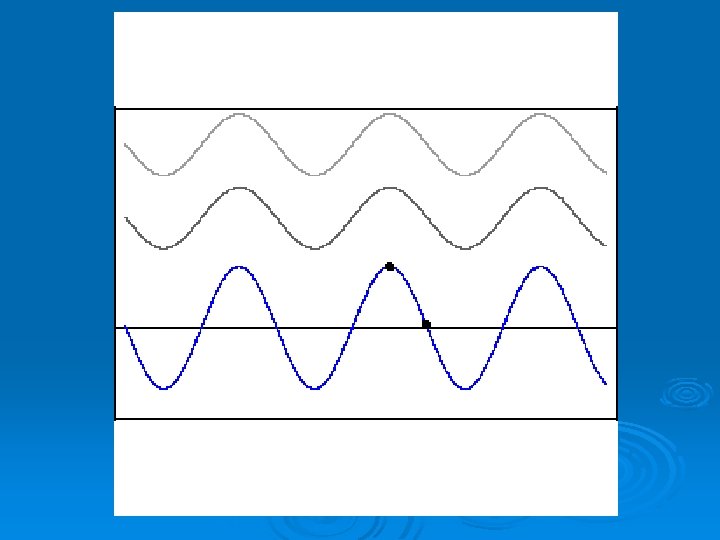
Wave Interactions Interferance – combination of 2 or more waves usually produces one wave (bigger if in phase) (smaller if out of phase)
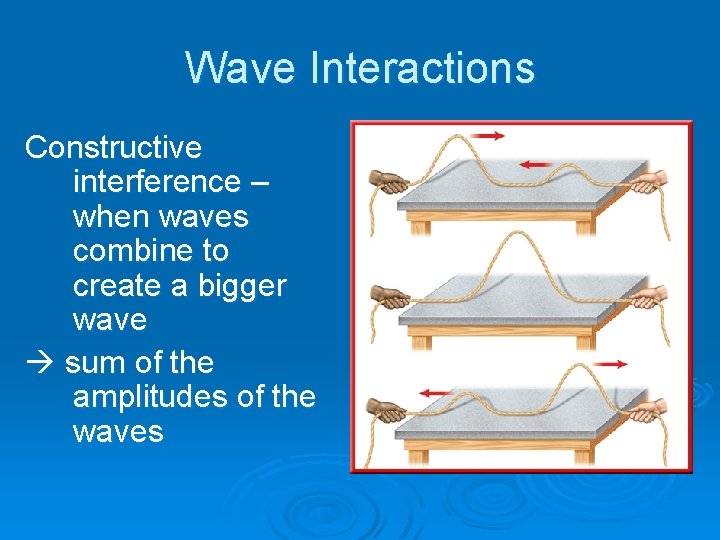
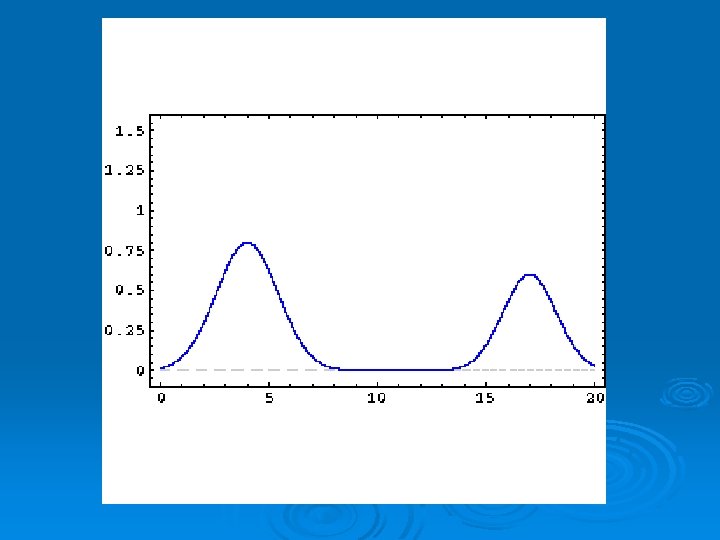
Types of Interference 1. Constructive Interference – individual displacements on the same side of equilibrium add together to form a resultant wave (in phase) - If two pulses move toward each other and are on the same side of equilibrium their amplitudes add together to form a larger wave
Wave Interactions Constructive interference – when waves combine to create a bigger wave sum of the amplitudes of the waves
- They move through and past each other - Superposition principle – method of summing the waves to get a resultant wave
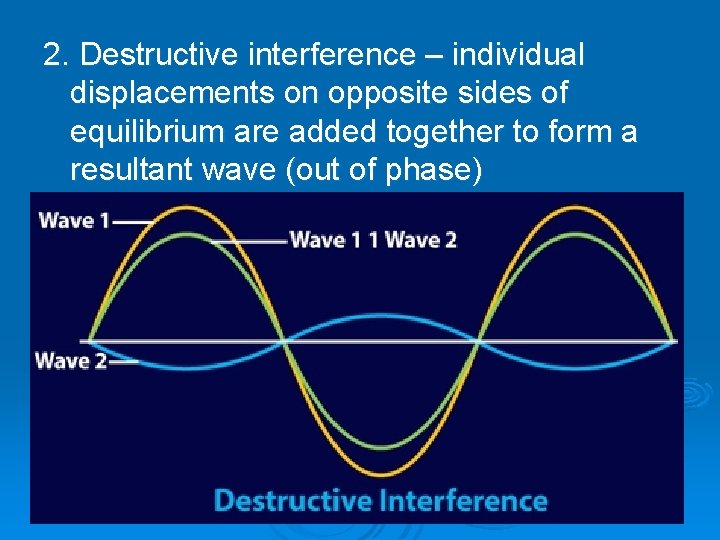
Wave Interactions 2. Destructive interference – when waves combine to form a smaller or no wave some may completely cancel out difference between the amplitudes of the waves
2. Destructive interference – individual displacements on opposite sides of equilibrium are added together to form a resultant wave (out of phase)
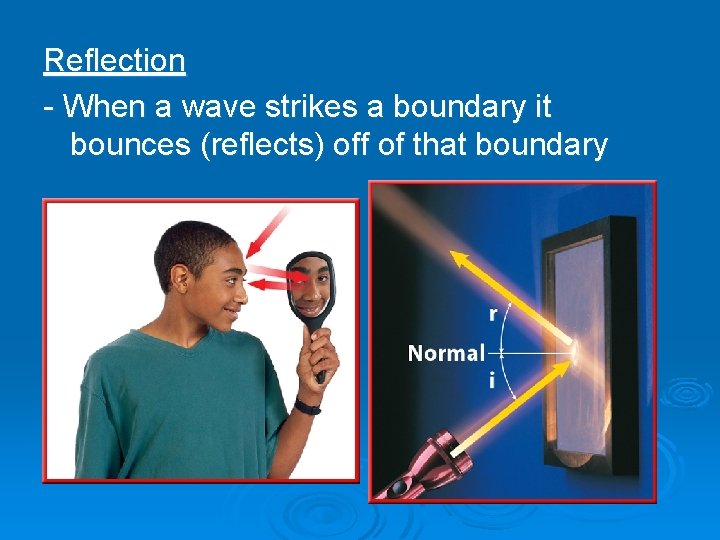
Reflection - When a wave strikes a boundary it bounces (reflects) off of that boundary
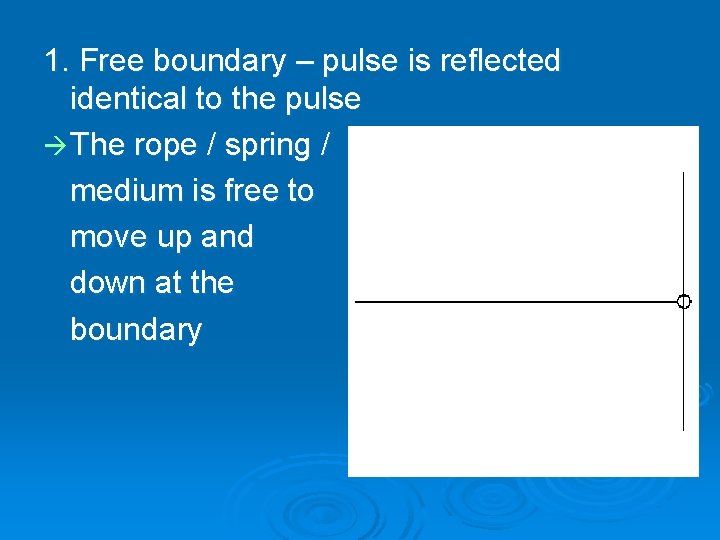
1. Free boundary – pulse is reflected identical to the pulse The rope / spring / medium is free to move up and down at the boundary
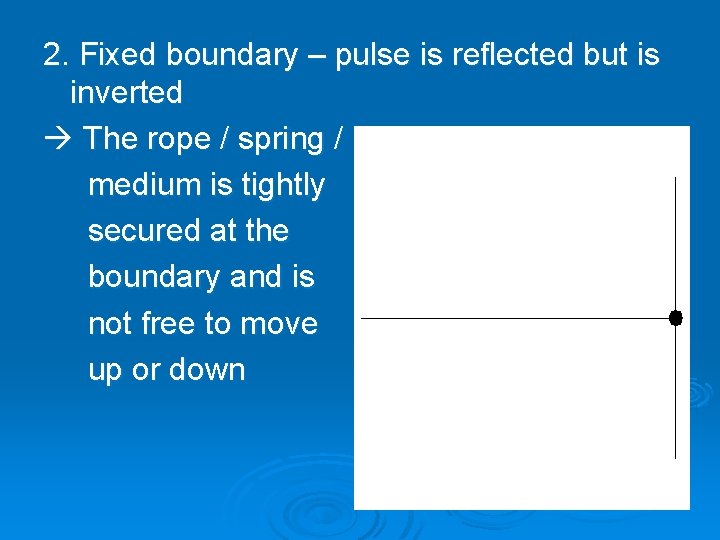
2. Fixed boundary – pulse is reflected but is inverted The rope / spring / medium is tightly secured at the boundary and is not free to move up or down
Ø Standing waves Ø - Wave pattern that appears to stand still from waves traveling in opposite directions Ø Waves at same frequency Ø Creates spots of zero displacement
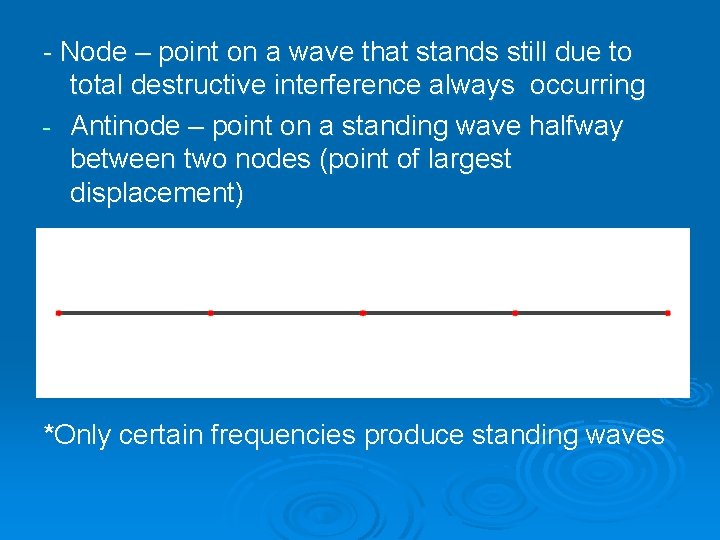
- Node – point on a wave that stands still due to total destructive interference always occurring - Antinode – point on a standing wave halfway between two nodes (point of largest displacement) *Only certain frequencies produce standing waves
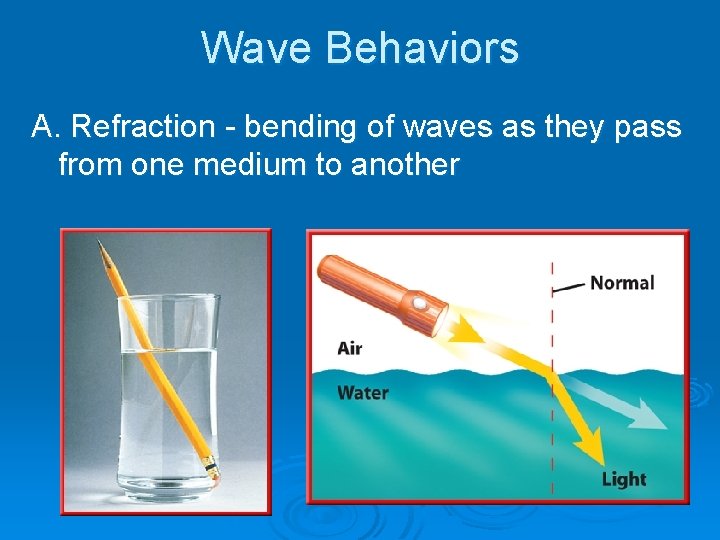
Wave Behaviors A. Refraction - bending of waves as they pass from one medium to another
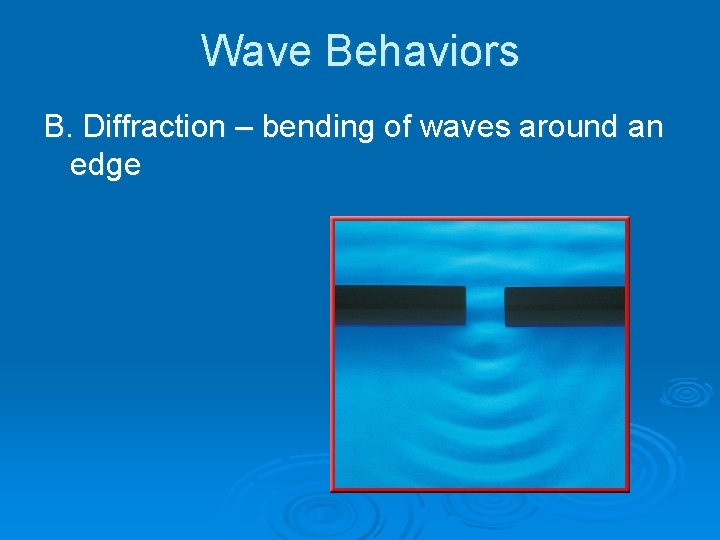
Wave Behaviors B. Diffraction – bending of waves around an edge
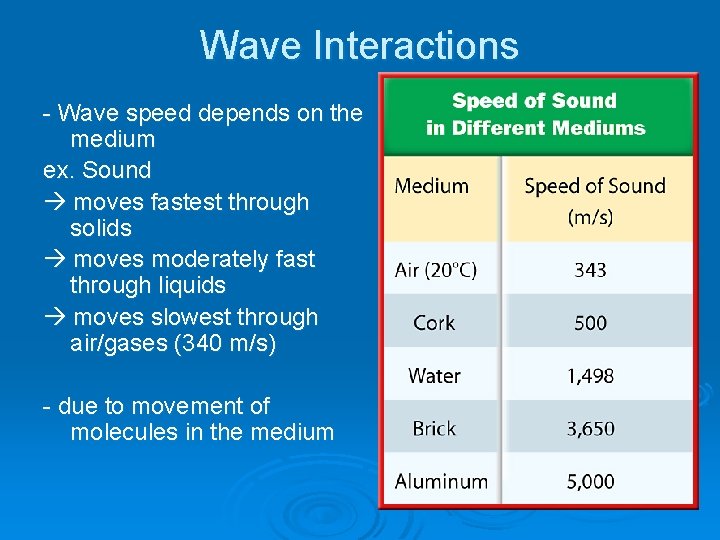
Wave Interactions - Wave speed depends on the medium ex. Sound moves fastest through solids moves moderately fast through liquids moves slowest through air/gases (340 m/s) - due to movement of molecules in the medium
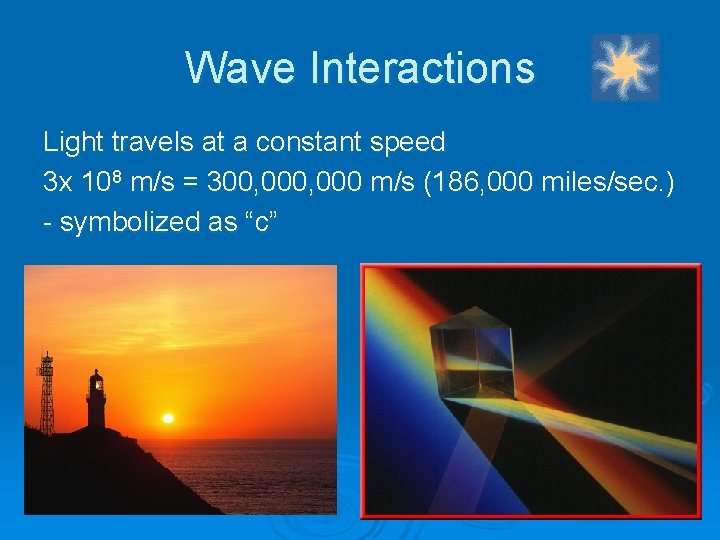
Wave Interactions Light travels at a constant speed 3 x 10⁸ m/s = 300, 000 m/s (186, 000 miles/sec. ) - symbolized as “c”