
Wave Interference Interference The speed of a mechanical


- Slides: 14
Wave Interference
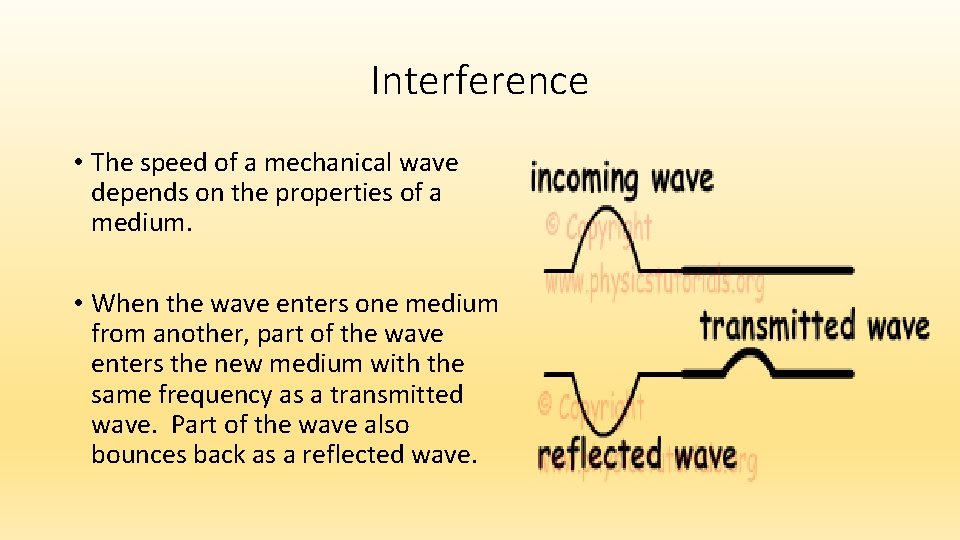
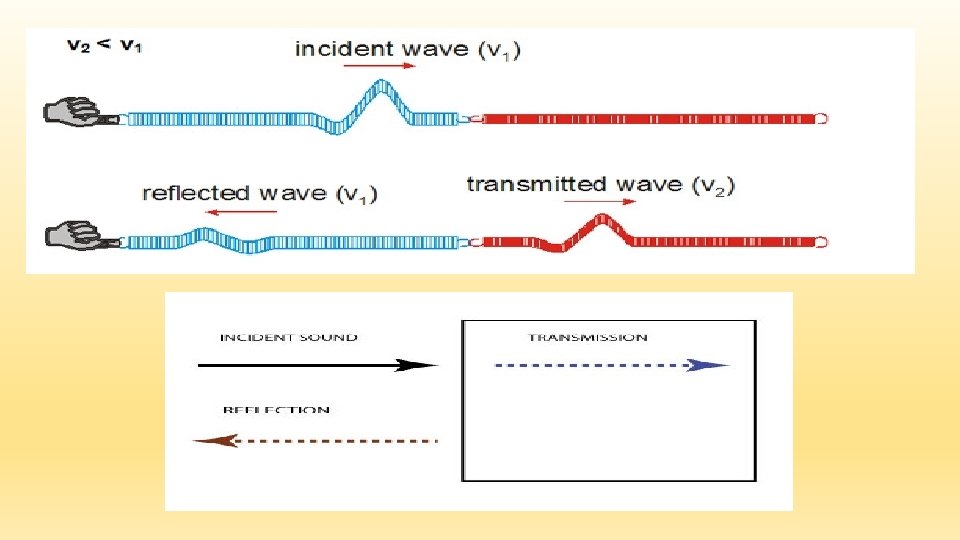
Interference • The speed of a mechanical wave depends on the properties of a medium. • When the wave enters one medium from another, part of the wave enters the new medium with the same frequency as a transmitted wave. Part of the wave also bounces back as a reflected wave.
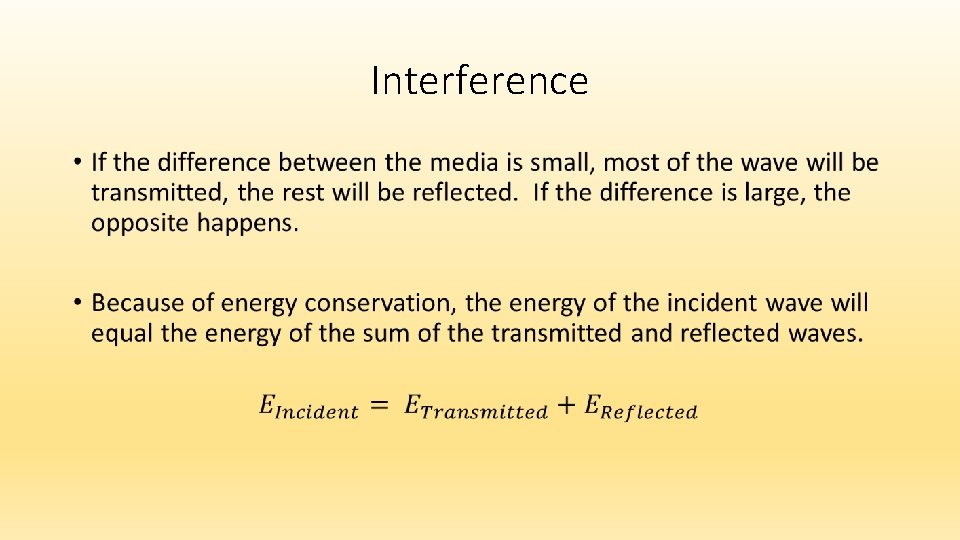
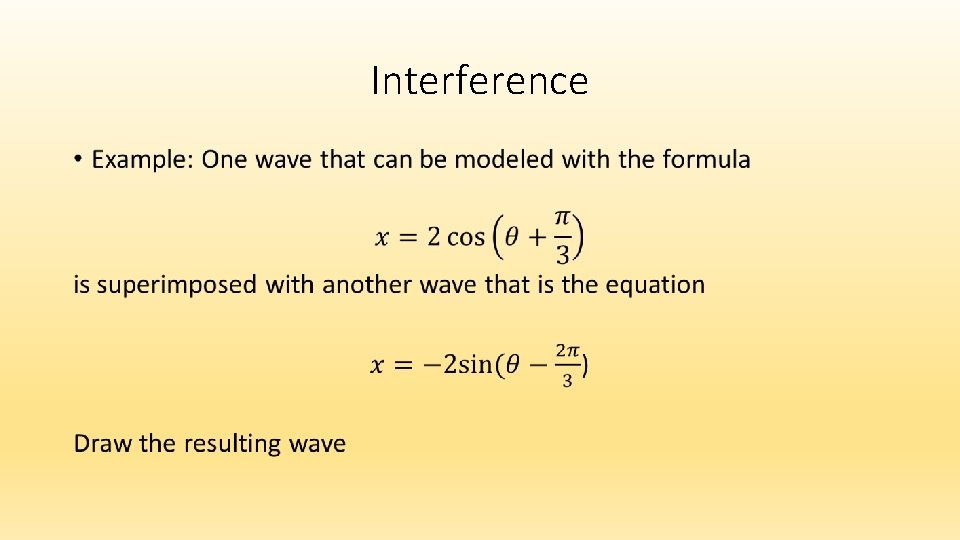
Interference •
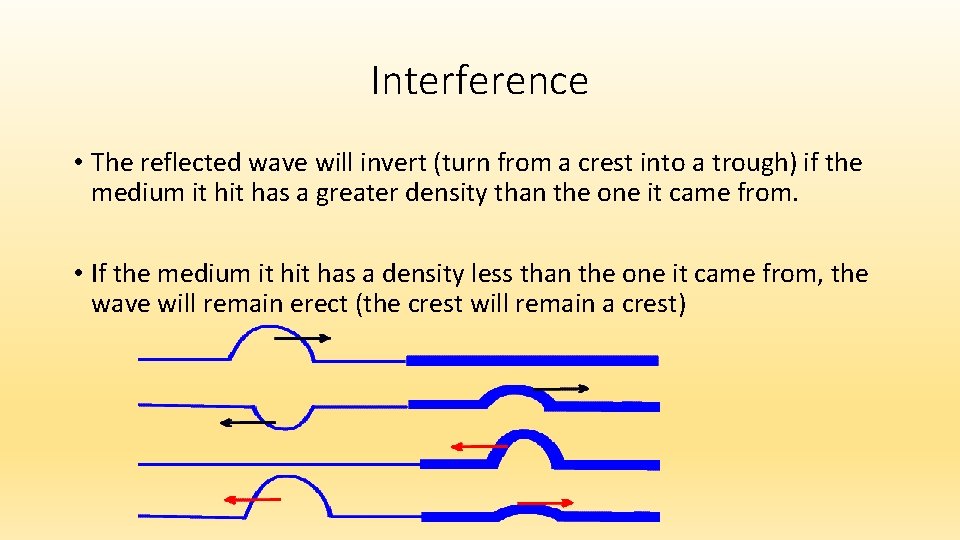
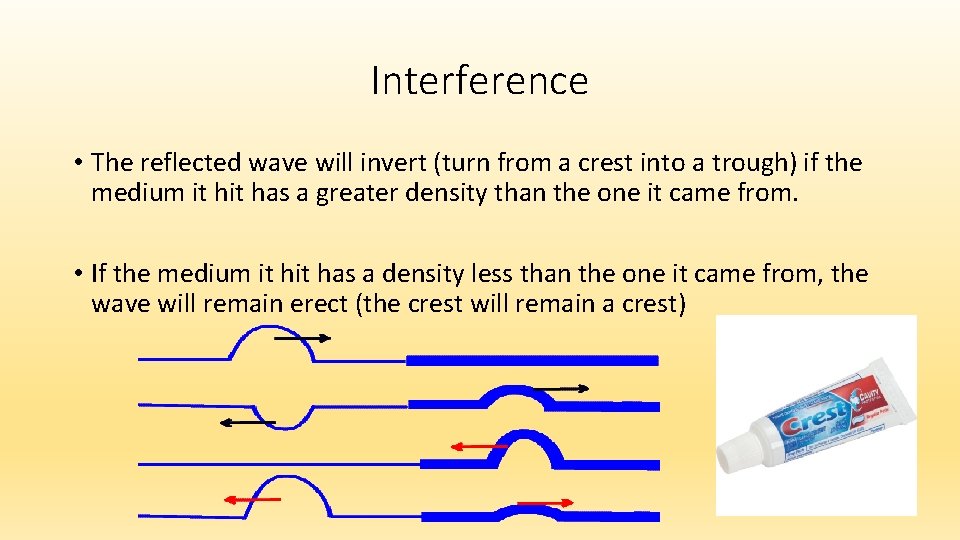
Interference • The reflected wave will invert (turn from a crest into a trough) if the medium it has a greater density than the one it came from. • If the medium it has a density less than the one it came from, the wave will remain erect (the crest will remain a crest)
Interference • The reflected wave will invert (turn from a crest into a trough) if the medium it has a greater density than the one it came from. • If the medium it has a density less than the one it came from, the wave will remain erect (the crest will remain a crest)
Interference • Video on trapping light
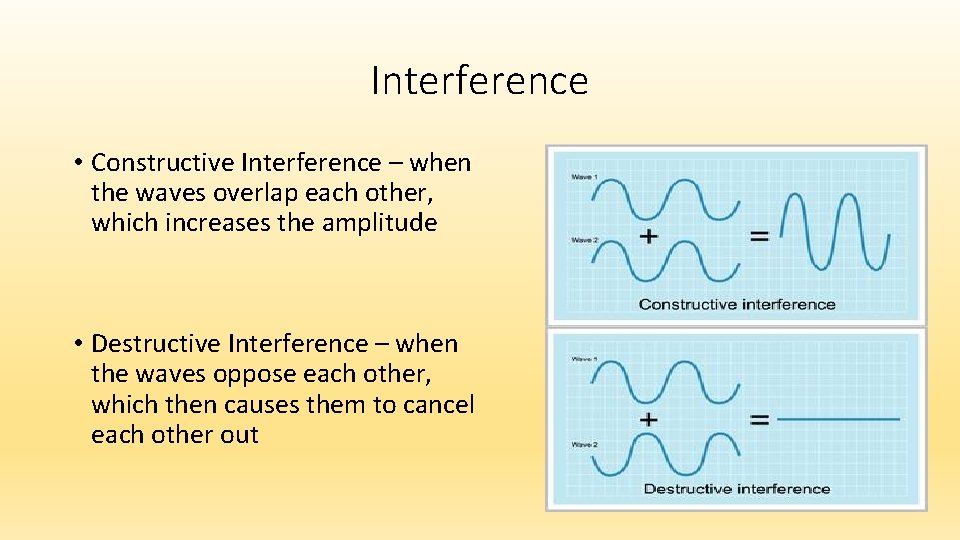
Interference • Constructive Interference – when the waves overlap each other, which increases the amplitude • Destructive Interference – when the waves oppose each other, which then causes them to cancel each other out
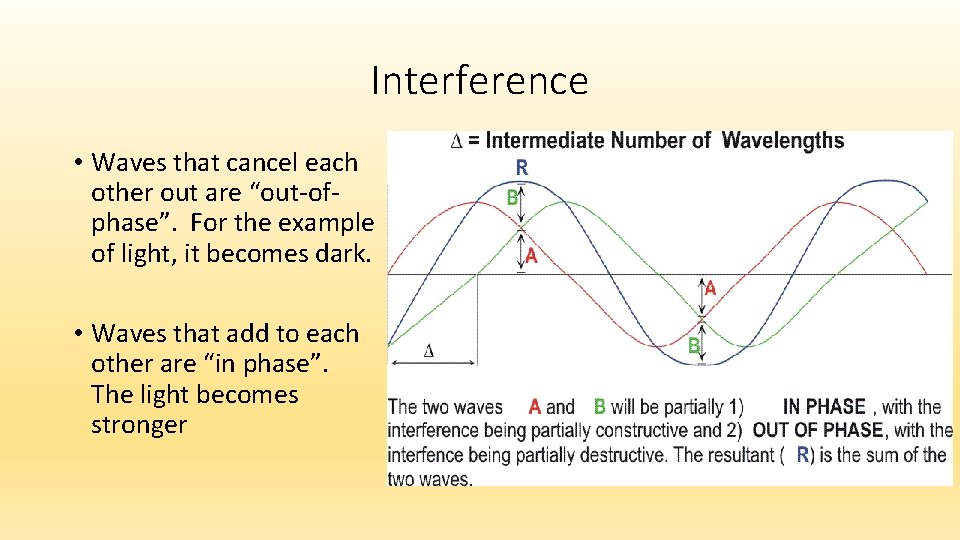
Interference • Waves that cancel each other out are “out-ofphase”. For the example of light, it becomes dark. • Waves that add to each other are “in phase”. The light becomes stronger
Interference •
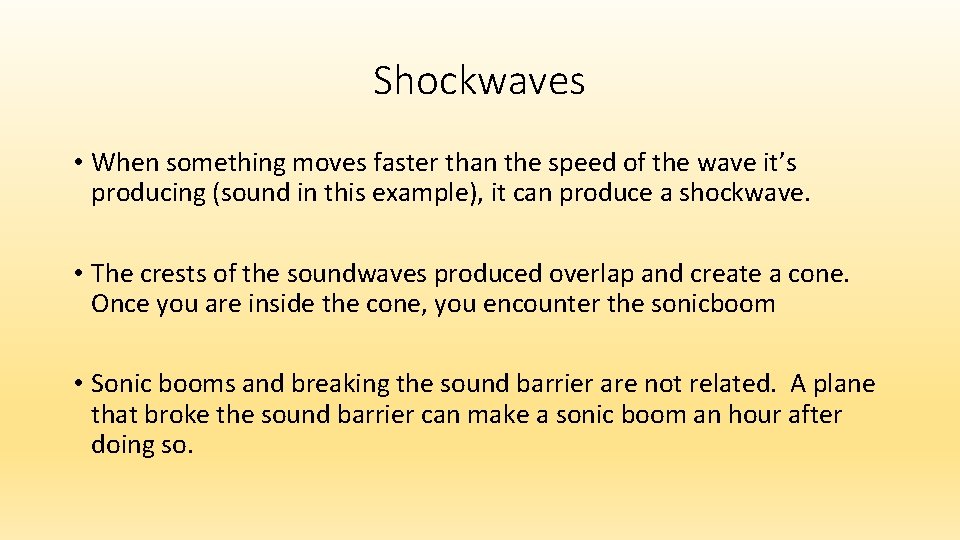
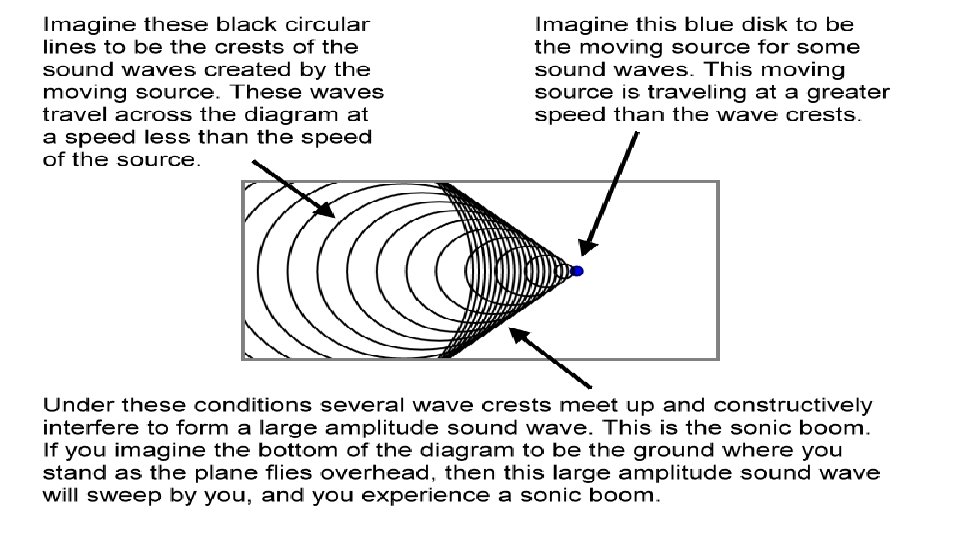
Shockwaves • When something moves faster than the speed of the wave it’s producing (sound in this example), it can produce a shockwave. • The crests of the soundwaves produced overlap and create a cone. Once you are inside the cone, you encounter the sonicboom • Sonic booms and breaking the sound barrier are not related. A plane that broke the sound barrier can make a sonic boom an hour after doing so.
Sonic Boom • Video on sonic booms
Interference • Try these problems. Turn them in at the end of class.