
WAVE INTERACTIONS WHAT DO WE ALREADY KNOW Doppler

- Slides: 13
WAVE INTERACTIONS
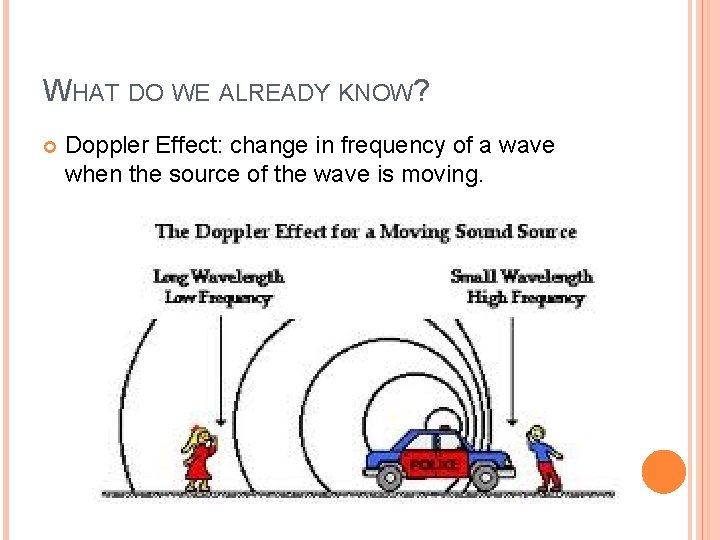
WHAT DO WE ALREADY KNOW? Doppler Effect: change in frequency of a wave when the source of the wave is moving.
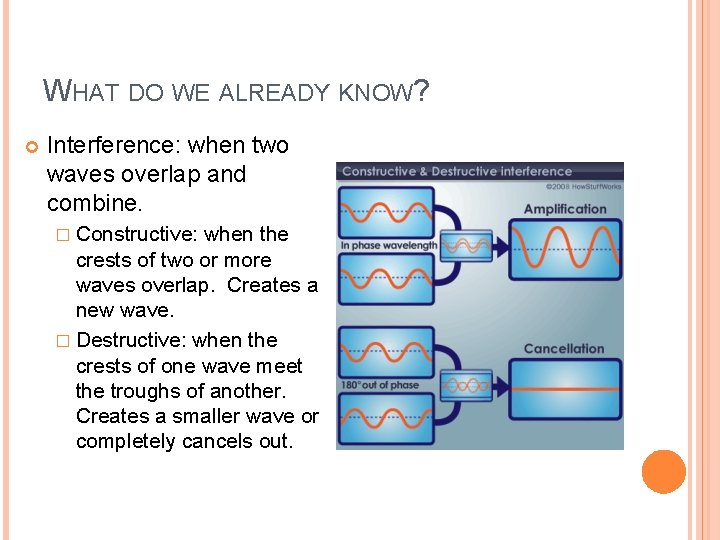
WHAT DO WE ALREADY KNOW? Interference: when two waves overlap and combine. � Constructive: when the crests of two or more waves overlap. Creates a new wave. � Destructive: when the crests of one wave meet the troughs of another. Creates a smaller wave or completely cancels out.
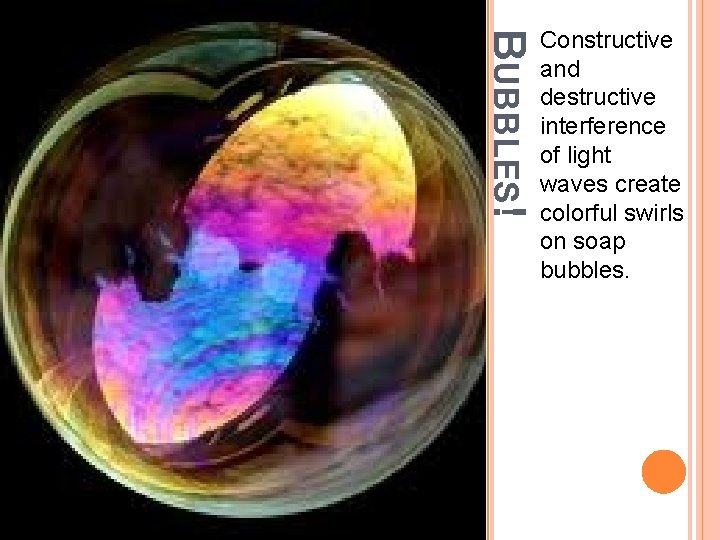
BUBBLES! Constructive and destructive interference of light waves create colorful swirls on soap bubbles.
NEW CONCEPTS Reflection Refraction Diffraction
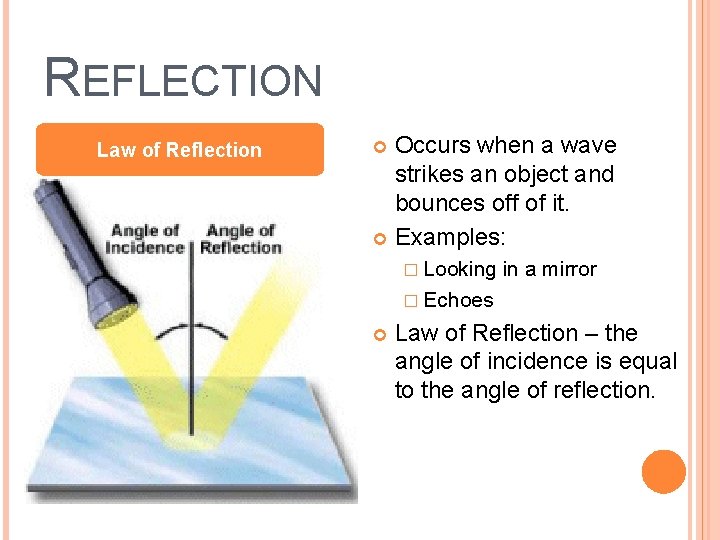
REFLECTION Law of Reflection Occurs when a wave strikes an object and bounces off of it. Examples: � Looking in a mirror � Echoes Law of Reflection – the angle of incidence is equal to the angle of reflection.
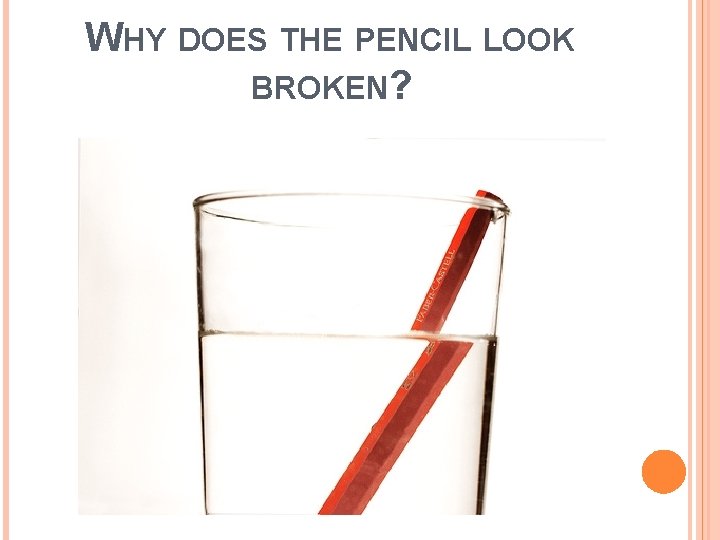
WHY DOES THE PENCIL LOOK BROKEN?
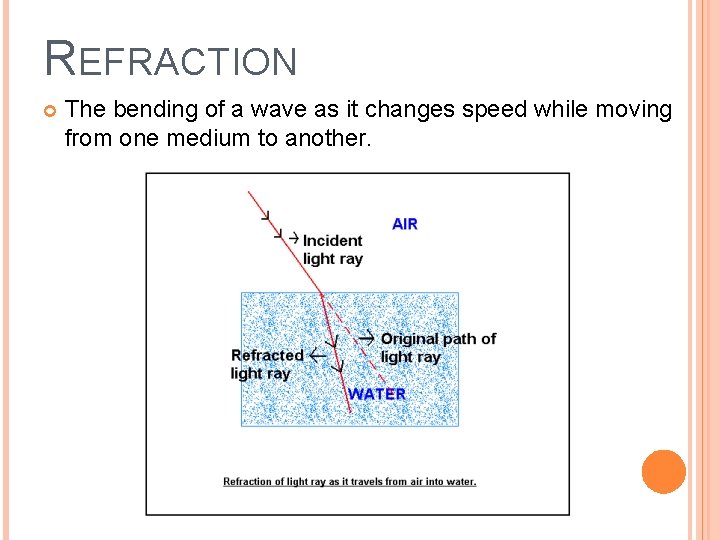
REFRACTION The bending of a wave as it changes speed while moving from one medium to another.
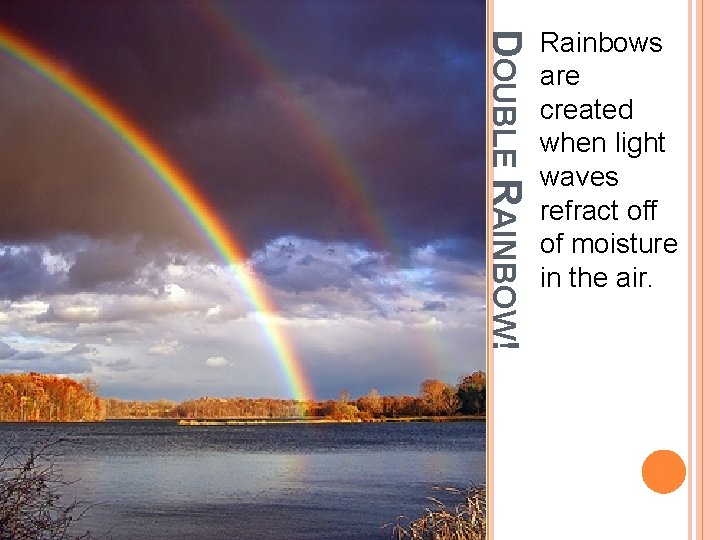
DOUBLE RAINBOW! Rainbows are created when light waves refract off of moisture in the air.
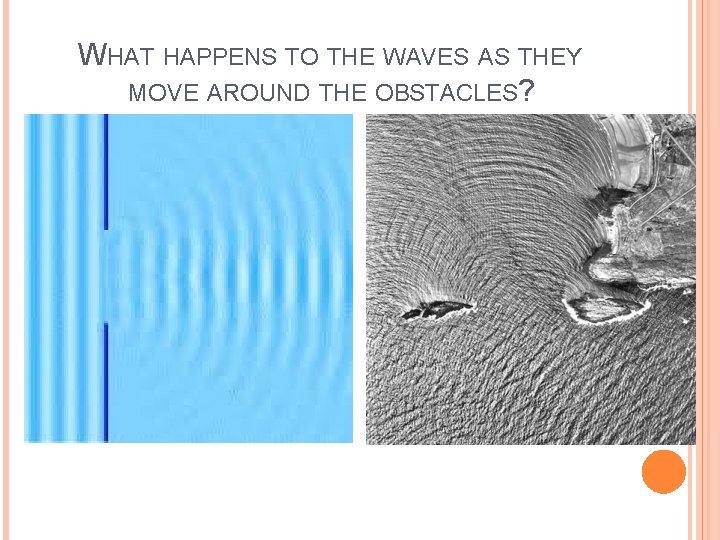
WHAT HAPPENS TO THE WAVES AS THEY MOVE AROUND THE OBSTACLES?
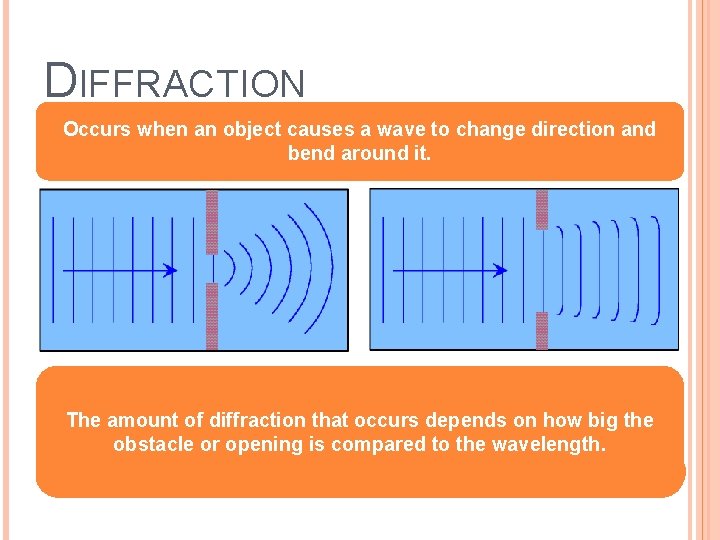
DIFFRACTION Occurs when an object causes a wave to change direction and bend around it. The amount of diffraction that occurs depends on how big the obstacle or opening is compared to the wavelength.
SOME EXAMPLES OF DIFFRACTION… Hearing around corners. Radio Waves Why can you hear noise from a room long before you can see the room? The waves are diffracted through the open door and are able to spread out. Radio waves have the longest wavelengths in the electromagnetic spectrum. These waves can be longer than a football field or as short as a football. Since wavelengths are so long, they can move around large obstacles (buildings, trees, etc…) easily.
WE WILL BE EXPLORING WAVE PROPERTIES AND SIMULATIONS IN THE LAB TOMORROW.