
Wave Interactions PreAssessment 1 Define Reflection The bouncing
Wave Interactions Pre-Assessment
1. Define Reflection • The bouncing back of a wave when it meets a surface boundary
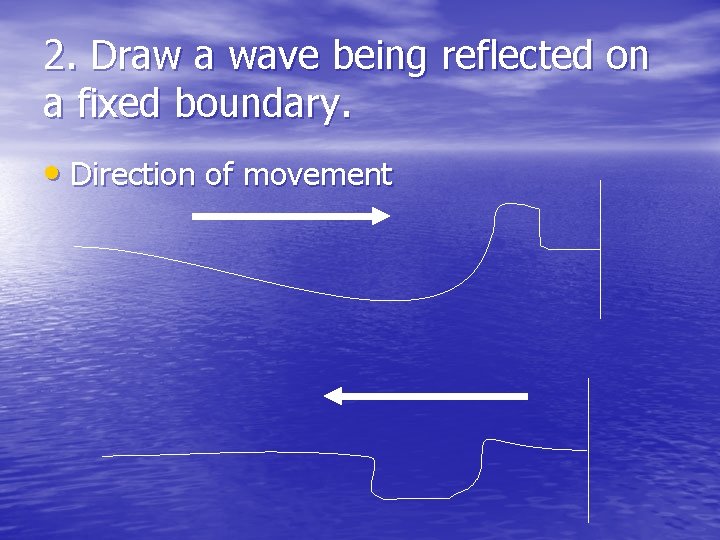
2. Draw a wave being reflected on a fixed boundary. • Direction of movement
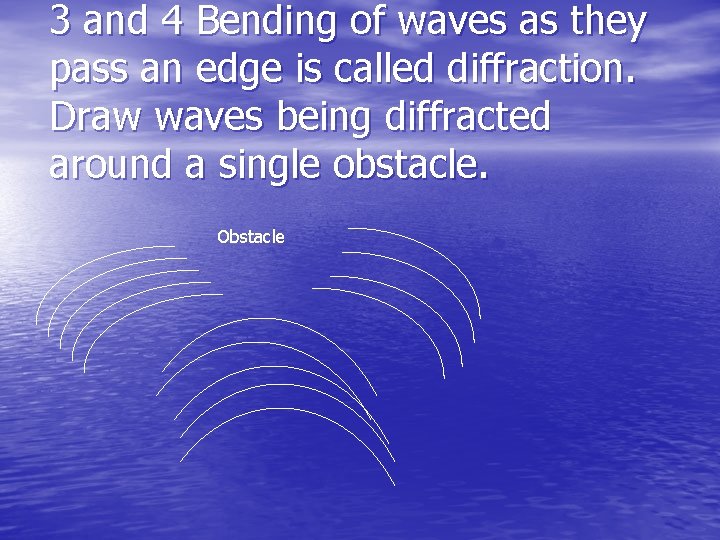
3 and 4 Bending of waves as they pass an edge is called diffraction. Draw waves being diffracted around a single obstacle. Obstacle
5. • Refraction is the bending of waves when they pass from one medium to another at an angle.
6. • What type of wave interaction is shown when two or more waves combine? • Answer: Interference
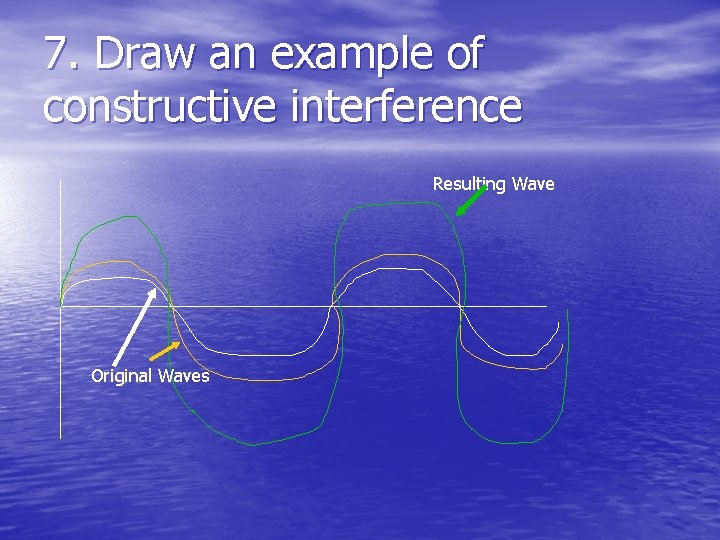
7. Draw an example of constructive interference Resulting Wave Original Waves
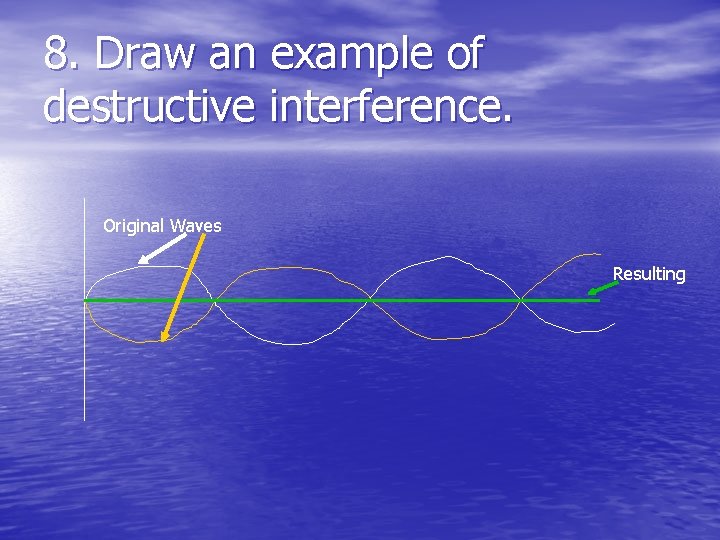
8. Draw an example of destructive interference. Original Waves Resulting
9. • Two different sounds have two different frequencies.
10. Explain how you hear beats. Describe in terms of constructive and destructive interferences. • Alternating loud and soft sounds cause us to hear beats. The loud sound is heard because of constructive interference. The softer sounds are due to destructive interference.
11. • Standing waves can form when a wave is reflected at the boundary of a medium. In a standing wave, interference of the original wave with the reflected wave causes the medium to vibrate in a stationary pattern that resembles a loop.
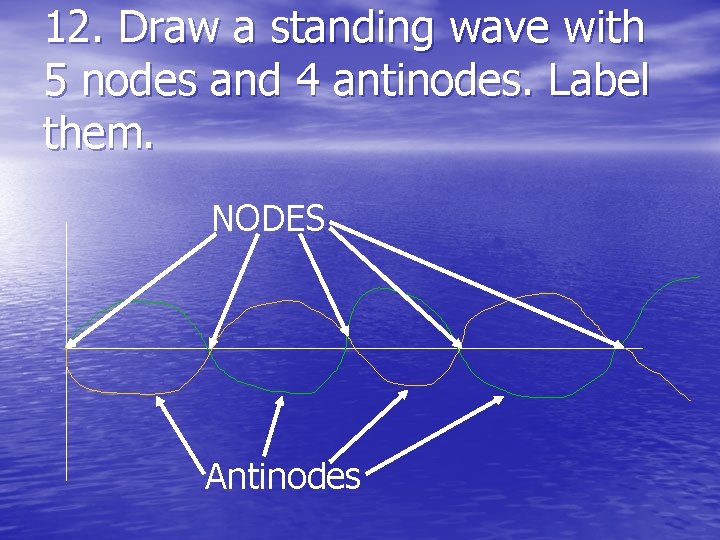
12. Draw a standing wave with 5 nodes and 4 antinodes. Label them. NODES Antinodes
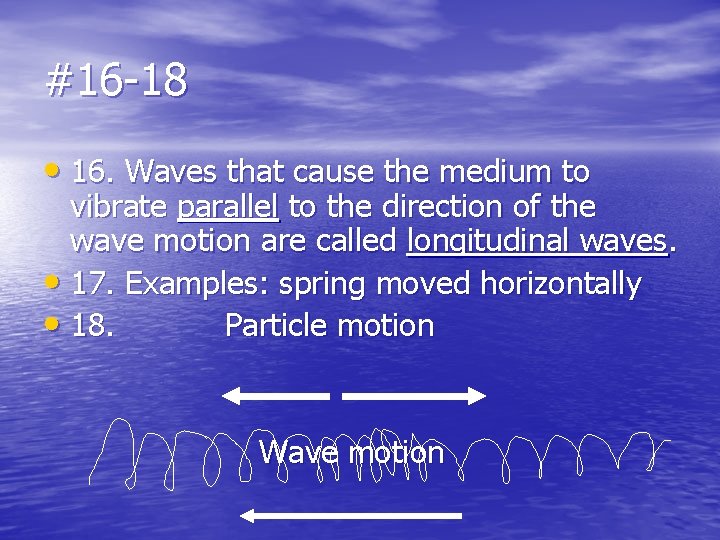
#16 -18 • 16. Waves that cause the medium to vibrate parallel to the direction of the wave motion are called longitudinal waves. • 17. Examples: spring moved horizontally • 18. Particle motion Wave motion
19. • Water waves are examples of surface waves.
20. • This type of wave occurs on the boundary between two different mediums.
21. • The particles in surface waves move both perpendicularly and parallel. *
- Slides: 16