
WAVE INTERACTIONS Chapter 11 Section 4 LEARNING TARGETS
- Slides: 12
WAVE INTERACTIONS Chapter 11: Section 4
LEARNING TARGETS Explain why multiple waves can occupy the same area at the same time Describe the difference between destructive and constructive interference Compare and contrast wave reflection on a fixed and moveable boundary
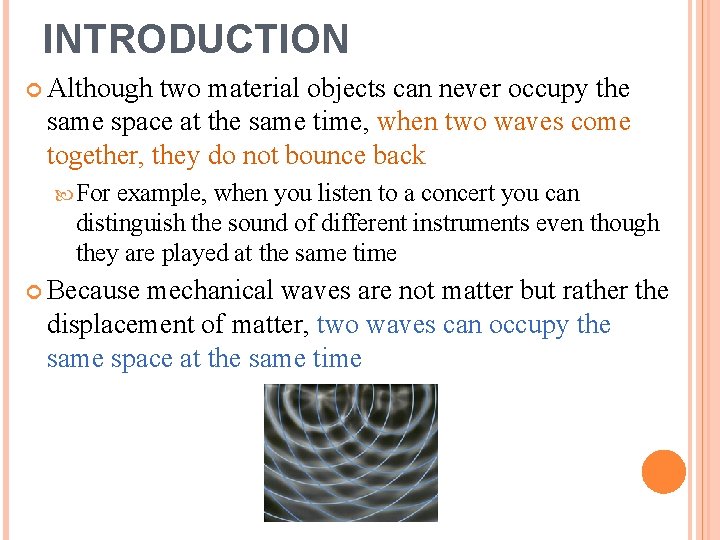
INTRODUCTION Although two material objects can never occupy the same space at the same time, when two waves come together, they do not bounce back For example, when you listen to a concert you can distinguish the sound of different instruments even though they are played at the same time Because mechanical waves are not matter but rather the displacement of matter, two waves can occupy the same space at the same time
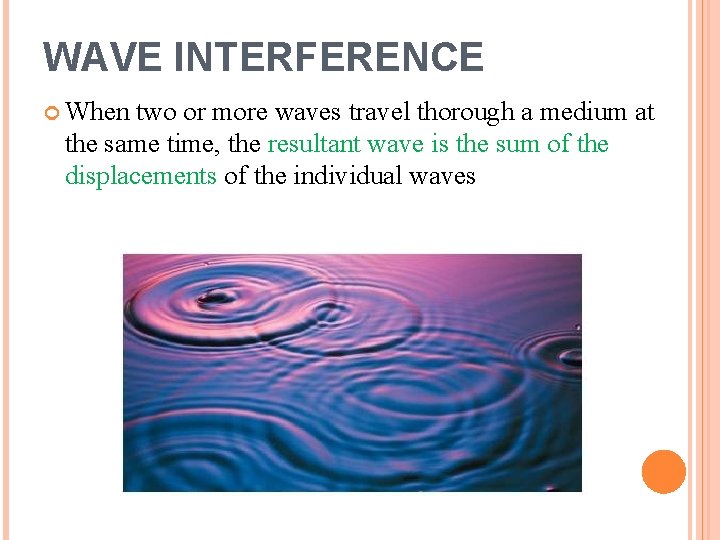
WAVE INTERFERENCE When two or more waves travel thorough a medium at the same time, the resultant wave is the sum of the displacements of the individual waves
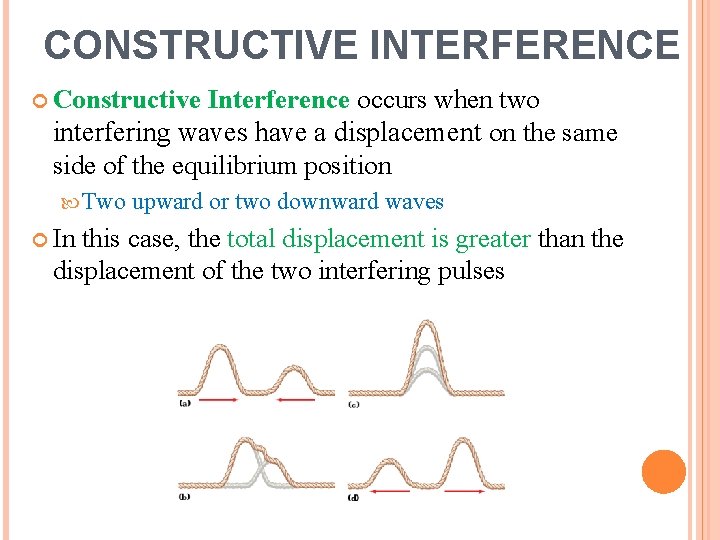
CONSTRUCTIVE INTERFERENCE Constructive Interference occurs when two interfering waves have a displacement on the same side of the equilibrium position Two In upward or two downward waves this case, the total displacement is greater than the displacement of the two interfering pulses
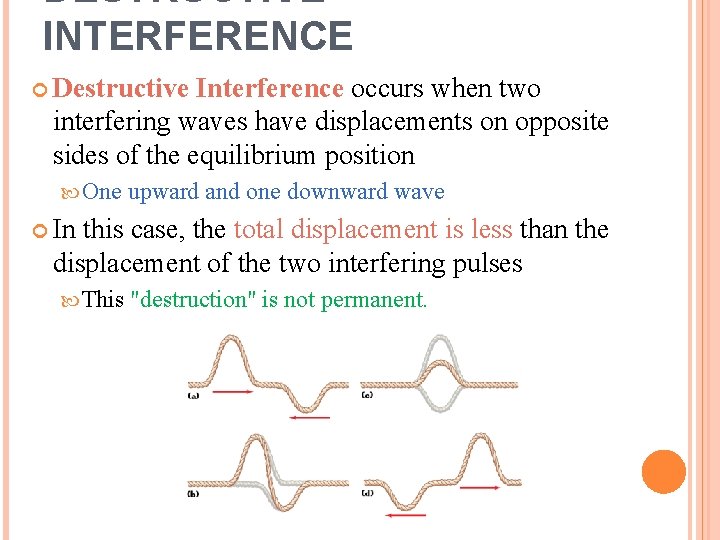
DESTRUCTIVE INTERFERENCE Destructive Interference occurs when two interfering waves have displacements on opposite sides of the equilibrium position One upward and one downward wave In this case, the total displacement is less than the displacement of the two interfering pulses This "destruction" is not permanent.
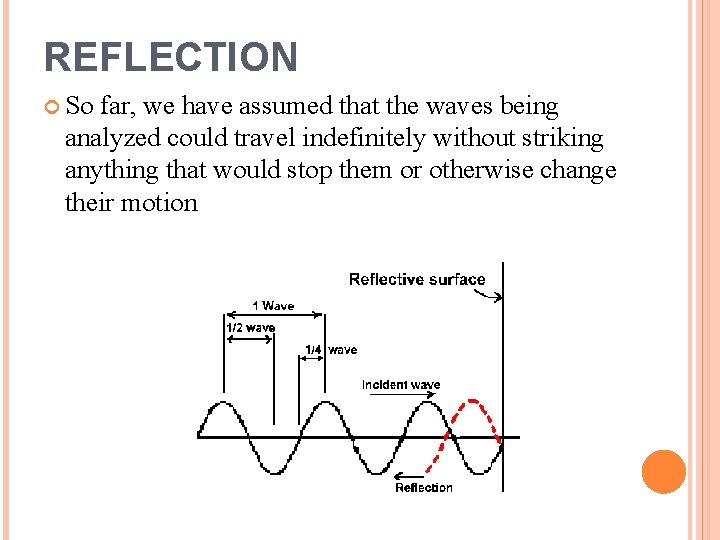
REFLECTION So far, we have assumed that the waves being analyzed could travel indefinitely without striking anything that would stop them or otherwise change their motion
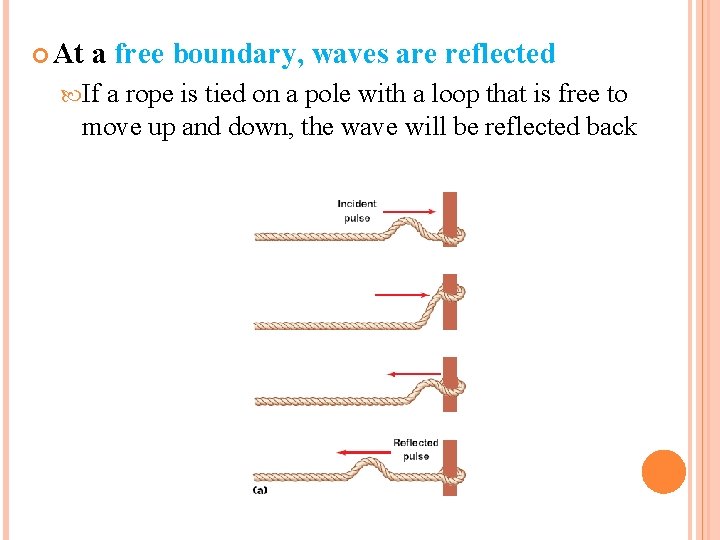
At a free boundary, waves are reflected If a rope is tied on a pole with a loop that is free to move up and down, the wave will be reflected back
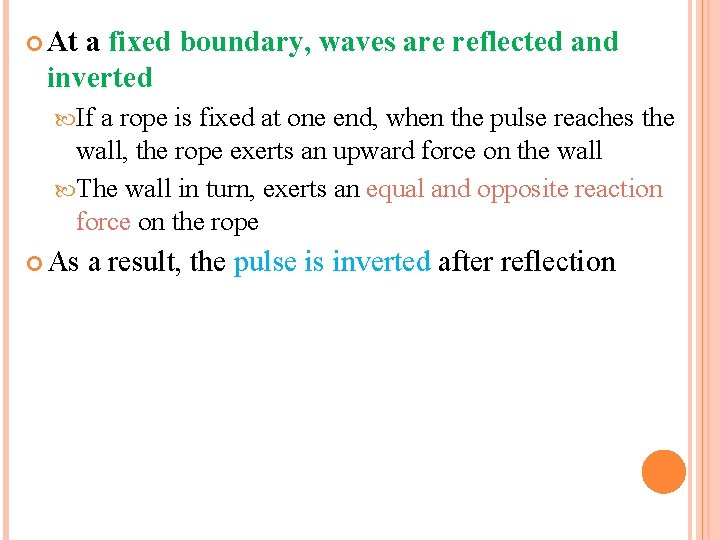
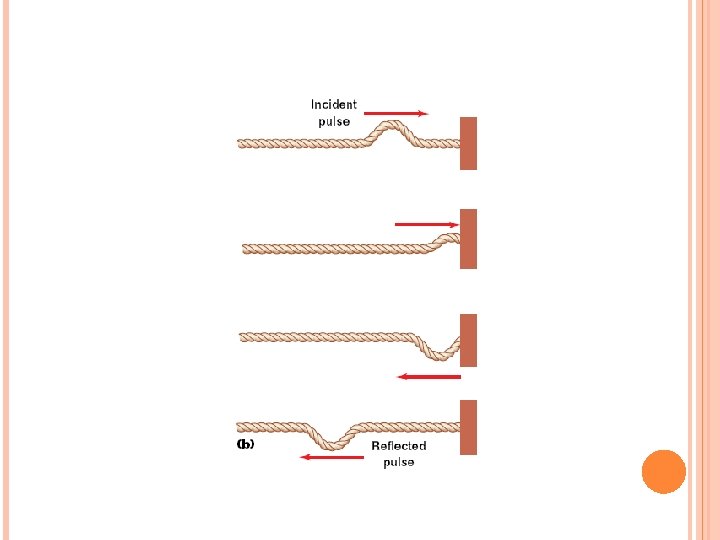
At a fixed boundary, waves are reflected and inverted If a rope is fixed at one end, when the pulse reaches the wall, the rope exerts an upward force on the wall The wall in turn, exerts an equal and opposite reaction force on the rope As a result, the pulse is inverted after reflection
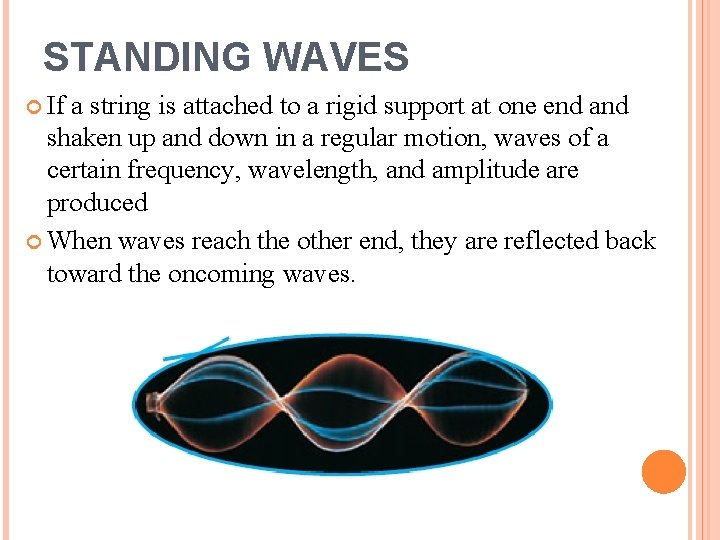
STANDING WAVES If a string is attached to a rigid support at one end and shaken up and down in a regular motion, waves of a certain frequency, wavelength, and amplitude are produced When waves reach the other end, they are reflected back toward the oncoming waves.
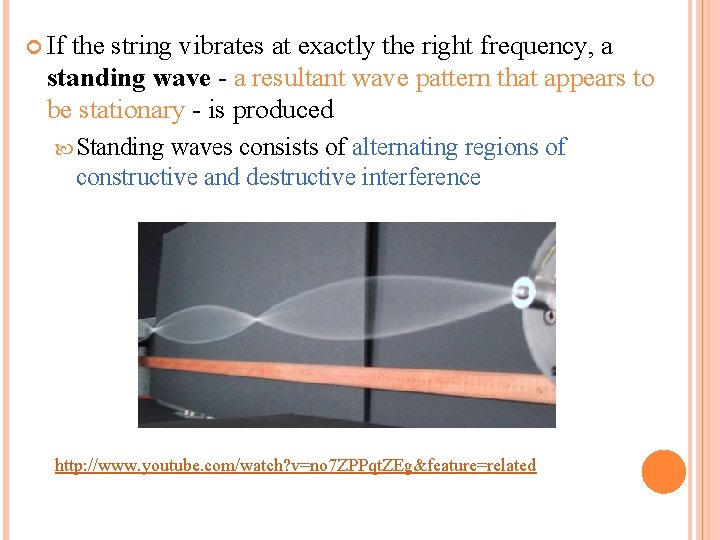
If the string vibrates at exactly the right frequency, a standing wave - a resultant wave pattern that appears to be stationary - is produced Standing waves consists of alternating regions of constructive and destructive interference http: //www. youtube. com/watch? v=no 7 ZPPqt. ZEg&feature=related