
Wave Interactions Chapter 10 Section 3 Physics Standard
- Slides: 11
Wave Interactions Chapter 10 Section 3 Physics Standard 4 f
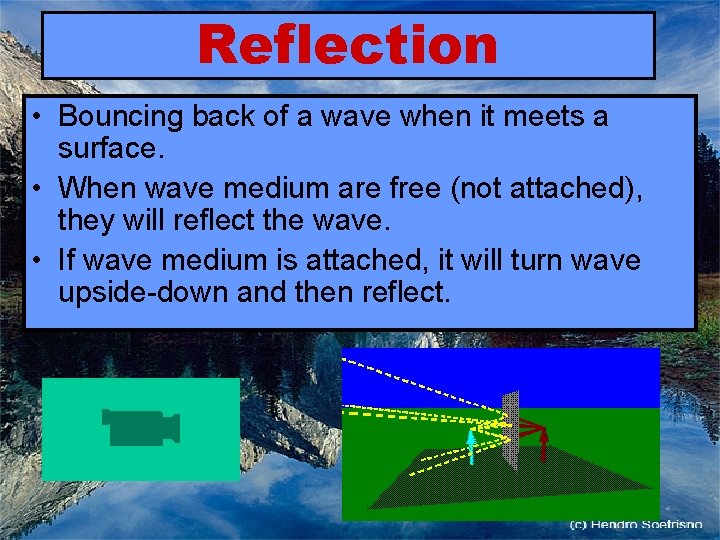
Reflection • Bouncing back of a wave when it meets a surface. • When wave medium are free (not attached), they will reflect the wave. • If wave medium is attached, it will turn wave upside-down and then reflect.
Reflection • Reflection occurs when an object or a wave hits a surface through which it cannot pass, and it bounces back – Examples: • Shouting in an empty gym • Looking in a mirror • The law of reflection: the angle of incidence equals the angle of reflection
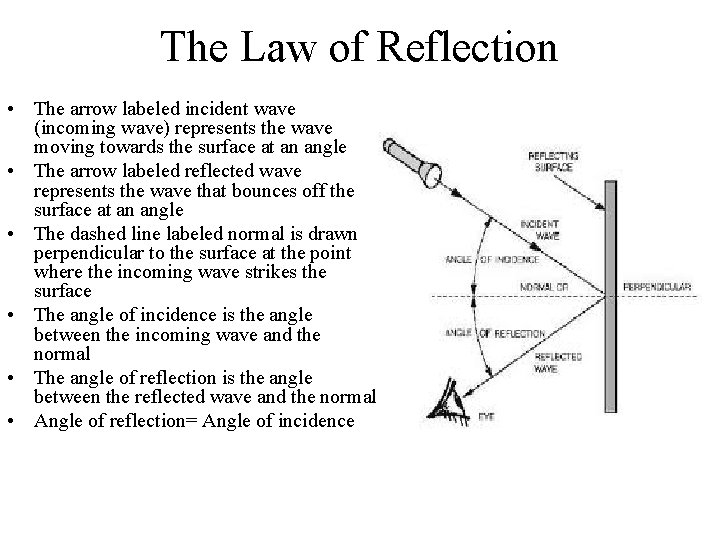
The Law of Reflection • The arrow labeled incident wave (incoming wave) represents the wave moving towards the surface at an angle • The arrow labeled reflected wave represents the wave that bounces off the surface at an angle • The dashed line labeled normal is drawn perpendicular to the surface at the point where the incoming wave strikes the surface • The angle of incidence is the angle between the incoming wave and the normal • The angle of reflection is the angle between the reflected wave and the normal • Angle of reflection= Angle of incidence
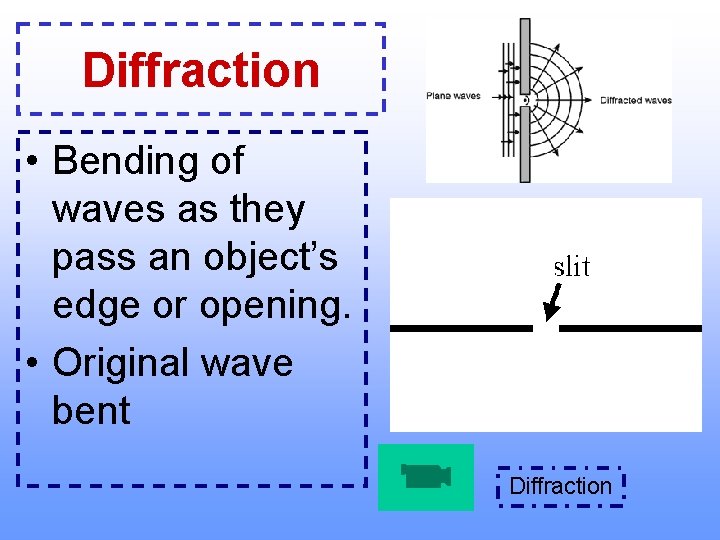
Diffraction • Bending of waves as they pass an object’s edge or opening. • Original wave bent Diffraction
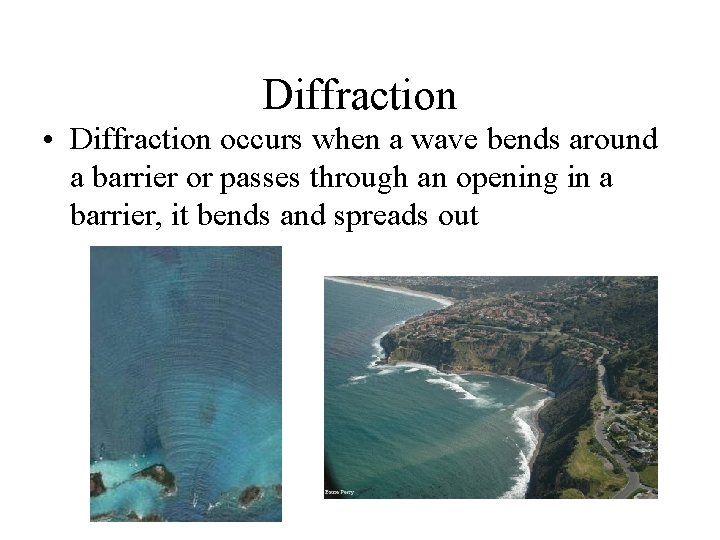
Diffraction • Diffraction occurs when a wave bends around a barrier or passes through an opening in a barrier, it bends and spreads out
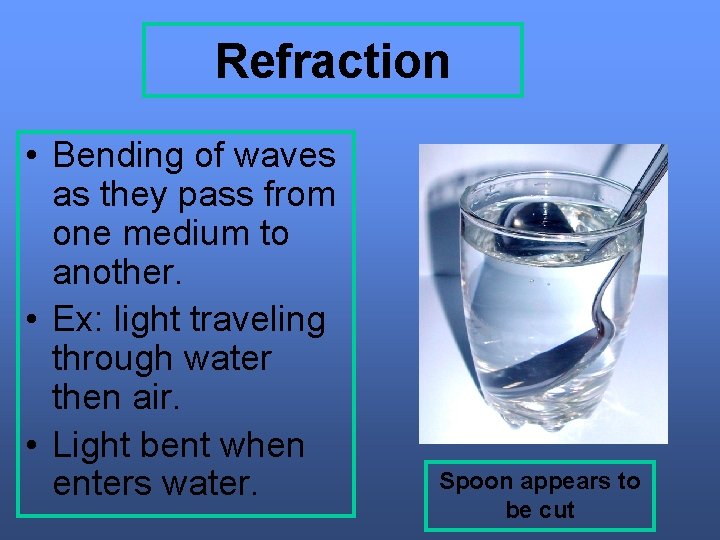
Refraction • Bending of waves as they pass from one medium to another. • Ex: light traveling through water then air. • Light bent when enters water. Spoon appears to be cut
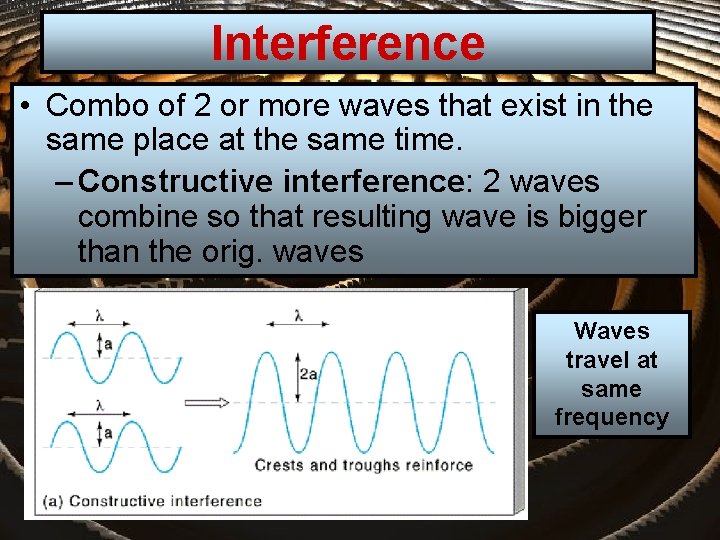
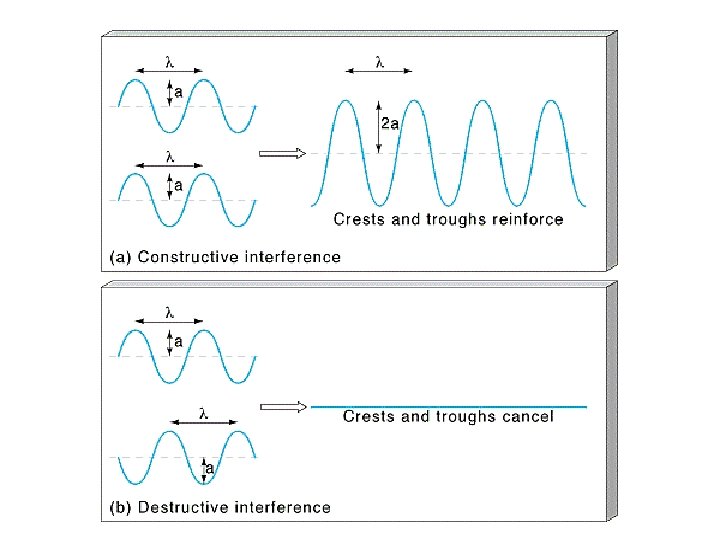
Interference • Combo of 2 or more waves that exist in the same place at the same time. – Constructive interference: 2 waves combine so that resulting wave is bigger than the orig. waves Waves travel at same frequency
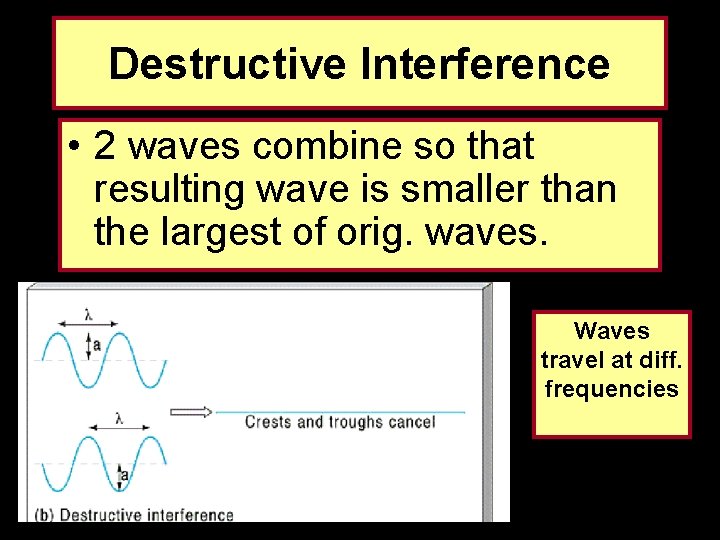
Destructive Interference • 2 waves combine so that resulting wave is smaller than the largest of orig. waves. Waves travel at diff. frequencies
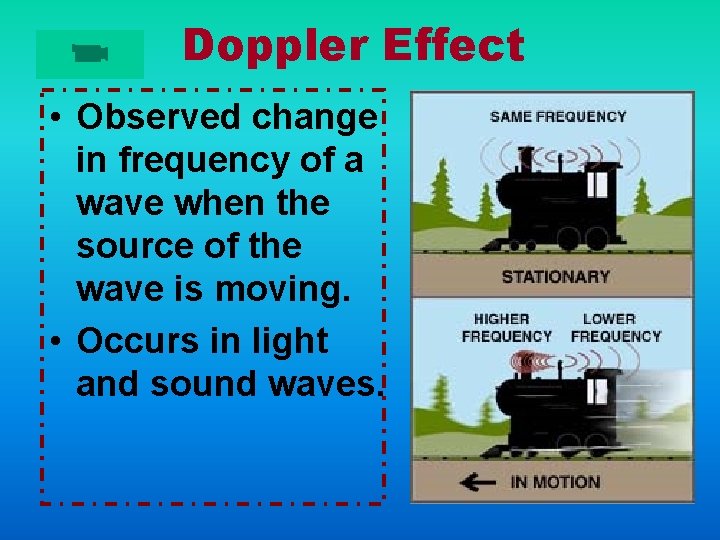
Doppler Effect • Observed change in frequency of a wave when the source of the wave is moving. • Occurs in light and sound waves.