
Wave Erosion The shoreline A dynamic interface Waves
- Slides: 28
Wave Erosion
The shoreline: A dynamic interface Waves Wind generated waves provide most of the energy that shapes and modifies shorelines
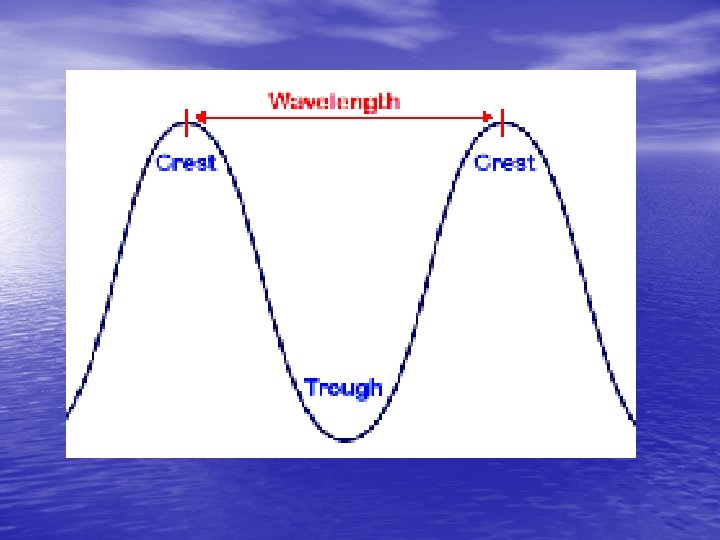
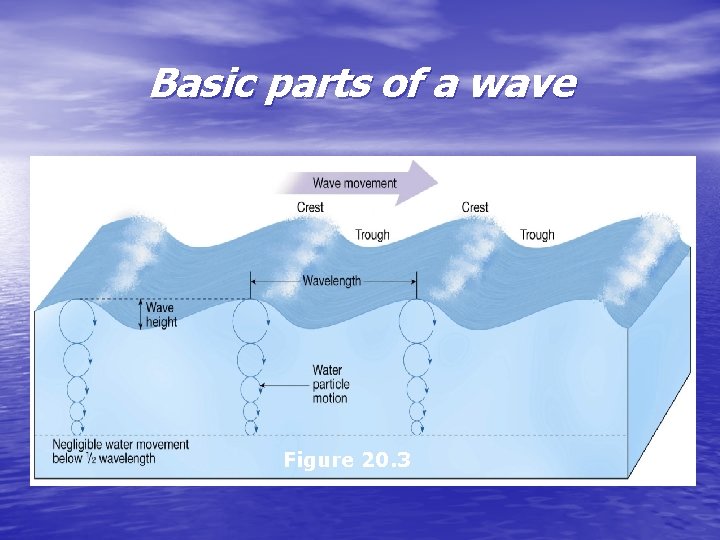
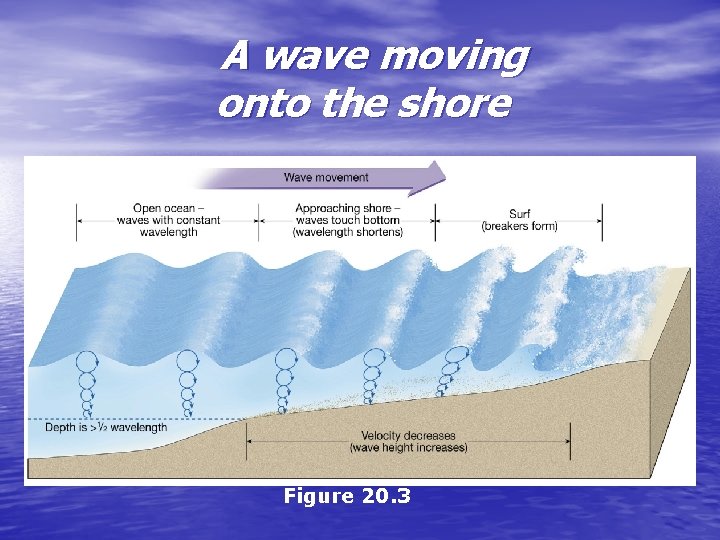
Waves Parts of a wave – Crest – top of the wave – Trough – low area between waves • Measurements of a wave – Wave height – the distance between a trough and a crest – Wavelength – the horizontal distance between crests
Waves • Measurements of a wave – Wave period – the time interval between the passage of two successive crests • Height, length, and period of a wave depend on – Wind speed – Length of time wind has blown – Fetch – the distance that the wind has traveled across open water
Basic parts of a wave Figure 20. 3
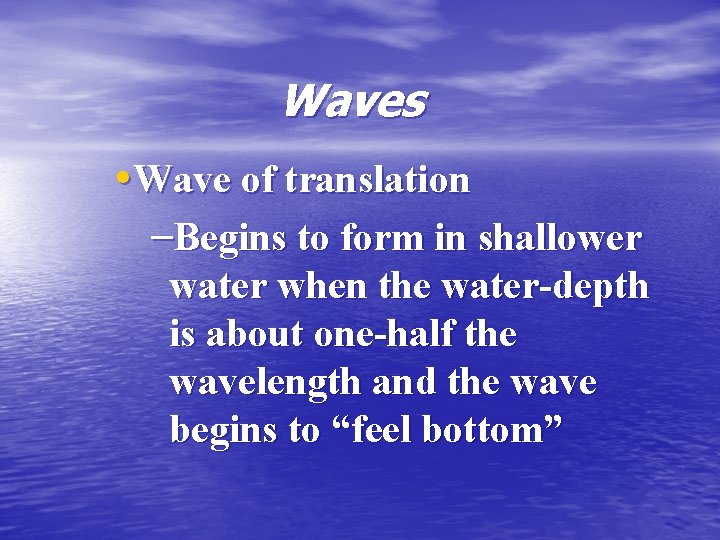
Waves • Wave of translation –Begins to form in shallower water when the water-depth is about one-half the wavelength and the wave begins to “feel bottom”
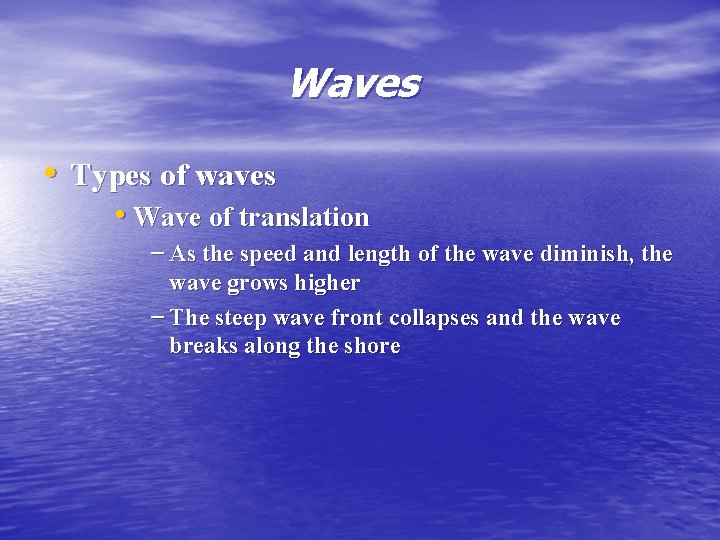
Waves • Types of waves • Wave of translation – As the speed and length of the wave diminish, the wave grows higher – The steep wave front collapses and the wave breaks along the shore
A wave moving onto the shore Figure 20. 3
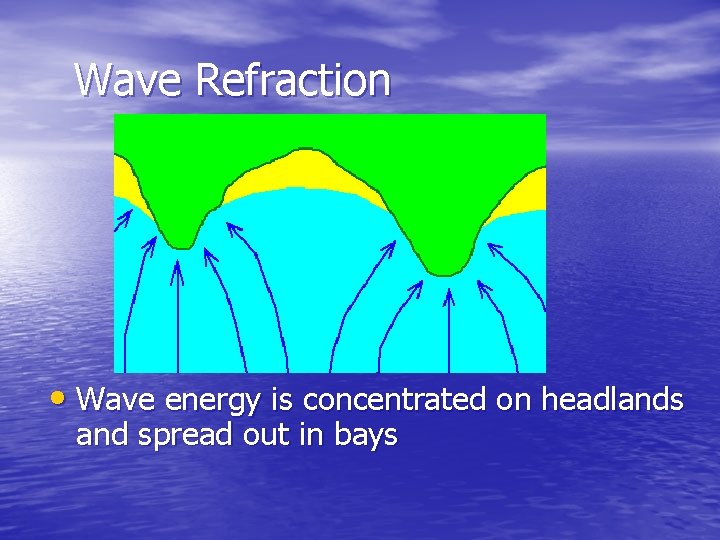
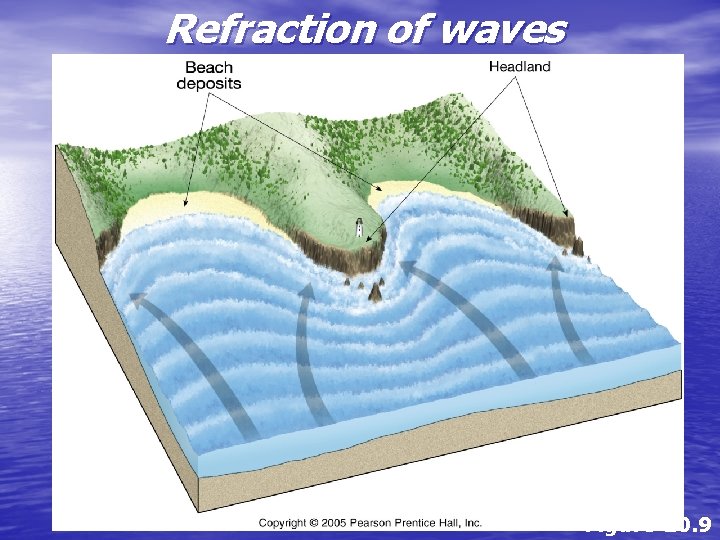
Wave Refraction • Wave energy is concentrated on headlands and spread out in bays
Refraction of waves Figure 20. 9
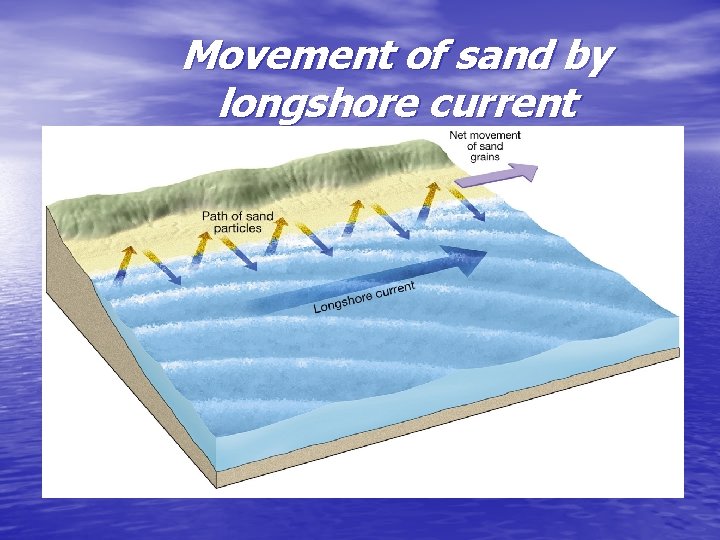
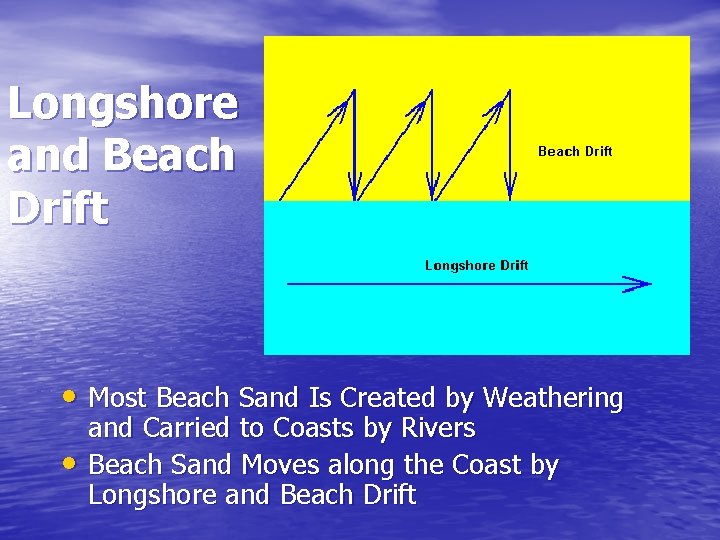
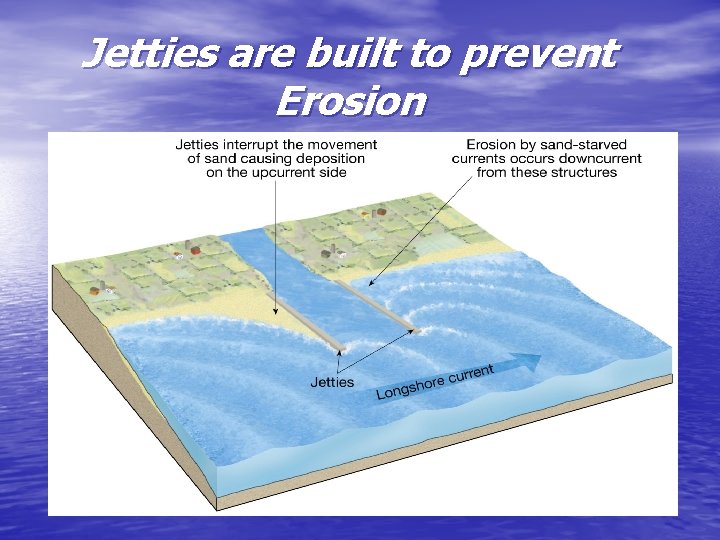
Sand movement on the beach • Wave refraction • Moving sand along the beach –Waves that reach the shoreline at an angle cause the sediment to move along a beach in a zigzag pattern called beach drift –waves also produce longshore currents v. Currents in the surf zone v. Flow parallel to the coast
Movement of sand by longshore current Figure 20. 10
Longshore and Beach Drift • Most Beach Sand Is Created by Weathering • and Carried to Coasts by Rivers Beach Sand Moves along the Coast by Longshore and Beach Drift
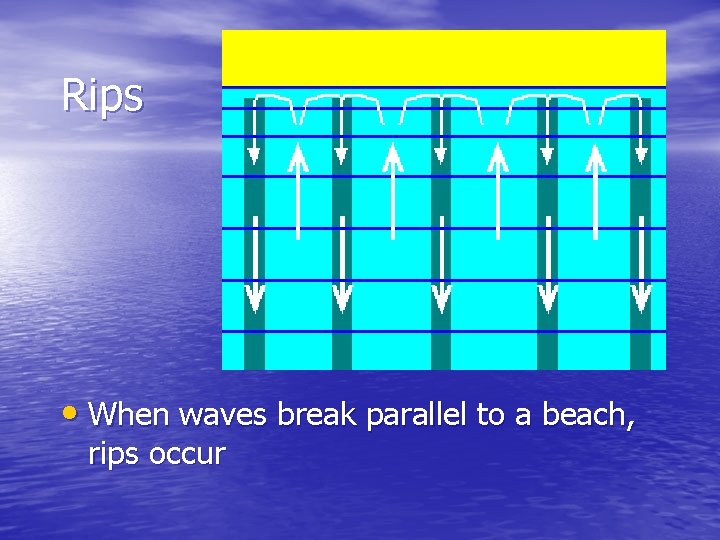
Rips • When waves break parallel to a beach, rips occur
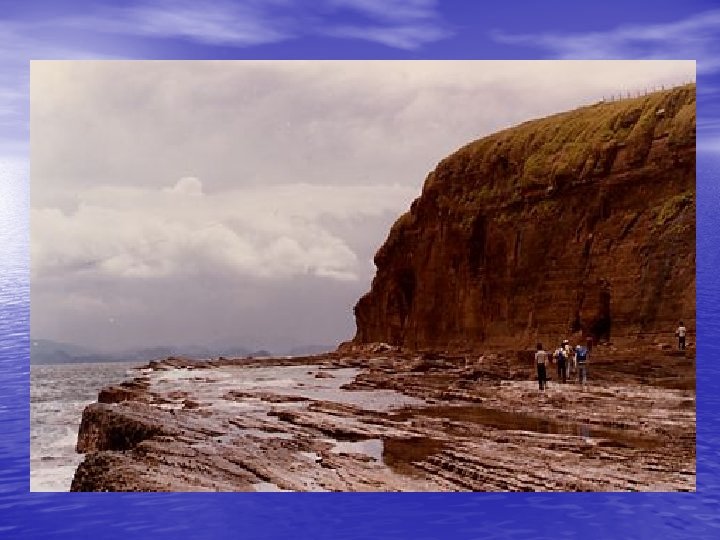
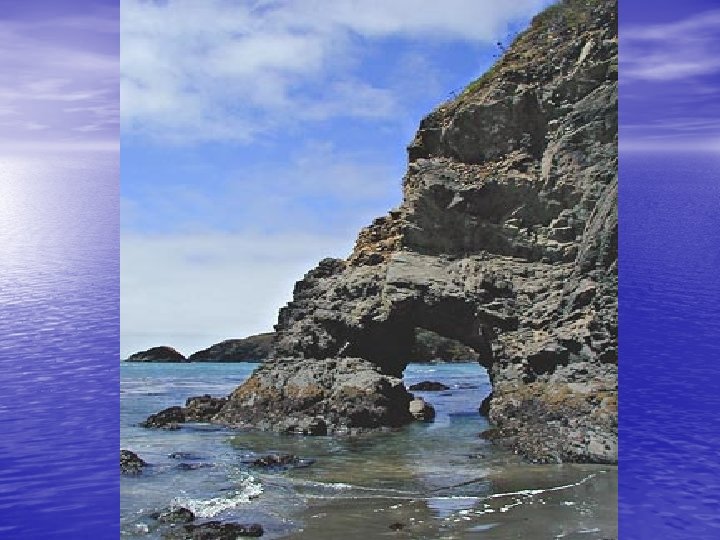
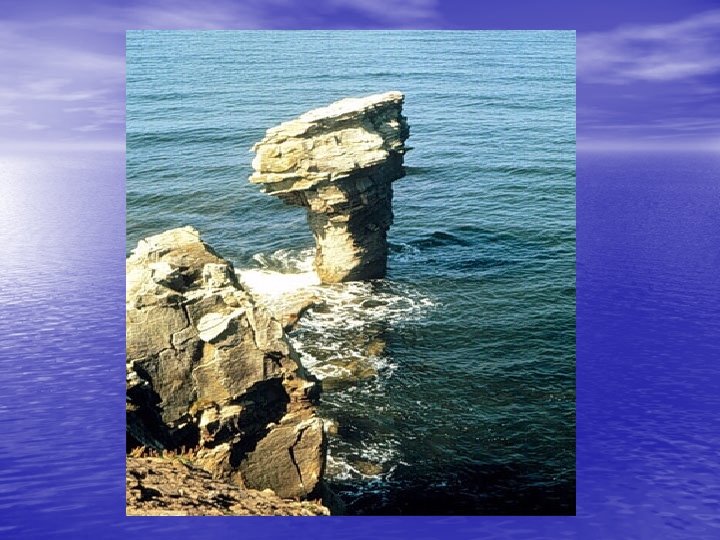
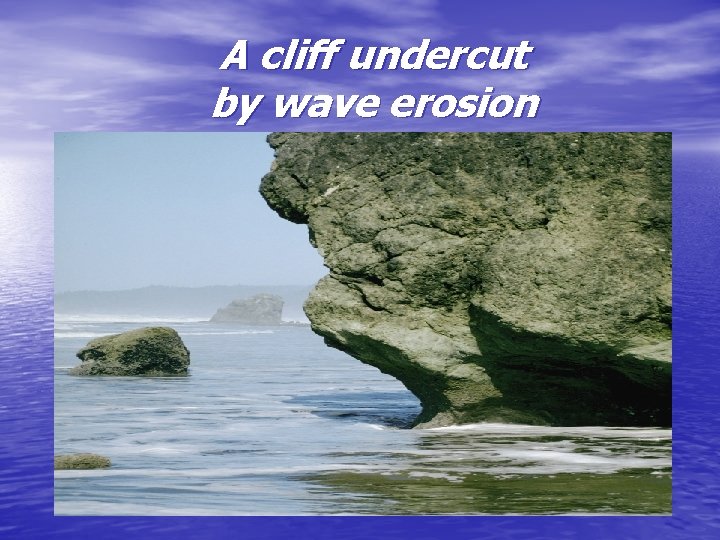
Shoreline features • Features caused by wave erosion • Wave-cut cliffs • Wave-cut platform • Features associated with headlands – Sea arch – Sea stack
A cliff undercut by wave erosion
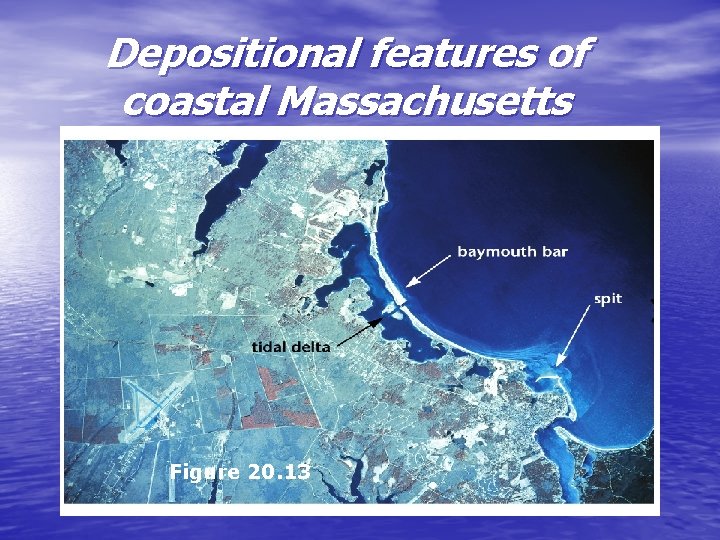
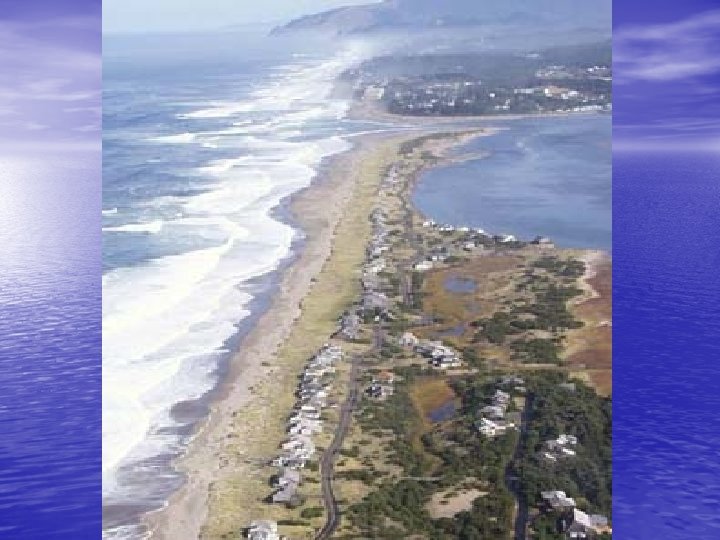
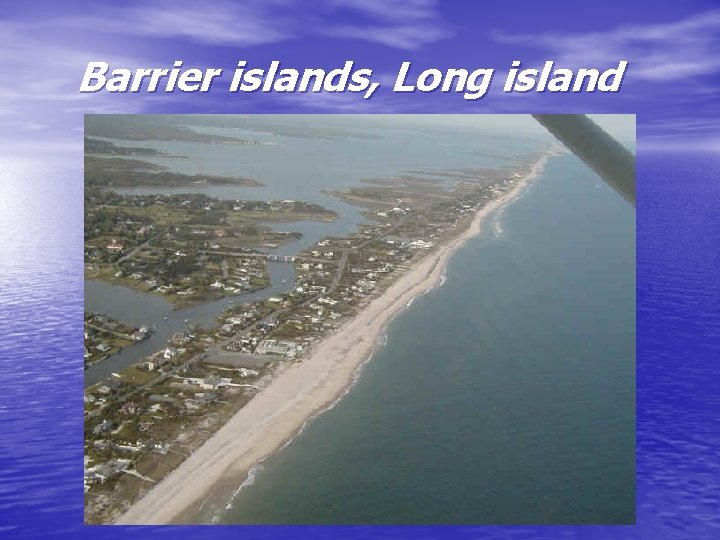
Shoreline features • Features related to beach drift and longshore currents • Baymouth bar – a sand bar that completely crosses a bay • Barrier islands Low ridges of sand that parallel the coast 3 to 30 kilometers offshore • Spits – Elongated ridges of sand extending from the land into the mouth of an adjacent bay – Often the end of a spit hooks landward in response to wavegenerated currents
Depositional features of coastal Massachusetts Figure 20. 13
Barrier islands, Long island
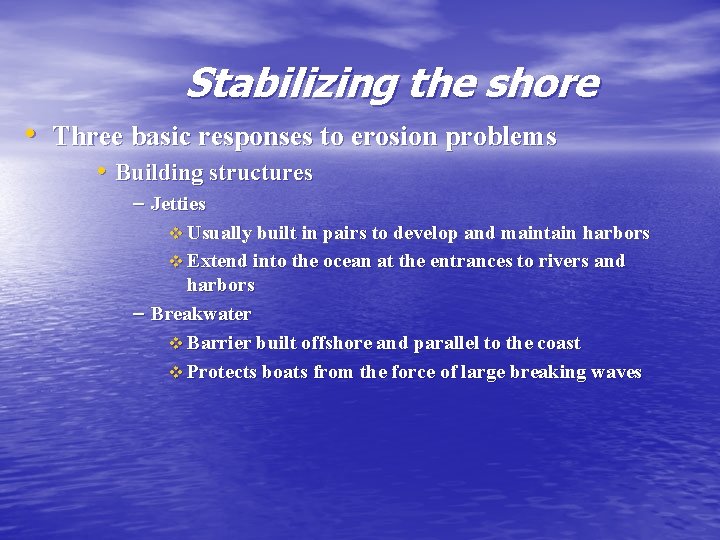
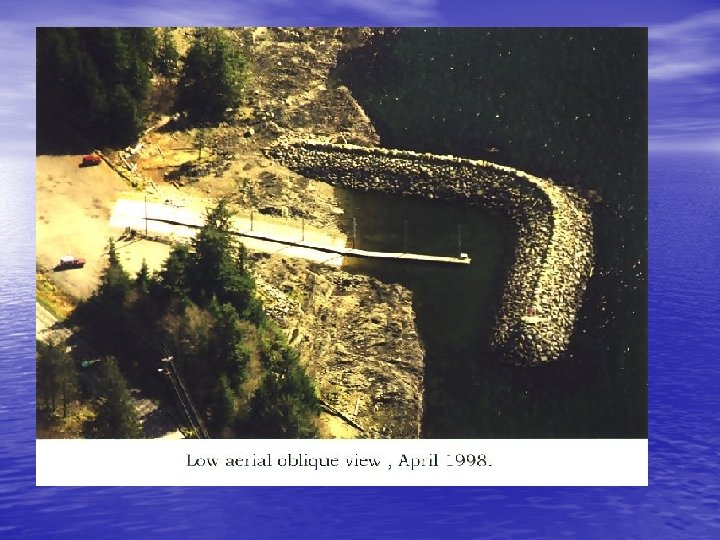
Stabilizing the shore • Three basic responses to erosion problems • Building structures – Jetties v Usually built in pairs to develop and maintain harbors v Extend into the ocean at the entrances to rivers and harbors – Breakwater v Barrier built offshore and parallel to the coast v Protects boats from the force of large breaking waves
Jetties are built to prevent Erosion Figure 20. 17
landscapes Erosion • Stack • Wave cut cliff • Arch Deposition • Spit • Baymouth Bar • Barrier Bar