
Wave Behavior All waves will Reflect Refract Diffract
Wave Behavior § All waves will • • Reflect Refract Diffract Interfere
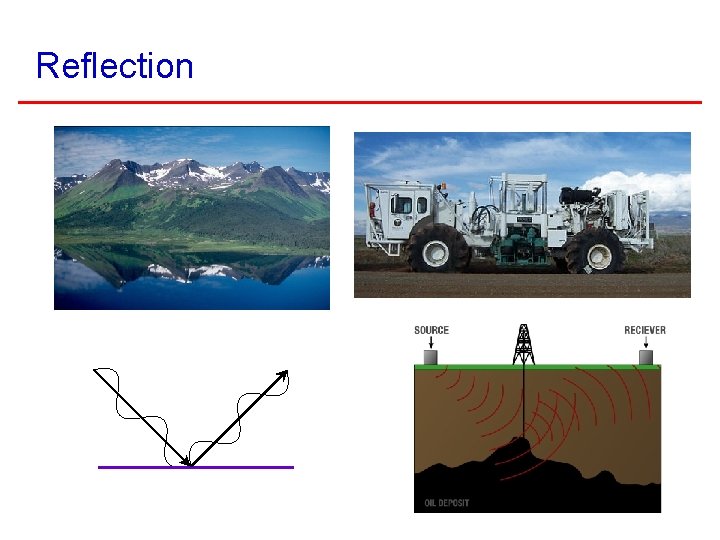
Reflection
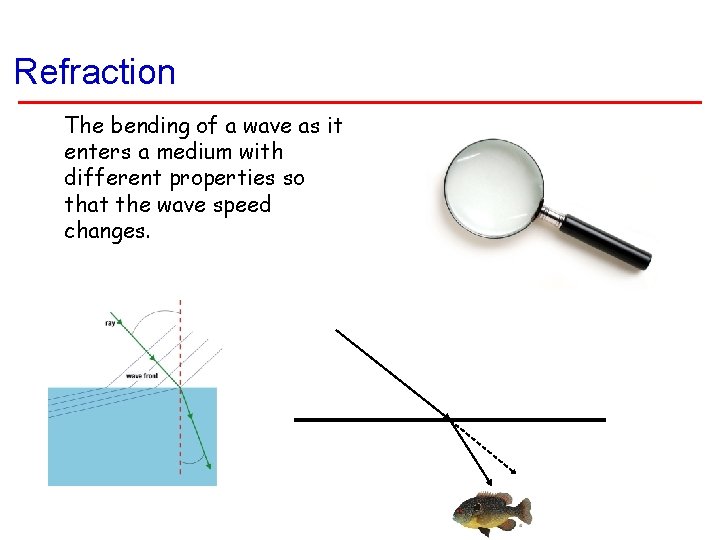
Refraction The bending of a wave as it enters a medium with different properties so that the wave speed changes.
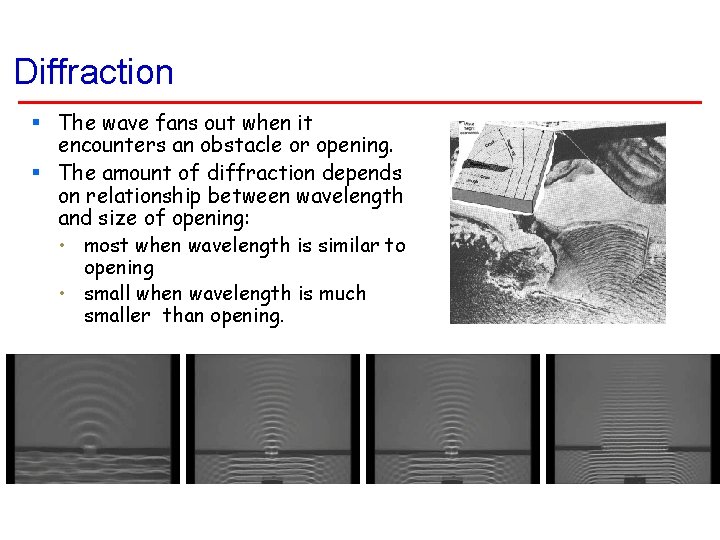
Diffraction § The wave fans out when it encounters an obstacle or opening. § The amount of diffraction depends on relationship between wavelength and size of opening: • most when wavelength is similar to opening • small when wavelength is much smaller than opening.
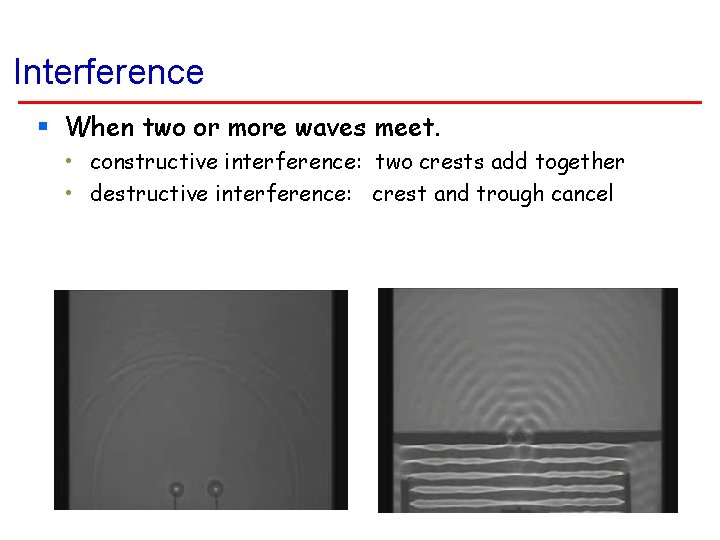
Interference § When two or more waves meet. • constructive interference: two crests add together • destructive interference: crest and trough cancel
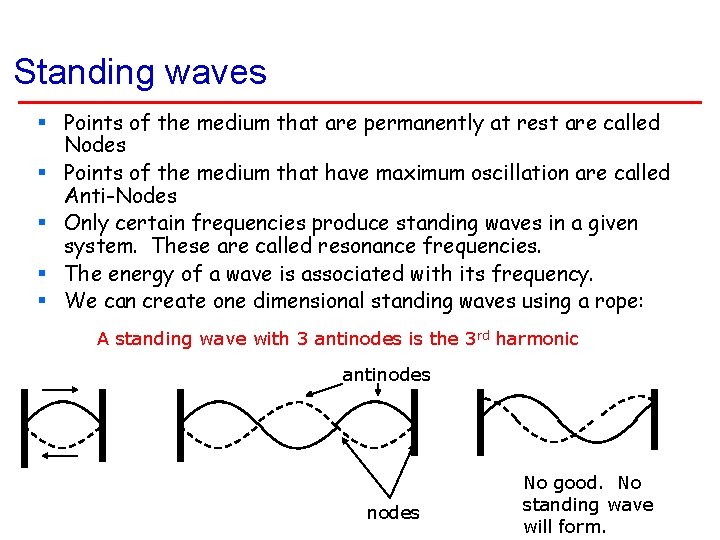
Standing waves § Points of the medium that are permanently at rest are called Nodes § Points of the medium that have maximum oscillation are called Anti-Nodes § Only certain frequencies produce standing waves in a given system. These are called resonance frequencies. § The energy of a wave is associated with its frequency. § We can create one dimensional standing waves using a rope: A standing wave with 3 antinodes is the 3 rd harmonic antinodes No good. No standing wave will form.
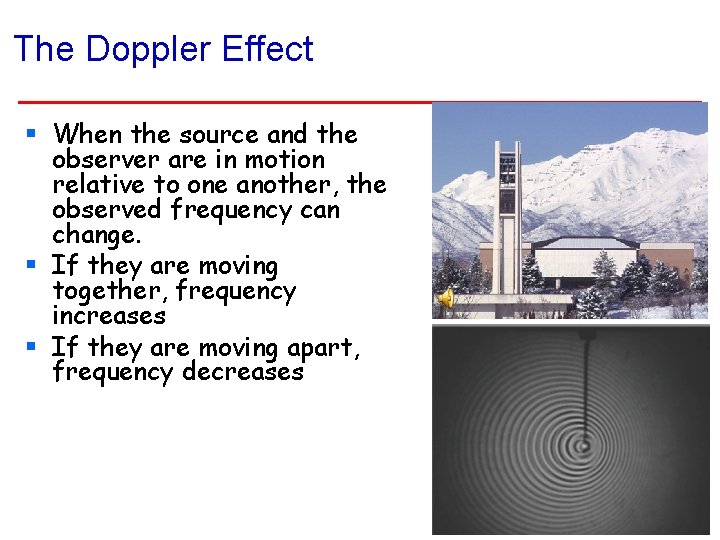
The Doppler Effect § When the source and the observer are in motion relative to one another, the observed frequency can change. § If they are moving together, frequency increases § If they are moving apart, frequency decreases
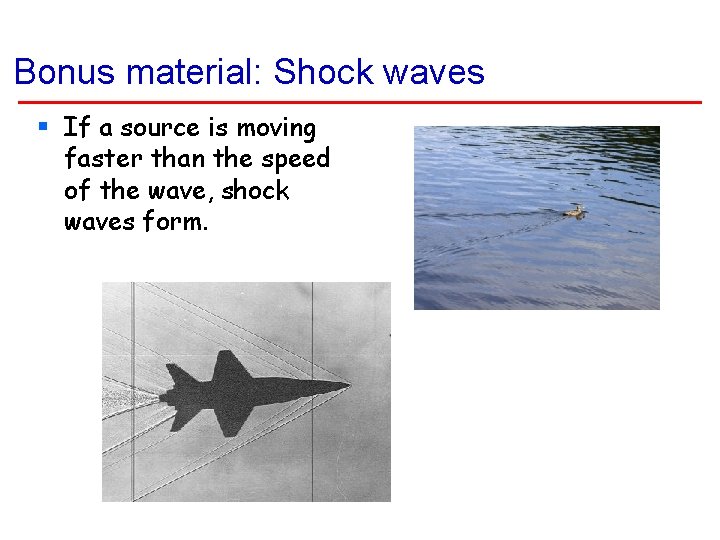
Bonus material: Shock waves § If a source is moving faster than the speed of the wave, shock waves form.
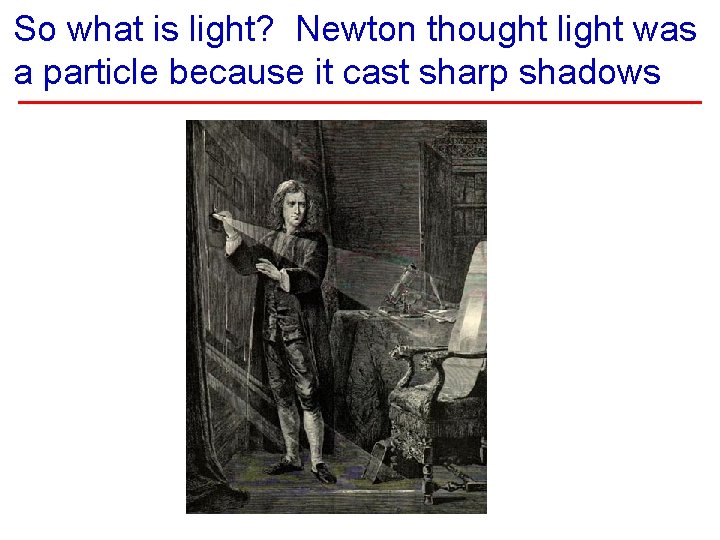
So what is light? Newton thought light was a particle because it cast sharp shadows
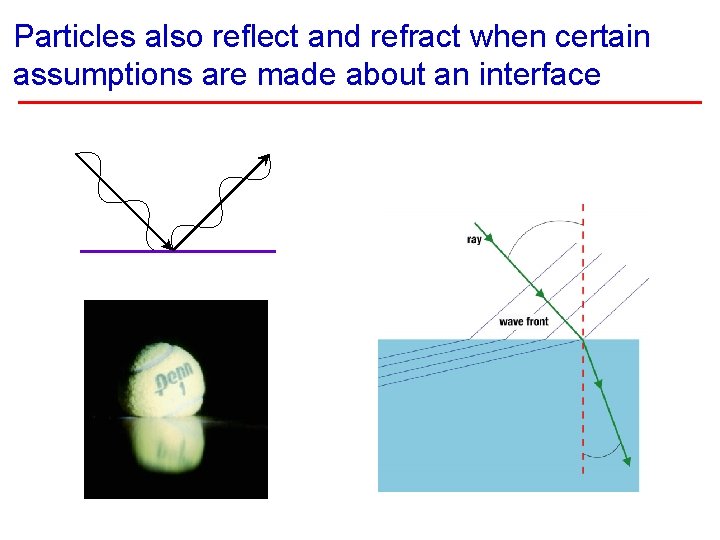
Particles also reflect and refract when certain assumptions are made about an interface
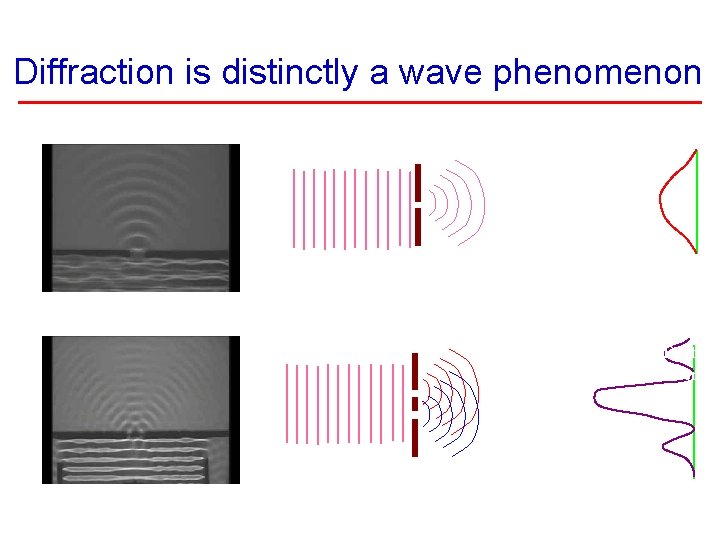
Diffraction is distinctly a wave phenomenon Construc Interfere Destruct Interfere
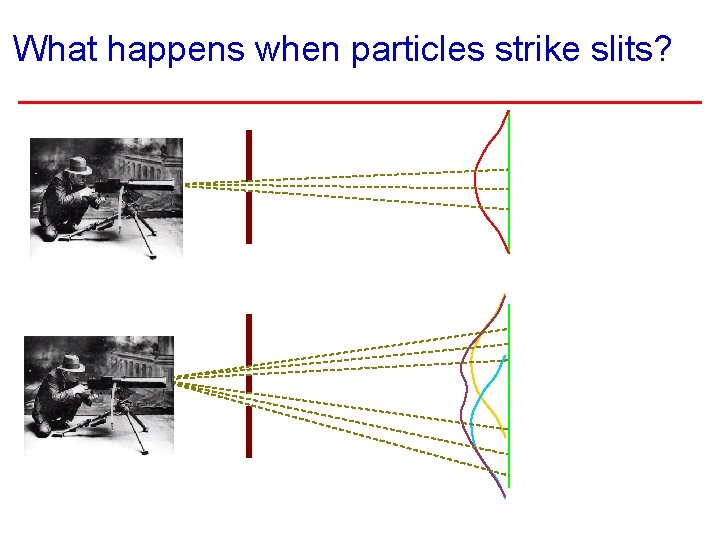
What happens when particles strike slits? Single slit scatter pattern Double slit scatter pattern
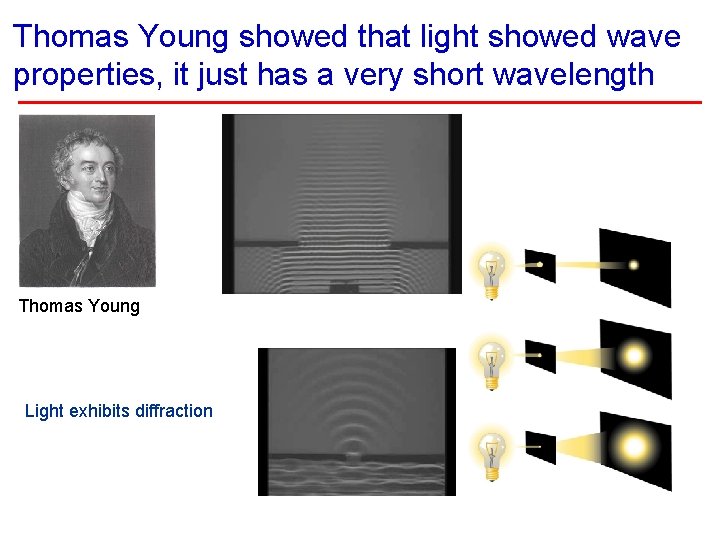
Thomas Young showed that light showed wave properties, it just has a very short wavelength Thomas Young Light exhibits diffraction
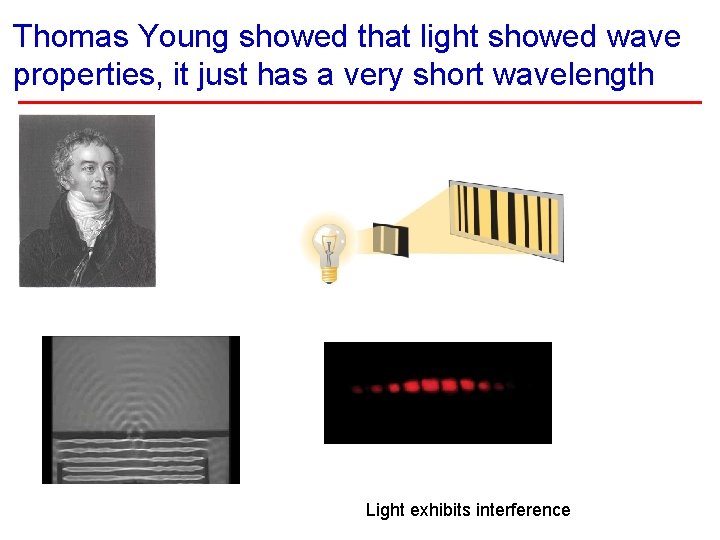
Thomas Young showed that light showed wave properties, it just has a very short wavelength Light exhibits interference
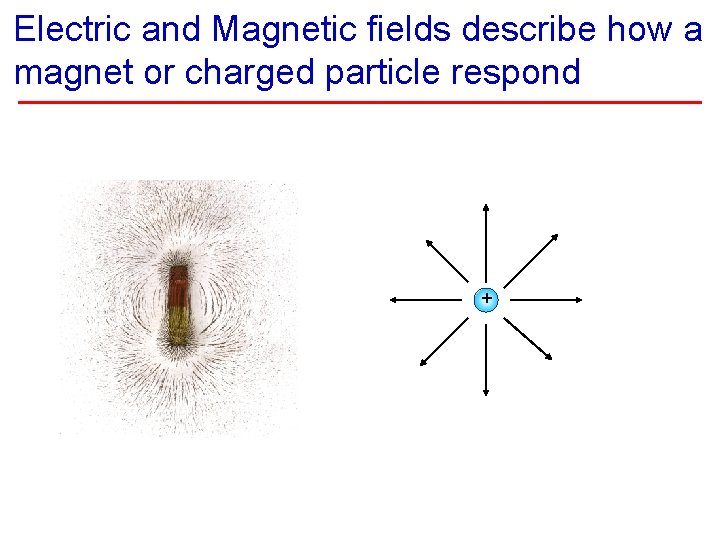
Electric and Magnetic fields describe how a magnet or charged particle respond +
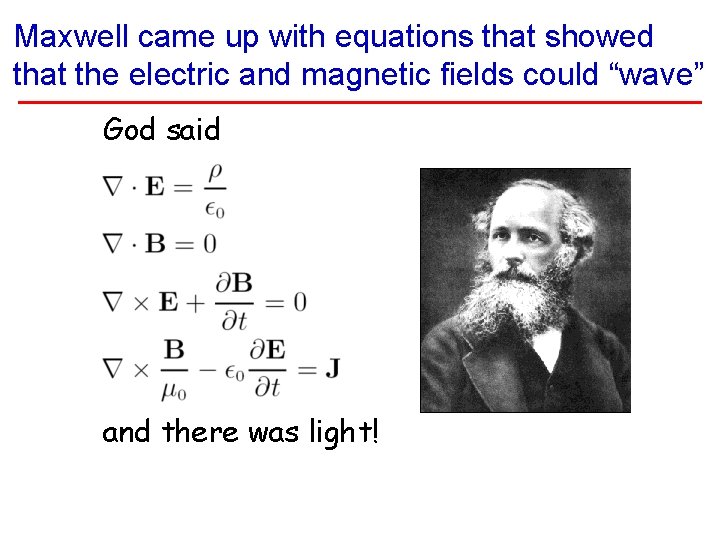
Maxwell came up with equations that showed that the electric and magnetic fields could “wave” God said and there was light!
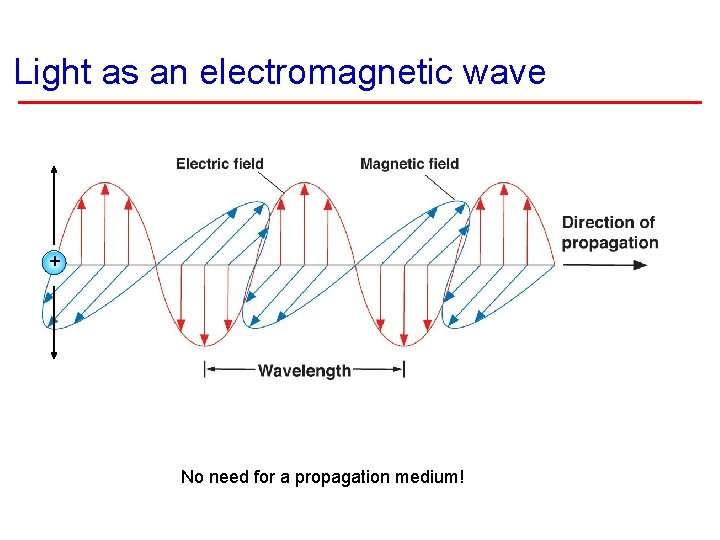
Light as an electromagnetic wave + No need for a propagation medium!
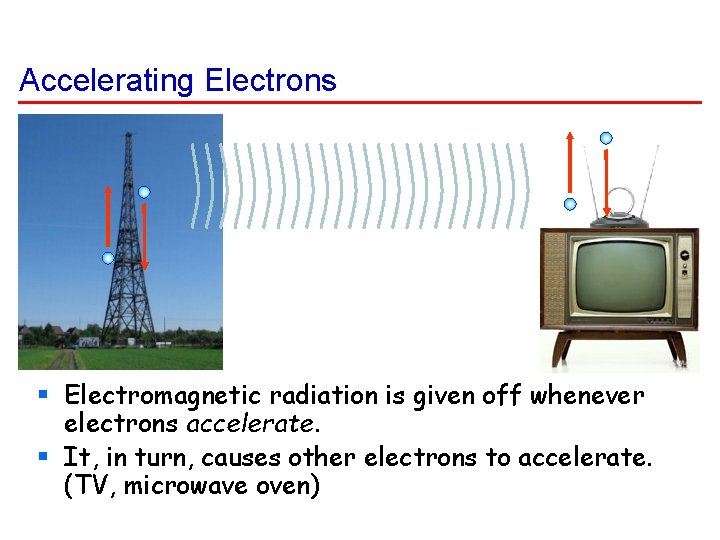
Accelerating Electrons § Electromagnetic radiation is given off whenever electrons accelerate. § It, in turn, causes other electrons to accelerate. (TV, microwave oven)
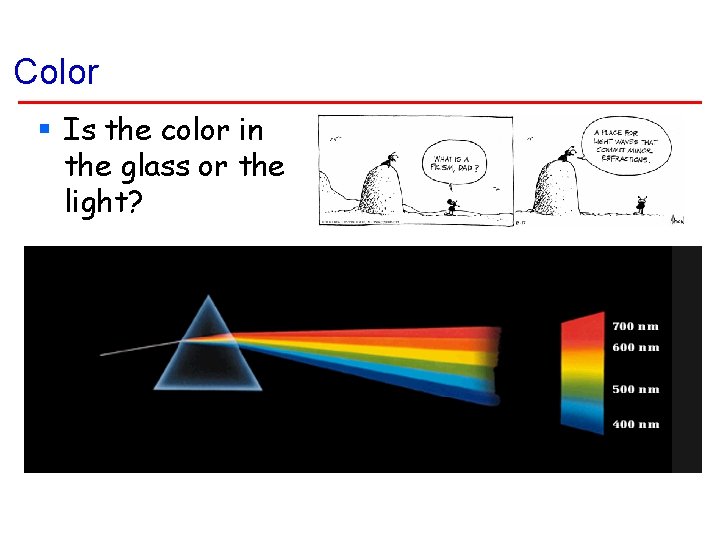
Color § Is the color in the glass or the light?
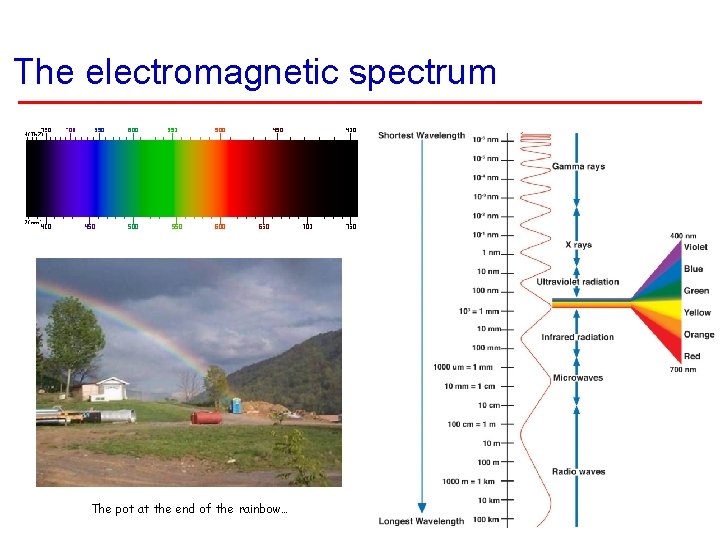
The electromagnetic spectrum The pot at the end of the rainbow…
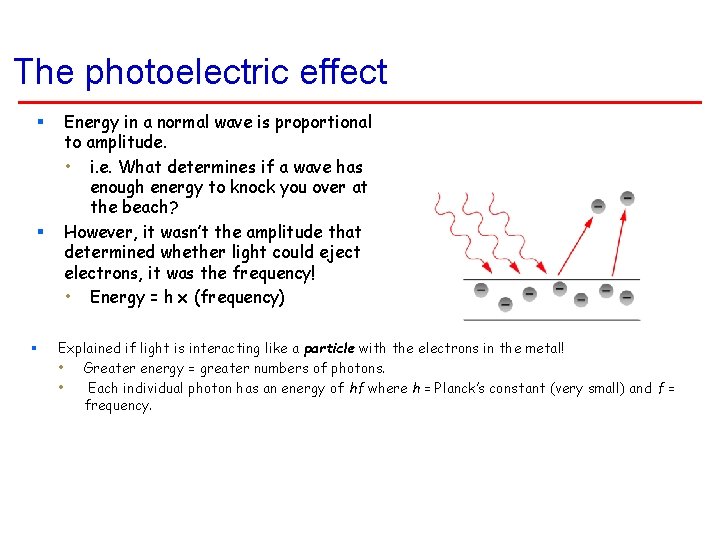
The photoelectric effect § § § Energy in a normal wave is proportional to amplitude. • i. e. What determines if a wave has enough energy to knock you over at the beach? However, it wasn’t the amplitude that determined whether light could eject electrons, it was the frequency! • Energy = h x (frequency) Explained if light is interacting like a particle with the electrons in the metal! • Greater energy = greater numbers of photons. • Each individual photon has an energy of hf where h = Planck’s constant (very small) and f = frequency.
Wave Particle Duality § Light is both a wave and a particle. • It behaves like a wave when unobserved • It travels through both slits like a wave • It is detected like a particle • It hits the screen as individual dots
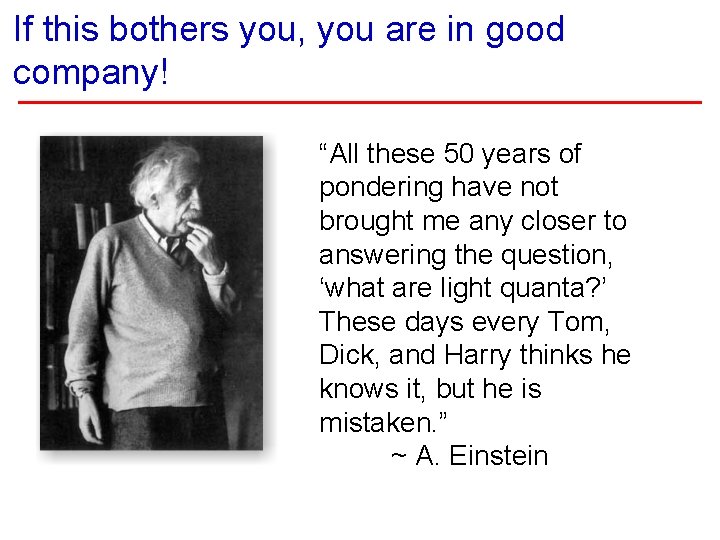
If this bothers you, you are in good company! “All these 50 years of pondering have not brought me any closer to answering the question, ‘what are light quanta? ’ These days every Tom, Dick, and Harry thinks he knows it, but he is mistaken. ” ~ A. Einstein
- Slides: 23