
Watson Crick Double Helix Structure Replication Mechanism SemiConservative
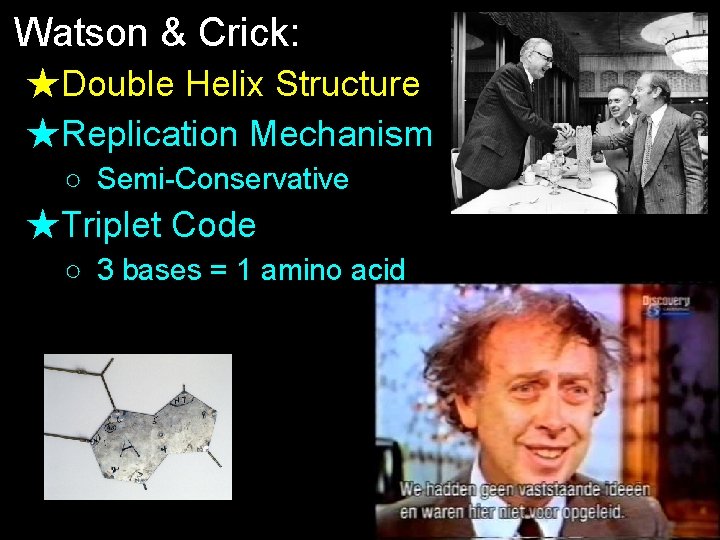
Watson & Crick: ★Double Helix Structure ★Replication Mechanism ○ Semi-Conservative ★Triplet Code ○ 3 bases = 1 amino acid
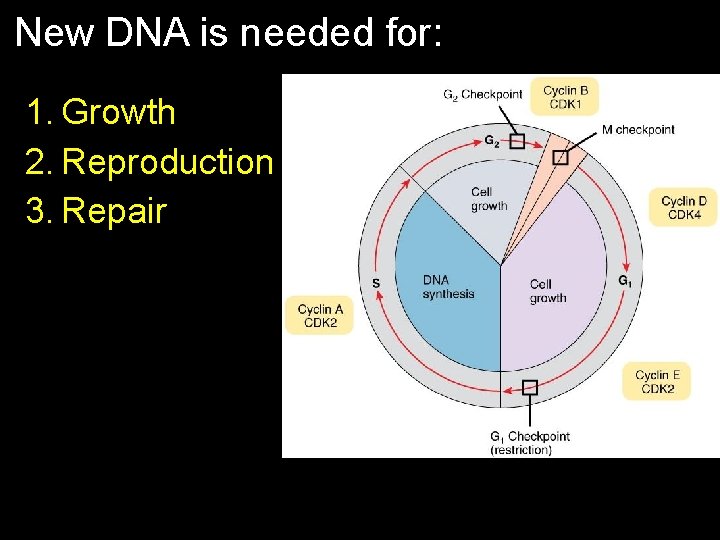
New DNA is needed for: 1. Growth 2. Reproduction 3. Repair
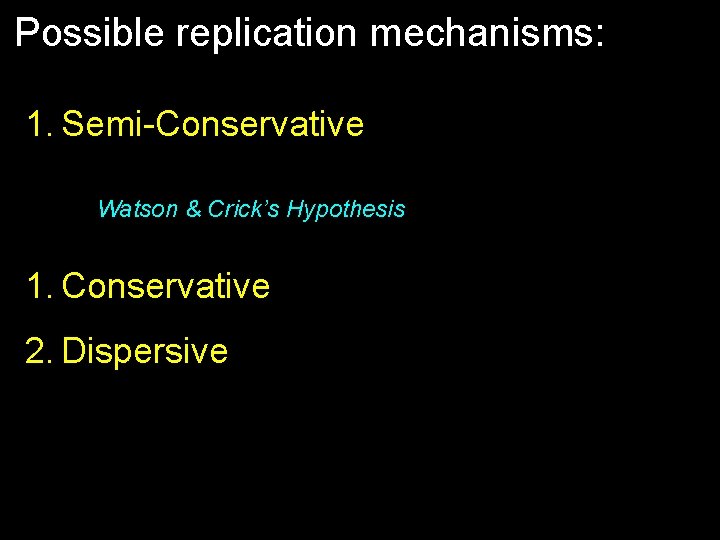
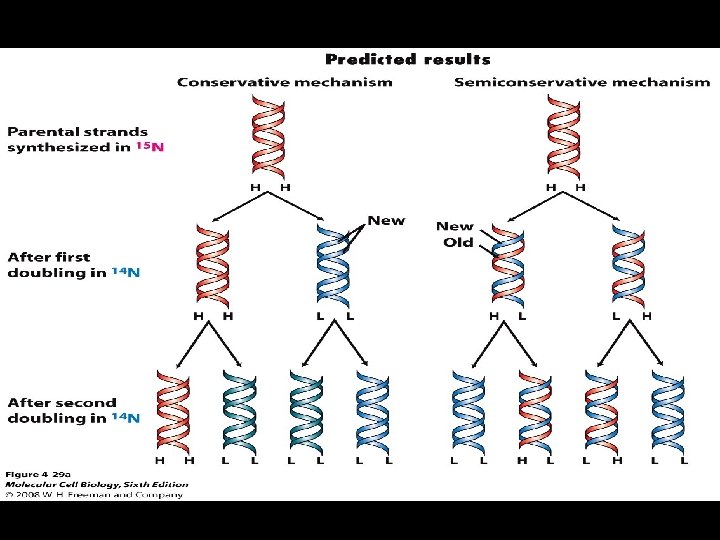
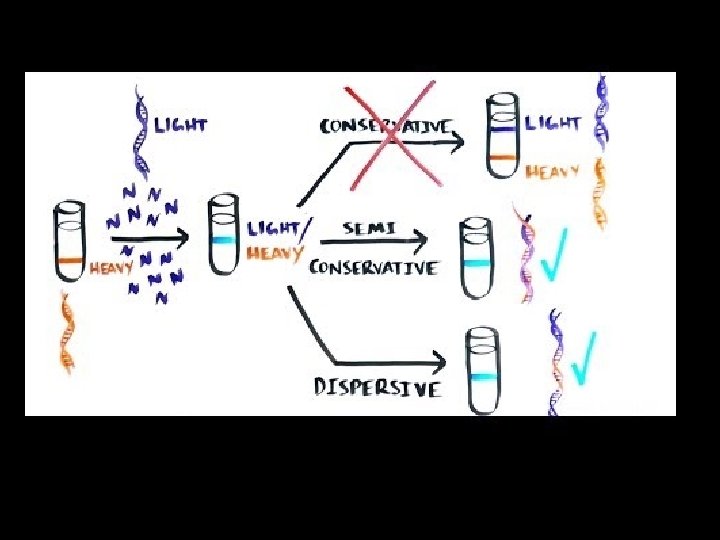
Possible replication mechanisms: 1. Semi-Conservative Watson & Crick’s Hypothesis 1. Conservative 2. Dispersive
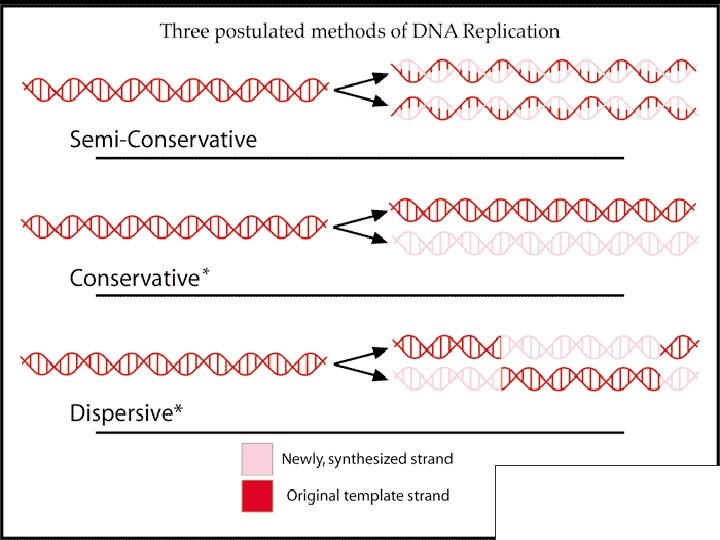
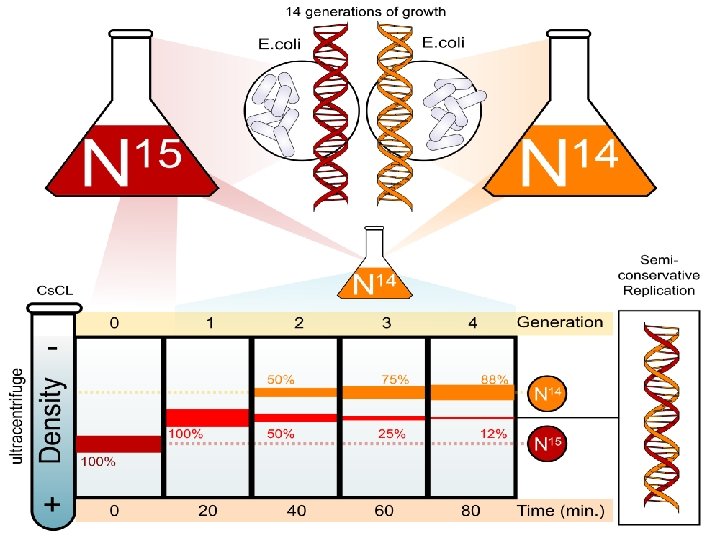
Meselson-Stahl Experiment Use isotopes of Nitrogen (N 15) to track new DNA and examine after each replication event.
DNA REPLICATION Semi-Conservative Anti-Parallel Complementary New DNA from 5 to 3
DNA Replication Three Basic Phases: 1. INITIATION - section of DNA is unwound to expose the bases for new base pairs 1. ELONGATION - 2 new DNA strands are created using the 2 ‘parental’ strands as templates 1. TERMINATION - process completes and new DNA molecules reform into helices
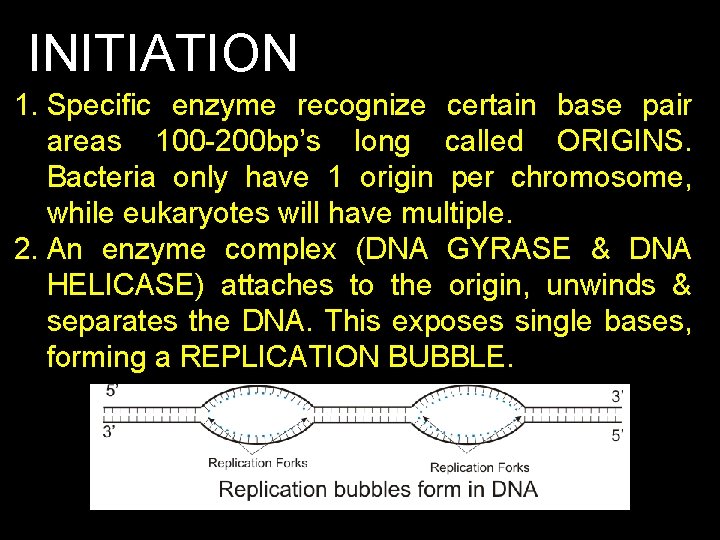
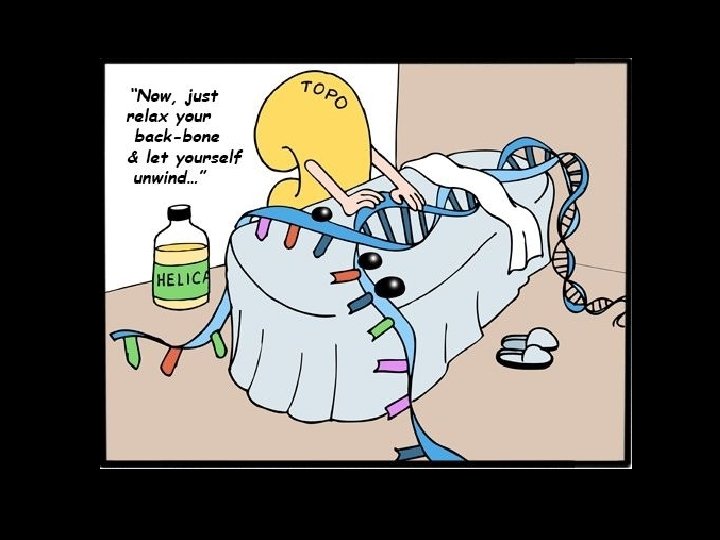
INITIATION 1. Specific enzyme recognize certain base pair areas 100 -200 bp’s long called ORIGINS. Bacteria only have 1 origin per chromosome, while eukaryotes will have multiple. 2. An enzyme complex (DNA GYRASE & DNA HELICASE) attaches to the origin, unwinds & separates the DNA. This exposes single bases, forming a REPLICATION BUBBLE.
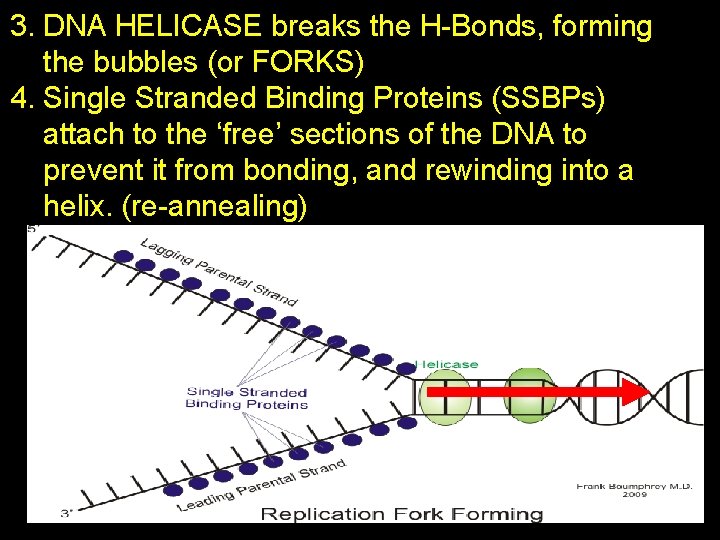
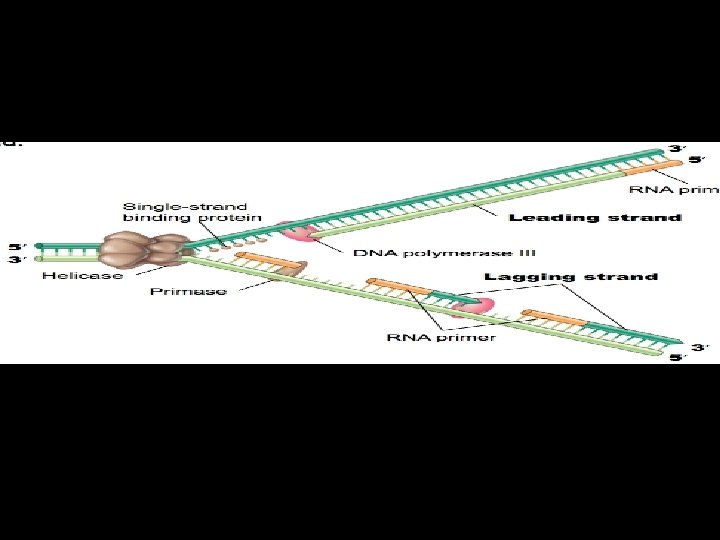
3. DNA HELICASE breaks the H-Bonds, forming the bubbles (or FORKS) 4. Single Stranded Binding Proteins (SSBPs) attach to the ‘free’ sections of the DNA to prevent it from bonding, and rewinding into a helix. (re-annealing)
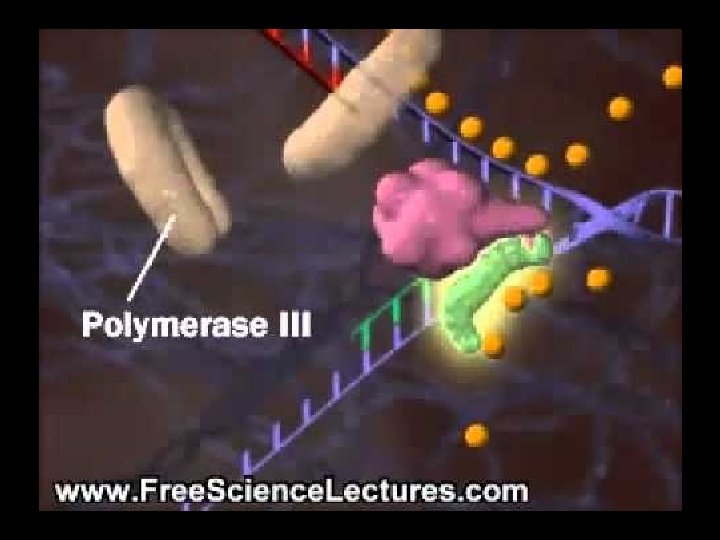
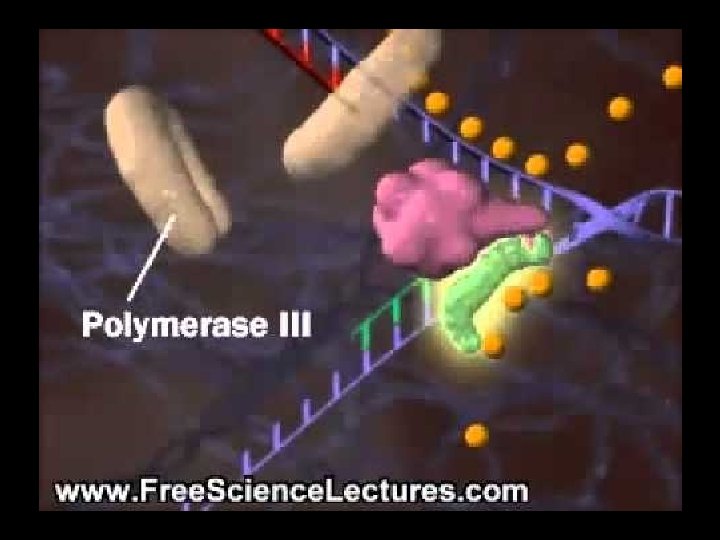
ELONGATION ❖ DNA Polymerase III adds new bases onto the parental strands. ➢ Only does this by adding to the 3’ end ➢ Adds them COMPLEMENTARY to the parental strand. ➢ Must start at an RNA Primer ➢ RNA PRIMERS are added by RNA PRIMASE at the beginning of the replication fork at the 3’ end of the template THIS MEANS THAT NEW BASES CAN ONLY BE PAIRED UP IN THE 5’ TO 3’ DIRECTION
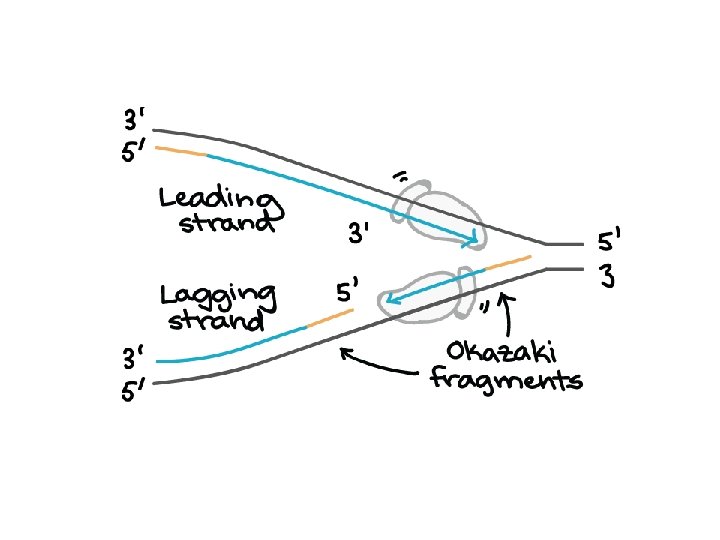
LEADING STRAND 1. RNA Primase attaches & adds an RNA primer to the parental strand. 2. DNA Poly III begins adding complementary nucleotides in the 5’ to 3’ direction 3. DNA POLYMERASE I cuts out the RNA primers and fills them in with DNA This replication proceeds TOWARDS the replication fork
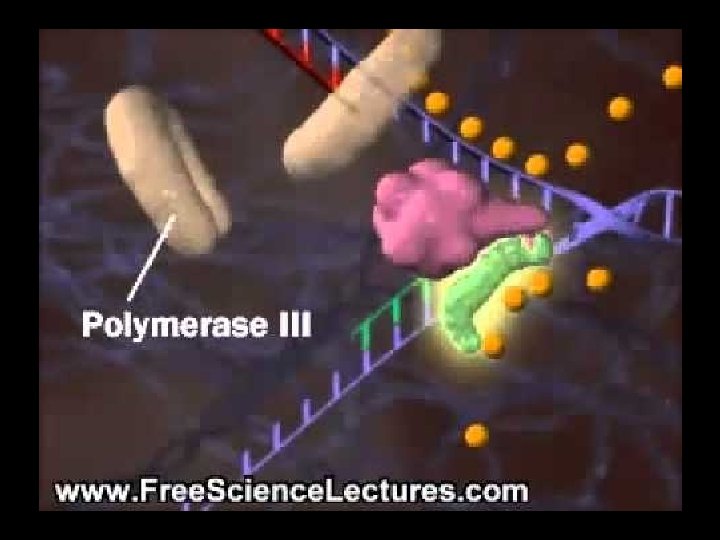
LAGGING STRAND 1. RNA Primase attaches & adds an RNA primer to the parental strand. 2. DNA Poly III begins adding complementary nucleotides in the 5’ to 3’ direction - AWAY FROM THE FORK 3. DNA Poly III continues until it meets another RNA Primer. Then it detaches. 4. ANOTHER DNA Poly III attaches UPSTREAM of the original primer - repeating steps 2 -3 This creates small discrete pieces of DNA called OKAZAKI FRAGMENTS
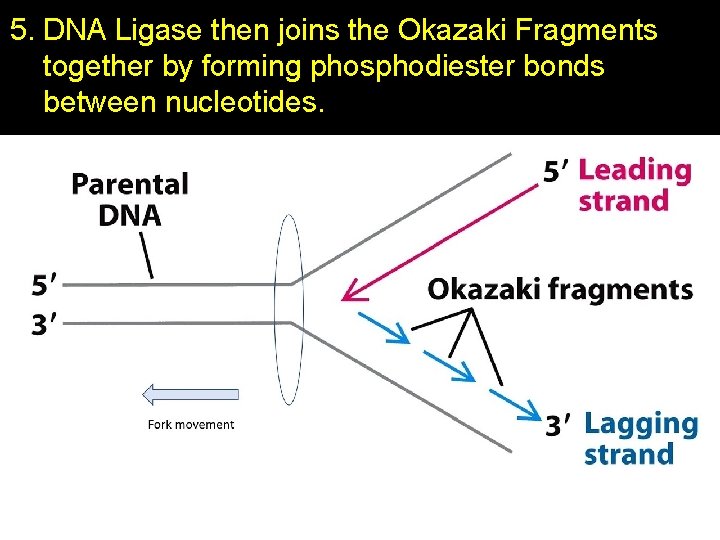
5. DNA Ligase then joins the Okazaki Fragments together by forming phosphodiester bonds between nucleotides.
TERMINATION 1. DNA reforms its helical shape without the use of enzymes 2. At the very end of the LAGGING strands the Okazaki Fragments and the Parental strands won’t match up perfectly because of the RNA Primer. This happens ONLY in eukaryotes Prokaryotes have circular chromosomes 1. This little bit of unpaired DNA (~100 bp) will be snipped off, leaving the new strand slightly shorter than the original.
TELOMERES ★At the end of each chromosome is a TELOMERE - a ‘non-sense’ region of DNA (repeats of TTAGGG) ★These buffer the loss of DNA. When telomeres erode, the cell usually malfunctions and dies. An enzyme known as Telomerase replenishes telomeres. This enzyme is deactivated after a certain point. It is reactivated in Cancer Cells, making them IMMORTAL !
PROOFREADING ★DNA Polymerase II checks to make sure the H -Bonds between base-pairs are present. If there is a failure the enzyme removes the new nucleotides and inserts the proper one. DNA Poly III works at 1000 nuc/s Mistakes happen 1/10 B nucleotides “Natural Mutation Rate” This is like typing at 60 letters/min 24 -7, and only making 1 mistake every 38 years.
- Slides: 25