
Watershed Connections Prewatershed model activity lesson for bilingual
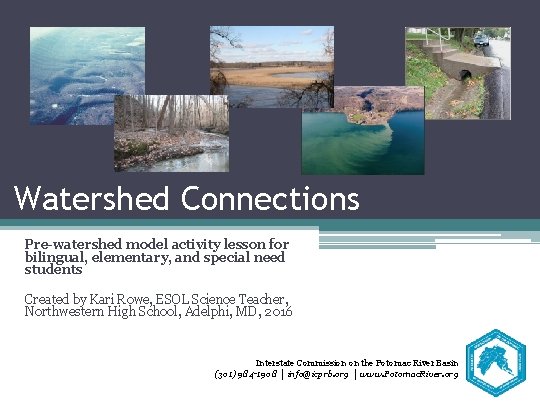
Watershed Connections Pre-watershed model activity lesson for bilingual, elementary, and special need students Created by Kari Rowe, ESOL Science Teacher, Northwestern High School, Adelphi, MD, 2016 Interstate Commission on the Potomac River Basin (301) 984 -1908 │ info@icprb. org │ www. Potomac. River. org
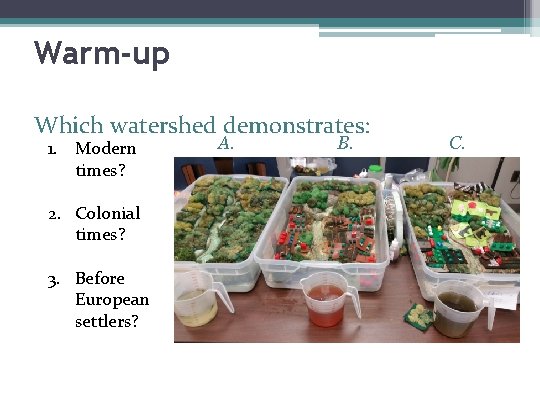
Warm-up Which watershed demonstrates: 1. Modern times? 2. Colonial times? 3. Before European settlers? A. B. C.
Objectives • We can explain ways to help protect the Anacostia River. • We can assess our school grounds for evidence of runoff. • We can discuss places to plant a garden at school.
Agenda 1. Review 2. Ways to stop runoff 3. Demonstration 4. Assessment 5. Conclusions
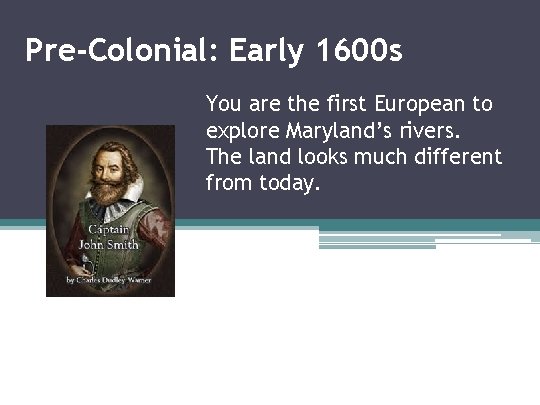
Pre-Colonial: Early 1600 s You are the first European to explore Maryland’s rivers. The land looks much different from today.
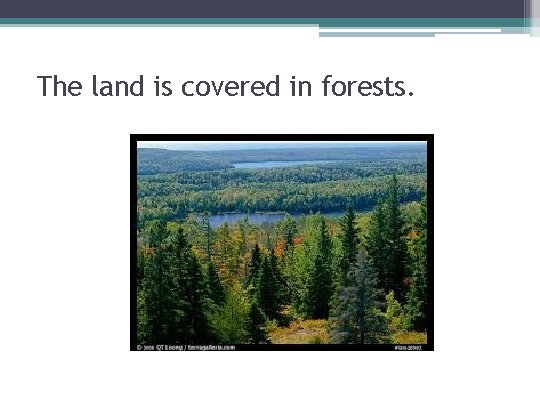
The land is covered in forests.
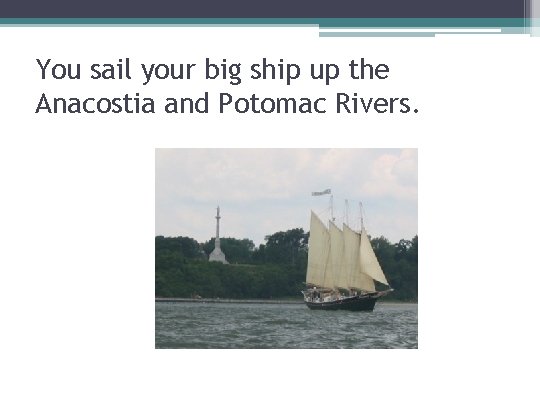
You sail your big ship up the Anacostia and Potomac Rivers.
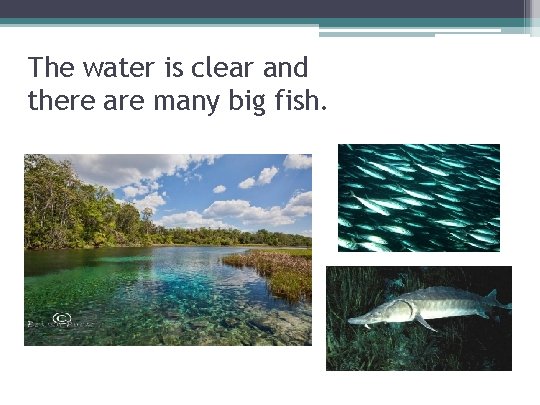
The water is clear and there are many big fish.
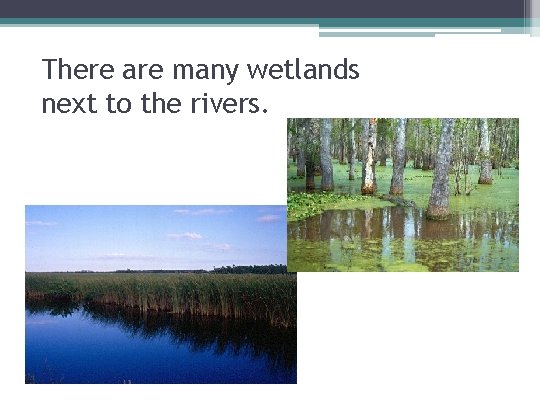
There are many wetlands next to the rivers.
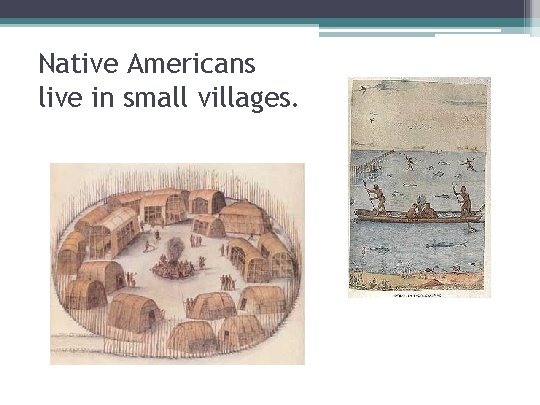
Native Americans live in small villages.
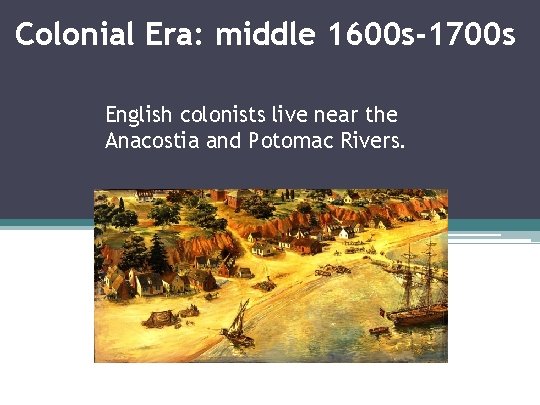
Colonial Era: middle 1600 s-1700 s English colonists live near the Anacostia and Potomac Rivers.
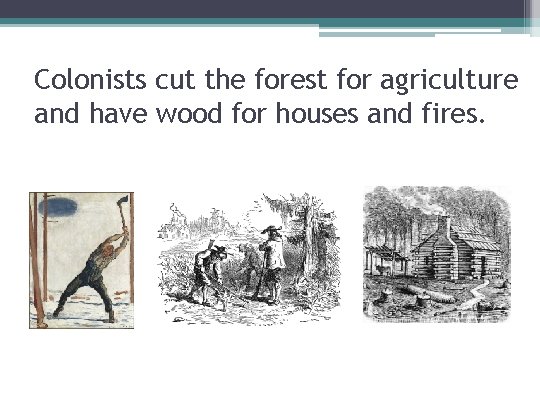
Colonists cut the forest for agriculture and have wood for houses and fires.
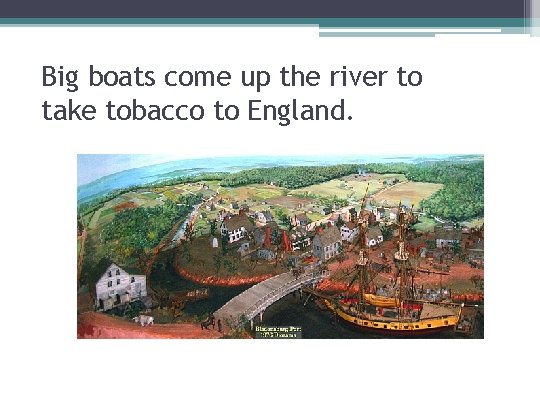
Big boats come up the river to take tobacco to England.
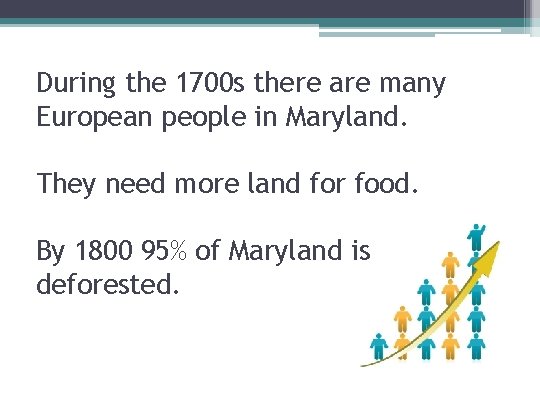
During the 1700 s there are many European people in Maryland. They need more land for food. By 1800 95% of Maryland is deforested.
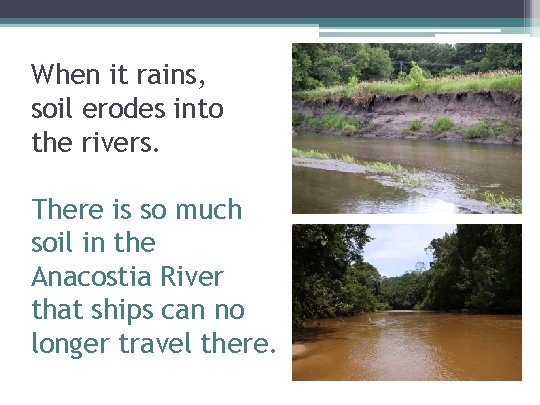
When it rains, soil erodes into the rivers. There is so much soil in the Anacostia River that ships can no longer travel there.
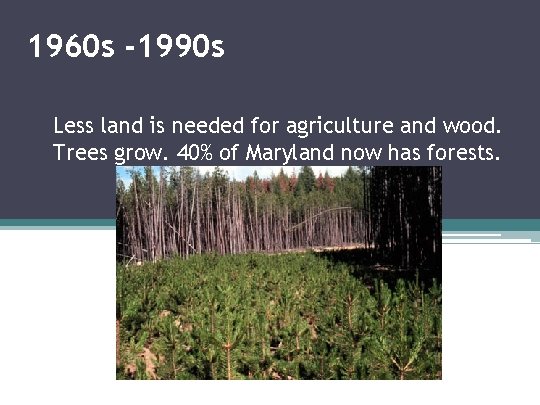
1960 s -1990 s Less land is needed for agriculture and wood. Trees grow. 40% of Maryland now has forests.
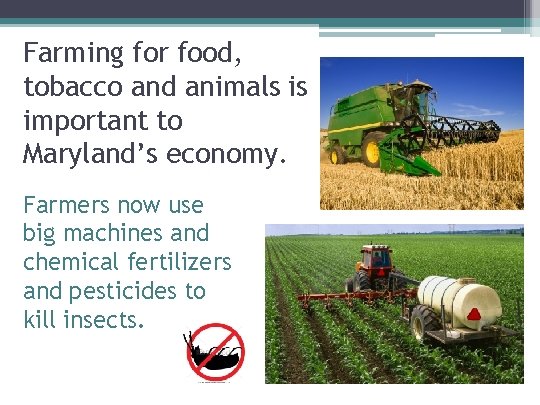
Farming for food, tobacco and animals is important to Maryland’s economy. Farmers now use big machines and chemical fertilizers and pesticides to kill insects.
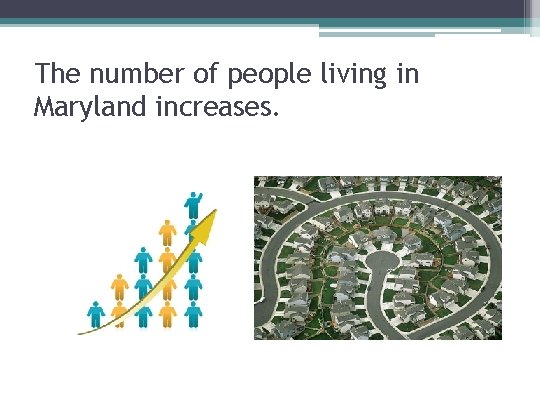
The number of people living in Maryland increases.
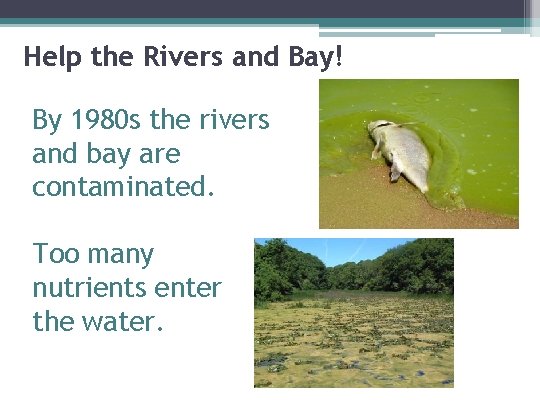
Help the Rivers and Bay! By 1980 s the rivers and bay are contaminated. Too many nutrients enter the water.
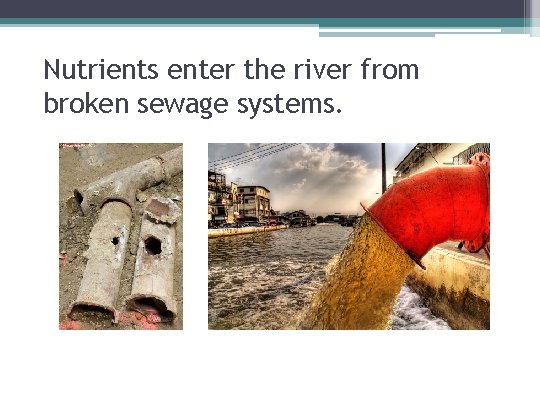
Nutrients enter the river from broken sewage systems.
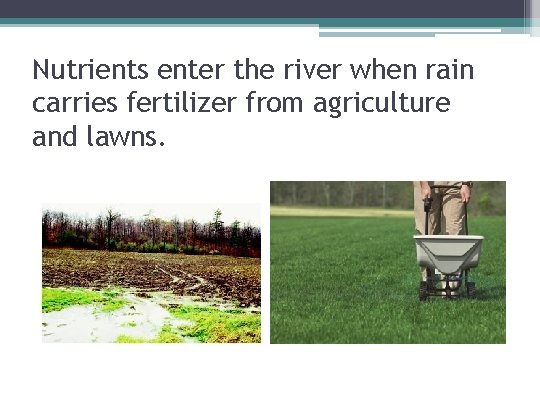
Nutrients enter the river when rain carries fertilizer from agriculture and lawns.
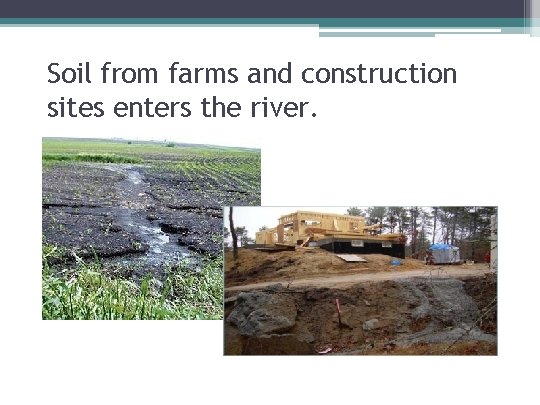
Soil from farms and construction sites enters the river.
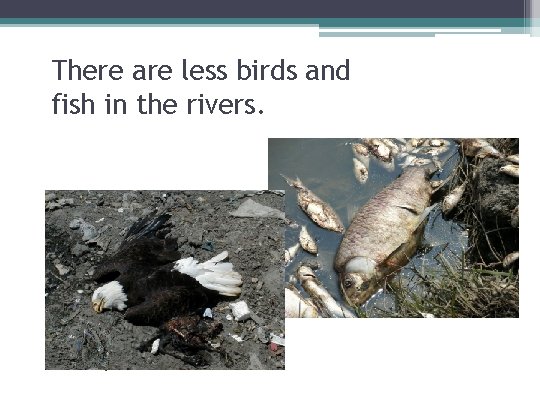
There are less birds and fish in the rivers.
How do we help the River?
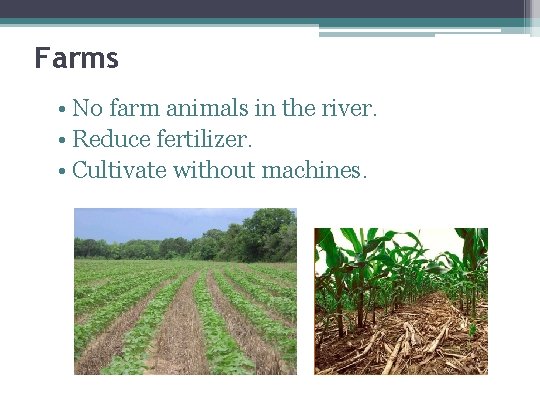
Farms • No farm animals in the river. • Reduce fertilizer. • Cultivate without machines.
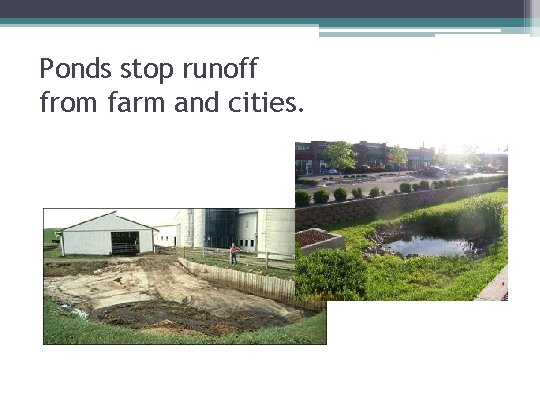
Ponds stop runoff from farm and cities.
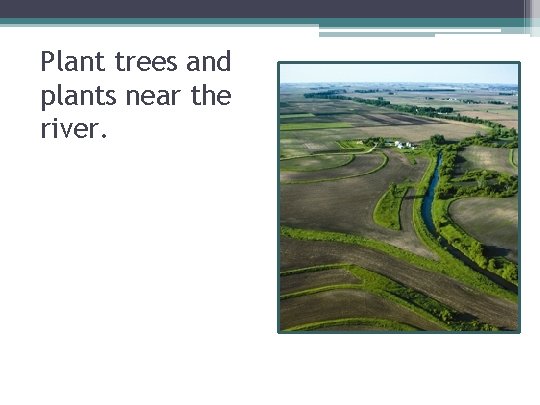
Plant trees and plants near the river.
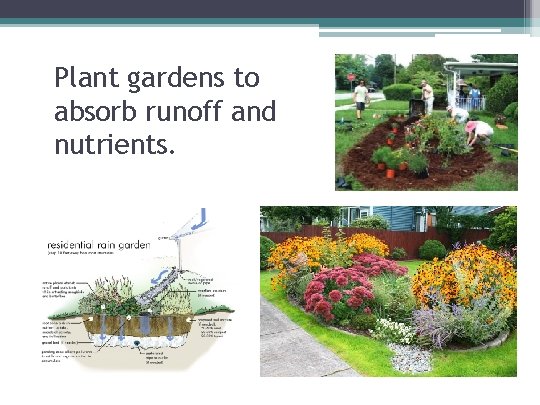
Plant gardens to absorb runoff and nutrients.
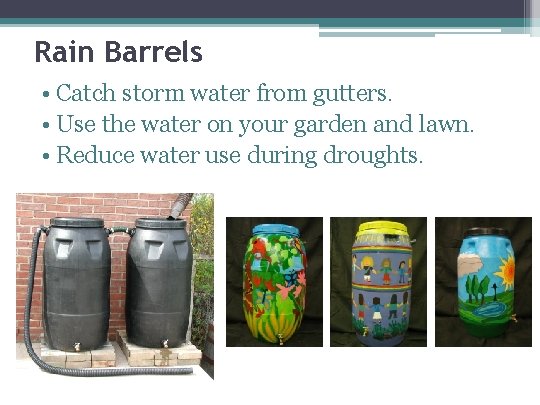
Rain Barrels • Catch storm water from gutters. • Use the water on your garden and lawn. • Reduce water use during droughts.
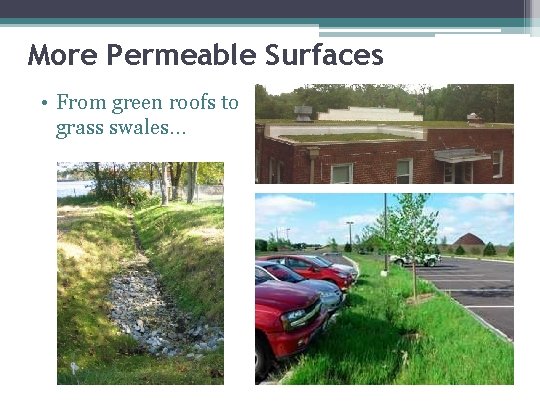
More Permeable Surfaces • From green roofs to grass swales…
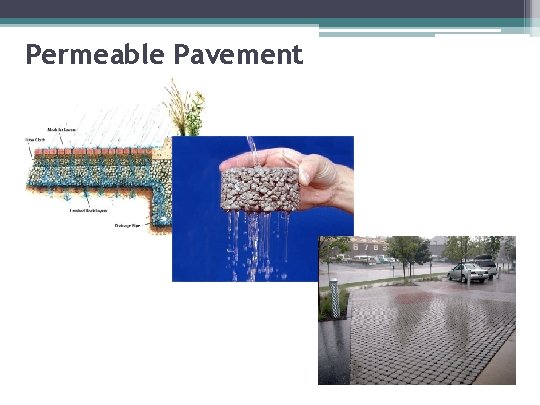
Permeable Pavement
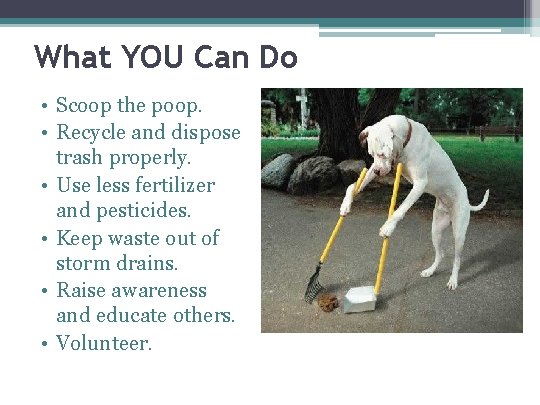
What YOU Can Do • Scoop the poop. • Recycle and dispose trash properly. • Use less fertilizer and pesticides. • Keep waste out of storm drains. • Raise awareness and educate others. • Volunteer.
Exit Question List 3 things that absorb runoff at school.
- Slides: 33