
WATERCOLOR LANDSCAPE POSITIVE AND NEGATIVE SPACE Mc Math
- Slides: 14
WATERCOLOR LANDSCAPE: POSITIVE AND NEGATIVE SPACE Mc. Math Art: 8 th grade
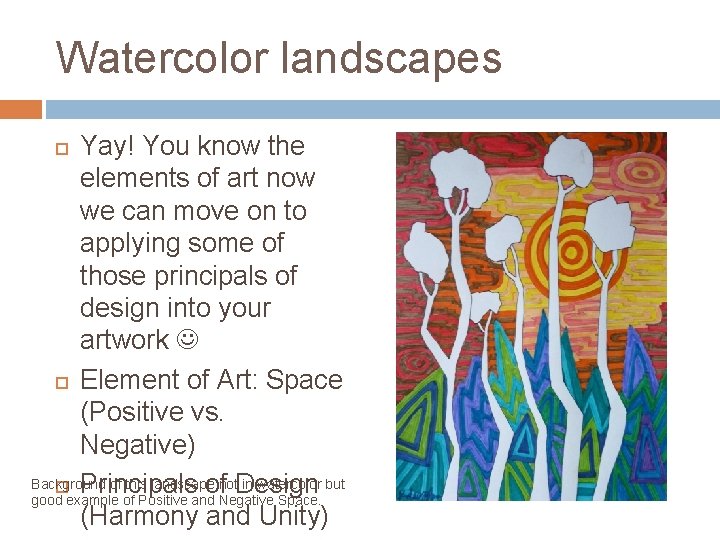
Watercolor landscapes Yay! You know the elements of art now we can move on to applying some of those principals of design into your artwork Element of Art: Space (Positive vs. Negative) Background of this landscape not. Design in watercolor but Principals of good example of Positive and Negative Space. (Harmony and Unity)
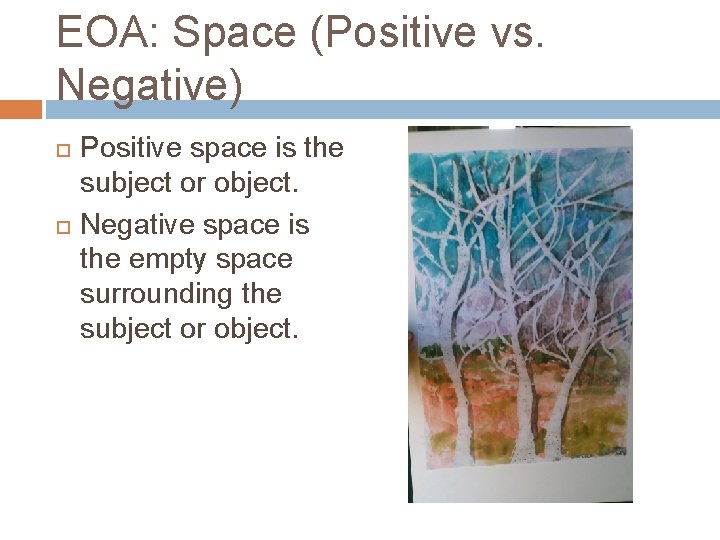
EOA: Space (Positive vs. Negative) Positive space is the subject or object. Negative space is the empty space surrounding the subject or object.
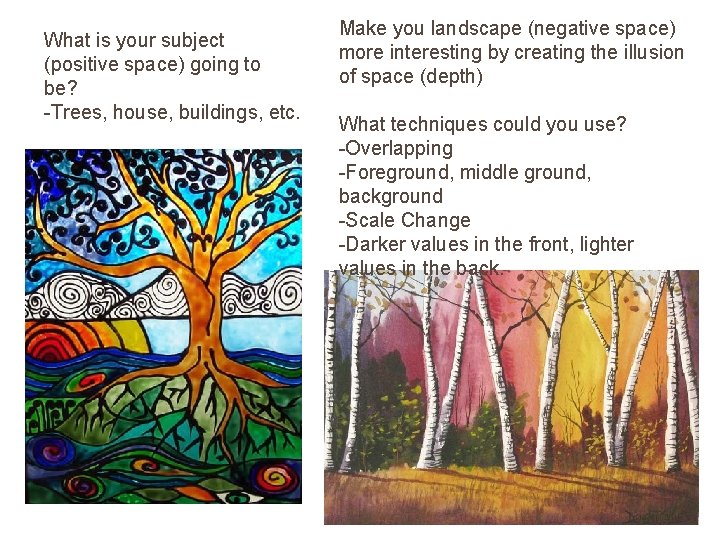
What is your subject (positive space) going to be? -Trees, house, buildings, etc. Make you landscape (negative space) more interesting by creating the illusion of space (depth) What techniques could you use? -Overlapping -Foreground, middle ground, background -Scale Change -Darker values in the front, lighter values in the back.
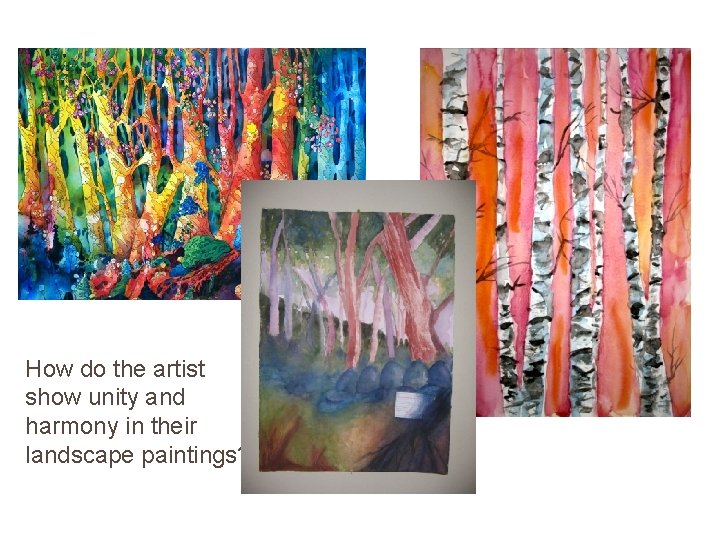
How do the artist show unity and harmony in their landscape paintings?
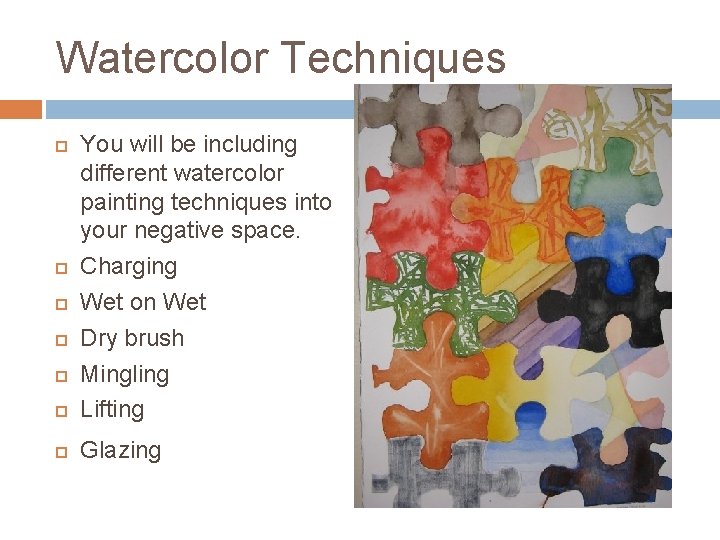
Watercolor Techniques You will be including different watercolor painting techniques into your negative space. Charging Wet on Wet Dry brush Mingling Lifting Glazing
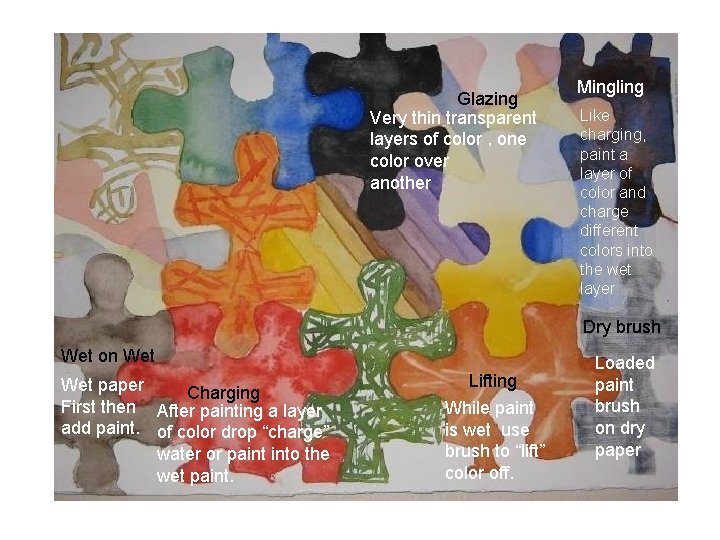
Glazing Very thin transparent layers of color , one color over another Mingling Like charging, paint a layer of color and charge different colors into the wet layer. Dry brush Wet on Wet paper Charging First then After painting a layer add paint. of color drop “charge” water or paint into the wet paint. Lifting While paint is wet use brush to “lift” color off. Loaded paint brush on dry paper
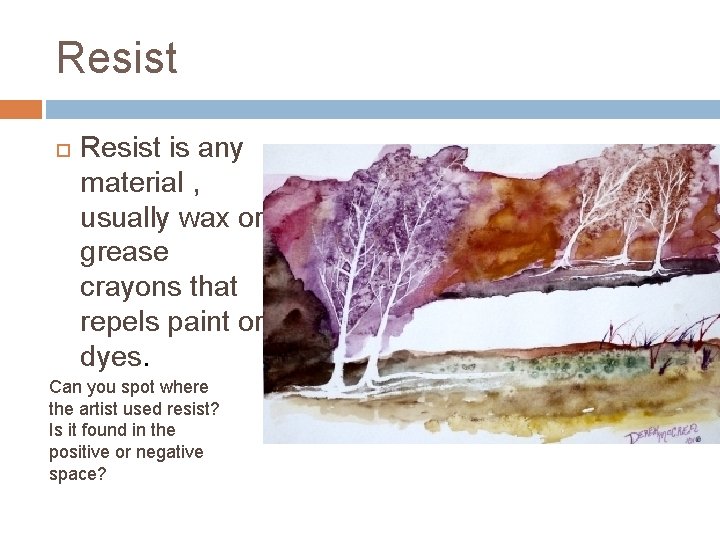
Resist is any material , usually wax or grease crayons that repels paint or dyes. Can you spot where the artist used resist? Is it found in the positive or negative space?
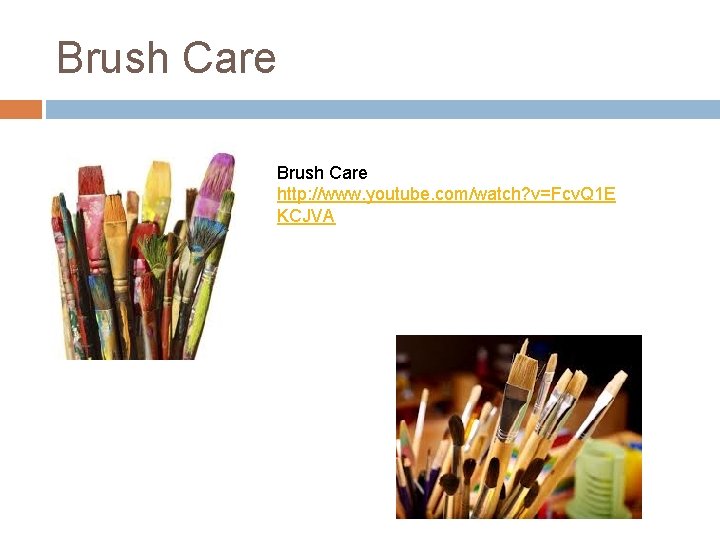
Brush Care http: //www. youtube. com/watch? v=Fcv. Q 1 E KCJVA
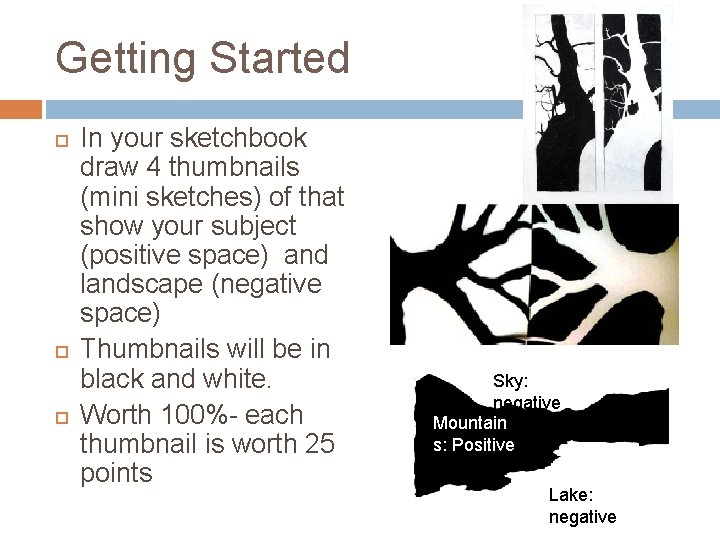
Getting Started In your sketchbook draw 4 thumbnails (mini sketches) of that show your subject (positive space) and landscape (negative space) Thumbnails will be in black and white. Worth 100%- each thumbnail is worth 25 points Sky: negative Mountain s: Positive Lake: negative
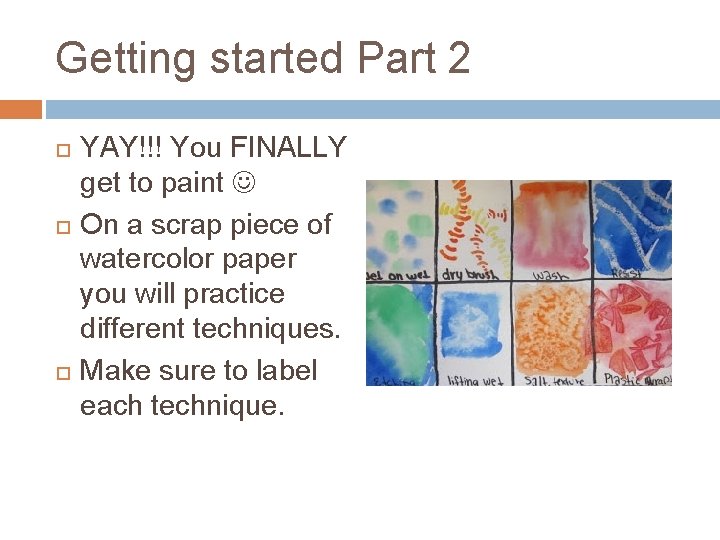
Getting started Part 2 YAY!!! You FINALLY get to paint On a scrap piece of watercolor paper you will practice different techniques. Make sure to label each technique.
How you’ll be graded _____ 10 pts. Did I show positive and negative space? _____ 10 pts. Did I include at least 4 watercolor techniques? _____10 pts. Did my landscape include a color scheme? _____ 40 pts. Did I successfully show UNITY and HARMONY in my landscape? _____ 10 pts. Did I complete a selfevaluation? _____20 pts. Craftsmanship – Is my work neat & clean? Does my artwork reflect my BEST effort?
Self-evaluation to be completed before turning in final project. On tear out a piece of sketchbook paper and attach to your final project. Please answer the following in complete sentences 1. How did you show positive and negative space? 2. What watercolor techniques did you use? 3. Describe how you successfully created UNITY and HARMONY in your landscape. 4. What would you do differently? What did you do well? What was the most challenging part?
HAVE FUN Mc. Math Art: 8 th Grade