
Water Underground groundwater permeable impermeable saturated zone unsaturated
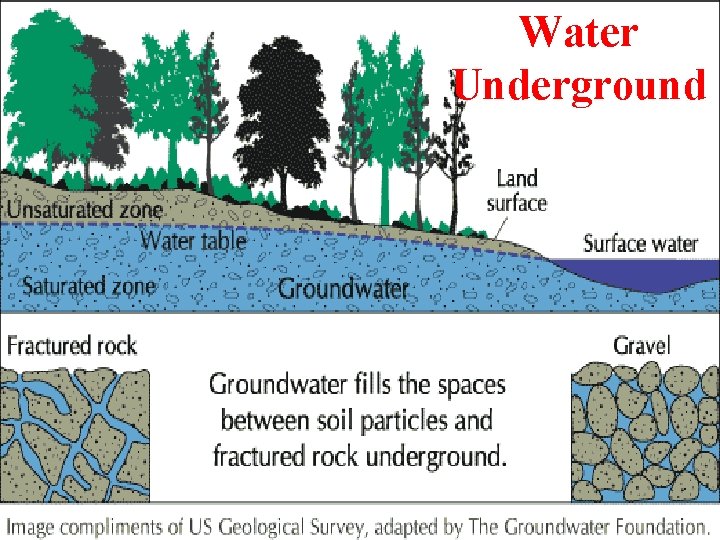
Water Underground
groundwater permeable impermeable saturated zone unsaturated zone aquifer water table
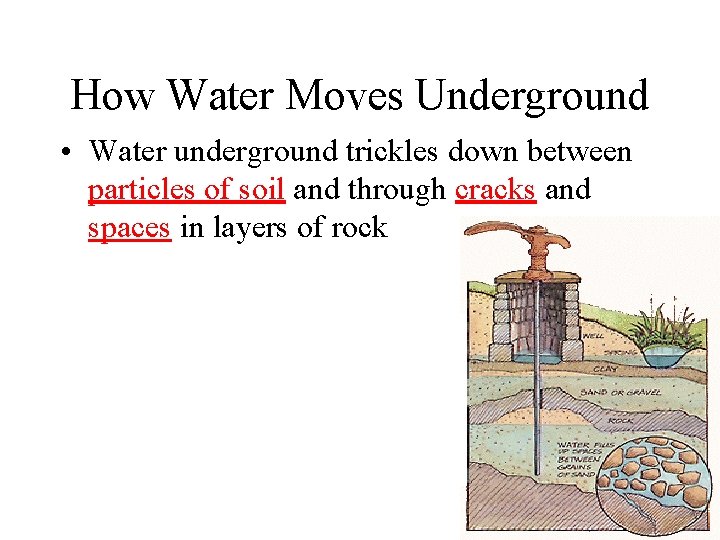
How Water Moves Underground • Water underground trickles down between particles of soil and through cracks and spaces in layers of rock
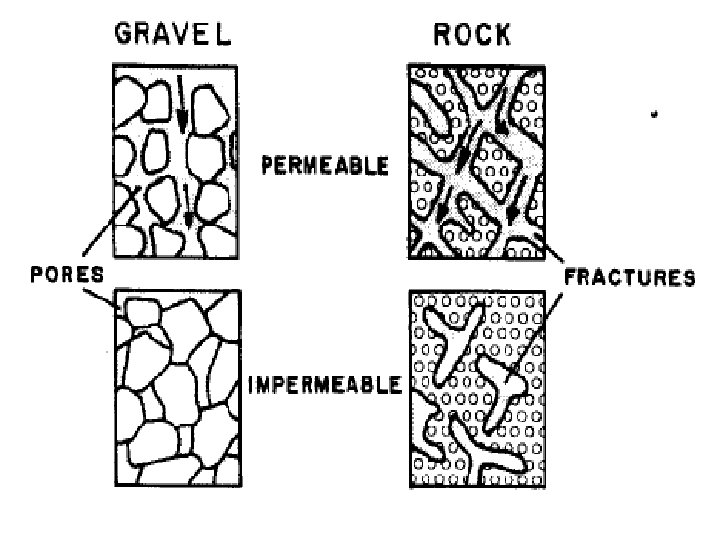
Effects of Different Materials Permeable materials have large and connected pores; materials such as sand gravel allow water to pass through or permeate. Impermeable materials have few or no pores or cracks; therefore the water cannot pass through easily Examples: clay and granite
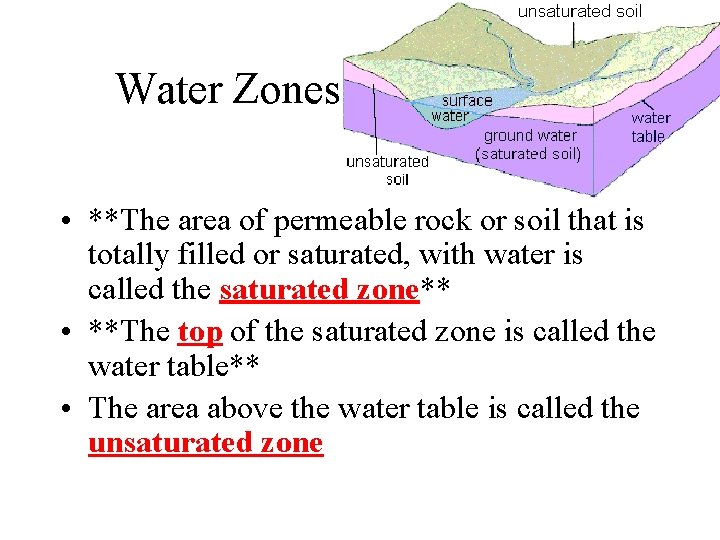
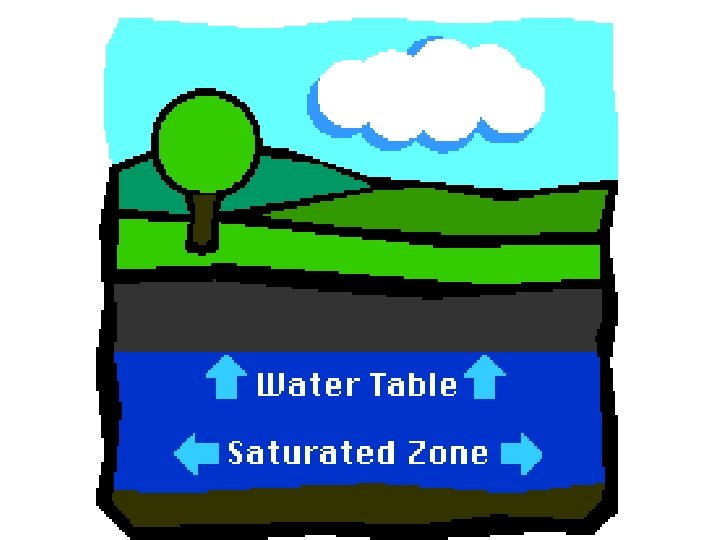
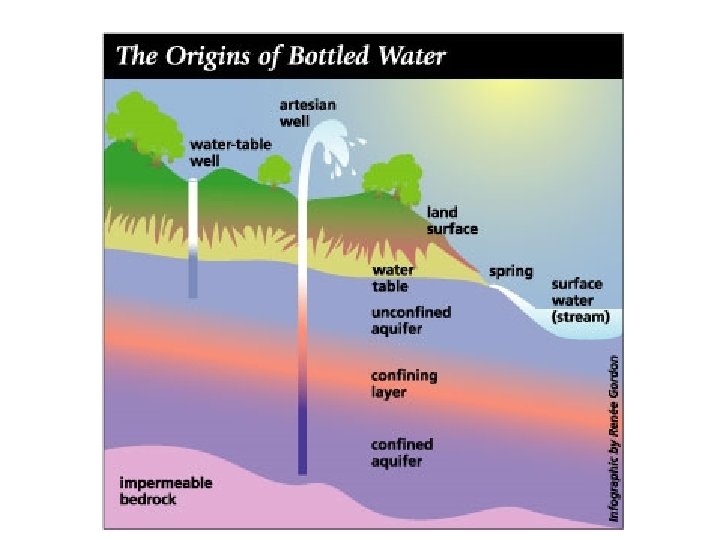
Water Zones • **The area of permeable rock or soil that is totally filled or saturated, with water is called the saturated zone** • **The top of the saturated zone is called the water table** • The area above the water table is called the unsaturated zone
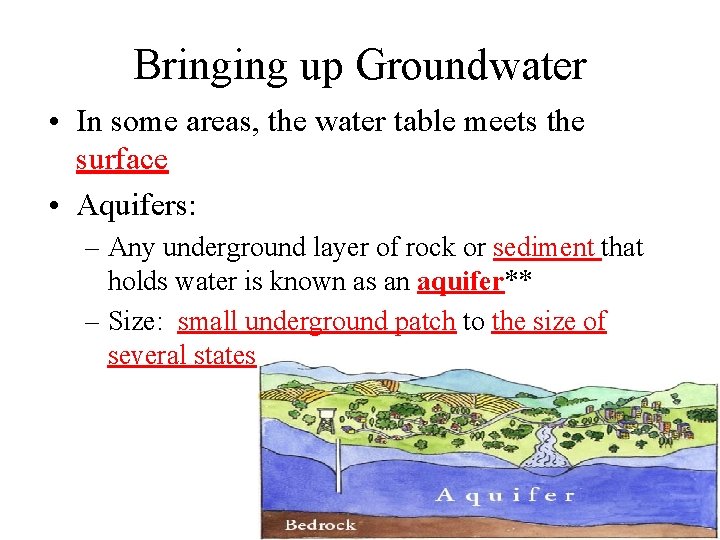
Bringing up Groundwater • In some areas, the water table meets the surface • Aquifers: – Any underground layer of rock or sediment that holds water is known as an aquifer** – Size: small underground patch to the size of several states
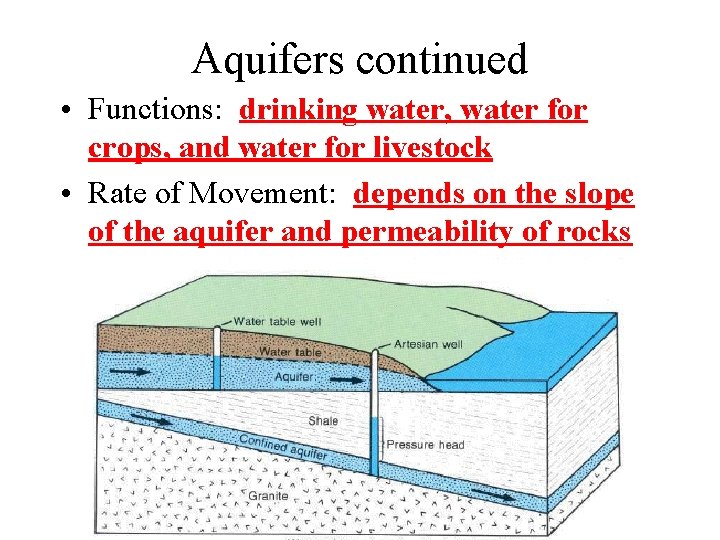
Aquifers continued • Functions: drinking water, water for crops, and water for livestock • Rate of Movement: depends on the slope of the aquifer and permeability of rocks
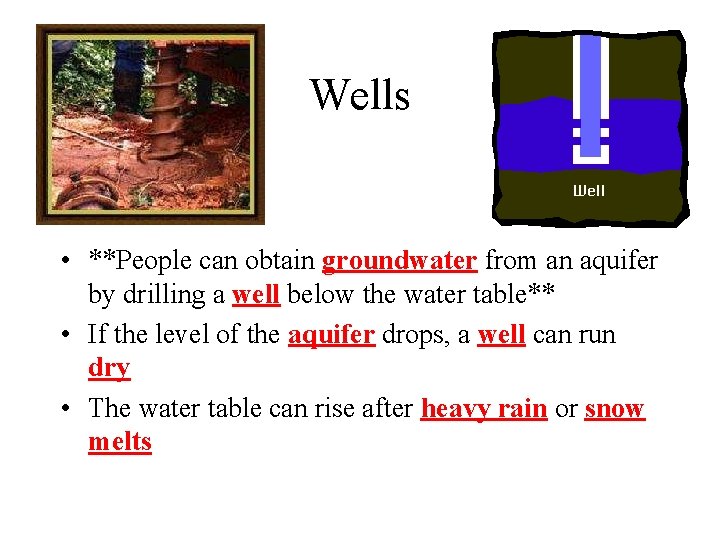
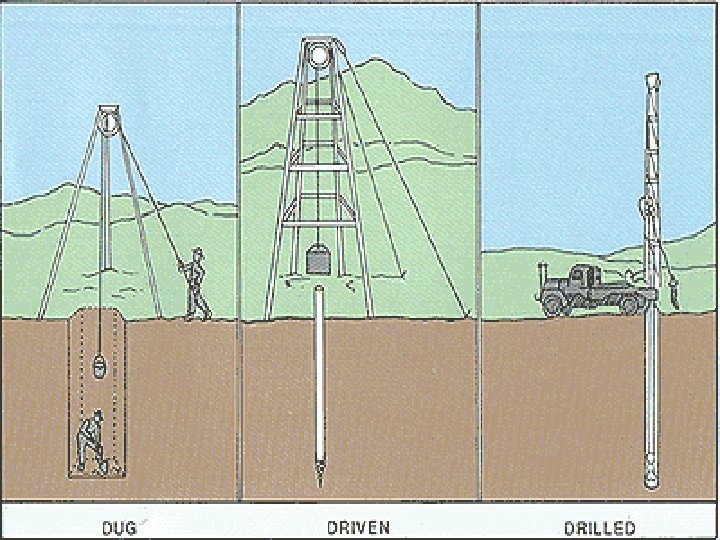
Wells • **People can obtain groundwater from an aquifer by drilling a well below the water table** • If the level of the aquifer drops, a well can run dry • The water table can rise after heavy rain or snow melts
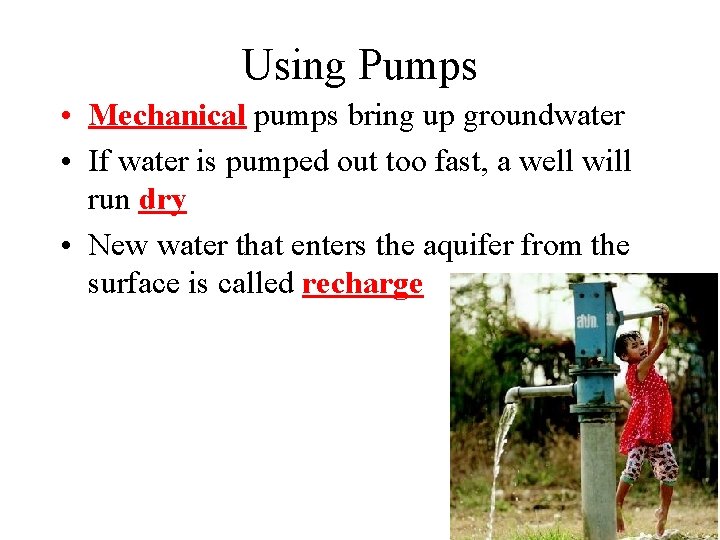
Using Pumps • Mechanical pumps bring up groundwater • If water is pumped out too fast, a well will run dry • New water that enters the aquifer from the surface is called recharge
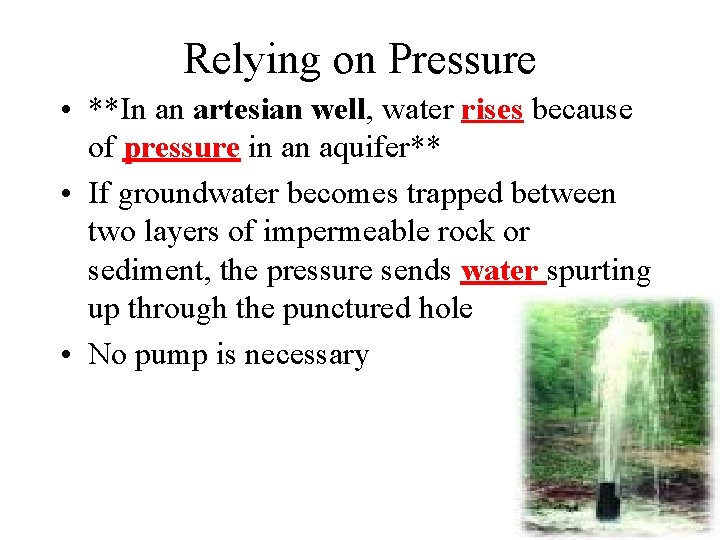
Relying on Pressure • **In an artesian well, water rises because of pressure in an aquifer** • If groundwater becomes trapped between two layers of impermeable rock or sediment, the pressure sends water spurting up through the punctured hole • No pump is necessary
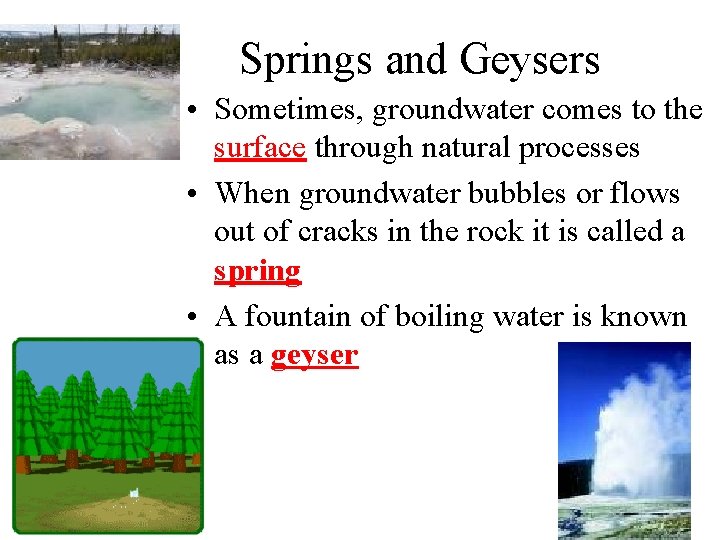
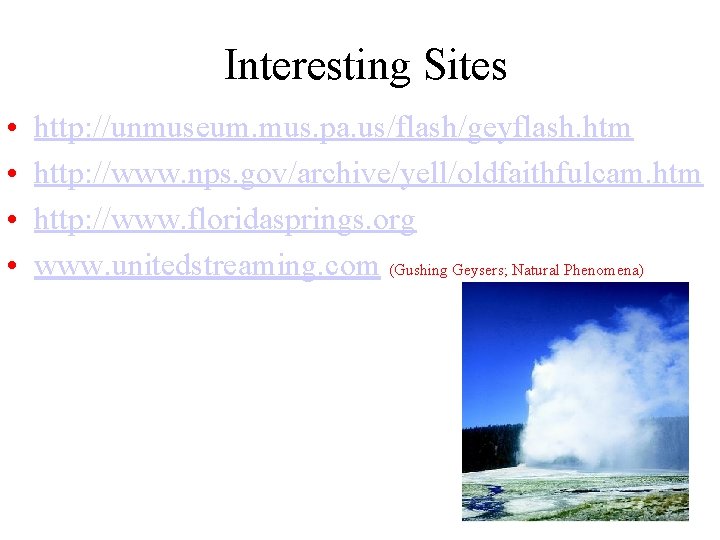
Springs and Geysers • Sometimes, groundwater comes to the surface through natural processes • When groundwater bubbles or flows out of cracks in the rock it is called a spring • A fountain of boiling water is known as a geyser
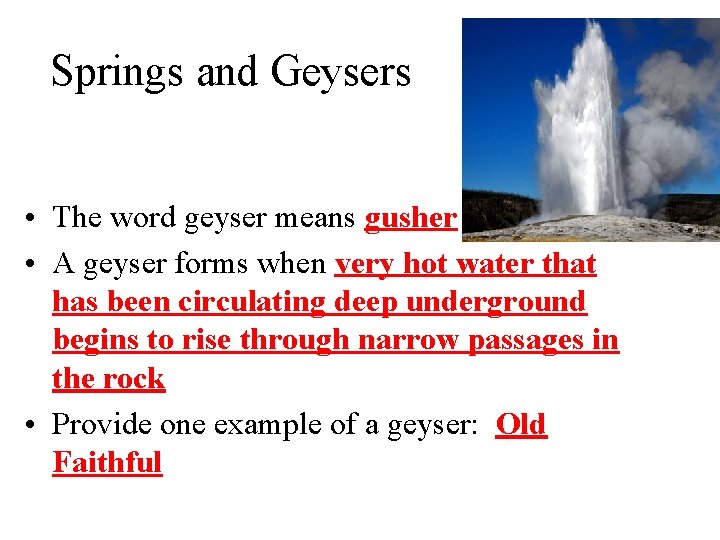
Springs and Geysers • The word geyser means gusher • A geyser forms when very hot water that has been circulating deep underground begins to rise through narrow passages in the rock • Provide one example of a geyser: Old Faithful
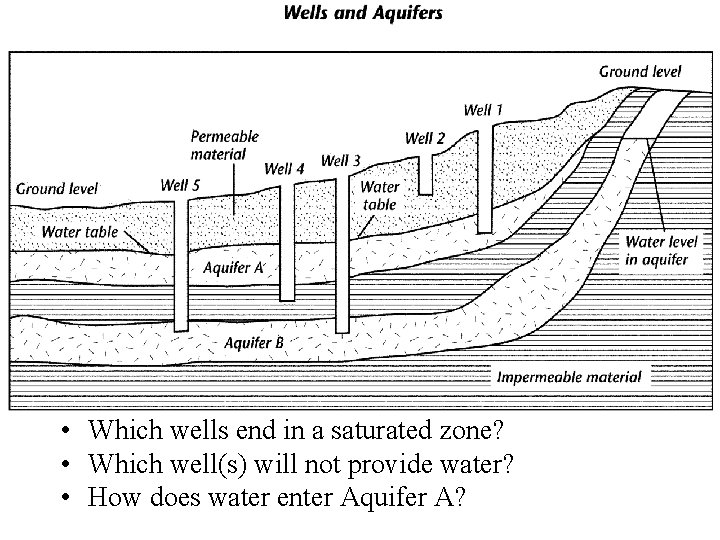
• Which wells end in a saturated zone? • Which well(s) will not provide water? • How does water enter Aquifer A?
Interesting Sites • • http: //unmuseum. mus. pa. us/flash/geyflash. htm http: //www. nps. gov/archive/yell/oldfaithfulcam. htm http: //www. floridasprings. org www. unitedstreaming. com (Gushing Geysers; Natural Phenomena)
- Slides: 18