
WATER Topic 1 1 ENDURING SYI1 Living systems


- Slides: 30
WATER Topic 1. 1
ENDURING SYI-1 Living systems are organized in a hierarchy of structural levels that interact. LEARNING UNDERSTANDING OBJECTIVE SYI-1. A Explain how the properties of water that result from its polarity and hydrogen bonding affect its biological function. ESSENTIAL SYI-1. A. 1 The KNOWLEDGE subcomponents of biological molecules and their sequence determine the properties of that molecule. SYI-1. A. 2 Living systems depend on properties of water that result from its polarity and hydrogen bonding. SYI-1. A. 3 The hydrogen bonds between water molecules result in cohesion, adhesion, and surface tension.
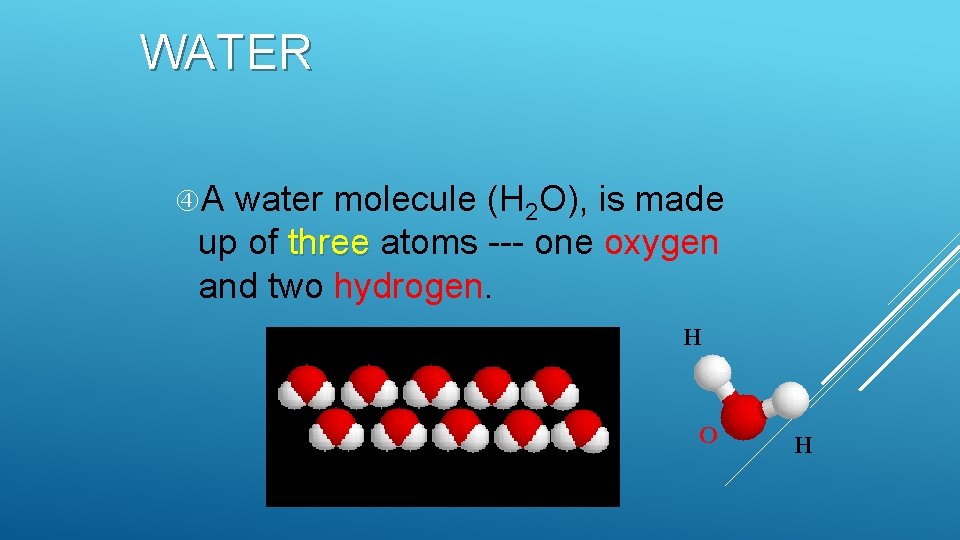
WATER A water molecule (H 2 O), is made up of three atoms --- one oxygen and two hydrogen. H O H
WATER IS POLAR In each water molecule, the oxygen atom attracts more than its "fair share" of electrons The oxygen end “acts” negative The hydrogen end “acts” positive Causes the water to be POLAR However, Water is neutral (equal number of e- and p+) --- Zero Net Charge
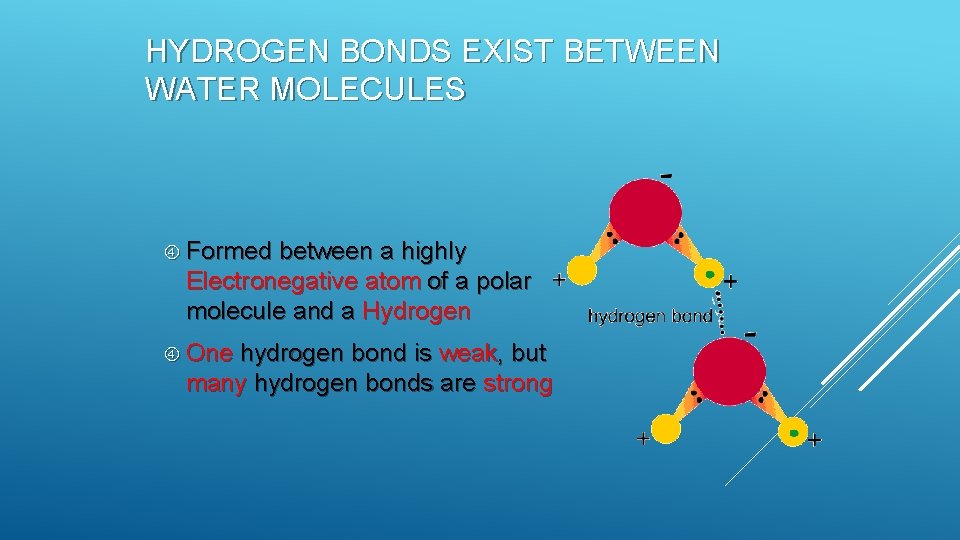
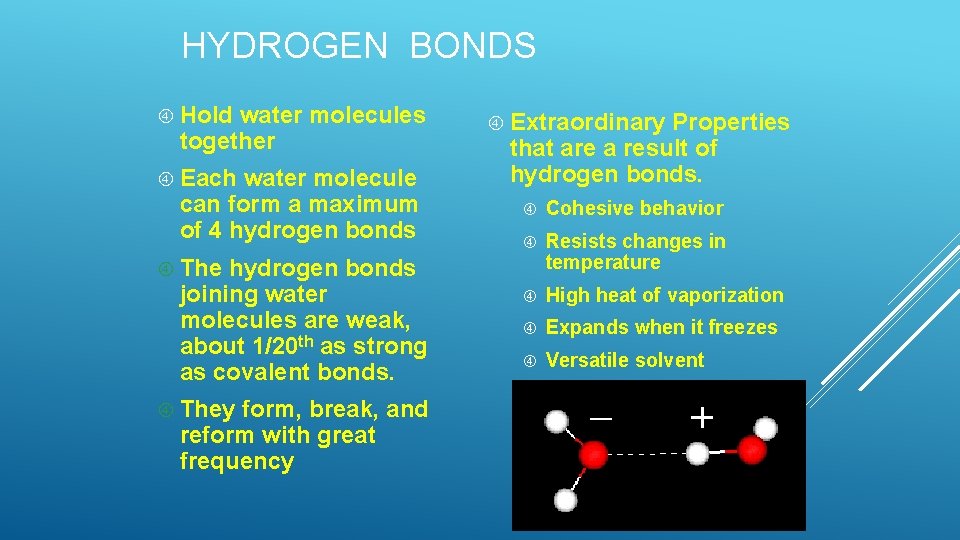
HYDROGEN BONDS EXIST BETWEEN WATER MOLECULES Formed between a highly Electronegative atom of a polar molecule and a Hydrogen One hydrogen bond is weak, but many hydrogen bonds are strong
HYDROGEN BONDS Hold water molecules together Each water molecule can form a maximum of 4 hydrogen bonds joining water molecules are weak, about 1/20 th as strong as covalent bonds. Extraordinary Properties that are a result of hydrogen bonds. Cohesive behavior Resists changes in temperature High heat of vaporization Expands when it freezes Versatile solvent They form, break, and reform with great frequency
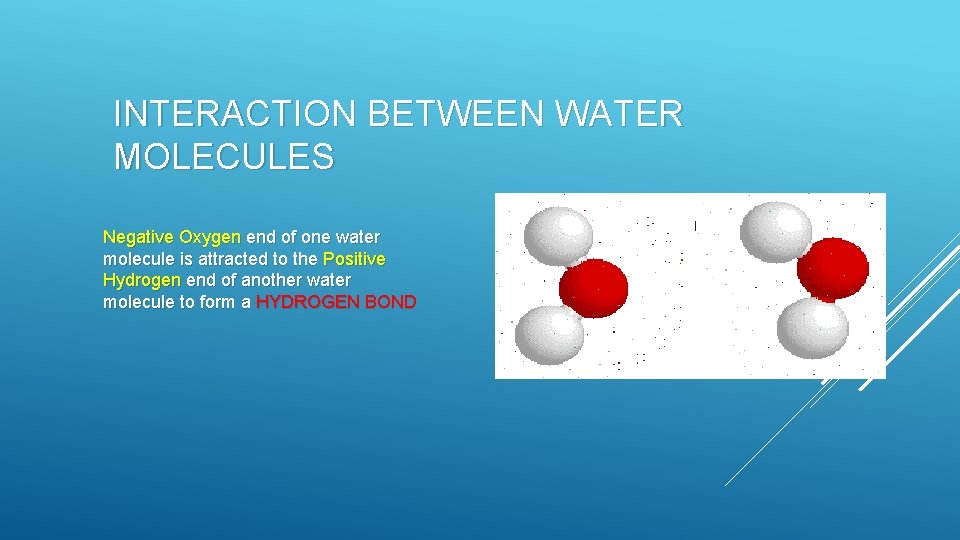
INTERACTION BETWEEN WATER MOLECULES Negative Oxygen end of one water molecule is attracted to the Positive Hydrogen end of another water molecule to form a HYDROGEN BOND
PROPERTIES OF WATER Cohesion Adhesion High Specific Heat High Heat of Vaporization Less Dense as a Solid
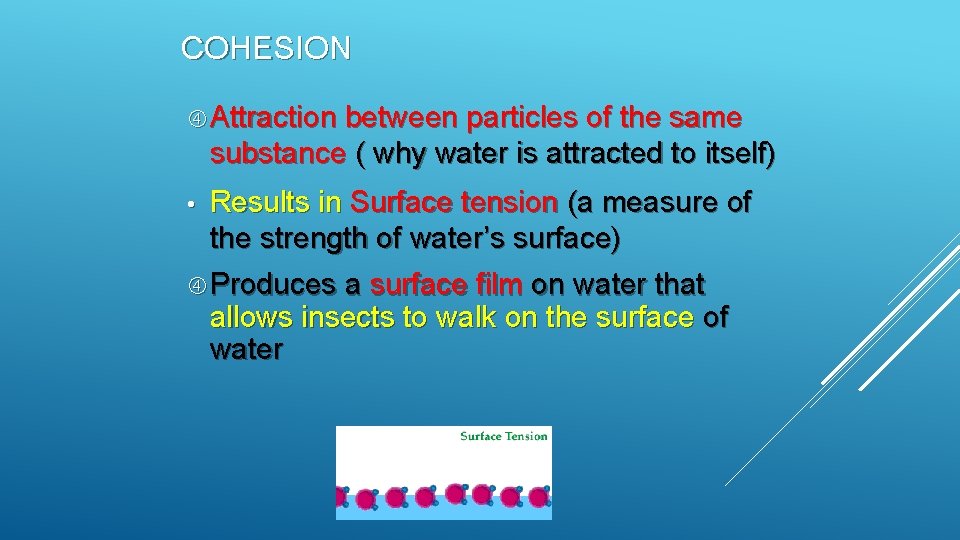
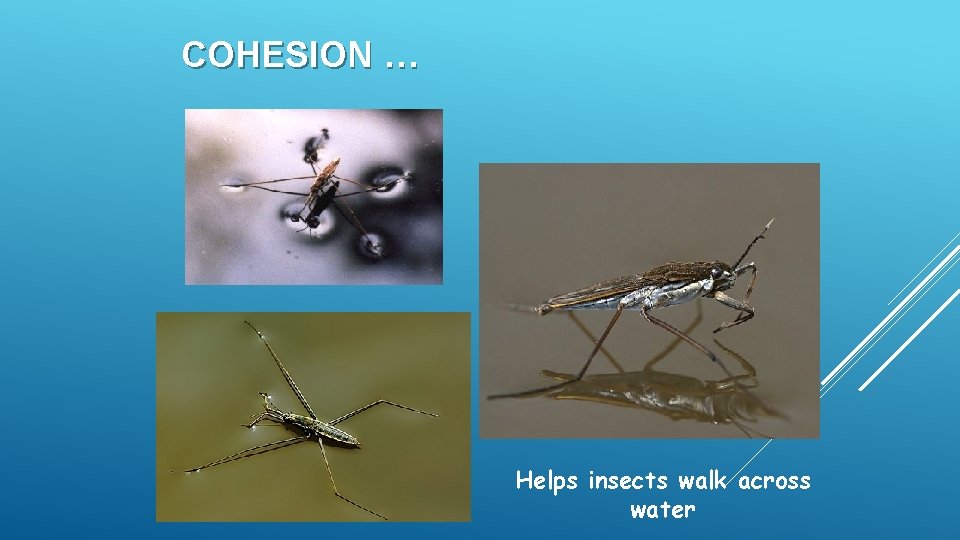
COHESION Attraction between particles of the same substance ( why water is attracted to itself) • Results in Surface tension (a measure of the strength of water’s surface) Produces a surface film on water that allows insects to walk on the surface of water
COHESION … Helps insects walk across water
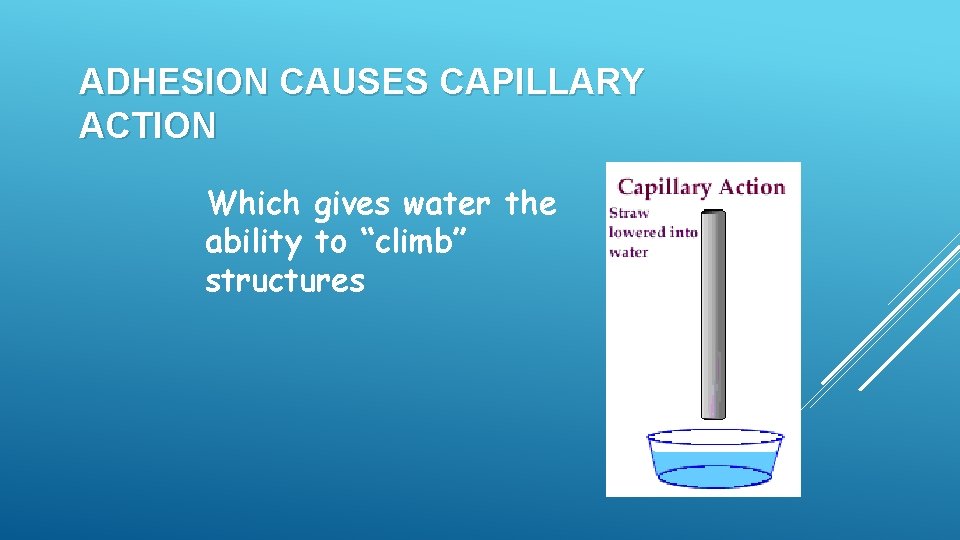
ADHESION • Attraction between two different substances. • Water will make hydrogen bonds with other surfaces such as glass, soil, plant tissues, and cotton. Capillary action-water molecules will “tow” each other along when in a thin glass tube. Example: transpiration process which plants and trees remove water from the soil, and paper towels soak up water.
ADHESION CAUSES CAPILLARY ACTION Which gives water the ability to “climb” structures
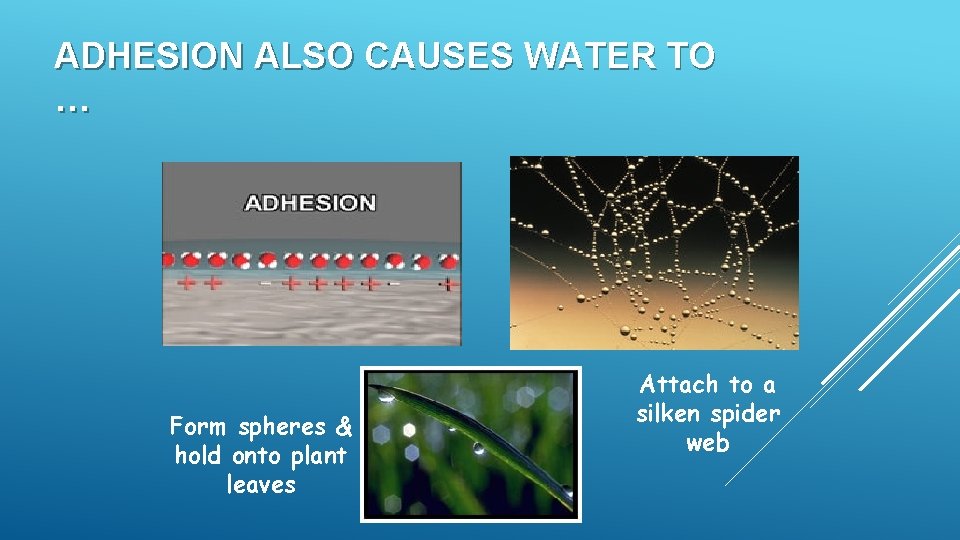
ADHESION ALSO CAUSES WATER TO … Form spheres & hold onto plant leaves Attach to a silken spider web
HIGH SPECIFIC HEAT • Amount of heat needed to raise or lower 1 g of a substance 1° C. Water resists temperature change, both for heating and cooling. Water can absorb or release large amounts of heat energy with little change in actual temperature.
HIGH HEAT OF VAPORIZATION Amount of energy to convert 1 g or a substance from a liquid to a gas In order for water to evaporate, hydrogen bonds must be broken. As water evaporates, it removes a lot of heat with it.
HIGH HEAT OF VAPORIZATION Water's heat of vaporization is 540 cal/g. In order for water to evaporate, each gram must GAIN 540 calories (temperature doesn’t change --100 o. C). As water evaporates, it removes a lot of heat with it (cooling effect).
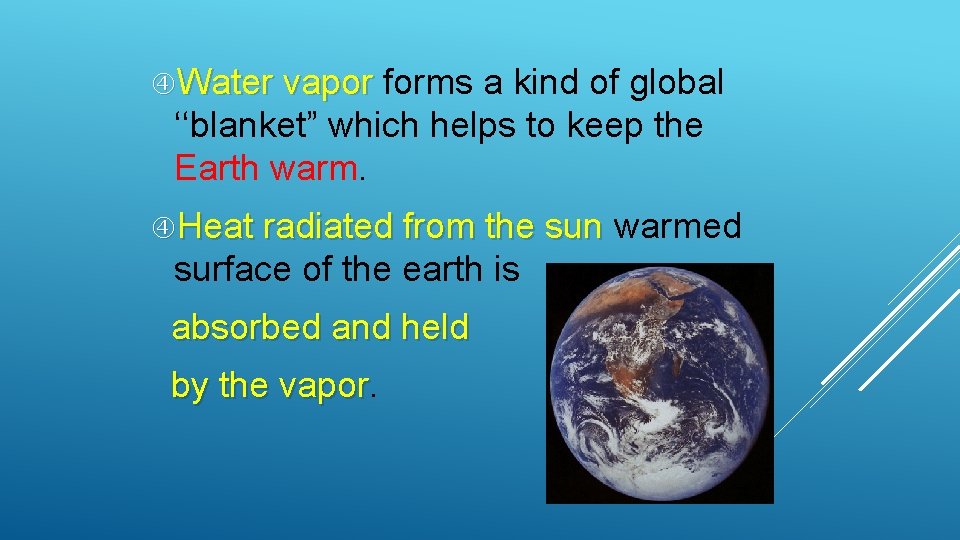
Water vapor forms a kind of global ‘‘blanket” which helps to keep the Earth warm. Heat radiated from the sun surface of the earth is absorbed and held by the vapor warmed
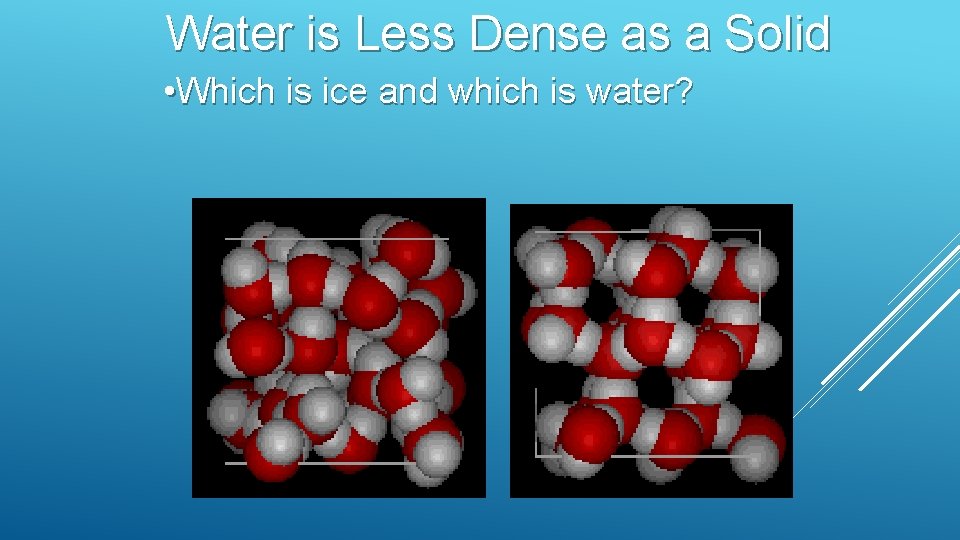
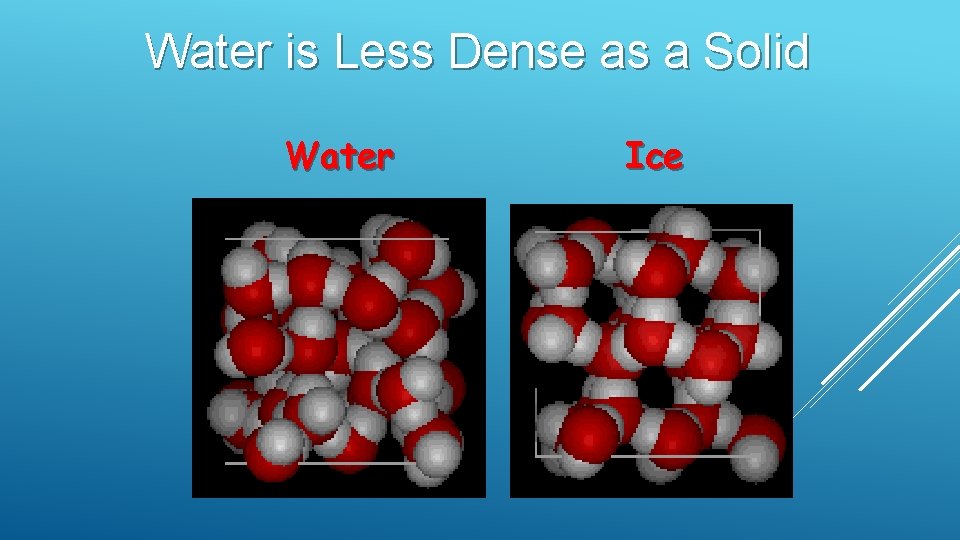
WATER IS LESS DENSE AS A SOLID • Ice is less dense as a solid than as a liquid (ice floats) • Liquid water has hydrogen bonds that are constantly being broken and reformed. • Frozen water forms a crystal-like lattice whereby molecules are set at fixed distances.
Water is Less Dense as a Solid • Which is ice and which is water?
Water is Less Dense as a Solid Water Ice
HOMEOSTASIS Ability to maintain a steady state despite changing conditions Water is important to this process because: a. Makes a good insulator b. Resists temperature change c. Universal solvent d. Coolant e. Ice protects against temperature extremes (insulates frozen lakes)
Water is usually part of a mixture. There are two types of mixtures: Solutions Suspensions SOLUTIONS & SUSPENSIONS
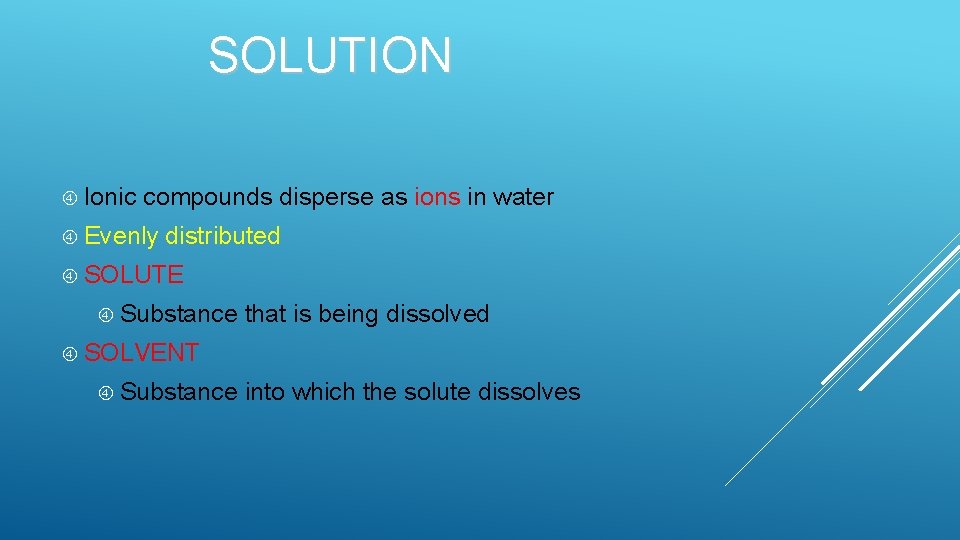
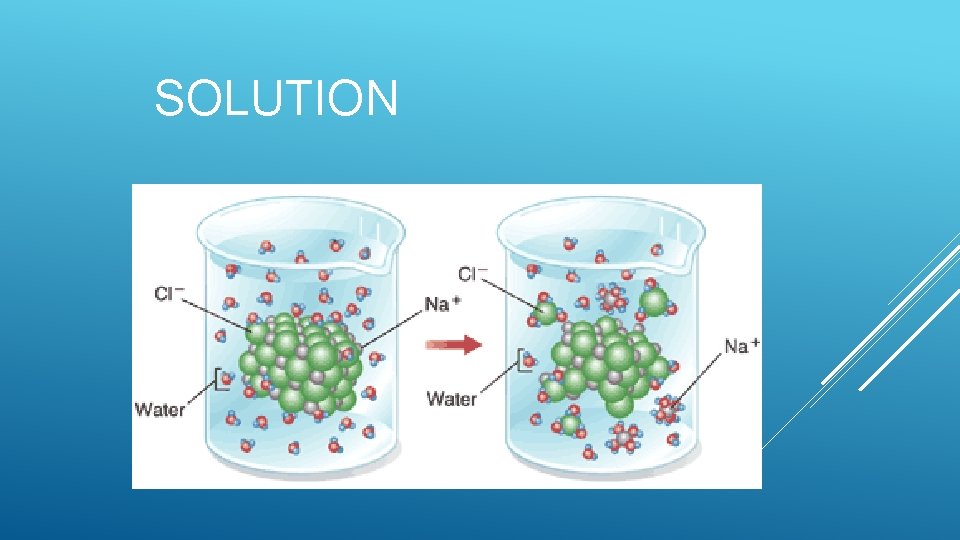
SOLUTION Ionic compounds disperse as ions in water Evenly distributed SOLUTE Substance that is being dissolved SOLVENT Substance into which the solute dissolves
SOLUTION
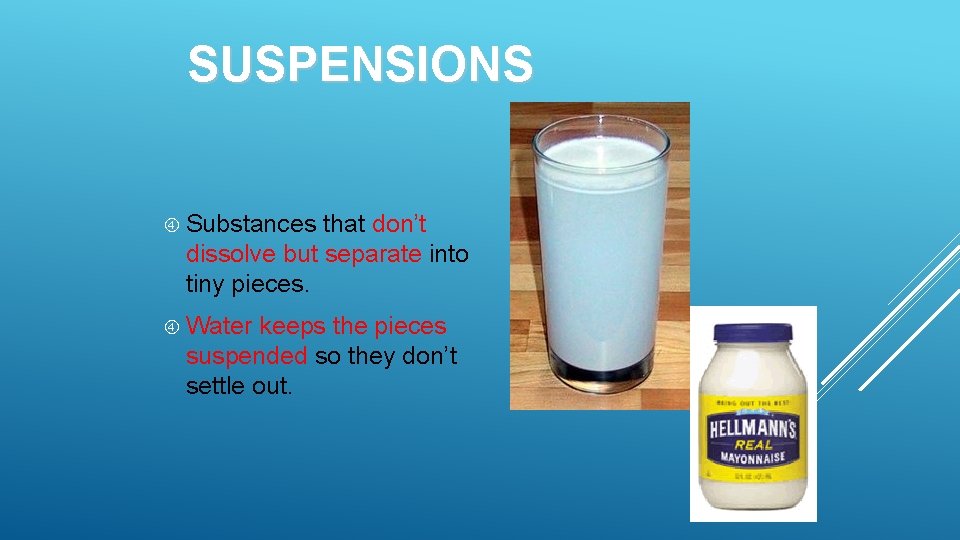
SUSPENSIONS Substances that don’t dissolve but separate into tiny pieces. Water keeps the pieces suspended so they don’t settle out.
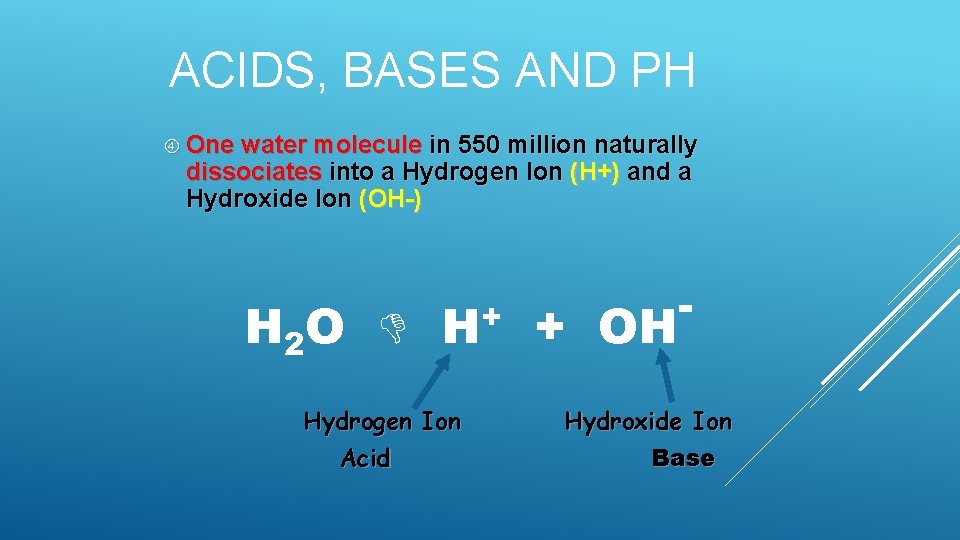
ACIDS, BASES AND PH One water molecule in 550 million naturally dissociates into a Hydrogen Ion (H+) and a Hydroxide Ion (OH-) H 2 O H+ Hydrogen Ion Acid + OH - Hydroxide Ion Base
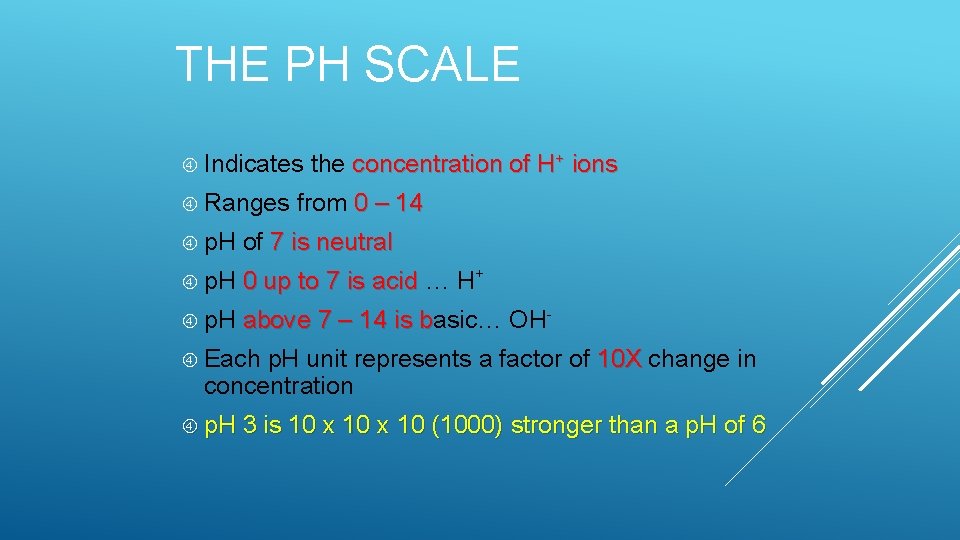
THE PH SCALE Indicates Ranges the concentration of H+ ions from 0 – 14 p. H of 7 is neutral p. H 0 up to 7 is acid … H+ p. H above 7 – 14 is basic… OHb Each p. H unit represents a factor of 10 X change in concentration p. H 3 is 10 x 10 (1000) stronger than a p. H of 6
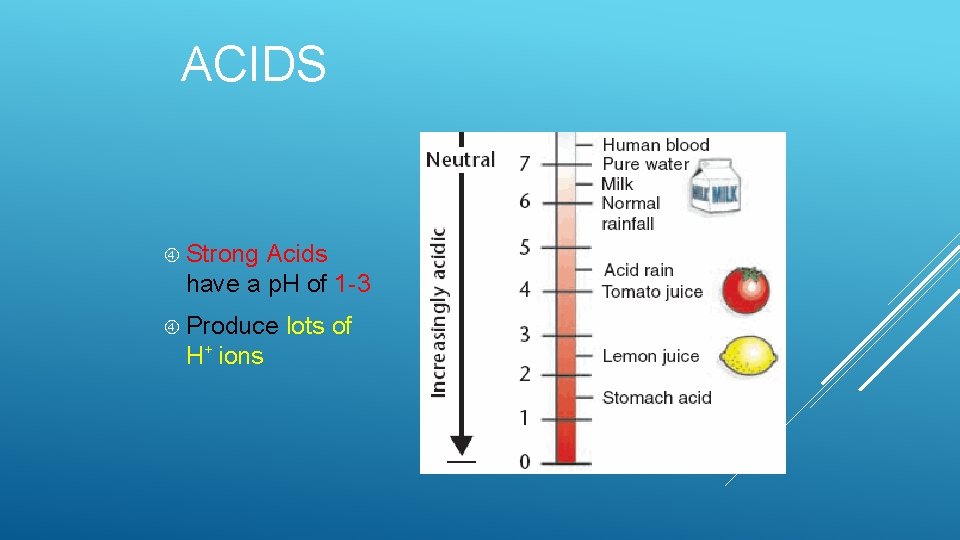
ACIDS Strong Acids have a p. H of 1 -3 Produce H+ ions lots of
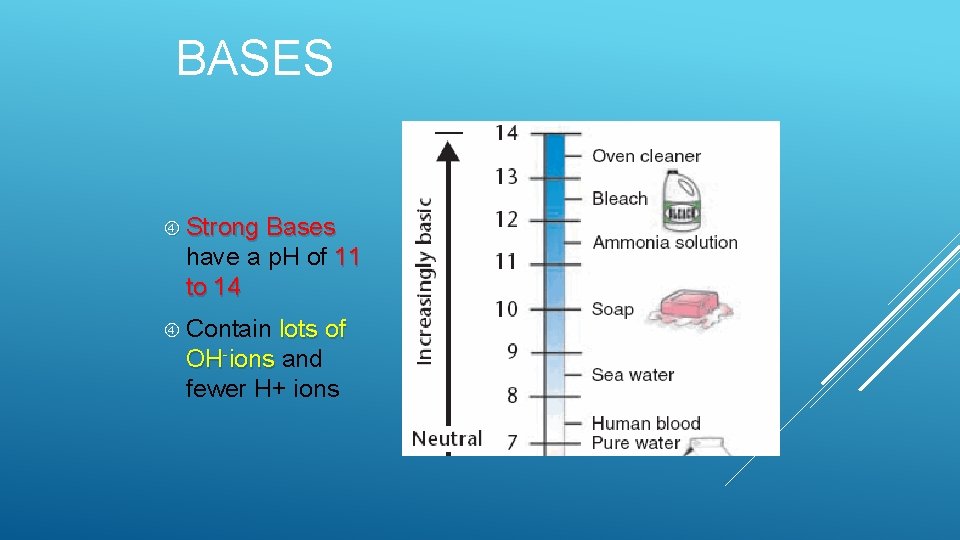
BASES Strong Bases have a p. H of 11 to 14 Contain lots of OH-ions and fewer H+ ions
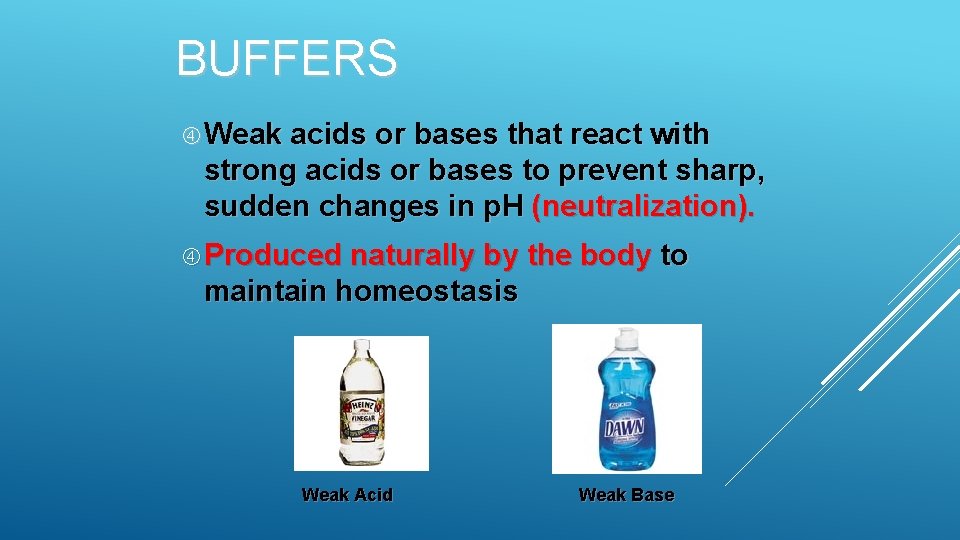
BUFFERS Weak acids or bases that react with strong acids or bases to prevent sharp, sudden changes in p. H (neutralization). Produced naturally by the body to maintain homeostasis Weak Acid Weak Base