
WATER Structure and processes within hydrosphere Water Earth
- Slides: 43
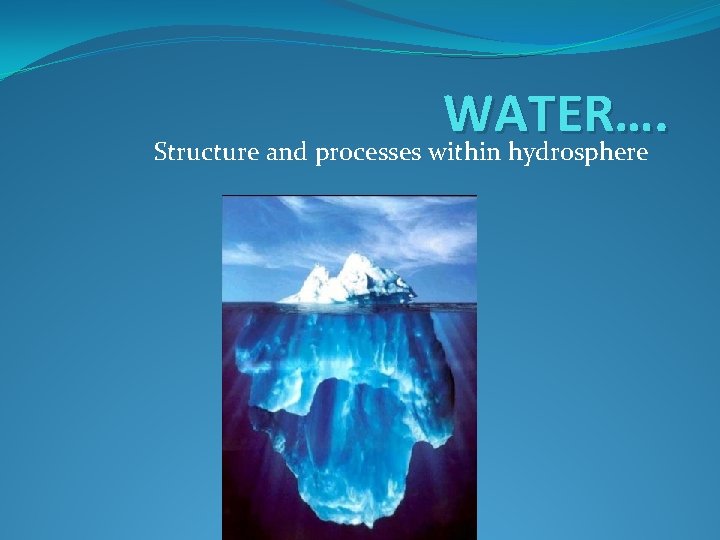
WATER…. Structure and processes within hydrosphere
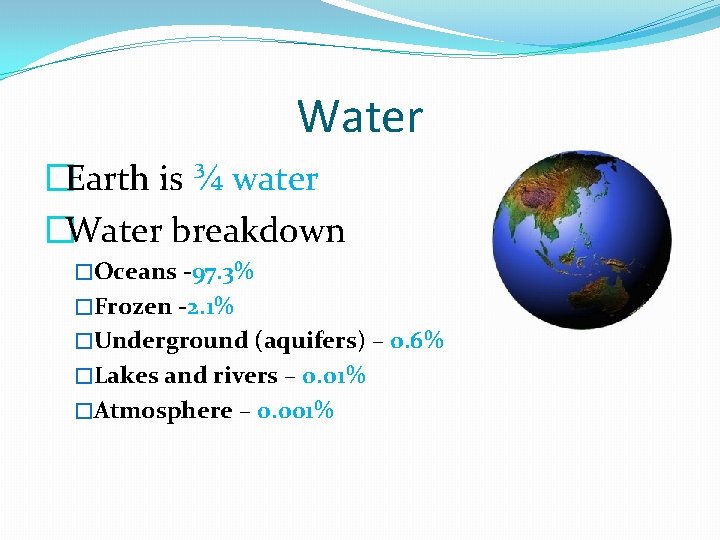
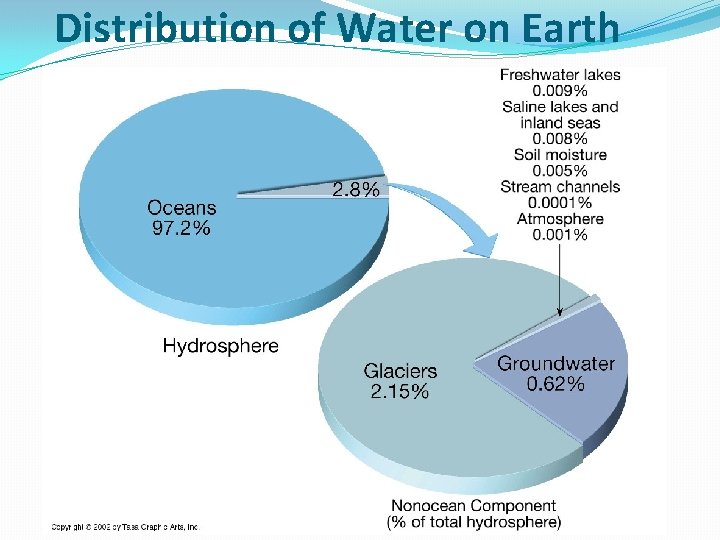
Water �Earth is ¾ water �Water breakdown �Oceans -97. 3% �Frozen -2. 1% �Underground (aquifers) – 0. 6% �Lakes and rivers – 0. 01% �Atmosphere – 0. 001%
Distribution of Water on Earth
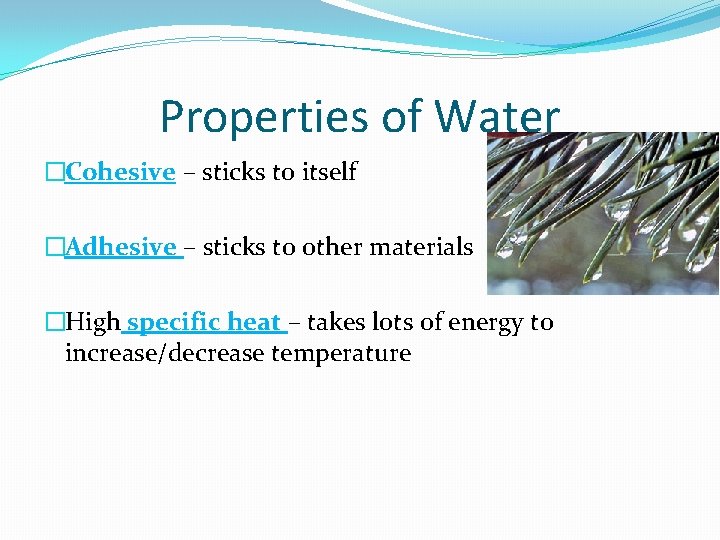
Properties of Water �Cohesive – sticks to itself �Adhesive – sticks to other materials �High specific heat – takes lots of energy to increase/decrease temperature
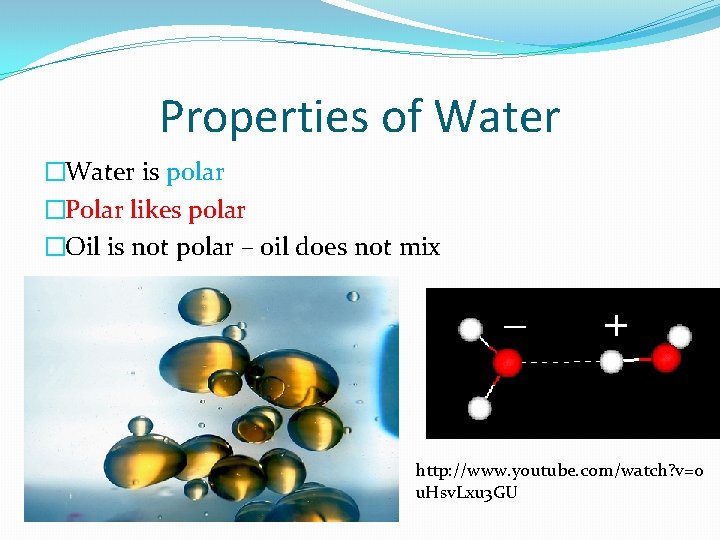
Properties of Water �Water is polar �Polar likes polar �Oil is not polar – oil does not mix http: //www. youtube. com/watch? v=0 u. Hsv. Lxu 3 GU
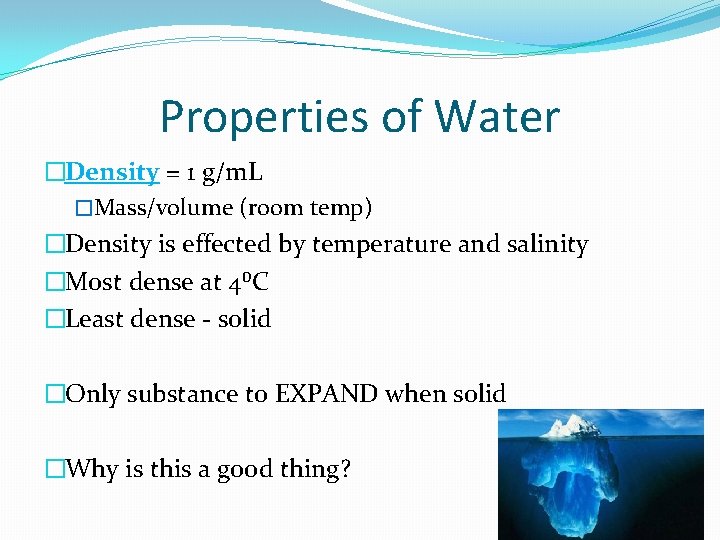
Properties of Water �Density = 1 g/m. L �Mass/volume (room temp) �Density is effected by temperature and salinity �Most dense at 4⁰C �Least dense - solid �Only substance to EXPAND when solid �Why is this a good thing?
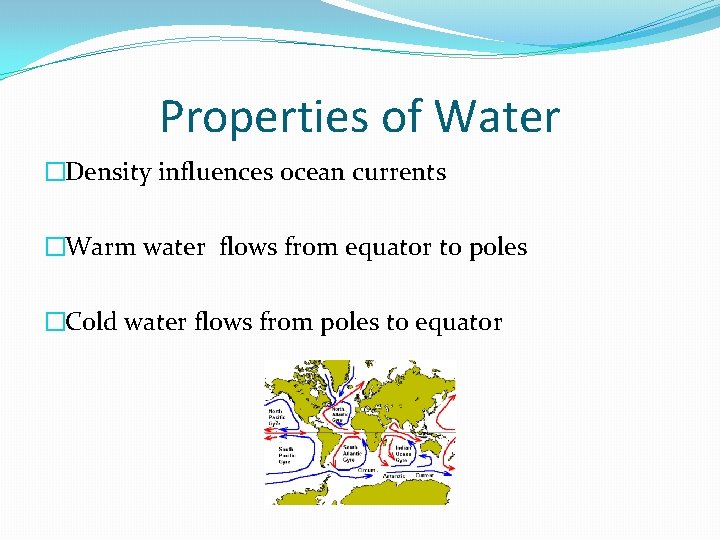
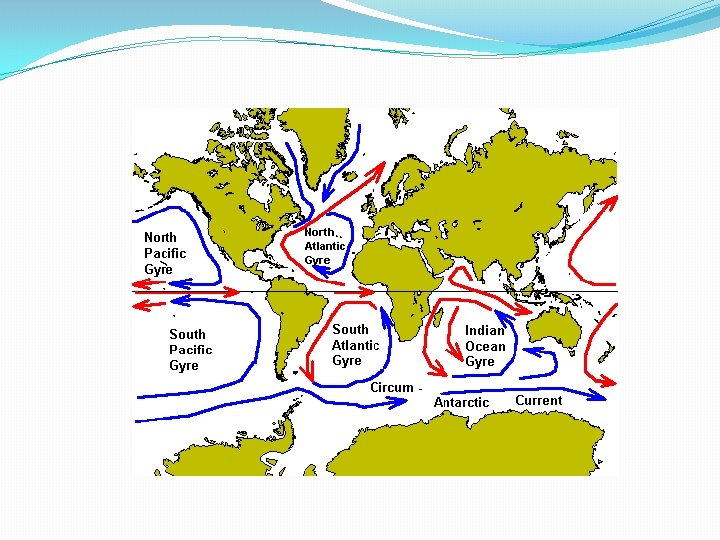
Properties of Water �Density influences ocean currents �Warm water flows from equator to poles �Cold water flows from poles to equator
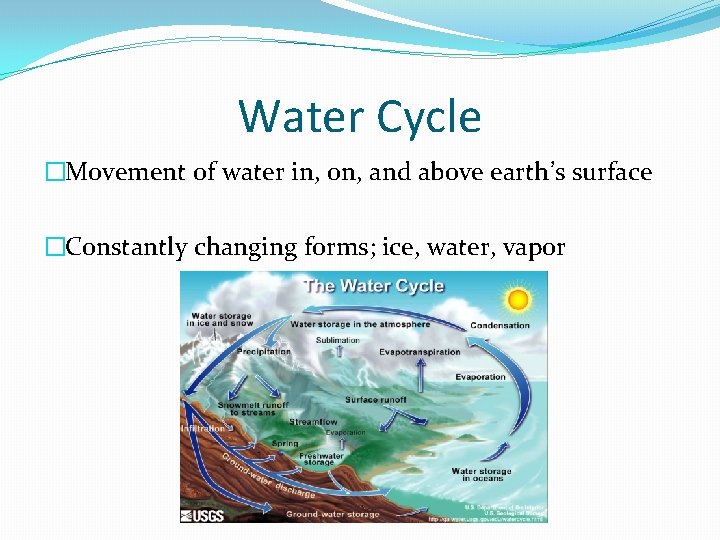
Water Cycle �Movement of water in, on, and above earth’s surface �Constantly changing forms; ice, water, vapor
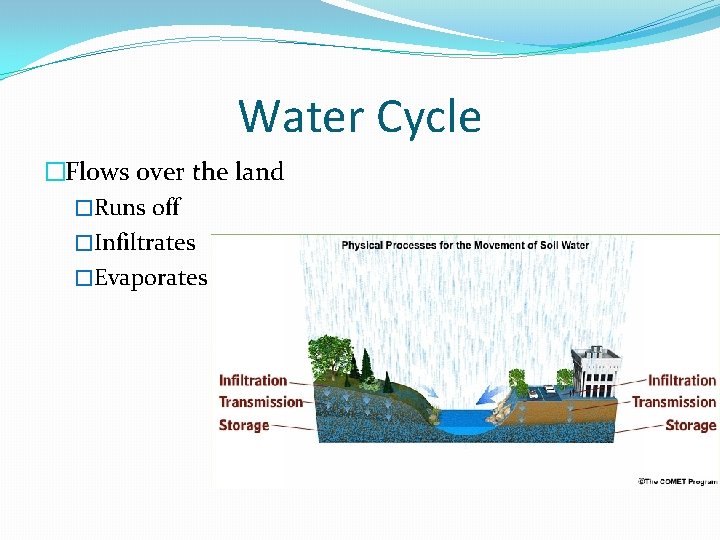
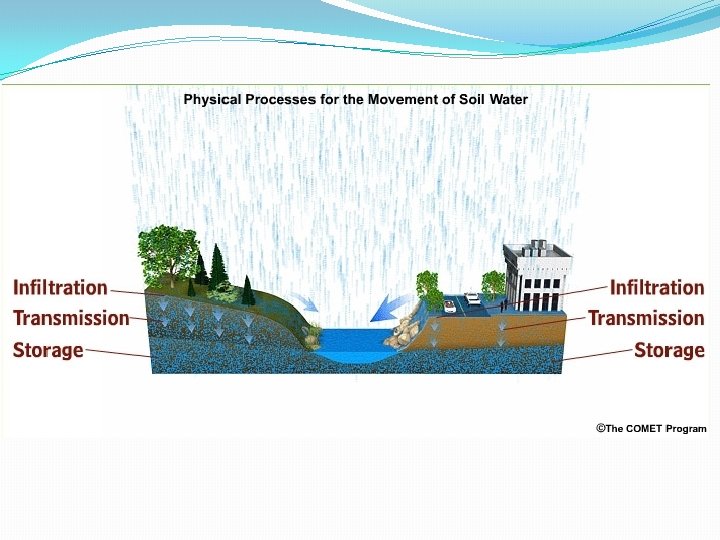
Water Cycle �Flows over the land �Runs off �Infiltrates �Evaporates
Water Cycle �Evaporates –moisture in atmosphere; forms clouds �Rain to Run off – streams, rivers, lakes, oceans, etc �Rain to infiltration – absorbed by vegetation, fills gaps in earth, becomes ground water
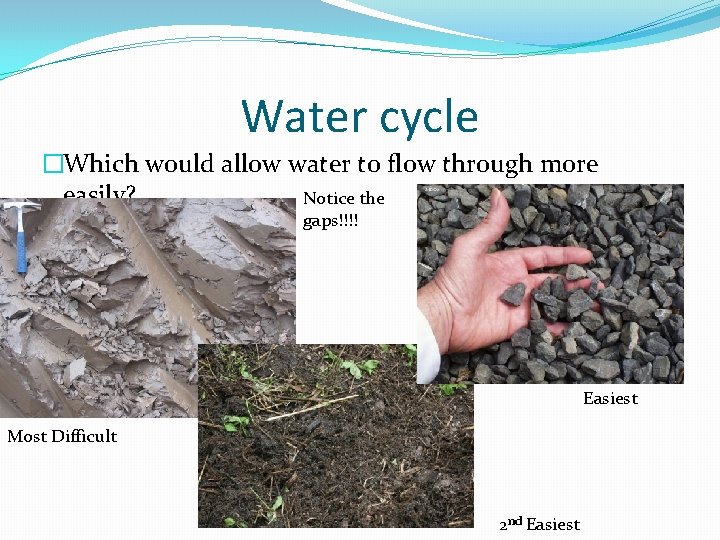
Water cycle �Which would allow water to flow through more easily? Notice the gaps!!!! Easiest Most Difficult 2 nd Easiest
Water Cycle �Create mural of water cycle �Include the following: �Run off, precipitation, evaporation, infiltration, condensation, and transpiration �Define each term on the back of your mural �Can be found on page 158 -159 in blue Earth Science Book
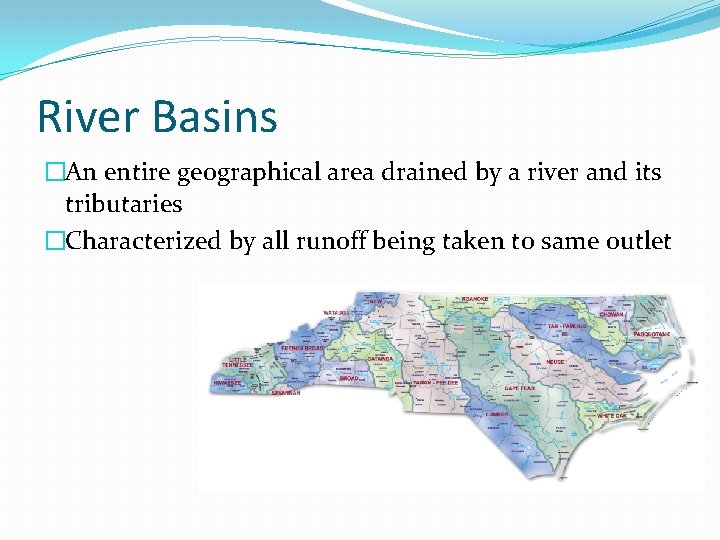
River Basins �An entire geographical area drained by a river and its tributaries �Characterized by all runoff being taken to same outlet
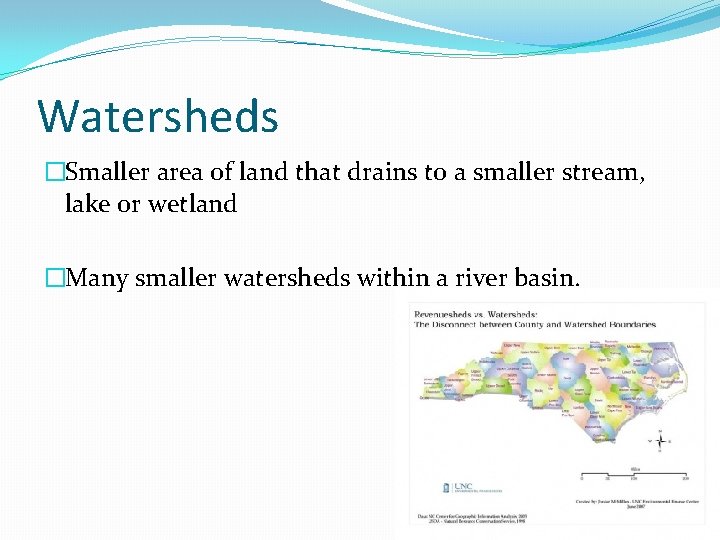
Watersheds �Smaller area of land that drains to a smaller stream, lake or wetland �Many smaller watersheds within a river basin.
Ground Water • Ground Water: the water that lies beneath the ground surface • filling cracks and pores in all types of rock • Source • rain and snow that falls to the ground, some percolates down into the ground
Porosity and Permeability • Porous: a rock that holds much water • Permeable: a rock that allows water to flow easily through it • Impermeable: a rock that does not allow water to flow through it easily
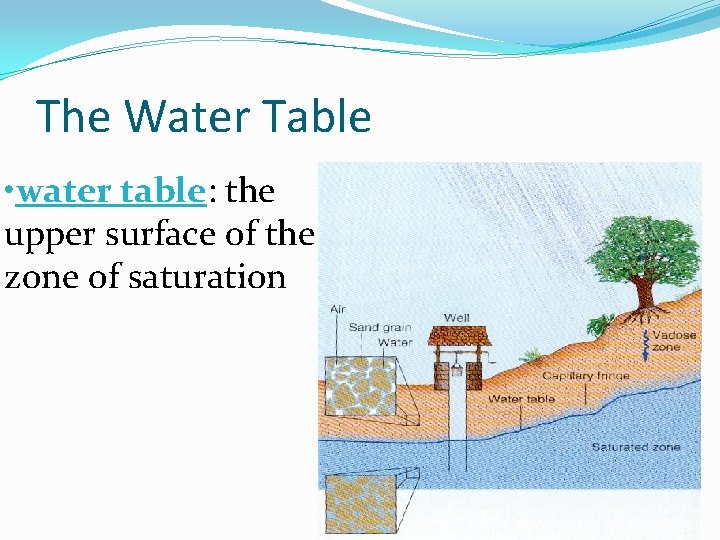
The Water Table • water table: the upper surface of the zone of saturation
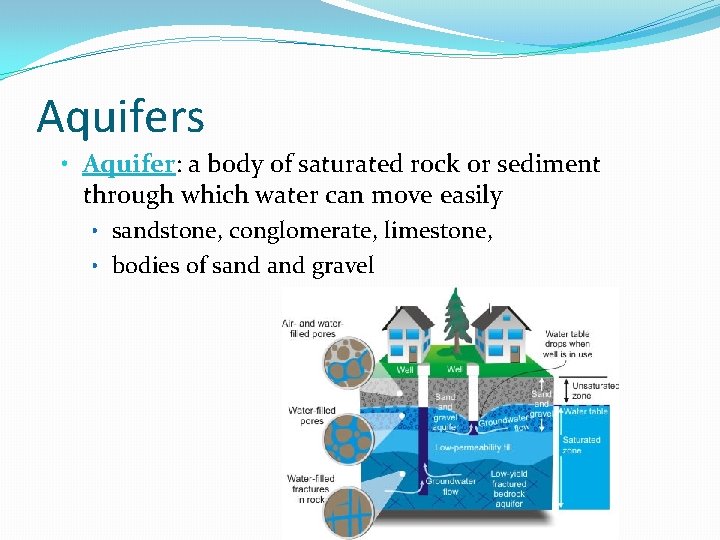
Aquifers • Aquifer: a body of saturated rock or sediment through which water can move easily • sandstone, conglomerate, limestone, • bodies of sand gravel
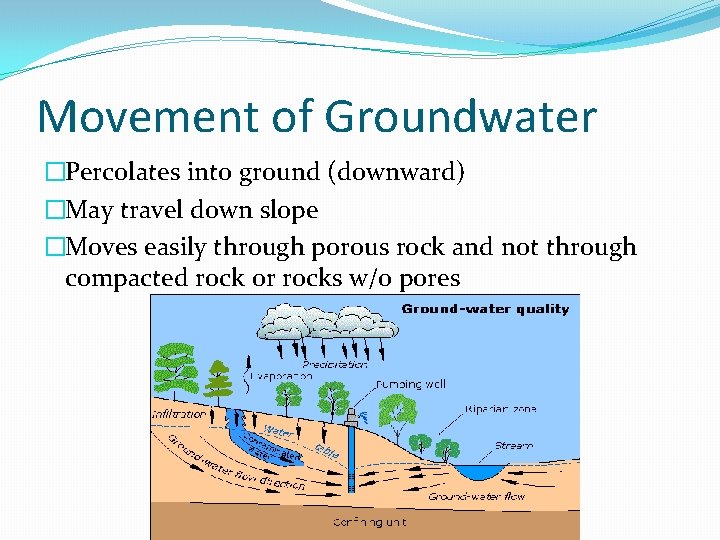
Movement of Groundwater �Percolates into ground (downward) �May travel down slope �Moves easily through porous rock and not through compacted rock or rocks w/o pores
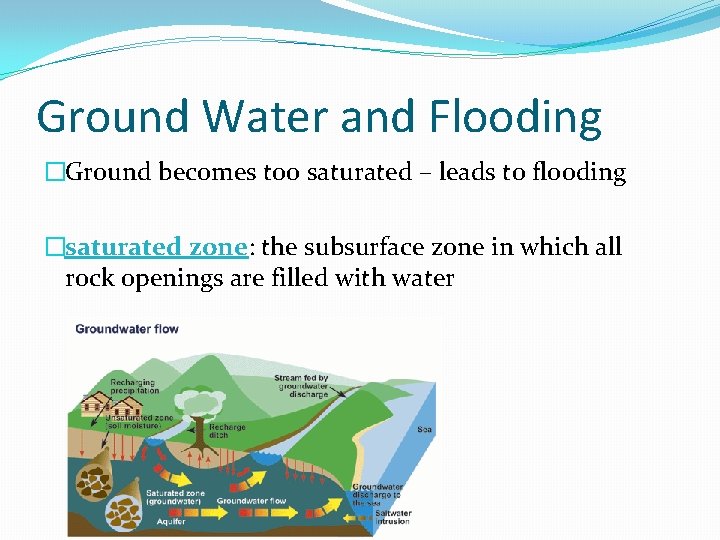
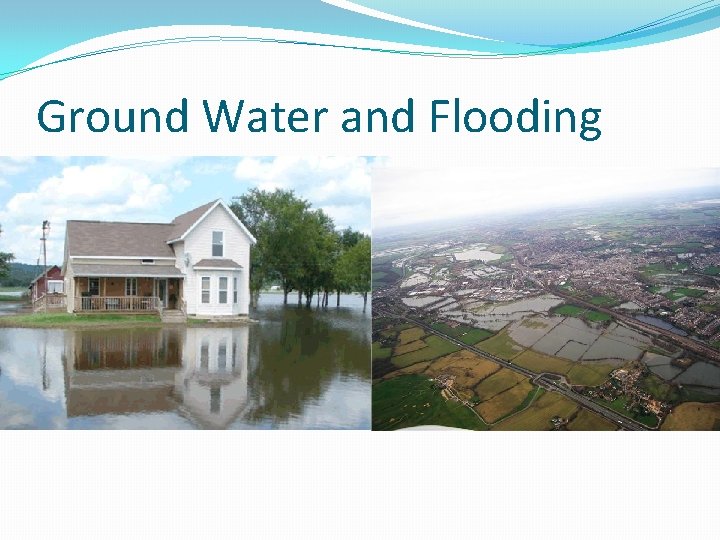
Ground Water and Flooding �Ground becomes too saturated – leads to flooding �saturated zone: the subsurface zone in which all rock openings are filled with water
Ground Water and Flooding
�http: //video. nationalgeographic. com/video/environm ent/environment-natural-disasters/landslides-andmore/floods/ �http: //www. youtube. com/watch? v=TDt. Bby 7 l. JX 0
Human Use of Water
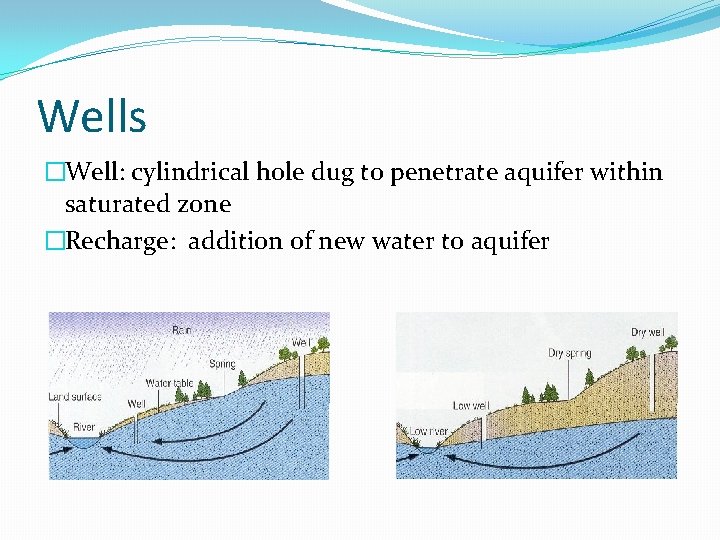
Wells �Well: cylindrical hole dug to penetrate aquifer within saturated zone �Recharge: addition of new water to aquifer
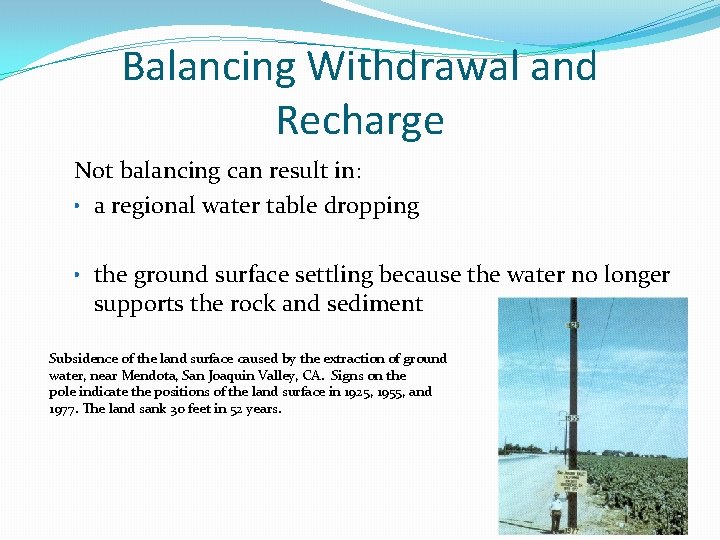
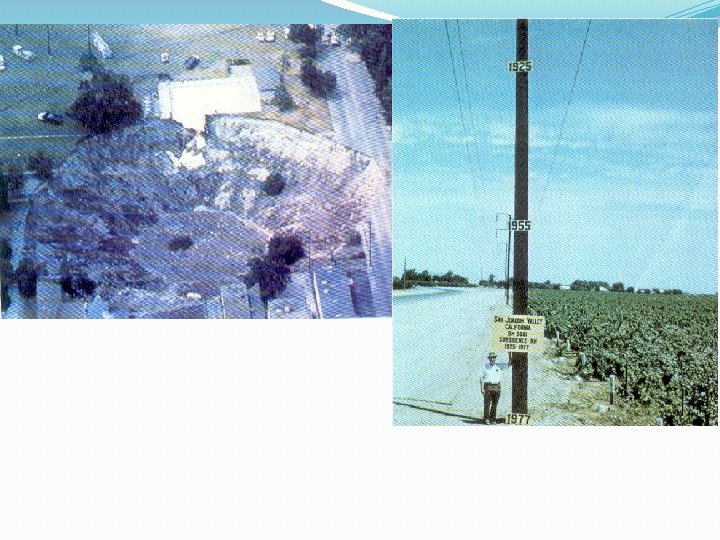
Balancing Withdrawal and Recharge Not balancing can result in: • a regional water table dropping • the ground surface settling because the water no longer supports the rock and sediment Subsidence of the land surface caused by the extraction of ground water, near Mendota, San Joaquin Valley, CA. Signs on the pole indicate the positions of the land surface in 1925, 1955, and 1977. The land sank 30 feet in 52 years.
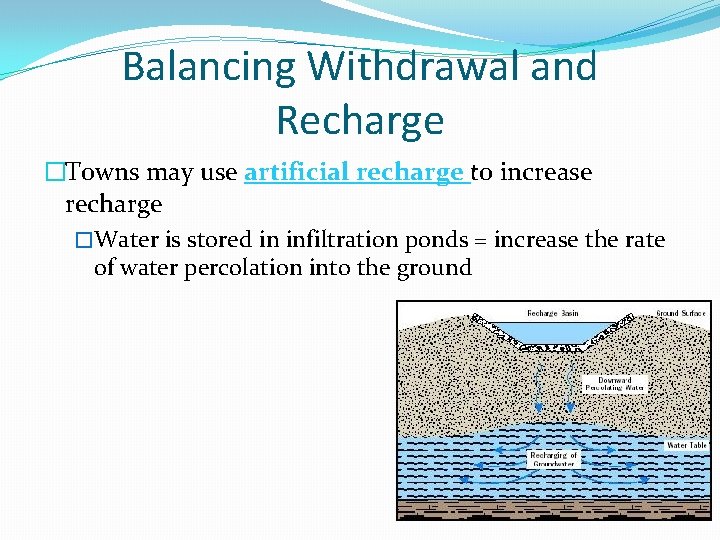
Balancing Withdrawal and Recharge �Towns may use artificial recharge to increase recharge �Water is stored in infiltration ponds = increase the rate of water percolation into the ground
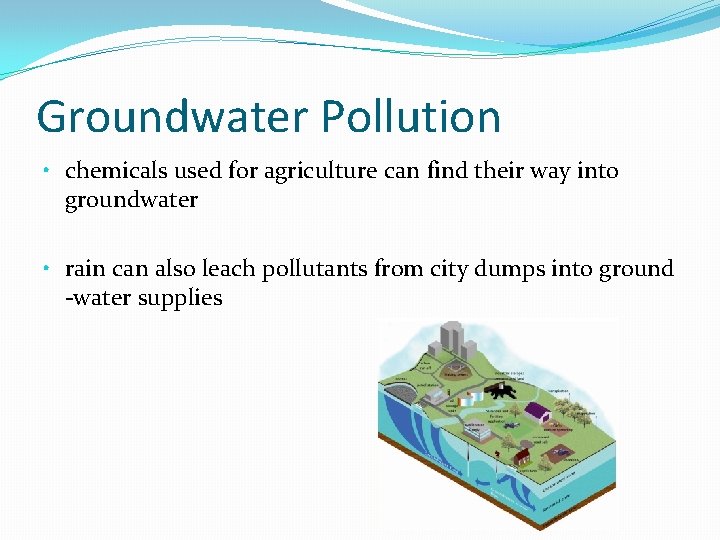
Groundwater Pollution • chemicals used for agriculture can find their way into groundwater • rain can also leach pollutants from city dumps into ground -water supplies
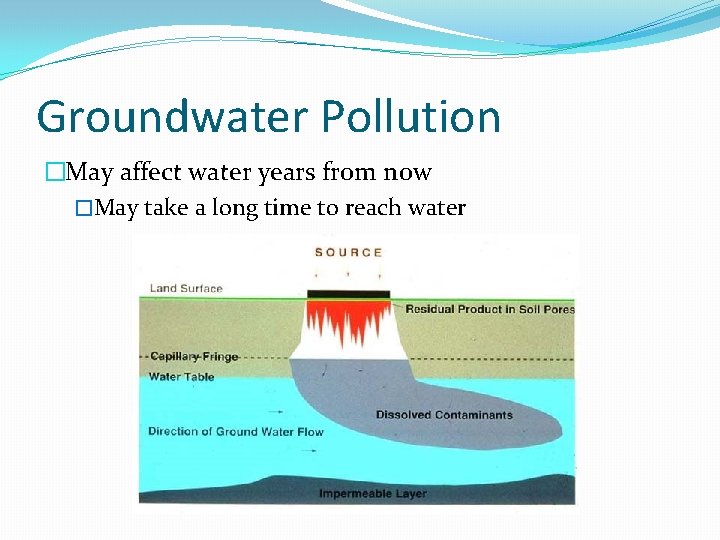
Groundwater Pollution �May affect water years from now �May take a long time to reach water
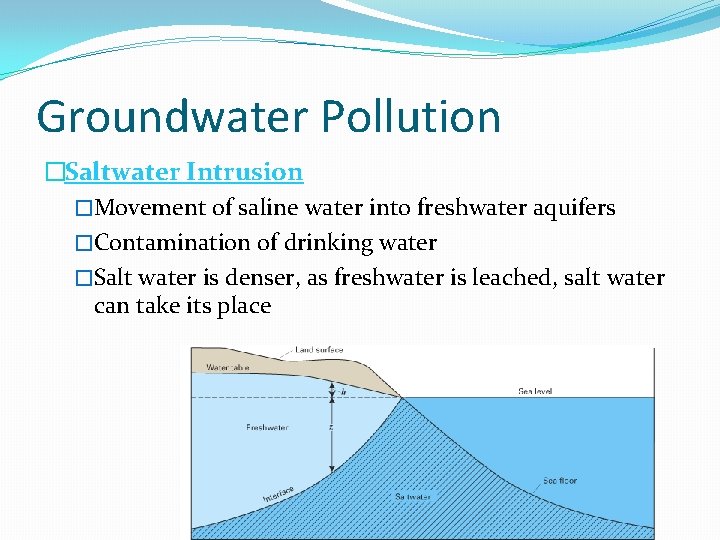
Groundwater Pollution �Saltwater Intrusion �Movement of saline water into freshwater aquifers �Contamination of drinking water �Salt water is denser, as freshwater is leached, salt water can take its place
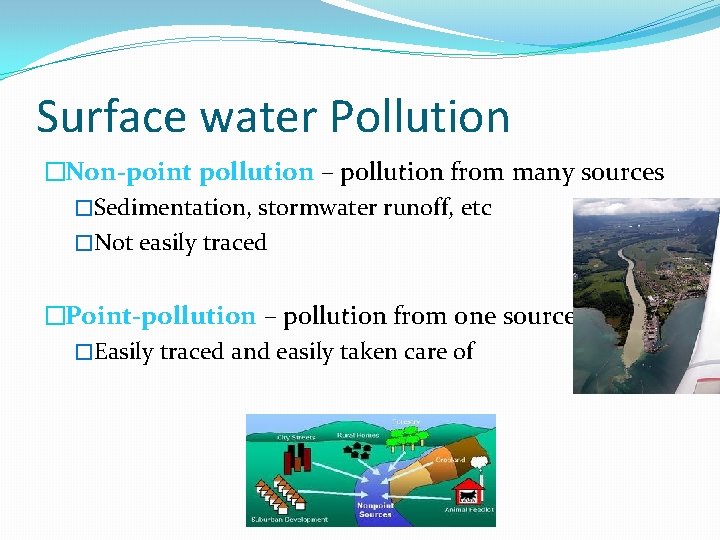
Surface water Pollution �Non-point pollution – pollution from many sources �Sedimentation, stormwater runoff, etc �Not easily traced �Point-pollution – pollution from one source �Easily traced and easily taken care of
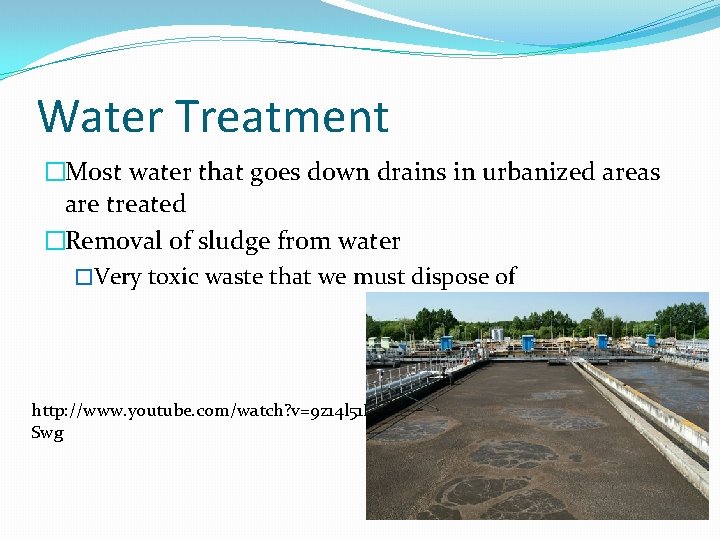
Water Treatment �Most water that goes down drains in urbanized areas are treated �Removal of sludge from water �Very toxic waste that we must dispose of http: //www. youtube. com/watch? v=9 z 14 l 51 I Swg
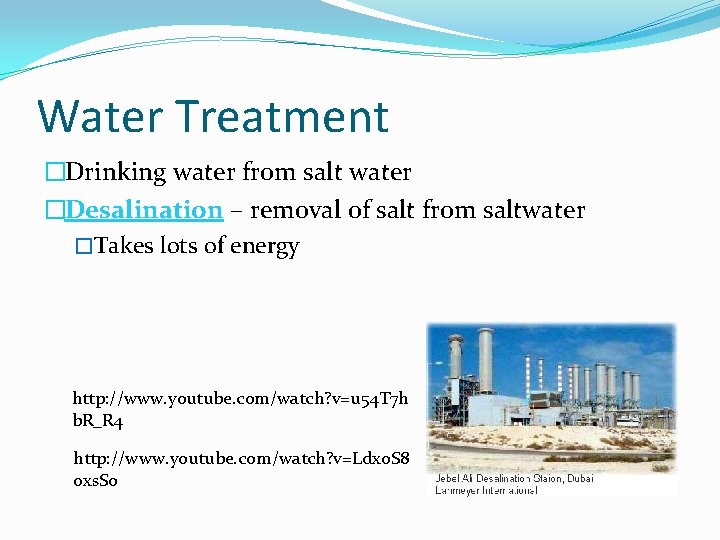
Water Treatment �Drinking water from salt water �Desalination – removal of salt from saltwater �Takes lots of energy http: //www. youtube. com/watch? v=u 54 T 7 h b. R_R 4 http: //www. youtube. com/watch? v=Ldxo. S 8 0 xs. So
Conservation Measures � 1972 – Clean Water Act “restore and maintain the chemical, physical, and biological integrity of the nation’s waters. ” � 1972 – Marine Protection, Research, and Sanctuaries Act � 1975 – Safe Drinking Water Act (groundwater and surface water) � 1987 – Water Quality Act
Conservation Measures �Need to protect water sources for our future �Increase population = increase need for water �Increase population = increase pollution �Must take care of our water for our survival!
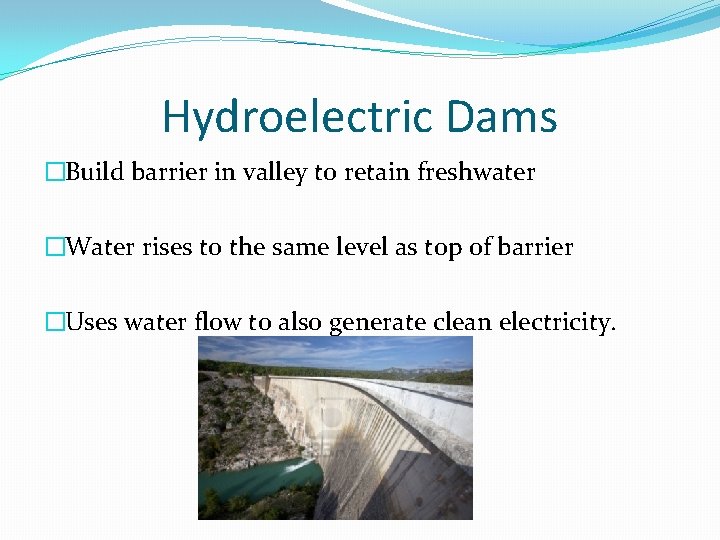
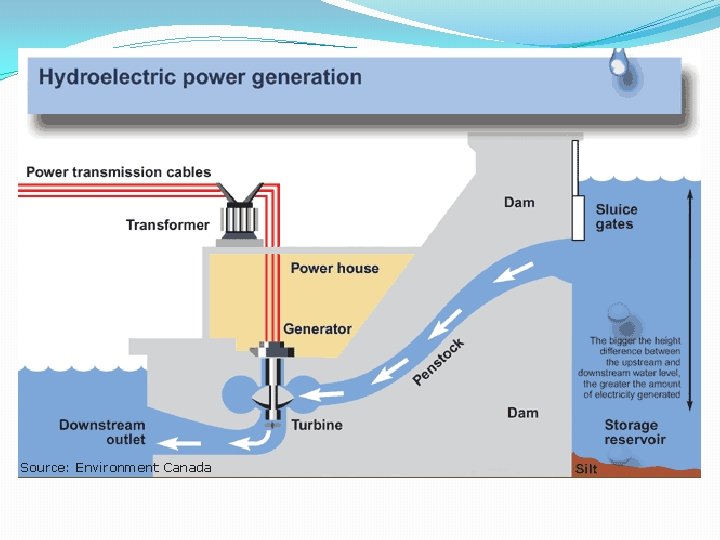
Hydroelectric Dams �Build barrier in valley to retain freshwater �Water rises to the same level as top of barrier �Uses water flow to also generate clean electricity.
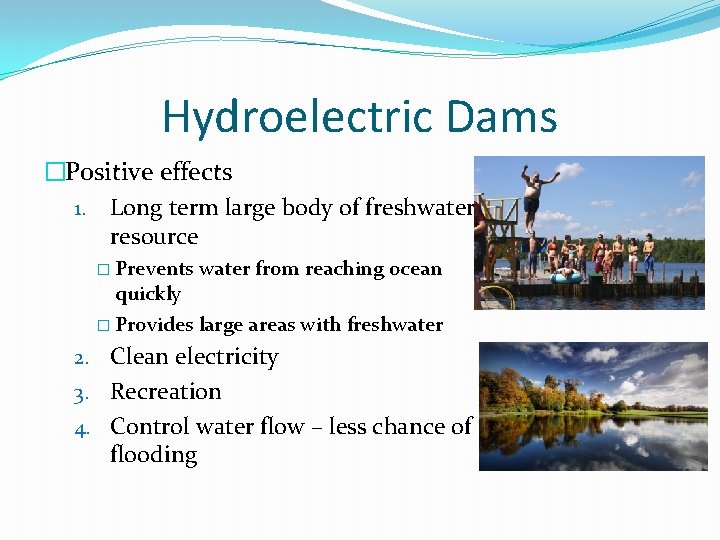
Hydroelectric Dams �Positive effects 1. Long term large body of freshwater resource � Prevents water from reaching ocean quickly � Provides large areas with freshwater 2. Clean electricity Recreation 4. Control water flow – less chance of flooding 3.
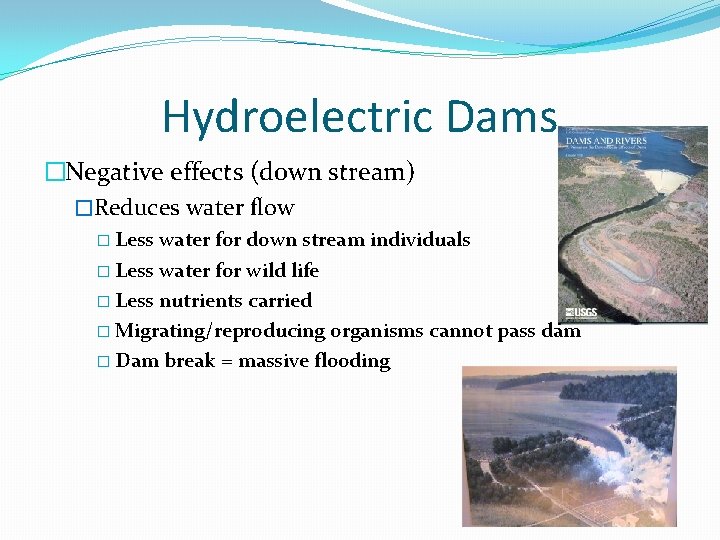
Hydroelectric Dams �Negative effects (down stream) �Reduces water flow � Less water for down stream individuals � Less water for wild life � Less nutrients carried � Migrating/reproducing organisms cannot pass dam � Dam break = massive flooding
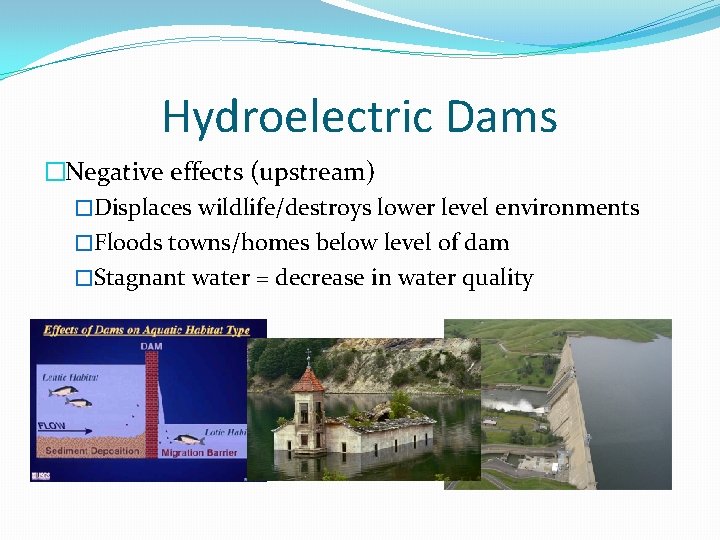
Hydroelectric Dams �Negative effects (upstream) �Displaces wildlife/destroys lower level environments �Floods towns/homes below level of dam �Stagnant water = decrease in water quality
Hydroelectric Dams �Much debate over building new power dams �Several dams being destroyed to allow natural flow �Energy/water crisis �Are dams our answer? ?