
Water Sodium and Potassium Bioc 416 Lect 3
Water, Sodium and Potassium Bioc 416 Lect 3
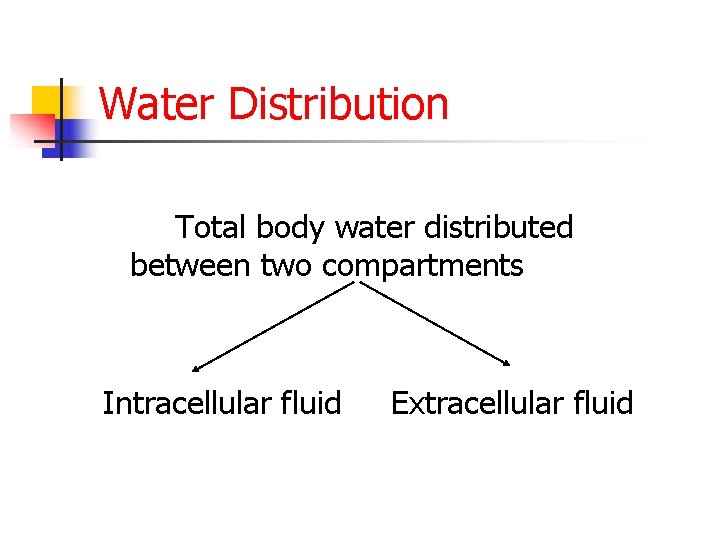
Water Distribution Total body water distributed between two compartments Intracellular fluid Extracellular fluid
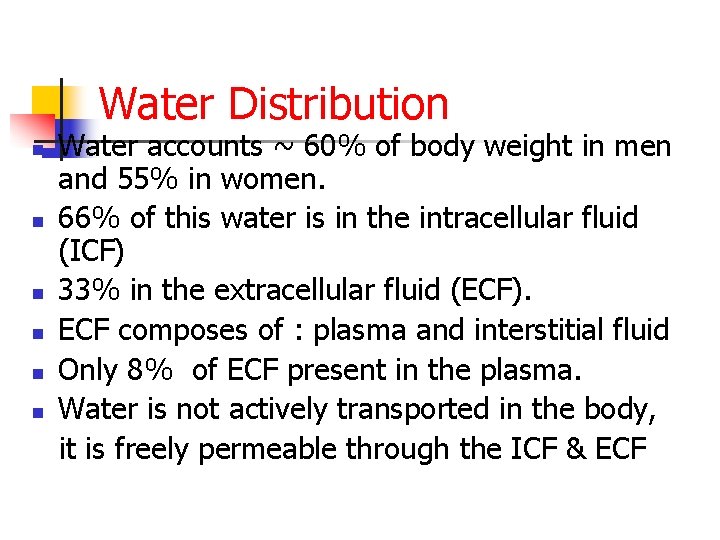
Water Distribution n n n Water accounts ~ 60% of body weight in men and 55% in women. 66% of this water is in the intracellular fluid (ICF) 33% in the extracellular fluid (ECF). ECF composes of : plasma and interstitial fluid Only 8% of ECF present in the plasma. Water is not actively transported in the body, it is freely permeable through the ICF & ECF
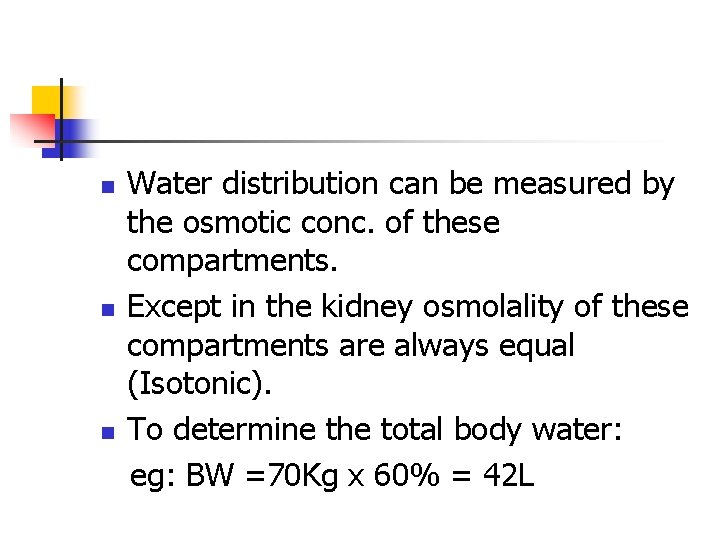
n n n Water distribution can be measured by the osmotic conc. of these compartments. Except in the kidney osmolality of these compartments are always equal (Isotonic). To determine the total body water: eg: BW =70 Kg x 60% = 42 L

Extracellular fluid n n All the fluids outside the cells are called ECF composed of the plasma which is the noncellular part of blood and the interstitial fluid Plasma is communicate continuously with interstitial fluid through the pores of capillary membranes. These pores are permeable to almost all solutes in ECF except proteins
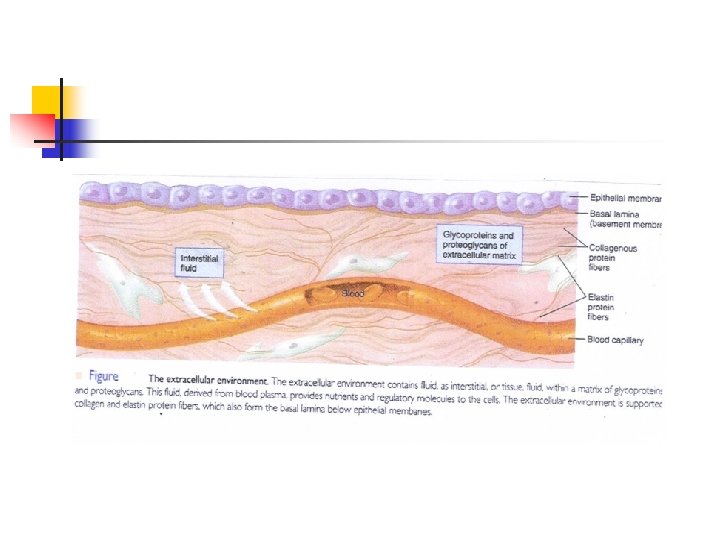
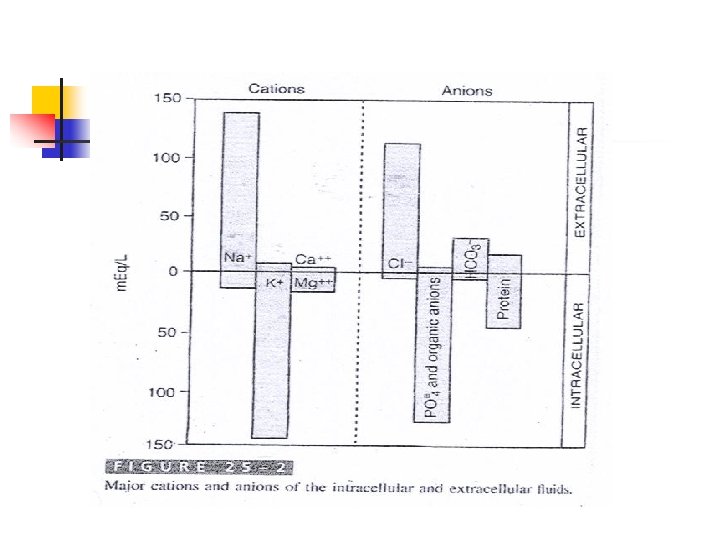
Compartments of Extracellular fluid and Intracellular fluids n n Composition of plasma is similar to the interstitial. ECF composed of : Cations (Na+, K+, Ca++) and Anions (Cl-, PO 4 ---, HCO 3 -, Protein) The major contributors to the osmolality of ECF are sodium and its associated anions, mainly chlorid and bicarbonate Almost the composition of ICF is similar to ECF but with different concentration.
n n In ICF the predominant cation is potassium Conc. of protein in ICF is much higher than in ECF. Conc. of protein in interstitial fluid is much less than that of plasma The osmotic effect of protein is an important factor in determining water distribution between ECF & ICF.
Water balance in the body n n Total daily water intake ~ 2300 ml/day include that from drinking, eating and oxidative metabolism. Total daily water loss ~ 2300 ml/day incluiding the insensible loss (skin, perspiration) and sensible loss (urine, feces, sweat, …. . ). Under normal conditions the amount of water intake is ~ equal to the water loss. The minimum volume of urine excretion ~500 ml/d
n n The minimum daily water intake for water balance is ~ 1100 ml With excessive sweating or diarrhoea the water intake should increase to keep water balance.
- Slides: 11