
Water Sanitation Situation in the CHT and Potentials
- Slides: 22
Water & Sanitation Situation in the CHT and Potentials for using Rainfall Hasin Jahan Programme Director, Water. Aid Bangladesh February 24, 2011
About Water. Aid. . . Water. Aid is an International Organisation Water. Aid operates in 26 countries with the mission for improving access to safe water, hygiene and sanitation in poor communities In Bangladesh, we reached over 2 million water, 6 million sanitation and 7 million hygiene beneficiaries till the last year
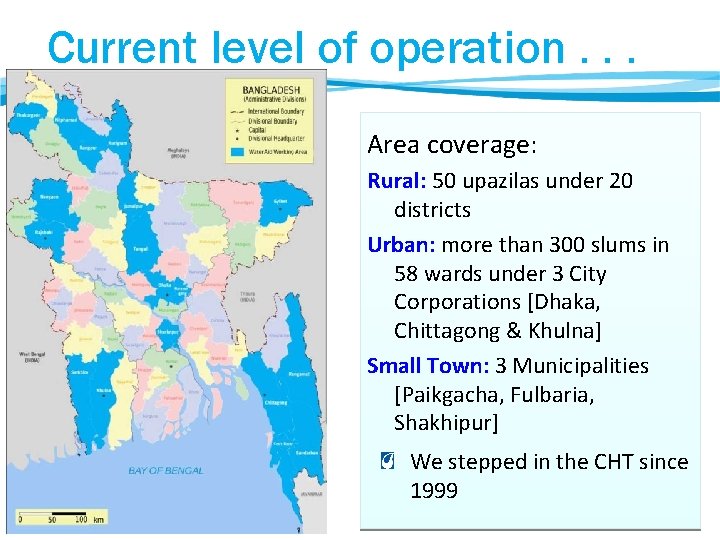
Current level of operation. . . Area coverage: Rural: 50 upazilas under 20 districts Urban: more than 300 slums in 58 wards under 3 City Corporations [Dhaka, Chittagong & Khulna] Small Town: 3 Municipalities [Paikgacha, Fulbaria, Shakhipur] We stepped in the CHT since 1999
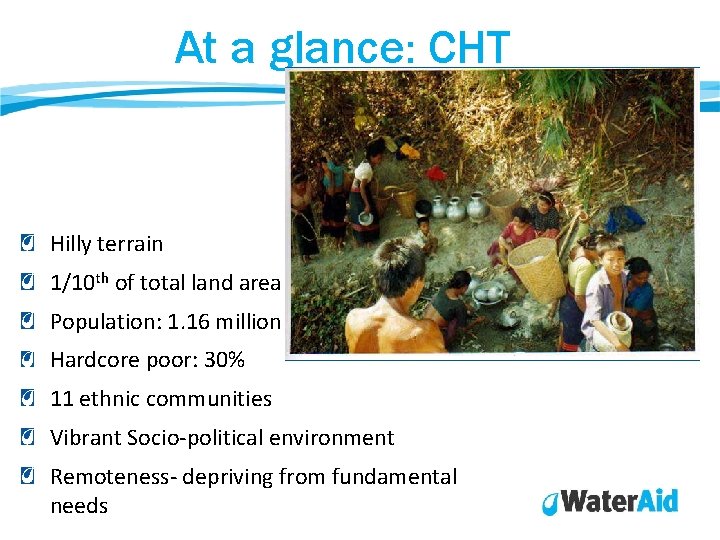
At a glance: CHT Hilly terrain 1/10 th of total land area Population: 1. 16 million Hardcore poor: 30% 11 ethnic communities Vibrant Socio-political environment Remoteness- depriving from fundamental needs
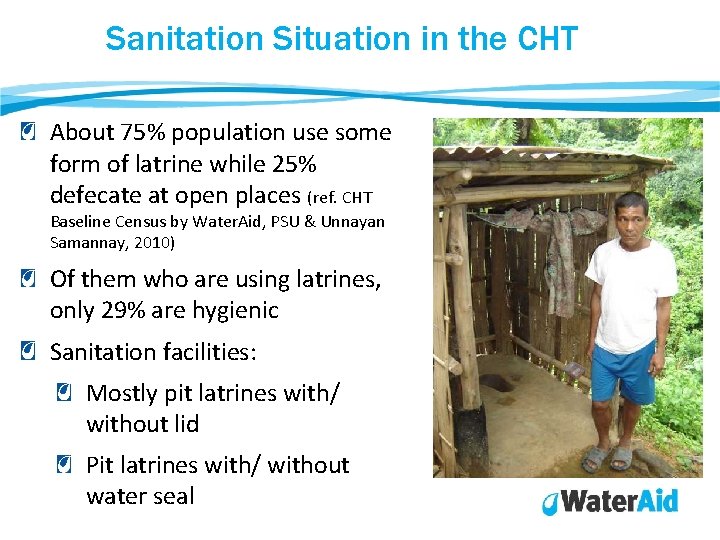
Sanitation Situation in the CHT About 75% population use some form of latrine while 25% defecate at open places (ref. CHT Baseline Census by Water. Aid, PSU & Unnayan Samannay, 2010) Of them who are using latrines, only 29% are hygienic Sanitation facilities: Mostly pit latrines with/ without lid Pit latrines with/ without water seal
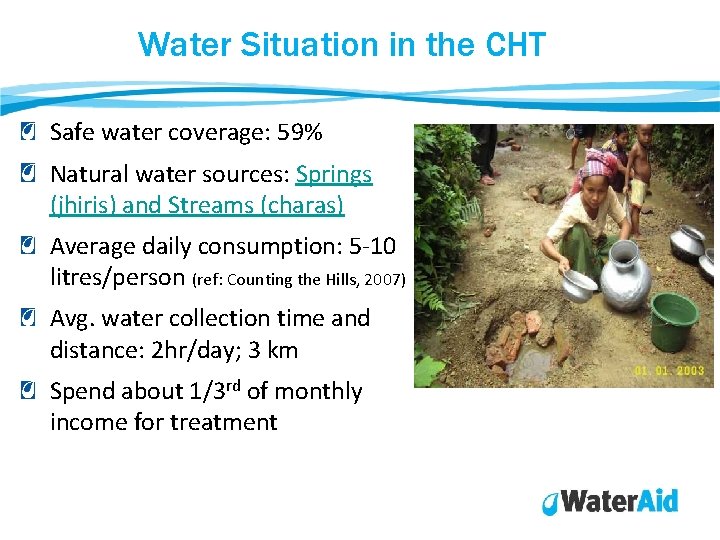
Water Situation in the CHT Safe water coverage: 59% Natural water sources: Springs (jhiris) and Streams (charas) Average daily consumption: 5 -10 litres/person (ref: Counting the Hills, 2007) Avg. water collection time and distance: 2 hr/day; 3 km Spend about 1/3 rd of monthly income for treatment
Water technologies in the CHT
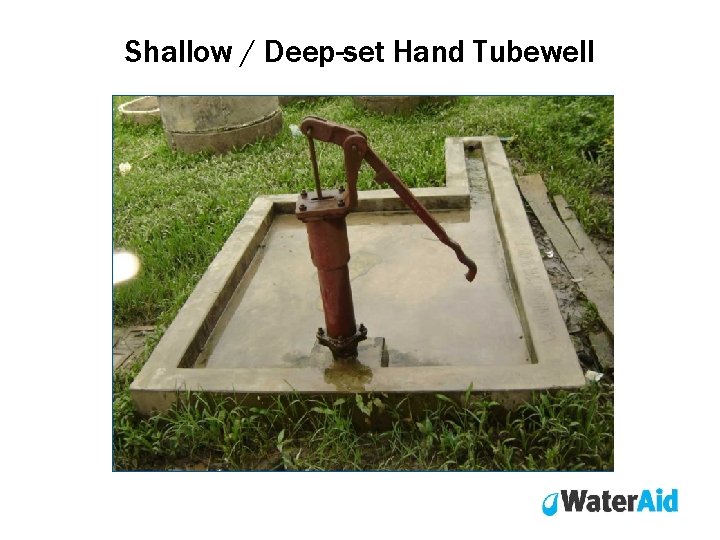
Shallow / Deep-set Hand Tubewell
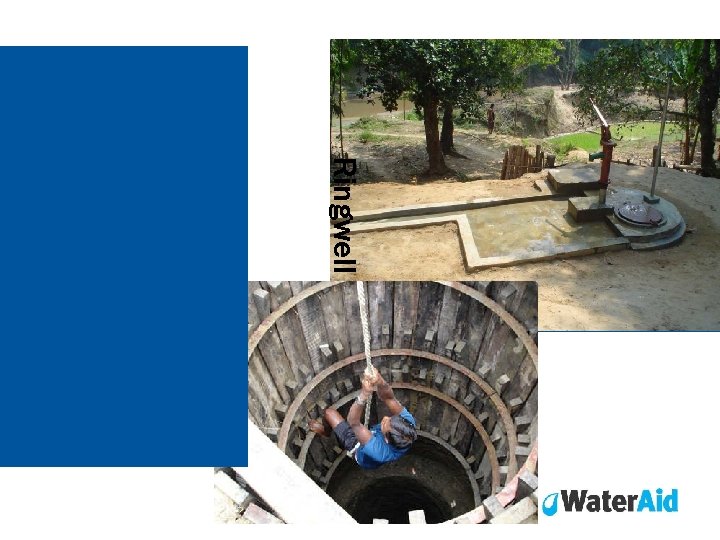
Ringwell
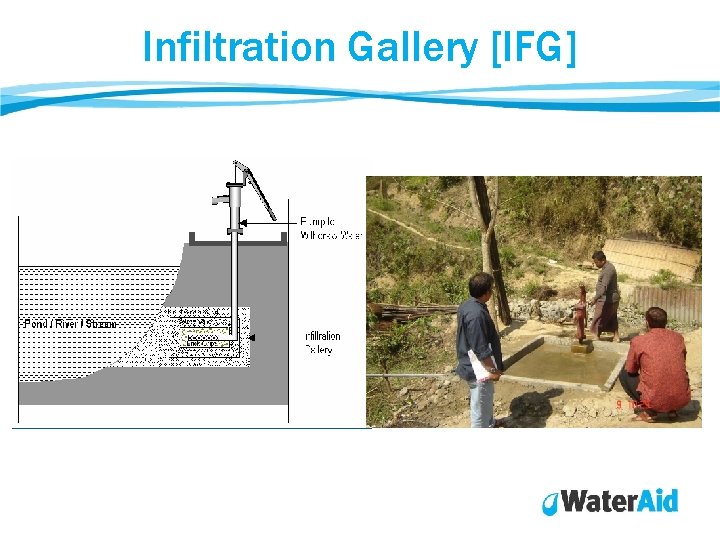
Infiltration Gallery [IFG]
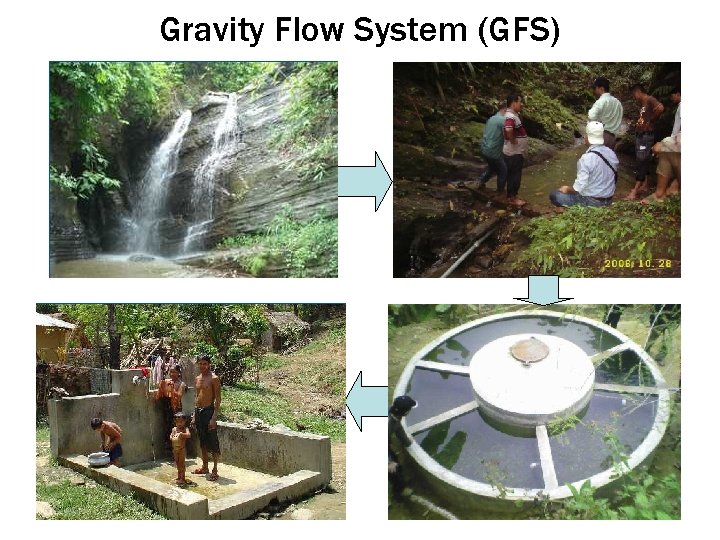
Gravity Flow System (GFS)
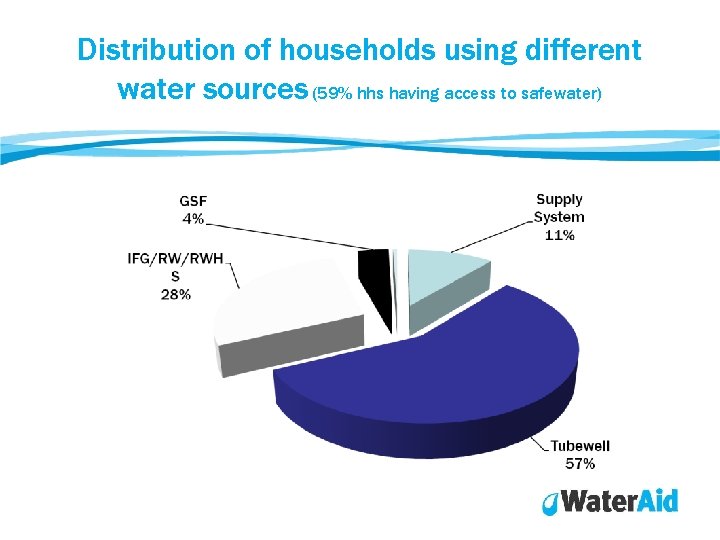
Distribution of households using different water sources (59% hhs having access to safewater)
Challenges in water technologies High investment cost O&M difficulties (requires technical skill and repairing cost) But the most importantly drying up of ‘sources’
Why? Water. Aid commissioned a Study to investigate underlying causes of spring flow deterioration jointly with CEGIS and BCAS in 2007 Image analyses Climatic and hydro-geological data analyses Perceptions of local inhabitants and indigenous knowledge
Few key findings… Analyses of climatic data Decreasing trend in Annual Rainfall (1961 -2003) Increasing trend of Evaporation (1989 -92) Increasing trend of Sunshine hours (1987 -2002)
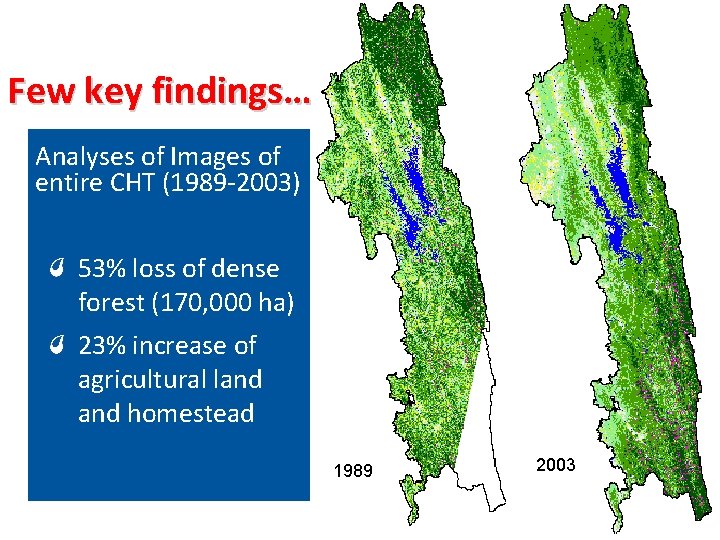
Few key findings… Analyses of Images of entire CHT (1989 -2003) 53% loss of dense forest (170, 000 ha) 23% increase of agricultural land homestead 1989 2003
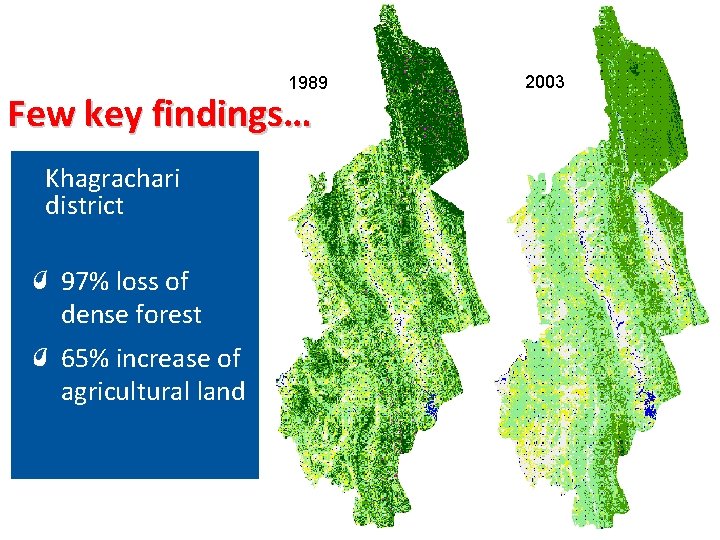
1989 Few key findings… Khagrachari district 97% loss of dense forest 65% increase of agricultural land 2003
Causes of Spring flow deterioration Loss of conducive environment at sources due to deforestation Due to plantation of exogenous species (like Shegoon, rubber, tobacco etc. ) soil becomes exposed and loss of vegetation in the catchment area does not allow to percolate rainwater into the ground to fed the spring during dry season. Landslides are increasing as a consequence. Change in landuse pattern
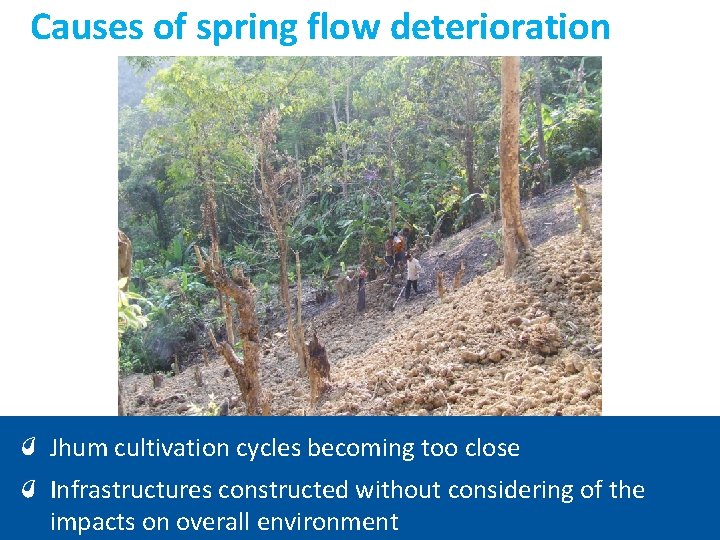
Causes of spring flow deterioration Jhum cultivation cycles becoming too close Infrastructures constructed without considering of the impacts on overall environment
Major recommendations of the study were: Social aforestation Spring management EIA for infrastructure development ‘Aquifer Recharge’ for ensuring drinking water in the long run
Let’s look forward … A holistic planning and adaptation of water resource management is needed by relevant sector actors A separate Sector Development Plan (SDP) for the CHT is underway; integration of compatible strategies is essential The emerging concern –protection natural springs is essential which requires support from beyond WSS sector and political will
THANKS For further details, please contact Water. Aid Bangladesh H 97/B, Rd 25, Block A Banani, Dhaka 1213 Ph: +880. 2. 881. 5757, 881. 8521 Email: info@wateraidbd. org www. wateraid. org/bangladesh