
Water Safety Plan Quality assurance Prepared by Eng
Water Safety Plan Quality assurance Prepared by: Eng. Randa tuffaha Technical Free Lancer Email: randatuffaha@yahoo. com
Contents • Introduction to Water Safety Plan • Water Safety Plan Components • Water Safety Plan Quality Assurance Tool (WSP/QA Tool) • Application of WSP/QA Tool • Benefits of WSP/QA Tool • Structure of the Tool • Scoring • Summary Tables & Graphs • Reporting
Introduction to Water Safety Plan (WSP) Ø Water Safety Plan (WSP) is a holistic, systematic, and integrated management approach used to identify and prioritize potential threats to water quality at each step in a specific system’s water supply chain- from catchment to consumer. Ø WSP is an improved risk management tool. Ø WSP implements remediation actions to mitigate raised threats and ensures the safety of drinking water.
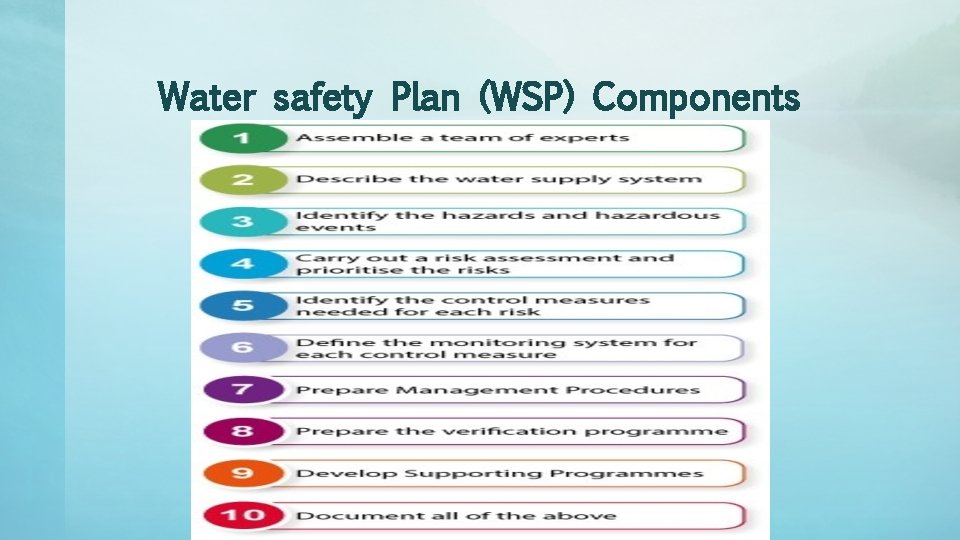
Water safety Plan (WSP) Components
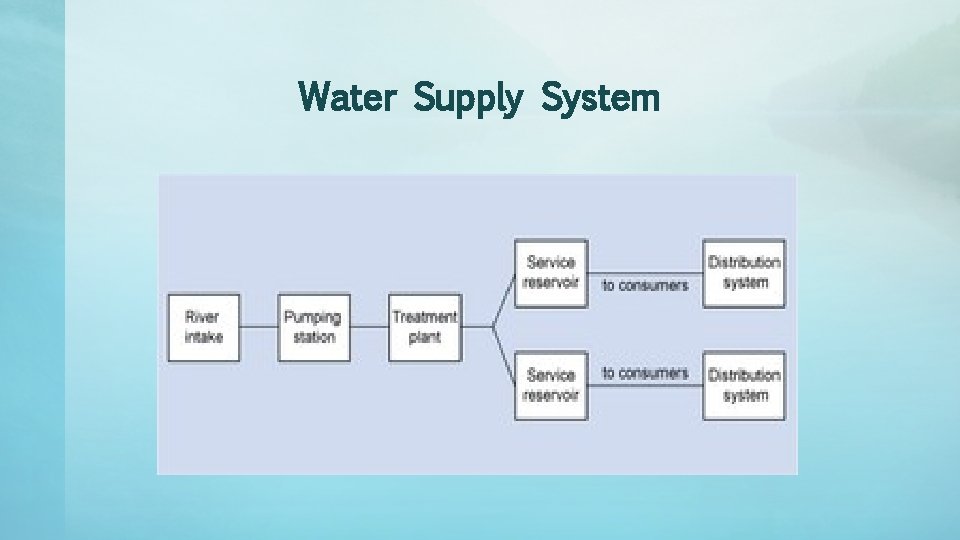
Water Supply System
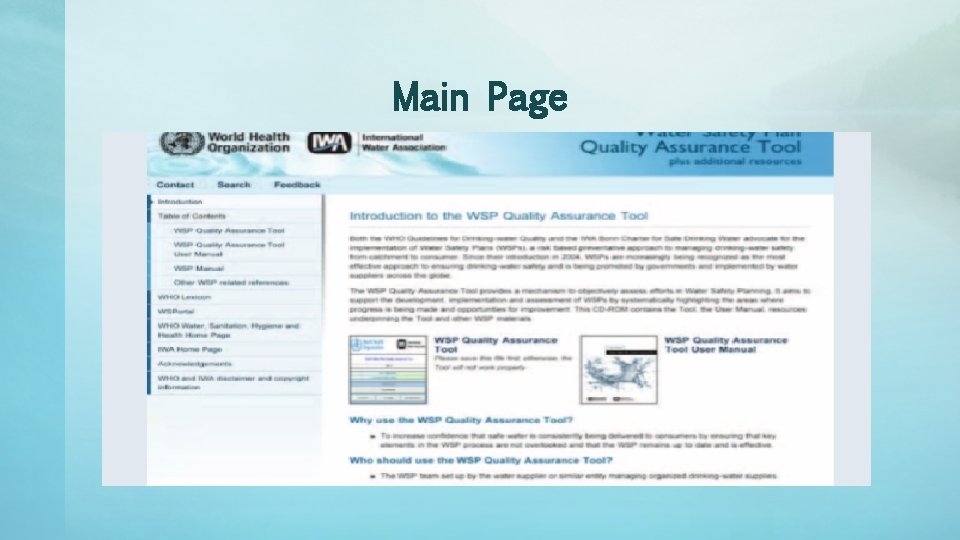
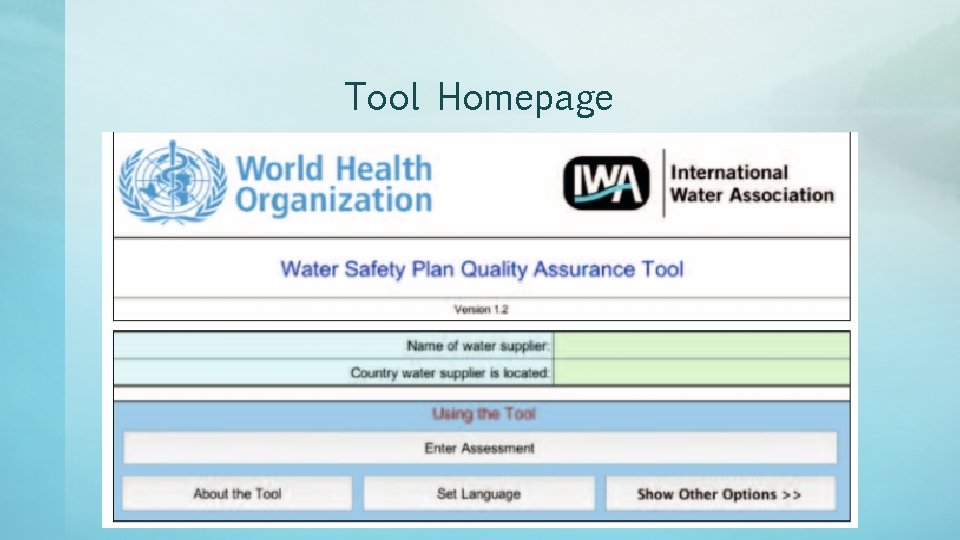
Water Safety Plan Quality Assurance Tool § Water Safety Plan Quality Assurance Tool-World Health Organization (electronic resource): https: \apps. who. int § The WSP QA Tool is a Microsoft® Excel-based Tool. It is compatible with the 2003, 2007 and 2010 versions of Excel. § If the Tool is obtained on the web or from the CD-ROM, it must be saved as an excel file first. § This Tool contains macros which must be enabled in order for the Tool to function correctly § It is published as technical document with reference no: WHO/HSE/WSH/10. 07
Why Use WSP Quality Assurance Tool? To increase consistently by ensuring process are confidence that safe water is being delivered to consumers that key elements in the WSP implemented effectively.
Who Should Use the Tool? • WSP team • external expertise • representatives of other stakeholders or other parties • senior management • Internal assessors
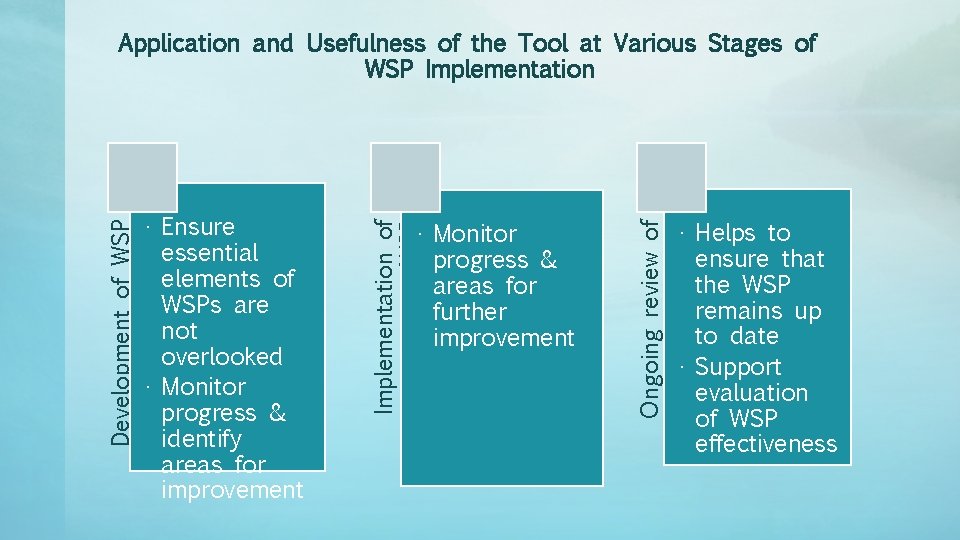
• Monitor progress & areas for further improvement • Helps to ensure that the WSP remains up to date • Support evaluation of WSP effectiveness Ongoing review of WSP • Ensure essential elements of WSPs are not overlooked • Monitor progress & identify areas for improvement Implementation of WSP Development of WSP Application and Usefulness of the Tool at Various Stages of WSP Implementation
Benefits of Water Safety Plan Quality assurance (WSP QA)Tool The major benefits for water suppliers in applying the Tool will be the systematic highlighting of: • Areas where progress is being made. • Opportunities for improvements.
Benefits of WSP QA Tool ØApplication as a guidance tool when initially developing and implementing a WSP. Ø Facilitates the identification of problems due to staff turnover and loss of institutional memory. Ø Helps to monitor progress over time of previously highlighted areas of concern. Ø Helps to justify areas where investment may be required to make improvements. Ø Facilitates reporting, both internally and externally (Tool generates summary reports).
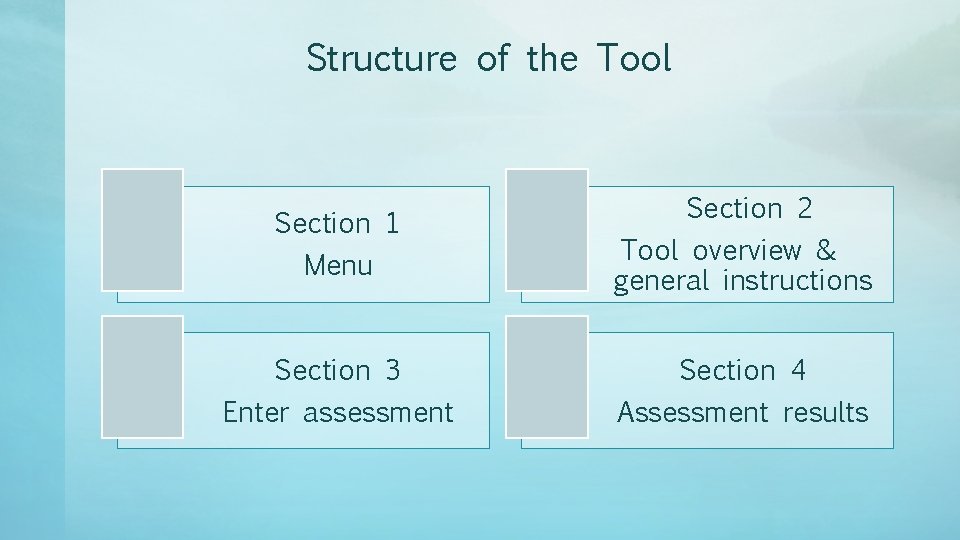
Structure of the Tool Section 1 Menu Section 2 Tool overview & general instructions Section 3 Enter assessment Section 4 Assessment results
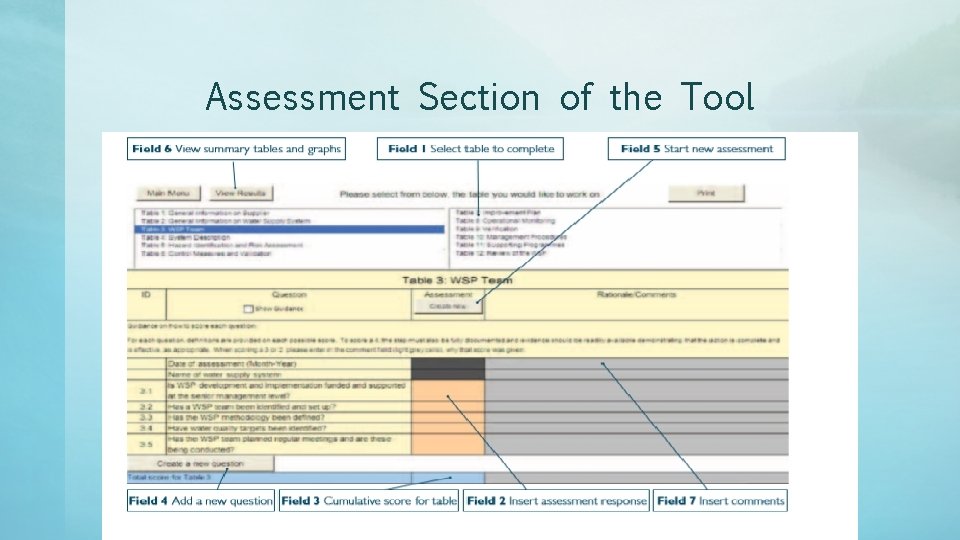
Enter Assessment Section ØThe enter Assessment portion of the Tool has been divided into two sections split into twelve tables. Øeach table includes a series of questions where each question includes some guidance on how to answer it. ØFurther guidance may also be available in the Water Safety Plan Manual: Step-by-step risk management for drinking-water suppliers (‘WSP Manual’) (Bartram et al. , 2009) and other references.
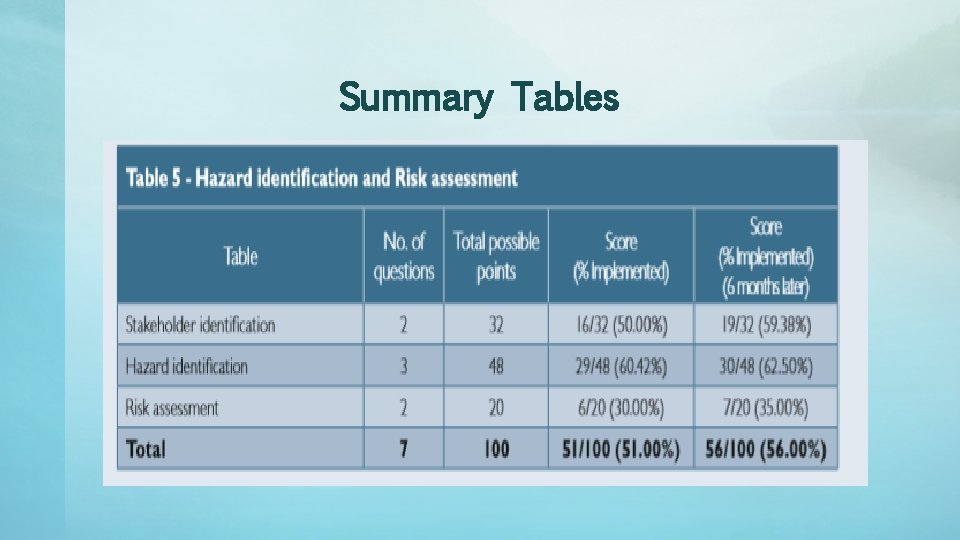
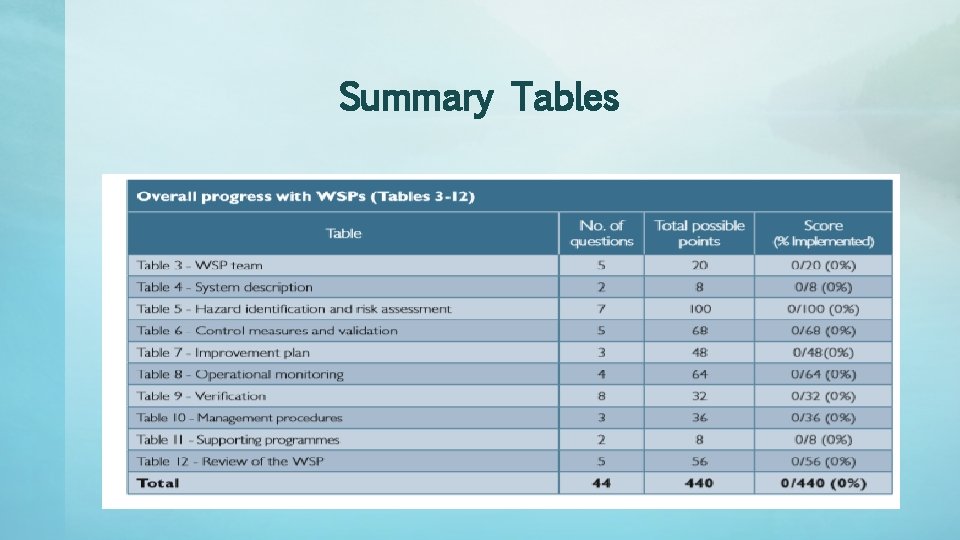
Structure of the Tool • Part 1 consists of two tables: • Table 1 – general information on the Water Supplier • Table 2 – general information on each Water Supply System • Part 2 consists of ten tables related to the WSP approach. , these tables are structured around the steps identified in the WSP Manual • Table 3 – WSP Team • Table 4 – System Description • Table 5 – hazard identifi cation and risk Assessment
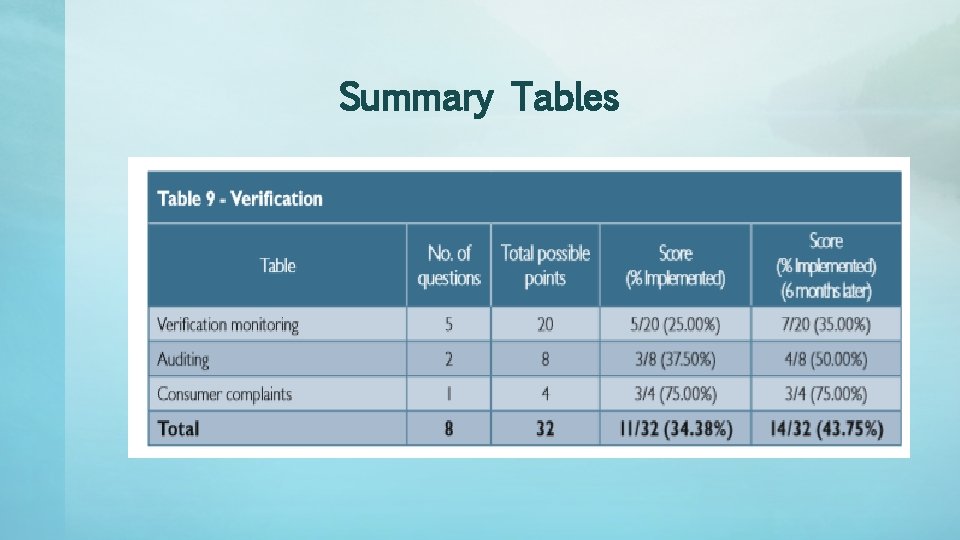
Structure of the Tool • Table 6 – Control Measures and validation (including reassessment and prioritization of risks) • Table 7 – improvement Plan • Table 8 – operational Monitoring • Table 9 – verification • Table 10 – Management Procedures • Table 11 – Supporting Programmes • Table 12 – review of the WSP (including periodic reviews and following incidents)
Main Page
Tool Homepage
Assessment Section of the Tool
Scoring • The questions specific to WSP development and implementation in tables three to twelve do not specify how a water supplier should operate. • Responses to the questions in tables three to twelve are generally in a drop down list format with a zero to four grading scale. • It is important that a water supplier’s responses are an honest and self-critical appraisal of the progress it has made.
Scoring ØA score of zero should be given to steps that have not been started. Ø one point should be given to steps which have just started. ØTwo points should be given to steps that have been partially completed and documented. Ø Three points should be given where the step has been substantially completed and documented. Ø Four points should be given where the step has been fully completed and documented and evidence of this is readily available.
Scoring • As water safety planning is an iterative process, obtaining top scores is not an end in itself and it’s imperative that the WSP is continually reviewed and assessed to ensure that the WSP remains up to date and effective
Summary Tables
Summary Tables
Summary Tables
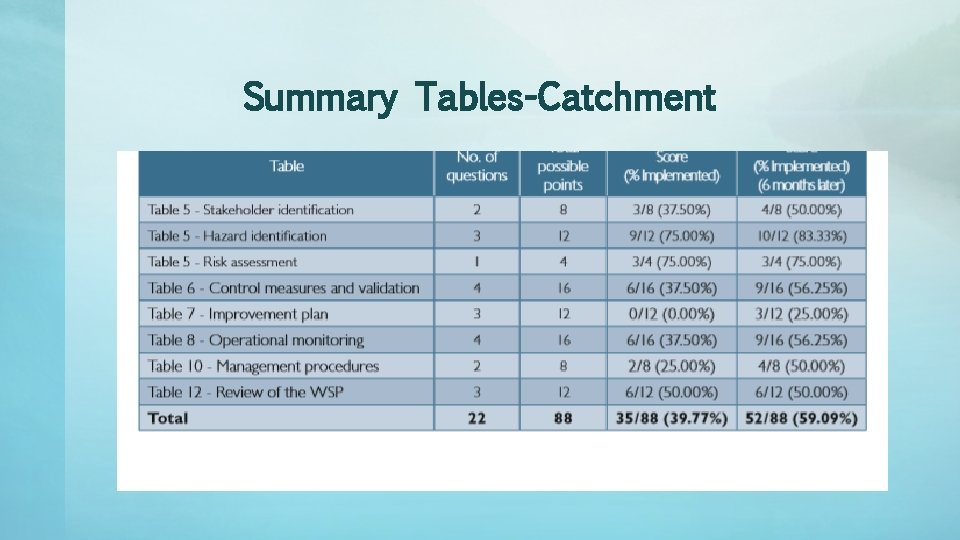
Summary Tables-Catchment
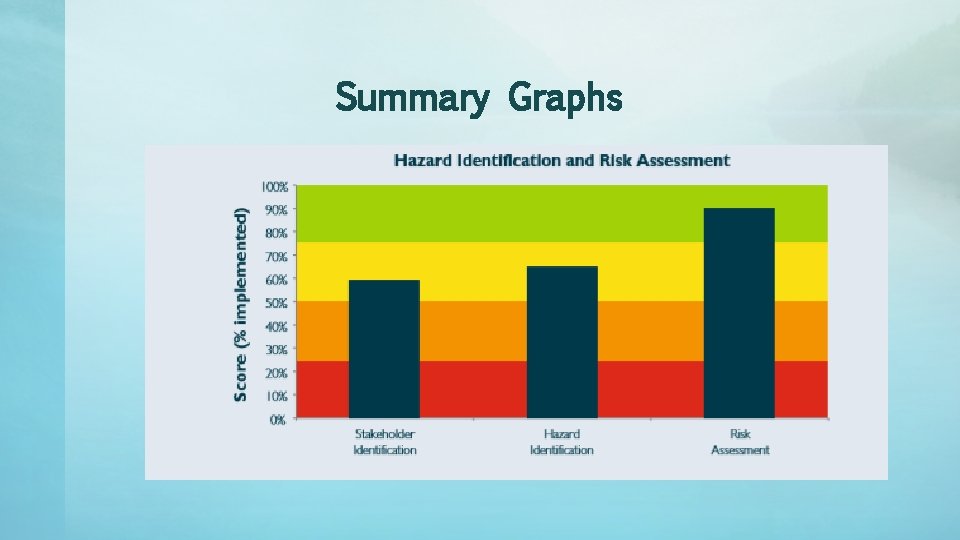
Summary Graphs
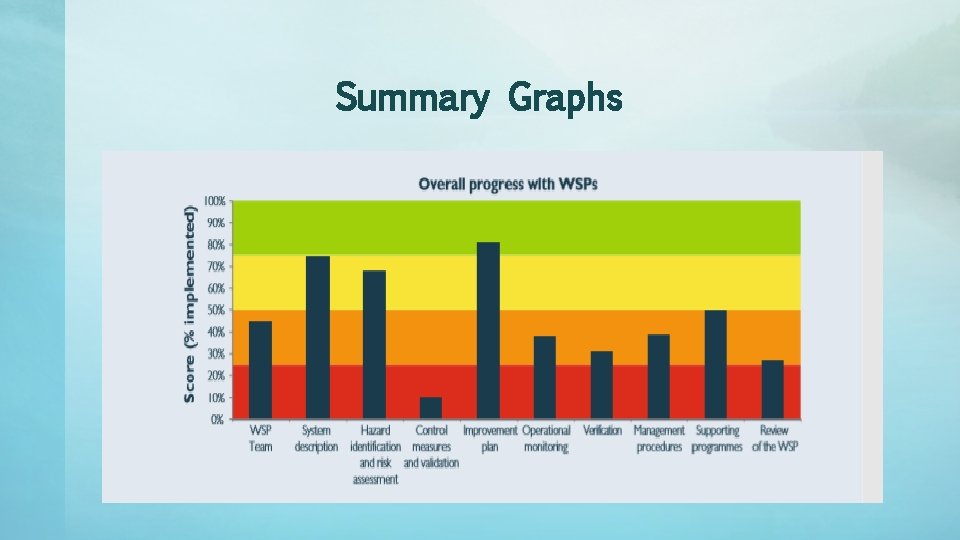
Summary Graphs
Exporting assessment reports ØThe reports can be generated in both Microsoft® Word and Power. Point format. ØThe results can also be exported into a separate excel file. Ø Unlike the reports within the Tool, the data within the exported excel file can be reformatted and therefore, customized to meet individual water supplier needs. ØThe user may also wish to generate the results in Word so that comments can be entered easily below each summary table or graph.

- Slides: 29