
Water Resources Water Cycle Water is constantly moving
- Slides: 14
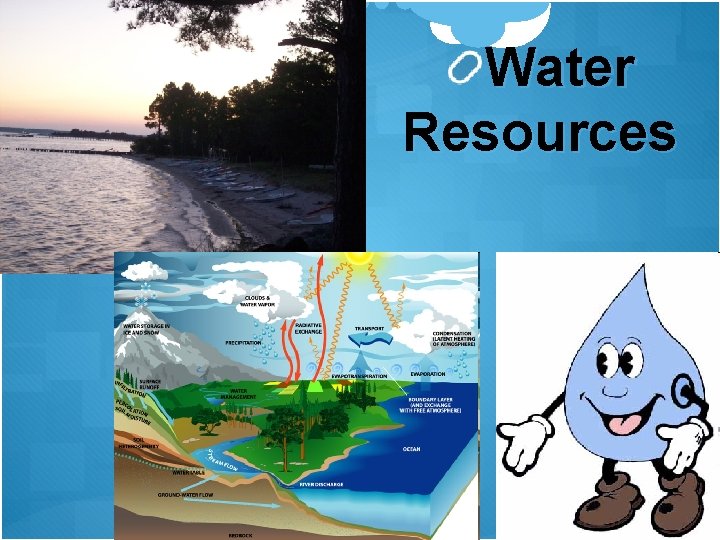
Water Resources
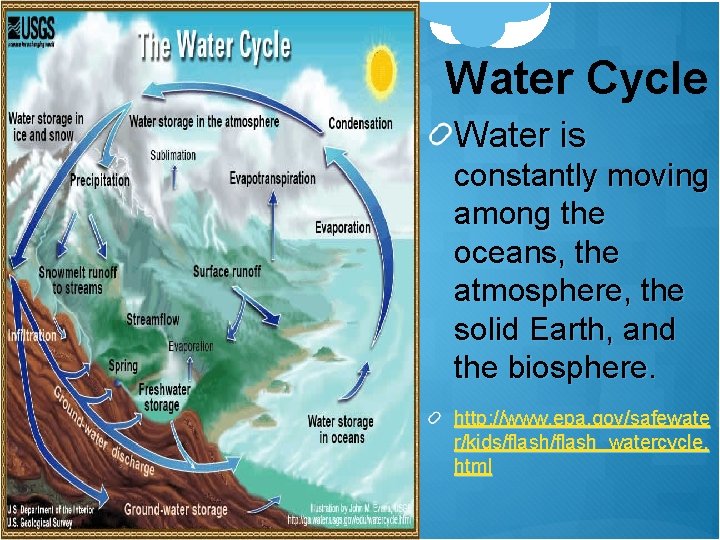
Water Cycle Water is constantly moving among the oceans, the atmosphere, the solid Earth, and the biosphere. http: //www. epa. gov/safewate r/kids/flash_watercycle. html
Parts of the water cycle Evaporation – water changes into vapor into the air Precipitation – liquid or solid water from the clouds Infiltration – water moving through the ground Transpiration – water released from plants Runoff – when flash rain storm hits the ground and is not absorbed.
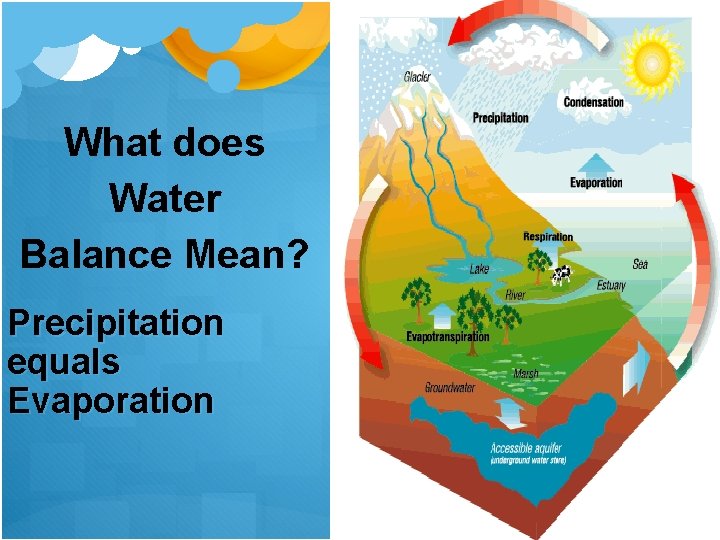
What does Water Balance Mean? Precipitation equals Evaporation
Water Facts of Life There is the same amount of water on Earth as there was when the Earth was formed. The water from your faucet could contain molecules that dinosaurs drank. 75% of the human brain is water and 75% of a living tree is water. A person can live about a month without food, but only about a week without water. The average total home water use for each person in the U. S. is about 50 gallons a day. Water expands by 9% when it freezes. Frozen water (ice) is lighter than water, which is why ice floats in water.
y l p p u S r e t a W d l r o W e h in t
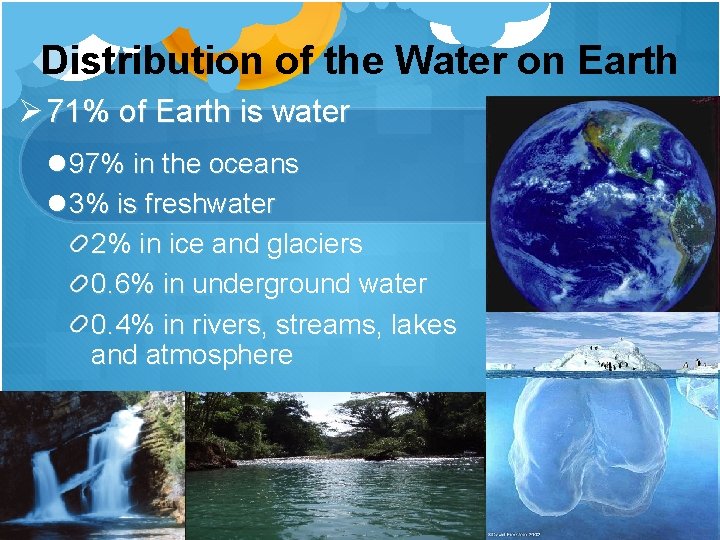
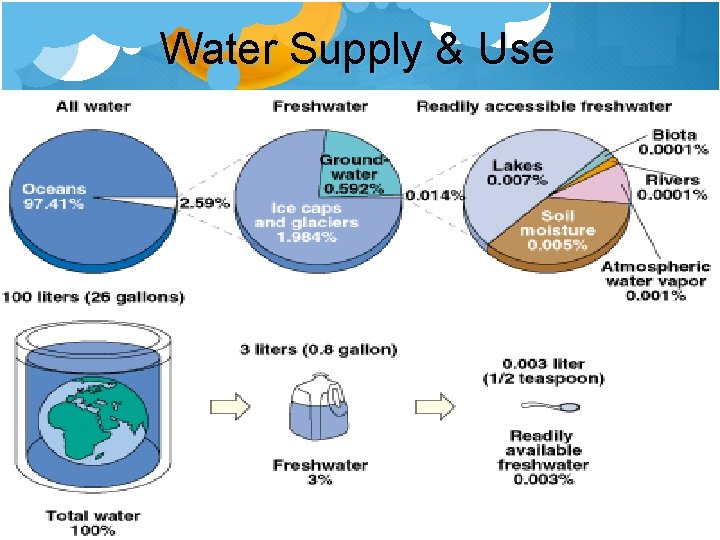
Distribution of the Water on Earth Ø 71% of Earth is water l 97% in the oceans l 3% is freshwater 2% in ice and glaciers 0. 6% in underground water 0. 4% in rivers, streams, lakes and atmosphere
Water Supply & Use http: //ga. water. usgs. gov/edu/waterdistr
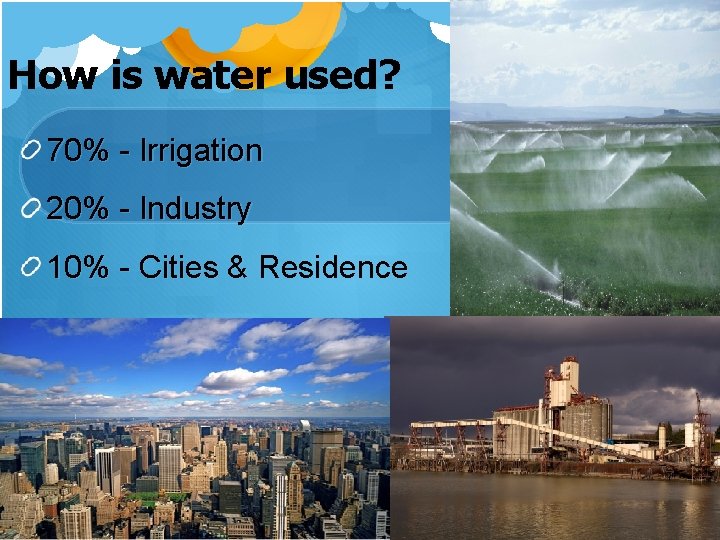
How is water used? 70% - Irrigation 20% - Industry 10% - Cities & Residence
s n a e Oc s t n e r r cu
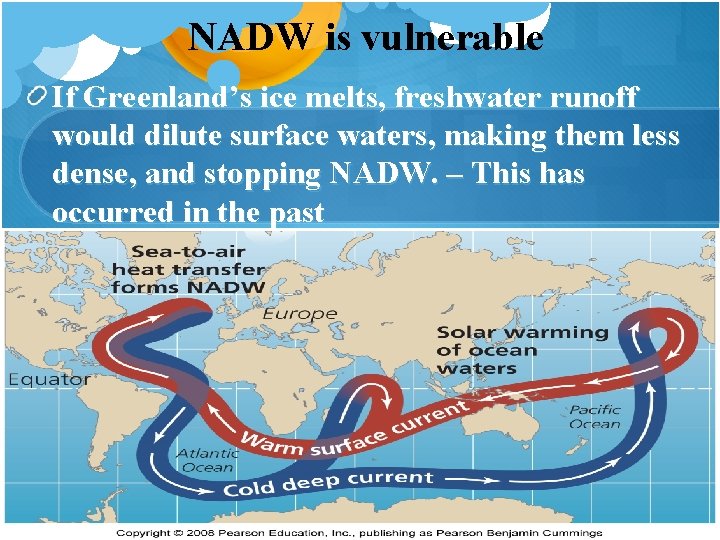
Ocean circulation also influences climate Ocean circulation: ocean water exchanges heat in the water with the atmosphere Thermohaline circulation: a worldwide current system in the ocean. Warmer, fresher water moves along the surface and carries heat to Europe North American Deep Water (NADW): the deep portion of thermohaline circulation denser, saltier, cool water that sinks moves deep beneath the surface
NADW is vulnerable If Greenland’s ice melts, freshwater runoff would dilute surface waters, making them less dense, and stopping NADW. – This has occurred in the past
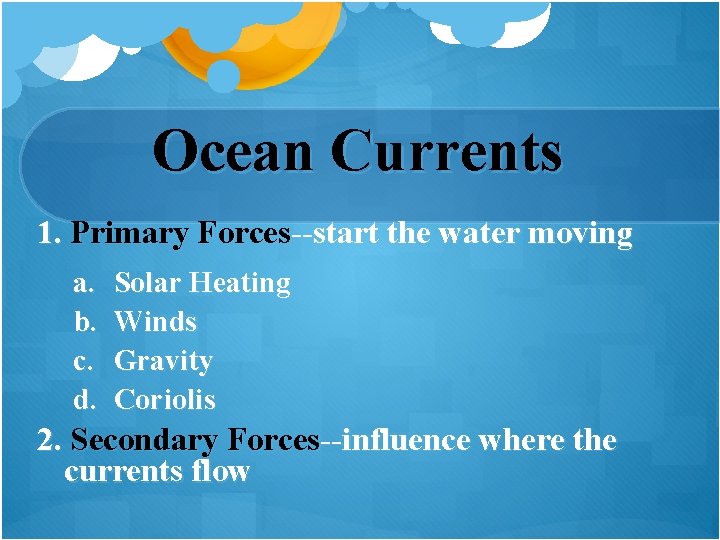
Ocean Currents 1. Primary Forces--start the water moving a. b. c. d. Solar Heating Winds Gravity Coriolis 2. Secondary Forces--influence where the currents flow
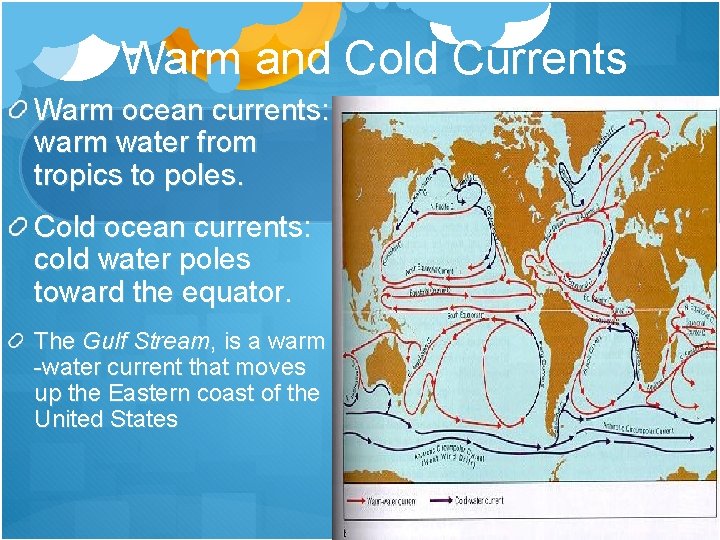
Warm and Cold Currents Warm ocean currents: warm water from tropics to poles. Cold ocean currents: cold water poles toward the equator. The Gulf Stream, is a warm -water current that moves up the Eastern coast of the United States