
Water Requirements and Fluid Balance Chapter 8 Major
Water Requirements and Fluid Balance Chapter 8
Major Functions of Water • Provides essential building material for cell protoplasm • Protects key body tissues (spinal cord, brain) • Maintains normal osmotic pressures • Main constituent of blood • Regulation of body temperature • Important in hearing, vision, taste
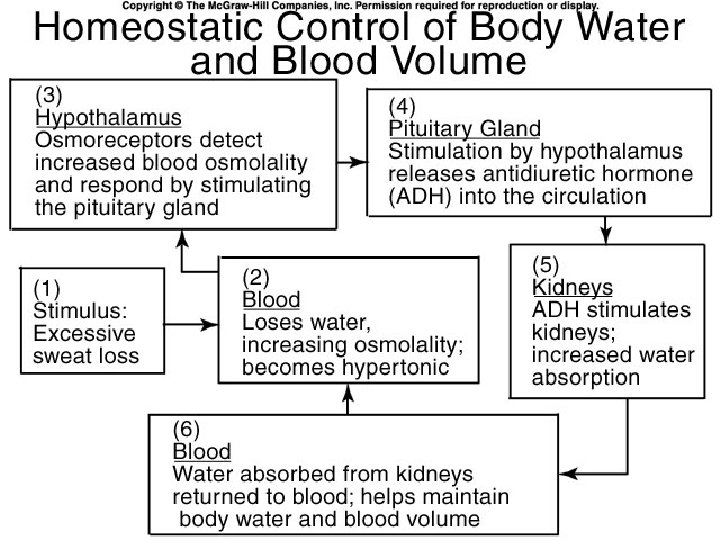
Definitions • Euhydration – normal body water content • Hypohydration – body water deficit • Dehydration – the dynamic loss of body water or the transition from euhydration to hypohydration
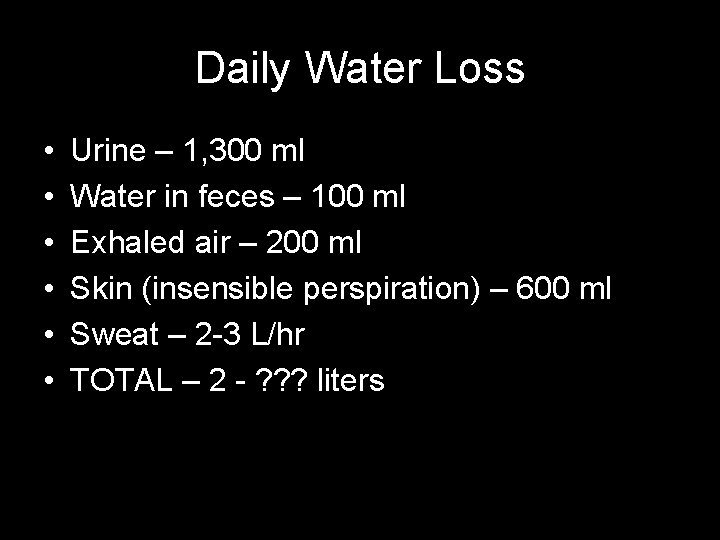
Daily Water Loss • • • Urine – 1, 300 ml Water in feces – 100 ml Exhaled air – 200 ml Skin (insensible perspiration) – 600 ml Sweat – 2 -3 L/hr TOTAL – 2 - ? ? ? liters
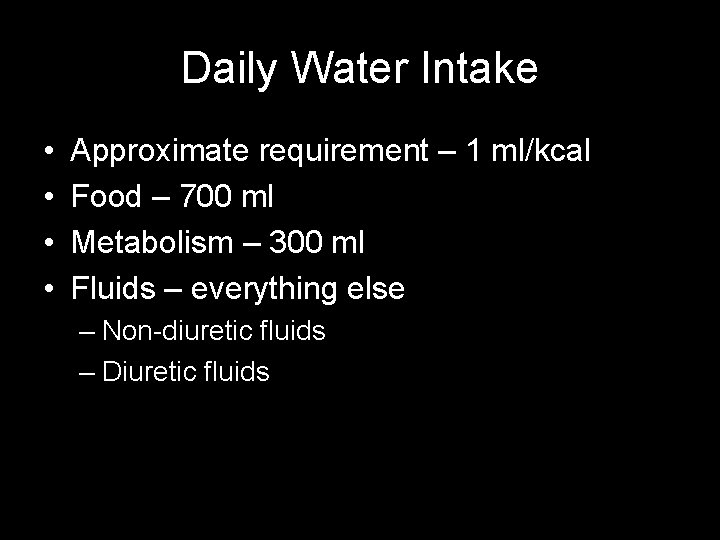
Daily Water Intake • • Approximate requirement – 1 ml/kcal Food – 700 ml Metabolism – 300 ml Fluids – everything else – Non-diuretic fluids – Diuretic fluids
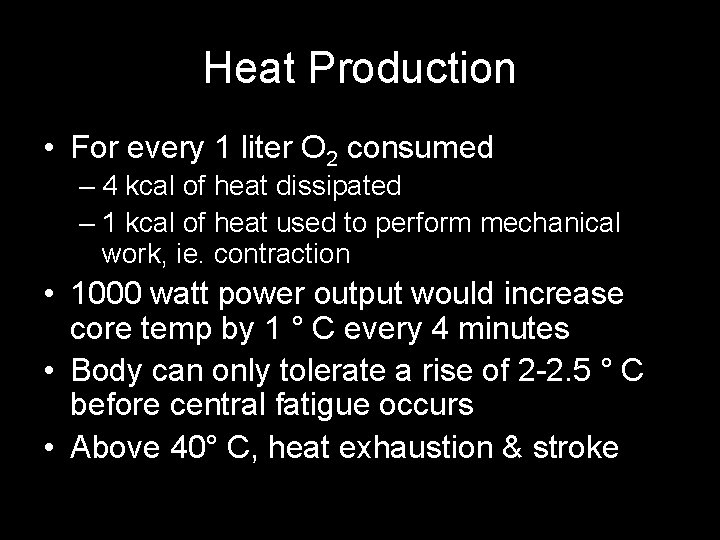
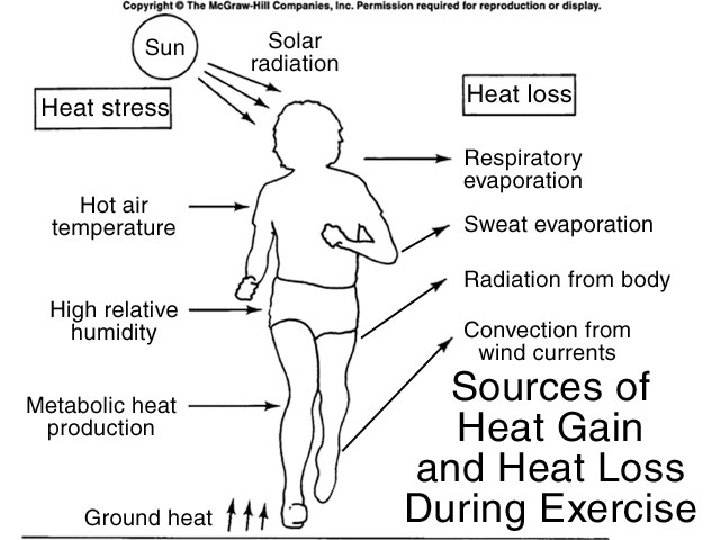
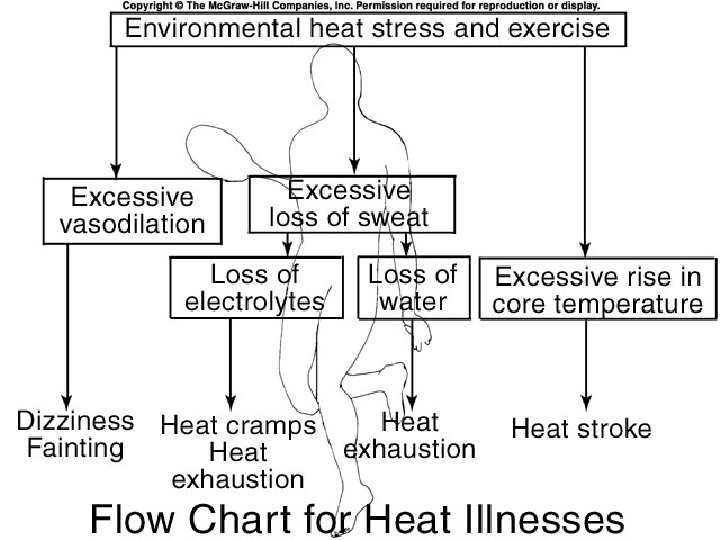
Heat Production • For every 1 liter O 2 consumed – 4 kcal of heat dissipated – 1 kcal of heat used to perform mechanical work, ie. contraction • 1000 watt power output would increase core temp by 1 ° C every 4 minutes • Body can only tolerate a rise of 2 -2. 5 ° C before central fatigue occurs • Above 40° C, heat exhaustion & stroke
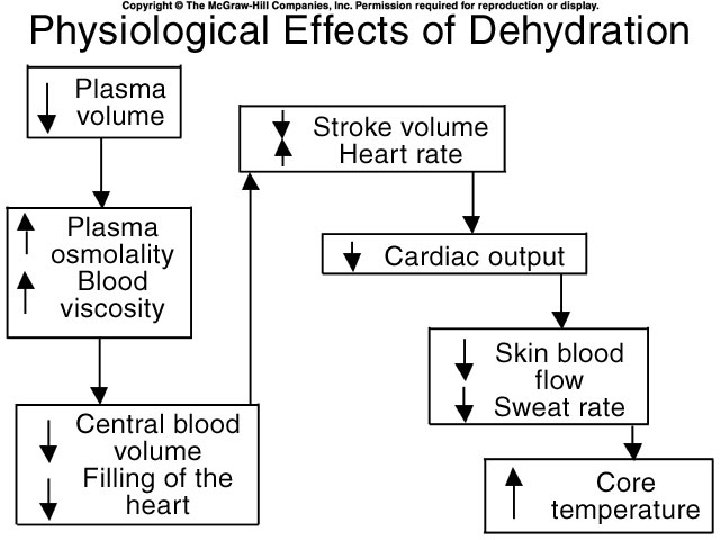
Why Dehydration Impairs Performance • • • Reduced blood volume Decreased skin blood flow Decreased sweat rate Decreased heat dissipation Increased core temp Increase in muscle glycogen use
Effects of Dehydration on Performance • At 2% of body weight loss, aerobic performance declines 5 -10%. • At 5% of body weight loss, aerobic performance can decline up to 30%. • At 2. 5% of body weight loss, high intensity effort lasting several minutes can be impaired by 45%.
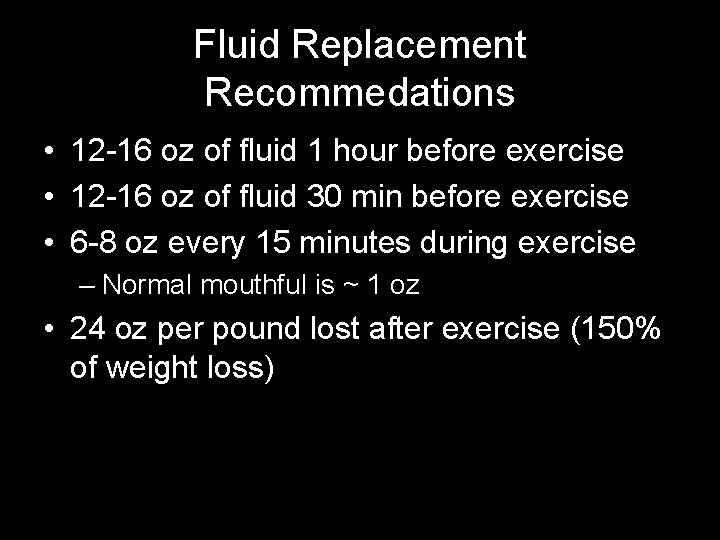
Fluid Replacement Recommedations • 12 -16 oz of fluid 1 hour before exercise • 12 -16 oz of fluid 30 min before exercise • 6 -8 oz every 15 minutes during exercise – Normal mouthful is ~ 1 oz • 24 oz per pound lost after exercise (150% of weight loss)
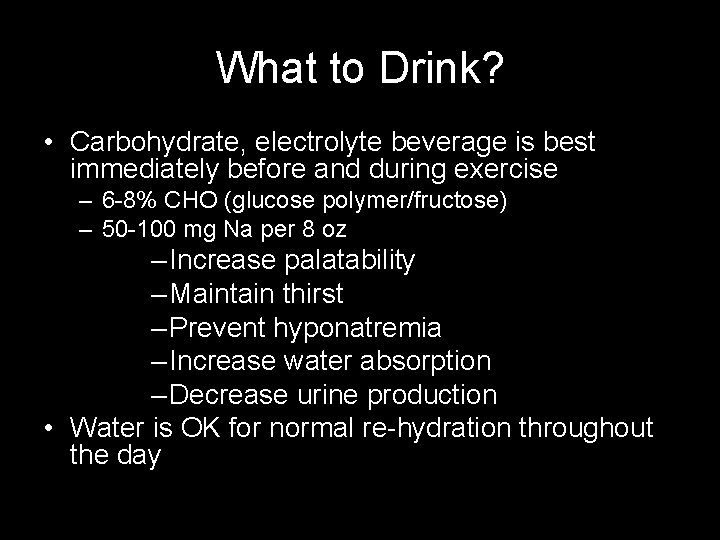
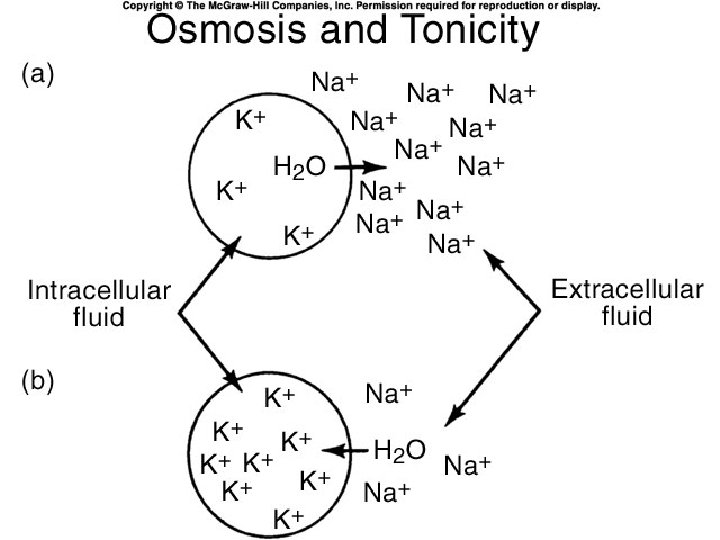
What to Drink? • Carbohydrate, electrolyte beverage is best immediately before and during exercise – 6 -8% CHO (glucose polymer/fructose) – 50 -100 mg Na per 8 oz – Increase palatability – Maintain thirst – Prevent hyponatremia – Increase water absorption – Decrease urine production • Water is OK for normal re-hydration throughout the day
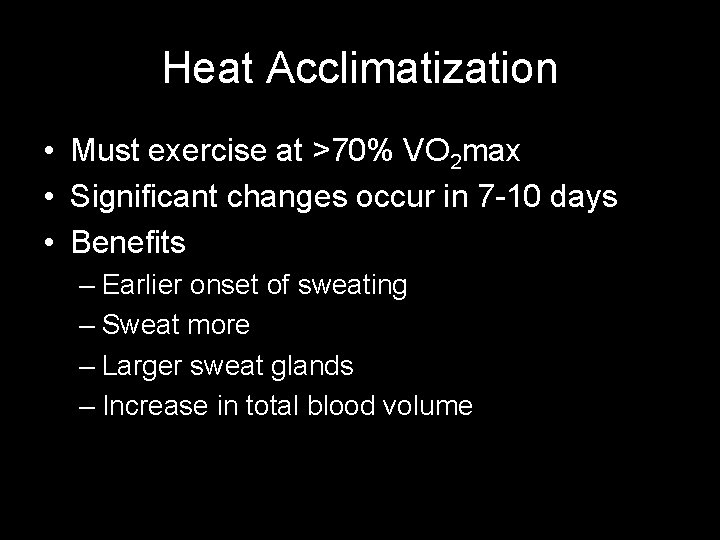
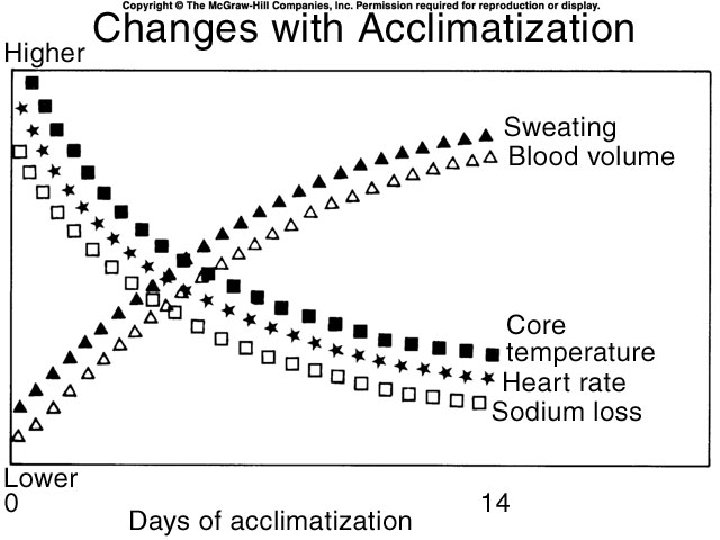
Heat Acclimatization • Must exercise at >70% VO 2 max • Significant changes occur in 7 -10 days • Benefits – Earlier onset of sweating – Sweat more – Larger sweat glands – Increase in total blood volume
- Slides: 18