
Water quality definition Canals and canalized rivers Reference
- Slides: 13
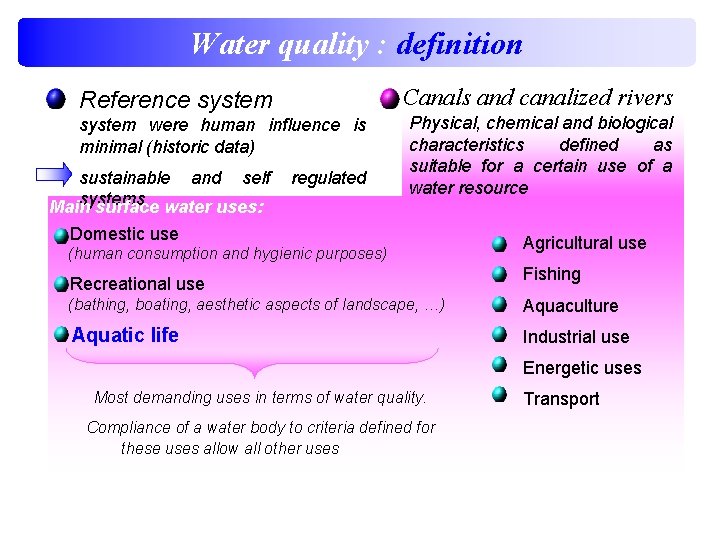
Water quality : definition Canals and canalized rivers Reference system were human influence is minimal (historic data) sustainable and self systems Main surface water uses: regulated Physical, chemical and biological characteristics defined as suitable for a certain use of a water resource Domestic use (human consumption and hygienic purposes) Recreational use Agricultural use Fishing (bathing, boating, aesthetic aspects of landscape, …) Aquaculture Aquatic life Industrial use Energetic uses Most demanding uses in terms of water quality. Compliance of a water body to criteria defined for these uses allow all other uses Transport
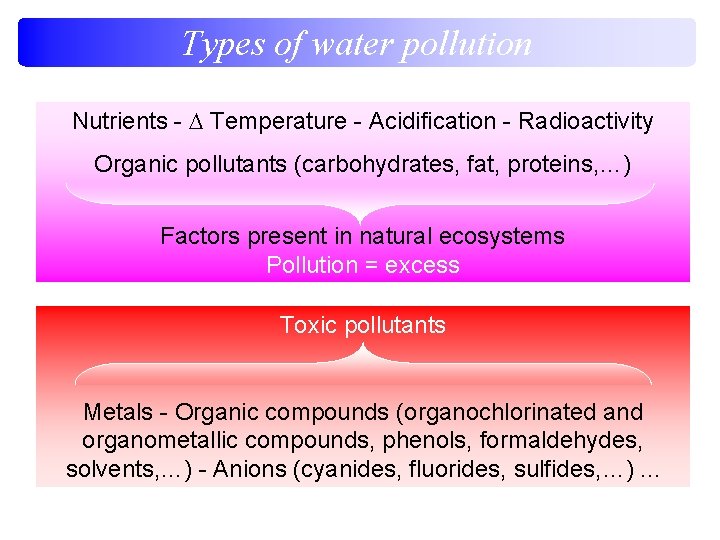
Types of water pollution Nutrients - Temperature - Acidification - Radioactivity Organic pollutants (carbohydrates, fat, proteins, …) Factors present in natural ecosystems Pollution = excess Toxic pollutants Metals - Organic compounds (organochlorinated and organometallic compounds, phenols, formaldehydes, solvents, …) - Anions (cyanides, fluorides, sulfides, …). . .
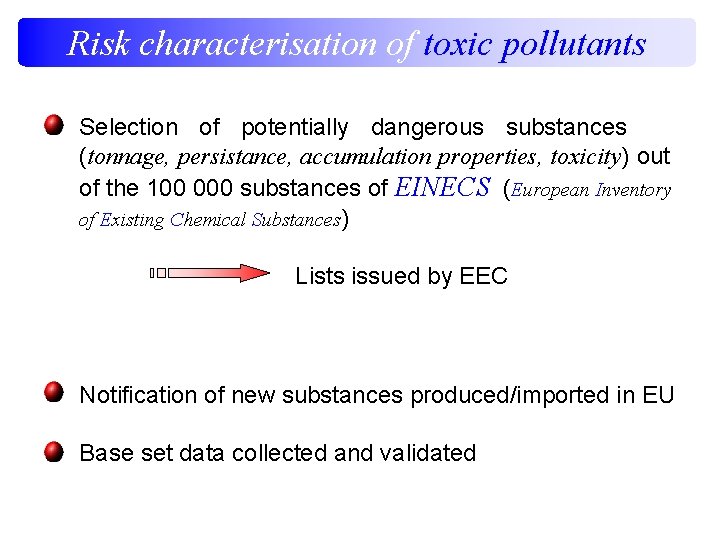
Risk characterisation of toxic pollutants Selection of potentially dangerous substances (tonnage, persistance, accumulation properties, toxicity) out of the 100 000 substances of EINECS (European Inventory of Existing Chemical Substances) Lists issued by EEC Notification of new substances produced/imported in EU Base set data collected and validated
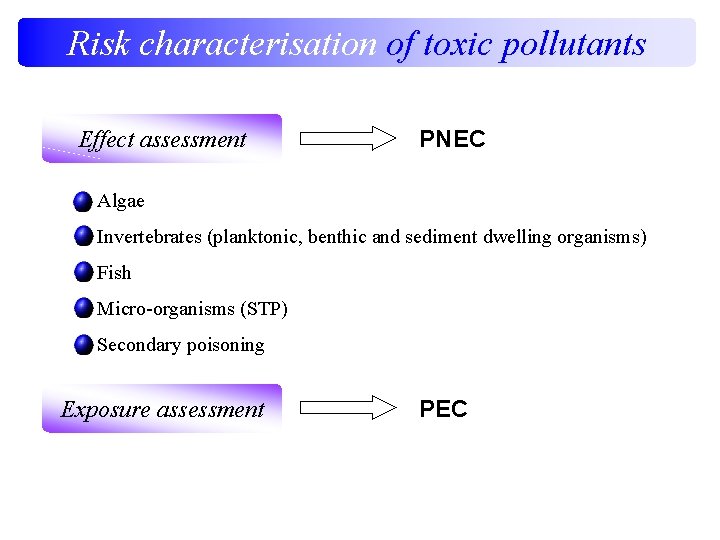
Risk characterisation of toxic pollutants Effect assessment PNEC Algae Invertebrates (planktonic, benthic and sediment dwelling organisms) Fish Micro-organisms (STP) Secondary poisoning Exposure assessment PEC
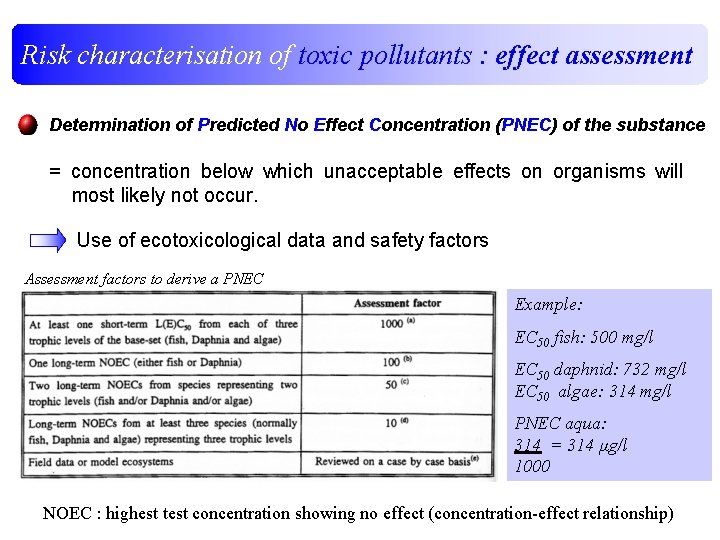
Risk characterisation of toxic pollutants : effect assessment Determination of Predicted No Effect Concentration (PNEC) of the substance = concentration below which unacceptable effects on organisms will most likely occur. most likely notnot occur. Use of ecotoxicological data and safety factors Assessment factors to derive a PNEC Example: EC 50 fish: 500 mg/l EC 50 daphnid: 732 mg/l EC 50 algae: 314 mg/l PNEC aqua: 314 = 314 µg/l 1000 NOEC : highest test concentration showing no effect (concentration-effect relationship)
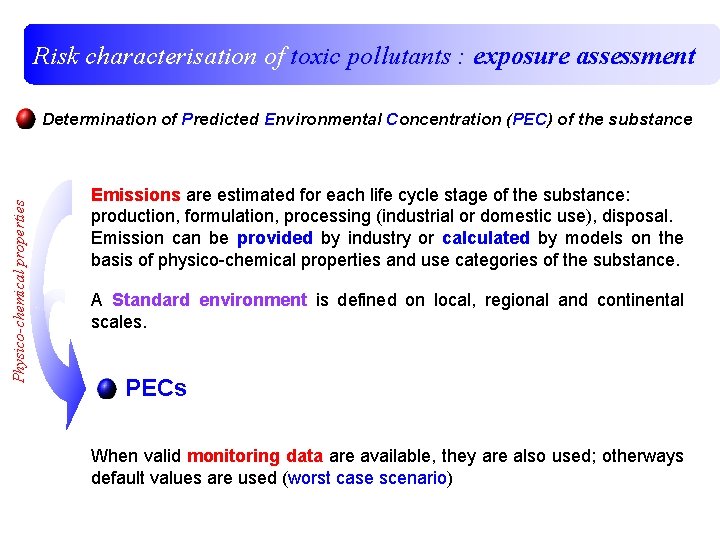
Risk characterisation of toxic pollutants : exposure assessment Physico-chemical properties Determination of Predicted Environmental Concentration (PEC) of the substance Emissions are estimated for each life cycle stage of the substance: production, formulation, processing (industrial or domestic use), disposal. Emission can be provided by industry or calculated by models on the basis of physico-chemical properties and use categories of the substance. A Standard environment is defined on local, regional and continental scales. PECs When valid monitoring data are available, they are also used; otherways default values are used (worst case scenario)
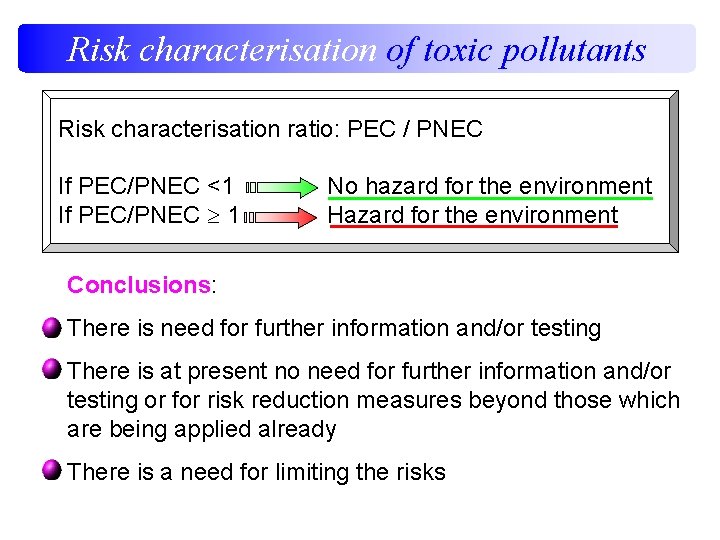
Risk characterisation of toxic pollutants Risk characterisation ratio: PEC / PNEC If PEC/PNEC <1 If PEC/PNEC 1 No hazard for the environment Hazard for the environment Conclusions: There is need for further information and/or testing There is at present no need for further information and/or testing or for risk reduction measures beyond those which are being applied already There is a need for limiting the risks
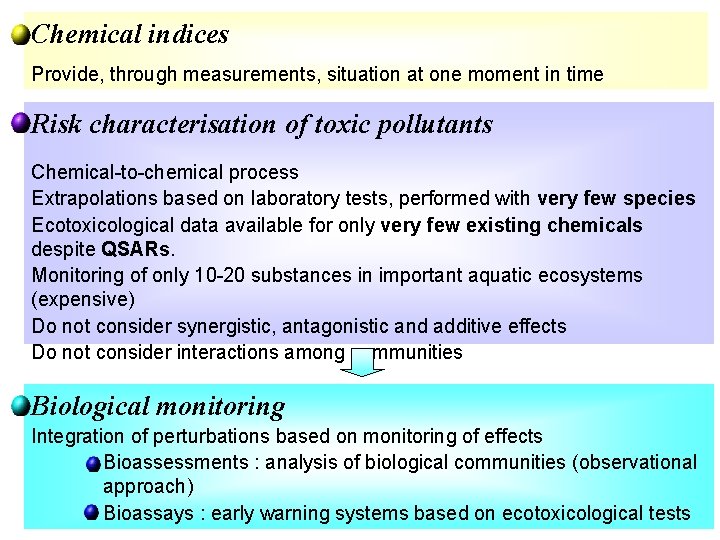
Chemical indices Provide, through measurements, situation at one moment in time Risk characterisation of toxic pollutants Chemical-to-chemical process Extrapolations based on laboratory tests, performed with very few species Ecotoxicological data available for only very few existing chemicals despite QSARs. Monitoring of only 10 -20 substances in important aquatic ecosystems (expensive) Do not consider synergistic, antagonistic and additive effects Do not consider interactions among communities Biological monitoring Integration of perturbations based on monitoring of effects Bioassessments : analysis of biological communities (observational approach) Bioassays : early warning systems based on ecotoxicological tests
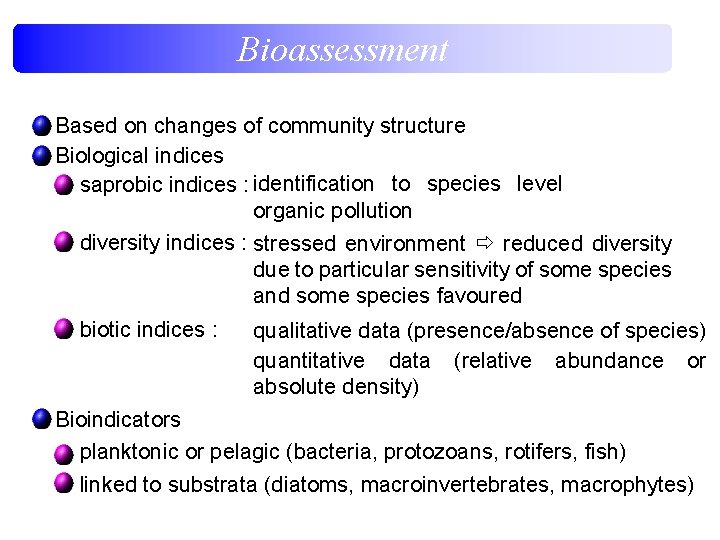
Bioassessment Based on changes of community structure Biological indices saprobic indices : identification to species level organic pollution diversity indices : stressed environment reduced diversity due to particular sensitivity of some species and some species favoured biotic indices : qualitative data (presence/absence of species) quantitative data (relative abundance or absolute density) Bioindicators planktonic or pelagic (bacteria, protozoans, rotifers, fish) linked to substrata (diatoms, macroinvertebrates, macrophytes)
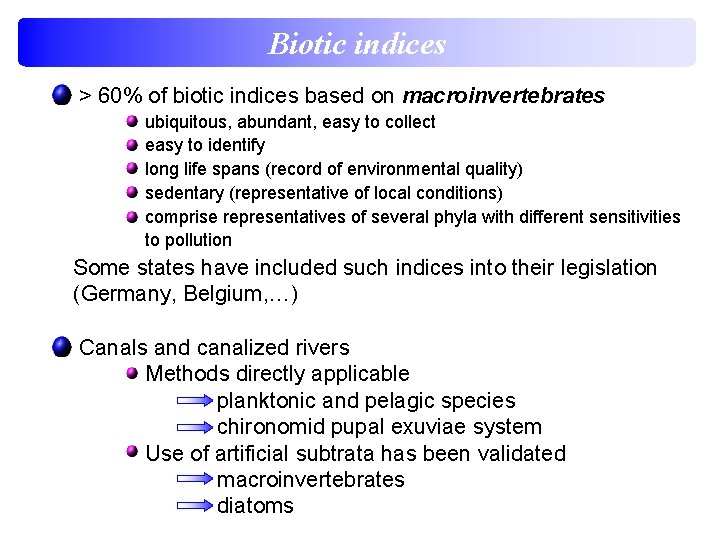
Biotic indices > 60% of biotic indices based on macroinvertebrates ubiquitous, abundant, easy to collect easy to identify long life spans (record of environmental quality) sedentary (representative of local conditions) comprise representatives of several phyla with different sensitivities to pollution Some states have included such indices into their legislation (Germany, Belgium, …) Canals and canalized rivers Methods directly applicable planktonic and pelagic species chironomid pupal exuviae system Use of artificial subtrata has been validated macroinvertebrates diatoms
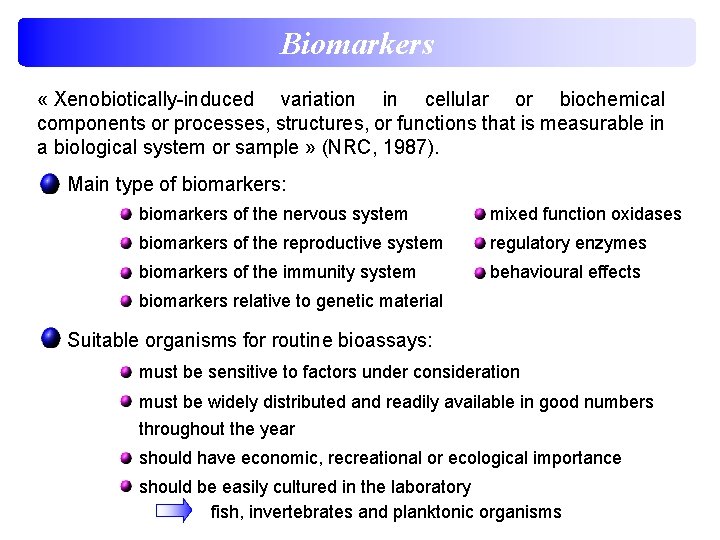
Biomarkers « Xenobiotically-induced variation in cellular or biochemical components or processes, structures, or functions that is measurable in a biological system or sample » (NRC, 1987). Main type of biomarkers: biomarkers of the nervous system mixed function oxidases biomarkers of the reproductive system regulatory enzymes biomarkers of the immunity system behavioural effects biomarkers relative to genetic material Suitable organisms for routine bioassays: must be sensitive to factors under consideration must be widely distributed and readily available in good numbers throughout the year should have economic, recreational or ecological importance should be easily cultured in the laboratory fish, invertebrates and planktonic organisms
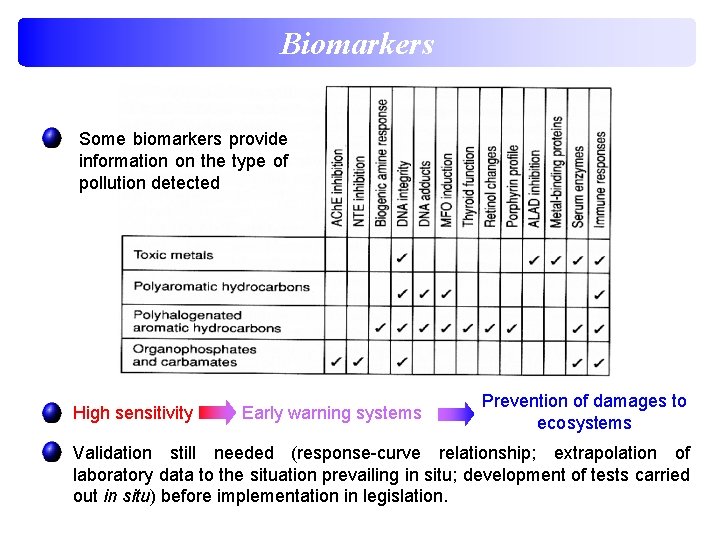
Biomarkers Some biomarkers provide information on the type of pollution detected High sensitivity Early warning systems Prevention of damages to ecosystems Validation still needed (response-curve relationship; extrapolation of laboratory data to the situation prevailing in situ; development of tests carried out in situ) before implementation in legislation.
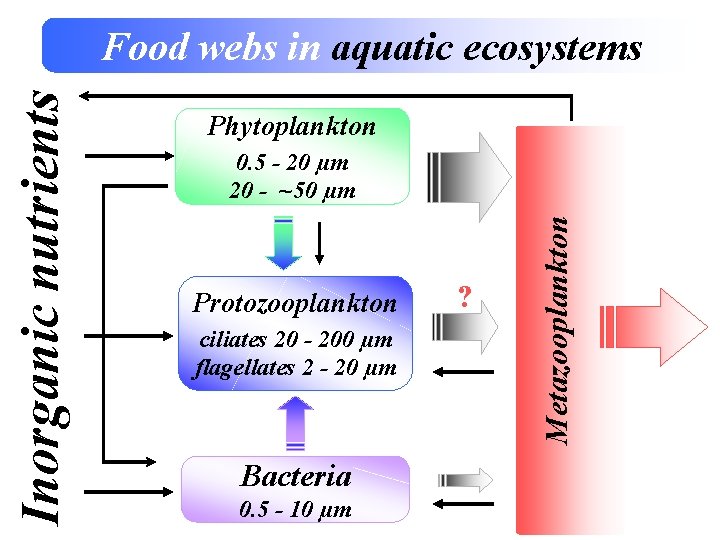
Phytoplankton 0. 5 - 20 µm 20 - ~50 µm Protozooplankton ciliates 20 - 200 µm flagellates 2 - 20 µm Bacteria 0. 5 - 10 µm ? Metazooplankton Inorganic nutrients Food webs in aquatic ecosystems