
WATER Properties of Water Universal Solvent Water is


- Slides: 38
WATER
Properties of Water Universal Solvent Water is the solvent of Life! Solute – substance dissolved in a solvent to form a solution Solvent – fluid that dissolves solutes Example: Ice Tea – water is the solvent and tea and sugar the solutes
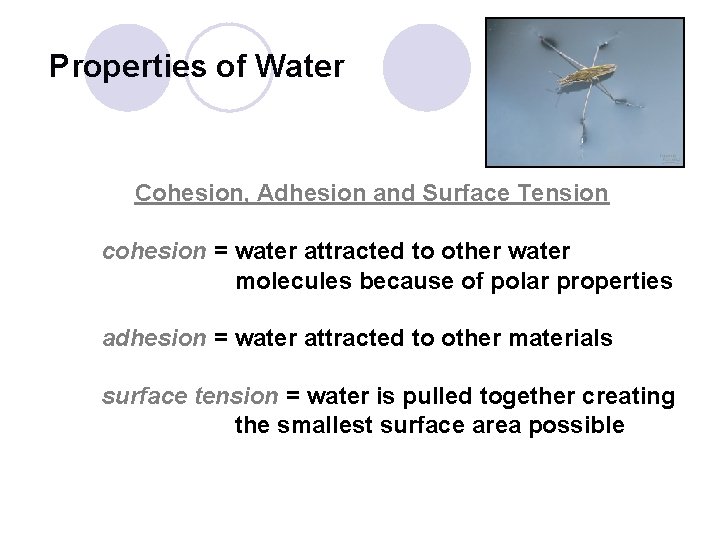
Properties of Water Cohesion, Adhesion and Surface Tension cohesion = water attracted to other water molecules because of polar properties adhesion = water attracted to other materials surface tension = water is pulled together creating the smallest surface area possible
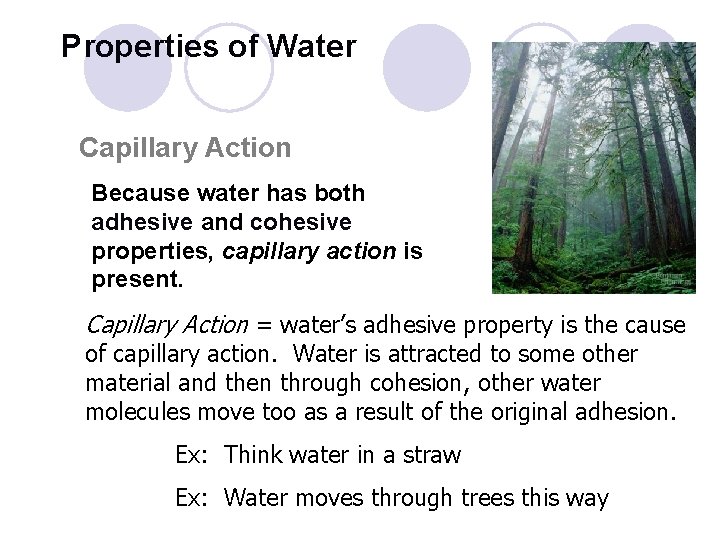
Properties of Water Capillary Action Because water has both adhesive and cohesive properties, capillary action is present. Capillary Action = water’s adhesive property is the cause of capillary action. Water is attracted to some other material and then through cohesion, other water molecules move too as a result of the original adhesion. Ex: Think water in a straw Ex: Water moves through trees this way
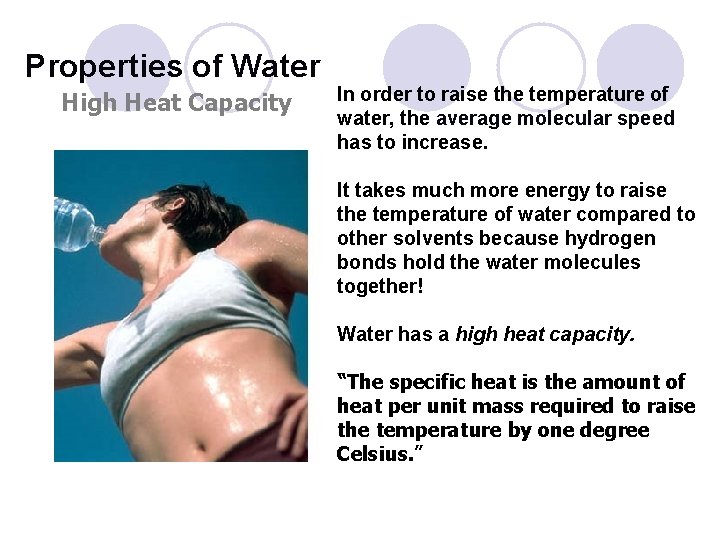
Properties of Water High Heat Capacity In order to raise the temperature of water, the average molecular speed has to increase. It takes much more energy to raise the temperature of water compared to other solvents because hydrogen bonds hold the water molecules together! Water has a high heat capacity. “The specific heat is the amount of heat per unit mass required to raise the temperature by one degree Celsius. ”
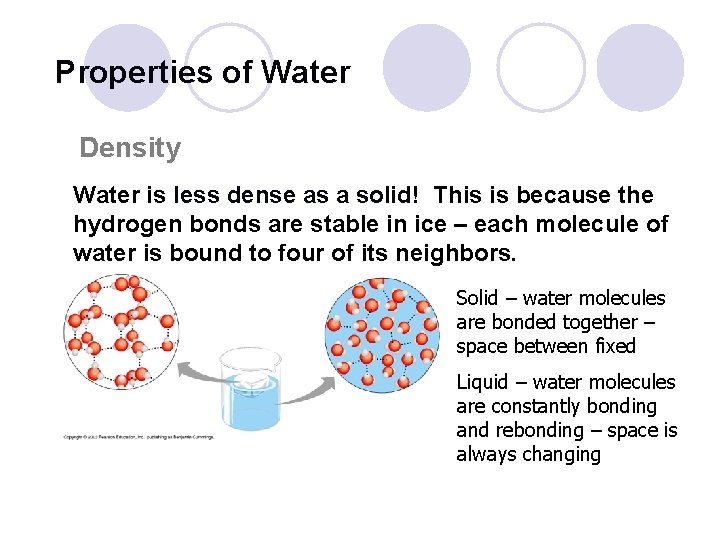
Properties of Water Density Water is less dense as a solid! This is because the hydrogen bonds are stable in ice – each molecule of water is bound to four of its neighbors. Solid – water molecules are bonded together – space between fixed Liquid – water molecules are constantly bonding and rebonding – space is always changing
Properties of Water So, can you name all of the properties of water? Adhesion Cohesion Capillary action High surface tension Holds heat to regulate temperature (High heat capacity) Less dense as a solid than a liquid
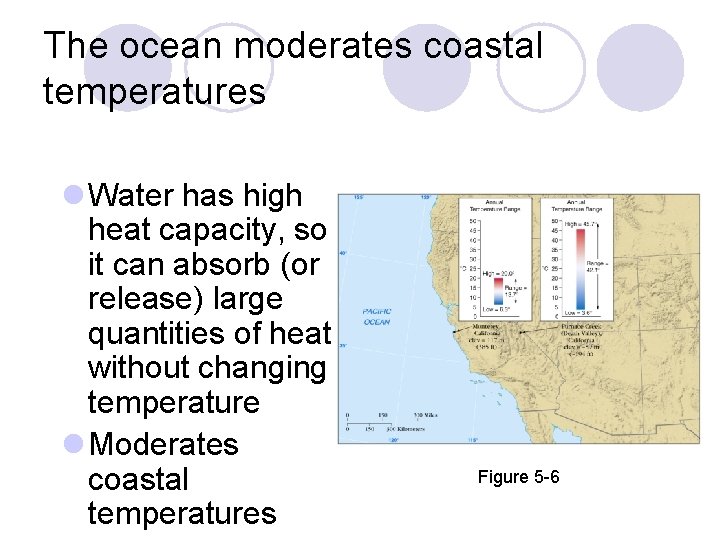
The ocean moderates coastal temperatures Water has high heat capacity, so it can absorb (or release) large quantities of heat without changing temperature Moderates coastal temperatures Figure 5 -6
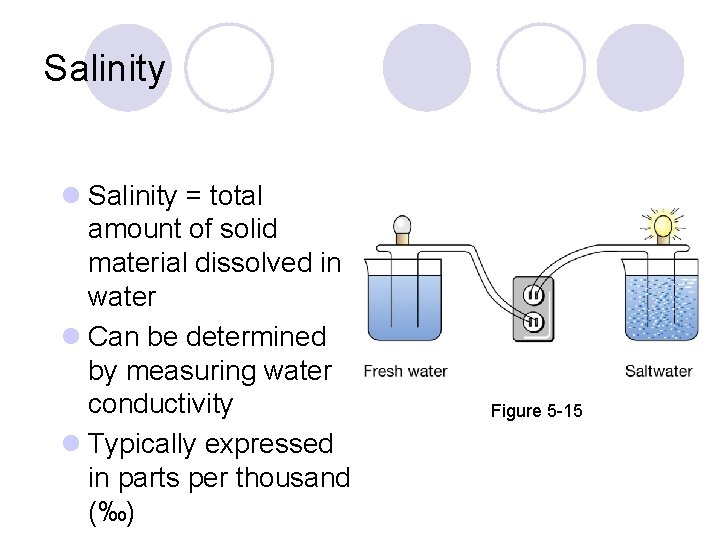
Salinity = total amount of solid material dissolved in water Can be determined by measuring water conductivity Typically expressed in parts per thousand (‰) Figure 5 -15
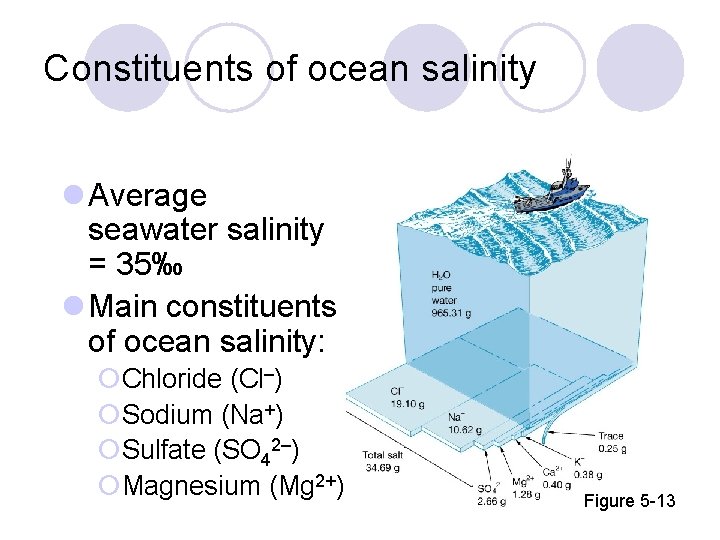
Constituents of ocean salinity Average seawater salinity = 35‰ Main constituents of ocean salinity: ¡Chloride (Cl–) ¡Sodium (Na+) ¡Sulfate (SO 42–) ¡Magnesium (Mg 2+) Figure 5 -13
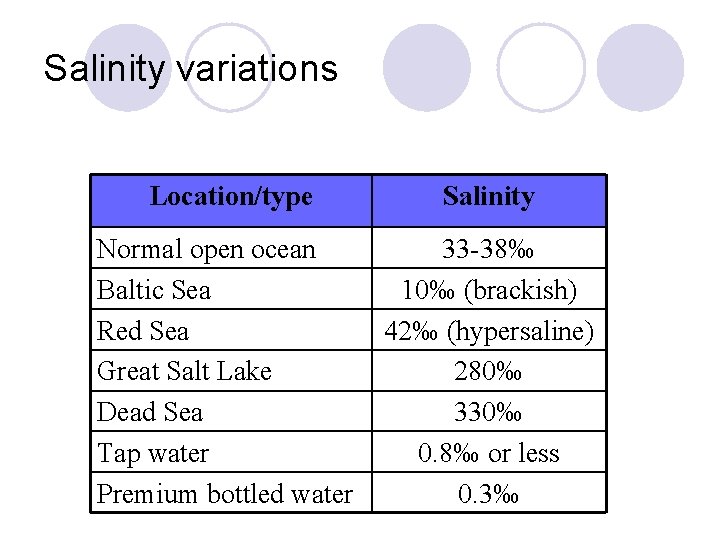
Salinity variations Location/type Salinity Normal open ocean Baltic Sea Red Sea Great Salt Lake Dead Sea Tap water Premium bottled water 33 -38‰ 10‰ (brackish) 42‰ (hypersaline) 280‰ 330‰ 0. 8‰ or less 0. 3‰
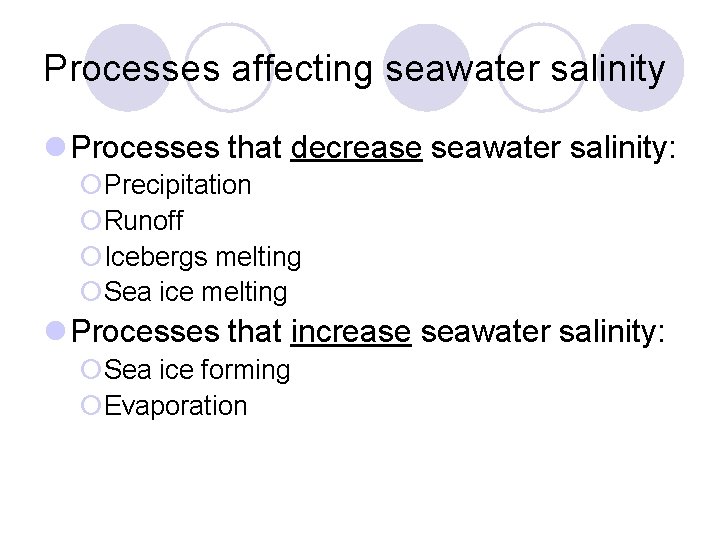
Processes affecting seawater salinity Processes that decrease seawater salinity: ¡Precipitation ¡Runoff ¡Icebergs melting ¡Sea ice melting Processes that increase seawater salinity: ¡Sea ice forming ¡Evaporation
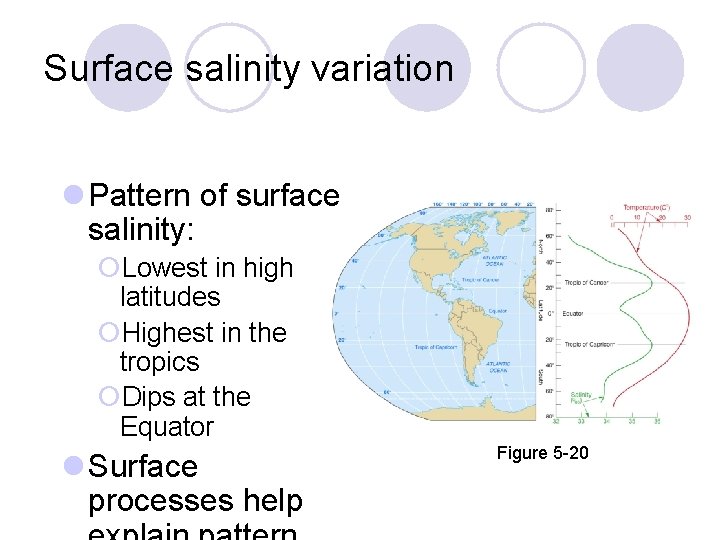
Surface salinity variation Pattern of surface salinity: ¡Lowest in high latitudes ¡Highest in the tropics ¡Dips at the Equator Surface processes help Figure 5 -20
Surface salinity variation High latitudes have low surface salinity ¡High precipitation and runoff ¡Low evaporation Tropics have high surface salinity ¡High evaporation ¡Low precipitation Equator has a dip in surface salinity ¡High precipitation partially offsets high evaporation
Seawater density Factors affecting seawater density: ¡Temperature ↑, Density ↓ (inverse relationship) ¡Salinity ↑, Density ↑ ¡Pressure ↑, Density ↑ Temperature has the greatest influence on surface seawater density
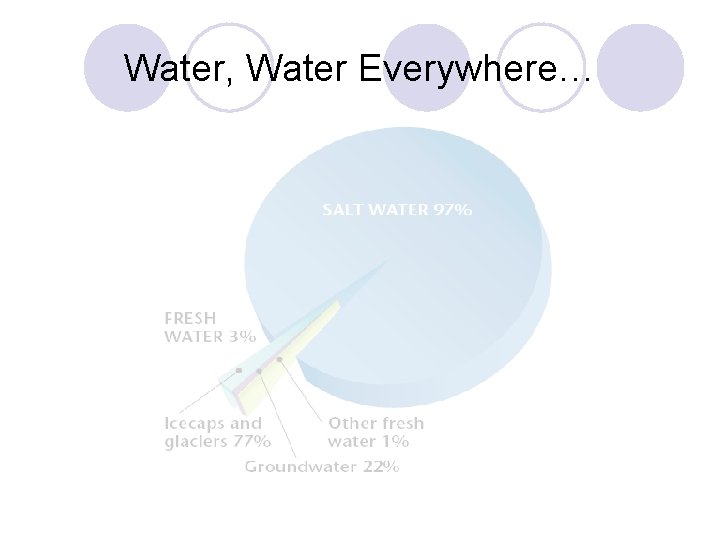
Water, Water Everywhere…
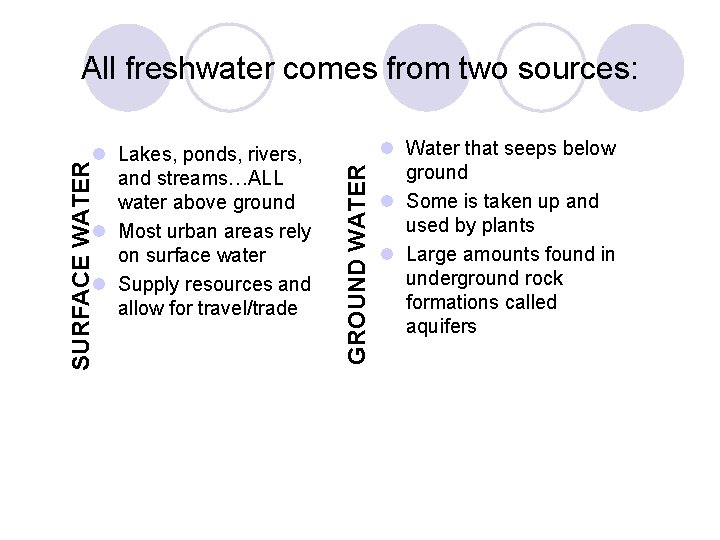
SURFACE WATER Lakes, ponds, rivers, and streams…ALL water above ground Most urban areas rely on surface water Supply resources and allow for travel/trade GROUND WATER All freshwater comes from two sources: Water that seeps below ground Some is taken up and used by plants Large amounts found in underground rock formations called aquifers
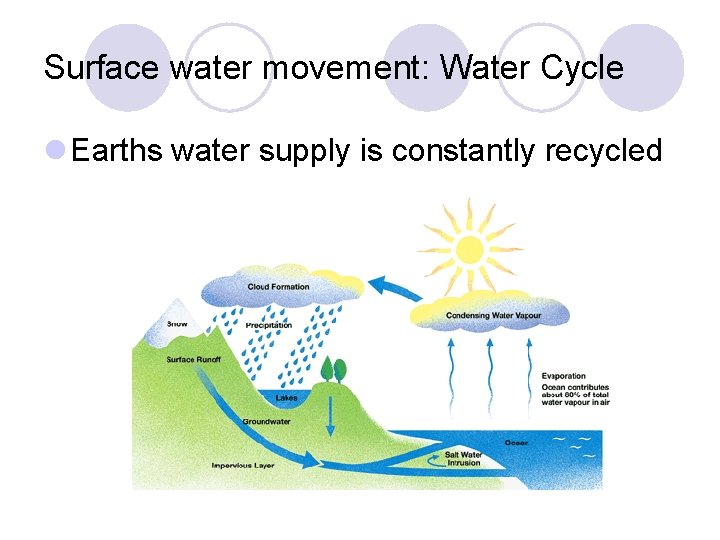
Surface water movement: Water Cycle Earths water supply is constantly recycled
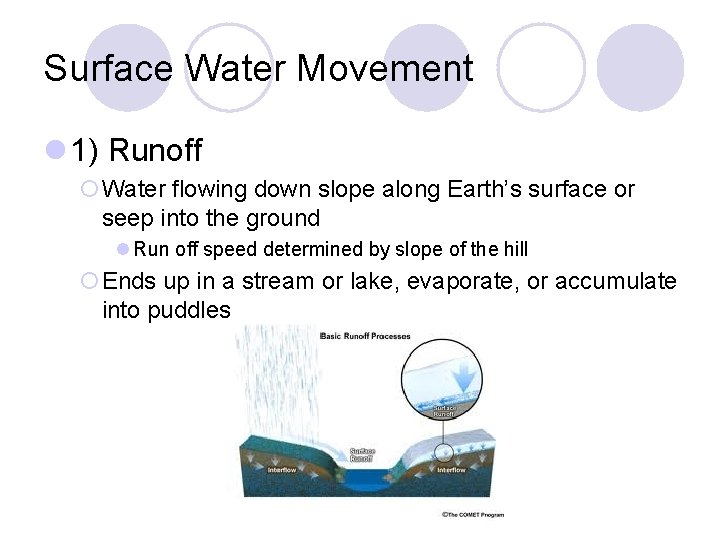
Surface Water Movement 1) Runoff ¡Water flowing down slope along Earth’s surface or seep into the ground Run off speed determined by slope of the hill ¡Ends up in a stream or lake, evaporate, or accumulate into puddles
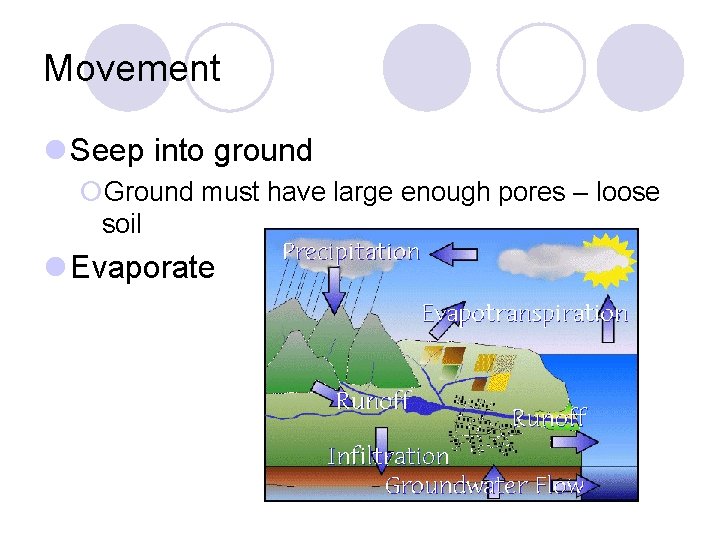
Movement Seep into ground ¡Ground must have large enough pores – loose soil Evaporate
Fate of water: Run off or Seep Certain characteristics will determine whether not water will either seep into or become runoff 1) Vegetation ¡Vegetation allows for loose soil ¡ Loose soil allows water to enter ground ¡ Gardeners do not pack their soil
Fate of water 2) Rate of precipitation ¡Heavy: soil clumps together closing pores Fills up ground to quickly and water becomes runoff ¡Light: allows water to gently slide through Less erosion
Fate of Water 3) Soil Composition ¡Effects the waters holding capacity ¡Decayed organic matter (humus) Creates the pores in soil – Increases retain ability ¡Minerals Clay – fine mineral which clump together • Few Spaces Sand – large pores
Fate of Water 4) Slopes ¡Steep: allows for high runoff & little absorption ¡Little: low runoff and high absorption
Formation of Stream systems Runoff Surface water flows in thin sheets and eventually collects in small channels Runoff increases, channels widen and become deeper and longer Channels fill up again each time with rain Channel can become a stream
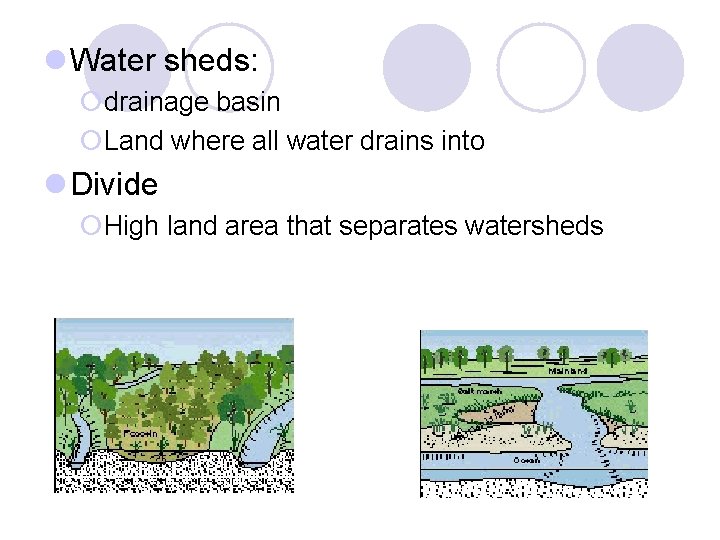
Water sheds: ¡drainage basin ¡Land where all water drains into Divide ¡High land area that separates watersheds
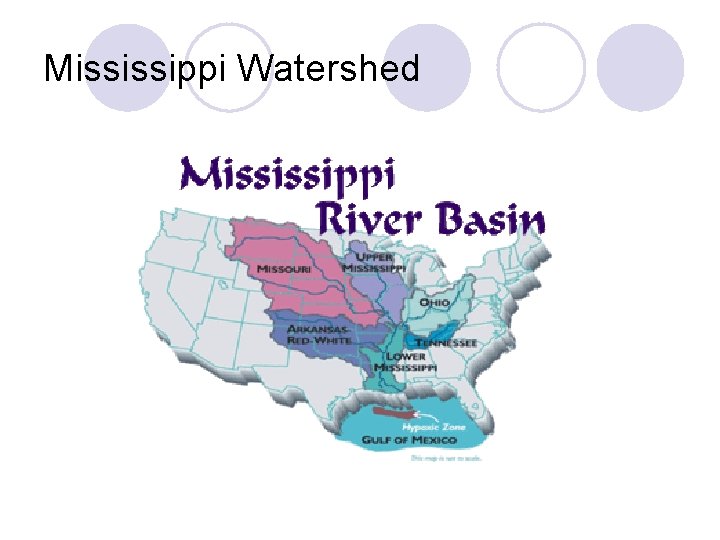
Mississippi Watershed
Stream Load All the materials that the stream carries Solution ¡Material that has been dissolved ¡Depends on area where the steam runs through ¡Erosion of rocks and dirt
Stream Load Suspension ¡Small particles held up by the turbulence of stream ¡Clay, silt, sand ¡Depends on volume and velocity of water Bed Load ¡Turbulence of water pushes heavy things ¡Pebbles and cobbles ¡Larger velocity – large objects ¡B/c of abrasion, rocks are smooth
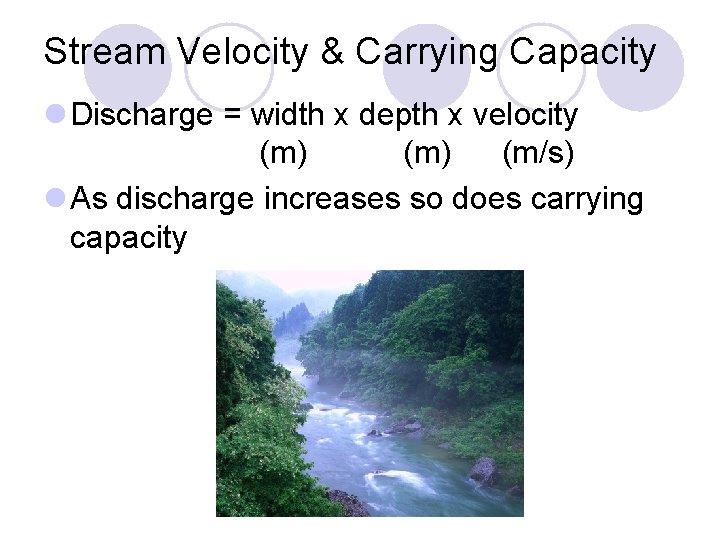
Stream Velocity & Carrying Capacity Discharge = width x depth x velocity (m) (m/s) As discharge increases so does carrying capacity
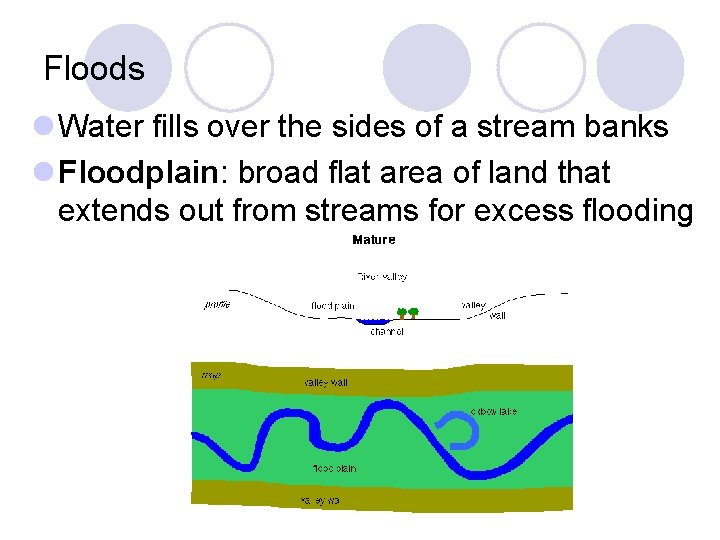
Floods Water fills over the sides of a stream banks Floodplain: broad flat area of land that extends out from streams for excess flooding
Freshwater Ecosystems
Characteristics of a Freshwater Ecosystem Slow moving waters Low dissolved salt Plant and animal life depends on depth of water, rate of flow, and amounts of nutrients, sunlight, and oxygen Include lakes, ponds, rivers, and wetlands
Lakes and Ponds
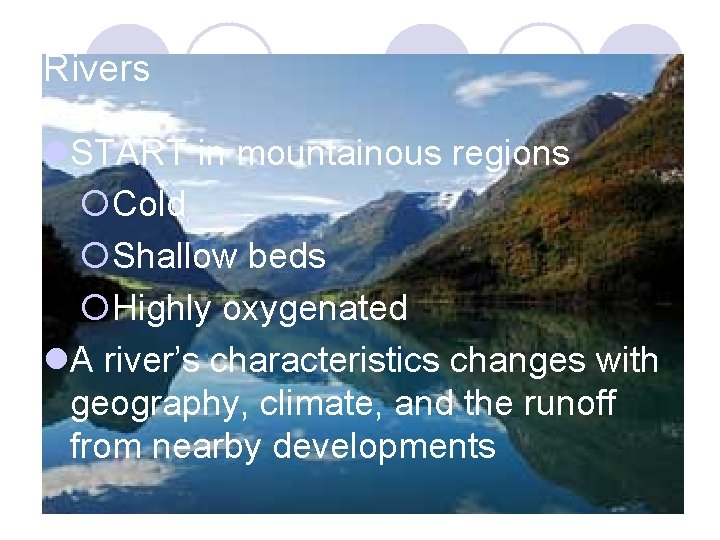
Rivers START in mountainous regions ¡Cold ¡Shallow beds ¡Highly oxygenated A river’s characteristics changes with geography, climate, and the runoff from nearby developments
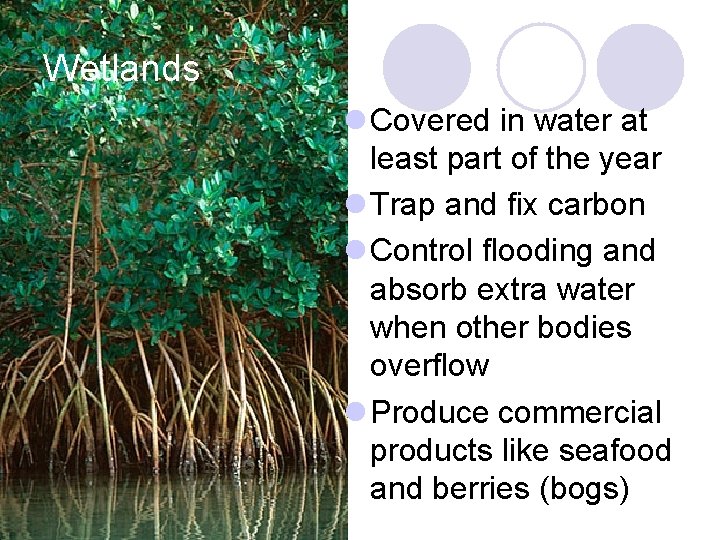
Wetlands Covered in water at least part of the year Trap and fix carbon Control flooding and absorb extra water when other bodies overflow Produce commercial products like seafood and berries (bogs)
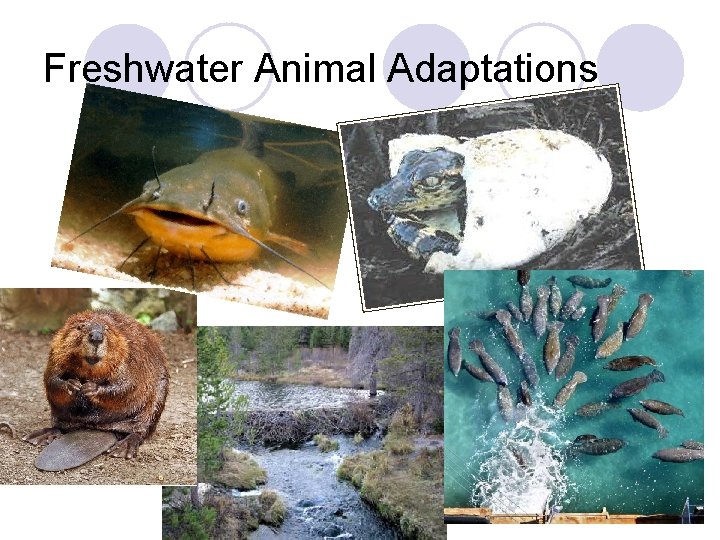
Freshwater Animal Adaptations
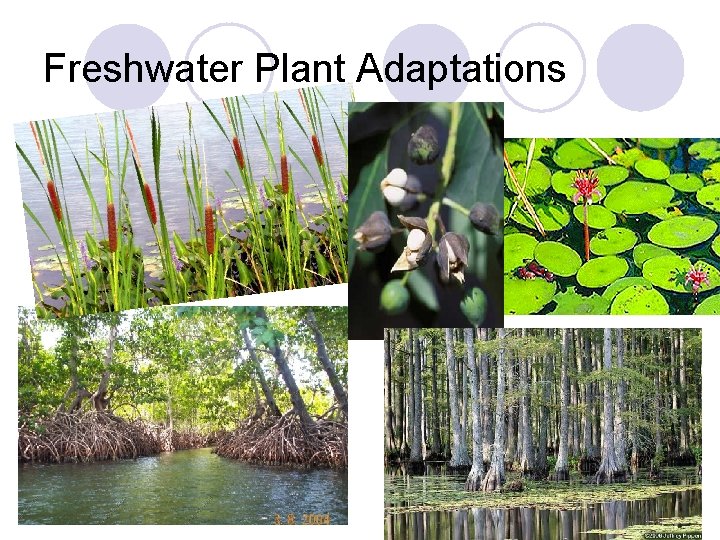
Freshwater Plant Adaptations