
Water Potential The tendency of water to diffuse
- Slides: 13
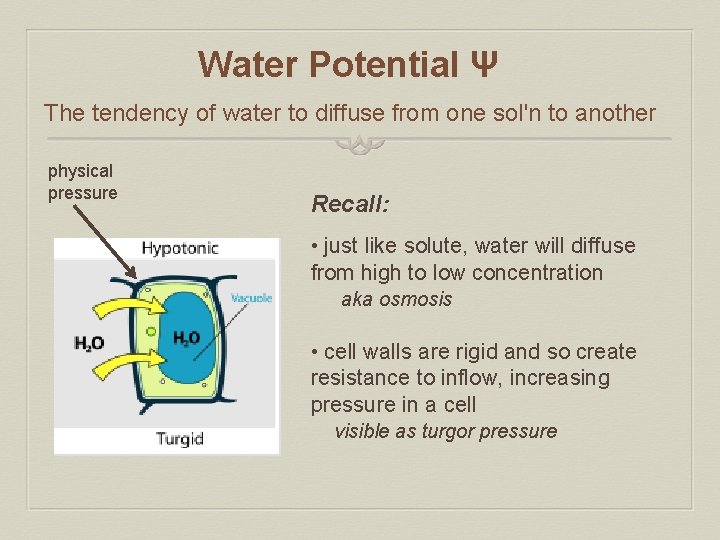
Water Potential Ψ The tendency of water to diffuse from one sol'n to another physical pressure Recall: • just like solute, water will diffuse from high to low concentration aka osmosis • cell walls are rigid and so create resistance to inflow, increasing pressure in a cell visible as turgor pressure
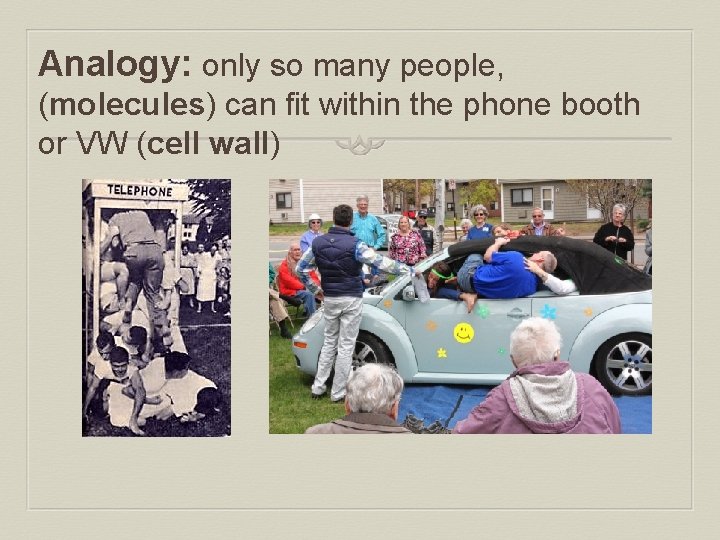
Analogy: only so many people, (molecules) can fit within the phone booth or VW (cell wall)
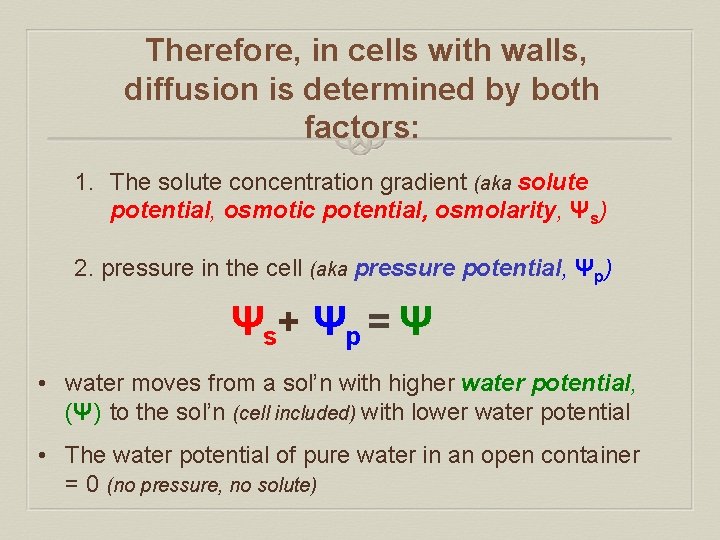
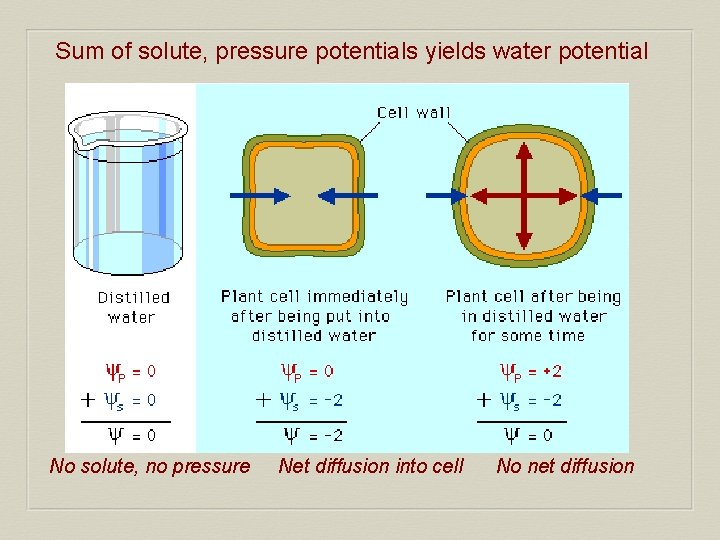
Therefore, in cells with walls, diffusion is determined by both factors: 1. The solute concentration gradient (aka solute potential, osmotic potential, osmolarity, Ψs) 2. pressure in the cell (aka pressure potential, Ψp) Ψs+ Ψp = Ψ • water moves from a sol’n with higher water potential, (Ψ) to the sol’n (cell included) with lower water potential • The water potential of pure water in an open container = 0 (no pressure, no solute)
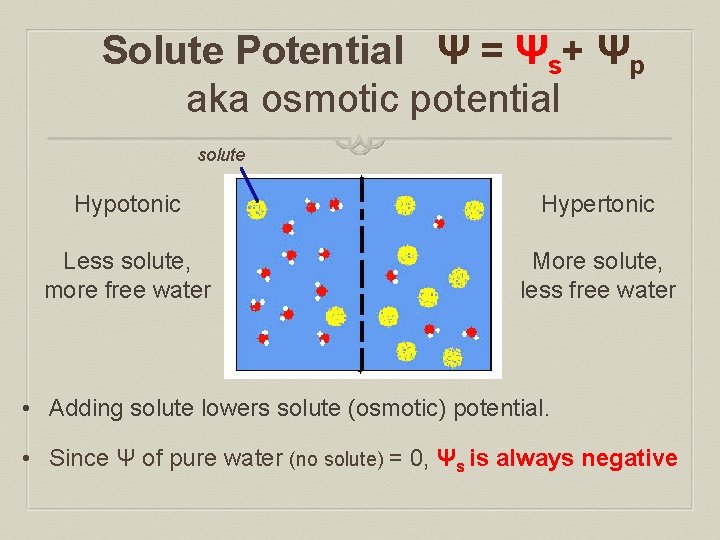
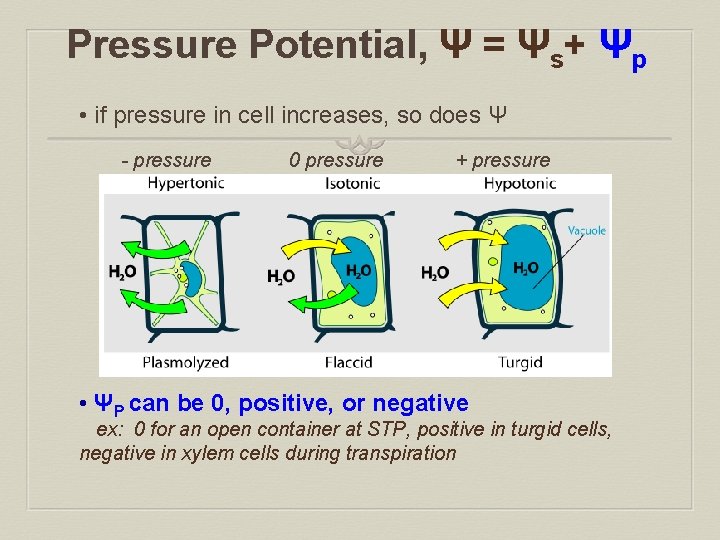
Solute Potential Ψ = Ψs+ Ψp aka osmotic potential solute Hypotonic Hypertonic Less solute, more free water More solute, less free water • Adding solute lowers solute (osmotic) potential. • Since Ψ of pure water (no solute) = 0, Ψs is always negative
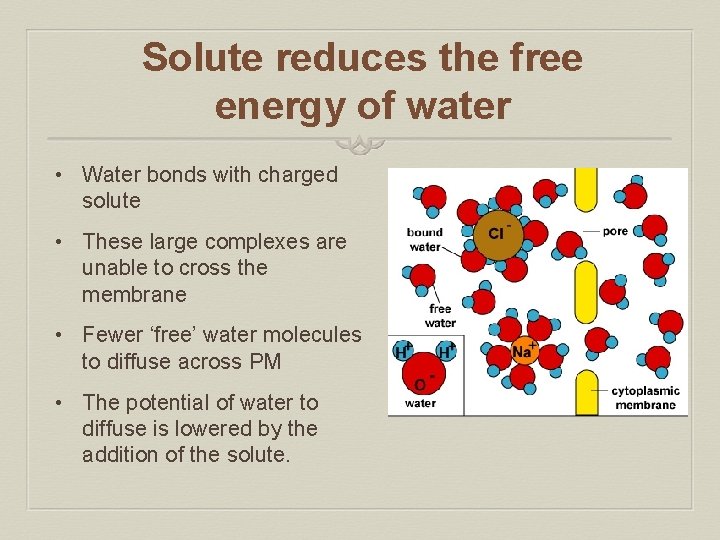
Solute reduces the free energy of water • Water bonds with charged solute • These large complexes are unable to cross the membrane • Fewer ‘free’ water molecules to diffuse across PM • The potential of water to diffuse is lowered by the addition of the solute.
Pressure Potential, Ψ = Ψs+ Ψp • if pressure in cell increases, so does Ψ - pressure 0 pressure + pressure • ΨP can be 0, positive, or negative ex: 0 for an open container at STP, positive in turgid cells, negative in xylem cells during transpiration
Sum of solute, pressure potentials yields water potential No solute, no pressure Net diffusion into cell No net diffusion
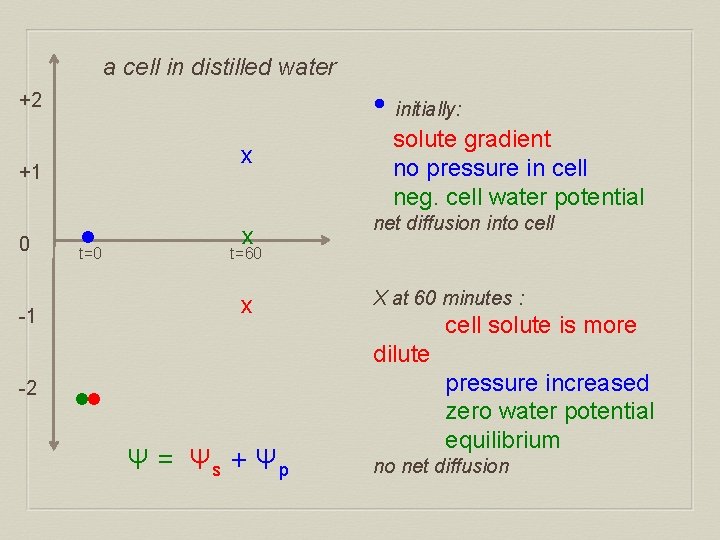
a cell in distilled water • initially: +2 x +1 0 • solute gradient no pressure in cell neg. cell water potential x net diffusion into cell x X at 60 minutes : t=0 t=60 -1 cell solute is more dilute -2 • • Ψ = Ψs + Ψp pressure increased zero water potential equilibrium no net diffusion
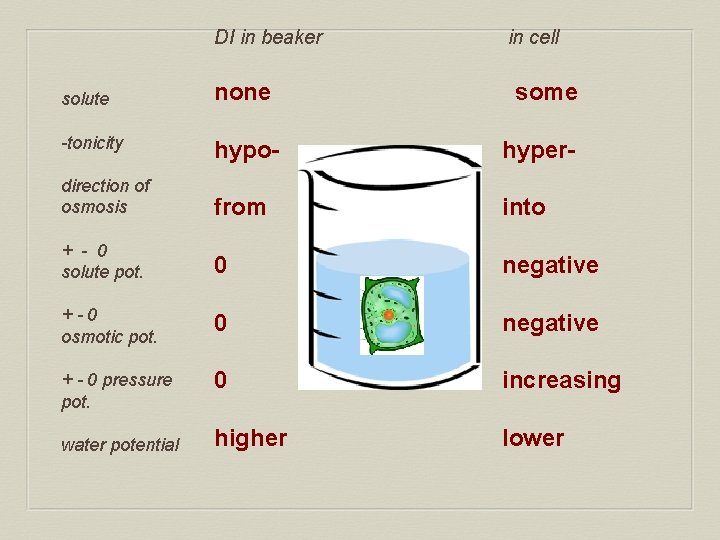
DI in beaker in cell solute none some -tonicity hypo- hyper- direction of osmosis from into + - 0 solute pot. 0 negative +-0 osmotic pot. 0 negative + - 0 pressure pot. 0 increasing higher lower water potential
Practice Problems #13 and 14 (Model 4) of the POGILish More: • If a plant cell’s ΨP = 1. 5 bars and its ΨS = -4. 0 bars, what is the resulting Ψ?
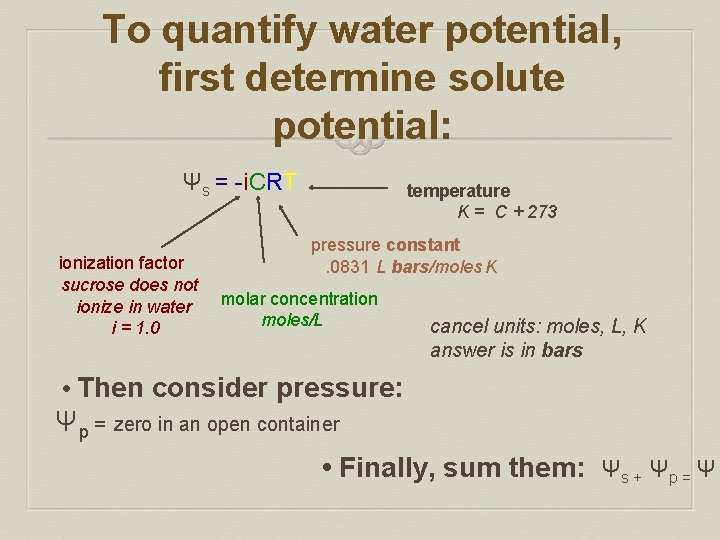
To quantify water potential, first determine solute potential: Ψs = -i. CRT ionization factor sucrose does not ionize in water i = 1. 0 temperature K = C + 273 pressure constant . 0831 L bars/moles K molar concentration moles/L cancel units: moles, L, K answer is in bars • Then consider pressure: Ψp = zero in an open container • Finally, sum them: Ψs + Ψp = Ψ
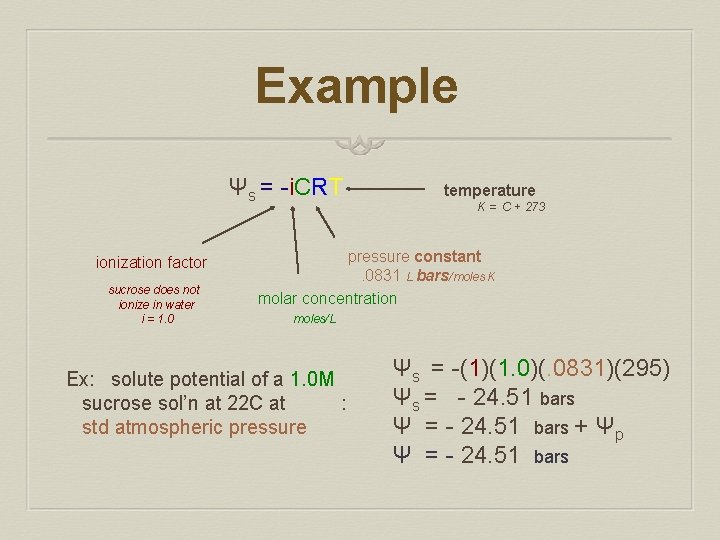
Example Ψs = -i. CRT ionization factor sucrose does not ionize in water i = 1. 0 temperature K = C + 273 pressure constant . 0831 L bars/moles K molar concentration moles/L Ex: solute potential of a 1. 0 M sucrose sol’n at 22 C at : std atmospheric pressure Ψs = -(1)(1. 0)(. 0831)(295) Ψs = - 24. 51 bars Ψ = - 24. 51 bars + Ψp Ψ = - 24. 51 bars
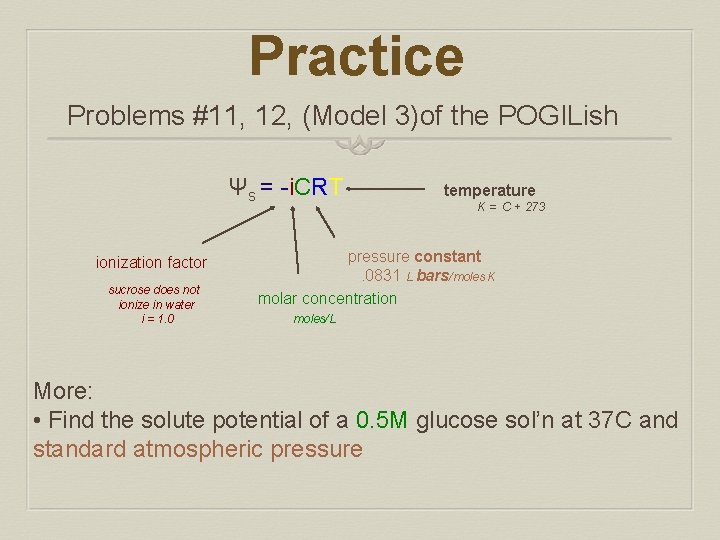
Practice Problems #11, 12, (Model 3)of the POGILish Ψs = -i. CRT ionization factor sucrose does not ionize in water i = 1. 0 temperature K = C + 273 pressure constant . 0831 L bars/moles K molar concentration moles/L More: • Find the solute potential of a 0. 5 M glucose sol’n at 37 C and standard atmospheric pressure