
Water Pollution Water Pollution Types PathogensSewage Organic Wastes




- Slides: 25
Water Pollution
Water Pollution Types ○ ○ ○ ○ Pathogens/Sewage Organic Wastes Inorganic Chemicals Sediments Nutrients Thermal Oil Spills Radioactive
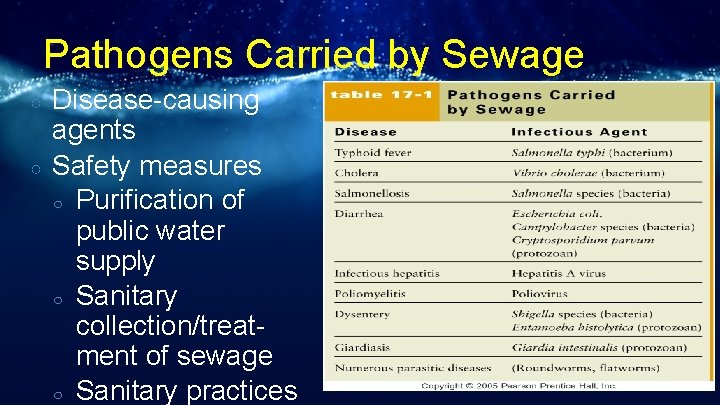
Pathogens Carried by Sewage ○ ○ Disease-causing agents Safety measures ○ Purification of public water supply ○ Sanitary collection/treatment of sewage ○ Sanitary practices
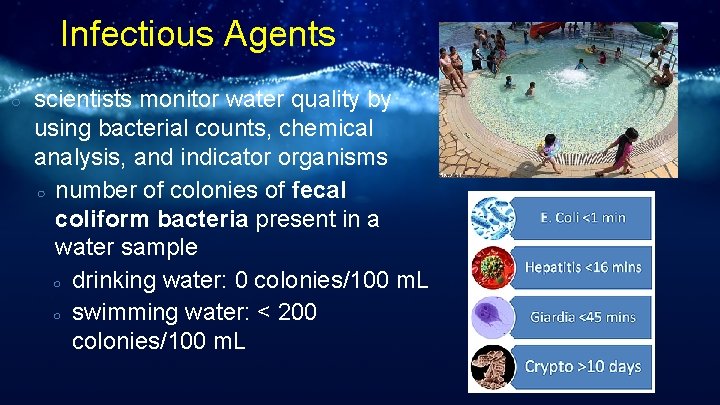
Infectious Agents: ○ scientists monitor water quality by using bacterial counts, chemical analysis, and indicator organisms ○ number of colonies of fecal coliform bacteria present in a water sample ○ drinking water: 0 colonies/100 m. L ○ swimming water: < 200 colonies/100 m. L
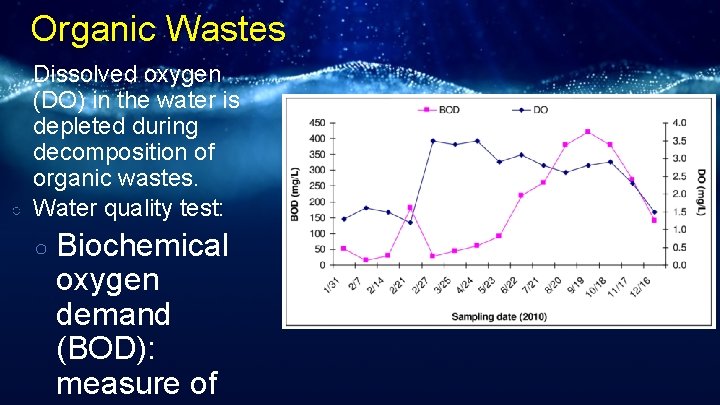
Organic Wastes ○ ○ Dissolved oxygen (DO) in the water is depleted during decomposition of organic wastes. Water quality test: ○ Biochemical oxygen demand (BOD): measure of
Chemical Pollutants ○ Inorganic chemicals ○ Heavy metals, acids, road salts ○ Organic chemicals ○ Petroleum, pesticides, detergents
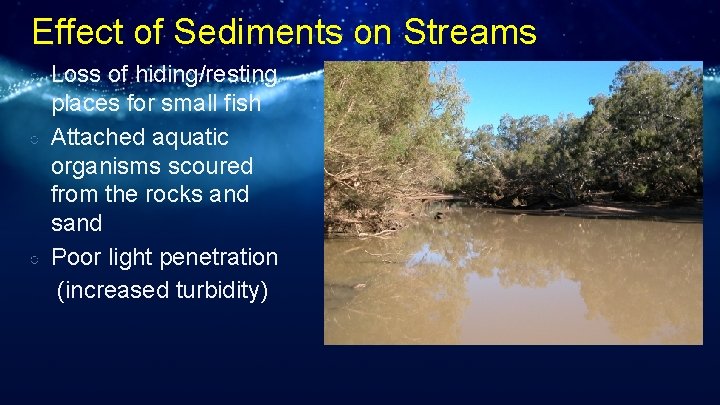
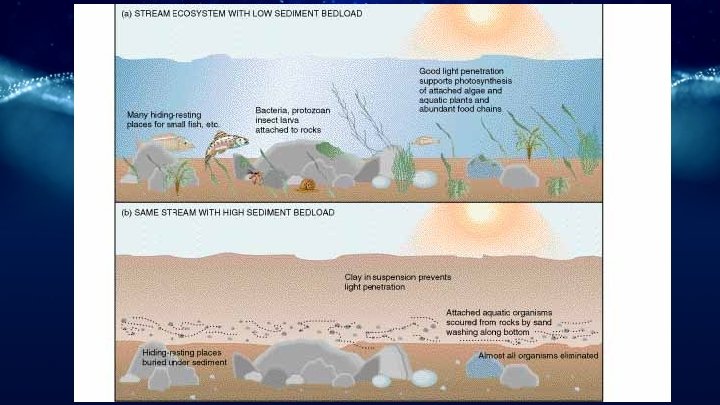
Effect of Sediments on Streams ○ ○ ○ Loss of hiding/resting places for small fish Attached aquatic organisms scoured from the rocks and sand Poor light penetration (increased turbidity)
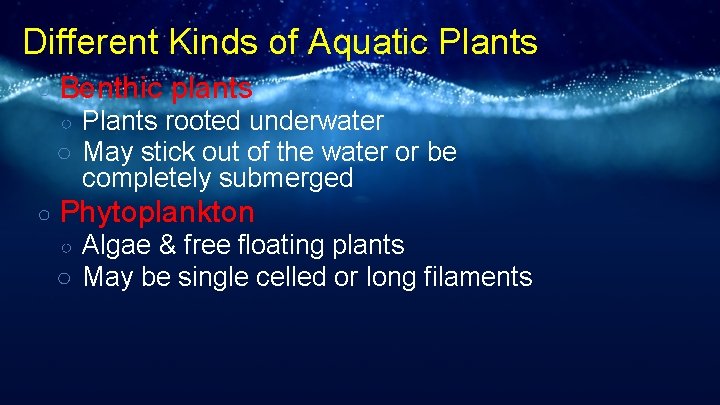
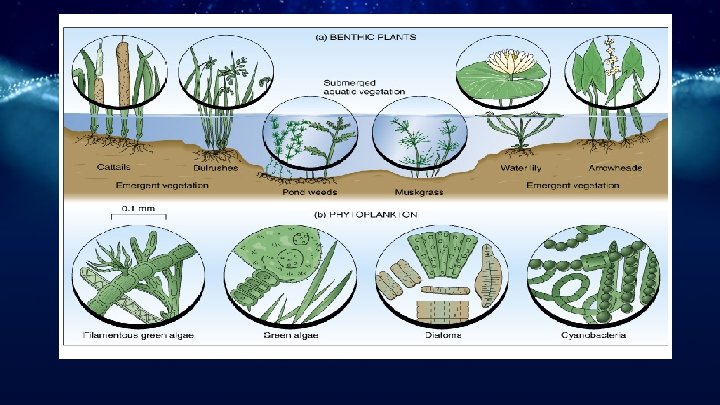
Different Kinds of Aquatic Plants ○ Benthic plants Plants rooted underwater ○ May stick out of the water or be completely submerged ○ ○ Phytoplankton Algae & free floating plants ○ May be single celled or long filaments ○
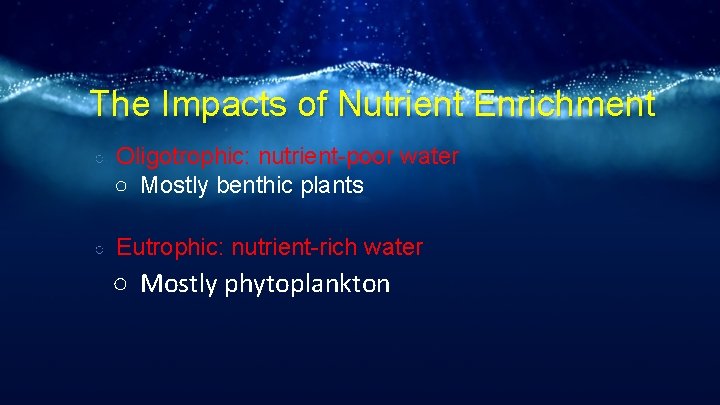
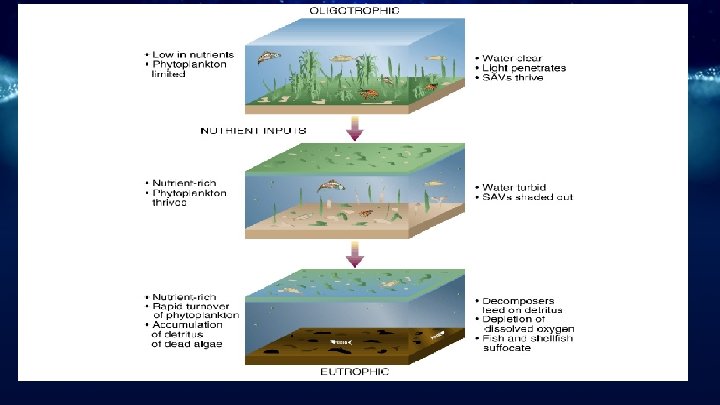
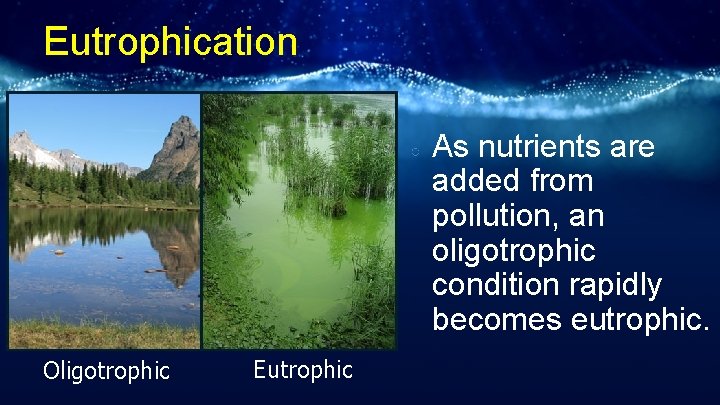
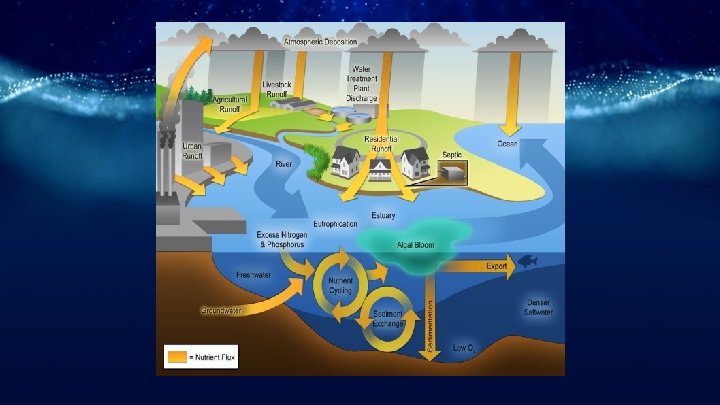
The Impacts of Nutrient Enrichment ○ Oligotrophic: nutrient-poor water ○ Mostly benthic plants ○ Eutrophic: nutrient-rich water ○ Mostly phytoplankton
Eutrophication ○ Oligotrophic Eutrophic As nutrients are added from pollution, an oligotrophic condition rapidly becomes eutrophic.
Eutrophic or Oligotrophic? ○ ○ ○ ○ High dissolved O 2 Deep light penetration High phytoplankton Turbid waters High species diversity Good recreational qualities High detritus decomposition
Eutrophic or Oligotrophic? ○ ○ ○ Low bacteria decomposition Benthic plants Warm water High nutrient concentration High BOD High sediments
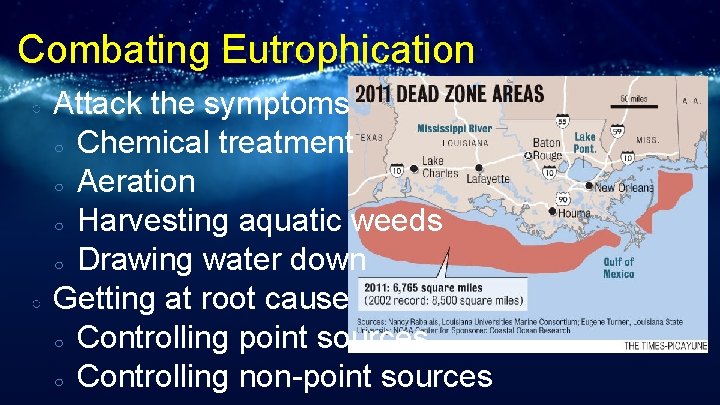
Combating Eutrophication ○ ○ Attack the symptoms ○ Chemical treatment ○ Aeration ○ Harvesting aquatic weeds ○ Drawing water down Getting at root cause ○ Controlling point sources ○ Controlling non-point sources
Thermal Pollution: Causes decrease in DO 1. Coal Powerplants: Heats water to steam to turn turbines then uses cooling tower to condense water Water is 10 o. C hotter when put back into the lake. 2. Urban Stormwater Runoff: Surfaces like parking lots and sidewalks heat up. When it rains, water absorbs heat and is put into bodies of water 3. Deforestation: Forests & vegetation reflect back & absorb sun’s heat. Deforestation leaves the water sources directly exposed to sunlight!
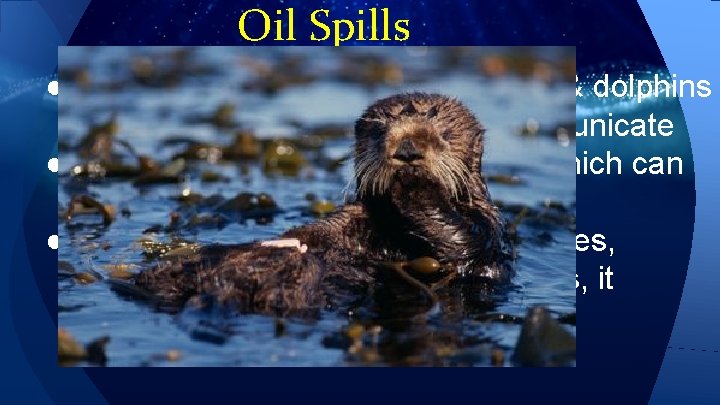
Oil Spills ● Can clog the blowholes of whales & dolphins so that they can’t breathe or communicate ● Coats the fur of otters and seals which can cause hypothermia ● When it washes into coastal marshes, mangrove forests or other wetlands, it damages the plants & makes area unsuitable for wildlife
Radioactive ● Relates to Thermal Pollution ● Water is used to cool the control rods. Warm water is put back into lake which causes dissolved oxygen to decrease.
Homework Research a case of eutrophication. Include: ○ Source of the pollution ○ Area (size) affected ○ Map showing the location ○ Pictures of the problem ○ How was it solved
Slide Title • Make Effective Presentations • Using Awesome Backgrounds • Engage your Audience • Capture Audience Attention
Slide Title • • Make Effective Presentations Using Awesome Backgrounds Engage your Audience Capture Audience Attention
Slide Title Product A • Feature 1 • Feature 2 • Feature 3 Product B • Feature 1 • Feature 2 • Feature 3