
Water Pollution Water Pollution Introduction of chemical physical

- Slides: 25
Water Pollution
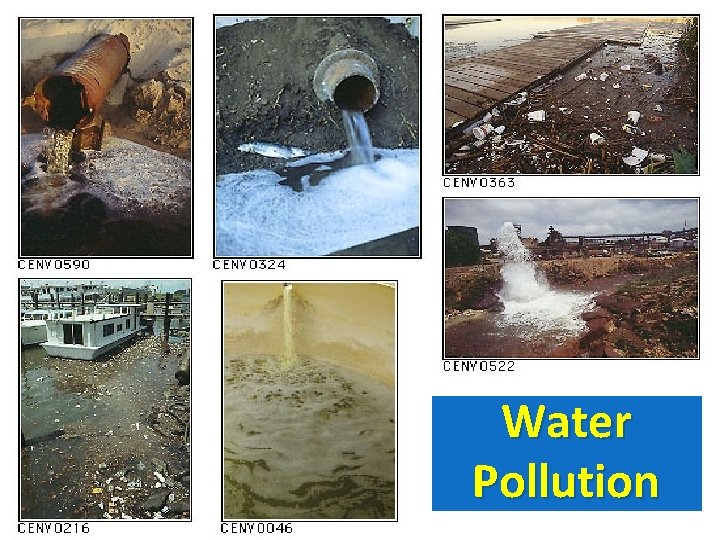
Water Pollution Introduction of chemical, physical, or biological agents into water that degrade quality 2 forms of pollution 1. Point source = single, identifiable source EX. Factory, wastewater treatment plant, oil tanker 2. Nonpoint source = multiple sources which can not be pinpointed EX. runoff, roads, a farm
Wastewater = water containing waste from homes or industry Treated at plants to make water suitable for return to lake or river Can’t remove everything Sewage Sludge = solid material remaining after treatment Disposal problems https: //youtube/oa. Xth 88 i 7 rk
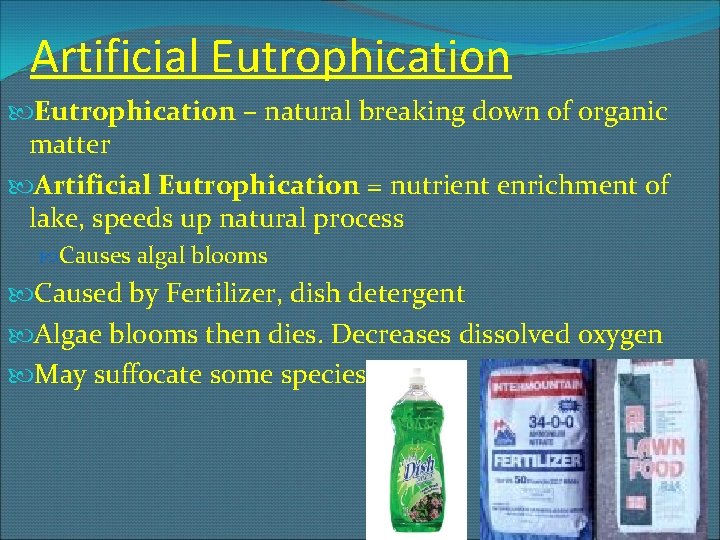
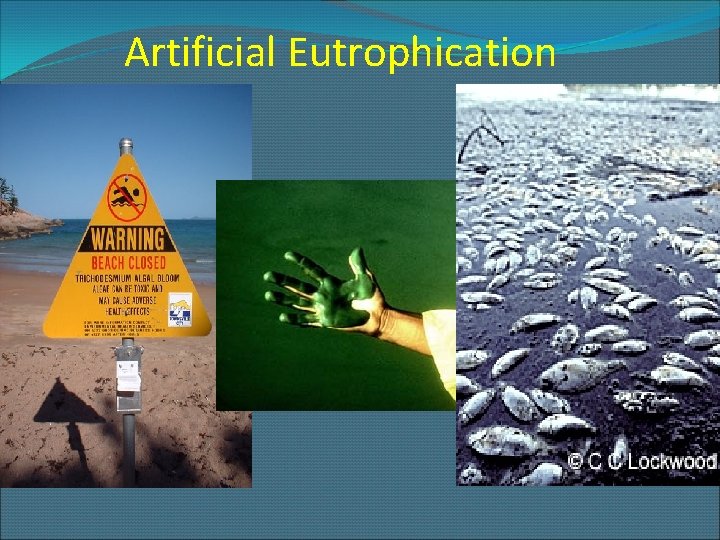
Artificial Eutrophication – natural breaking down of organic matter Artificial Eutrophication = nutrient enrichment of lake, speeds up natural process Causes algal blooms Caused by Fertilizer, dish detergent Algae blooms then dies. Decreases dissolved oxygen May suffocate some species
Artificial Eutrophication
Thermal Pollution T. P. = change in temp. of water caused by humans caused by release of water from cooling towers Can cause fish kills Reduces dissolved oxygen of water (Warm water holds less oxygen)
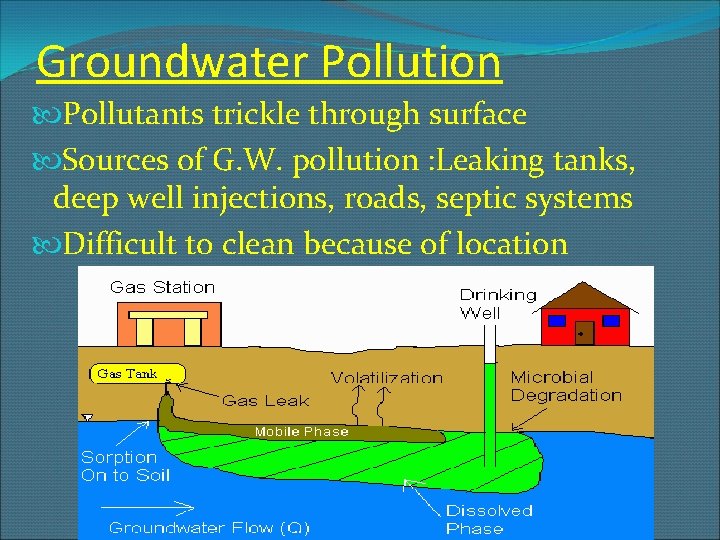
Groundwater Pollution Pollutants trickle through surface Sources of G. W. pollution : Leaking tanks, deep well injections, roads, septic systems Difficult to clean because of location
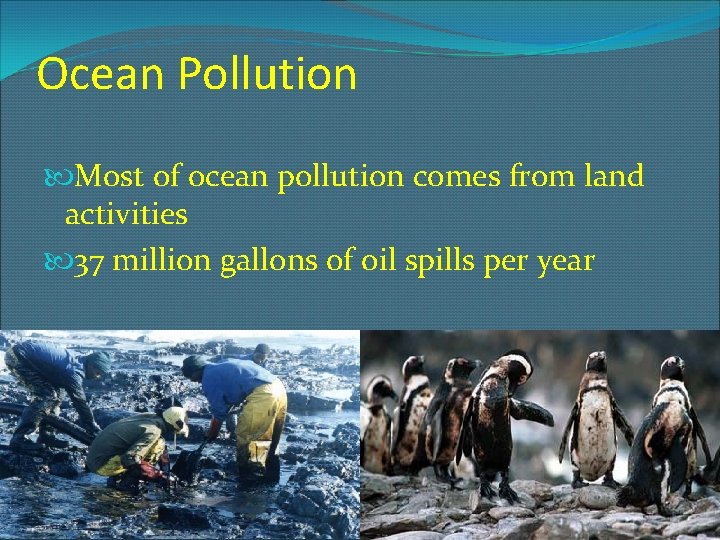
Ocean Pollution Most of ocean pollution comes from land activities 37 million gallons of oil spills per year
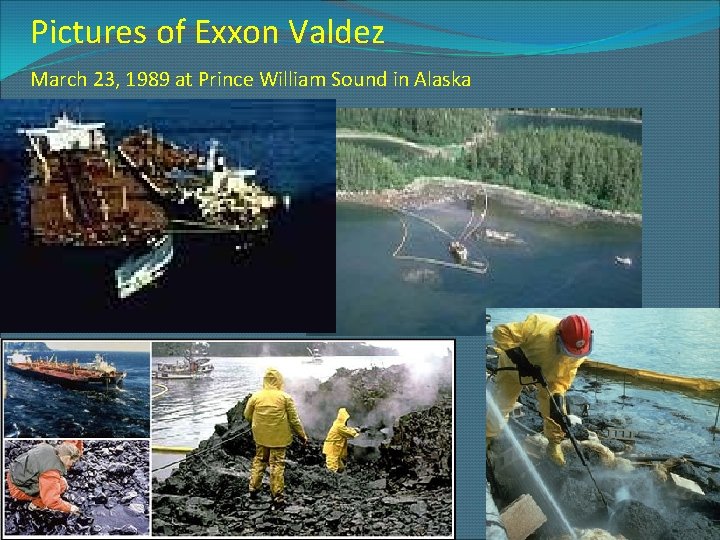
Pictures of Exxon Valdez March 23, 1989 at Prince William Sound in Alaska
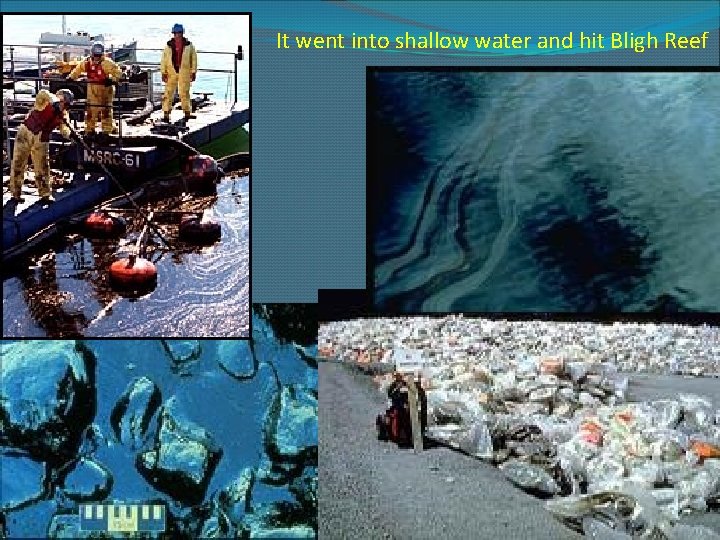
It went into shallow water and hit Bligh Reef
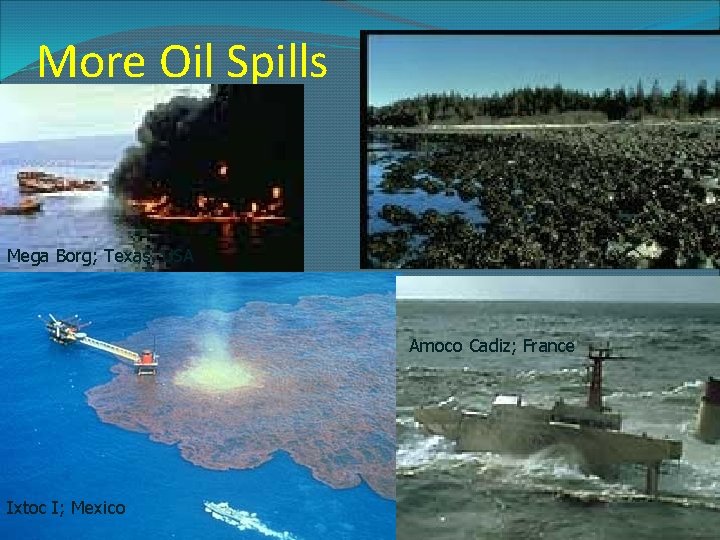
More Oil Spills Mega Borg; Texas, USA Amoco Cadiz; France Ixtoc I; Mexico
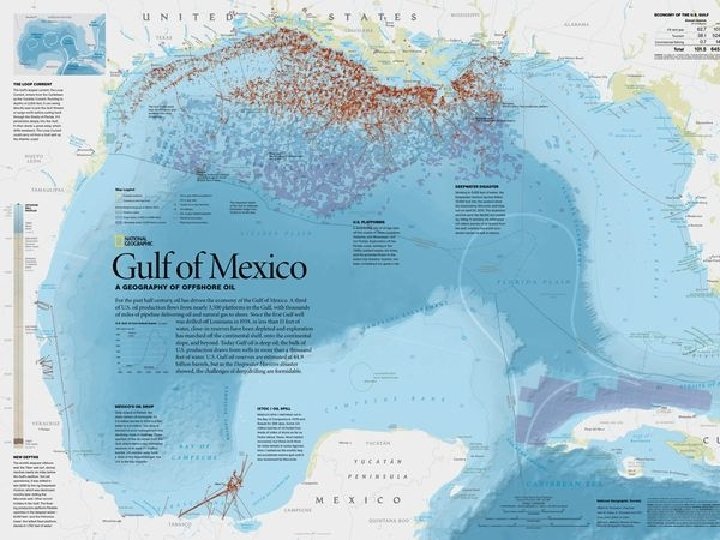
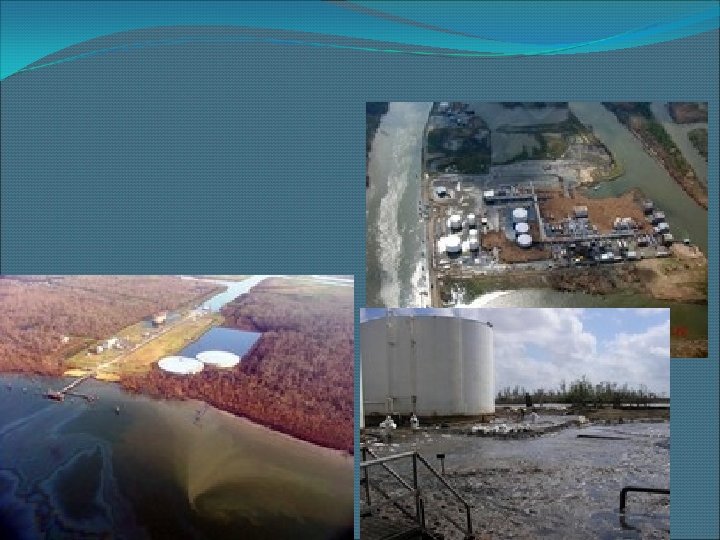
Deep Water Horizon Blowout April 20, 2010 4. 9 million barrels of oil into the Gulf Took months to plug well Chemical dispersants broke up oil Most of the oil is still below the surface in the water column in small droplets
http: //www. pbs. org/newshour/ru ndown/2010/06/jean-michelcousteau-use-of-oil-dispersants-amistake. html
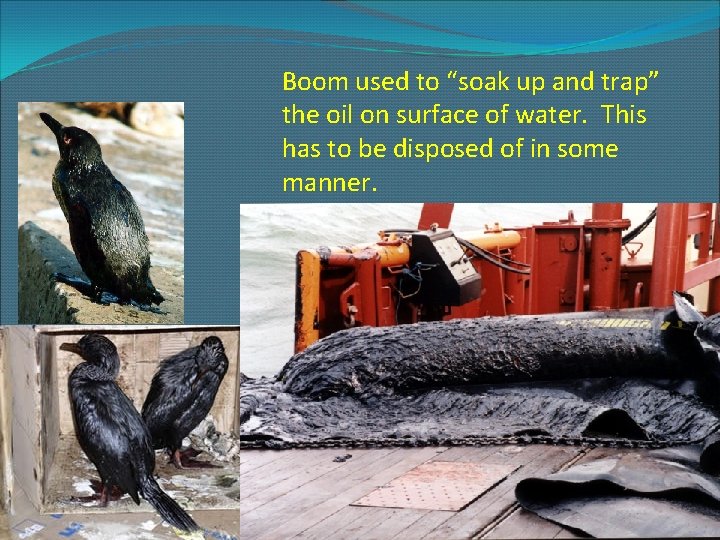
Boom used to “soak up and trap” the oil on surface of water. This has to be disposed of in some manner.
http: //www. pbs. org/newshour/bb/environment/julydec 10/oil_08 -11. html
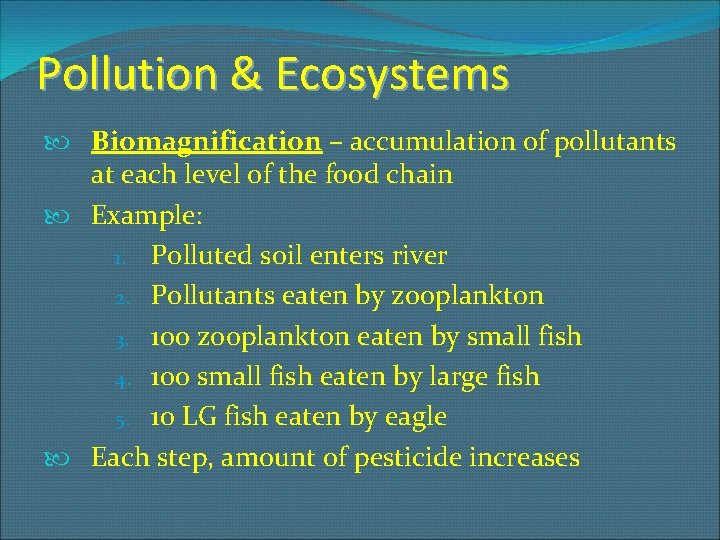
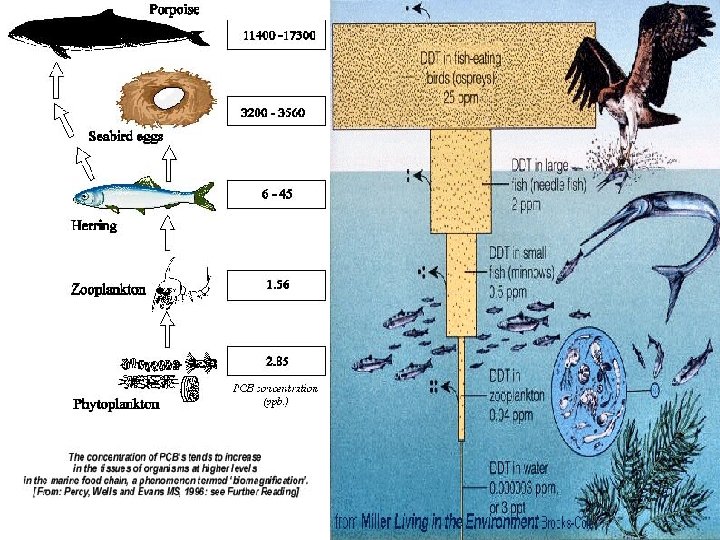
Pollution & Ecosystems Biomagnification – accumulation of pollutants at each level of the food chain Example: 1. Polluted soil enters river 2. Pollutants eaten by zooplankton 3. 100 zooplankton eaten by small fish 4. 100 small fish eaten by large fish 5. 10 LG fish eaten by eagle Each step, amount of pesticide increases
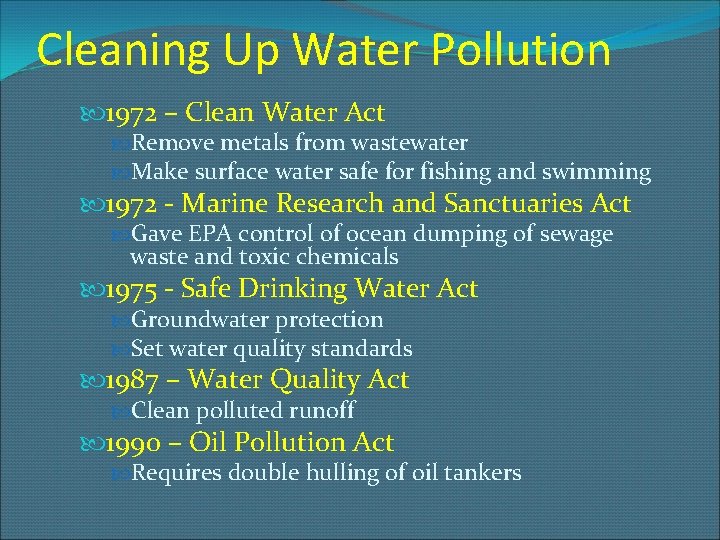
Cleaning Up Water Pollution 1972 – Clean Water Act Remove metals from wastewater Make surface water safe for fishing and swimming 1972 - Marine Research and Sanctuaries Act Gave EPA control of ocean dumping of sewage waste and toxic chemicals 1975 - Safe Drinking Water Act Groundwater protection Set water quality standards 1987 – Water Quality Act Clean polluted runoff 1990 – Oil Pollution Act Requires double hulling of oil tankers
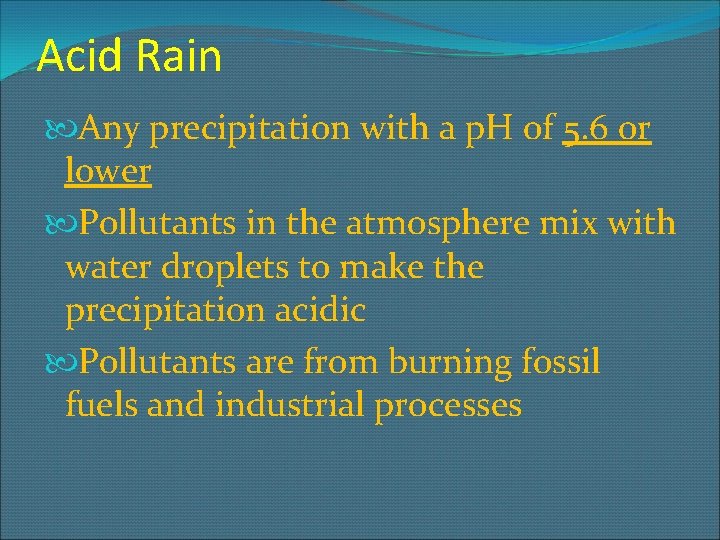
Acid Rain Any precipitation with a p. H of 5. 6 or lower Pollutants in the atmosphere mix with water droplets to make the precipitation acidic Pollutants are from burning fossil fuels and industrial processes
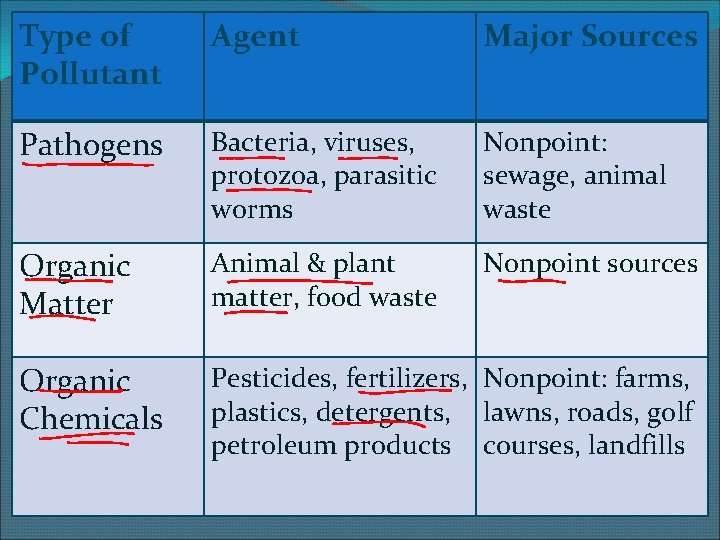
Type of Pollutant Agent Major Sources Pathogens Bacteria, viruses, protozoa, parasitic worms Nonpoint: sewage, animal waste Organic Matter Animal & plant matter, food waste Nonpoint sources Organic Chemicals Pesticides, fertilizers, Nonpoint: farms, plastics, detergents, lawns, roads, golf petroleum products courses, landfills
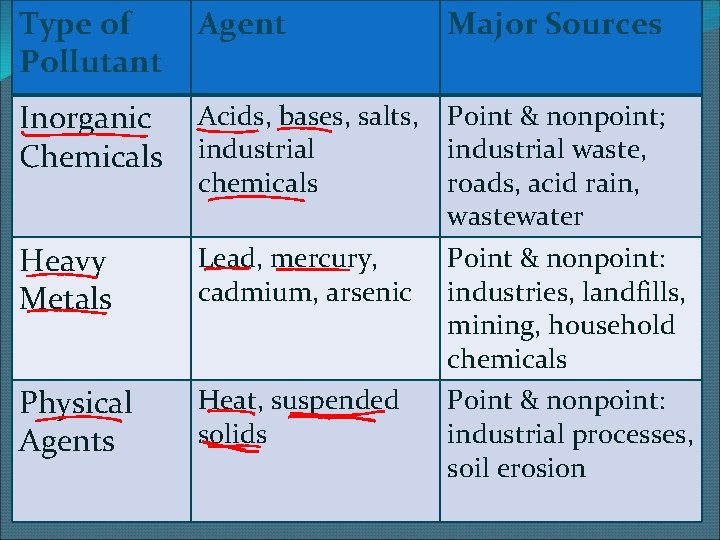
Type of Pollutant Agent Major Sources Inorganic Chemicals Acids, bases, salts, industrial chemicals Heavy Metals Lead, mercury, cadmium, arsenic Physical Agents Heat, suspended solids Point & nonpoint; industrial waste, roads, acid rain, wastewater Point & nonpoint: industries, landfills, mining, household chemicals Point & nonpoint: industrial processes, soil erosion