
WATER POLLUTION The Park School of Buffalo Ms
WATER POLLUTION The Park School of Buffalo Ms. Pici
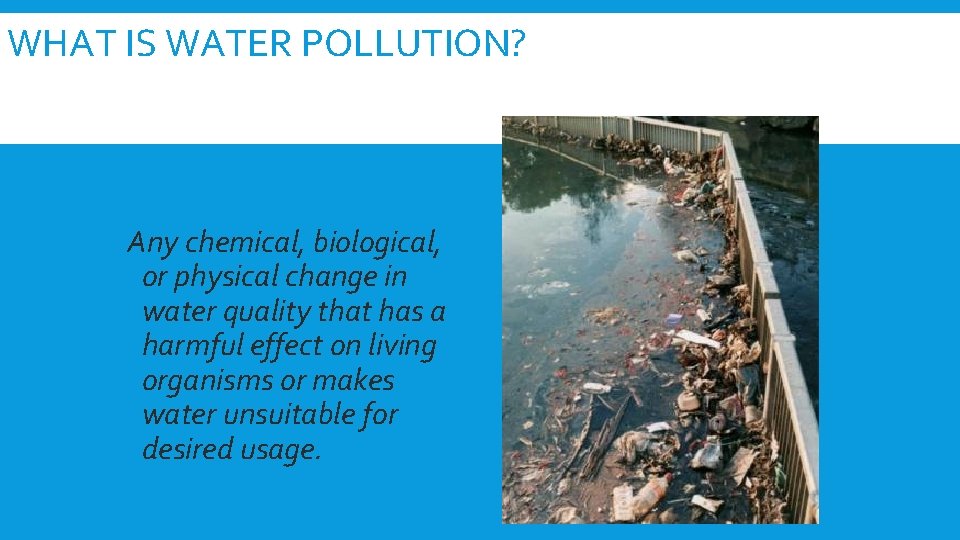
WHAT IS WATER POLLUTION? Any chemical, biological, or physical change in water quality that has a harmful effect on living organisms or makes water unsuitable for desired usage.
Point Source Pollution vs. Nonpoint Source Pollution What’s the difference? Adapted by Christopher C. Obropta, Rutgers University
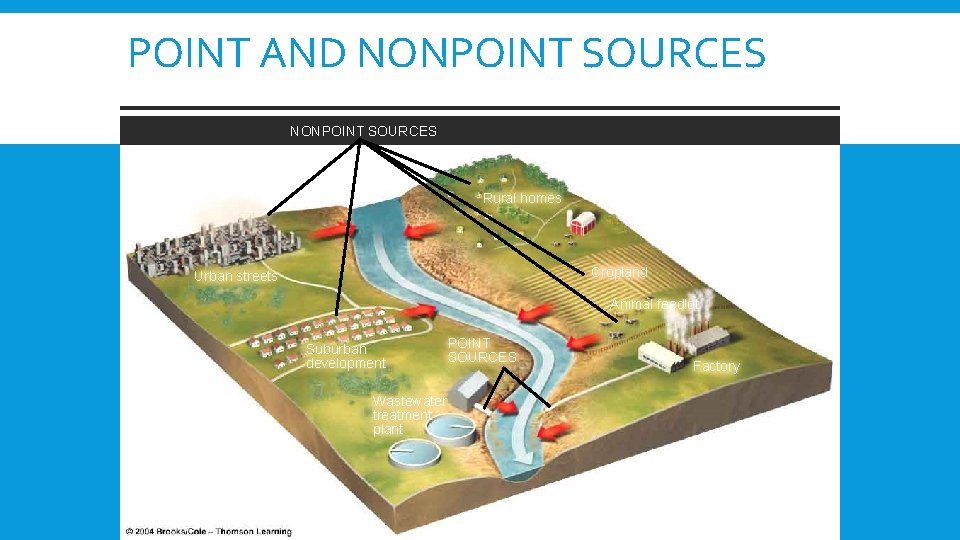
POINT AND NONPOINT SOURCES Rural homes Cropland Urban streets Animal feedlot Suburban development POINT SOURCES Factory Wastewater treatment plant Fig. 22 -4 p. 494
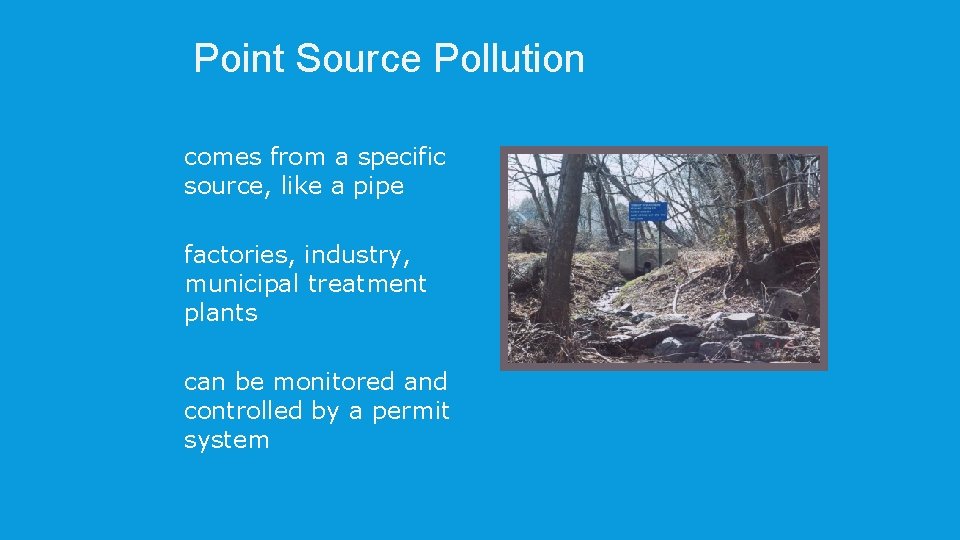
Point Source Pollution p comes from a specific source, like a pipe p factories, industry, municipal treatment plants p can be monitored and controlled by a permit system
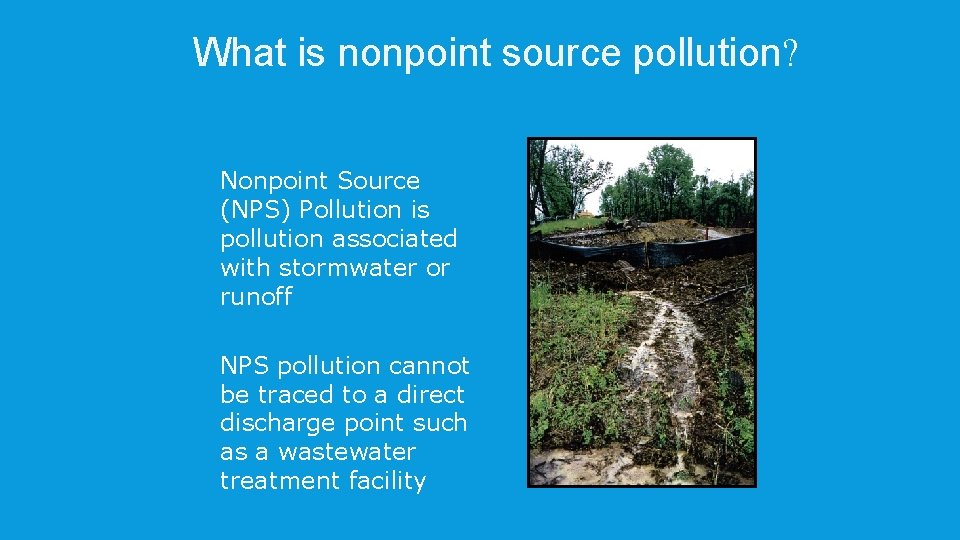
What is nonpoint source pollution? p Nonpoint Source (NPS) Pollution is pollution associated with stormwater or runoff p NPS pollution cannot be traced to a direct discharge point such as a wastewater treatment facility
Examples of NPS p p p oil & grease from cars fertilizers animal waste grass clippings septic systems p p p sewage & cleaners from boats household cleaning products litter
Pollutant Transport Mechanisms • NPS pollutants build up on land surfaces during dry weather Ø Atmospheric deposition Ø Fertilizer applications Ø Animal waste Ø Automotive exhaust/fluid leaks • Pollutants are washed off land surfaces during precipitation events (stormwater runoff) • Stormwater runoff will flow to lakes and streams
Pollutant build-up and wash off are affected by land use. Ø Imperviousness increases runoff Ø Land use changes impact build up
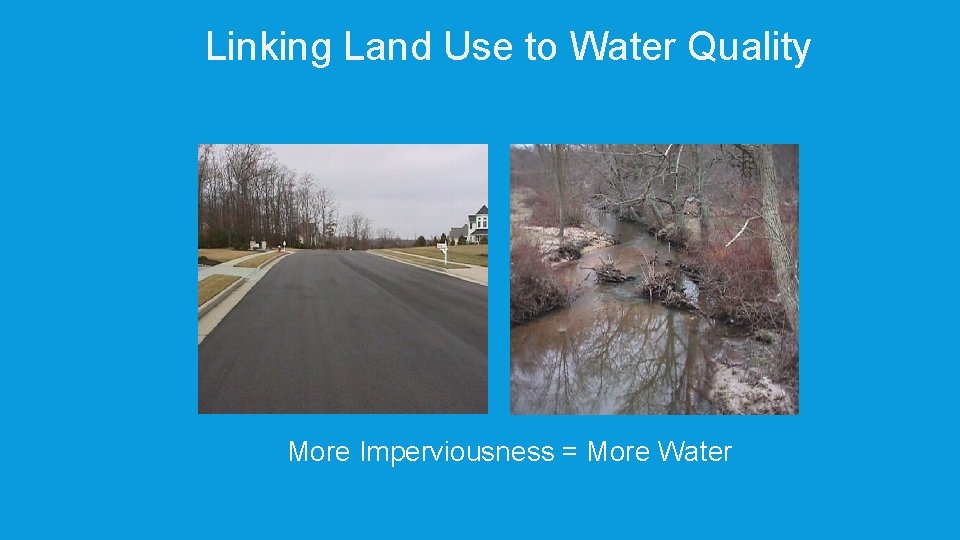
Linking Land Use to Water Quality More Imperviousness = More Water
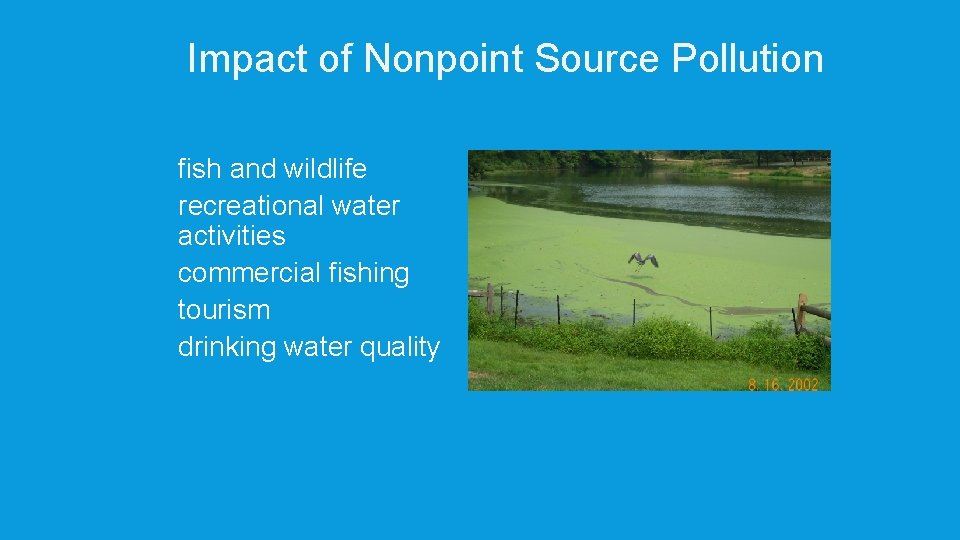
Impact of Nonpoint Source Pollution fish and wildlife p recreational water activities p commercial fishing p tourism p drinking water quality p
TYPES OF WATER POLLUTION Sediment logging, roadbuilding, erosion Oxygen-demanding wastes human waste, storm sewers, runoff from agriculture, grazing and logging, many others Nutrient enrichment = Eutrophication N, P from fertilizers, detergents leads to increased growth in aquatic systems, ultimately more non-living organic matter
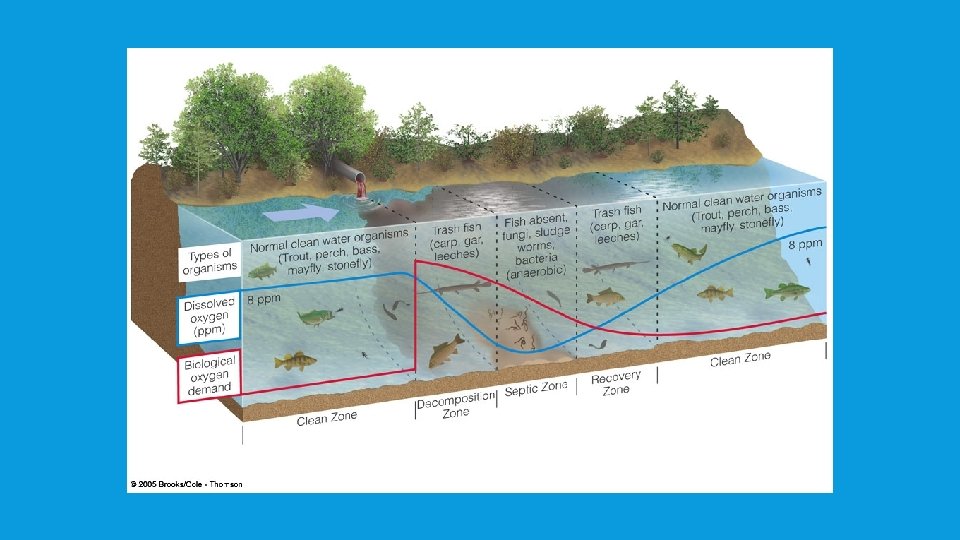
BOD As micro-organisms decompose (through respiration) organic matter, they use up all the available oxygen. Biological Oxygen Demand (BOD) Amount of oxygen required to decay a certain amount of organic matter. If too much organic matter is added, the available oxygen supplies will be used up.
EUTROPHICATION Eutrophic – well-fed, high nutrient levels present in a lake or river Oligotrophic – poorly-fed, low nutrient levels Water bodies can be naturally eutrophic or oligotrophic, but can also be human-caused
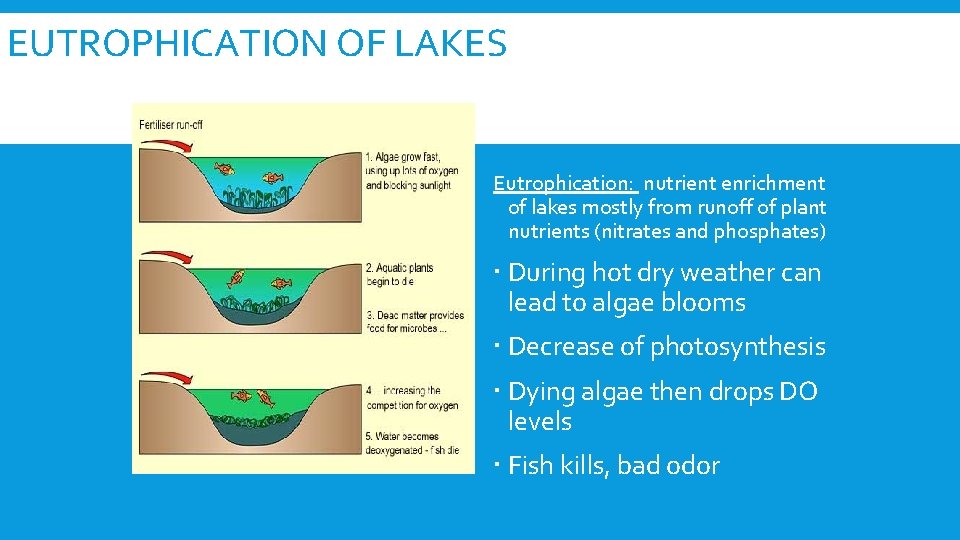
EUTROPHICATION OF LAKES Eutrophication: nutrient enrichment of lakes mostly from runoff of plant nutrients (nitrates and phosphates) During hot dry weather can lead to algae blooms Decrease of photosynthesis Dying algae then drops DO levels Fish kills, bad odor
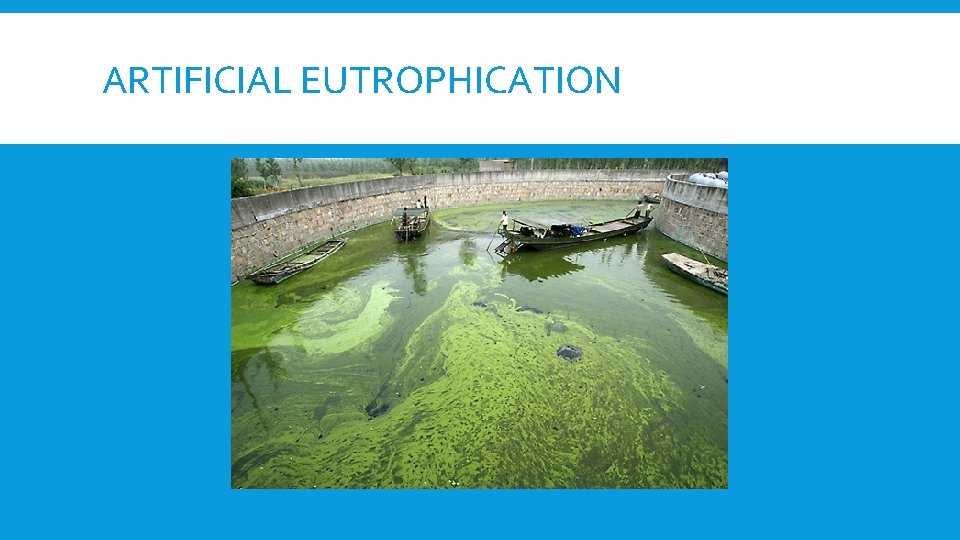
ARTIFICIAL EUTROPHICATION
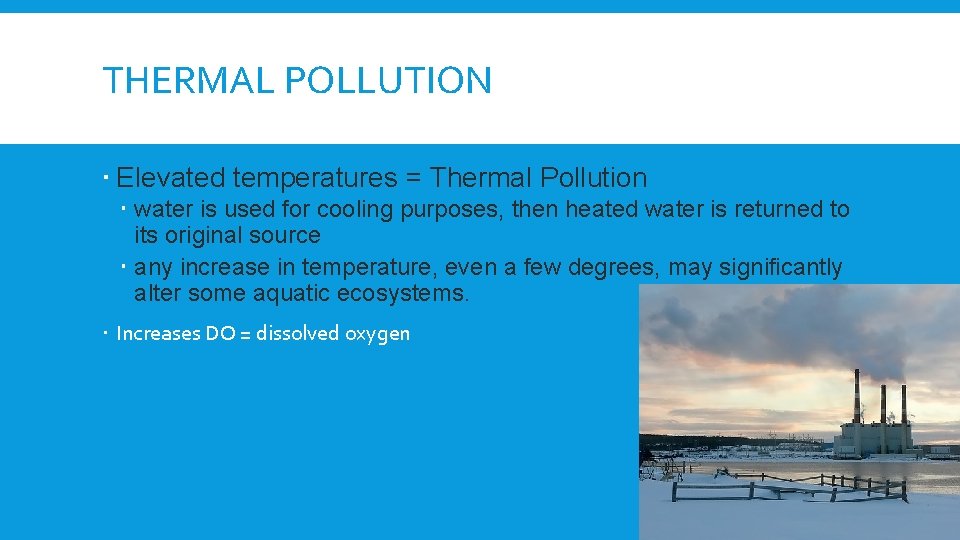
THERMAL POLLUTION Elevated temperatures = Thermal Pollution water is used for cooling purposes, then heated water is returned to its original source any increase in temperature, even a few degrees, may significantly alter some aquatic ecosystems. Increases DO = dissolved oxygen
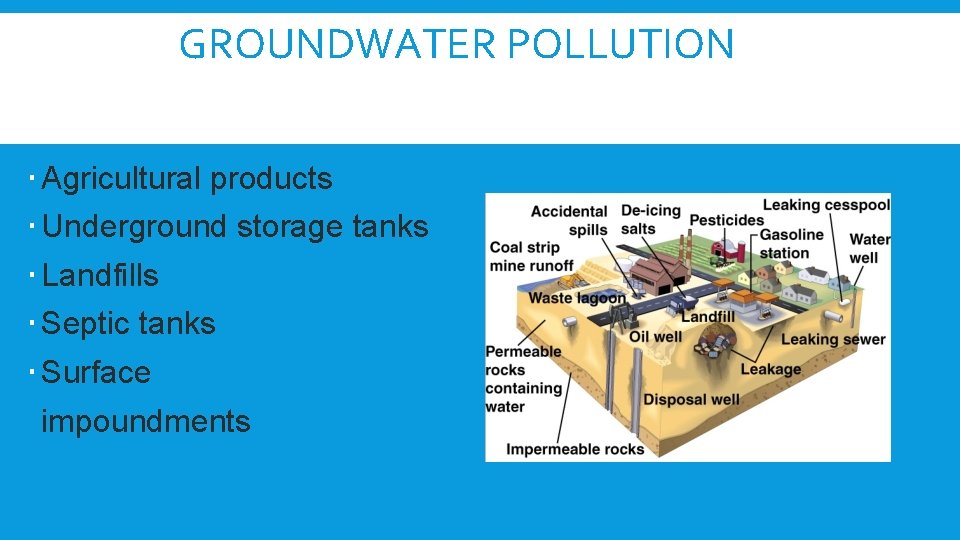
GROUNDWATER POLLUTION Agricultural products Underground storage tanks Landfills Septic tanks Surface impoundments
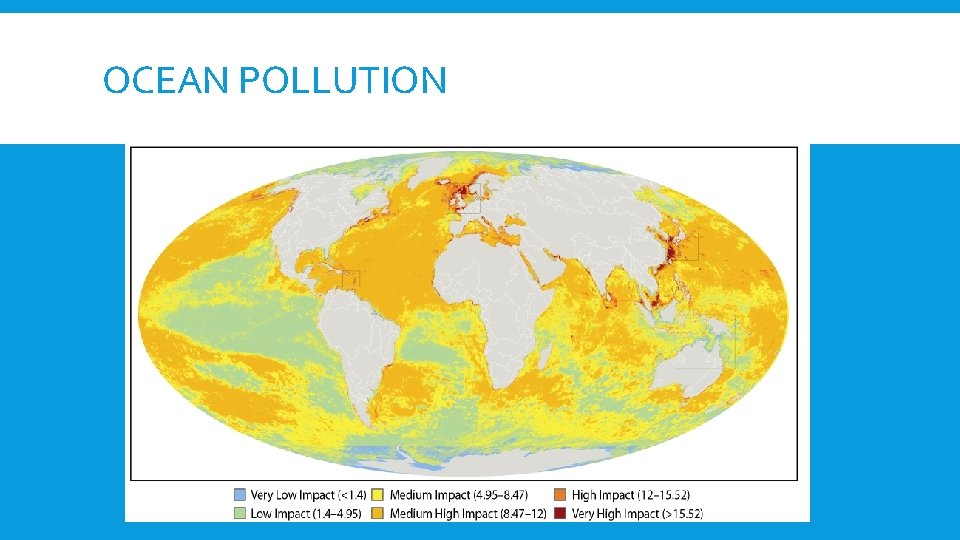
OCEAN POLLUTION
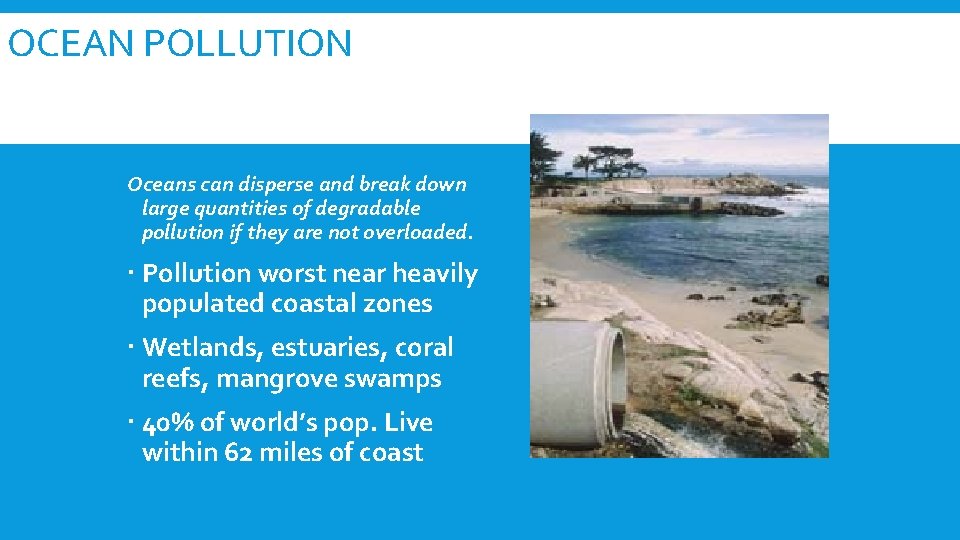
OCEAN POLLUTION Oceans can disperse and break down large quantities of degradable pollution if they are not overloaded. Pollution worst near heavily populated coastal zones Wetlands, estuaries, coral reefs, mangrove swamps 40% of world’s pop. Live within 62 miles of coast
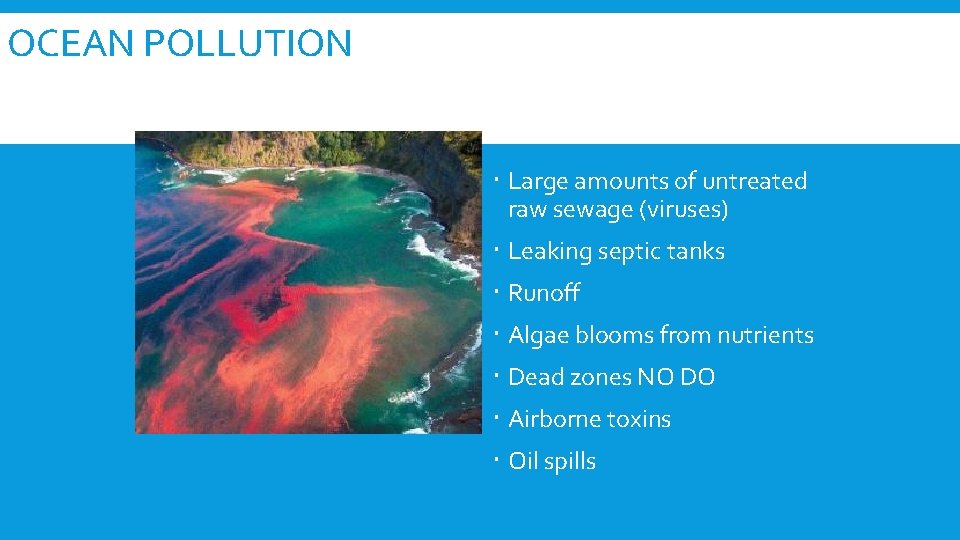
OCEAN POLLUTION Large amounts of untreated raw sewage (viruses) Leaking septic tanks Runoff Algae blooms from nutrients Dead zones NO DO Airborne toxins Oil spills
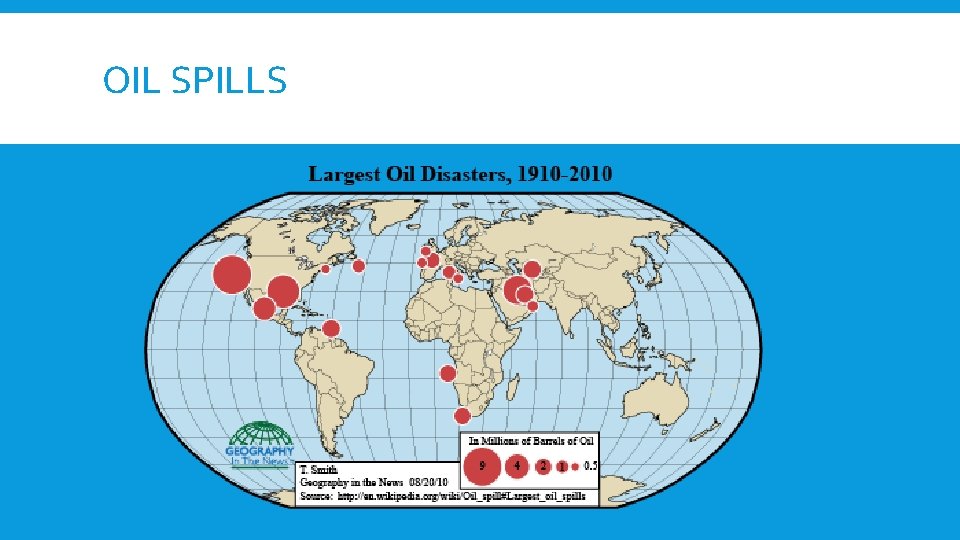
OIL SPILLS
OIL SPILLS Exxon Valdez released 42 million liters of oil in Prince William Sound, contaminating 1500 km of Alaska coastline in 1989 Was the cleanup effective? Most marine oil pollution comes from non-point sources: runoff from streets improper disposal of used oil discharge of oil-contaminated ballast water from tankers
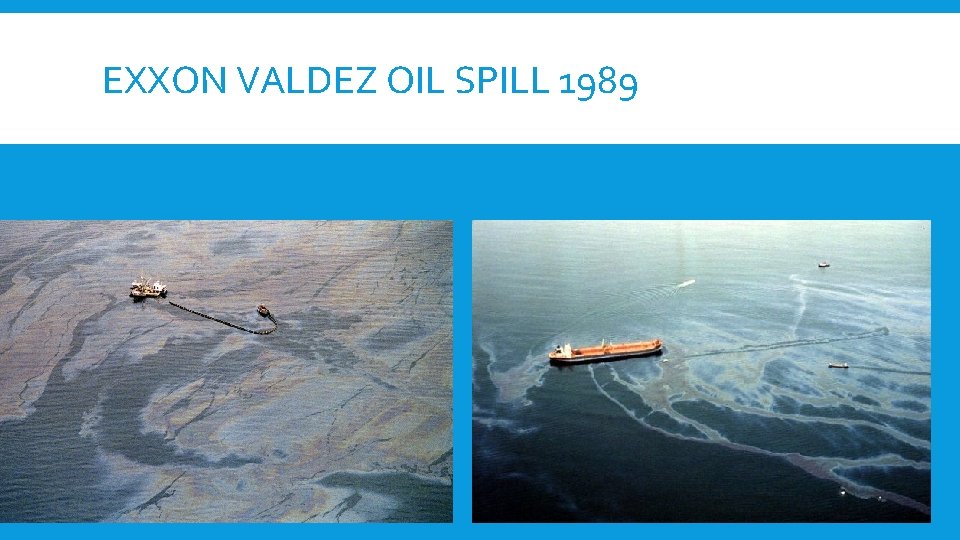
EXXON VALDEZ OIL SPILL 1989
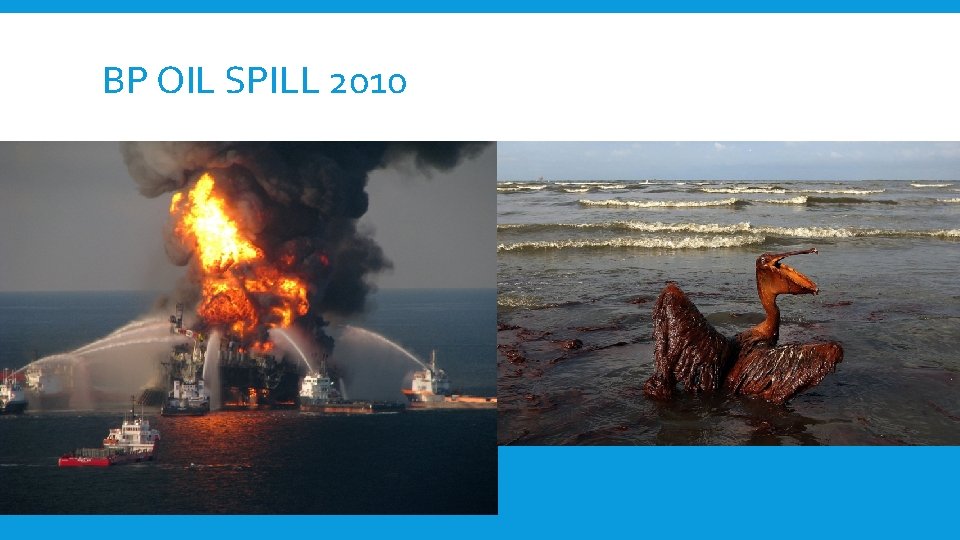
BP OIL SPILL 2010
OCEAN POLLUTION https: //www. youtube. com/watch? v=Sp 572 udn. PVg http: //video. nationalgeographic. com/video/why-ocean-matters
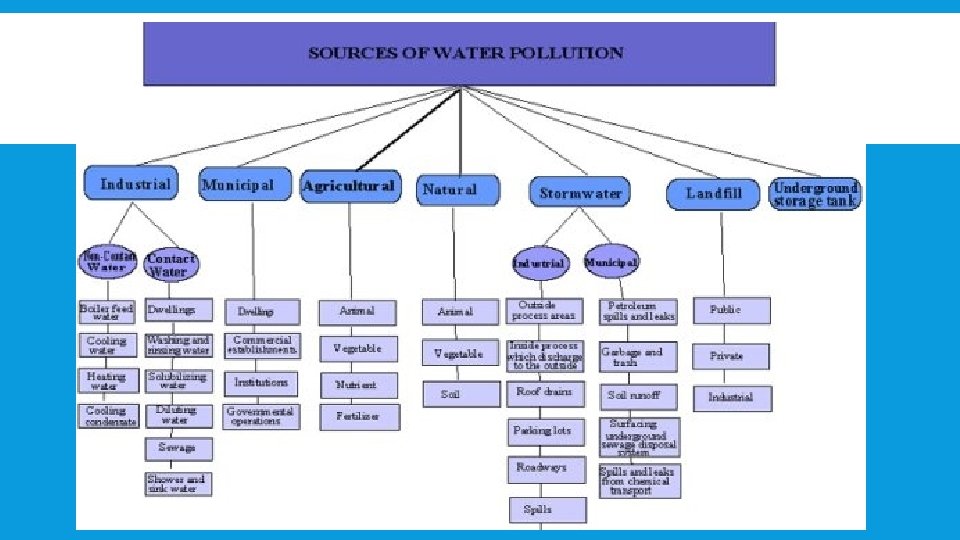
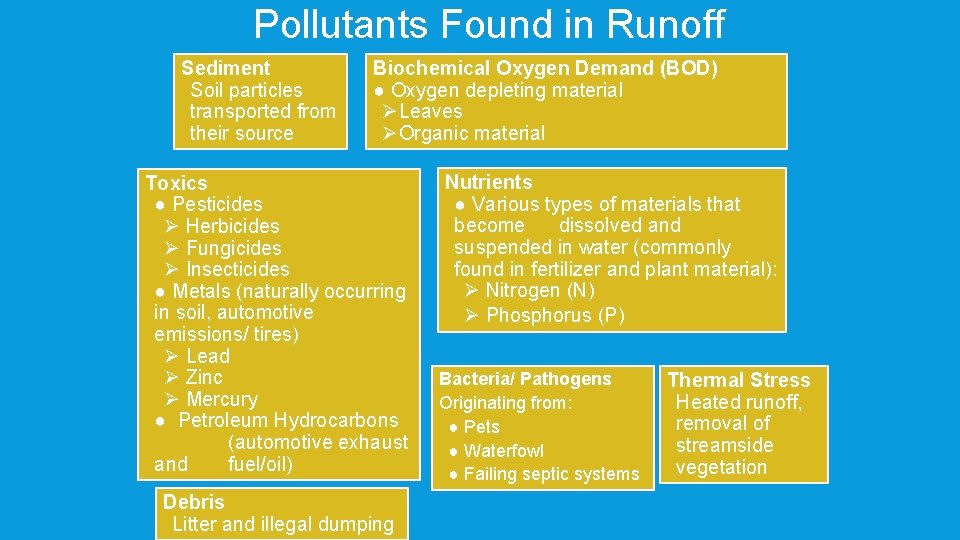
Pollutants Found in Runoff Sediment Soil particles transported from their source Biochemical Oxygen Demand (BOD) ● Oxygen depleting material ØLeaves ØOrganic material Toxics ● Pesticides Ø Herbicides Ø Fungicides Ø Insecticides ● Metals (naturally occurring in soil, automotive emissions/ tires) Ø Lead Ø Zinc Ø Mercury ● Petroleum Hydrocarbons (automotive exhaust and fuel/oil) Debris Litter and illegal dumping Nutrients ● Various types of materials that become dissolved and suspended in water (commonly found in fertilizer and plant material): Ø Nitrogen (N) Ø Phosphorus (P) Bacteria/ Pathogens Originating from: ● Pets ● Waterfowl ● Failing septic systems Thermal Stress Heated runoff, removal of streamside vegetation
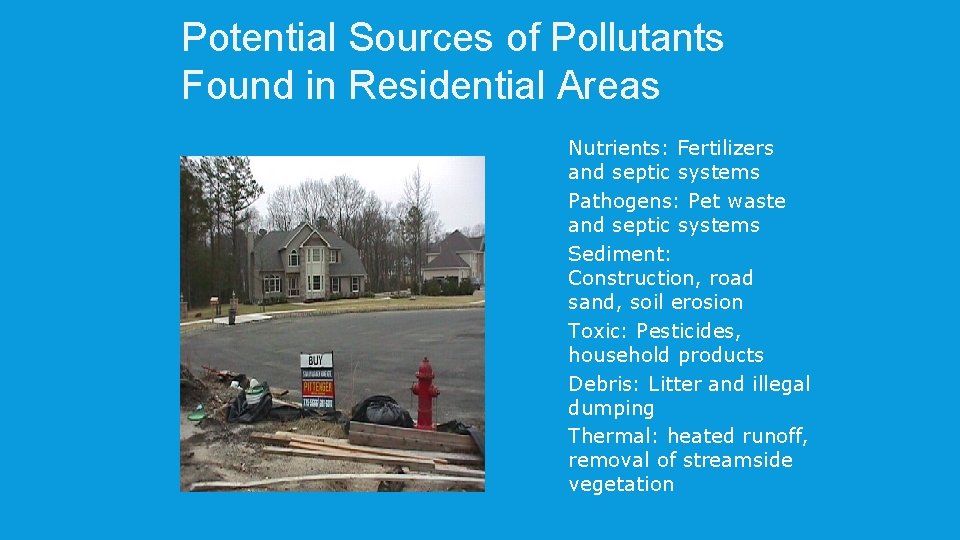
Potential Sources of Pollutants Found in Residential Areas p p p Nutrients: Fertilizers and septic systems Pathogens: Pet waste and septic systems Sediment: Construction, road sand, soil erosion Toxic: Pesticides, household products Debris: Litter and illegal dumping Thermal: heated runoff, removal of streamside vegetation
POLLUTANTS FROM AGRICULTURE Sediment Nutrients Pathogens Pesticides
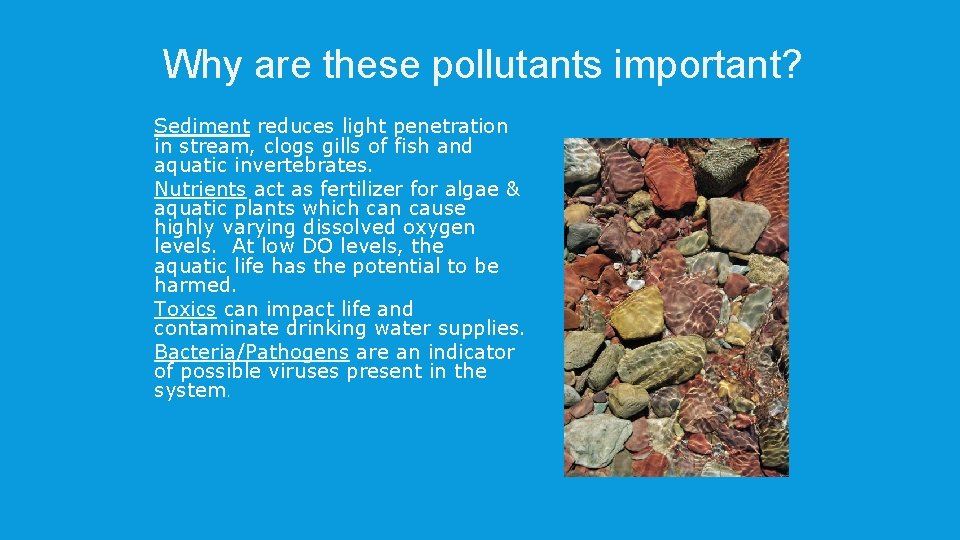
Why are these pollutants important? p p Sediment reduces light penetration in stream, clogs gills of fish and aquatic invertebrates. Nutrients act as fertilizer for algae & aquatic plants which can cause highly varying dissolved oxygen levels. At low DO levels, the aquatic life has the potential to be harmed. Toxics can impact life and contaminate drinking water supplies. Bacteria/Pathogens are an indicator of possible viruses present in the system.
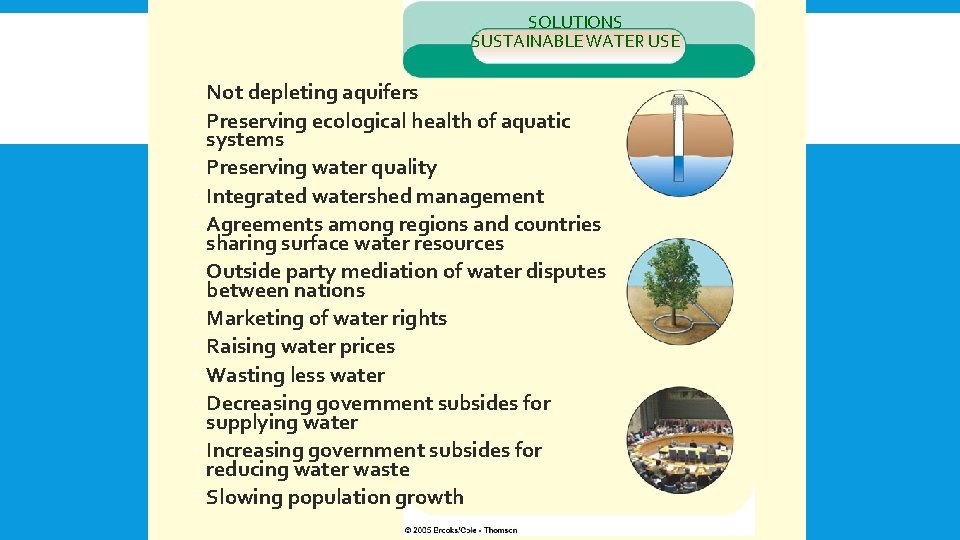
SOLUTIONS SUSTAINABLE WATER USE Not depleting aquifers Preserving ecological health of aquatic systems Preserving water quality Integrated watershed management Agreements among regions and countries sharing surface water resources Outside party mediation of water disputes between nations Marketing of water rights Raising water prices Wasting less water Decreasing government subsides for supplying water Increasing government subsides for reducing water waste Slowing population growth
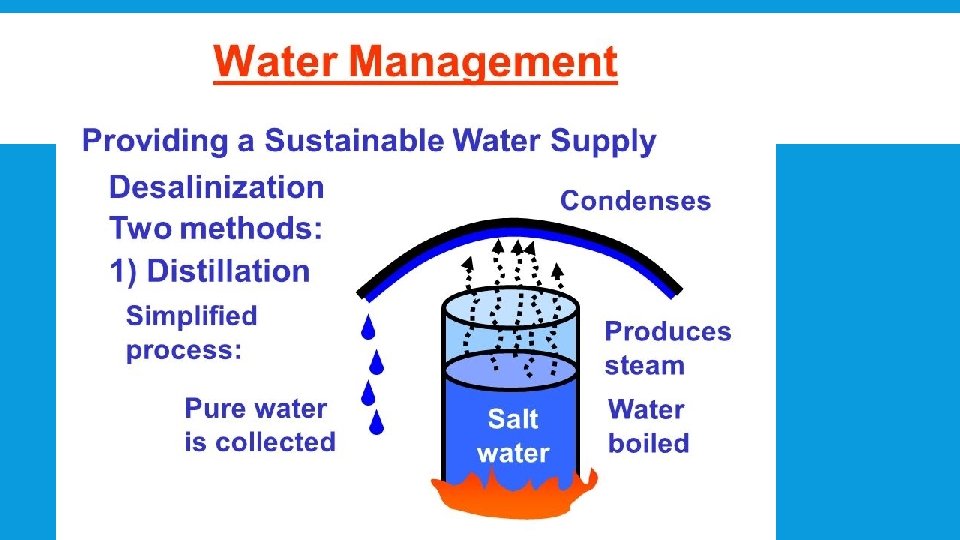
WATER MANAGEMENT
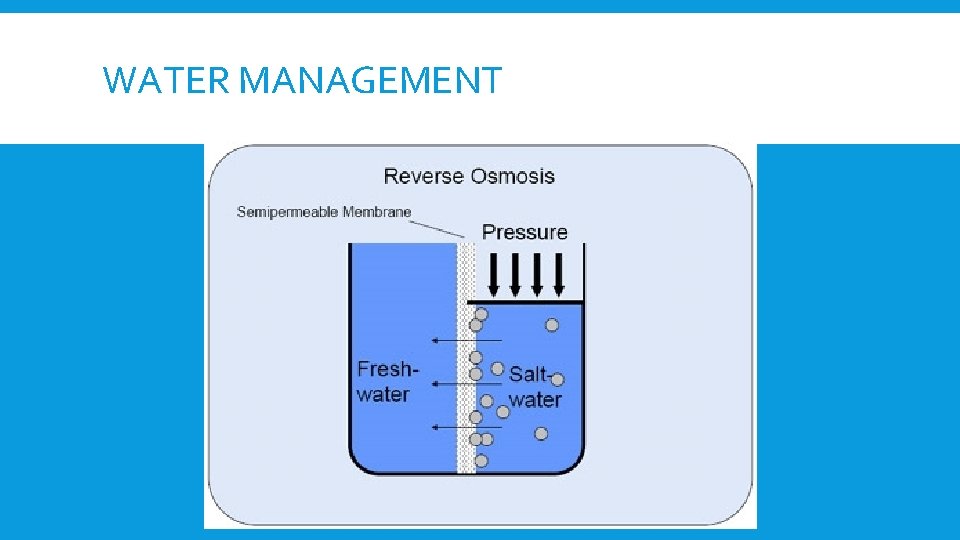
WATER MANAGEMENT
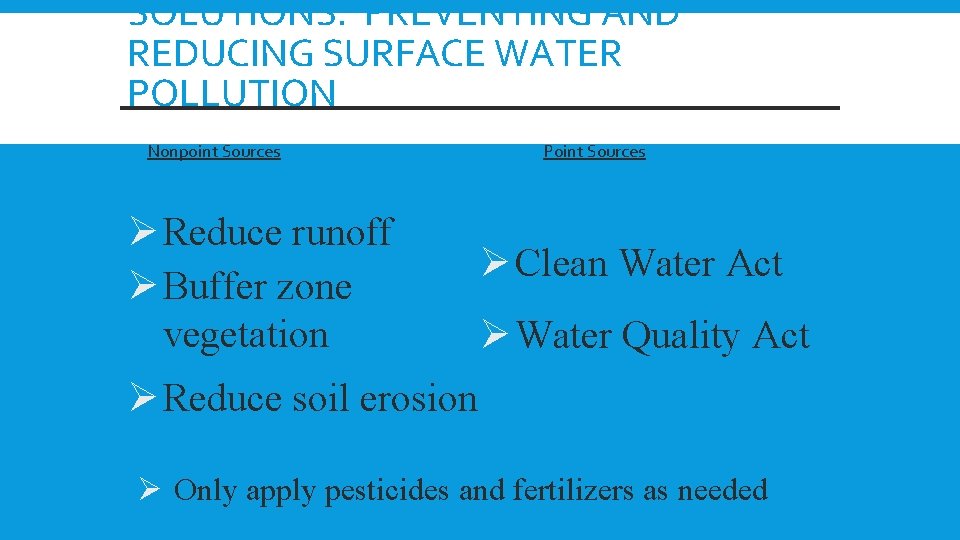
SOLUTIONS: PREVENTING AND REDUCING SURFACE WATER POLLUTION Nonpoint Sources Ø Reduce runoff Ø Buffer zone vegetation Point Sources Ø Clean Water Act Ø Water Quality Act Ø Reduce soil erosion Ø Only apply pesticides and fertilizers as needed
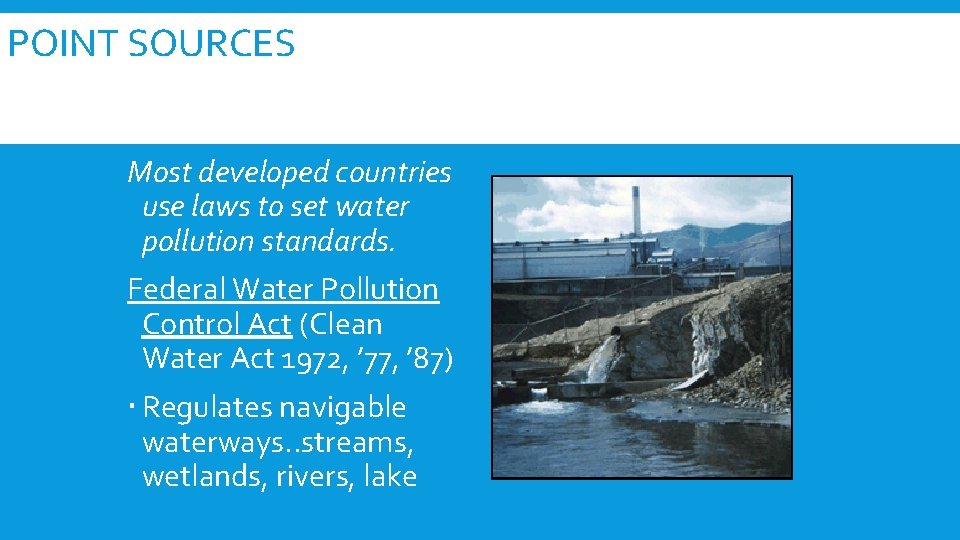
POINT SOURCES Most developed countries use laws to set water pollution standards. Federal Water Pollution Control Act (Clean Water Act 1972, ’ 77, ’ 87) Regulates navigable waterways. . streams, wetlands, rivers, lake
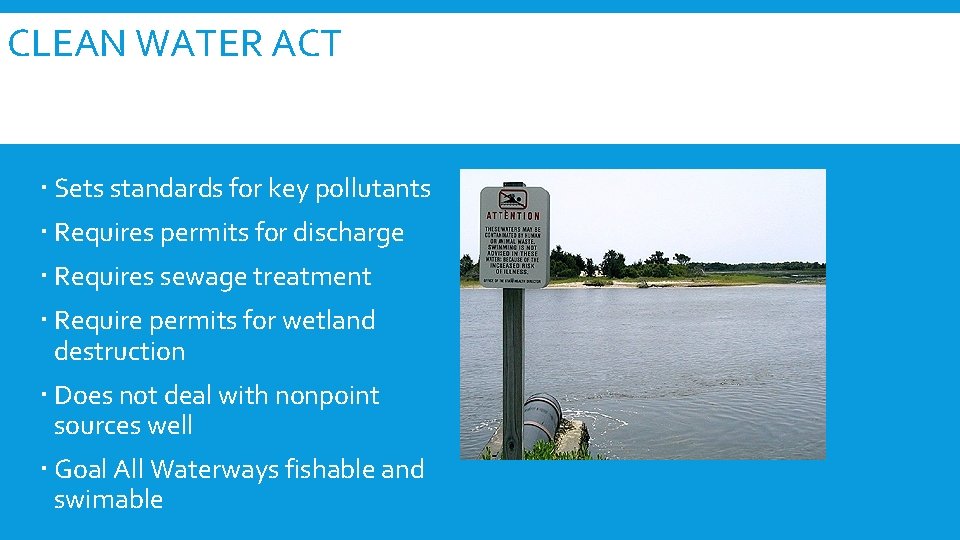
CLEAN WATER ACT Sets standards for key pollutants Requires permits for discharge Requires sewage treatment Require permits for wetland destruction Does not deal with nonpoint sources well Goal All Waterways fishable and swimable
SAFE DRINKING WATER ACT 54 countries have drinking water laws SDWA passed 1974 requires EPA to set drinking water standards Maximum Contaminating Levels (MCLs)
OIL POLLUTION ACT OF 1990 Requires all oil tankers in U. S. waters to be double hulled by 2015 Set up fund to pay for oil spill clean up when a company responsible is unable to afford it.
- Slides: 40