
Water Pollution Objective I will identify types and
Water Pollution Objective: I will identify types and sources of water pollution.
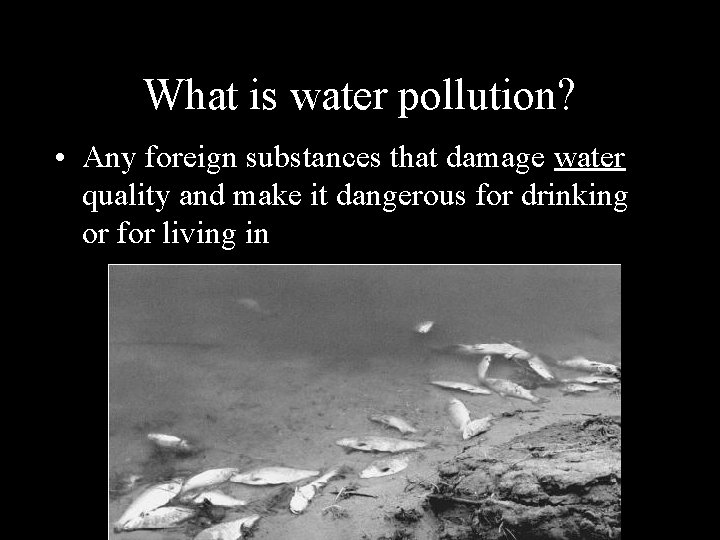
What is water pollution? • Any foreign substances that damage water quality and make it dangerous for drinking or for living in
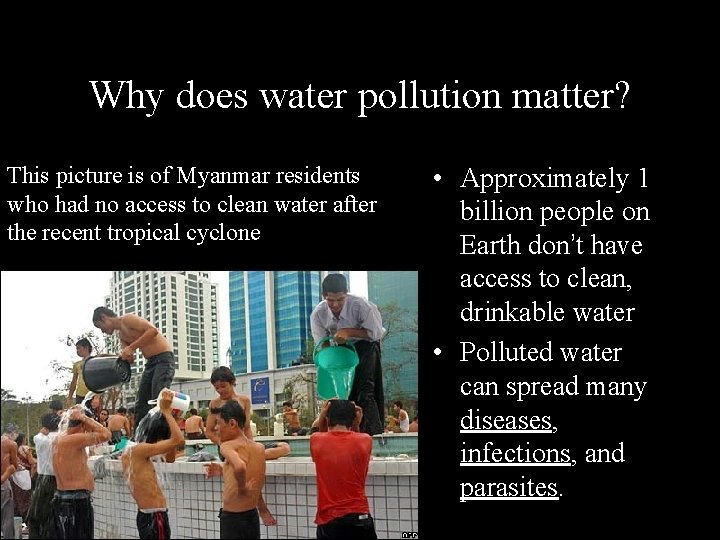
Why does water pollution matter? This picture is of Myanmar residents who had no access to clean water after the recent tropical cyclone • Approximately 1 billion people on Earth don’t have access to clean, drinkable water • Polluted water can spread many diseases, infections, and parasites.
Most Common Sources of Pollution • Point source pollution – pollution that comes from a specific source • Non-point source pollution – pollution that doesn’t have one specific source • Groundwater pollution – chemicals seep through the soil and into the groundwater below
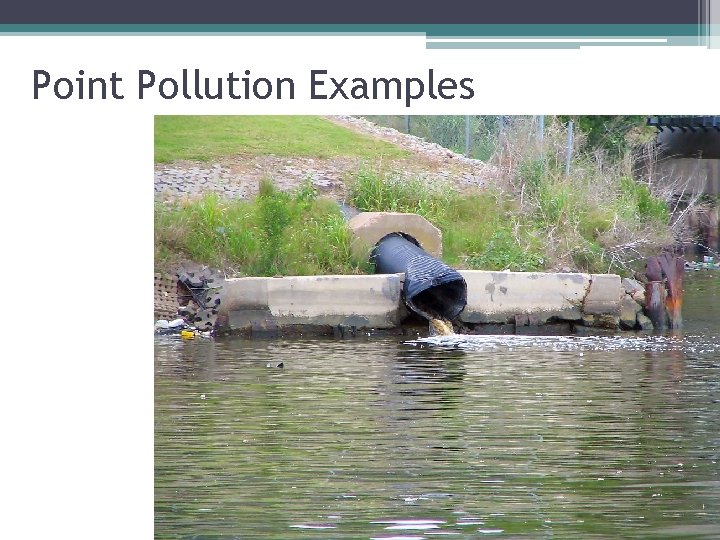
Point Pollution Examples
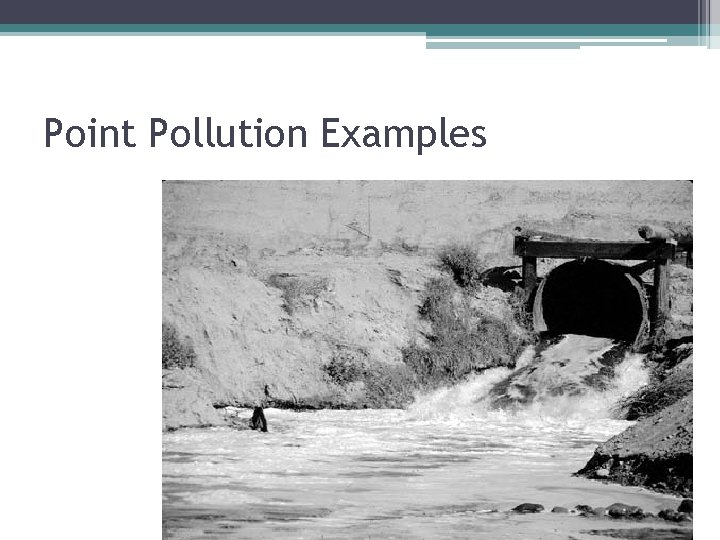
Point Pollution Examples
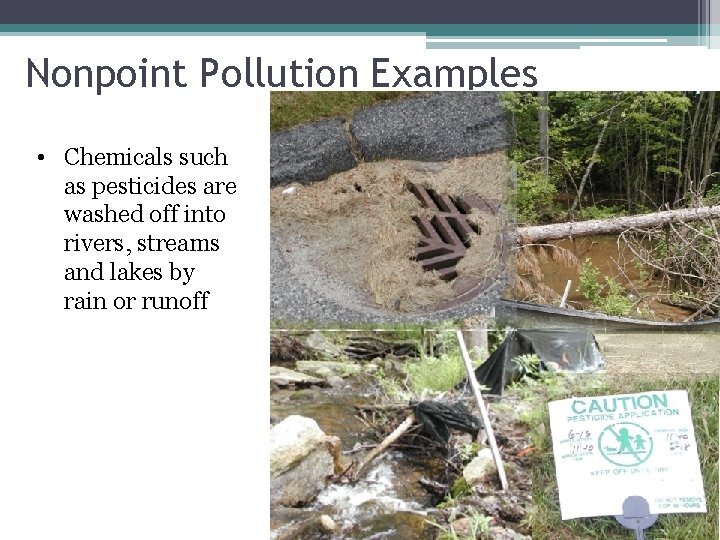
Nonpoint Pollution Examples • Chemicals such as pesticides are washed off into rivers, streams and lakes by rain or runoff
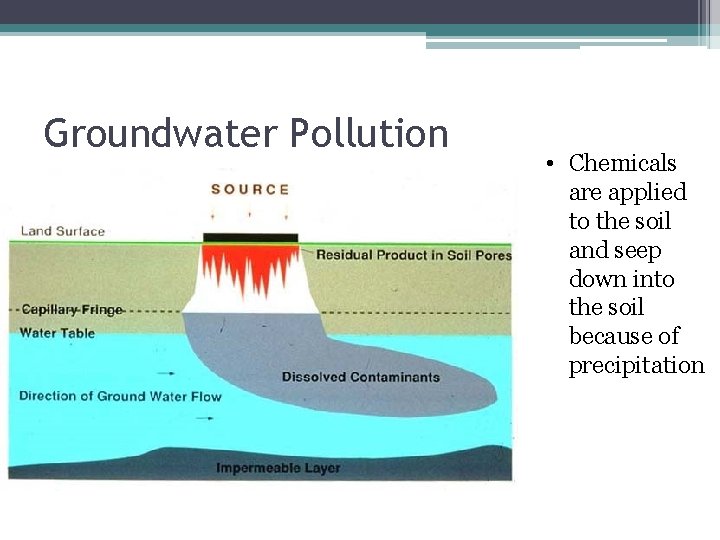
Groundwater Pollution • Chemicals are applied to the soil and seep down into the soil because of precipitation
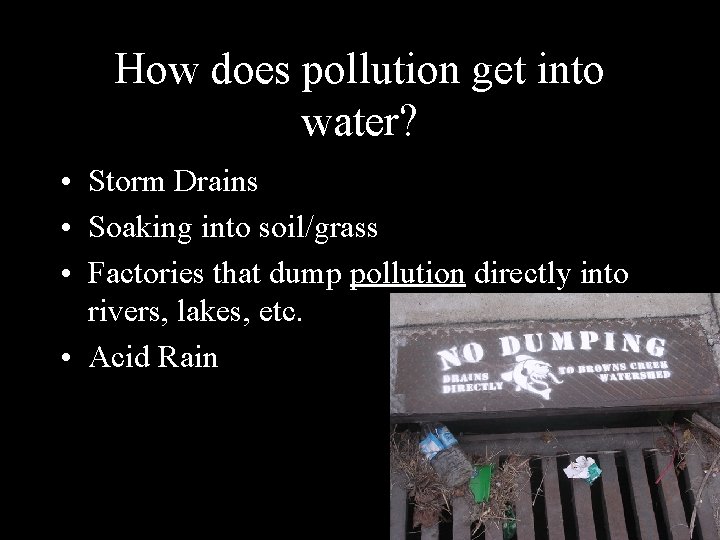
How does pollution get into water? • Storm Drains • Soaking into soil/grass • Factories that dump pollution directly into rivers, lakes, etc. • Acid Rain
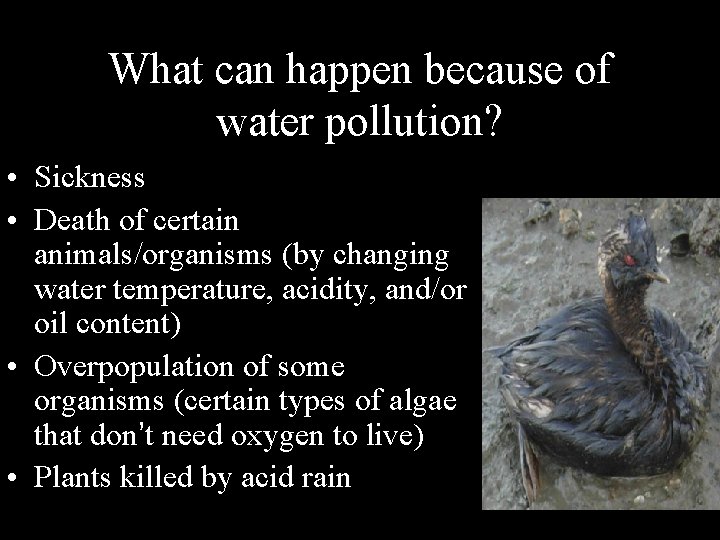
What can happen because of water pollution? • Sickness • Death of certain animals/organisms (by changing water temperature, acidity, and/or oil content) • Overpopulation of some organisms (certain types of algae that don’t need oxygen to live) • Plants killed by acid rain
What are the different types of pollution? • • Biodegradable waste Fertilizers/Pesticides Heat Sedimentation Chemicals Radioactive Material Antibiotics Bacteria/Viruses
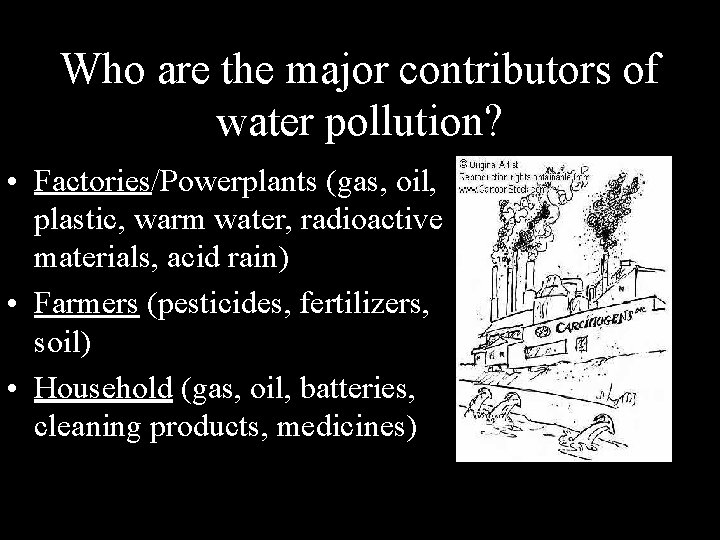
Who are the major contributors of water pollution? • Factories/Powerplants (gas, oil, plastic, warm water, radioactive materials, acid rain) • Farmers (pesticides, fertilizers, soil) • Household (gas, oil, batteries, cleaning products, medicines)
What can we do about it? • Don’t let chemicals, medicines, and cleaning products soak into the ground or go into a storm drain on the side of the street • Throw trash in a garbage can and not on the side of the road where rain can get to it • Make sure septic systems are working properly and without leaks
- Slides: 14