
WATER POLLUTION By Dr T RAKESH SHARMA Department
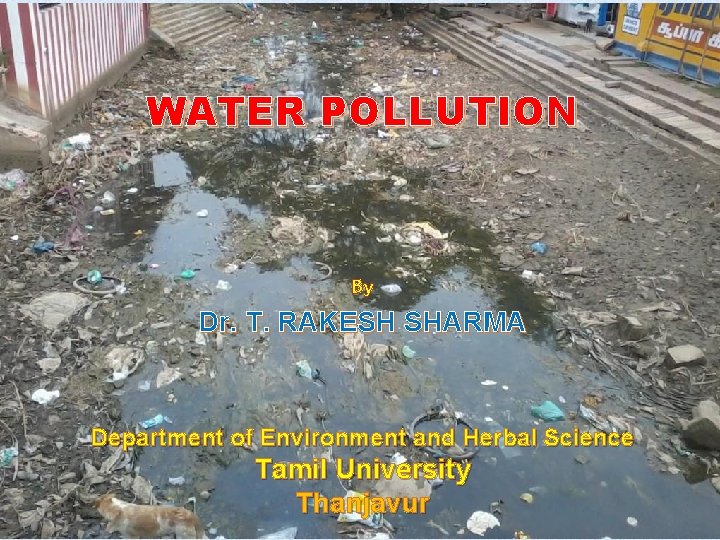
WATER POLLUTION By Dr. T. RAKESH SHARMA Department of Environment and Herbal Science Tamil University Thanjavur
Learning Objectives: 1. Sources of water pollution 2. Causes of water pollution 3. Impacts of water pollution 4. Current Scenario of water pollution 5. Prevent and control of water pollution
Introduction • Water pollution is the contamination of water resources by physical, chemical, radioactive and microbial substances. • It happens when pollutants are directly or indirectly discharged into water resources. • It is a major global issue, leading to cause of diseases and deaths (14, 000 people daily). • Mainly caused by anthropogenic activities in urban areas of developed and developing countries.
Sources of Water Pollution 1. Point source - contaminants that comes from a single, identifiable source such as a pipelines or ditches. e. g. Discharges from treatment plants, industries, and storm drains. 2. Non-point source – contaminates that comes from diffuse sources. e. g. Agricultural and surface run-offs.
Causes of Water Pollution Rapid growth of population, unplanned urbanization, increasing industrialization, rising of living standards and other human activities. § Sewage discharges from urban areas. § Solid wastes dump and littering plastics. § Effluents from various industries. § Agricultural and land run-offs. § Oil spills from tankers and ships. § High temperatures in natural water bodies § Lack of sanitation facilities.
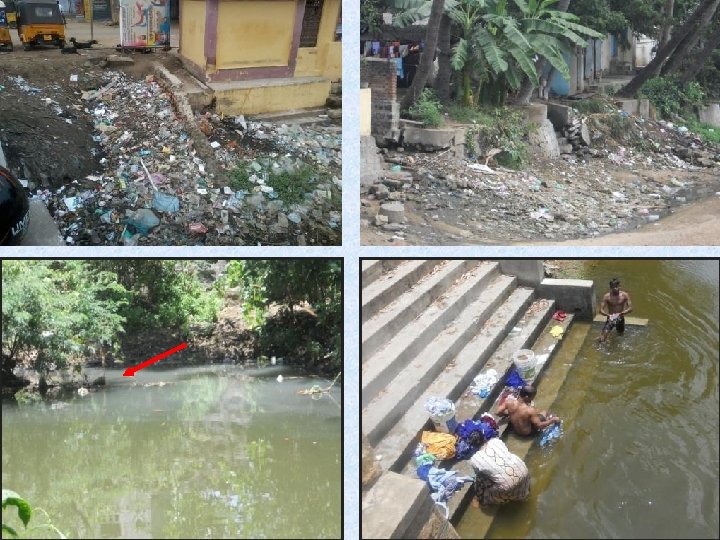
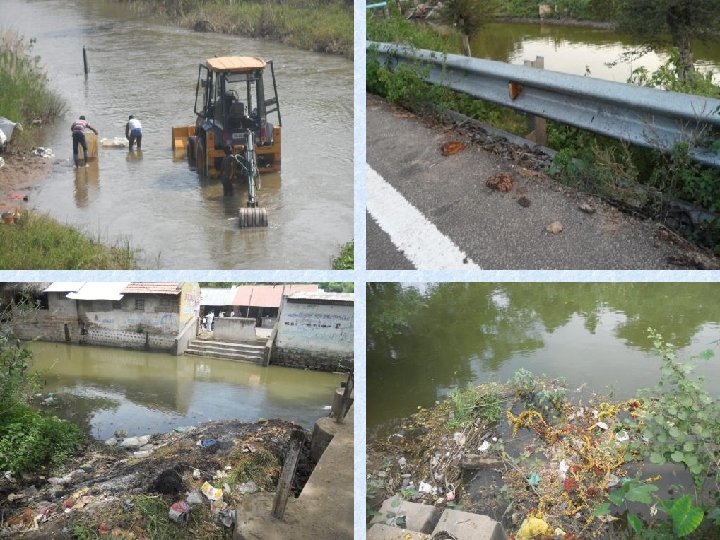
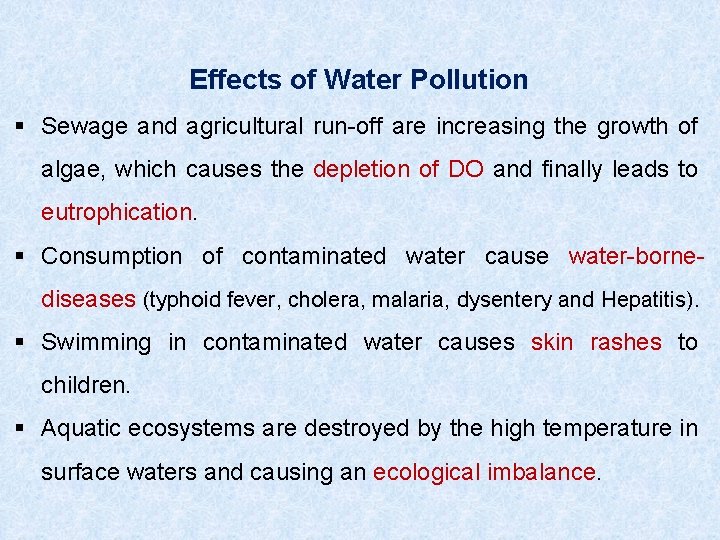
Effects of Water Pollution § Sewage and agricultural run-off are increasing the growth of algae, which causes the depletion of DO and finally leads to eutrophication. § Consumption of contaminated water cause water-bornediseases (typhoid fever, cholera, malaria, dysentery and Hepatitis). § Swimming in contaminated water causes skin rashes to children. § Aquatic ecosystems are destroyed by the high temperature in surface waters and causing an ecological imbalance.
Some Facts of Water Pollution ü In every year, 14 billion pounds of garbage is dumped into the ocean. ü Ganges river is most polluted rivers in the world - discharging untreated sewage from 114 cities. ü According to EPA, 1. 2 trillion gallons of wastewater is discharging into U. S. water bodies annually. ü Contaminated water is being consumed by 700 million people and more than 3, 000 children die (UNICEF) in every day at global level.
Conti…. ü In India, only 12% of people get clean drinking water, the rest 88% consumed from polluted water bodies. ü Aquatic organisms are decreased - five times more than terrestrial organisms. ü Over 30 billion tons of sewages are discharged into water resources every year. ü The massive oil spill in the Gulf of Mexico that was caused by British Petroleum caused over 1, 000 animal species die.
Control of Water Pollution § Always conserve water § Practice organic farming § Dispose trash properly § Proper wastewater treatment and management 1. Primary treatment – Screening, grit removal, scum removal neutralization & sedimentation 2. Secondary treatment - Aerobic process & Anaerobic Process 3. Tertiary treatment – SF, ACF, electrolysis, Ion-exchange, RO, Disinfection methods 4. Cooling towers & cooling spray ponds
Summary • Different identifiable and diffused sources • Various human activities causing water pollution • Impacts to aquatic ecosystems and humans • Prevent water pollution and wastewater management

Copy. Right – All Rights Reserved @ tamiluniversity. ac. in

THANK YOU
- Slides: 14