
Water Life Humans and Civilization The First Organisms

- Slides: 41
Water, Life, Humans, and Civilization
The First Organisms Must survive in low-oxygen environments Could not eat other organisms for food Assemble complex carbon compounds from simple Carbon compounds (CO 2) using external energy. Two energy sources: Light: Chemical reactions: Light and Chemical reactions photoautotrophs chemoautotrophs
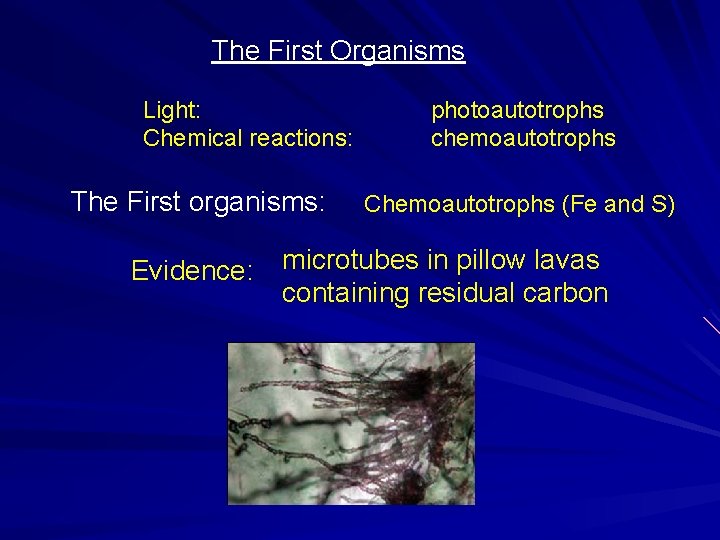
The First Organisms Light: Chemical reactions: The First organisms: Evidence: photoautotrophs chemoautotrophs Chemoautotrophs (Fe and S) microtubes in pillow lavas containing residual carbon
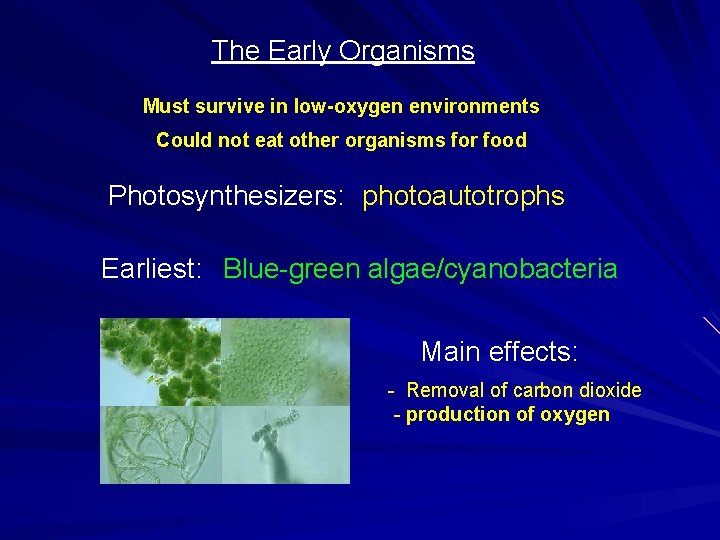
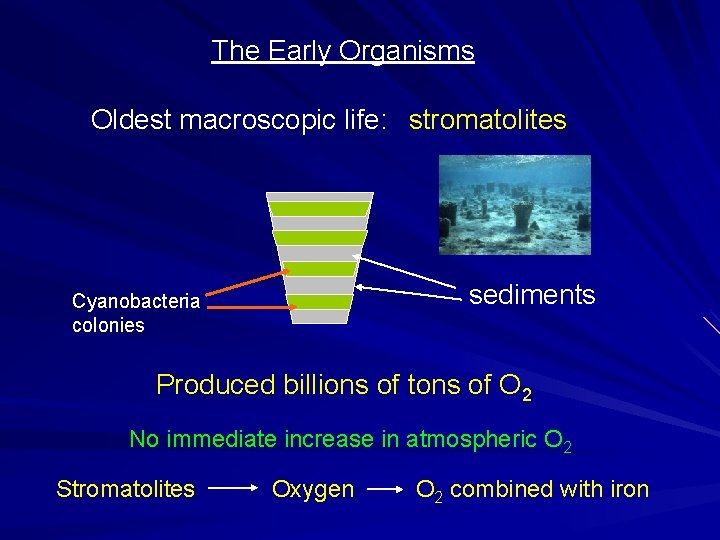
The Early Organisms Must survive in low-oxygen environments Could not eat other organisms for food Photosynthesizers: photoautotrophs Earliest: Blue-green algae/cyanobacteria Main effects: - Removal of carbon dioxide - production of oxygen
The Early Organisms Oldest macroscopic life: stromatolites sediments Cyanobacteria colonies Produced billions of tons of O 2 No immediate increase in atmospheric O 2 Stromatolites Oxygen O 2 combined with iron
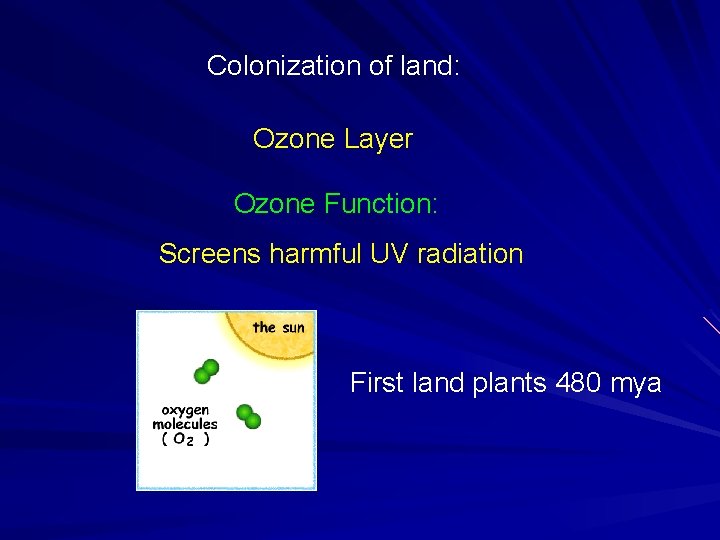
Colonization of land: Ozone Layer Ozone Function: Screens harmful UV radiation First land plants 480 mya
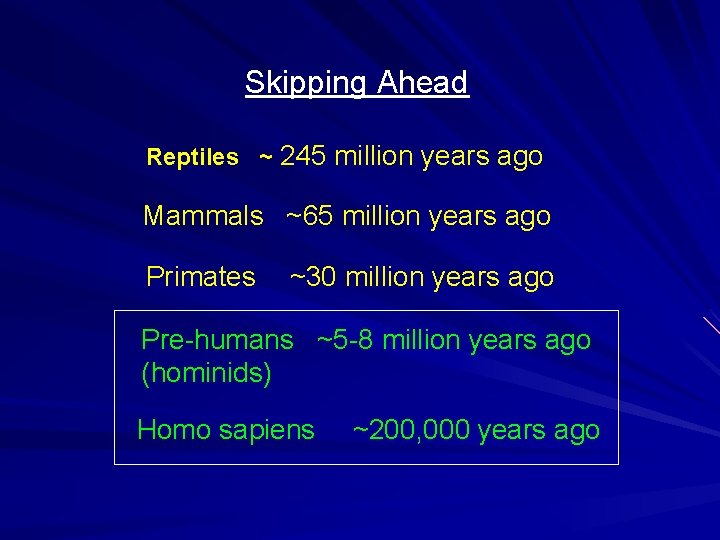
Skipping Ahead Reptiles ~ 245 million years ago Mammals ~65 million years ago Primates ~30 million years ago Pre-humans ~5 -8 million years ago (hominids) Homo sapiens ~200, 000 years ago
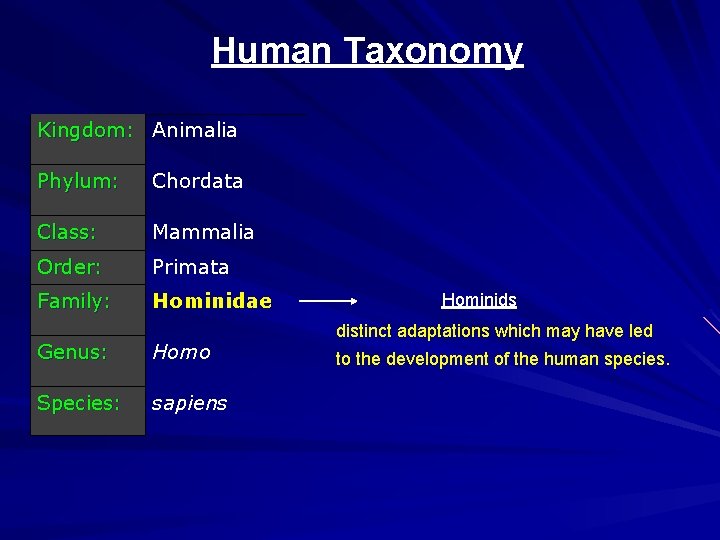
Human Taxonomy Kingdom: Animalia Phylum: Chordata Class: Mammalia Order: Primata Family: Hominidae Genus: Homo Species: sapiens Hominids distinct adaptations which may have led to the development of the human species.
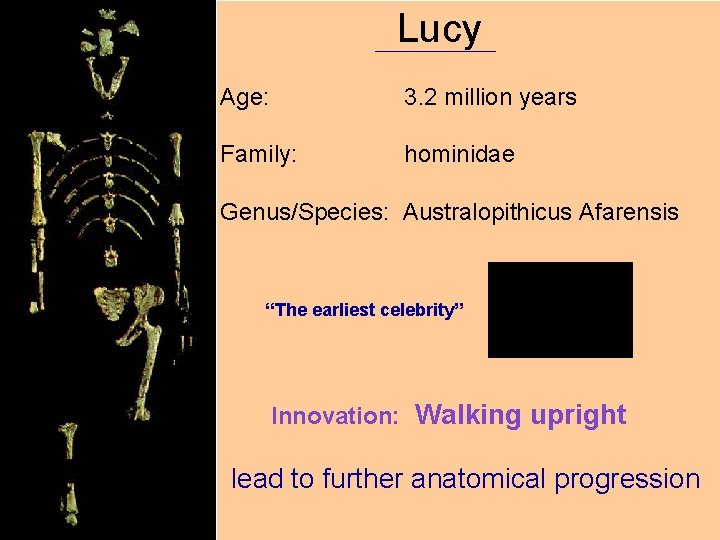
Lucy Age: 3. 2 million years Family: hominidae Genus/Species: Australopithicus Afarensis “The earliest celebrity” Innovation: Walking upright lead to further anatomical progression
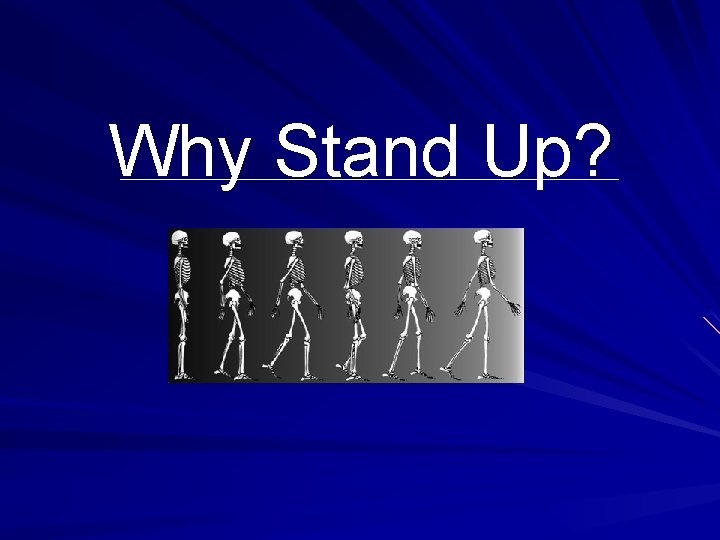
Why Stand Up?
Hypotheses Postural Feeding Hypothesis Thermoregulatory Model Wading Hypothesis Savanna Hypothesis
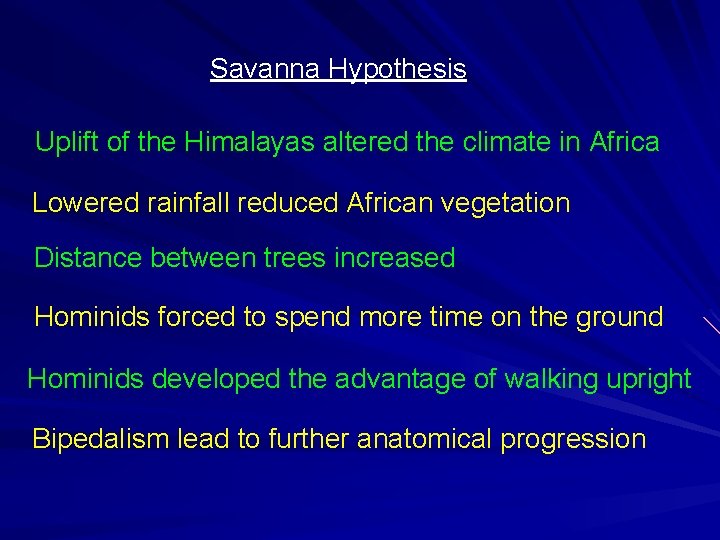
Savanna Hypothesis Uplift of the Himalayas altered the climate in Africa Lowered rainfall reduced African vegetation Distance between trees increased Hominids forced to spend more time on the ground Hominids developed the advantage of walking upright Bipedalism lead to further anatomical progression
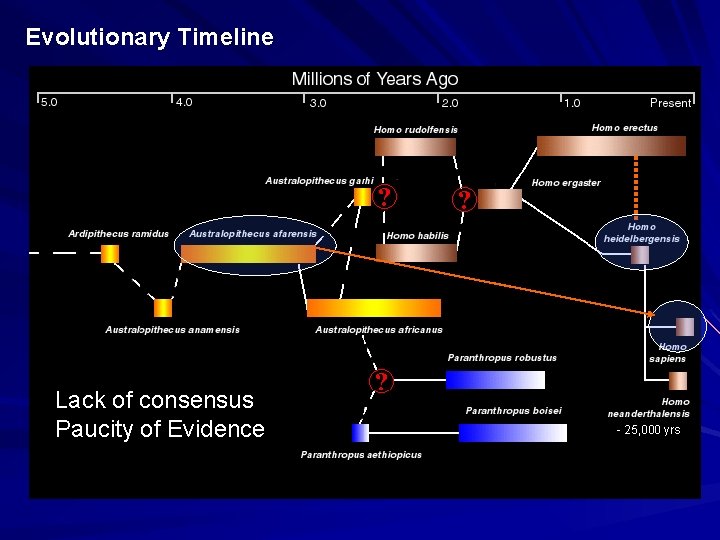
Evolutionary Timeline Lack of consensus Paucity of Evidence - 25, 000 yrs
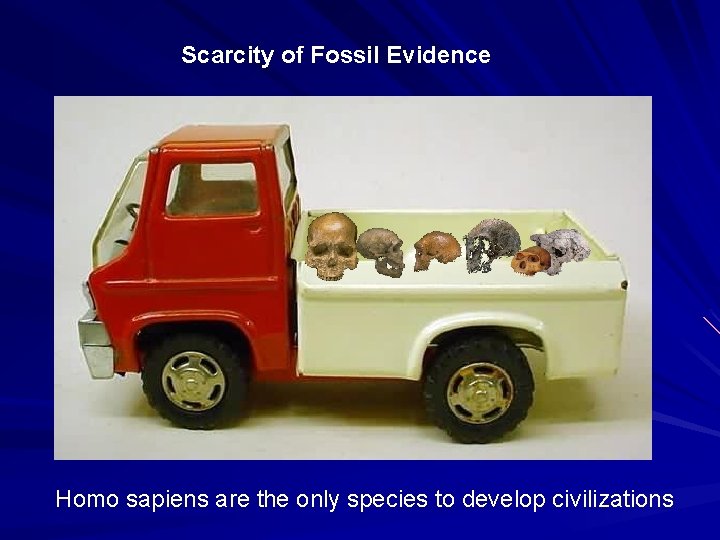
Scarcity of Fossil Evidence Homo sapiens are the only species to develop civilizations
Water and the Development of Human Civilization
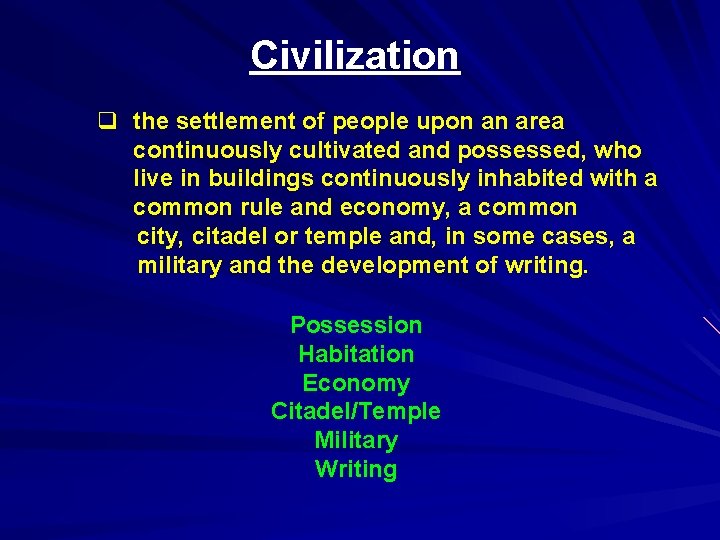
Civilization q the settlement of people upon an area continuously cultivated and possessed, who live in buildings continuously inhabited with a common rule and economy, a common city, citadel or temple and, in some cases, a military and the development of writing. Possession Habitation Economy Citadel/Temple Military Writing
Civilization The first condition necessary to the settling of humans. A trustworthy supply of water
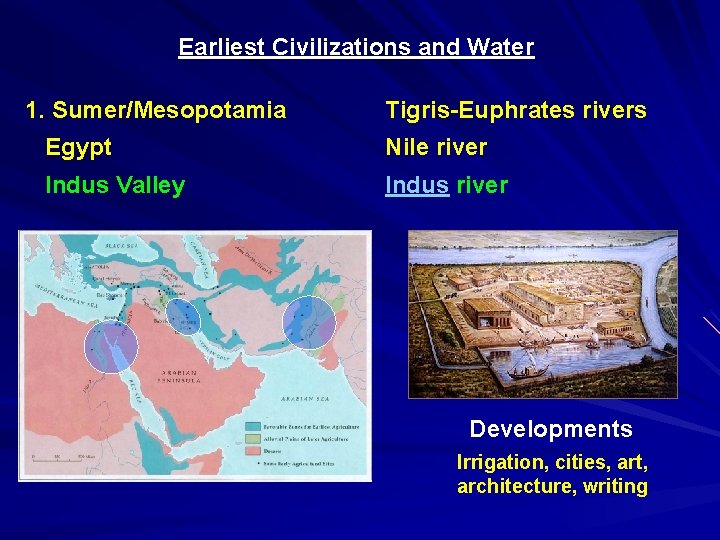
Earliest Civilizations and Water 1. Sumer/Mesopotamia Tigris-Euphrates rivers Egypt Nile river Indus Valley Indus river Developments Irrigation, cities, art, architecture, writing
Civilization: Before and After
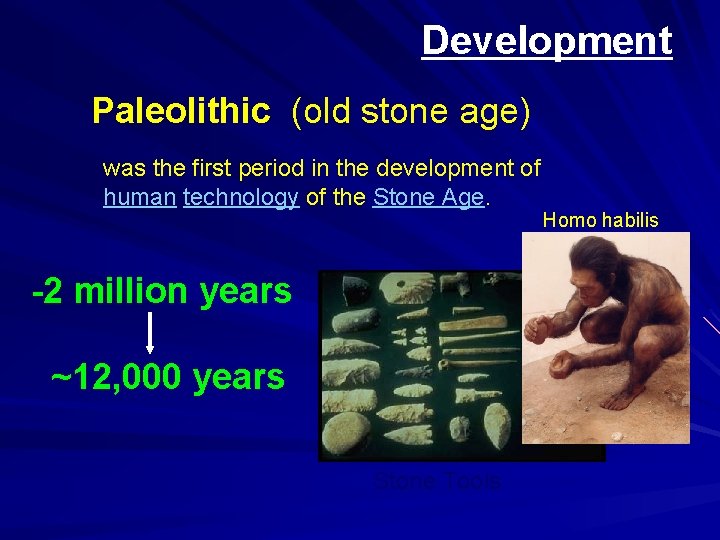
Development Paleolithic (old stone age) was the first period in the development of human technology of the Stone Age. -2 million years ~12, 000 years Stone Tools Homo habilis
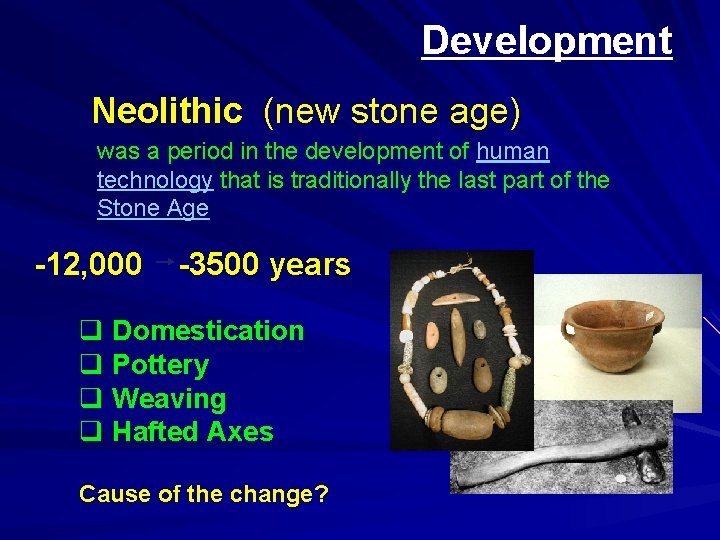
Development Neolithic (new stone age) was a period in the development of human technology that is traditionally the last part of the Stone Age -12, 000 -3500 years q Domestication q Pottery q Weaving q Hafted Axes Cause of the change?
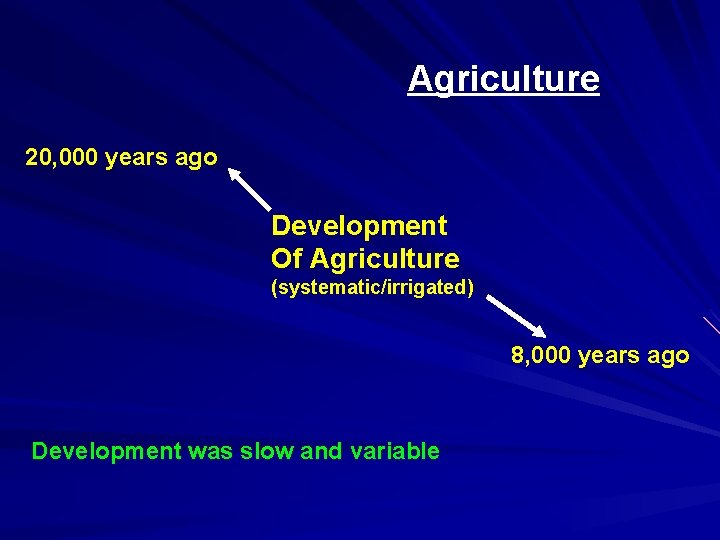
Agriculture 20, 000 years ago Development Of Agriculture (systematic/irrigated) 8, 000 years ago Development was slow and variable
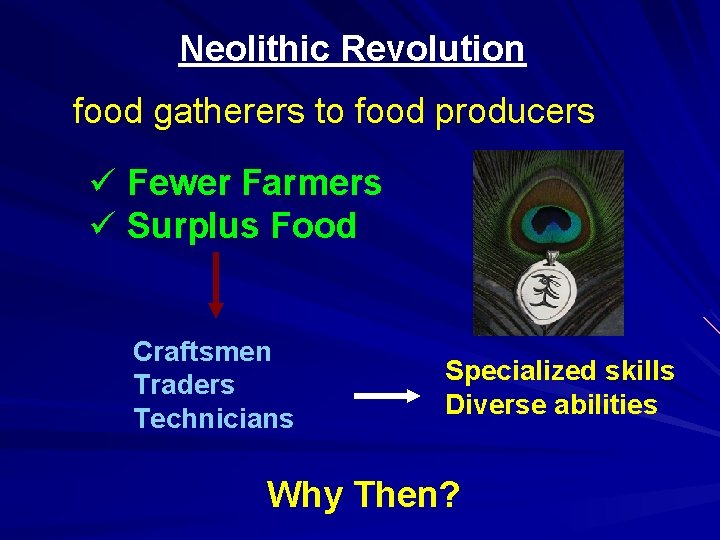
Neolithic Revolution food gatherers to food producers ü Fewer Farmers ü Surplus Food Craftsmen Traders Technicians Specialized skills Diverse abilities Why Then?
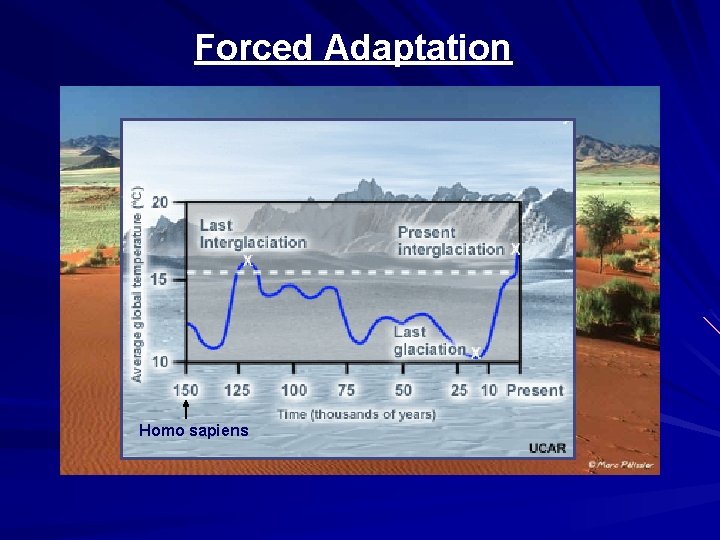
Forced Adaptation Climate and Water Homo sapiens
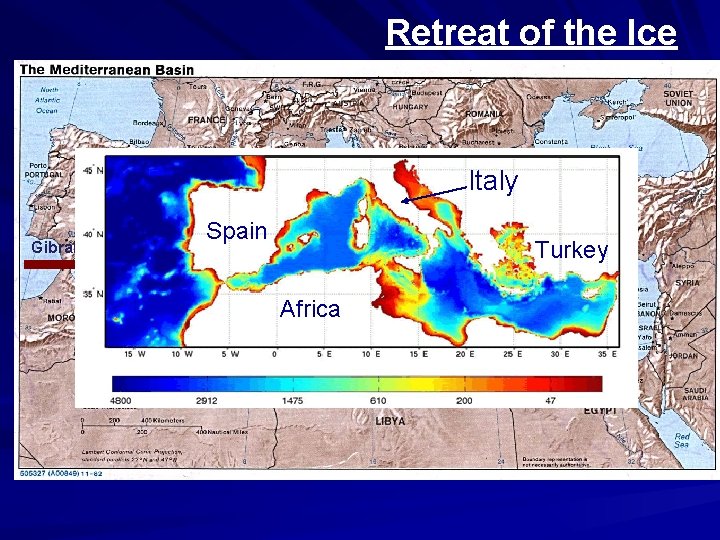
Retreat of the Ice Italy Gibraltar Spain Turkey Africa
Consequences • Overpopulation of lands around the Mediterranean • Concentration of people into smaller areas • Overload of available resources üdepletion of plants üAnimal populations died back • new survival strategies ütill the earth üPooled resources üProtect/domesticate animals
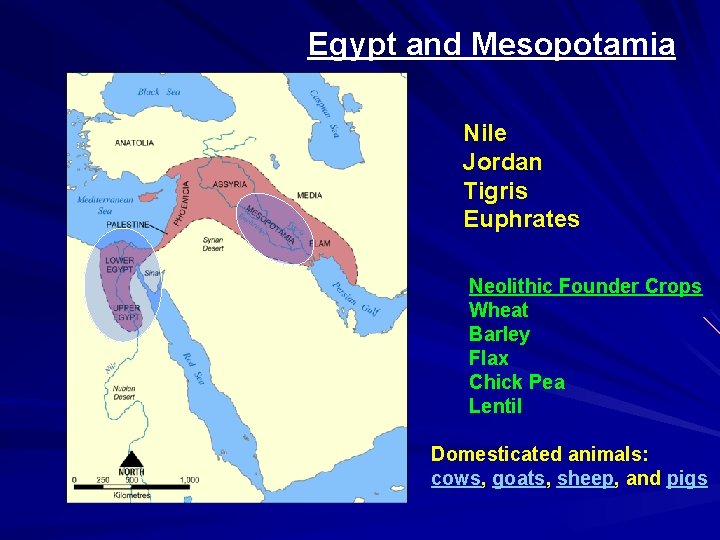
Egypt and Mesopotamia Nile Jordan Tigris Euphrates Neolithic Founder Crops Wheat Barley Flax Chick Pea Lentil Domesticated animals: cows, goats, sheep, and pigs
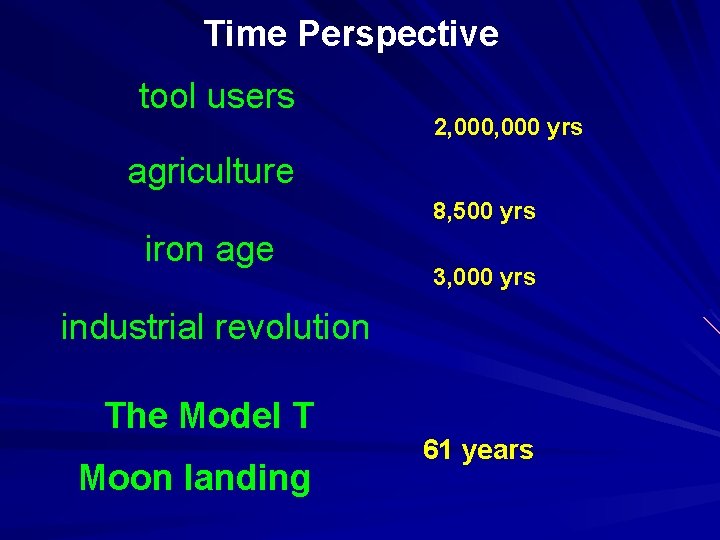
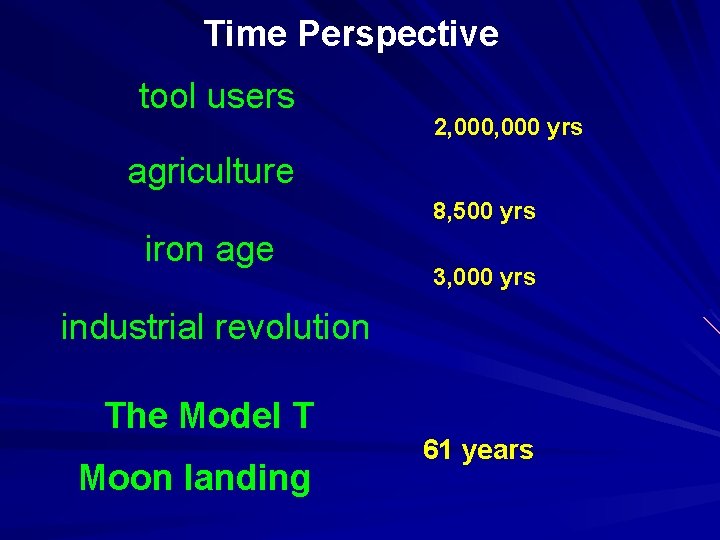
Time Perspective tool users 2, 000 yrs agriculture 8, 500 yrs iron age 3, 000 yrs industrial revolution The Model T Moon landing 61 years
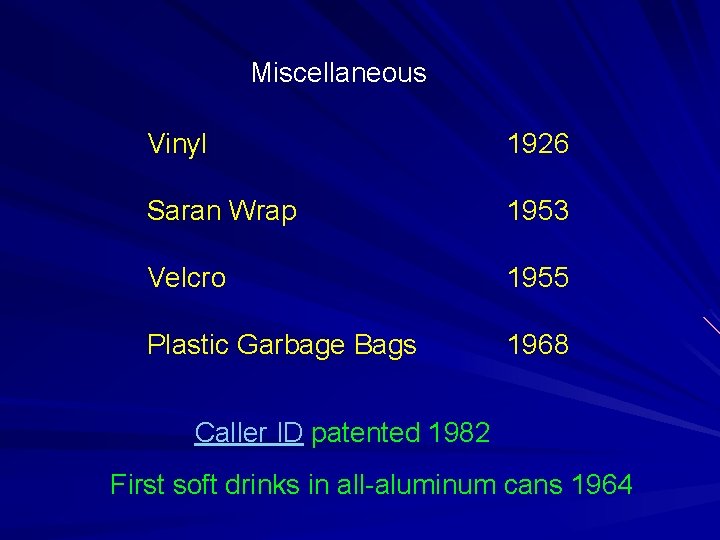
Miscellaneous Vinyl 1926 Saran Wrap 1953 Velcro 1955 Plastic Garbage Bags 1968 Caller ID patented 1982 First soft drinks in all-aluminum cans 1964
Life, Humans, Civilization, and Water Next: What’s So Special About Water?
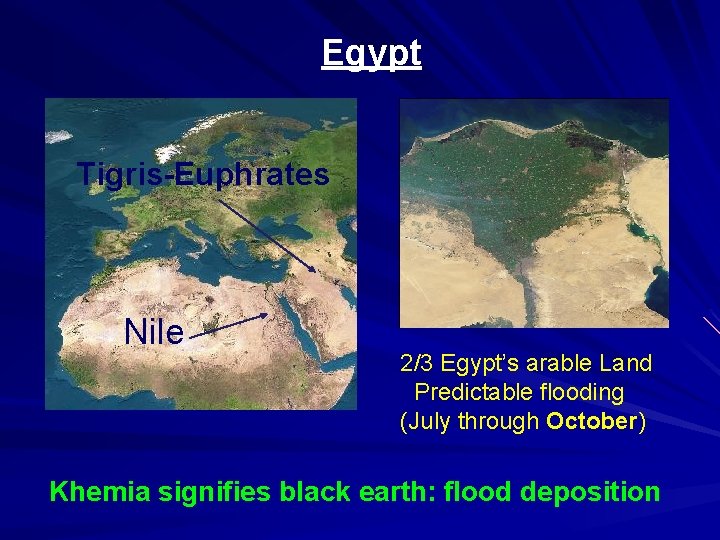
Egypt Tigris-Euphrates Nile 2/3 Egypt’s arable Land Predictable flooding (July through October) Khemia signifies black earth: flood deposition
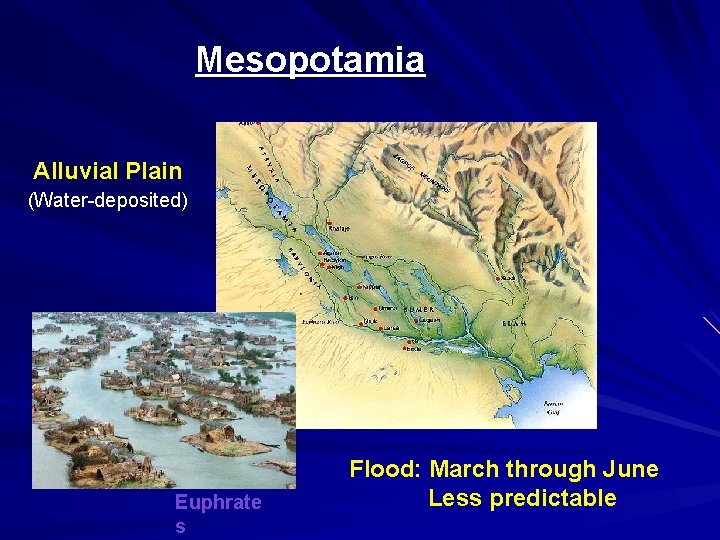
Mesopotamia Alluvial Plain (Water-deposited) Euphrate s Flood: March through June Less predictable
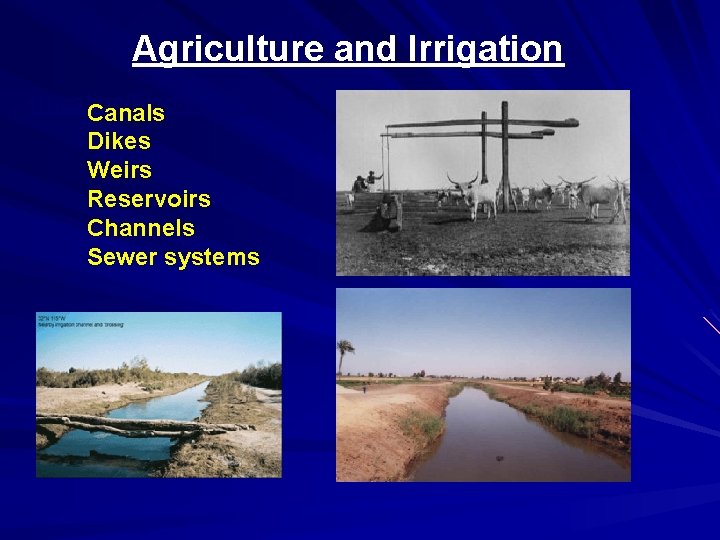
Agriculture and Irrigation/Flood Canals Control Dikes Weirs Reservoirs Channels Sewer systems
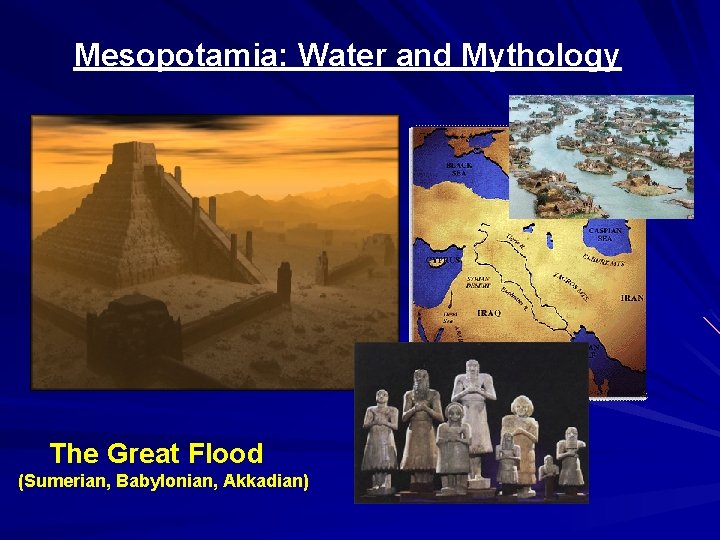
Mesopotamia: Water and Mythology The Great Flood (Sumerian, Babylonian, Akkadian)
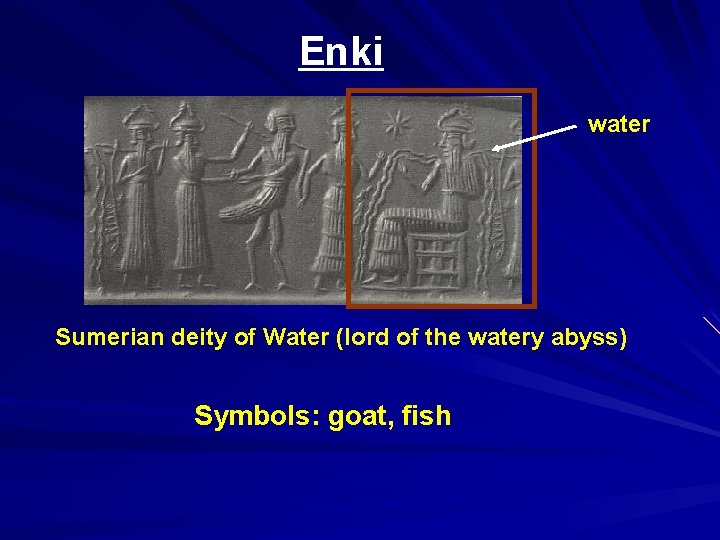
Enki water Sumerian deity of Water (lord of the watery abyss) Symbols: goat, fish
Sumerian Flood Myth The Sumerian myth of Ziusudra tells how the god Enki warns Ziusudra, a provincial king, of the gods' decision to destroy mankind in a flood. Enki instructs Ziusudra to build a large boat - the text describing the instructions is lost. Circa 2900 BCE
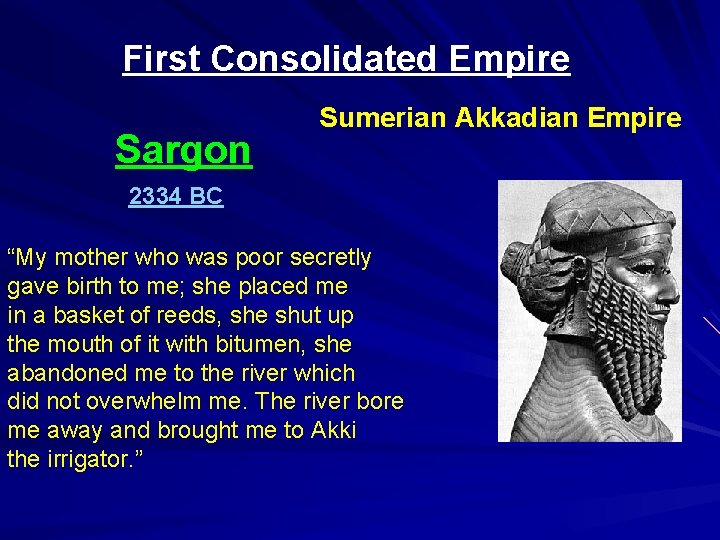
First Consolidated Empire Sargon Sumerian Akkadian Empire 2334 BC “My mother who was poor secretly gave birth to me; she placed me in a basket of reeds, she shut up the mouth of it with bitumen, she abandoned me to the river which did not overwhelm me. The river bore me away and brought me to Akki the irrigator. ”
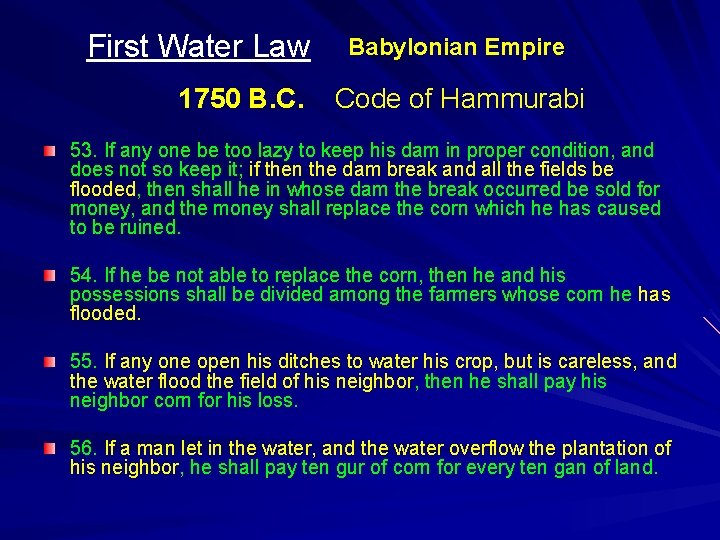
First Water Law 1750 B. C. Babylonian Empire Code of Hammurabi 53. If any one be too lazy to keep his dam in proper condition, and does not so keep it; if then the dam break and all the fields be flooded, then shall he in whose dam the break occurred be sold for money, and the money shall replace the corn which he has caused to be ruined. 54. If he be not able to replace the corn, then he and his possessions shall be divided among the farmers whose corn he has flooded. 55. If any one open his ditches to water his crop, but is careless, and the water flood the field of his neighbor, then he shall pay his neighbor corn for his loss. 56. If a man let in the water, and the water overflow the plantation of his neighbor, he shall pay ten gur of corn for every ten gan of land.
Life, Humans, Civilization, and Water Next: What’s So Special About Water?
Time Perspective tool users 2, 000 yrs agriculture 8, 500 yrs iron age 3, 000 yrs industrial revolution The Model T Moon landing 61 years
Miscellaneous Vinyl 1926 Saran Wrap 1953 Velcro 1955 Plastic Garbage Bags 1968 Caller ID patented 1982 First soft drinks in all-aluminum cans 1964