
Water in the Atmosphere States of Matter Water

- Slides: 12
Water in the Atmosphere
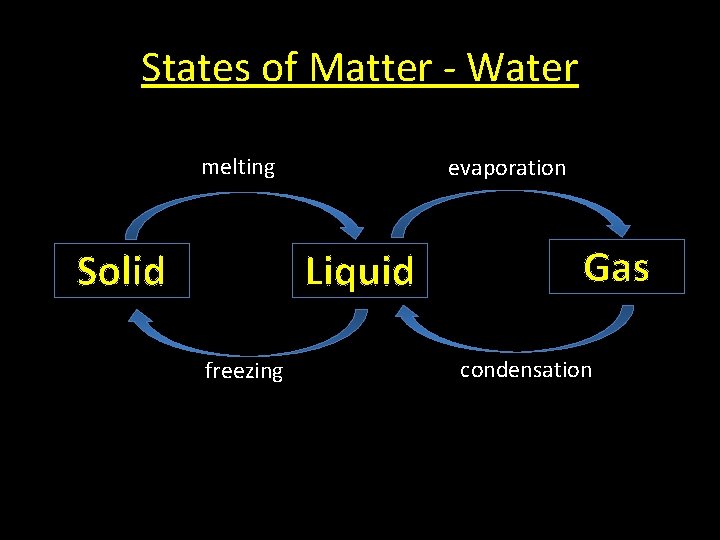
States of Matter - Water melting Solid evaporation Liquid freezing Gas condensation
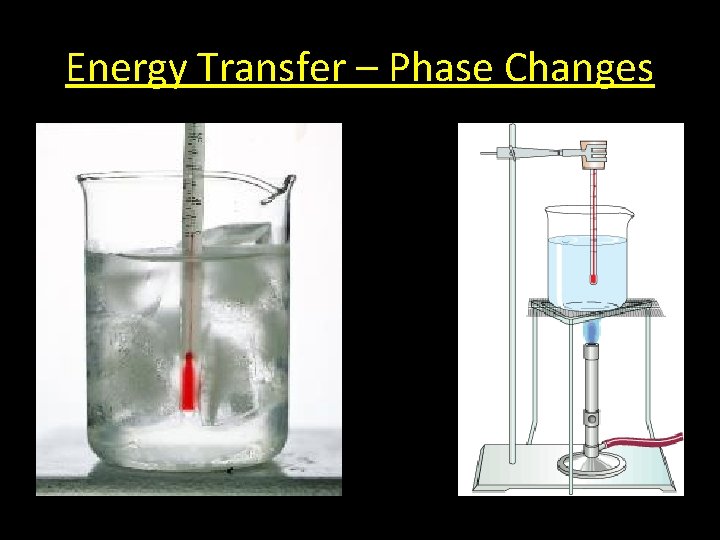
Energy Transfer – Phase Changes
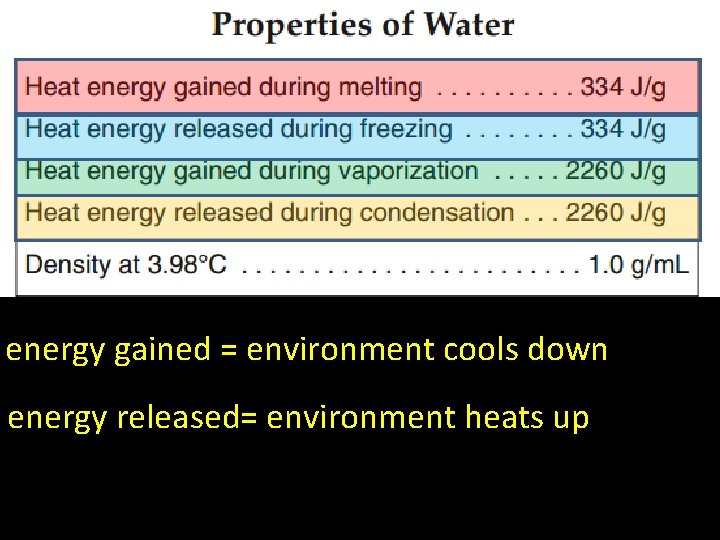
energy gained = environment cools down energy released= environment heats up
Latent Heat • Energy is required to break the hydrogen bonds that hold water molecules together • Energy is taken from the environment and is stored in the water molecule • This energy is called latent heat • Energy is released during condensation/freezing
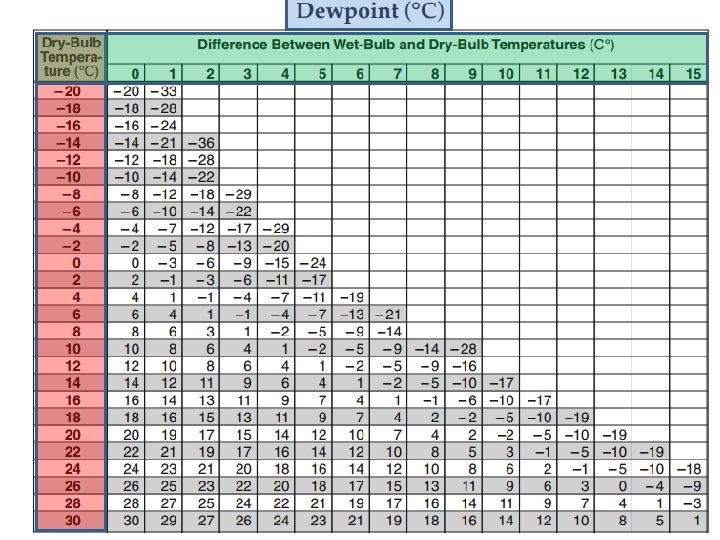
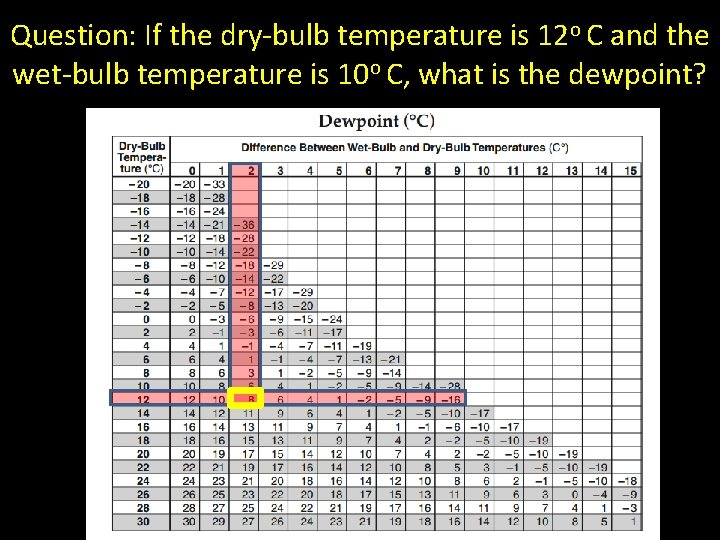
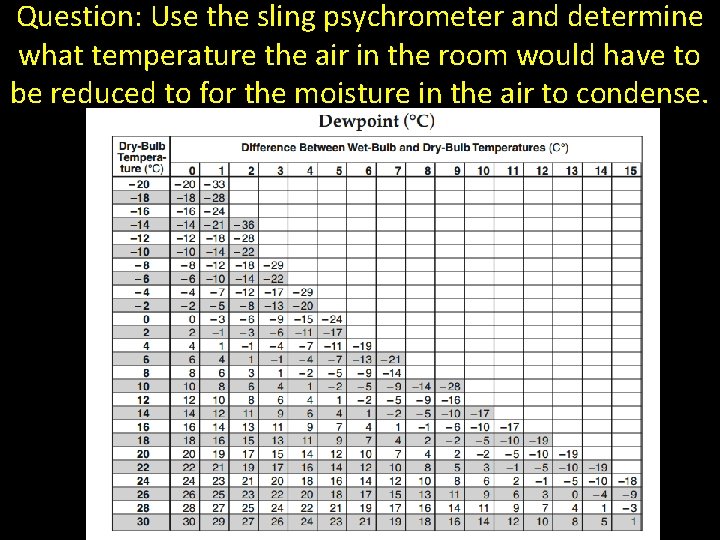
Humidity • Humidity – measure of the amount of water vapor in the air – Warm air holds more water vapor than cold air • Relative Humidity – the percentage of water in the air, relative to how much it can hold • Saturated - when air can’t hold any more water vapor – Condensation occurs • Dew point – temperature at which saturation occurs – Measured with a sling psychrometer
Sling Psychrometer
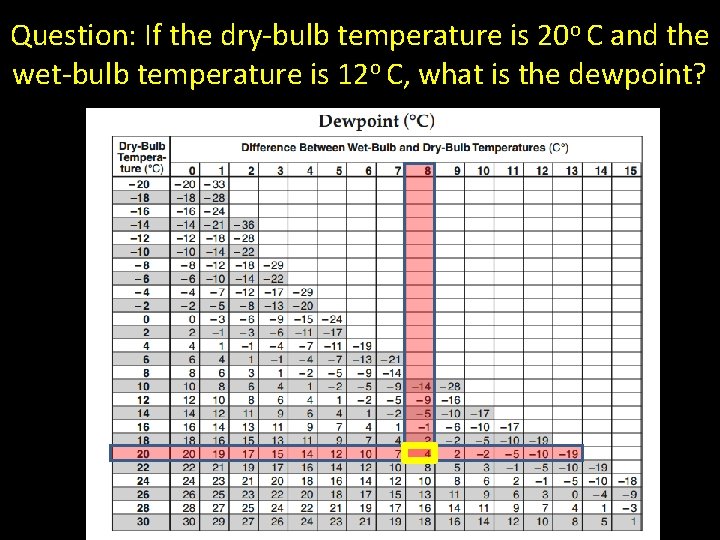
Question: If the dry-bulb temperature is 20 o C and the wet-bulb temperature is 12 o C, what is the dewpoint?
Question: If the dry-bulb temperature is 12 o C and the wet-bulb temperature is 10 o C, what is the dewpoint?
Question: Use the sling psychrometer and determine what temperature the air in the room would have to be reduced to for the moisture in the air to condense.
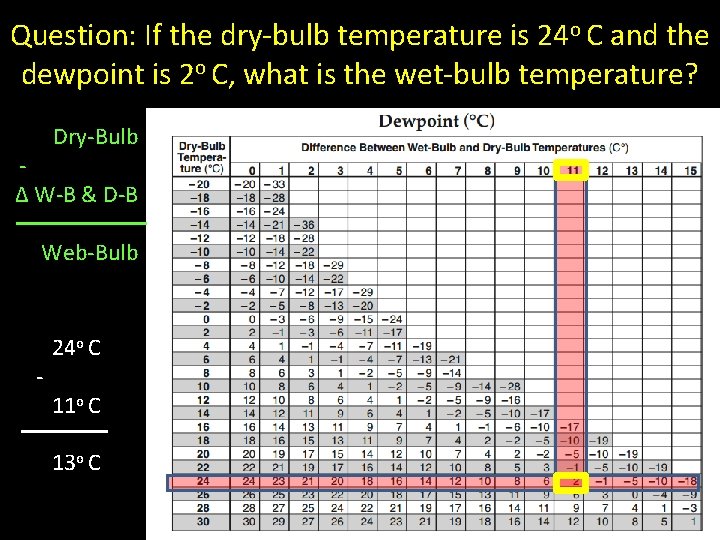
Question: If the dry-bulb temperature is 24 o C and the dewpoint is 2 o C, what is the wet-bulb temperature? Dry-Bulb ∆ W-B & D-B Web-Bulb - 24 o C 11 o C 13 o C