
Water in the Atmosphere Evaporation Condensation and Cloud
- Slides: 18
Water in the Atmosphere Evaporation Condensation and Cloud Formation
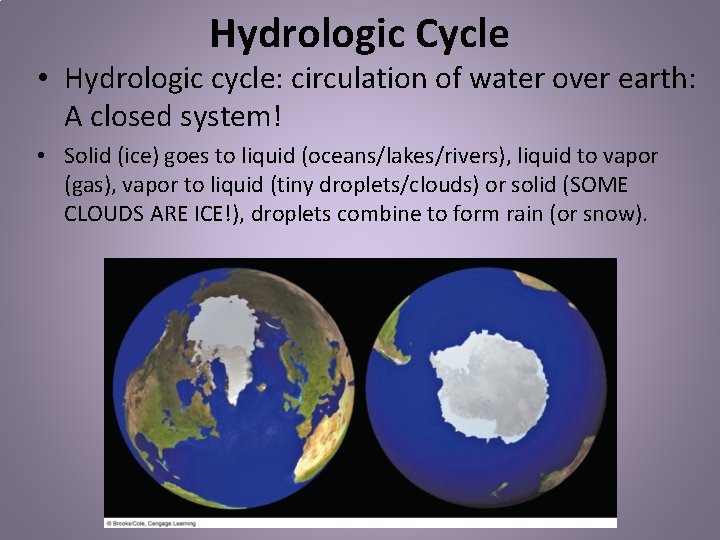
Hydrologic Cycle • Hydrologic cycle: circulation of water over earth: A closed system! • Solid (ice) goes to liquid (oceans/lakes/rivers), liquid to vapor (gas), vapor to liquid (tiny droplets/clouds) or solid (SOME CLOUDS ARE ICE!), droplets combine to form rain (or snow).
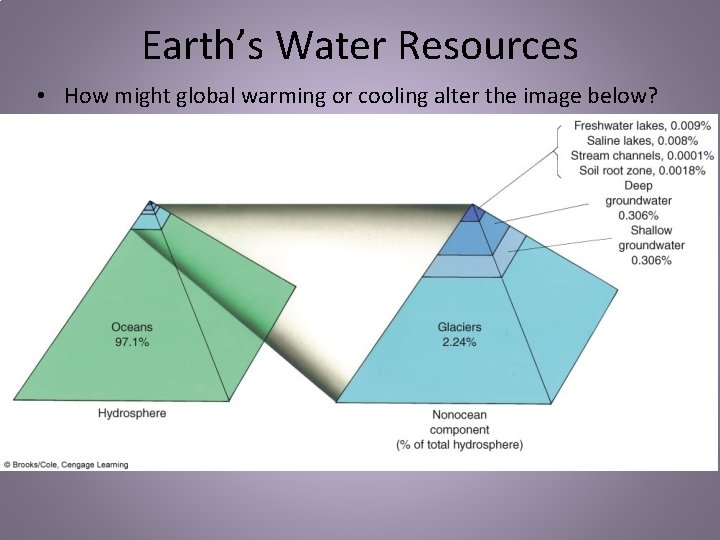
Earth’s Water Resources • How might global warming or cooling alter the image below?
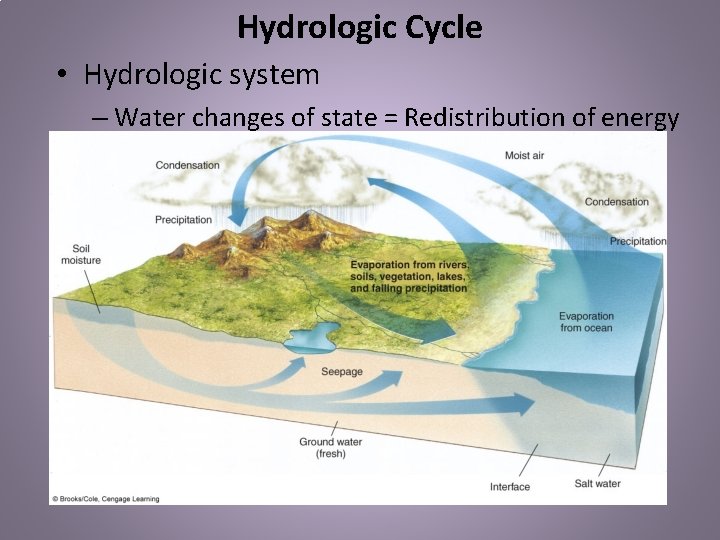
Hydrologic Cycle • Hydrologic system – Water changes of state = Redistribution of energy
Water in the Atmosphere • Water absorbs and reflects energy • Water Budget: • Total quantity of water remains the same. Any deficit must balance gains • Heat Budget: • Latent Heat (energy from evaporation) • Energy gained from evaporation is released during condensation to form clouds • Heat transfer involved with evaporation and condensation is huge! • The energy stored and transferred in phase changes provides the power for Earth’s storms (think hurricanes)
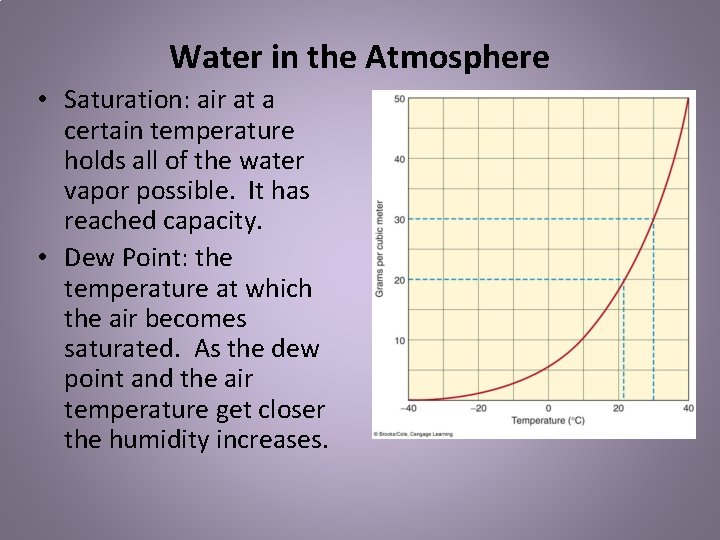
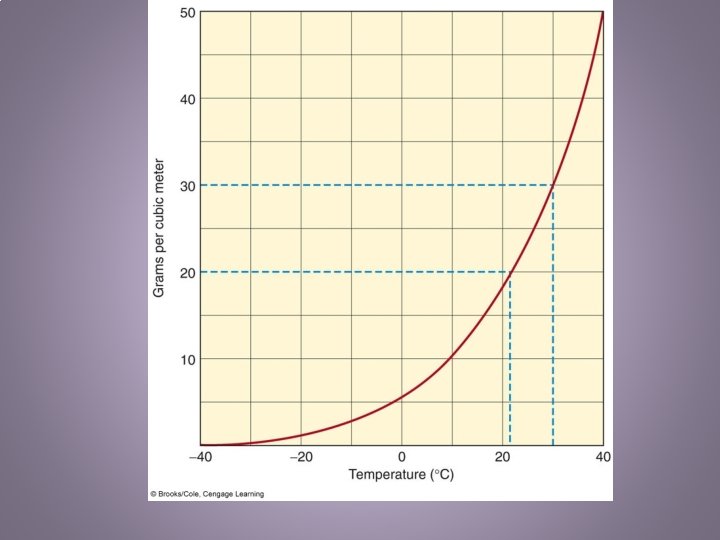
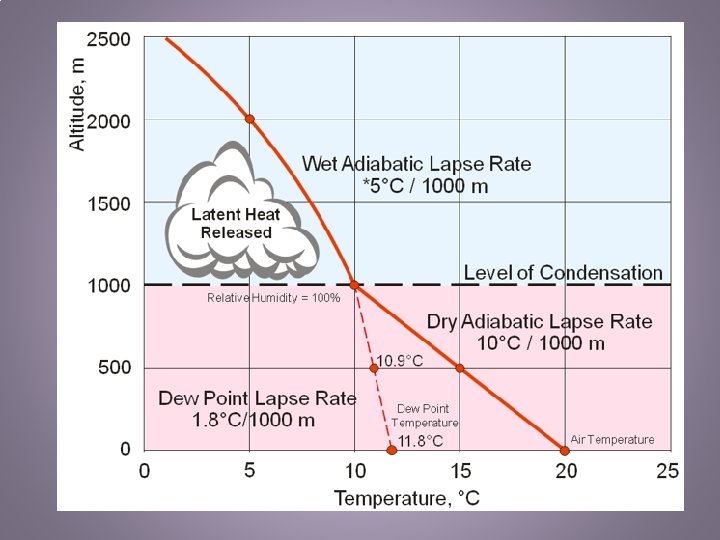
Water in the Atmosphere • Saturation: air at a certain temperature holds all of the water vapor possible. It has reached capacity. • Dew Point: the temperature at which the air becomes saturated. As the dew point and the air temperature get closer the humidity increases.
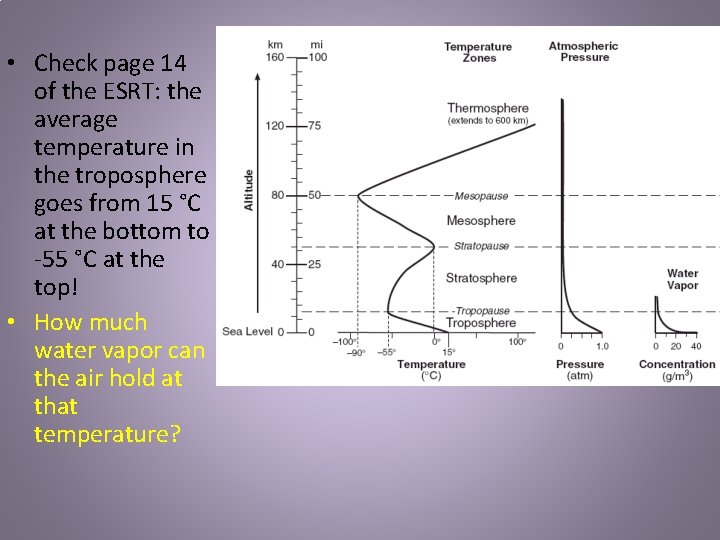
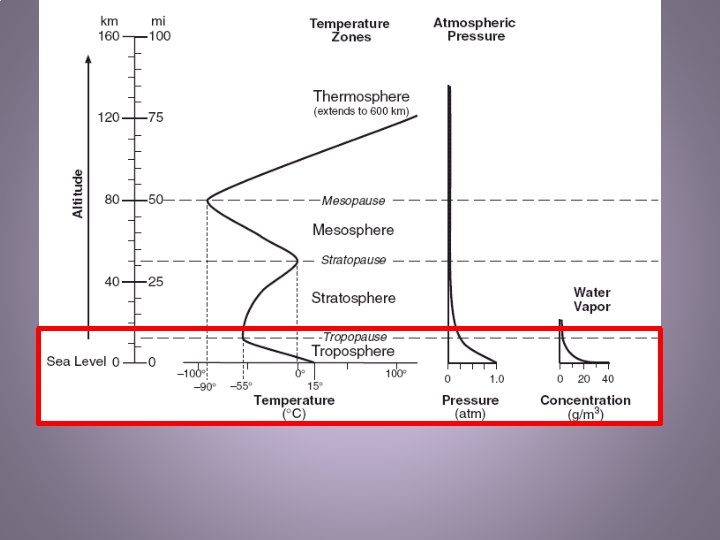
• Check page 14 of the ESRT: the average temperature in the troposphere goes from 15 °C at the bottom to -55 °C at the top! • How much water vapor can the air hold at that temperature?
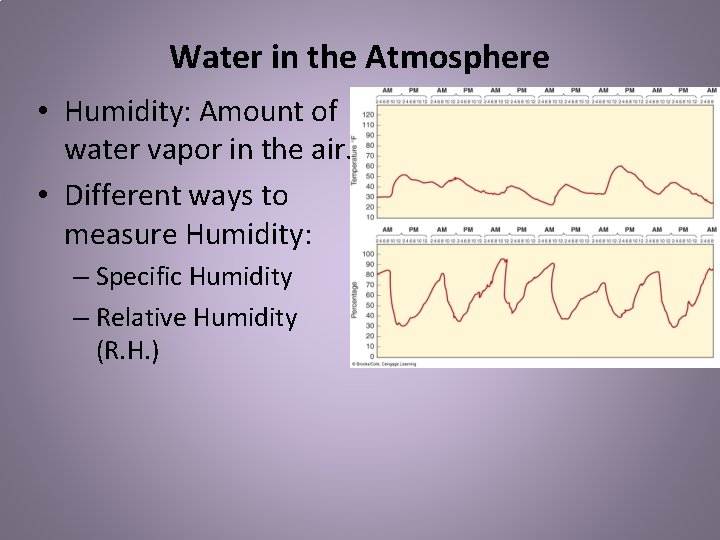
Water in the Atmosphere • Humidity: Amount of water vapor in the air. • Different ways to measure Humidity: – Specific Humidity – Relative Humidity (R. H. )
Condensation • Condensation: occurs when air temperature reaches the dew point. The R. H. becomes 100% (saturated). • Condensation requires the presence of Condensation Nuclei. These provide a surface for the water vapor to condense on. • Fog and Clouds form when water vapor condenses and a large number of these droplets form a mass.
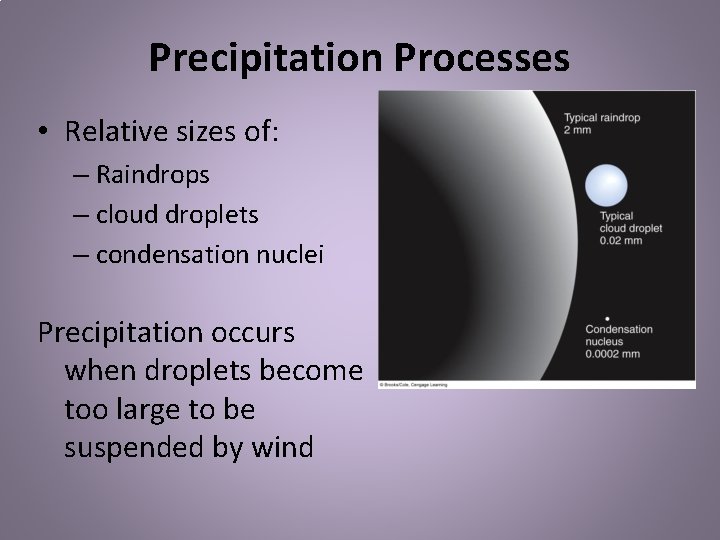
Precipitation Processes • Relative sizes of: – Raindrops – cloud droplets – condensation nuclei Precipitation occurs when droplets become too large to be suspended by wind
Cloud Formation • As you go higher in the earths troposphere, temperature decreases • Therefore the air capacity for water vapor also decreases and the R. H. INCREASES! Even as specific humidity decreases! • When the R. H. reaches 100% and condensation nuclei are present condensation (cloud formation) starts
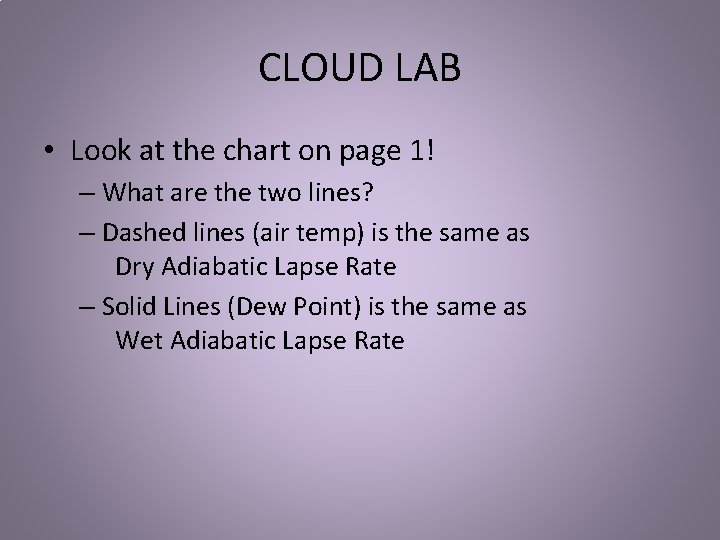
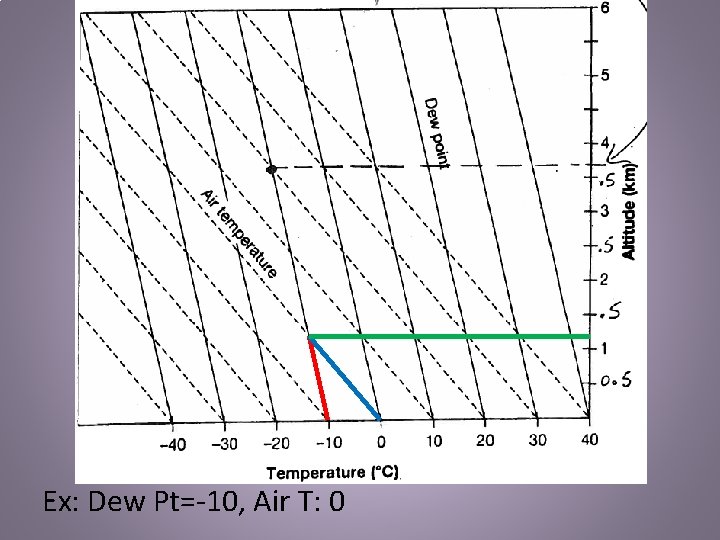
CLOUD LAB • Look at the chart on page 1! – What are the two lines? – Dashed lines (air temp) is the same as Dry Adiabatic Lapse Rate – Solid Lines (Dew Point) is the same as Wet Adiabatic Lapse Rate
Ex: Dew Pt=-10, Air T: 0
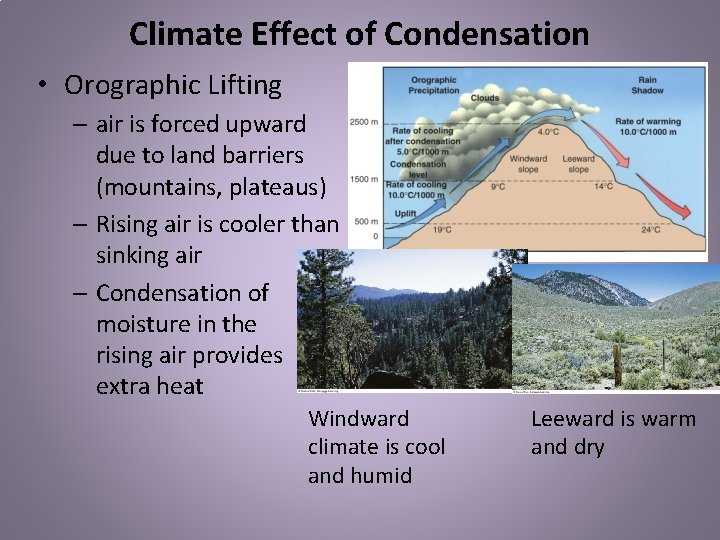
Climate Effect of Condensation • Orographic Lifting – air is forced upward due to land barriers (mountains, plateaus) – Rising air is cooler than sinking air – Condensation of moisture in the rising air provides the extra heat Windward climate is cool and humid Leeward is warm and dry
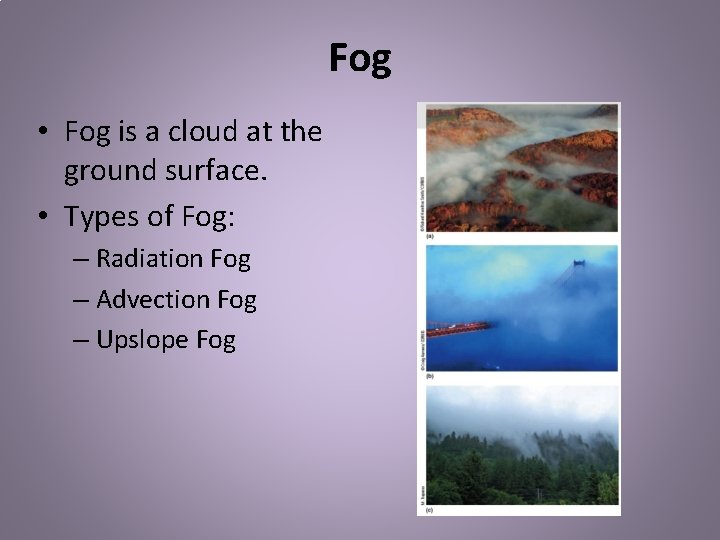
Fog • Fog is a cloud at the ground surface. • Types of Fog: – Radiation Fog – Advection Fog – Upslope Fog