
Water in the Atmosphere Chapter 2 4 Pages
- Slides: 27
Water in the Atmosphere Chapter 2. 4 Pages 61 -66
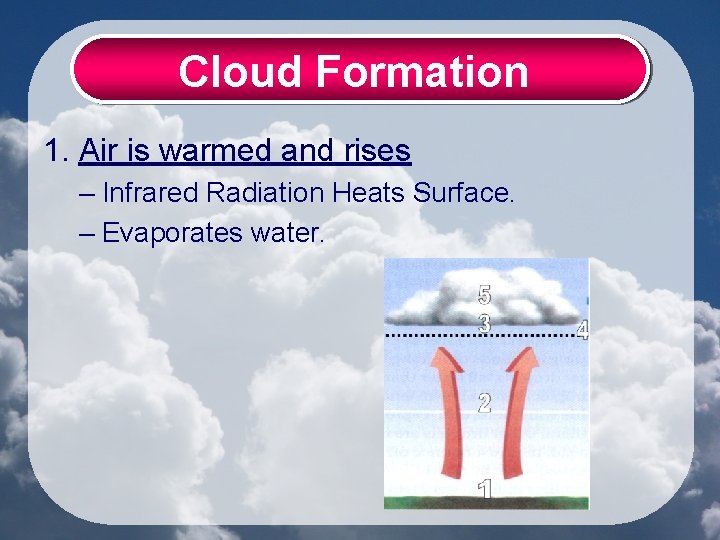
Cloud Formation 1. Air is warmed and rises – Infrared Radiation Heats Surface. – Evaporates water.
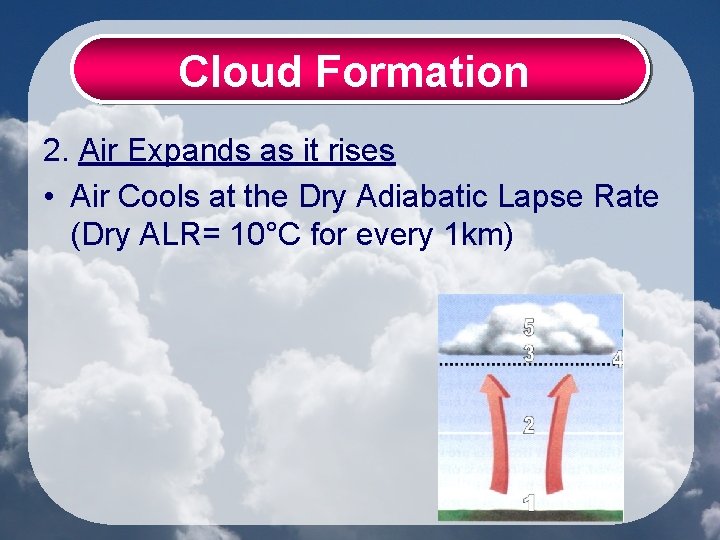
Cloud Formation 2. Air Expands as it rises • Air Cools at the Dry Adiabatic Lapse Rate (Dry ALR= 10°C for every 1 km)
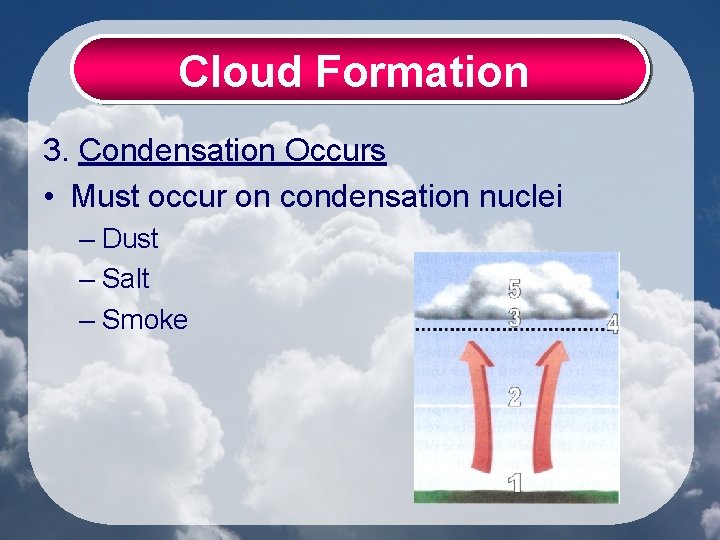
Cloud Formation 3. Condensation Occurs • Must occur on condensation nuclei – Dust – Salt – Smoke
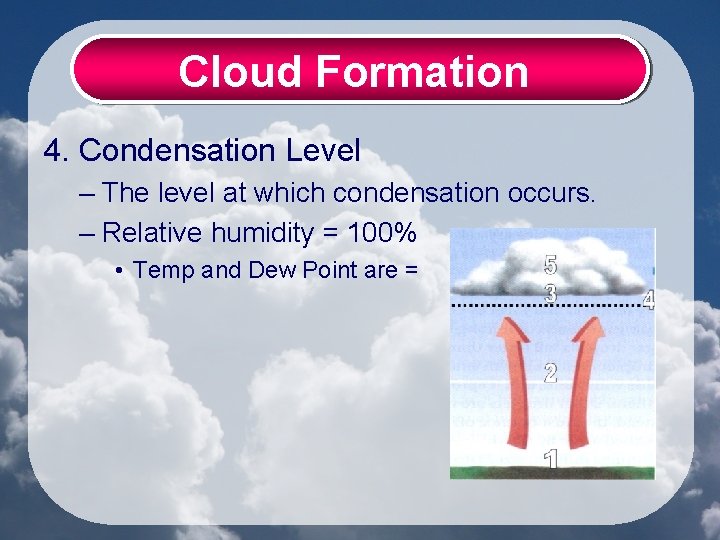
Cloud Formation 4. Condensation Level – The level at which condensation occurs. – Relative humidity = 100% • Temp and Dew Point are =
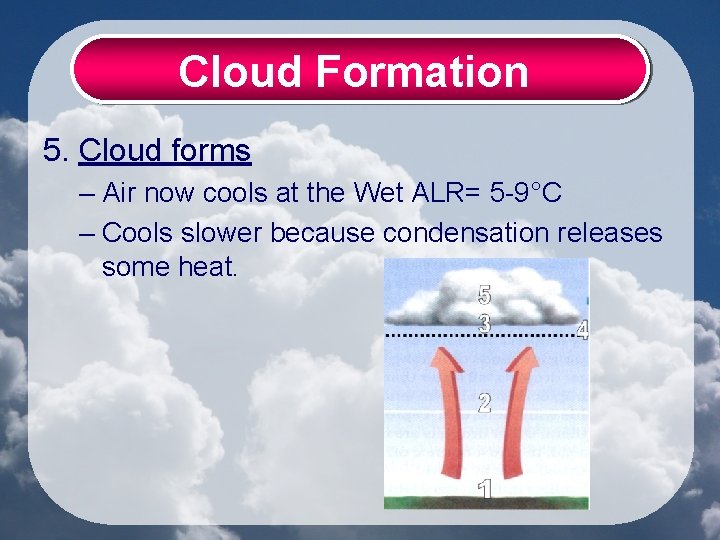
Cloud Formation 5. Cloud forms – Air now cools at the Wet ALR= 5 -9°C – Cools slower because condensation releases some heat.
Exit Pass Describe two of the Global Winds (Where is it located, H or L pressure, direction, etc. ) etc.
Cloud Identification Chapter 2. 4 Pages 63 -66
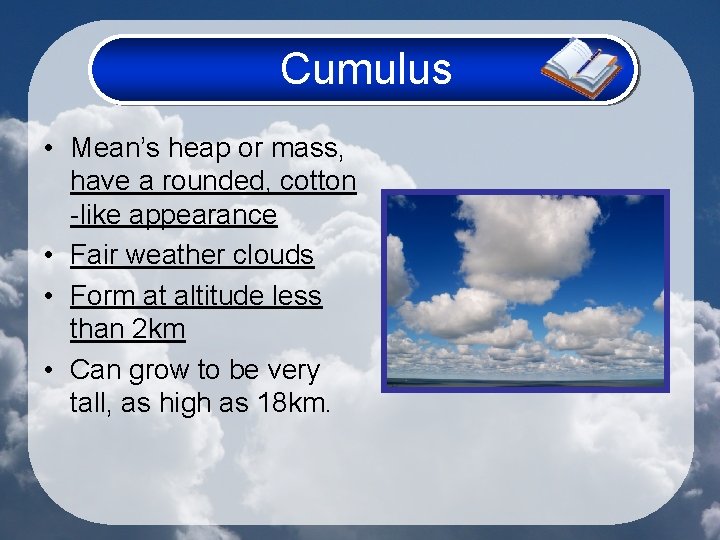
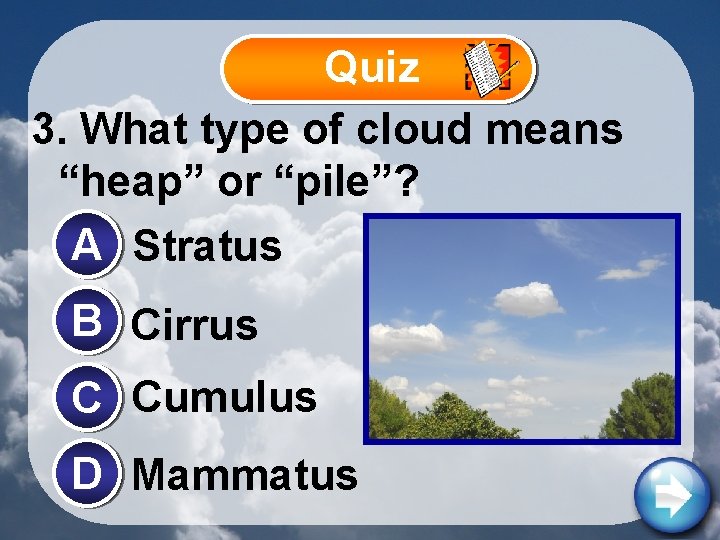
Cumulus • Mean’s heap or mass, have a rounded, cotton -like appearance • Fair weather clouds • Form at altitude less than 2 km • Can grow to be very tall, as high as 18 km.
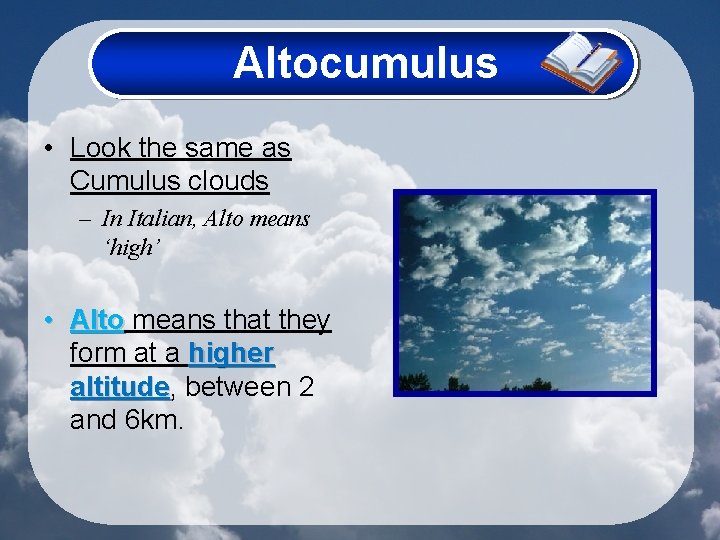
Altocumulus • Look the same as Cumulus clouds – In Italian, Alto means ‘high’ • Alto means that they form at a higher altitude, altitude between 2 and 6 km.
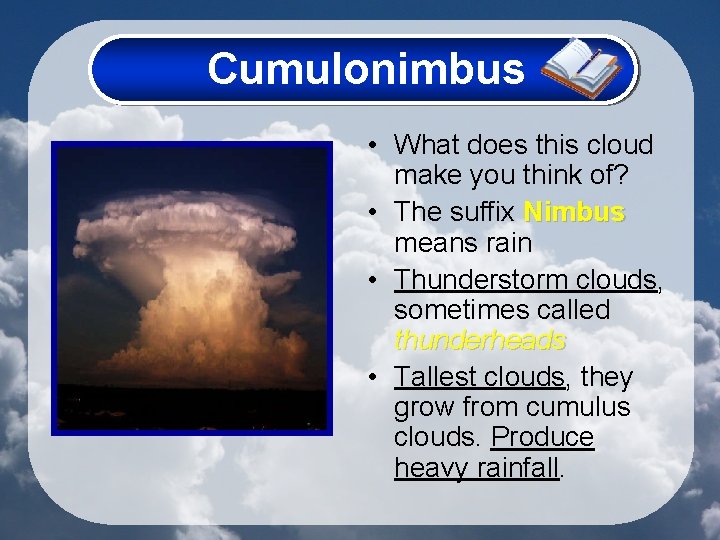
Cumulonimbus • What does this cloud make you think of? • The suffix Nimbus means rain • Thunderstorm clouds, sometimes called thunderheads • Tallest clouds, they grow from cumulus clouds. Produce heavy rainfall.
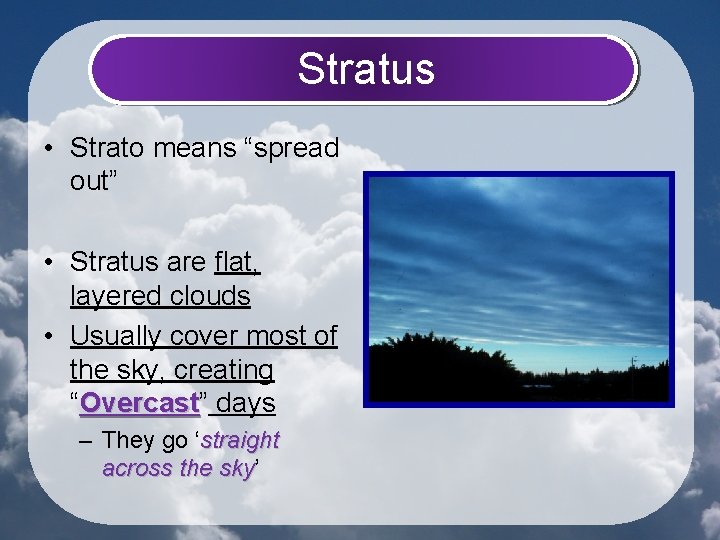
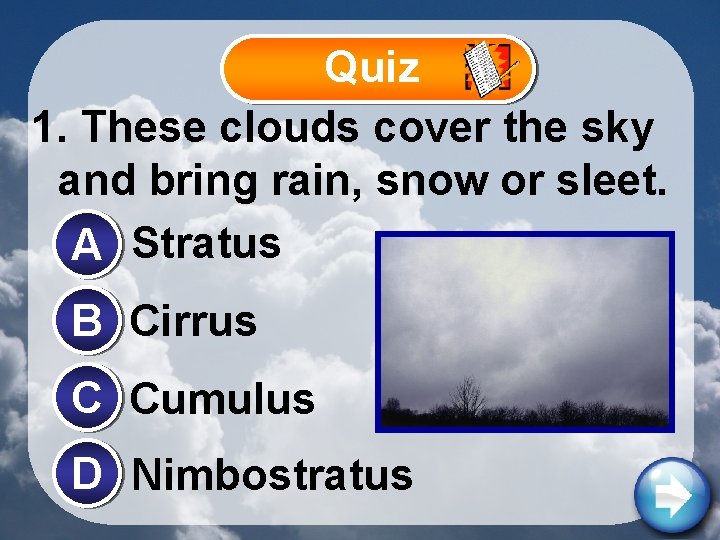
Stratus • Strato means “spread out” • Stratus are flat, layered clouds • Usually cover most of the sky, creating “Overcast” Overcast days – They go ‘straight across the sky’ sky
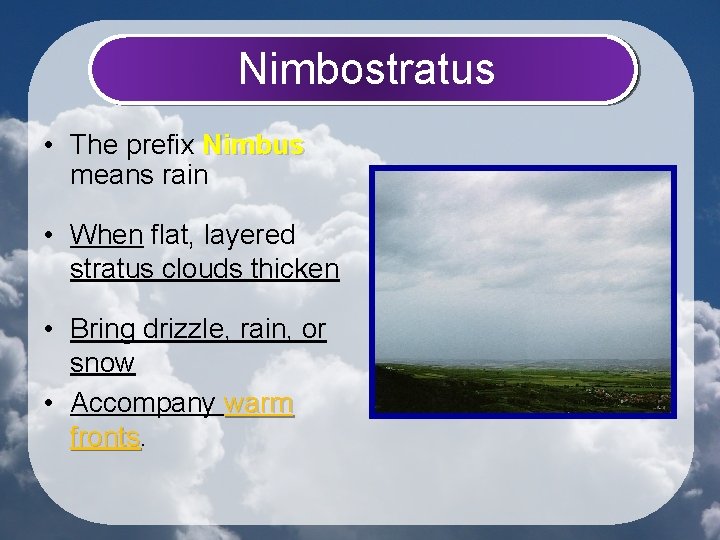
Nimbostratus • The prefix Nimbus means rain • When flat, layered stratus clouds thicken • Bring drizzle, rain, or snow • Accompany warm fronts
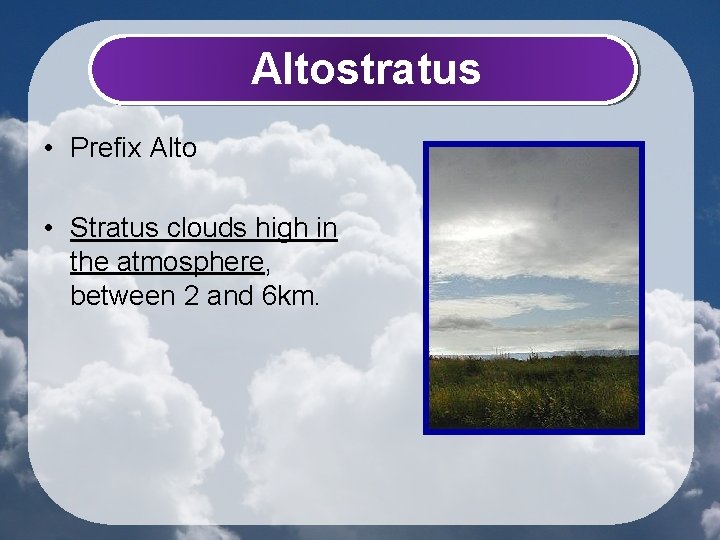
Altostratus • Prefix Alto • Stratus clouds high in the atmosphere, between 2 and 6 km.
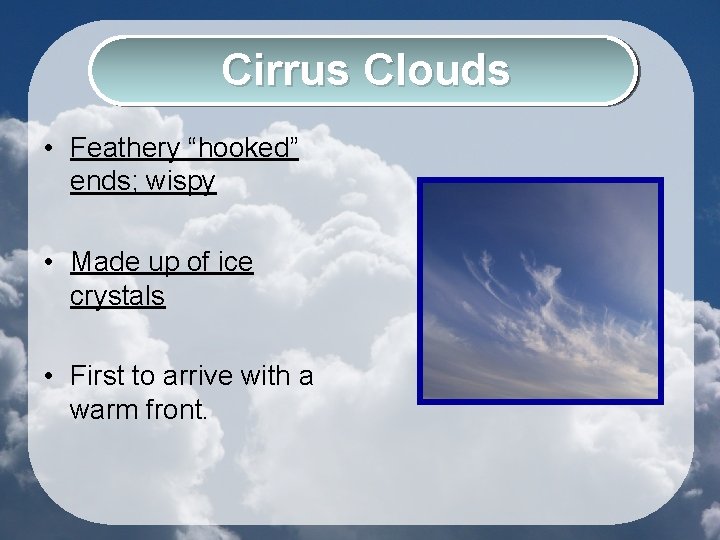
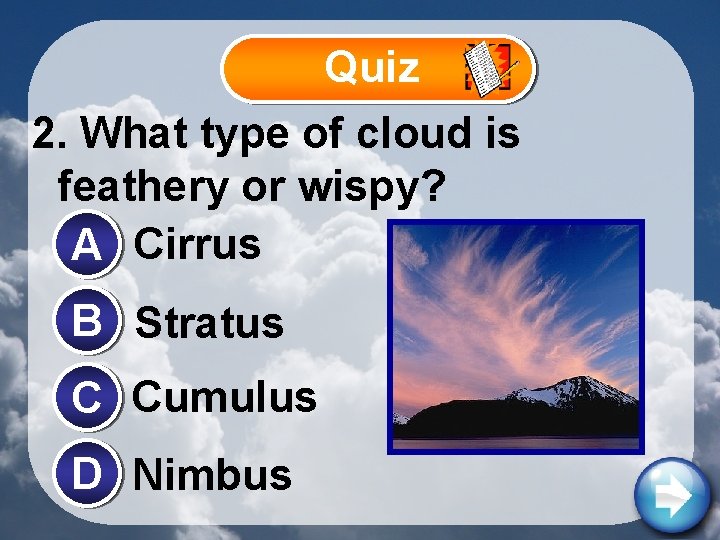
Cirrus Clouds • Feathery “hooked” ends; wispy • Made up of ice crystals • First to arrive with a warm front.
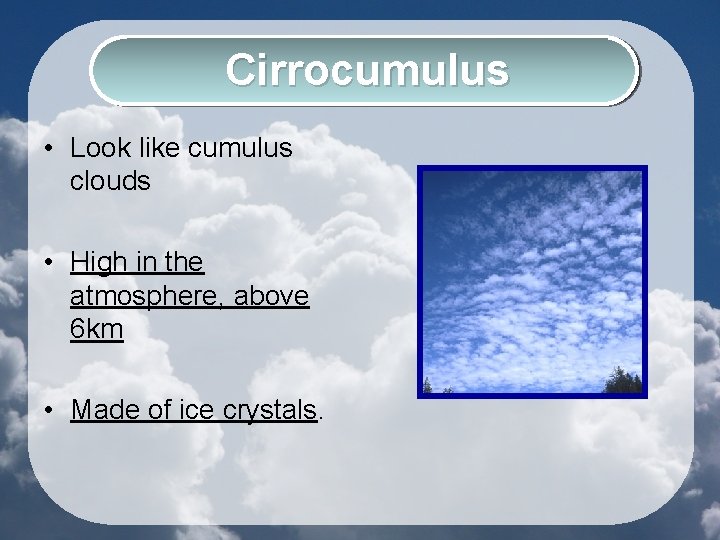
Cirrocumulus • Look like cumulus clouds • High in the atmosphere, above 6 km • Made of ice crystals.
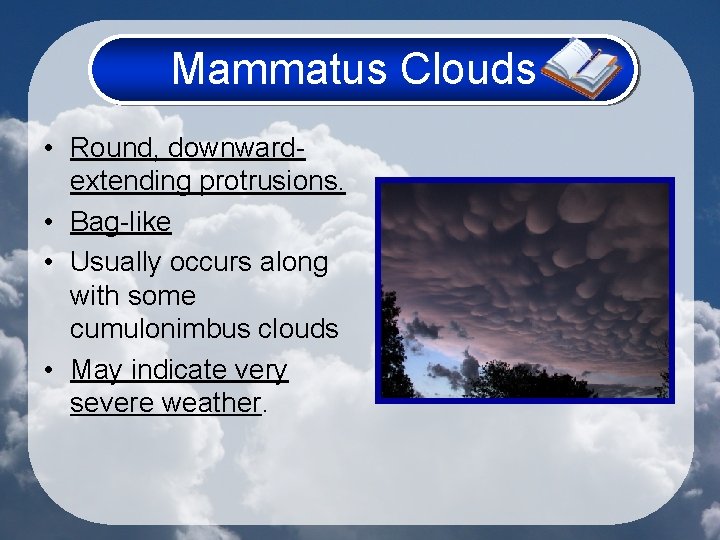
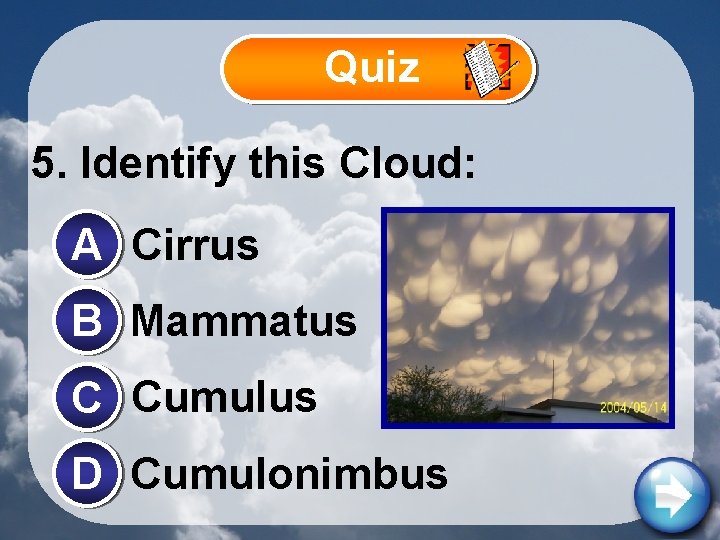
Mammatus Clouds • Round, downwardextending protrusions. • Bag-like • Usually occurs along with some cumulonimbus clouds • May indicate very severe weather.
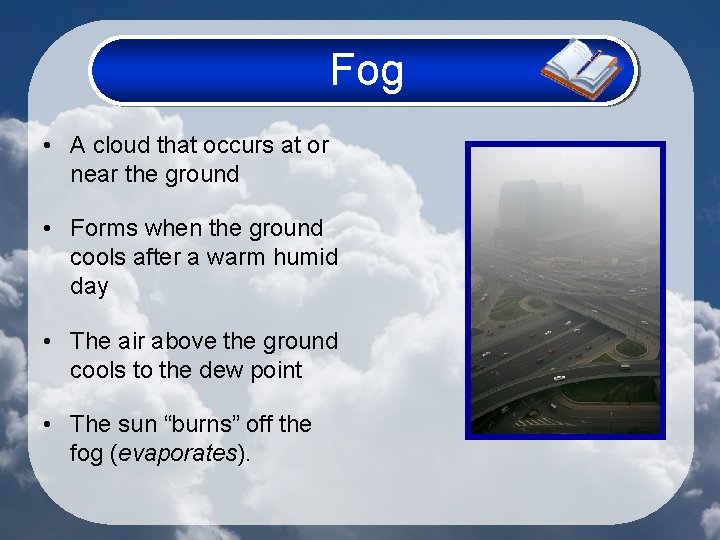
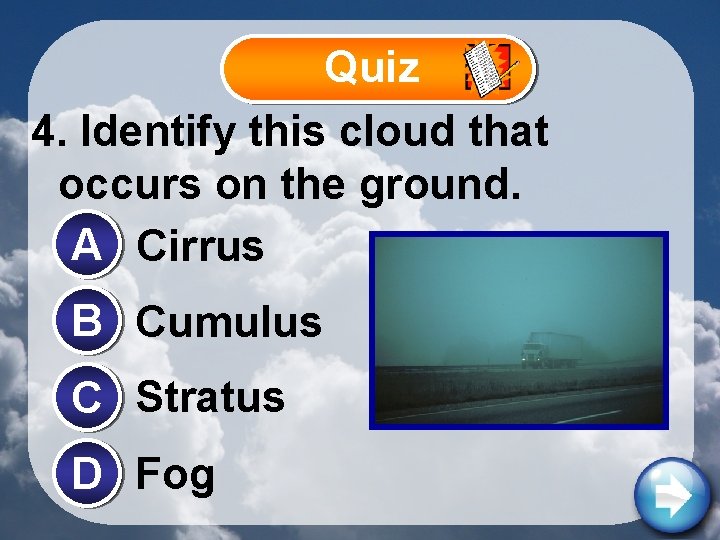
Fog • A cloud that occurs at or near the ground • Forms when the ground cools after a warm humid day • The air above the ground cools to the dew point • The sun “burns” off the fog (evaporates).
Exit Pass Describe two of the three major cloud types and the type of weather they are associated with.
Question • Explain how clouds are classified? • Use the Sky Watcher Chart to help you.
Quiz • Directions: – Read each question. – Click on the letter of your choice. – If you get a question wrong, the button will turn red. Try again. – If you get the question right, move on to the next question by clicking the arrow. – Click the arrow to the right to begin. Main Menu
Quiz 1. These clouds cover the sky and bring rain, snow or sleet. A Stratus B Cirrus C Cumulus D Nimbostratus
Quiz 2. What type of cloud is feathery or wispy? A Cirrus B Stratus C Cumulus D Nimbus
Quiz 3. What type of cloud means “heap” or “pile”? A Stratus B Cirrus C Cumulus D Mammatus
Quiz 4. Identify this cloud that occurs on the ground. A Cirrus B Cumulus C Stratus D Fog
Quiz 5. Identify this Cloud: A Cirrus B Mammatus C Cumulus D Cumulonimbus
Great Job! • Congratulations on being able to correctly identify the types of clouds! You are on your way to becoming a meteorologist. Keep up the great work! • Read pages 63 -66 Main Menu