
Water in the Air Air has water vapor


- Slides: 19
Water in the Air
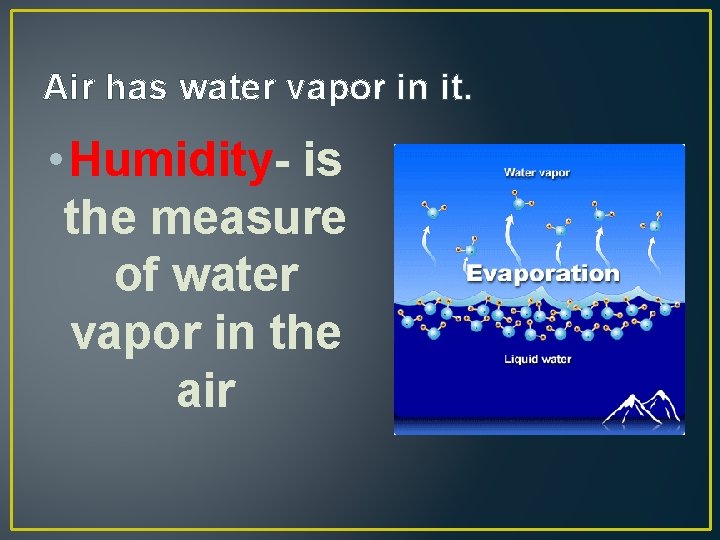
Air has water vapor in it. • Humidity- is the measure of water vapor in the air
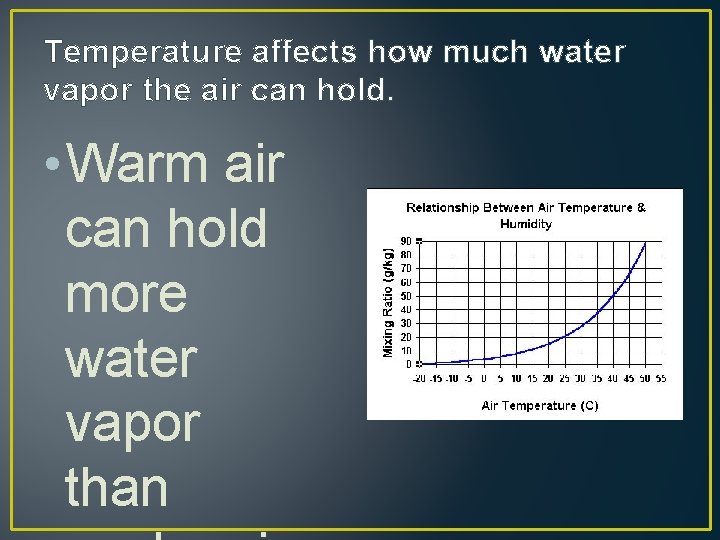
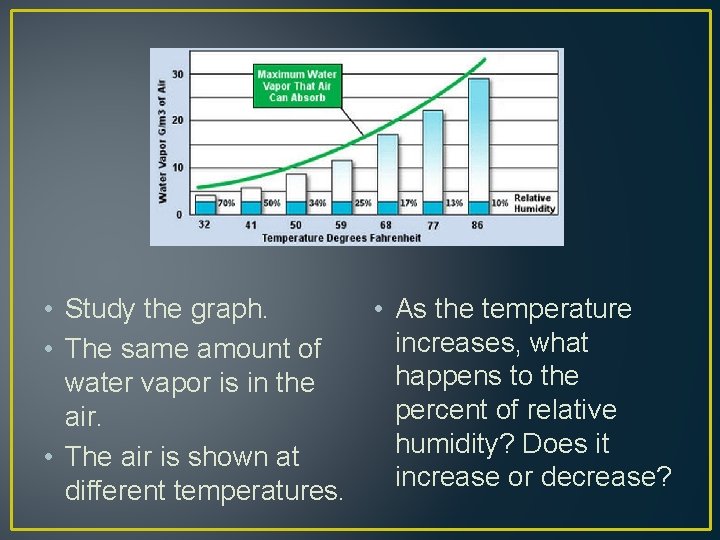
Temperature affects how much water vapor the air can hold. • Warm air can hold more water vapor than
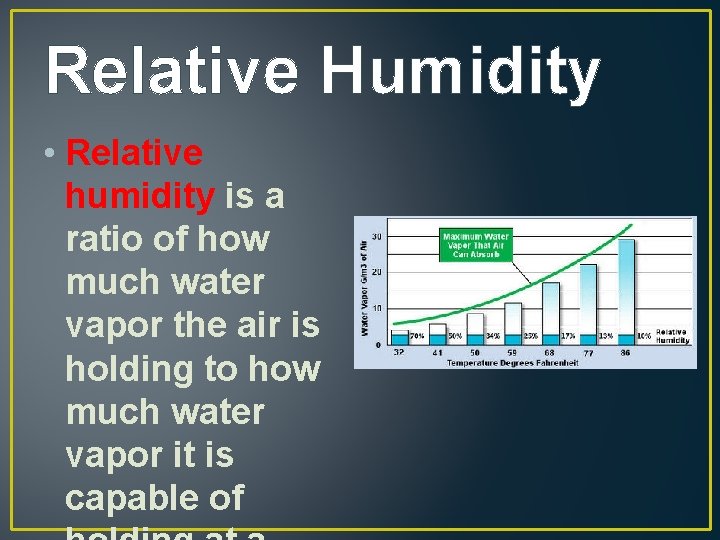
Relative Humidity • Relative humidity is a ratio of how much water vapor the air is holding to how much water vapor it is capable of
• Study the graph. • As the temperature increases, what • The same amount of happens to the water vapor is in the percent of relative air. humidity? Does it • The air is shown at increase or decrease? different temperatures.
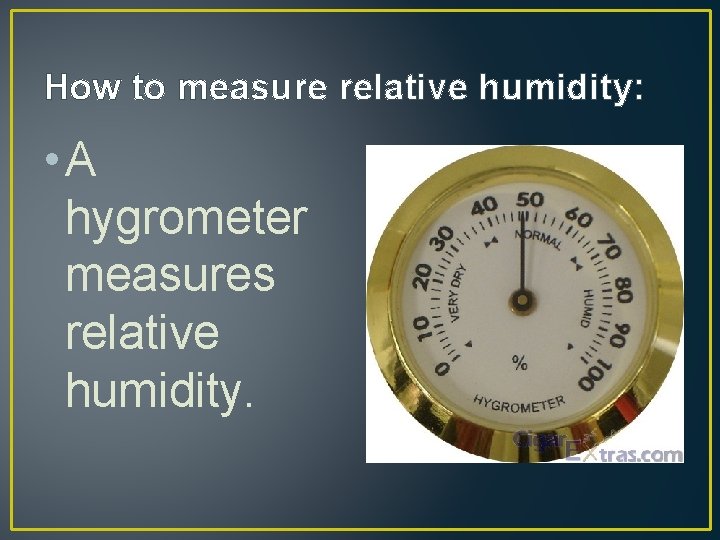
How to measure relative humidity: • A hygrometer measures relative humidity.
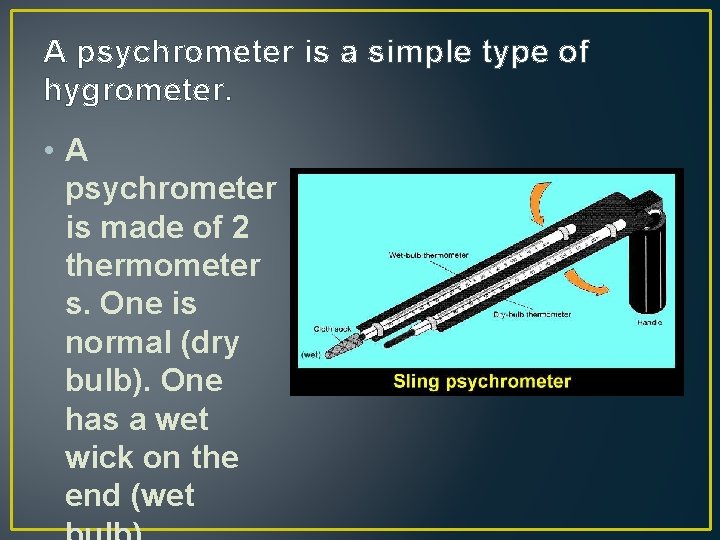
A psychrometer is a simple type of hygrometer. • A psychrometer is made of 2 thermometer s. One is normal (dry bulb). One has a wet wick on the end (wet
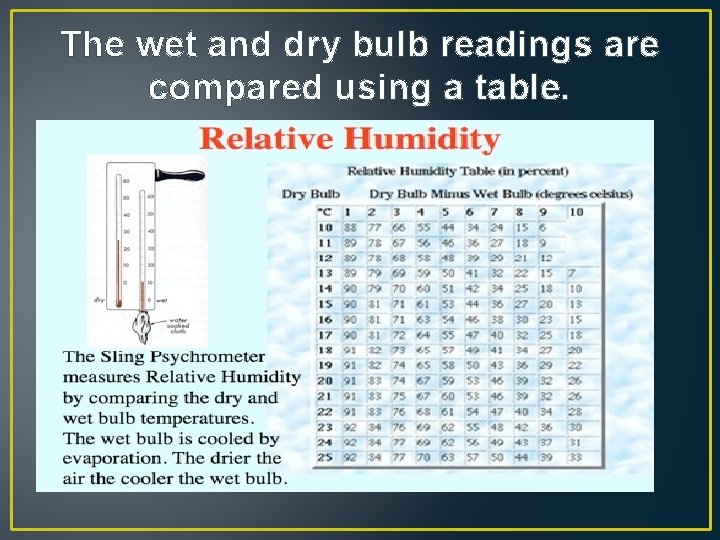
The wet and dry bulb readings are compared using a table.
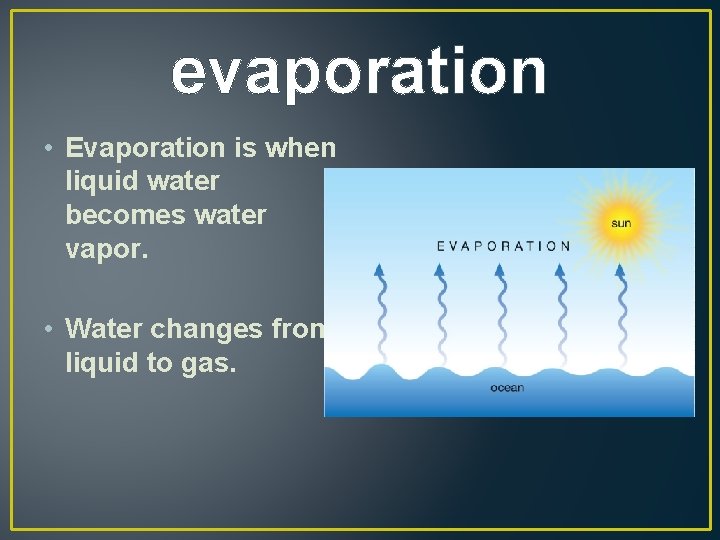
evaporation • Evaporation is when liquid water becomes water vapor. • Water changes from liquid to gas.
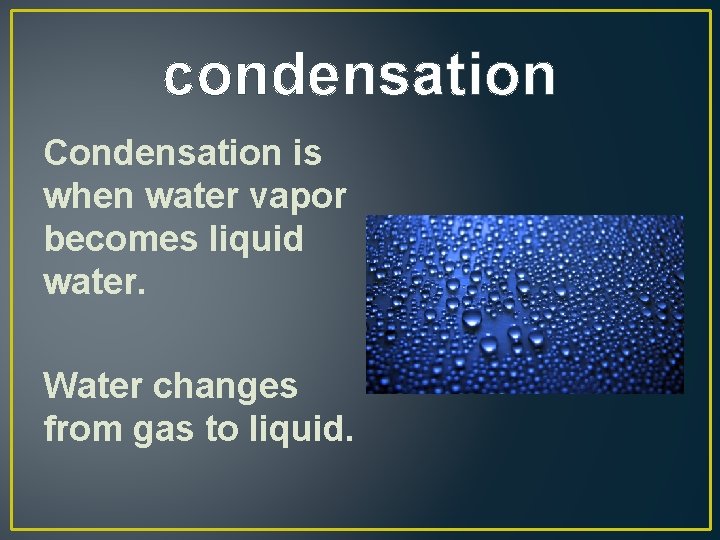
condensation Condensation is when water vapor becomes liquid water. Water changes from gas to liquid.
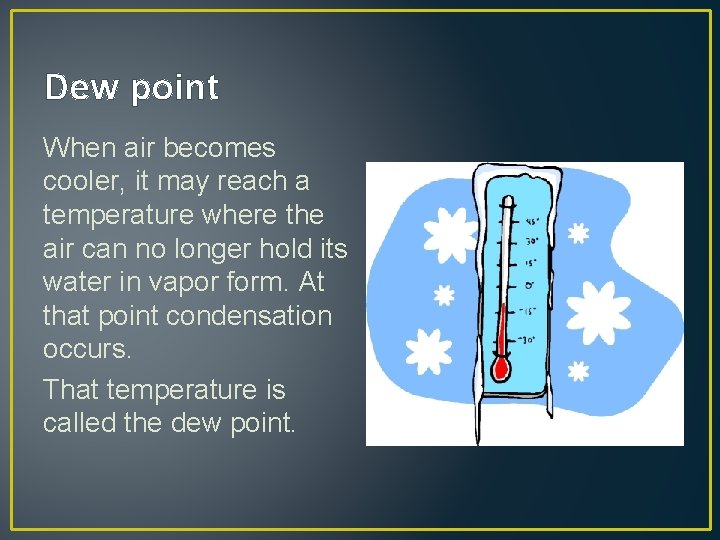
Dew point When air becomes cooler, it may reach a temperature where the air can no longer hold its water in vapor form. At that point condensation occurs. That temperature is called the dew point.
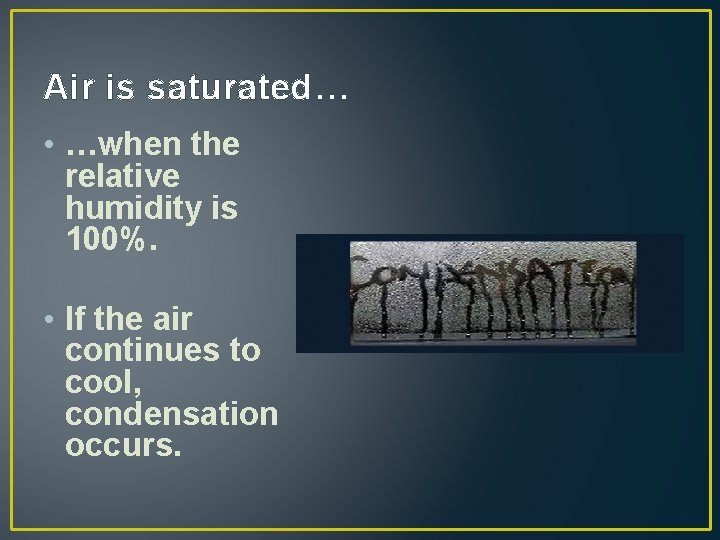
Air is saturated… • …when the relative humidity is 100%. • If the air continues to cool, condensation occurs.
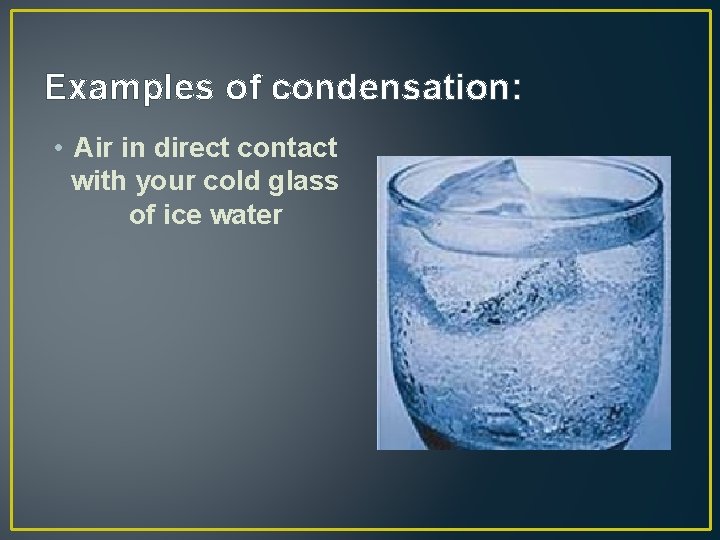
Examples of condensation: • Air in direct contact with your cold glass of ice water
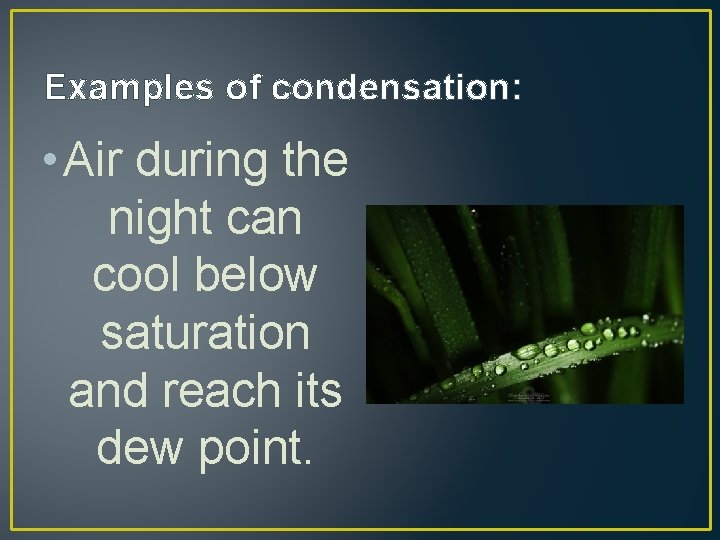
Examples of condensation: • Air during the night can cool below saturation and reach its dew point.
Examples of condensation: • Condensatio n on small particles of dust in the atmosphere forms clouds.
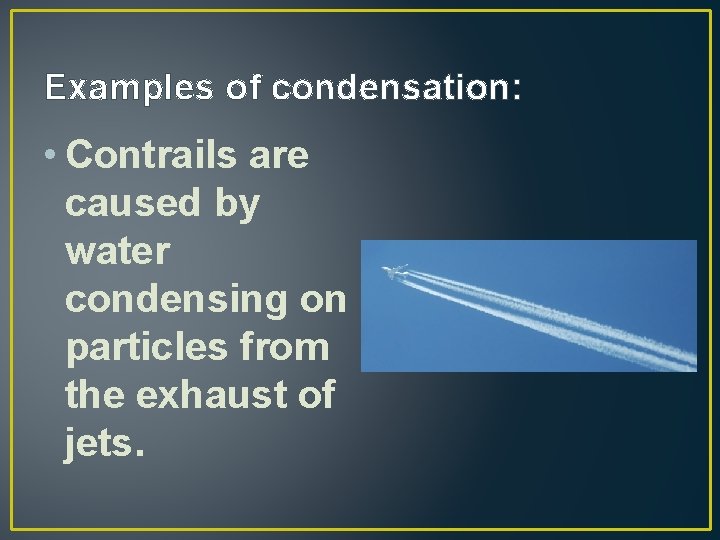
Examples of condensation: • Contrails are caused by water condensing on particles from the exhaust of jets.
precipitation • Warm moist air rises and cools. • Condensation in the atmosphere forms clouds. • Eventually the condensation becomes too heavy to cling to dust particles in the air. • Rain, snow or sleet is the result.
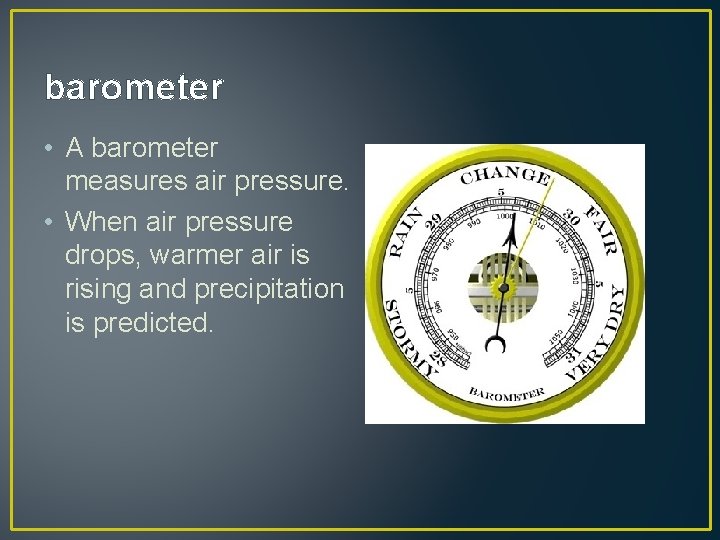
barometer • A barometer measures air pressure. • When air pressure drops, warmer air is rising and precipitation is predicted.
ASSIGNMENT • Look at current weather conditions in your area. • Find the • Temperature • Relative humidity • Dew point • Barometric pressure (air