
WATER GOVERNANCE IN KIBERA INFORMAL SETTLEMENT SILANGA VILLAGE
WATER GOVERNANCE IN KIBERA INFORMAL SETTLEMENT SILANGA VILLAGE MAPPING OF VULNERABILITIES AND COPING MECHANISMS. PRESENTED BY: SADIQUE BILAL –SPORTS OFFICER KI ELIZABETH -INTERN STUDENT UNIVERSITY OF NAIROBI Copyright © 2011 CCAA Project
q Kibera INTRODUCTION is an informal settlement q Because the settlement is not planned, no provision for essential basic infrastructural facilities and services such as water and sewerage system q Residents rely on water sold by street vendors and individual water kiosks q There are various water projects in Kibera sponsored by NGOS, CBOS & Civil society but with little assistance from the government. q Approximately ONLY 16% have access to water and sanitation facilities
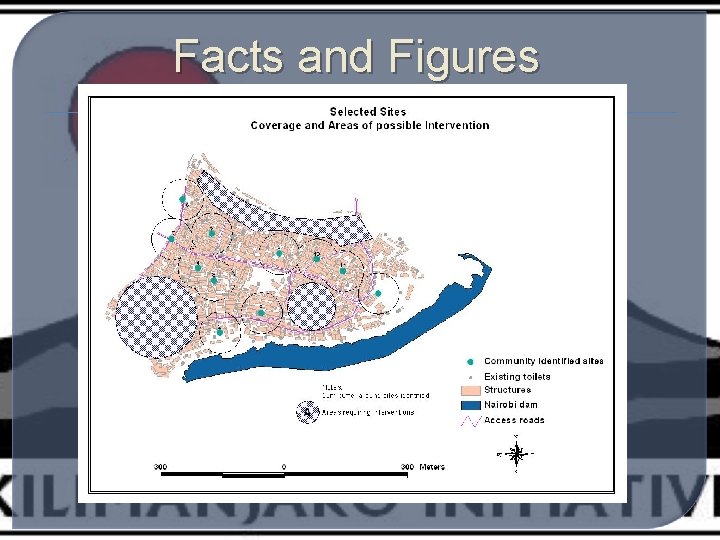
Facts and Figures
q In 2004, the Athi Water Service Board contracted the Nairobi Water and Sewerage Company to provide water in Nairobi region q Limited reach of water supply and delivery of water services in Kibera has resulted in illegal connections and privatization of water supply points. q A majority of people in Kibera obtain water from private and community owned water kiosks. q Poor management of water supplies, corruption, and drying up of rivers in the water catchment has compounded the water problem in Kibera.
ACCESS, AVAILABILITY & AFFORDABILITY q Kibera residents rely on hawked water from piped water, boreholes and polluted Nairobi dam. q Approx. 2 kms of piped water serve Silanga q 30% of water is lost through leakages q Avg distance to nearest water kiosk is 100200 m q 20 -60 ltrs per family per day q Average family size of 5 -7 q Residents pay ksh. 2 -5 for 20 litres but rises to 10 -20 kshs when there is a shortage
WATER GOVERNANCE VULNERABILITIES q Lack of awareness and inadequate information on water governance structures q Water rationing and scarcity q Illegal connections and individualization of water points q high water prices q Unsafe drinking water q Corruption and water supply ethnization.
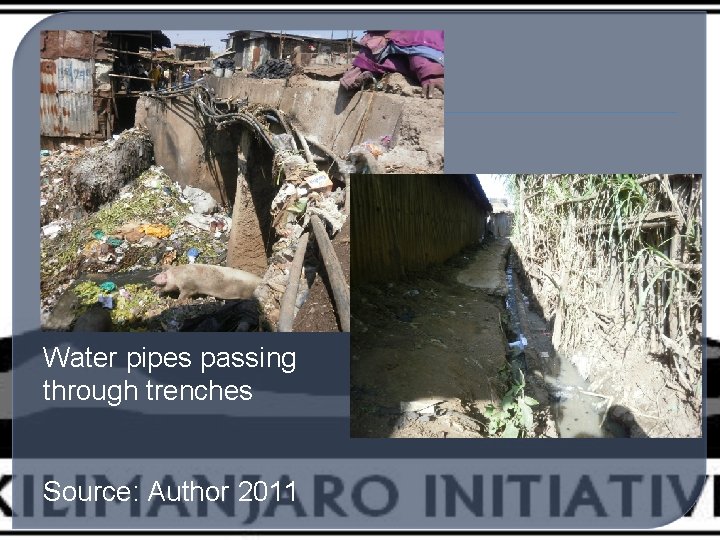
Water pipes passing through trenches Source: Author 2011
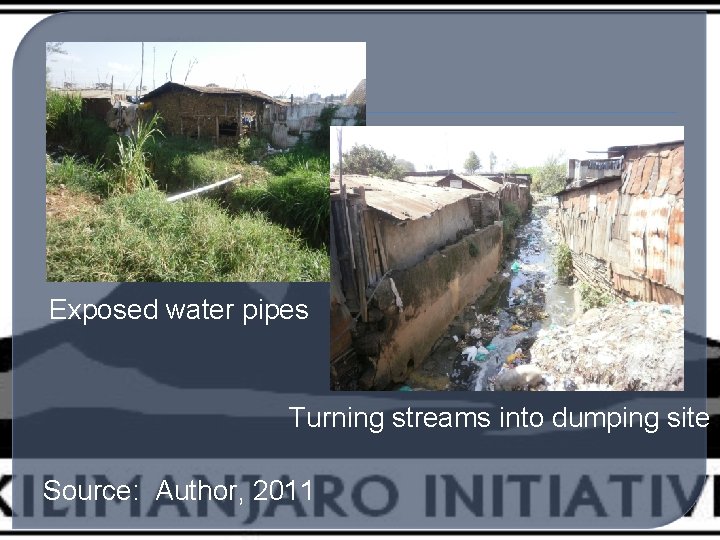
Exposed water pipes Turning streams into dumping site Source: Author, 2011
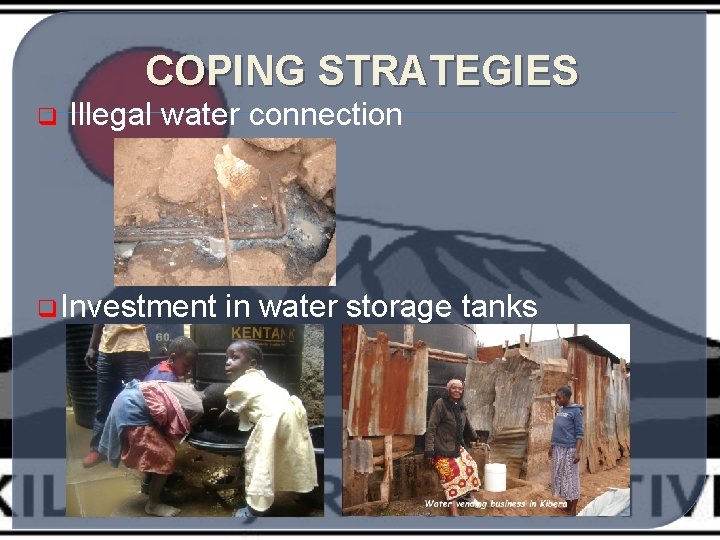
COPING STRATEGIES q Illegal water connection q Investment in water storage tanks
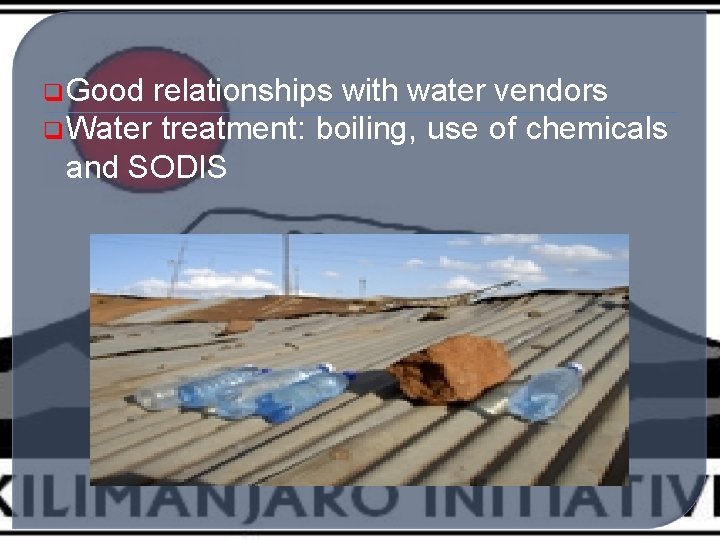
q Good relationships with water vendors q Water treatment: boiling, use of chemicals and SODIS
RECOMMENDATIONS q Provide allotment letters q Coordination of various water actors both formal and informal actors q Formulate a strategic plan to promote good working relations; MOU q Promote sustainable water governance structures q Formation of community group movements to fight for the rights of the vulnerable since water is a basic human right in Kenya.
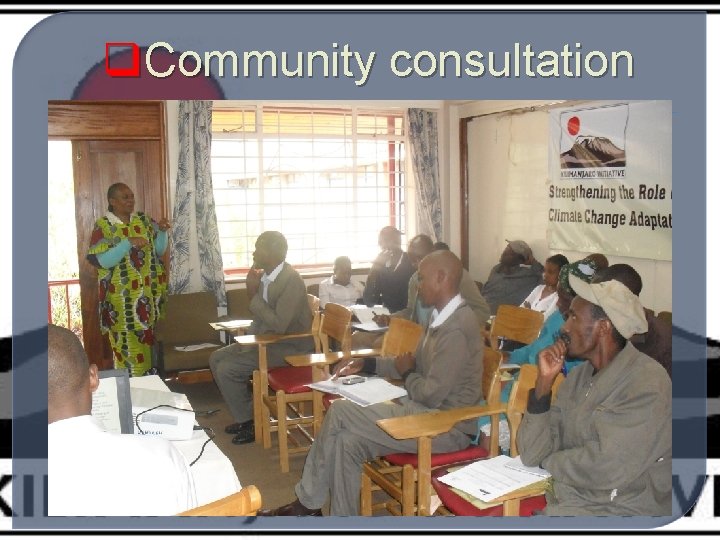
q. Community consultation
Thank you www. kilimanjaro initiative. or. ke
- Slides: 13