
Water Erosion Chapter 4 1 Pages 118 127
- Slides: 36
Water Erosion Chapter 4. 1 Pages 118 -127
Key Questions How does moving water cause erosion? What land features are formed by water erosion and deposition?
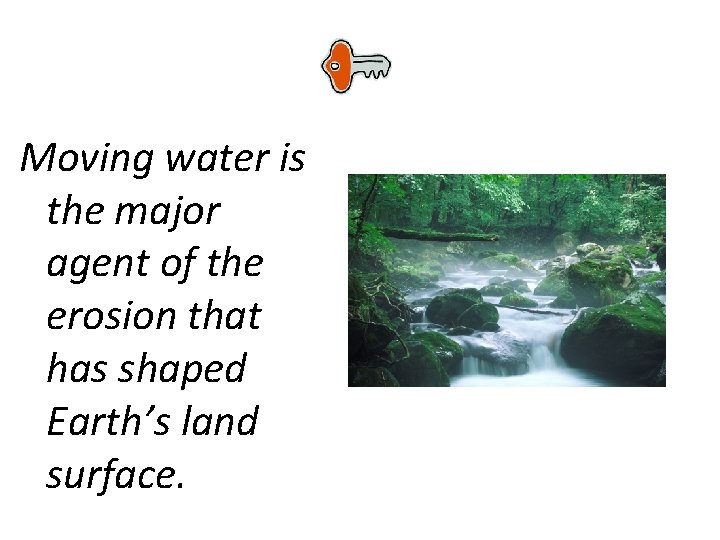
Moving water is the major agent of the erosion that has shaped Earth’s land surface.
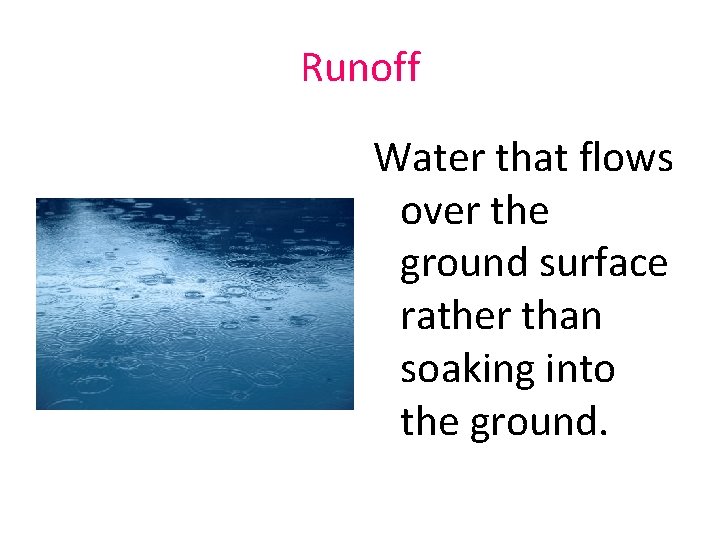
Runoff Water that flows over the ground surface rather than soaking into the ground.
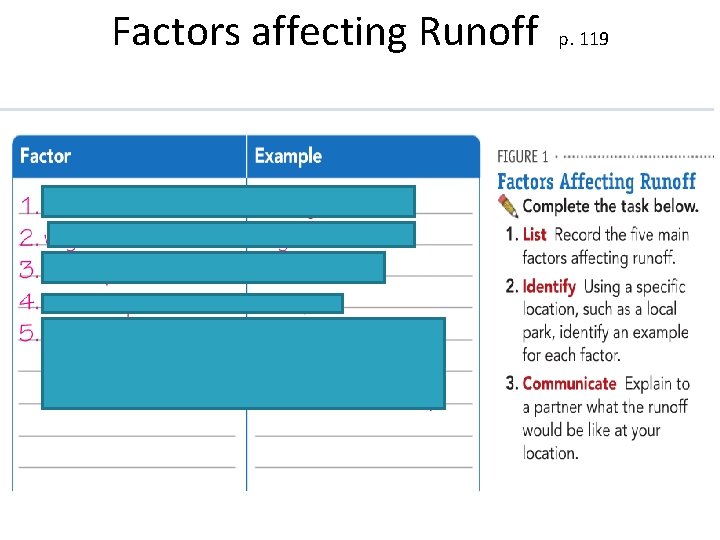
Factors affecting Runoff p. 119
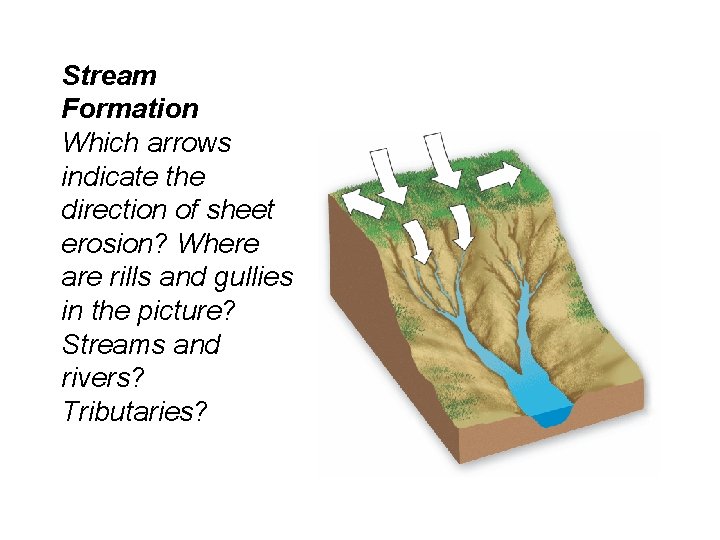
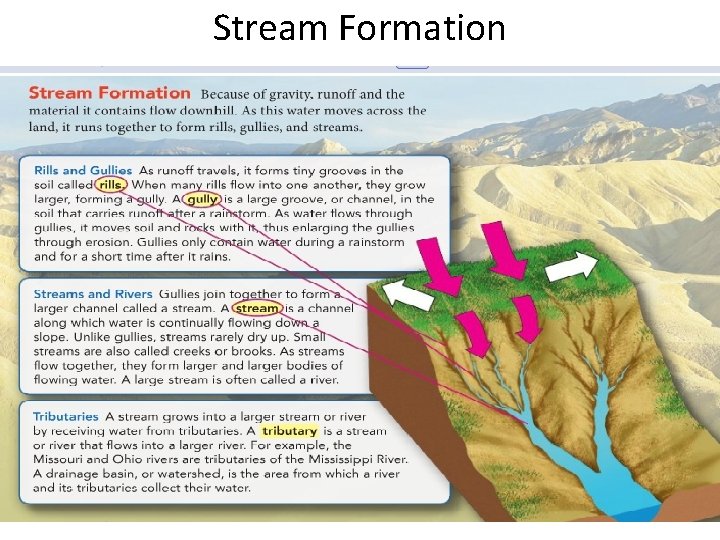
Stream Formation p. 120 • Because of gravity, runoff and the material it contains flow downhill. • As the water moves across the land, it runs together to form: • Rills • Gullies • Streams • Rivers
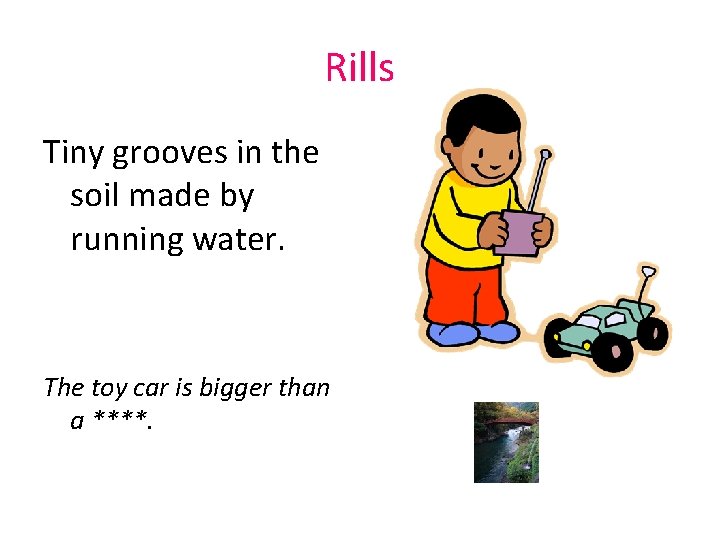
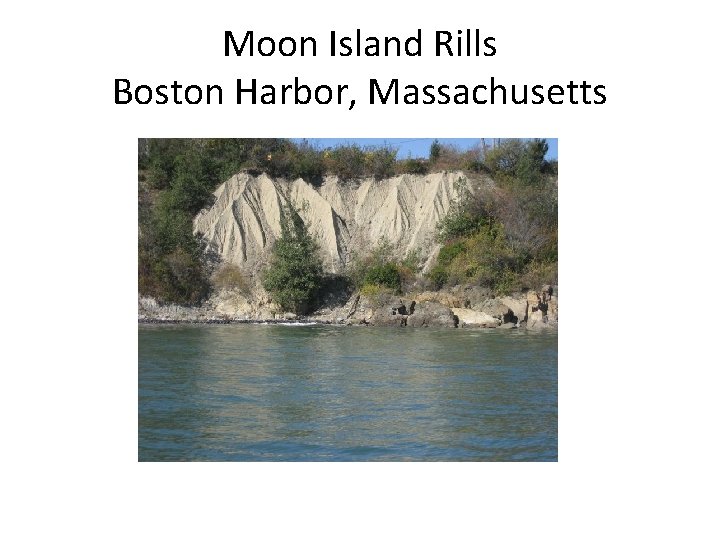
Rills Tiny grooves in the soil made by running water. The toy car is bigger than a ****.
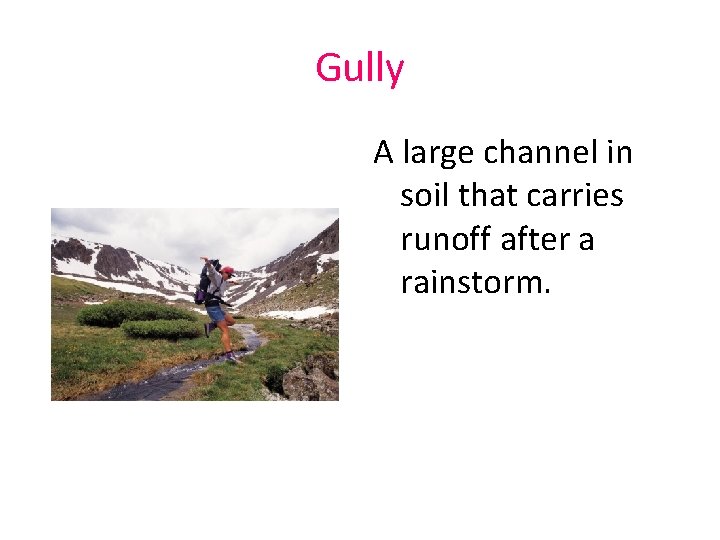
Gully A large channel in soil that carries runoff after a rainstorm.
Moon Island Rills Boston Harbor, Massachusetts
Stream A channel through which water is continually flowing downhill.
Tributary A stream or river that flows into a larger river.
Stream Formation Which arrows indicate the direction of sheet erosion? Where are rills and gullies in the picture? Streams and rivers? Tributaries?
Stream Formation
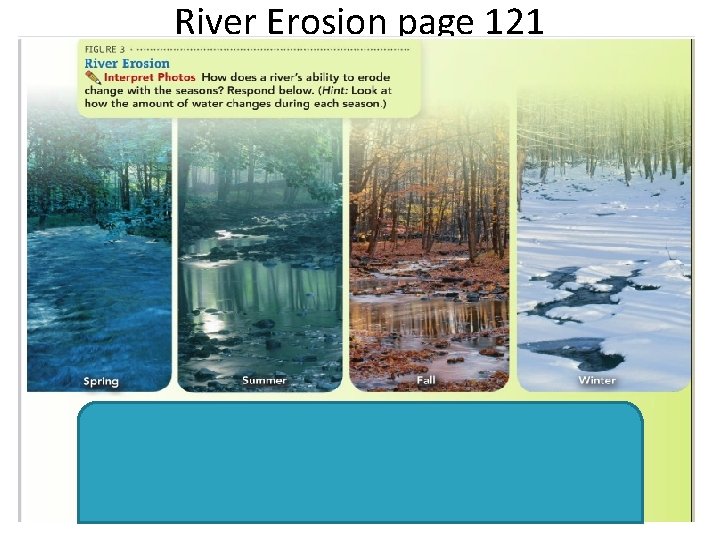
River Erosion page 121
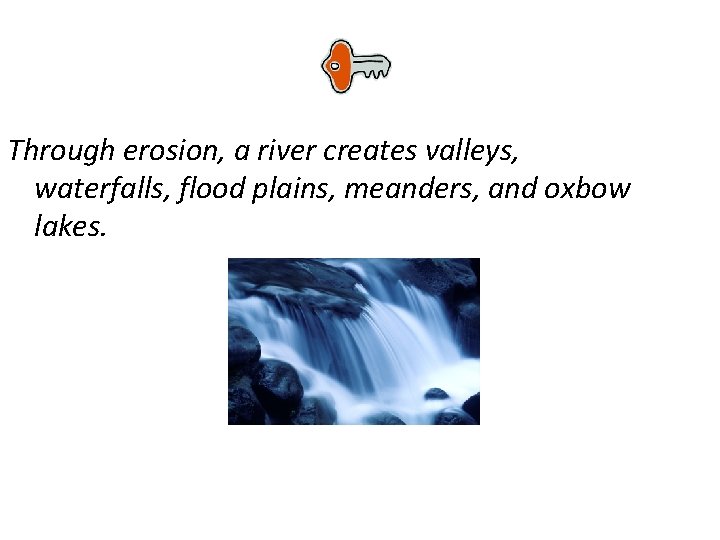
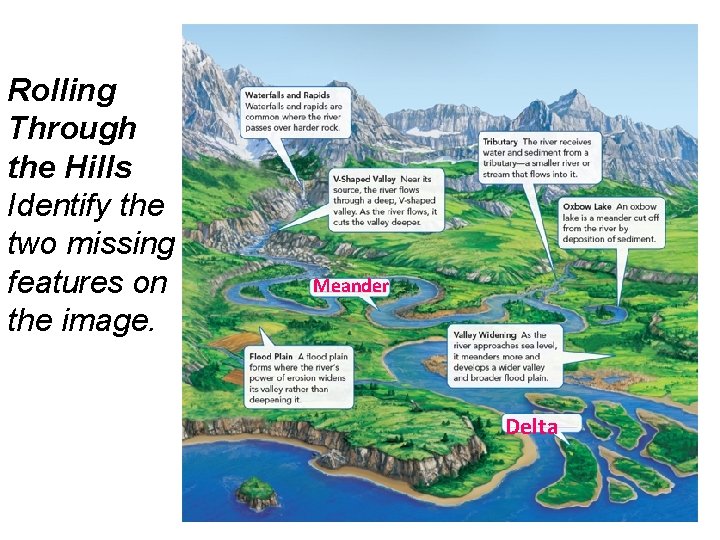
Through erosion, a river creates valleys, waterfalls, flood plains, meanders, and oxbow lakes.
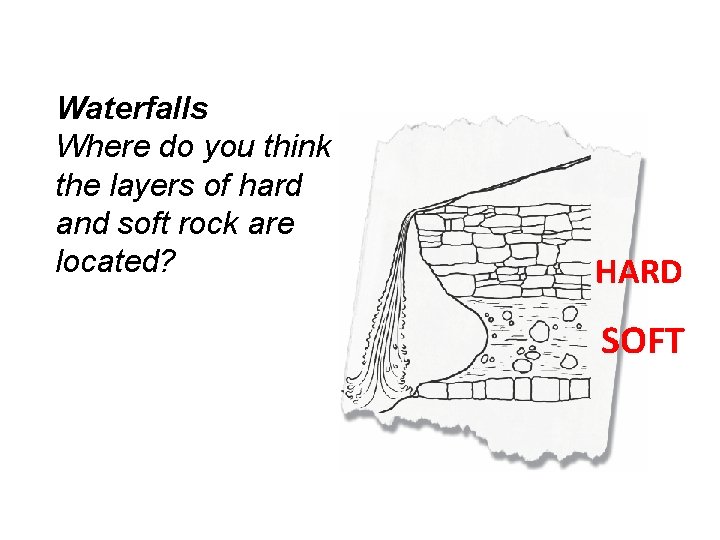
Waterfalls Where do you think the layers of hard and soft rock are located? HARD SOFT
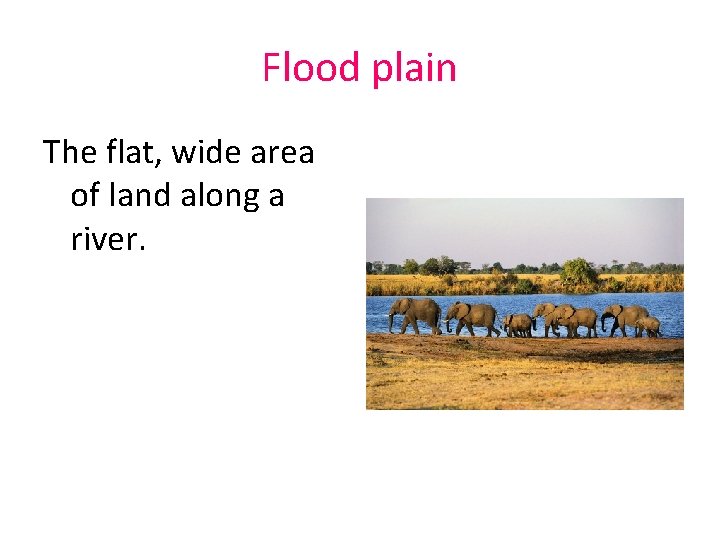
Flood plain The flat, wide area of land along a river.
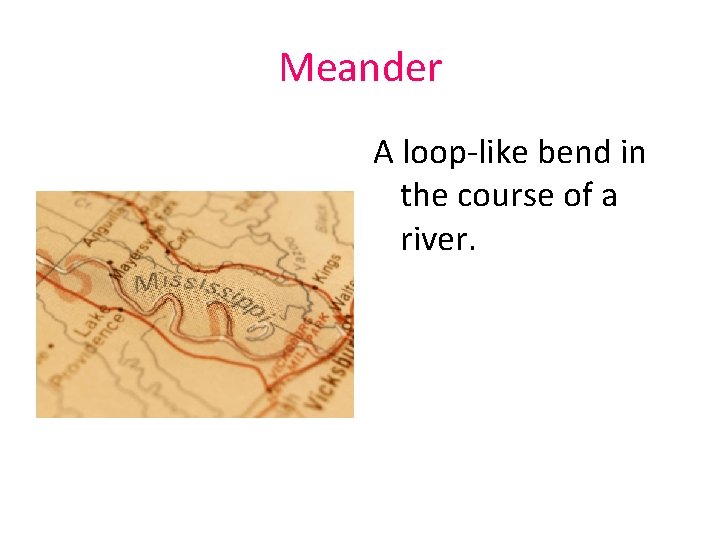
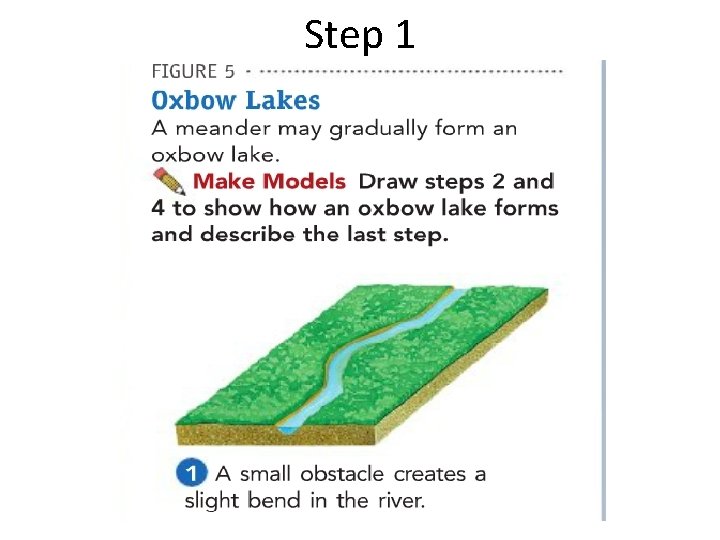
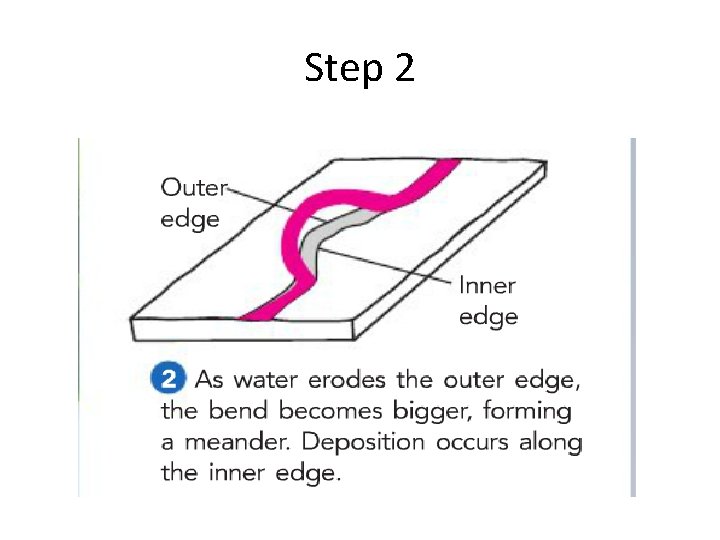
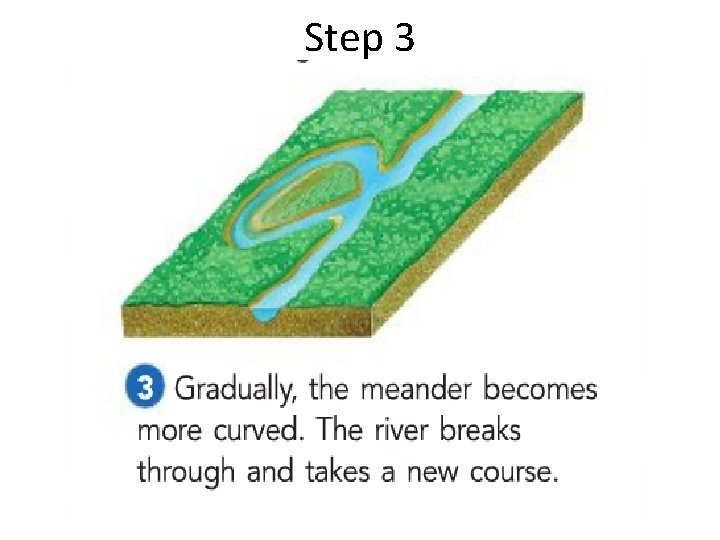
Meander A loop-like bend in the course of a river.
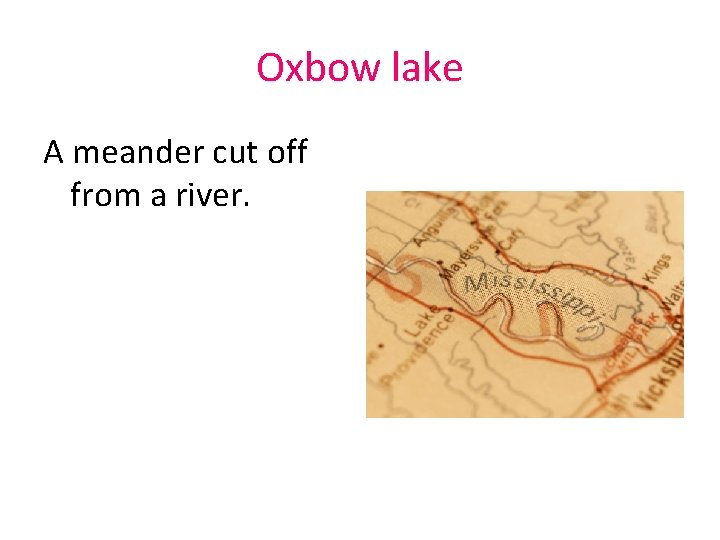
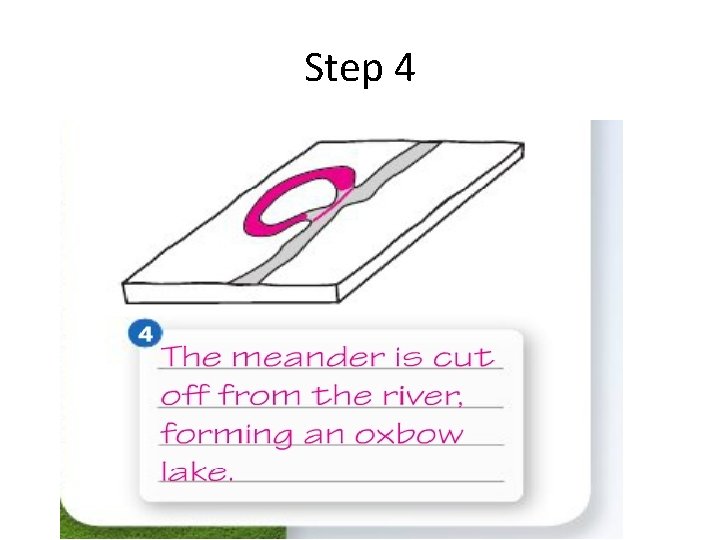
Oxbow lake A meander cut off from a river.
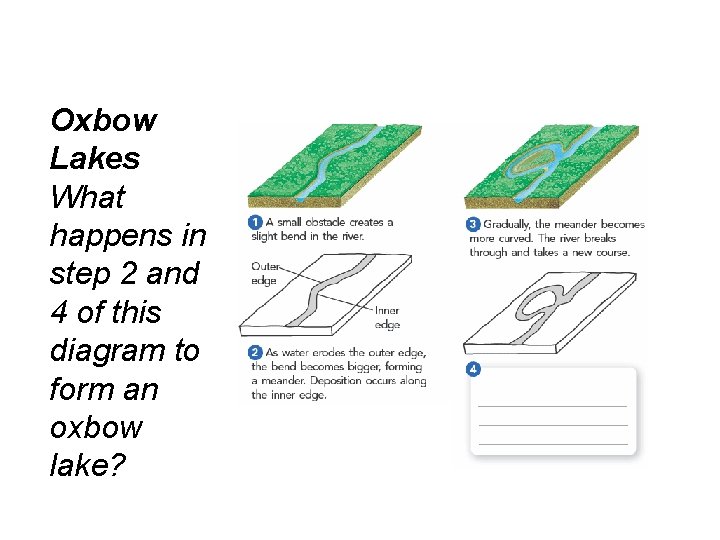
Oxbow Lakes What happens in step 2 and 4 of this diagram to form an oxbow lake?
Step 1
Step 2
Step 3
Step 4
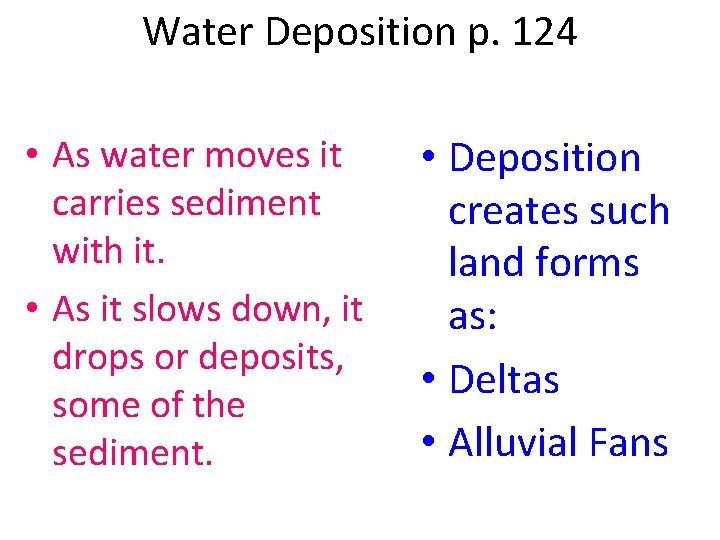
Water Deposition p. 124 • As water moves it carries sediment with it. • As it slows down, it drops or deposits, some of the sediment. • Deposition creates such land forms as: • Deltas • Alluvial Fans
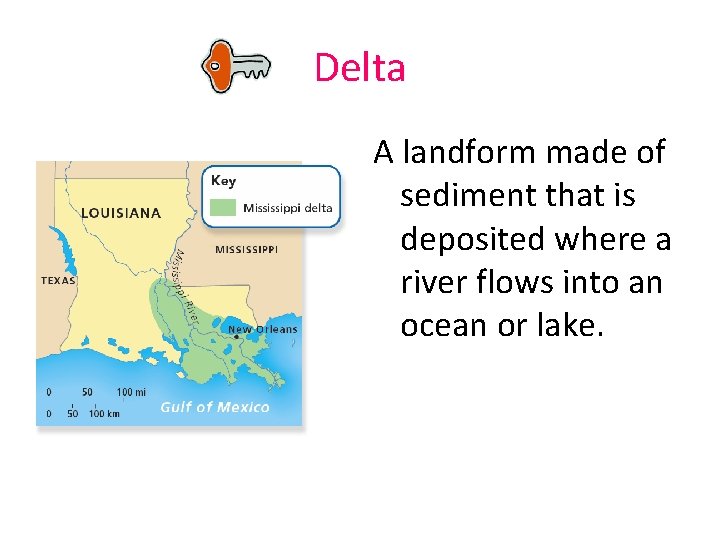
Delta A landform made of sediment that is deposited where a river flows into an ocean or lake.
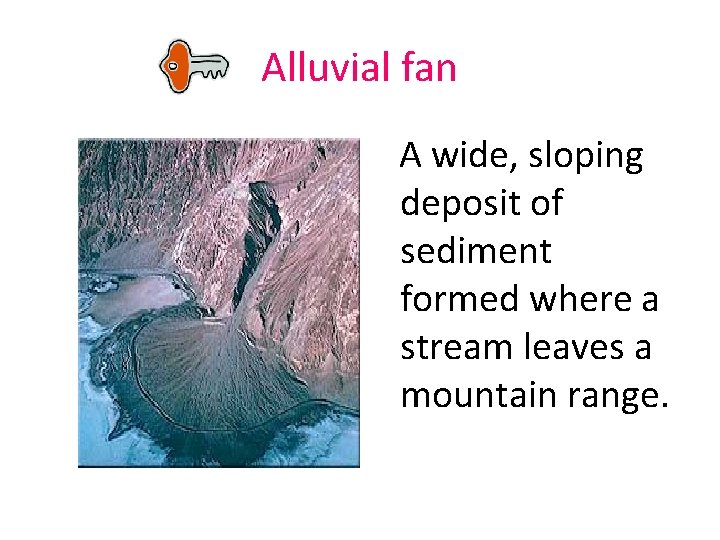
Alluvial fan A wide, sloping deposit of sediment formed where a stream leaves a mountain range.
Rolling Through the Hills Identify the two missing features on the image. Meander Delta
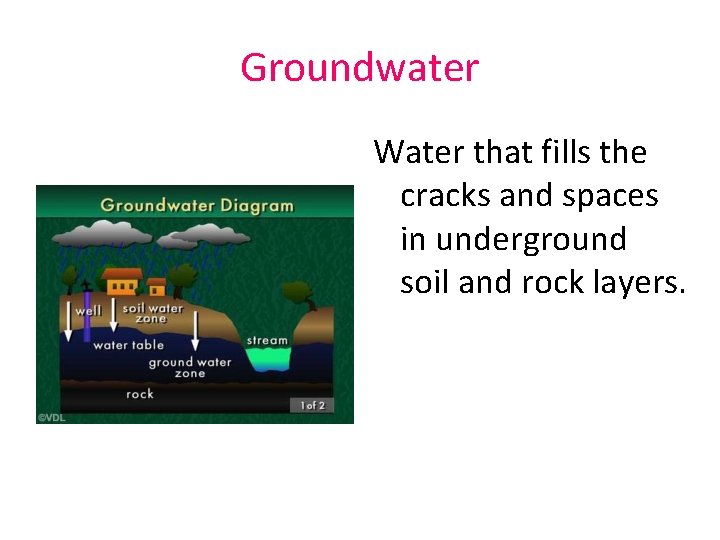
Groundwater Water that fills the cracks and spaces in underground soil and rock layers.
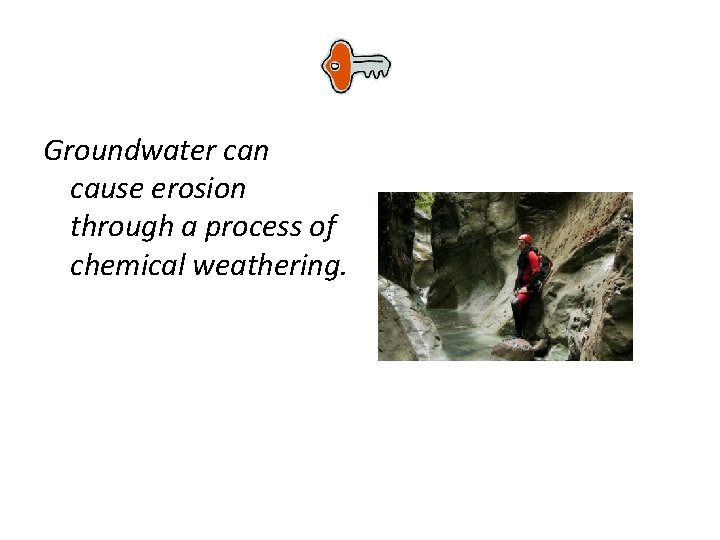
Groundwater can cause erosion through a process of chemical weathering.
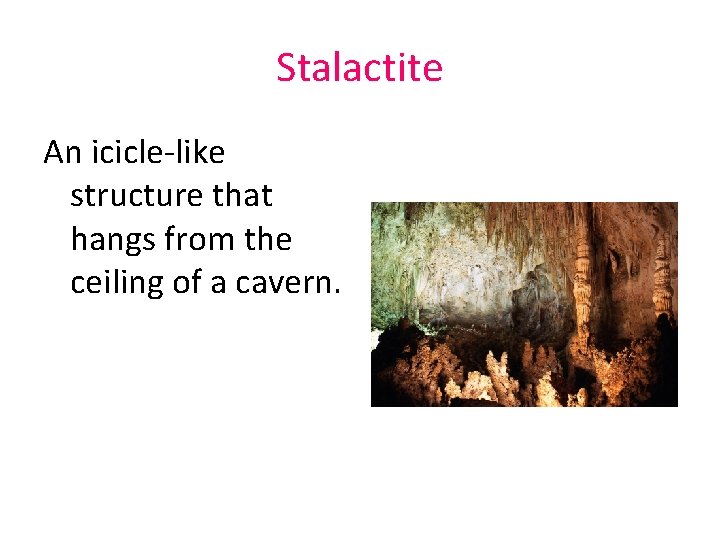
Stalactite An icicle-like structure that hangs from the ceiling of a cavern.
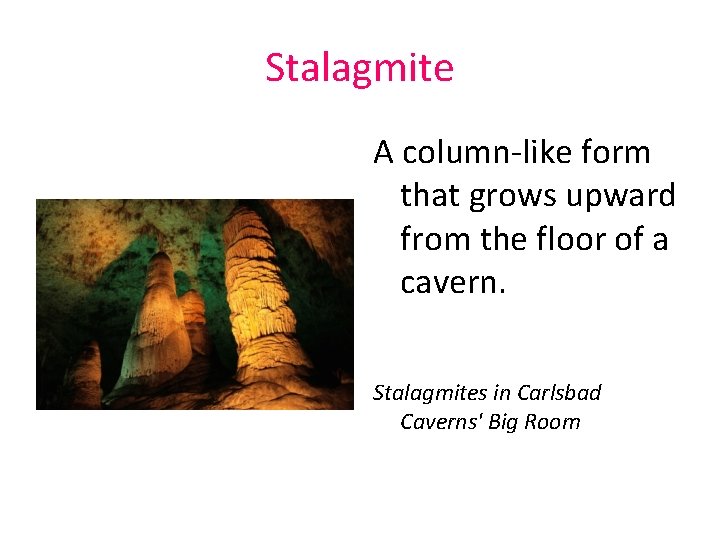
Stalagmite A column-like form that grows upward from the floor of a cavern. Stalagmites in Carlsbad Caverns' Big Room
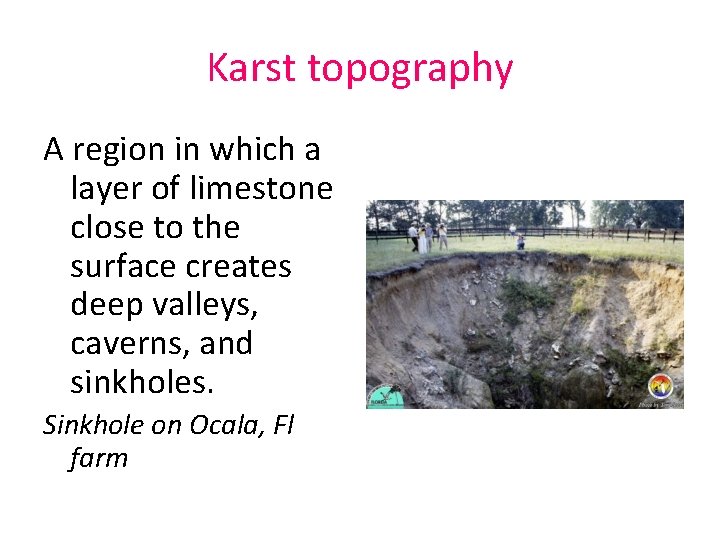
Karst topography A region in which a layer of limestone close to the surface creates deep valleys, caverns, and sinkholes. Sinkhole on Ocala, Fl farm
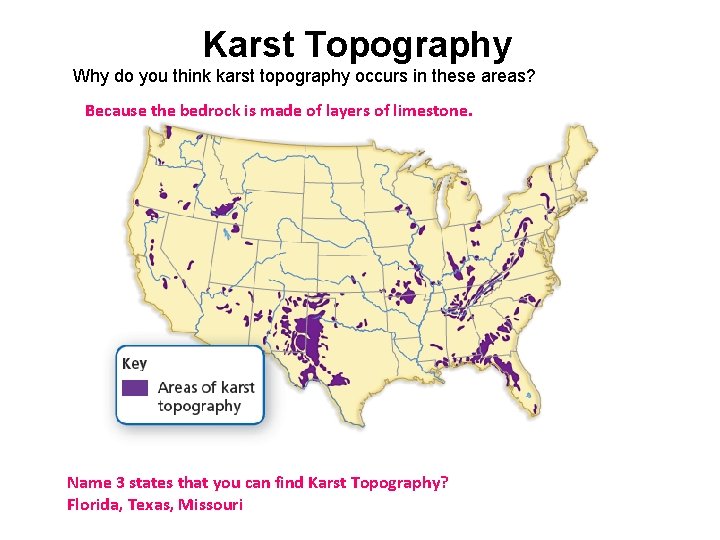
Karst Topography Why do you think karst topography occurs in these areas? Because the bedrock is made of layers of limestone. Name 3 states that you can find Karst Topography? Florida, Texas, Missouri
Key Questions How does moving water cause erosion? Moving water is the major agent of the erosion that has shaped Earth’s land surface. What land features are formed by water erosion and deposition? Valleys, waterfalls, flood plains, meanders, oxbow lakes, deltas, alluvial fans, caves